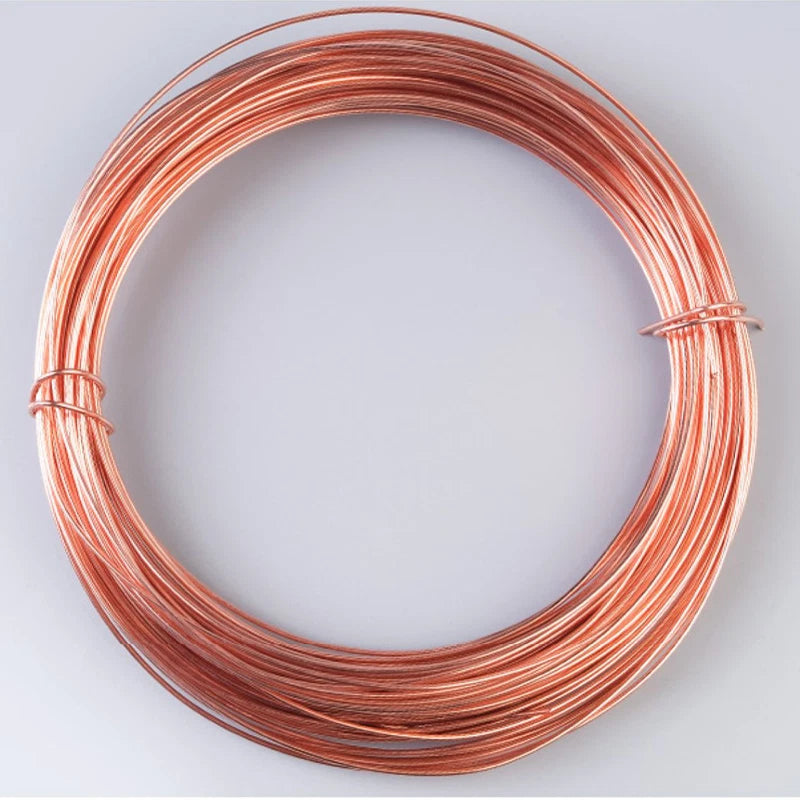
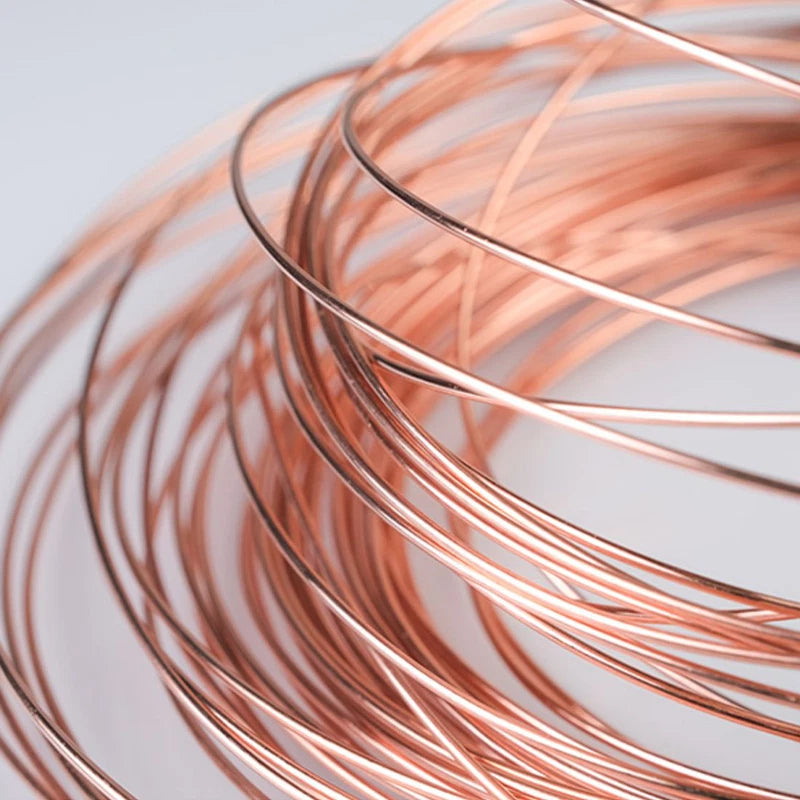
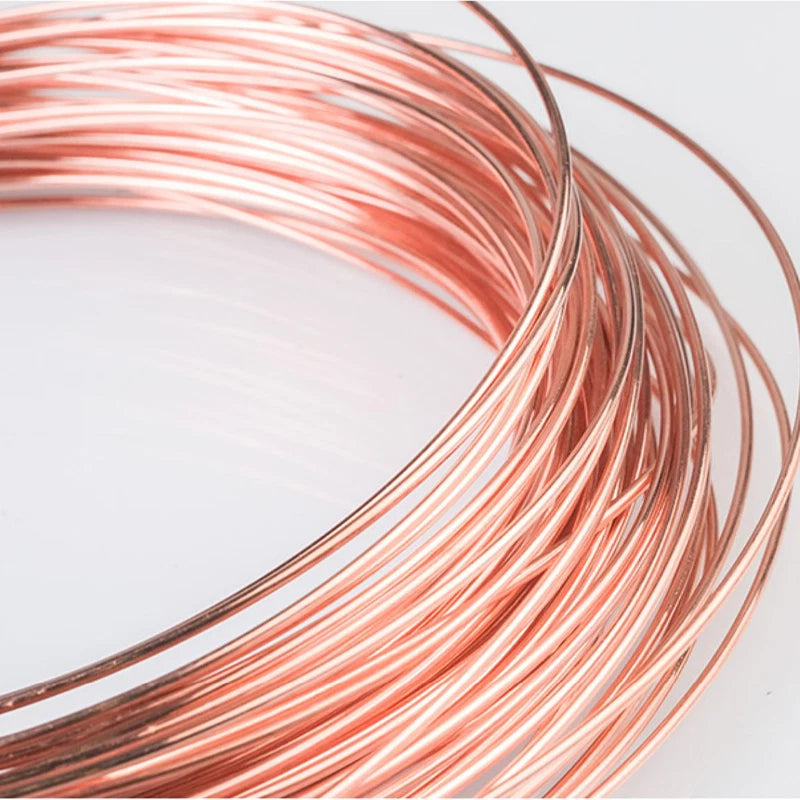
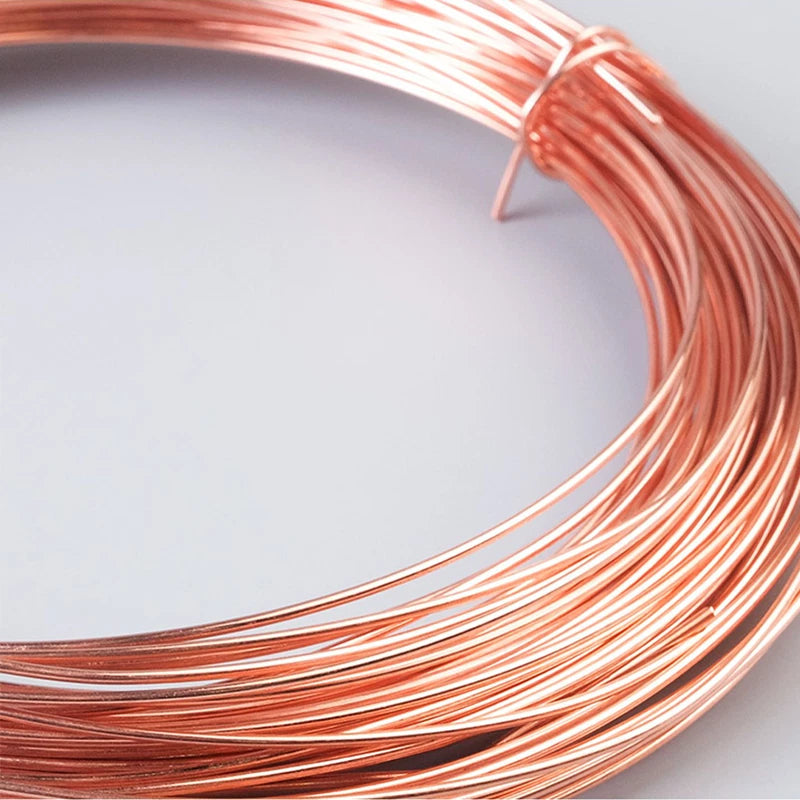
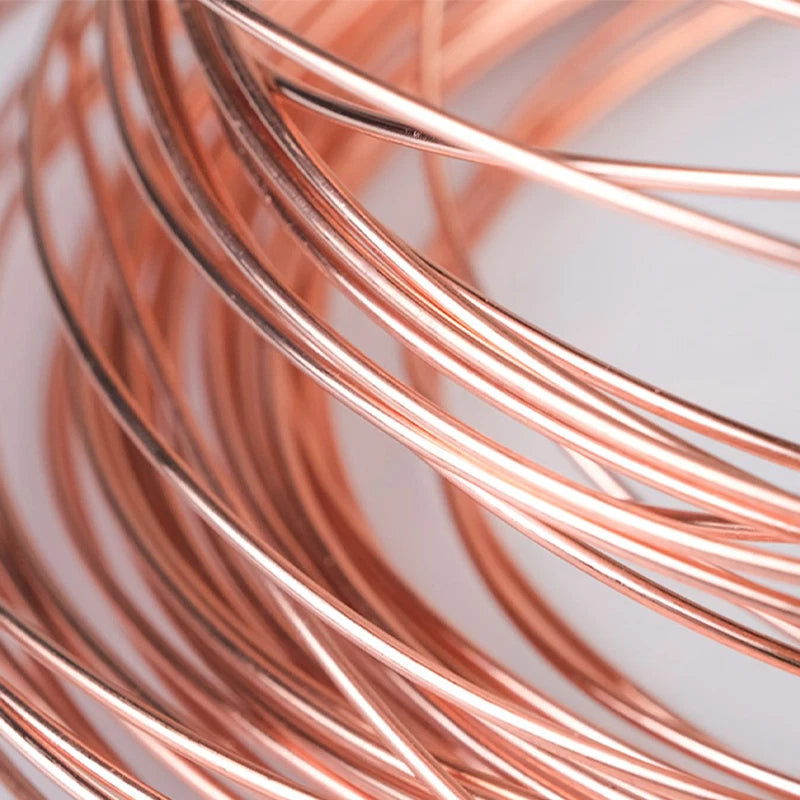
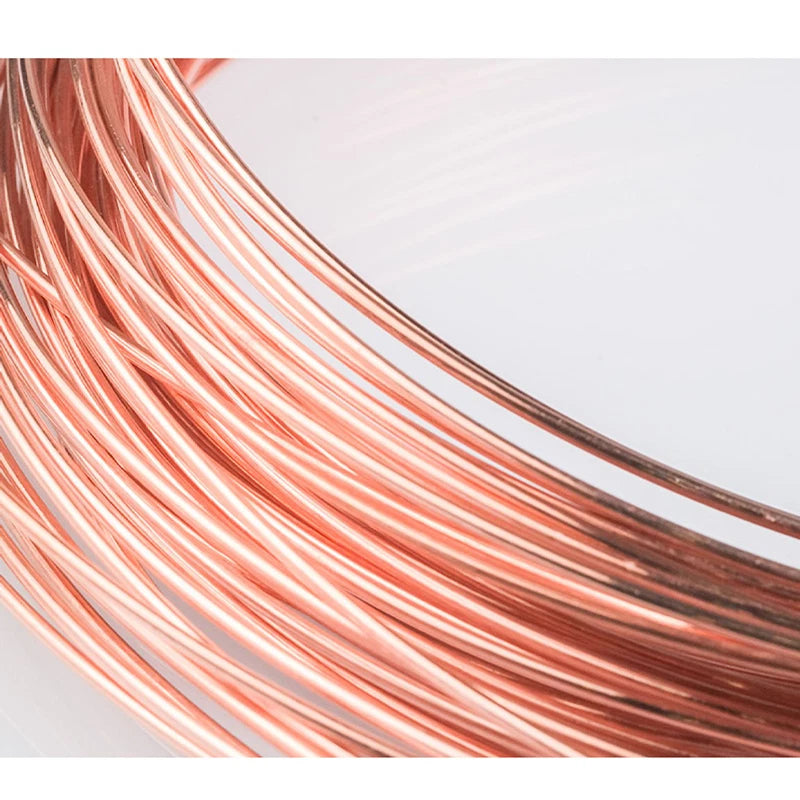
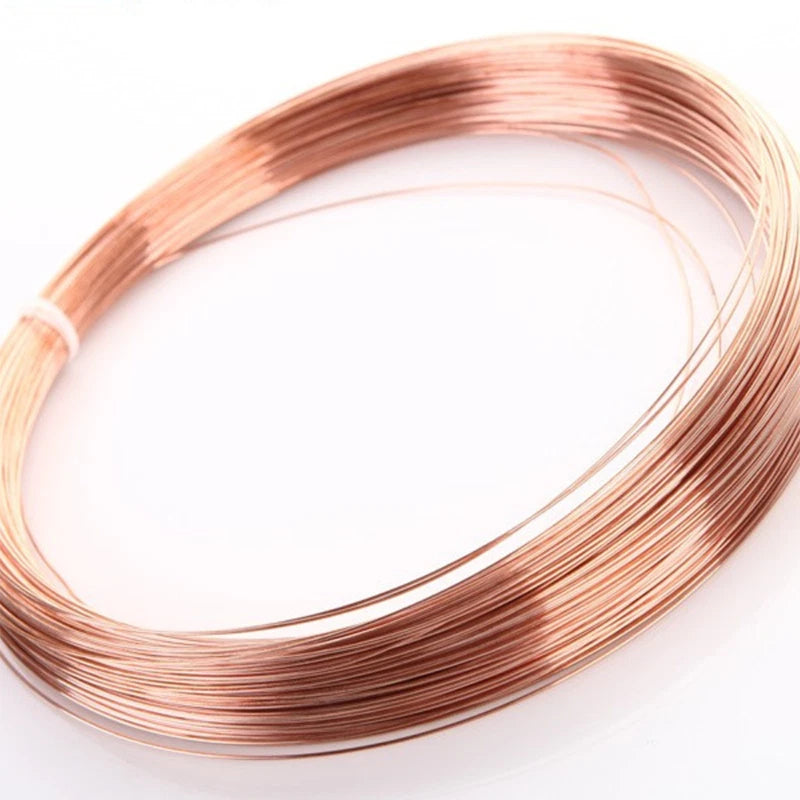
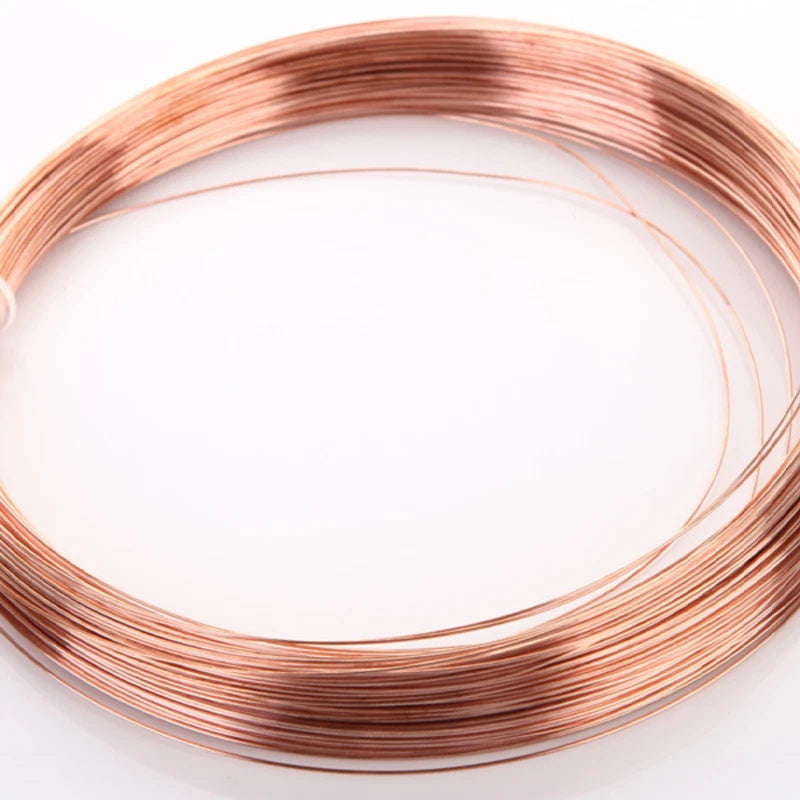
10M Pure Copper Cable Bare Copper Wire Solid Round Coil Diameter: 0.2mm - 0.6mm

Keine Bewertungen

Preis:
Sonderpreis$4.00 USD
Lagerbestand:
Verfügbar (500 Stück), versandbereit

Payment & Security

Ach Direct Debit Amazon American Express Apple Pay Bancontact Diners Club Discover Google Pay iDEAL Wero Mastercard PayPal Shop Pay USDC Visa

Deine Zahlungsinformationen werden sicher verarbeitet. Wir speichern keine Kreditkartendaten und haben auch keinen Zugang zu deinen Kreditkartendaten.

Quantity Discount Promotion
🎯 BULK DISCOUNT: Buy More, Save More!
Buy 2 Items
5% OFF
Buy 4 Items
10% OFF
Buy 6 Items
15% OFF
Expert

DIY Expert Support

Get fitment advice & recommendations

Mon-Fri, 8:30AM-8PM
24-Hour Fast Ship
🚚
Arrives in 3-14 days
🌍
Global Reach
↩️
30-Day Returns
🌱 1 tree planted with every purchase

Beschreibung

Bare Copper Wire Solid Round Coil — Flexible Lengths for Electrical, Craft & DIY Use

When a project calls for reliable conductivity without insulation getting in the way, finding bare copper wire in the exact diameter and length you need can be frustrating. Whether you're a hobbyist wiring a custom circuit, an electrician running a grounding conductor, or a craftsperson shaping decorative coils, this bare copper wire solid round coil gives you the precise gauge and quantity to match the job — no excess, no shortage.

Each coil is drawn from solid, uncoated copper with a circular cross-section. Diameters range from 0.2 mm (~0.008 in) up to 0.6 mm (~0.024 in), and quantity options run from 1 × 10 m up to 100 × 10 m (1,000 m total), letting you order exactly what the project demands. The wire ships wound into a tidy coil that unspools cleanly without kinking.

Typical applications include grounding and bonding runs in low-voltage electrical panels, antenna and RF coil winding for amateur radio builds, jewelry-making and wire-wrapping where bare copper wire solid round stock is preferred for its workability, and resistance-wire experiments in school or maker-lab settings.

Compatibility note: This is uninsulated solid copper wire. Confirm your application does not require insulated or stranded wire before ordering. Not rated for mains-voltage wiring inside walls.

✅ Key Features of These Bare Copper Wire Solid Round Coils

  • 🔩 Solid round cross-section — uniform circular profile maintains consistent resistance per metre and bends predictably without flattening, making it suitable for coil winding and shaped-wire craft work.
  • ⚗️ Uncoated bare copper — no enamel, PVC, or oxide layer to strip before soldering or crimping; the wire surface accepts solder readily and bonds cleanly to copper lugs and terminals.
  • 📏 Five diameter options (0.2 – 0.6 mm) — select the gauge that matches your current-carrying or forming requirement; finer gauges suit delicate craft and RF work, while 0.5–0.6 mm handles light grounding and structural coil applications.
  • 📦 Scalable quantity tiers — choose from 1 × 10 m through 100 × 10 m so occasional DIYers and workshop buyers alike can order the right amount without overstocking.
  • 🔄 Tidy coil winding — each length is wound into a compact coil that unspools without tangling; the round cross-section resists kinking during handling and storage.
  • 🛠️ Broad application range — used in grounding conductors, antenna coils, jewelry wire-wrapping, resistance experiments, and decorative metalwork where bare copper wire solid round stock is the specified material.

📐 Technical Specifications — Bare Copper Wire

Material Solid bare copper (uncoated, uninsulated)
Wire Form Solid round (not stranded)
Diameter Options 0.2 mm / 0.3 mm / 0.4 mm / 0.5 mm / 0.6 mm
Length per Unit 10 metres (approx. 32.8 ft)
Quantity Options 1 / 2 / 3 / 5 / 10 / 30 / 50 / 100 units (× 10 m each)
Surface Finish Bare / bright copper (no coating)
Cross-Section Circular
Flexibility See variant options
Tensile Strength See variant options
Packaging Wound coil

❓ Frequently Asked Questions

Which diameter should I choose for grounding applications?

For light grounding and bonding in low-voltage DC systems (under 30 V), 0.5 mm or 0.6 mm solid bare copper wire is typically adequate. For mains-voltage grounding inside walls or panels, consult your local electrical code — this wire is not rated for that use and a larger, insulated conductor is required.

Is this wire suitable for antenna and RF coil winding?

Yes. Solid bare copper wire is a common choice for hand-wound RF inductors and antenna elements because the uncoated surface allows direct contact between turns when close-wound, and the solid core holds its shape after forming. Finer gauges (0.2–0.3 mm) are used for high-turn-count coils; 0.4–0.6 mm suits larger-diameter coils with fewer turns.

Will the copper oxidise over time, and does that affect performance?

Bare copper does develop a surface oxide layer when exposed to air and humidity. For electrical connections, oxidation increases contact resistance at termination points — applying flux before soldering or using a mechanical crimp removes the oxide layer at the joint. For decorative wire-wrapping, a light coat of clear lacquer after shaping preserves the bright copper appearance.

Can I use this wire for jewelry making and wire-wrapping?

Bare copper wire solid round stock is widely used in jewelry and craft wire-wrapping. The 0.2–0.4 mm range is soft enough to wrap by hand around stones and findings, while 0.5–0.6 mm holds structural shapes such as rings and frames. Note that bare copper may leave a green patina on skin with prolonged contact; sealing finished pieces with jeweler's lacquer addresses this.

How do I calculate how much wire I need?

Measure the total run length of your project, then add 10–15% for terminations, waste, and any re-dos. Each unit in this listing equals 10 metres. For example, a project needing 45 m would require at least 5 units (50 m). Ordering one tier above your calculated minimum is a practical buffer for complex projects.

Is this wire compatible with standard crimp connectors and solder lugs?

Solid bare copper wire can be inserted into crimp connectors sized for the wire's cross-sectional area. Because it is solid (not stranded), it does not compress as much as stranded wire under a crimp — use connectors rated for solid conductors where possible. For solder lugs, the bare surface accepts standard rosin-core solder without pre-tinning, though a brief flux application improves wetting speed.

What is the difference between this solid wire and stranded copper wire?

Solid wire consists of a single conductor and holds its shape after bending, making it suited for fixed installations, coil winding, and shaped craft work. Stranded wire bundles multiple thin conductors together, giving it greater flexibility for applications that involve repeated movement or vibration. Choose solid for static, formed, or coil-wound uses; choose stranded for flexible leads and wiring harnesses.

🛒 Select your diameter and quantity above, then add to cart.

You may also like

Recently viewed