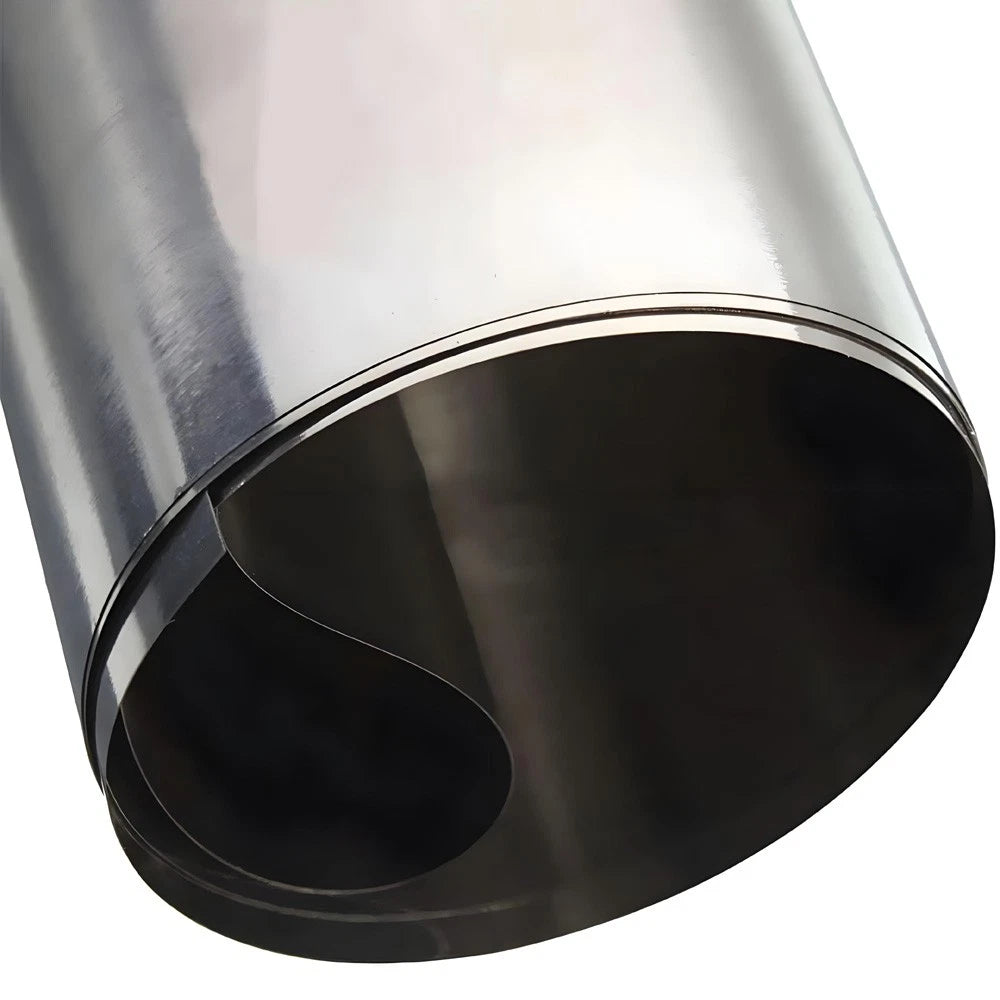
1M 304 Stainless Steel Band Sheet Foil Thin Steel Plate Strip 0.015mm-1mm Thick

Keine Bewertungen

Preis:
Sonderpreis$7.47 USD
Lagerbestand:
Verfügbar (500 Stück), versandbereit

Payment & Security

Ach Direct Debit Amazon American Express Apple Pay Bancontact Diners Club Discover Google Pay iDEAL Wero Mastercard PayPal Shop Pay USDC Visa

Deine Zahlungsinformationen werden sicher verarbeitet. Wir speichern keine Kreditkartendaten und haben auch keinen Zugang zu deinen Kreditkartendaten.

Quantity Discount Promotion
🎯 BULK DISCOUNT: Buy More, Save More!
Buy 2 Items
5% OFF
Buy 4 Items
10% OFF
Buy 6 Items
15% OFF
Expert

DIY Expert Support

Get fitment advice & recommendations

Mon-Fri, 8:30AM-8PM
24-Hour Fast Ship
🚚
Arrives in 3-14 days
🌍
Global Reach
↩️
30-Day Returns
🌱 1 tree planted with every purchase

Beschreibung

304 Stainless Steel Foil Strip — Precision-Cut Sheet for DIY Fabrication & Repair

When a project demands a thin, flat metal strip that holds its shape, resists rust, and cuts cleanly, most hardware-store sheet metal falls short — it's too thick, too wide, or sold in lengths you can't use. This 1-metre 304 stainless steel band sheet foil is stocked in a wide matrix of thicknesses (0.015 mm to 1 mm) and widths (10 mm to 300 mm), so hobbyists, machinists, and tradespeople can order exactly the cross-section they need without waste.

Each strip is cut from Grade 304 austenitic stainless steel — an alloy containing approximately 18% chromium and 8% nickel — and supplied in a 1,000 mm (≈39.4 in) length. Thickness options span 0.015 mm through 1 mm; width options run from 10 mm (≈0.39 in) to 300 mm (≈11.8 in). The surface finish is a standard mill-bright 2B, offering a smooth, lightly reflective appearance suitable for most functional applications.

Typical uses include shimming bearing housings and gearbox covers, fabricating custom gaskets and heat shields, lining or reinforcing channels in woodworking jigs, and crafting precision spacers for electronics enclosures. The combination of thin-gauge availability and corrosion resistance also makes these strips a go-to material for marine hardware repairs and outdoor signage brackets.

🔧 Compatibility note: These strips are non-magnetic (austenitic 304 alloy) and are not suitable for applications requiring magnetic permeability. Confirm your required thickness and width from the variant selector before ordering — dimensions are as-cut and not further machined.

✅ Key Features of These 304 Stainless Steel Foil Strips

  • 🧱 Grade 304 Alloy — 18/8 chromium-nickel composition delivers reliable corrosion resistance in humid, wet, and mildly acidic environments without surface treatment.
  • 📏 Wide Thickness Range (0.015 mm – 1 mm) — Ultra-thin foil gauges down to 0.015 mm allow precise shimming and gasketing; thicker 0.5–1 mm options suit structural spacers and brackets.
  • ↔️ Multiple Width Options (10 mm – 300 mm) — Seven width choices from 10 mm to 300 mm mean you can match the strip to your channel, slot, or flange without cutting down excess material.
  • 📐 1,000 mm Fixed Length — Each piece is supplied at a consistent 1-metre length (≈39.4 in), giving a predictable starting point for layout and cutting on the bench.
  • 2B Mill-Bright Finish — The smooth, lightly reflective surface is free of scale and heavy oxide, reducing prep time before bonding, painting, or leaving exposed.
  • ✂️ Workable with Standard Tools — Thin gauges (≤0.3 mm) can be scored and snapped or cut with aviation snips; thicker gauges respond well to angle grinders and metal-cutting blades.

📐 Technical Specifications — Stainless Steel Foil Strip

Material 304 Austenitic Stainless Steel (18% Cr, 8% Ni)
Length 1,000 mm (≈39.4 in)
Thickness See variant options (0.015 mm – 1 mm)
Width See variant options (10 mm – 300 mm)
Surface Finish 2B Mill-Bright
Temper Annealed (soft)
Magnetic Non-magnetic (austenitic)
Tensile Strength (typical) 515–720 MPa
Operating Temperature Up to approximately 870 °C (intermittent)
Weight See variant options (varies by thickness × width)

❓ Frequently Asked Questions

How do I choose the right thickness for shimming?

Start by measuring the gap you need to fill with a feeler gauge. For bearing-housing shims, gaps under 0.1 mm are typically addressed with 0.01–0.05 mm foil; gaps of 0.1–0.5 mm suit the mid-range options. If you are unsure, order one step thinner than your measurement — it is easier to stack two thin shims than to remove material from one that is too thick.

Is 304 stainless steel strong enough for structural brackets?

Grade 304 has a typical tensile strength of 515–720 MPa, which is adequate for light-duty brackets and reinforcement plates. For load-bearing structural applications subject to significant bending or impact, thicker gauges (0.5 mm and above) are recommended. If you need higher strength, consider 316 or 430 grades, which are not covered by this listing.

Will these strips rust or corrode outdoors?

Grade 304 stainless steel forms a passive chromium-oxide layer that resists rust in most outdoor and humid environments. It performs well in rain, condensation, and mild chemical exposure. In coastal or high-chloride environments (salt spray, swimming pools), surface staining can occur over time; wiping the strip periodically with a damp cloth and mild detergent helps maintain the passive layer.

Can I weld or solder these strips?

Yes. Grade 304 is readily TIG- and MIG-welded using 308L filler wire. Thin foils (under 0.1 mm) require careful heat control to avoid warping — a backing bar and tack-welding in short intervals helps. Soft soldering with stainless-compatible flux is possible for non-structural joints on thinner gauges.

Are these strips compatible with food-contact or medical applications?

Grade 304 is widely used in food-processing equipment and is generally considered food-safe when properly cleaned. However, this listing does not include certification documentation (e.g., FDA, EU 10/2011). If your application requires certified food-grade or medical-grade material with full traceability, please contact us to confirm before ordering.

How do I cut thin foil gauges cleanly without distortion?

For gauges up to 0.1 mm, a sharp craft knife guided along a steel rule on a hard surface gives clean, straight cuts. Aviation snips work well from 0.1–0.5 mm but may leave a slight burr — deburr with a fine file or 400-grit wet-and-dry paper. For widths above 100 mm or thicknesses above 0.5 mm, a metal guillotine or angle grinder with a thin cutting disc produces the cleanest edge.

What width should I order for a channel or slot application?

Measure the internal width of your channel or slot and select the next size down from our available widths (10, 20, 50, 100, 150, 200, or 300 mm). A strip that is 0.5–1 mm narrower than the channel slides in without binding and still covers the full bearing surface. If your channel width falls between two options, the narrower strip is easier to work with and can be shimmed laterally if needed.

🛒 Select your Thickness and Width above, then add to cart.

You may also like

Recently viewed