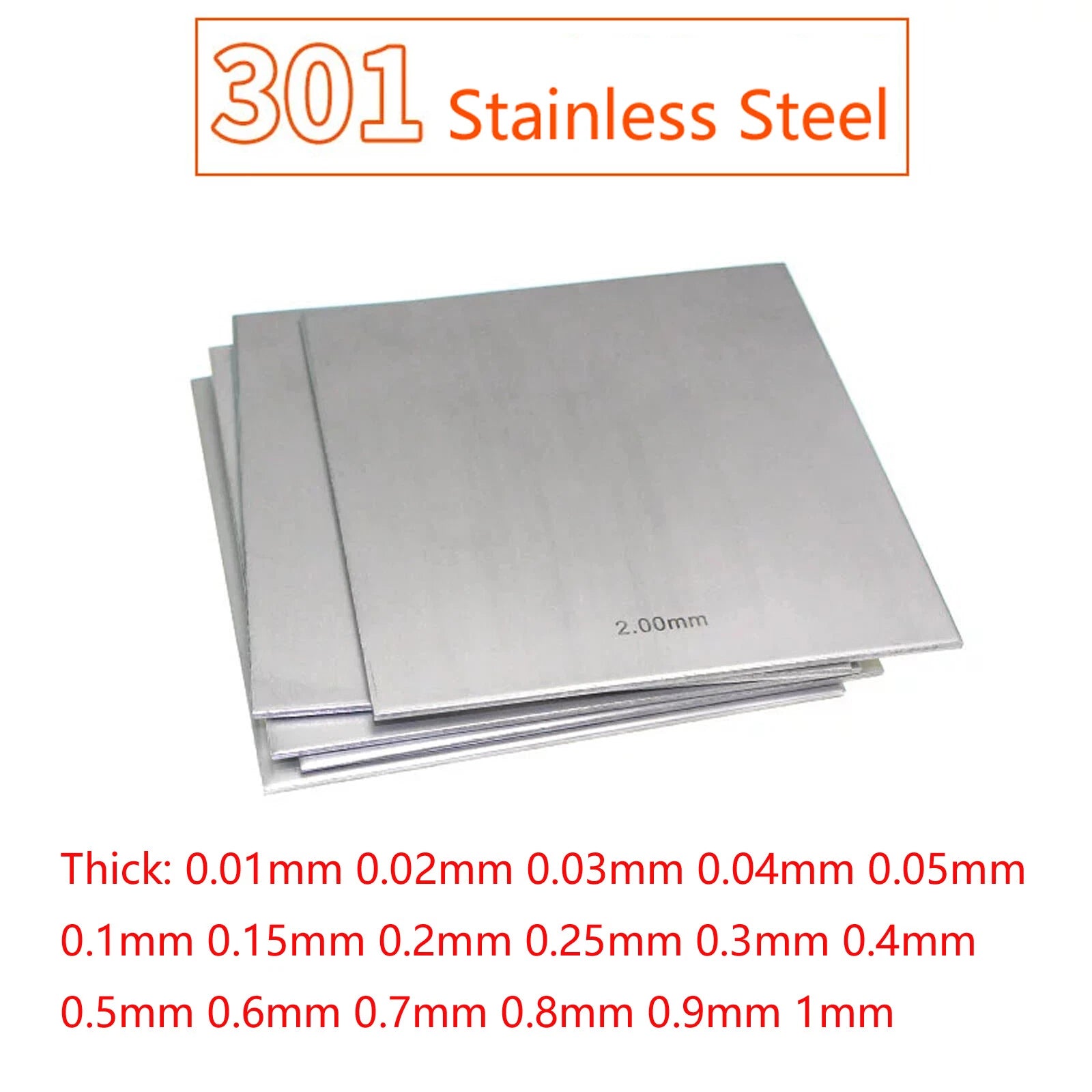
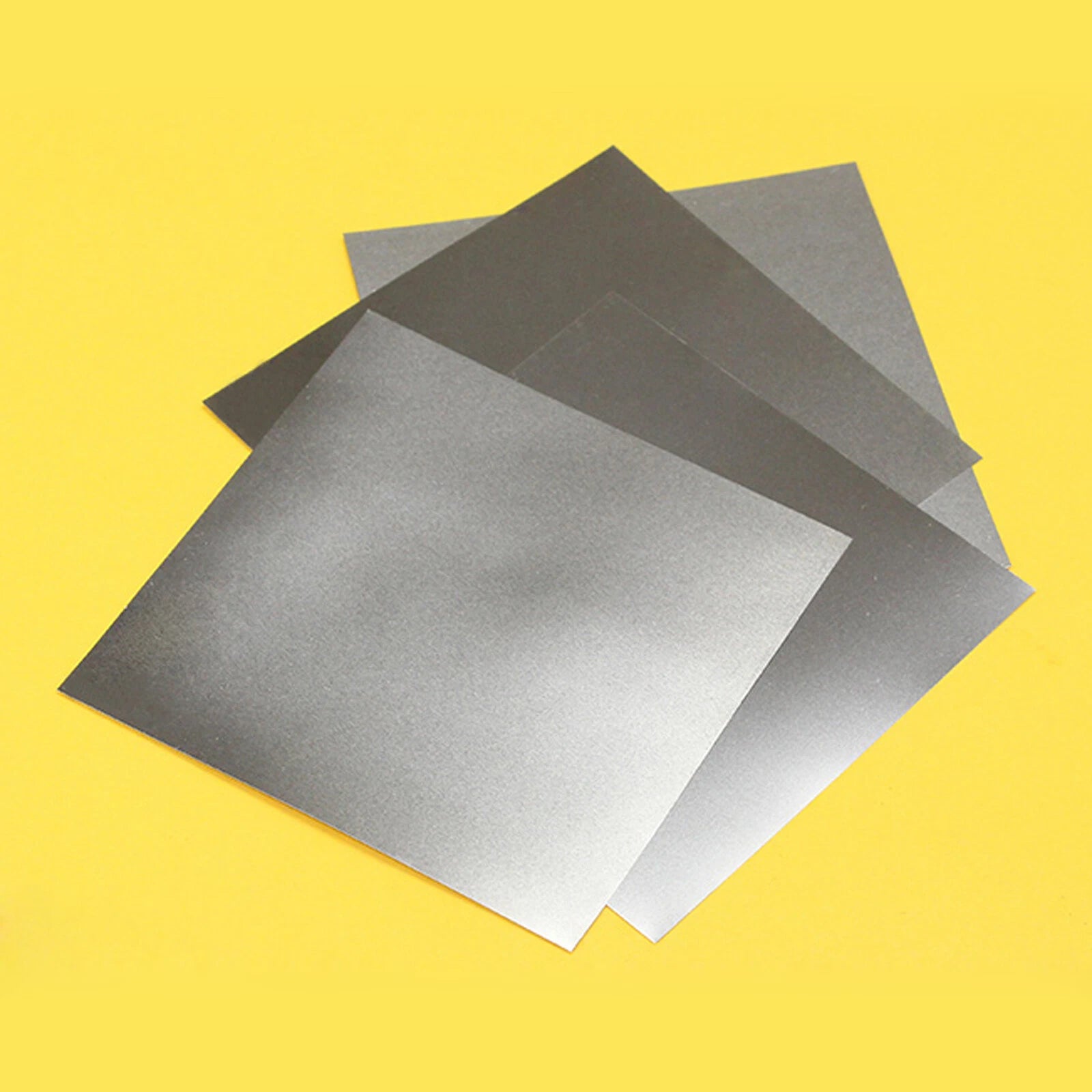
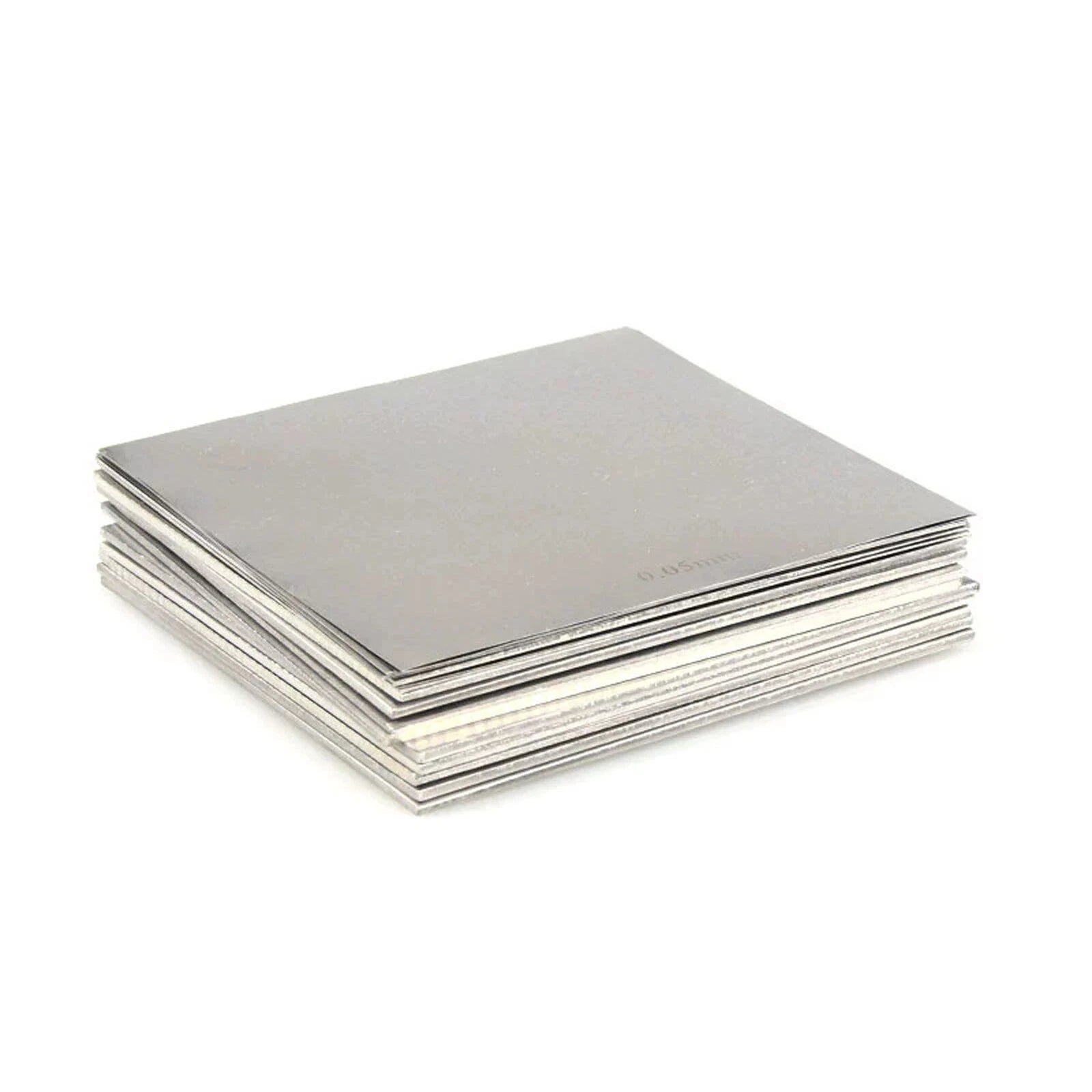
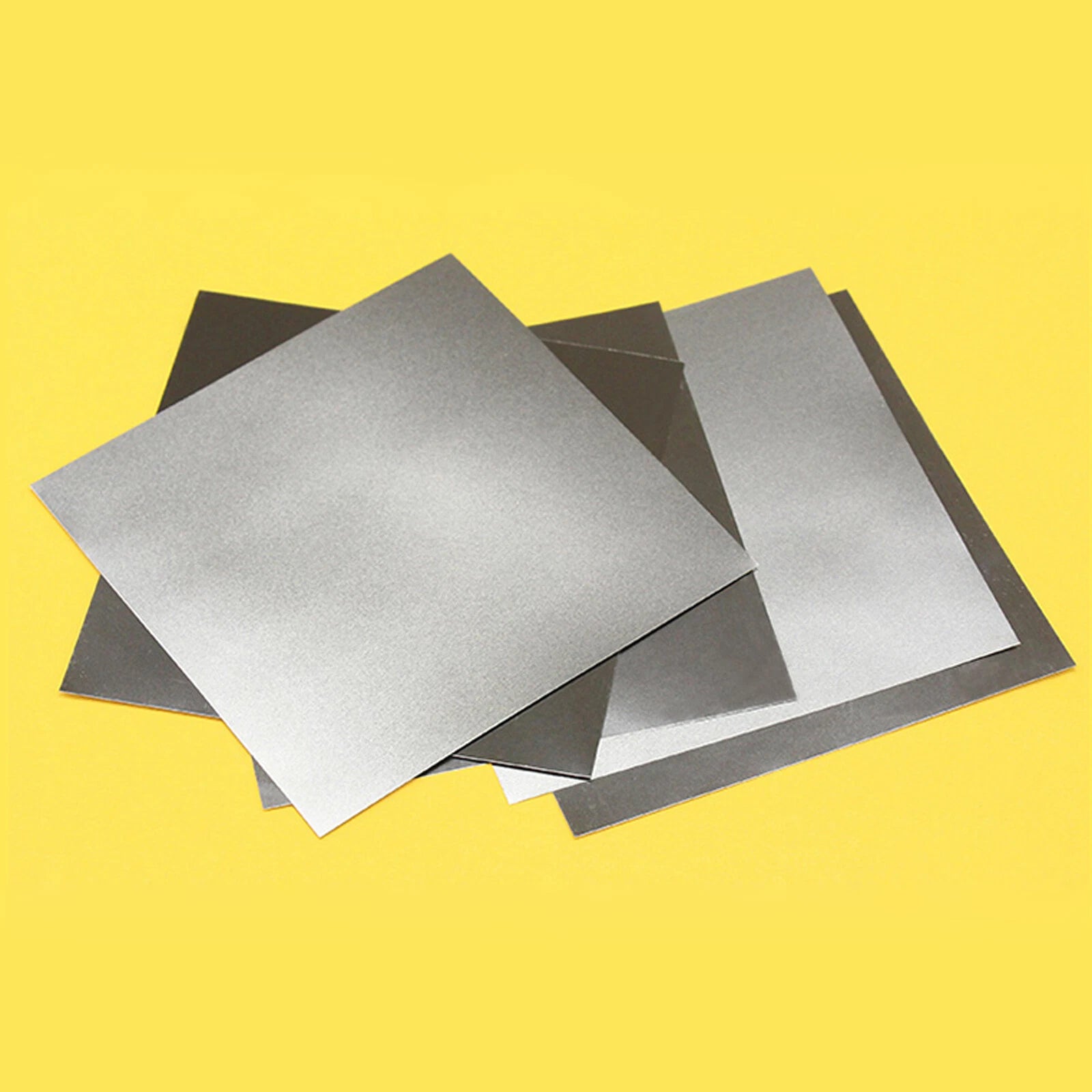
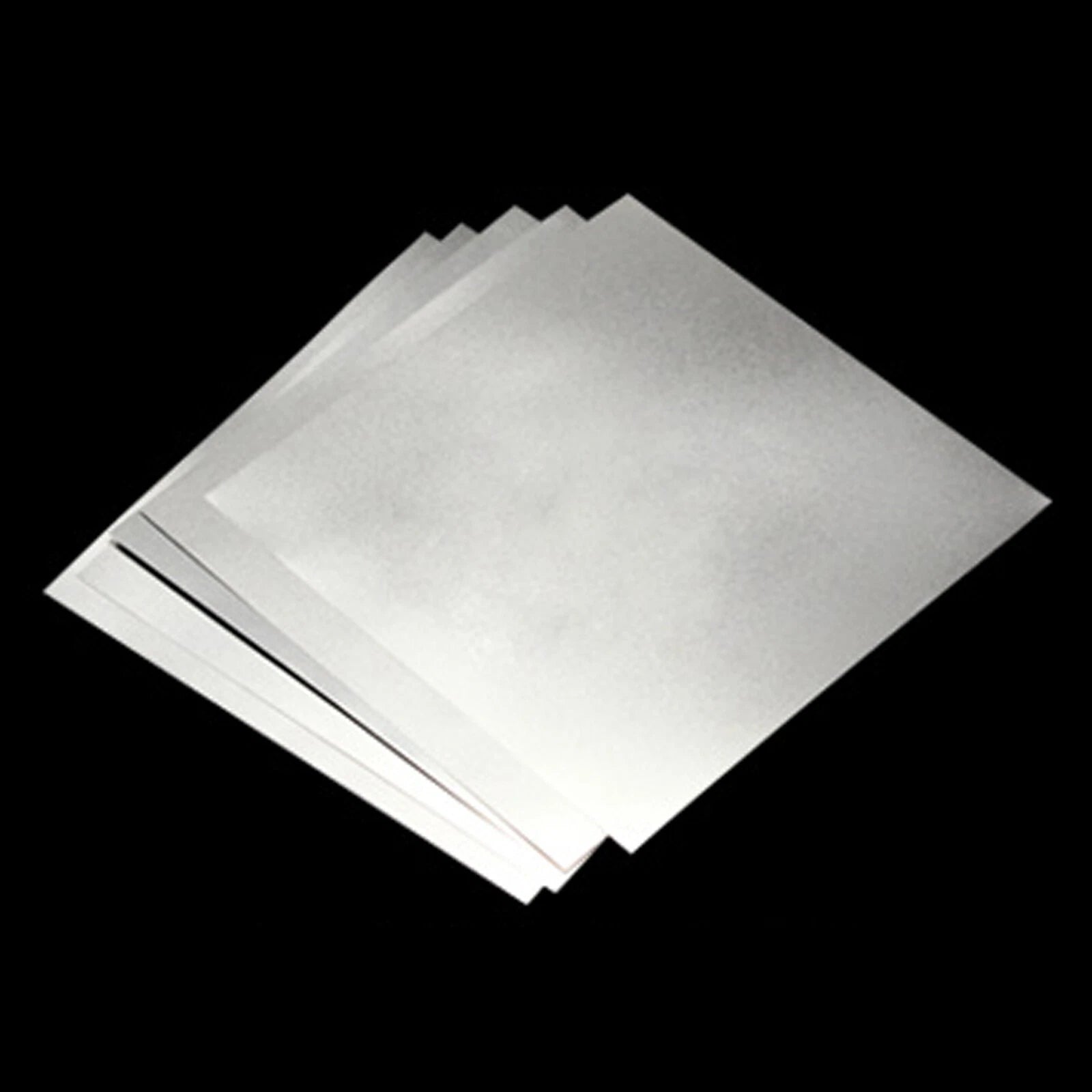
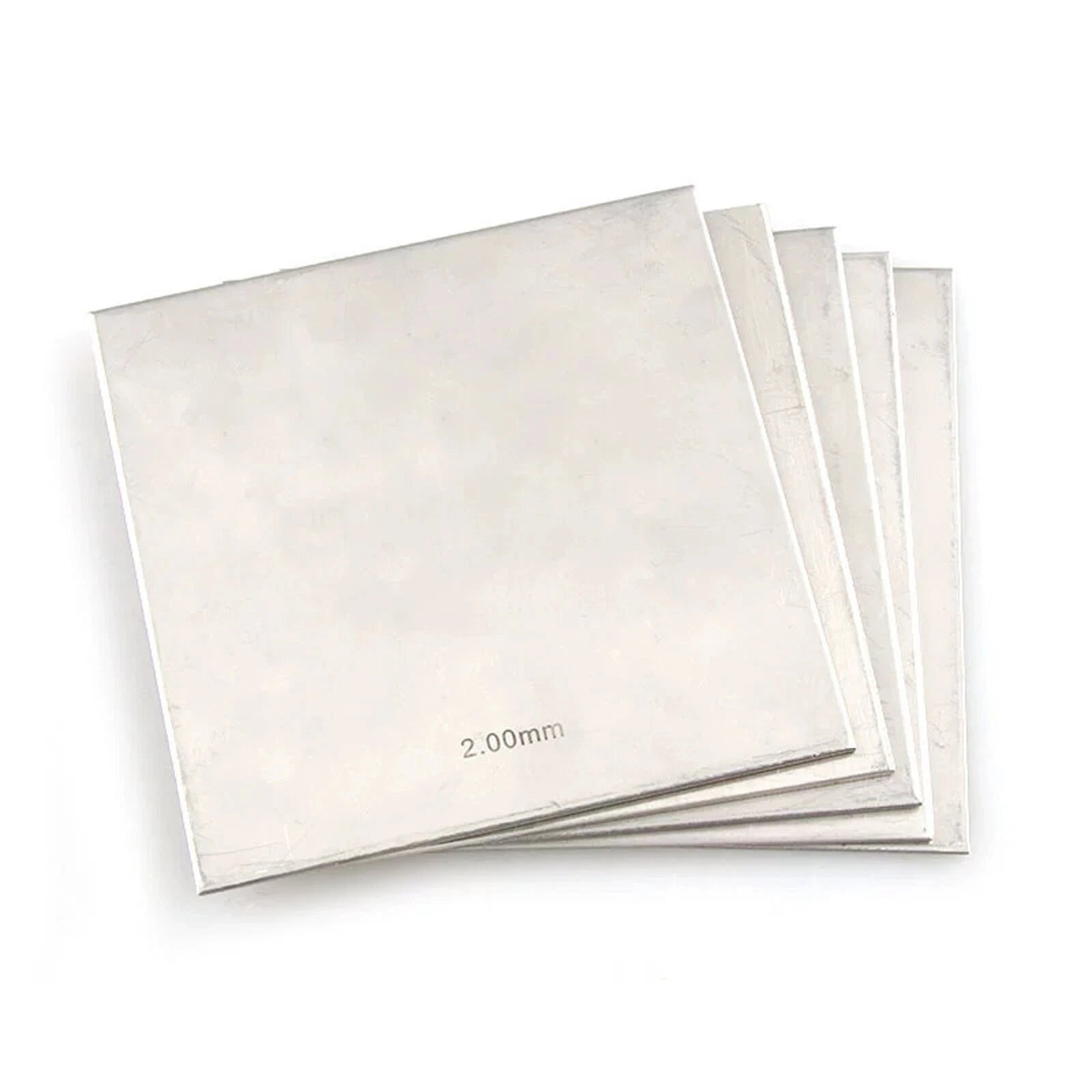
301 Stainless Steel Sheet Metal Sheet Flat Stock Thin Plate Thick 0.01mm-1mm

Keine Bewertungen

Preis:
Sonderpreis$5.83 USD
Lagerbestand:
Verfügbar (500 Stück), versandbereit

Payment & Security

Ach Direct Debit Amazon American Express Apple Pay Bancontact Diners Club Discover Google Pay iDEAL Wero Mastercard PayPal Shop Pay USDC Visa

Deine Zahlungsinformationen werden sicher verarbeitet. Wir speichern keine Kreditkartendaten und haben auch keinen Zugang zu deinen Kreditkartendaten.

Quantity Discount Promotion
🎯 BULK DISCOUNT: Buy More, Save More!
Buy 2 Items
5% OFF
Buy 4 Items
10% OFF
Buy 6 Items
15% OFF
Expert

DIY Expert Support

Get fitment advice & recommendations

Mon-Fri, 8:30AM-8PM
24-Hour Fast Ship
🚚
Arrives in 3-14 days
🌍
Global Reach
↩️
30-Day Returns
🌱 1 tree planted with every purchase

Beschreibung

301 Stainless Steel Sheet — Precision Thin Flat Stock for Fabrication & DIY Projects

When a project demands a metal sheet that holds tight tolerances without adding unnecessary bulk, finding the right thin-gauge flat stock can be a real challenge. Hobbyists, model makers, electronics fabricators, and workshop professionals all share the same frustration: standard hardware store sheets are too thick, too rough, or cut to sizes that waste material. These 301 stainless steel sheet panels are stocked specifically for applications where thickness precision — down to 0.01 mm — makes a measurable difference in the finished result.

Each sheet is cut from 301-grade austenitic stainless steel, a work-hardening alloy known for its combination of strength, spring-back resilience, and corrosion resistance. Thickness options span 0.01 mm to 1 mm (approximately 0.0004 in to 0.039 in), with planar dimensions ranging from 100 × 100 mm (roughly 3.94 × 3.94 in) up to 300 × 300 mm (approximately 11.81 × 11.81 in). Surfaces are mill-finished and flat, ready for cutting, bending, or further processing.

Typical use cases include shim stock and precision gap-filling in mechanical assemblies, thin backing plates for electronics enclosures and PCB shields, spring-temper blanks for custom clips and retaining tabs, decorative inlay panels in woodworking and furniture projects, and replacement flat stock for small appliance repair or model engineering. The wide thickness range makes these sheets equally useful for ultra-thin foil-like applications and for structural sheet-metal work within the 1 mm ceiling.

🔩 Compatibility note: These sheets are uncoated 301 stainless steel and are not pre-drilled or pre-formed. They are compatible with standard metal-cutting tools (tin snips, laser cutters, waterjet, CNC routers with appropriate bits). Not recommended as a direct replacement for 304 or 316 grade where elevated corrosion resistance in harsh chemical environments is required — confirm grade suitability before ordering.

✅ Key Features of These 301 Stainless Steel Sheets

  • 📏Ultra-thin gauge range: Thickness options from 0.01 mm to 1 mm give you precise control over weight, flexibility, and structural contribution — choose the exact gauge your design calls for.
  • 🔄Work-hardening resilience: 301 stainless work-hardens during forming, which means bent tabs and spring clips gain strength after shaping — useful for retaining features that need to hold their position under repeated stress.
  • 🛡️Corrosion-resistant surface: The chromium content in 301 stainless forms a passive oxide layer that resists rust and surface oxidation in typical indoor and light outdoor environments, reducing the need for additional coatings.
  • ✂️Multiple sheet sizes available: Planar dimensions from 100 × 100 mm up to 300 × 300 mm let you select the closest match to your project footprint, minimising offcut waste.
  • 🔧Mill-flat surface finish: Sheets arrive with a consistent mill finish — flat, clean, and free of heavy scale — so they can be used directly or finished further with sanding, polishing, or coating as needed.
  • 📦Single-piece ordering: Each variant is sold per piece, so you can order exactly the quantity you need without committing to bulk packs — practical for prototyping, repair, or small-batch production.

📐 Technical Specifications — 301 Stainless Steel Sheet

Material Grade 301 Austenitic Stainless Steel
Thickness Range 0.01 mm – 1.00 mm (approx. 0.0004 in – 0.039 in)
Width Options 100 mm, 200 mm, 300 mm (approx. 3.94 in, 7.87 in, 11.81 in)
Length Options 100 mm, 300 mm (approx. 3.94 in, 11.81 in)
Surface Finish Mill finish (uncoated, unpolished)
Chromium Content Typically 16–18% (per 301 specification)
Nickel Content Typically 6–8% (per 301 specification)
Temper / Condition See variant options
Tensile Strength Typically 515–860 MPa depending on temper
Magnetic Properties Slightly magnetic when cold-worked
Sold As 1 piece per order (select size above)
Pre-drilled / Pre-formed No — flat stock only

❓ Frequently Asked Questions

How do I choose the right thickness for my project?

For shim and gap-filling applications, thicknesses between 0.01 mm and 0.1 mm are typical. For spring clips and retaining tabs that need to flex and return, 0.2 mm – 0.5 mm is a common starting range. For structural backing plates or panels that need to resist bending under load, 0.5 mm – 1 mm is generally more appropriate. If you are unsure, start with a mid-range thickness and test deflection before committing to a final gauge.

Is 301 stainless steel strong enough for load-bearing applications?

301 stainless steel has a tensile strength that typically ranges from around 515 MPa in the annealed condition up to 860 MPa or higher in the full-hard condition, depending on the degree of cold work. For light structural brackets, spring elements, and retaining features, it performs well. For heavy structural load-bearing applications, consult an engineer to confirm the specific temper and thickness meet your load requirements.

Will these sheets rust or corrode outdoors?

301 stainless steel forms a passive chromium oxide layer that resists rust in typical indoor and light outdoor environments. However, it is not as corrosion-resistant as 304 or 316 grades. In environments with prolonged exposure to salt spray, chlorides, or aggressive chemicals, surface staining or pitting may occur over time. For marine or chemical-process environments, consider 316 grade instead.

Can I cut these sheets with standard tools?

Yes. Thin gauges (under 0.3 mm) can be cut with sharp tin snips or a craft knife and straightedge. Mid-range gauges (0.3 mm – 0.7 mm) work well with aviation snips, a nibbler, or a laser cutter. Thicker gauges up to 1 mm are suitable for waterjet cutting, plasma cutting, or CNC routing with carbide tooling. Always use cutting fluid or coolant when machining to extend tool life and reduce work-hardening at the cut edge.

What is the difference between 301 and 304 stainless steel sheets?

Both are austenitic stainless steels, but 301 has a lower nickel content (6–8% vs. 8–10.5% in 304), which makes it more prone to work-hardening during forming. This is actually an advantage for spring and clip applications where you want the part to stiffen after bending. 304 offers slightly better corrosion resistance and is more commonly specified for food-contact and chemical-exposure applications. Choose 301 when spring-back strength matters; choose 304 when corrosion resistance is the priority.

How do I select the right sheet size to minimise waste?

Measure your finished part dimensions and add at least 5–10 mm on each edge to allow for clamping, cutting kerf, and any edge cleanup. Then select the smallest available sheet size that covers your layout. For example, if your part is 85 × 85 mm, the 100 × 100 mm sheet is the most efficient choice. If you are nesting multiple parts, sketch a layout first to confirm they all fit within the chosen sheet dimensions before ordering.

Can these sheets be welded or soldered?

301 stainless steel can be welded using TIG or MIG processes with appropriate stainless filler wire (ER308L is commonly used). For very thin gauges (under 0.1 mm), laser welding or resistance spot welding is more practical to avoid burn-through. Soldering is possible with stainless-compatible flux and silver-bearing solder, though the joint strength will be lower than a welded connection. Always clean the surface thoroughly before welding or soldering to remove any oils or contaminants.

🛒 Select your thickness, width, and length above, then add to cart.

You may also like

Recently viewed