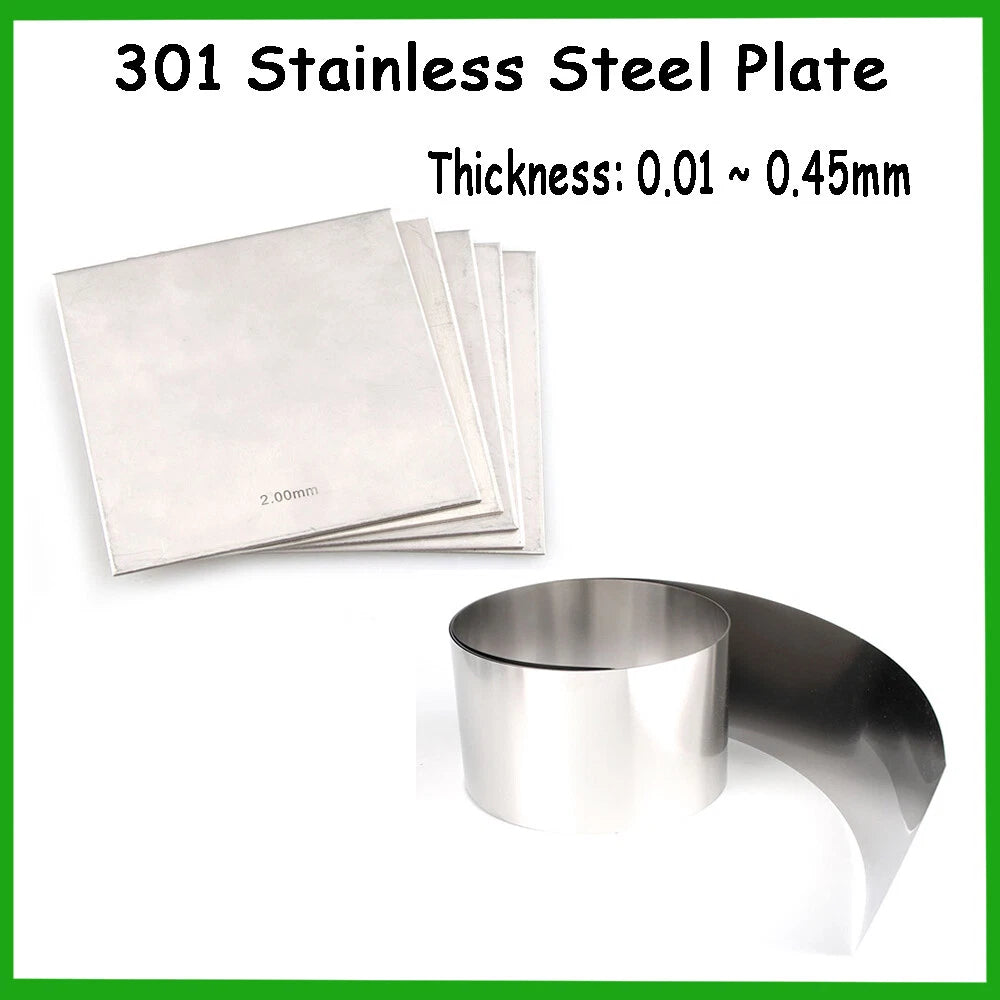
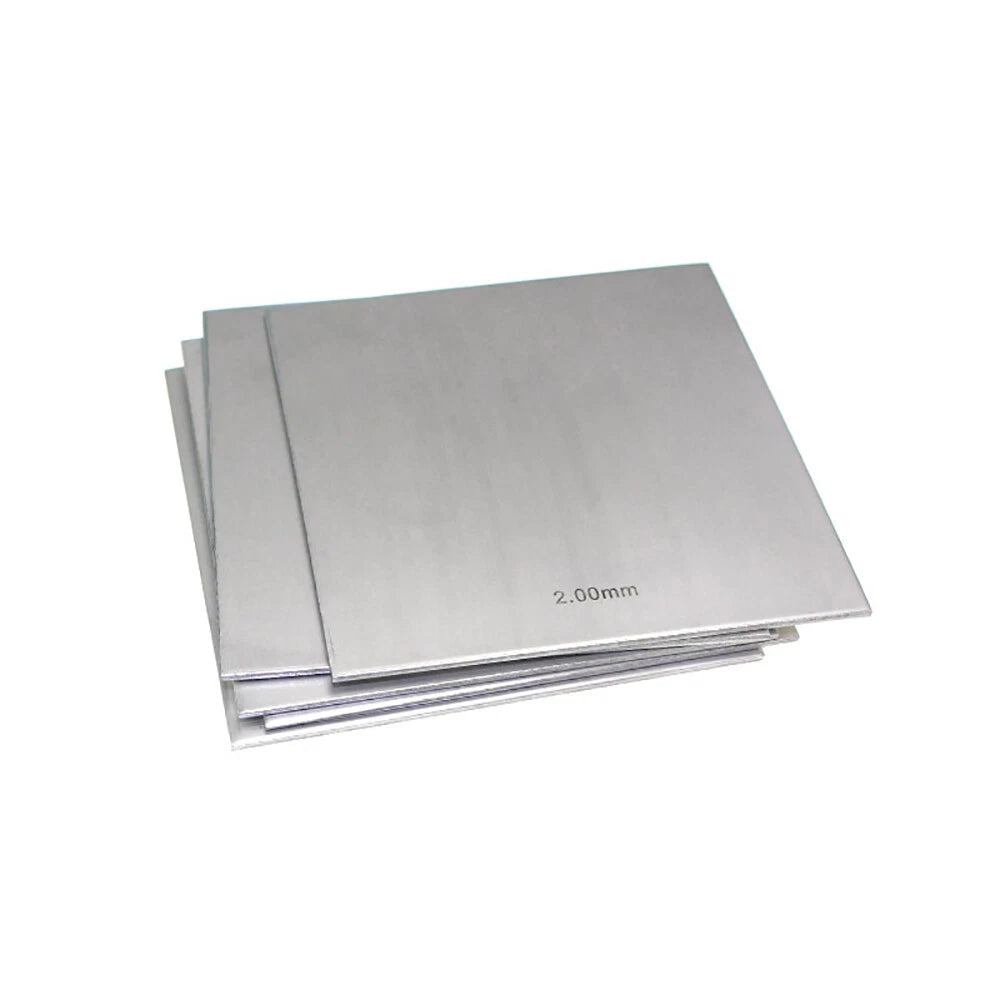
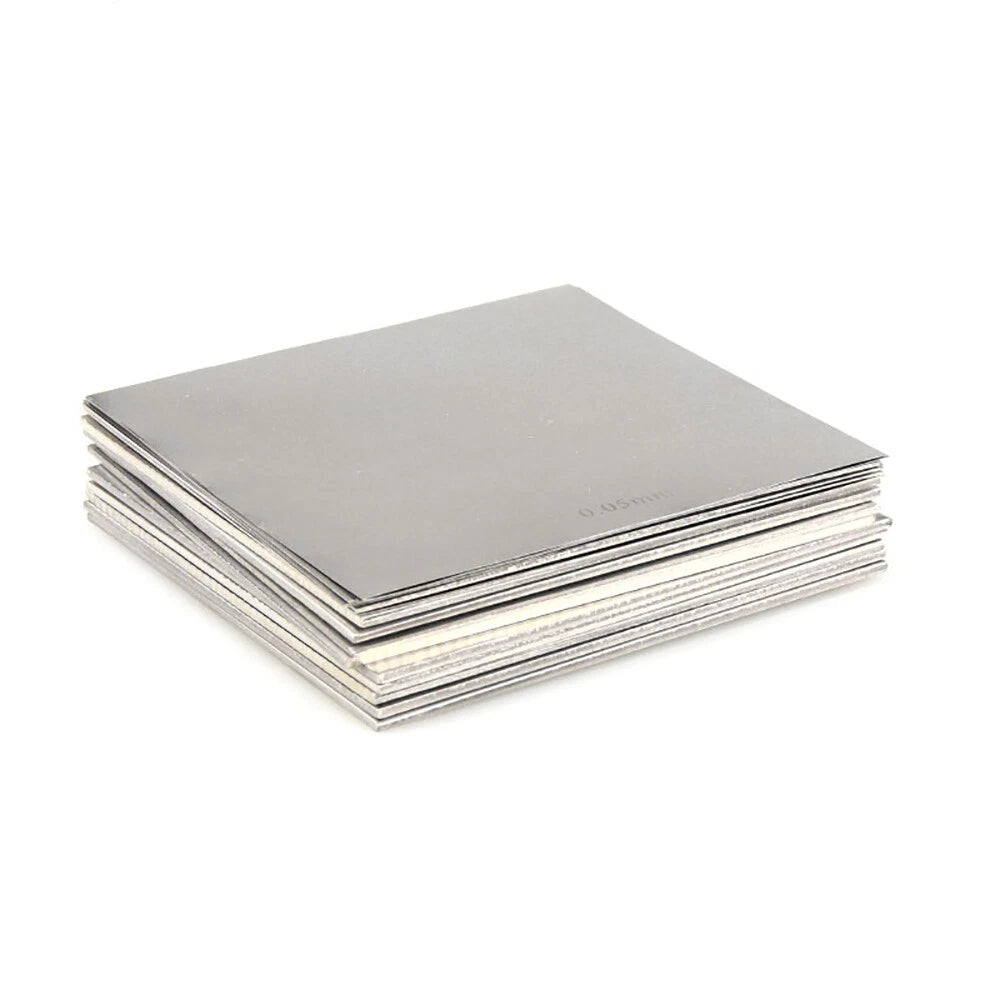
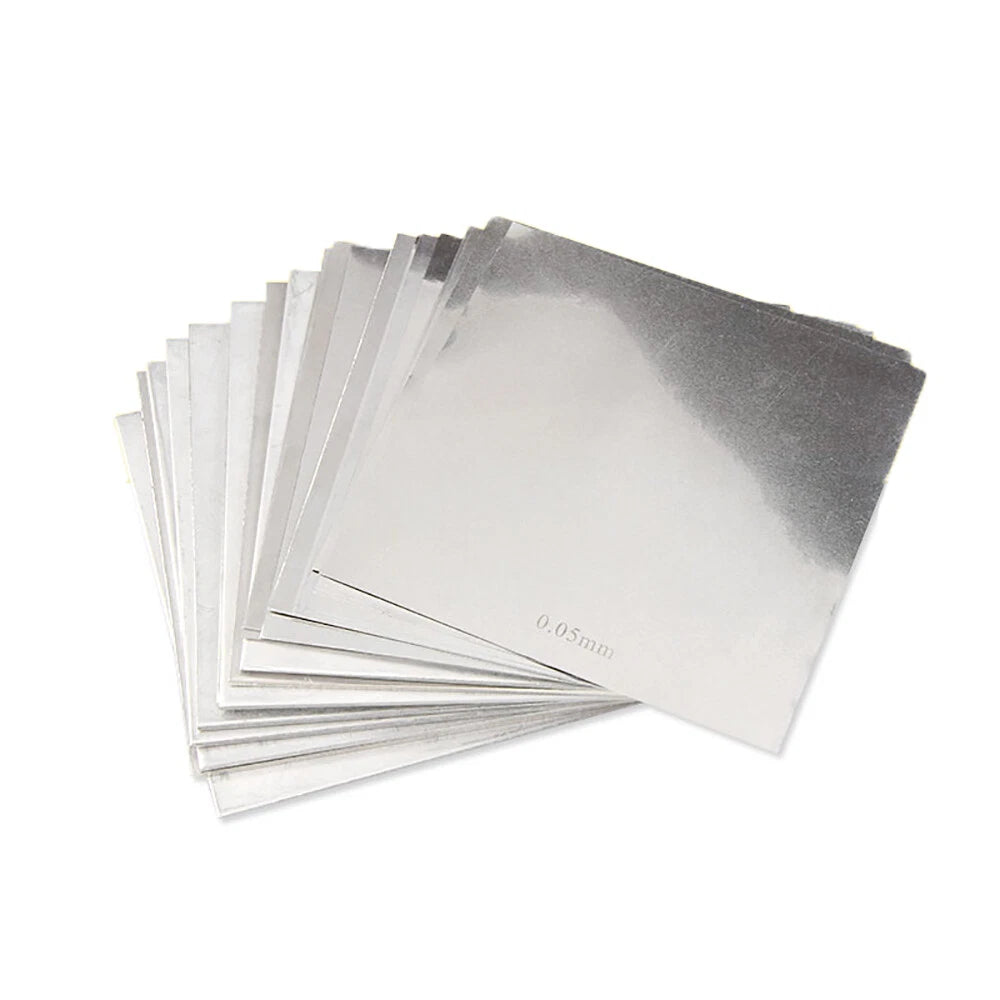
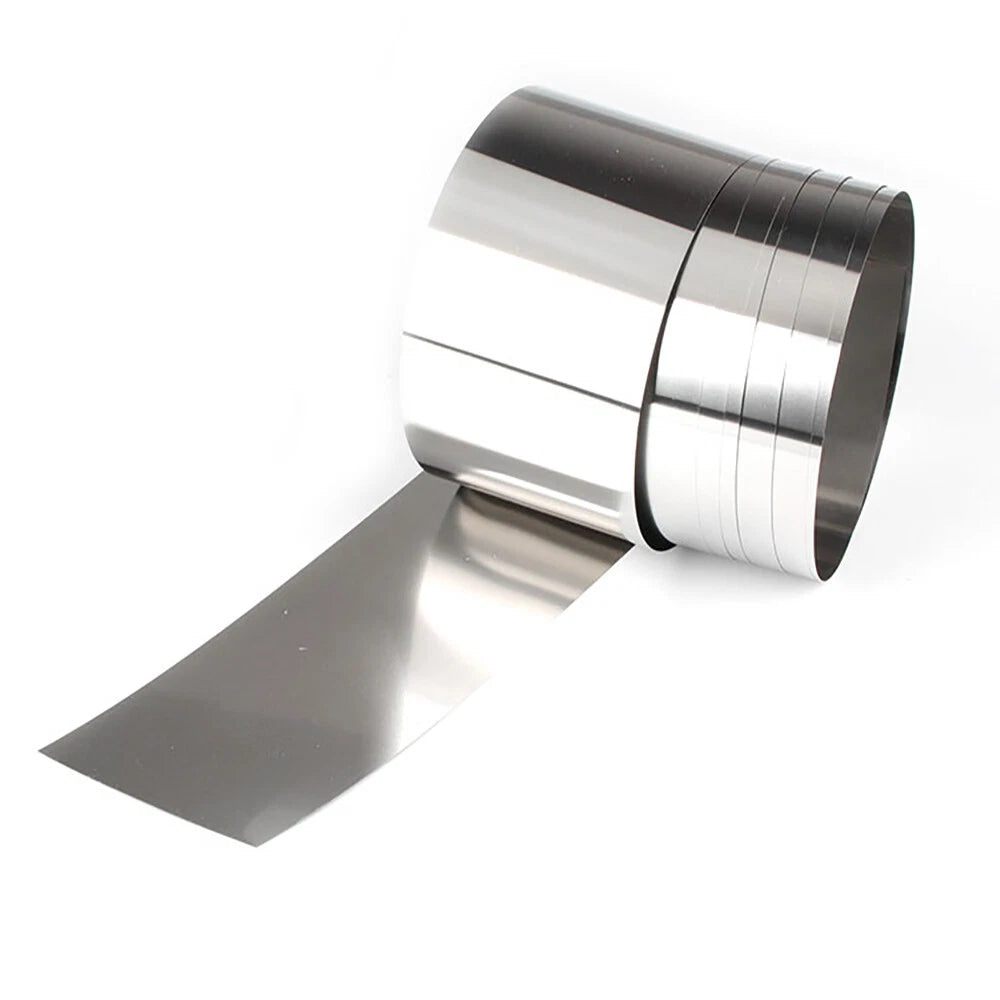
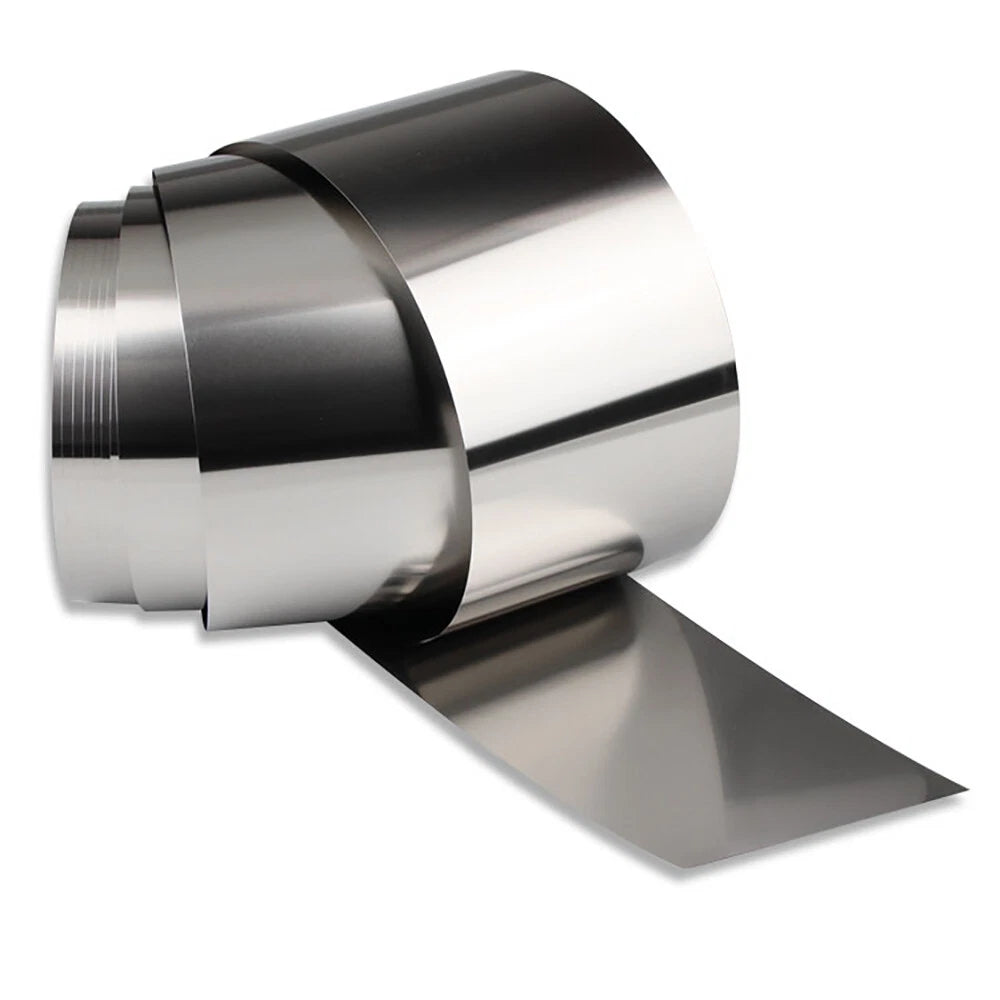
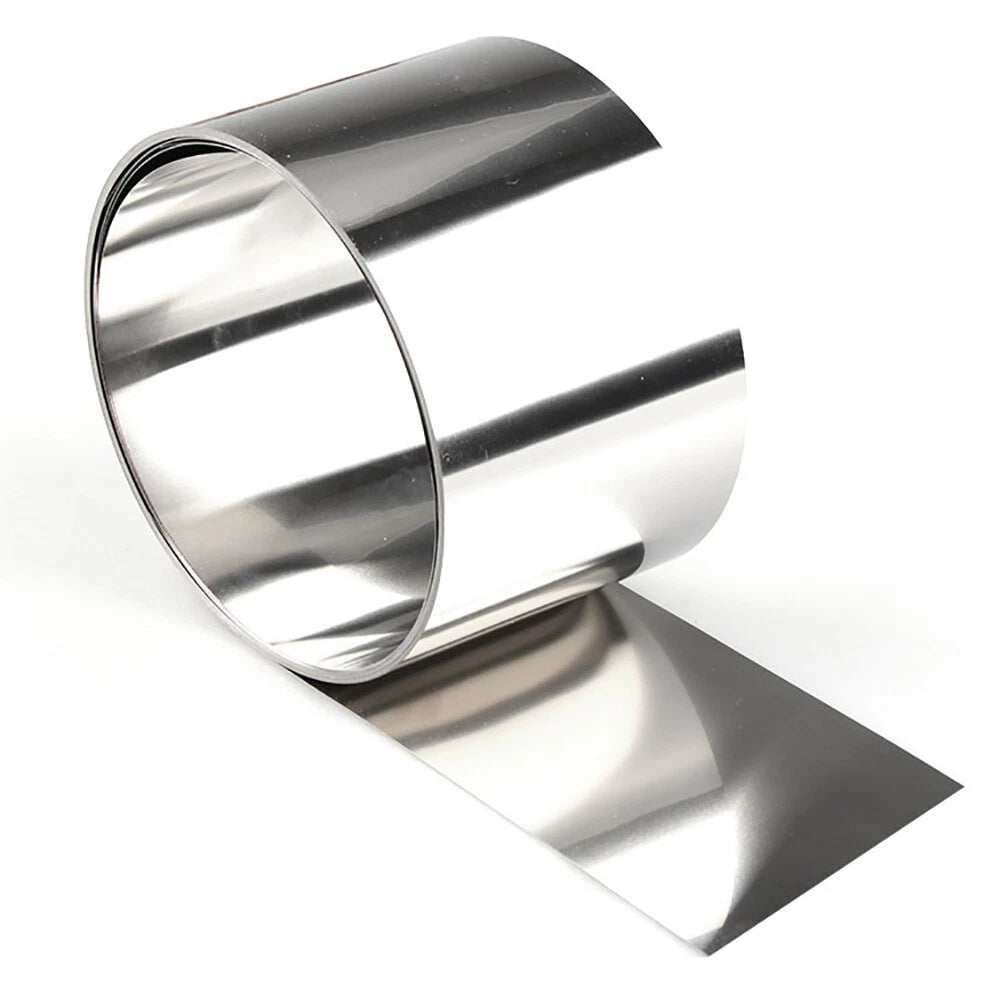
301 Stainless Steel Sheet — 0.01mm to 0.45mm Thin Metal Plate, Multiple Sizes

Keine Bewertungen

Preis:
Sonderpreis$10.16 USD
Lagerbestand:
Verfügbar (500 Stück), versandbereit

Payment & Security

Ach Direct Debit Amazon American Express Apple Pay Bancontact Diners Club Discover Google Pay iDEAL Wero Mastercard PayPal Shop Pay USDC Visa

Deine Zahlungsinformationen werden sicher verarbeitet. Wir speichern keine Kreditkartendaten und haben auch keinen Zugang zu deinen Kreditkartendaten.

Quantity Discount Promotion
🎯 BULK DISCOUNT: Buy More, Save More!
Buy 2 Items
5% OFF
Buy 4 Items
10% OFF
Buy 6 Items
15% OFF
Expert

DIY Expert Support

Get fitment advice & recommendations

Mon-Fri, 8:30AM-8PM
24-Hour Fast Ship
🚚
Arrives in 3-14 days
🌍
Global Reach
↩️
30-Day Returns
🌱 1 tree planted with every purchase

Beschreibung


301 Stainless Steel Thin Sheet — Precision Flat Metal Plate for Fabrication, Shimming & DIY Projects

Whether you're a machinist chasing a precise tolerance gap, a hobbyist building a custom enclosure, or a fabricator needing a reliable flat metal blank, sourcing a thin stainless steel sheet in the exact thickness you need is rarely straightforward. Off-the-shelf hardware store stock is limited to a handful of gauges, and ordering custom-cut material often means long lead times and minimum order quantities that don't make sense for small runs.

Each sheet is made from 301 stainless steel — a chromium-nickel alloy known for its higher tensile strength and spring-back resilience compared to standard 304 grade. Sheets are available in thicknesses from 0.01mm (≈0.0004") to 0.45mm (≈0.018"), with width × length options spanning 100×100mm (≈3.9"×3.9") up to 300×1000mm (≈11.8"×39.4"). All dimensions are in millimeters; see the variant selector for the full size matrix.

These thin stainless steel plates are well-suited for precision shimming and gap-filling in mechanical assemblies, DIY spring and clip fabrication, custom RF or EMI shielding panels, lightweight structural brackets in electronics enclosures, and decorative metalwork where a clean, brushed-metal finish is desired.

ℹ️ Compatibility Note: These sheets are uncoated, undrilled flat stock. They are compatible with standard metric and imperial fastener systems when holes are added by the user. Suitable for hand tools, CNC, laser cutting, and waterjet processing.

✅ Key Features of These 301 Stainless Steel Thin Metal Sheets

  • 📏 Ultra-Thin Gauge Range — Available from 0.01mm to 0.45mm thick, covering everything from feeler-gauge shimming to light structural panel work in a single product line.
  • 💪 Work-Hardened Strength — 301 stainless steel in the work-hardened condition typically delivers higher tensile strength than annealed 304, making it a reliable choice for spring clips, flexible brackets, and snap-fit components.
  • 🔧 Machinable & Formable — Thin gauges (≤0.1mm) cut cleanly with metal shears; thicker gauges (0.2mm–0.45mm) respond well to tin snips, nibblers, and bending brakes — no specialized CNC required for basic shapes.
  • 🛡️ Corrosion-Resistant Alloy — The chromium content in 301 stainless steel provides solid oxidation resistance in indoor and low-humidity environments, keeping surfaces clean and rust-free in typical workshop and light industrial conditions.
  • 📐 Multiple Sheet Sizes — Five width × length combinations (from 100×100mm to 300×1000mm) let you select the closest blank size to your finished part, minimizing waste on small-batch fabrication projects.
  • EMI & RF Shielding Ready — The conductive stainless steel surface makes these thin metal plates a practical choice for DIY electromagnetic shielding enclosures, Faraday cage panels, and grounding straps in electronics projects.

📐 Technical Specifications — 301 Stainless Steel Flat Sheet

Material 301 Stainless Steel (Chromium-Nickel Austenitic)
Thickness Range 0.01mm (≈0.0004") — 0.45mm (≈0.018"); see variant options
Width Options 100mm (≈3.9"), 200mm (≈7.9"), 300mm (≈11.8")
Length Options 100mm (≈3.9"), 300mm (≈11.8"), 500mm (≈19.7"), 1000mm (≈39.4")
Surface Finish See variant options / Contact us to confirm
Temper / Condition Typically work-hardened (1/4H to full-hard); contact us to confirm specific temper
Chromium Content Typically 16–18% (per 301 grade standard)
Nickel Content Typically 6–8% (per 301 grade standard)
Tensile Strength Typically 515–1275 MPa depending on temper condition
Magnetic Properties Slightly magnetic when work-hardened (austenitic base)
Pre-Drilled Holes None — flat blank stock; user-drilled or machined
Packing Quantity 1 piece per order (select quantity at checkout)
Country of Origin See variant options / Contact us to confirm
⚠️ Heads up: Dimensions are nominal. Actual thickness may vary by ±10% on ultra-thin gauges (≤0.05mm), which is standard for rolled stainless steel strip. If your application requires tight tolerance, please contact us before ordering.

❓ Frequently Asked Questions

How do I choose the right thickness for my project?

For light shielding, gaskets, or shimming, thicknesses of 0.01mm–0.05mm are typically sufficient. For structural brackets, enclosures, or load-bearing panels, 0.2mm–0.45mm is generally recommended. A good rule of thumb: measure the gap or load requirement first, then select the nearest available thickness. If you're replacing an existing shim or gasket, measure the original part with a micrometer before ordering.

What sheet sizes are available, and how do they convert to inches?

Sheets are available in five width × length combinations: 100×100mm (≈3.9"×3.9"), 100×300mm (≈3.9"×11.8"), 100×500mm (≈3.9"×19.7"), 200×300mm (≈7.9"×11.8"), and 300×1000mm (≈11.8"×39.4"). To convert any dimension: divide mm by 25.4. For thickness: 0.1mm ≈ 0.004", 0.3mm ≈ 0.012", 0.45mm ≈ 0.018".

How strong is 301 stainless steel, and can it handle load-bearing applications?

301 stainless steel generally offers higher tensile strength than annealed 304, particularly in work-hardened conditions where tensile strength can reach 1275 MPa or more. For thin-sheet applications like spring clips, flexible brackets, and snap-fit parts, 301 is typically a stronger choice than 304 at the same gauge. For heavy structural loads, thicker plate stock (generally >1mm) is recommended — these sheets are best suited for light-to-medium duty applications.

Is this sheet rust-proof and safe for outdoor or humid environments?

301 stainless steel provides good corrosion resistance in most indoor and mildly humid conditions. In most standard workshop, electronics, and light industrial environments, it performs reliably without surface treatment. For prolonged outdoor exposure, coastal environments, or direct contact with chlorides (salt water, pool chemicals), 316 stainless steel is generally a better choice. If you're unsure, contact us and we can advise on the right grade for your application.

What fastener or thread standards are compatible with this sheet?

These are flat blank sheets with no pre-drilled holes or threads. You can add holes to suit any standard fastener system — metric (M2, M3, M4, etc.) or imperial (UNC/UNF). For thin gauges (≤0.1mm), self-tapping screws, rivets, or adhesive bonding are commonly used. Thicker gauges (0.3mm–0.45mm) can accept tapped threads for small metric screws in most cases. Consult a thread engagement chart for your specific fastener size.

Can I cut and bend this sheet with basic hand tools?

Yes, in most cases. Thinner gauges (0.01mm–0.1mm) can typically be cut with sharp metal shears, a utility knife and straightedge, or standard scissors for the very thinnest stock. Bending by hand or with pliers is generally straightforward at these gauges. Thicker sheets (0.2mm–0.45mm) usually require tin snips or a metal nibbler for cutting, and a bending brake or vise-and-mallet setup for accurate folds. Laser cutting and waterjet are also compatible with all gauges.

How do I decide between 301 and 304 stainless steel for my application?

Choose 301 when you need higher strength, better spring-back, or a thinner sheet that still holds its shape under stress — common in clips, springs, flexible shims, and snap-fit enclosures. Choose 304 when corrosion resistance is the top priority and strength is secondary, or when you need to weld the sheet (304 is generally easier to weld). Both grades are non-magnetic in the annealed state, but 301 becomes slightly magnetic when work-hardened.

🛒 Select your material, thickness, and sheet size above, then add to cart — ships from our US warehouse.

You may also like

Recently viewed