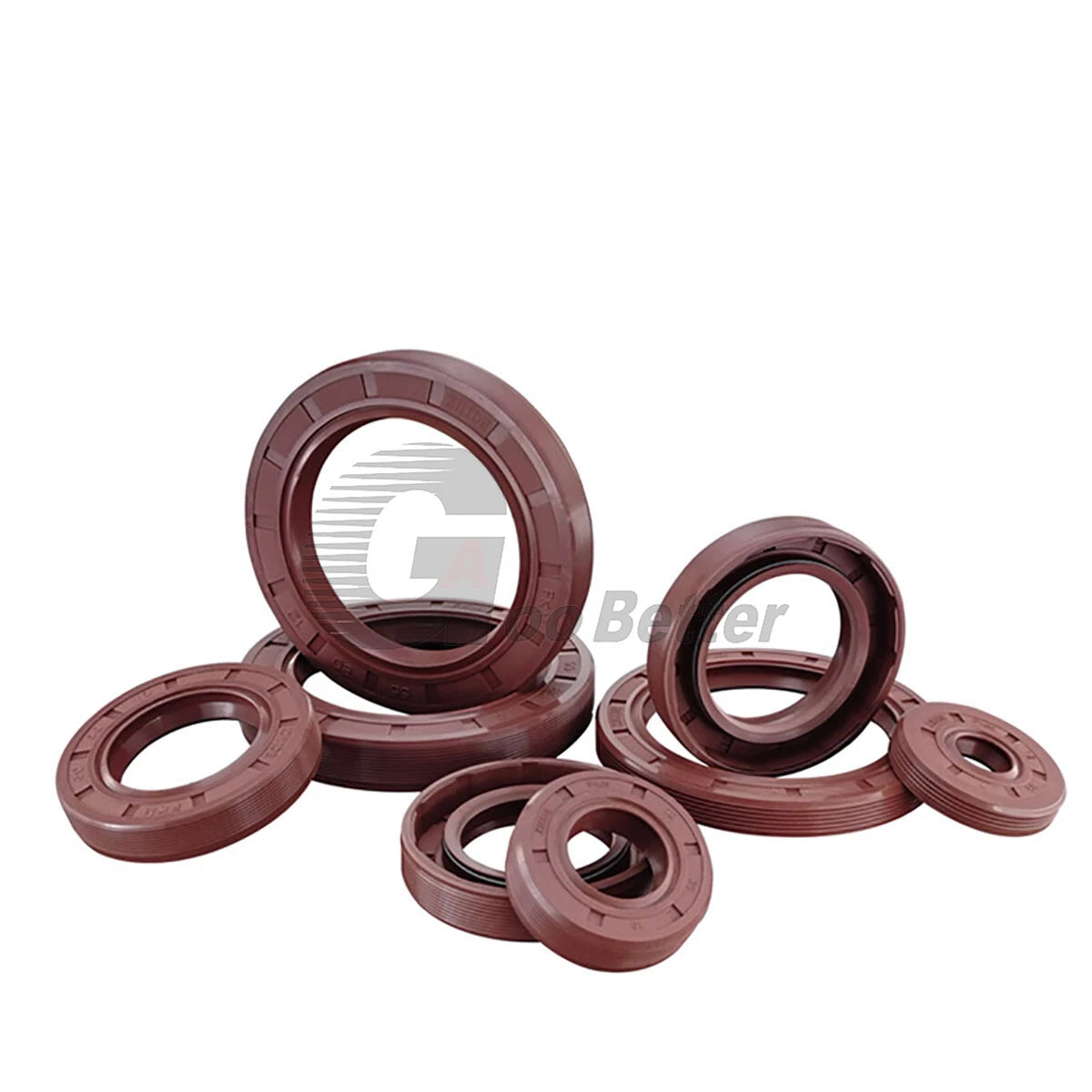
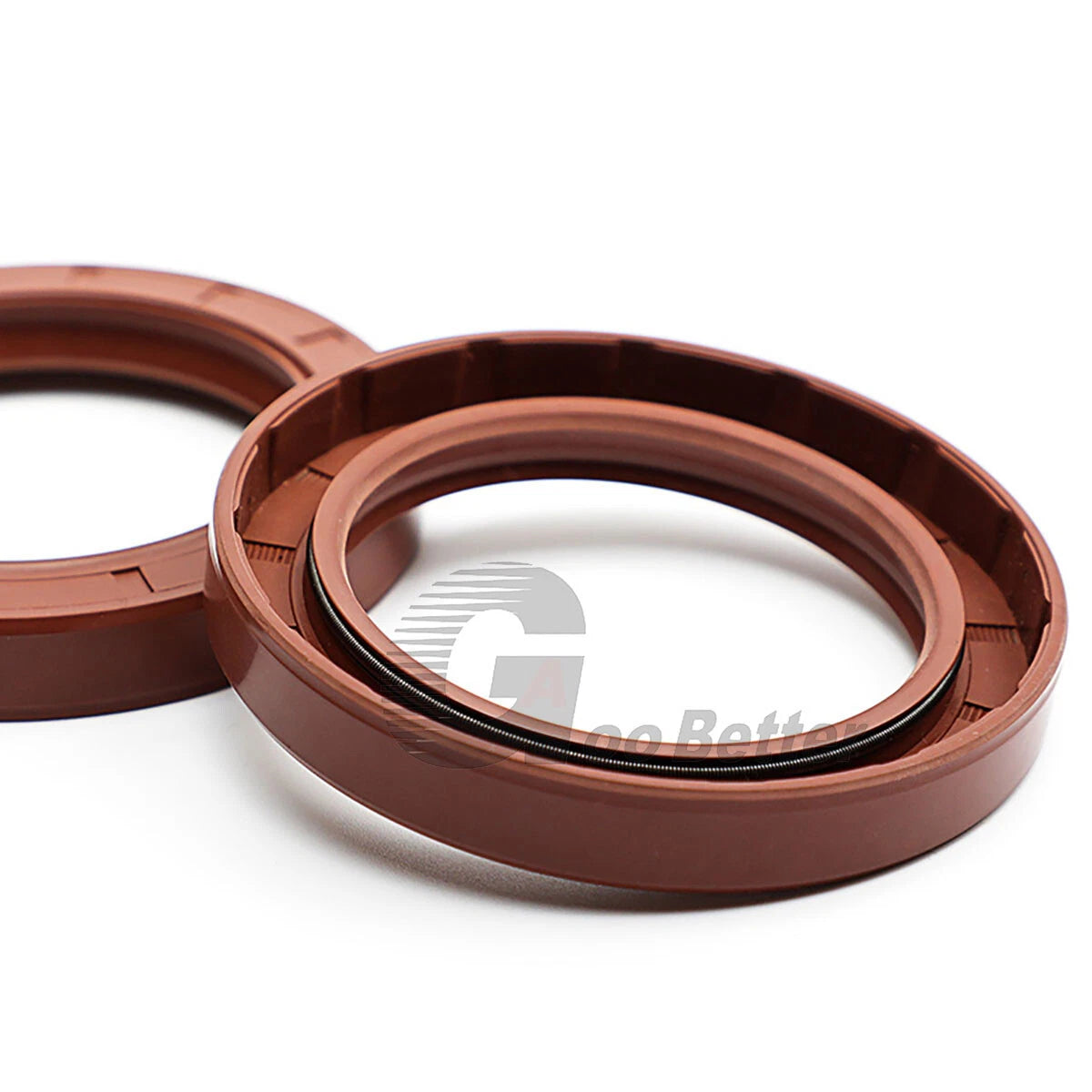
Ø50-120mm TC Skeleton Oil Seal Ring FKM Rubber Double Lip Seals for Rotary Shaft

Keine Bewertungen

Preis:
Sonderpreis$16.17 USD
Lagerbestand:
Verfügbar (500 Stück), versandbereit

Payment & Security

Ach Direct Debit Amazon American Express Apple Pay Bancontact Diners Club Discover Google Pay iDEAL Wero Mastercard PayPal Shop Pay USDC Visa

Deine Zahlungsinformationen werden sicher verarbeitet. Wir speichern keine Kreditkartendaten und haben auch keinen Zugang zu deinen Kreditkartendaten.

Quantity Discount Promotion
🎯 BULK DISCOUNT: Buy More, Save More!
Buy 2 Items
5% OFF
Buy 4 Items
10% OFF
Buy 6 Items
15% OFF
Expert

DIY Expert Support

Get fitment advice & recommendations

Mon-Fri, 8:30AM-8PM
24-Hour Fast Ship
🚚
Arrives in 3-14 days
🌍
Global Reach
↩️
30-Day Returns
🌱 1 tree planted with every purchase

Beschreibung

TC Skeleton Oil Seal Ring — FKM Double Lip Protection for Rotary Shafts

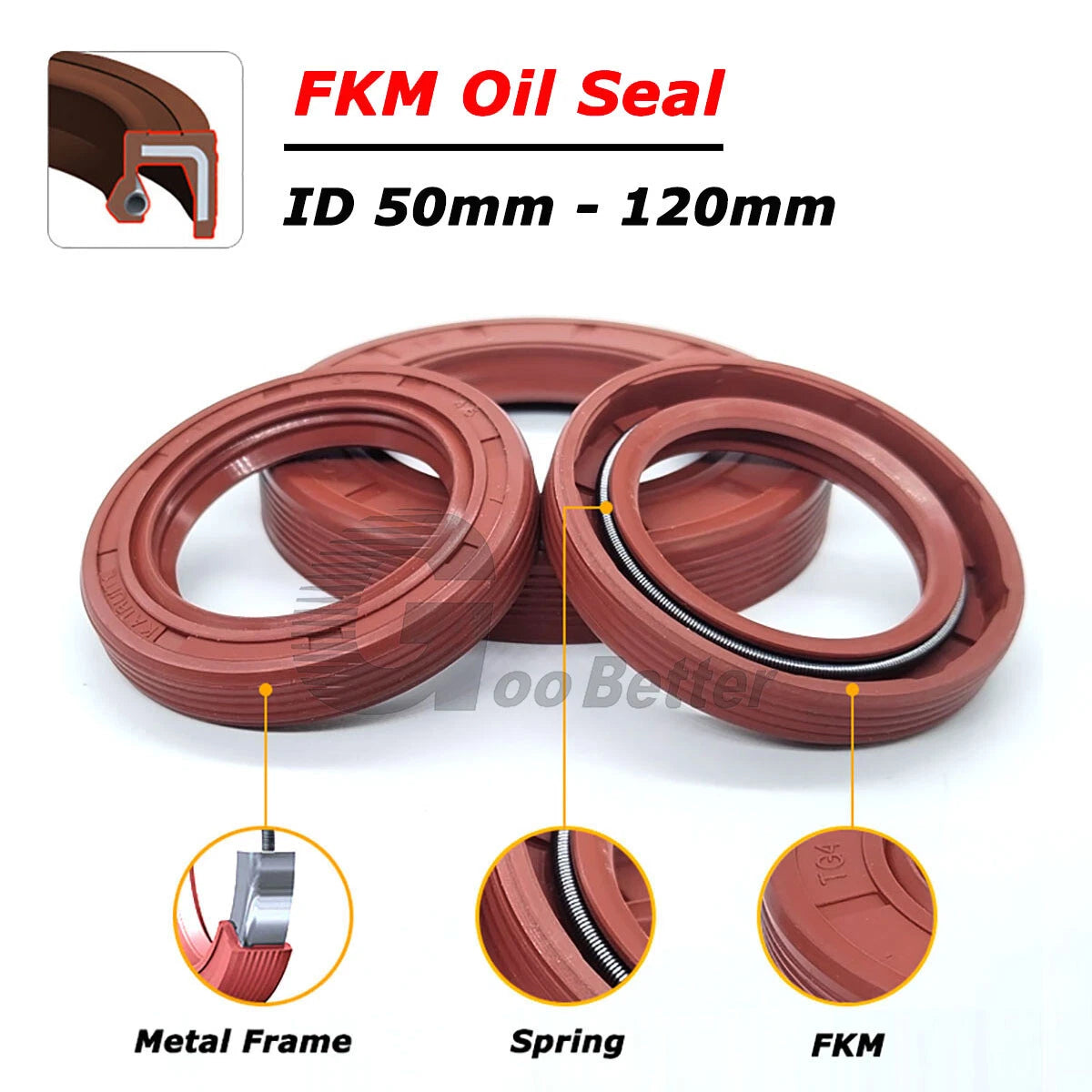
When a worn or undersized shaft seal lets lubricant escape and contaminants in, the damage compounds fast — bearings run dry, housings corrode, and downtime follows. These TC skeleton oil seal rings are sized for rotary shaft applications where reliable sealing matters: agricultural equipment, industrial gearboxes, hydraulic pumps, automotive axles, and general machinery with rotating shafts.

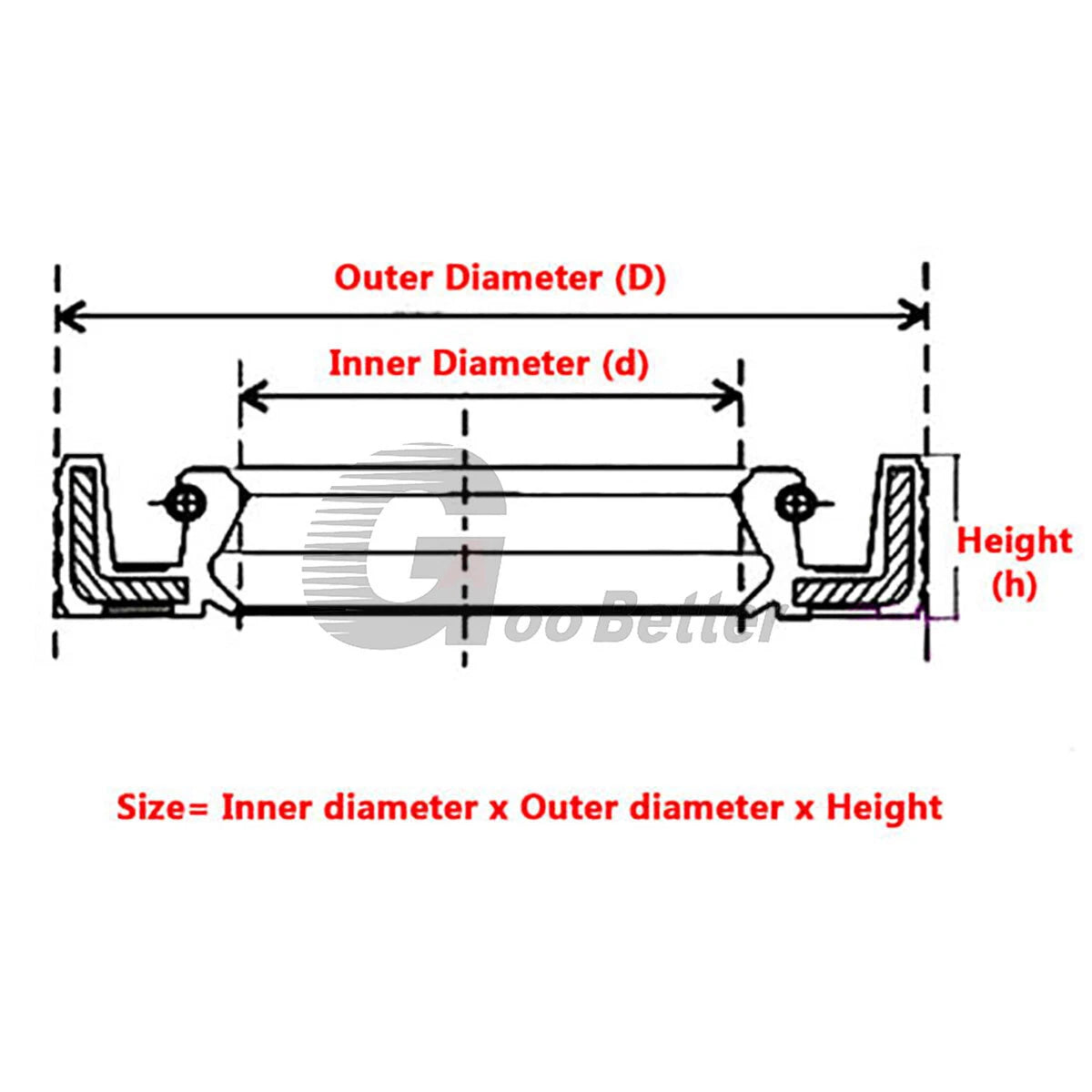
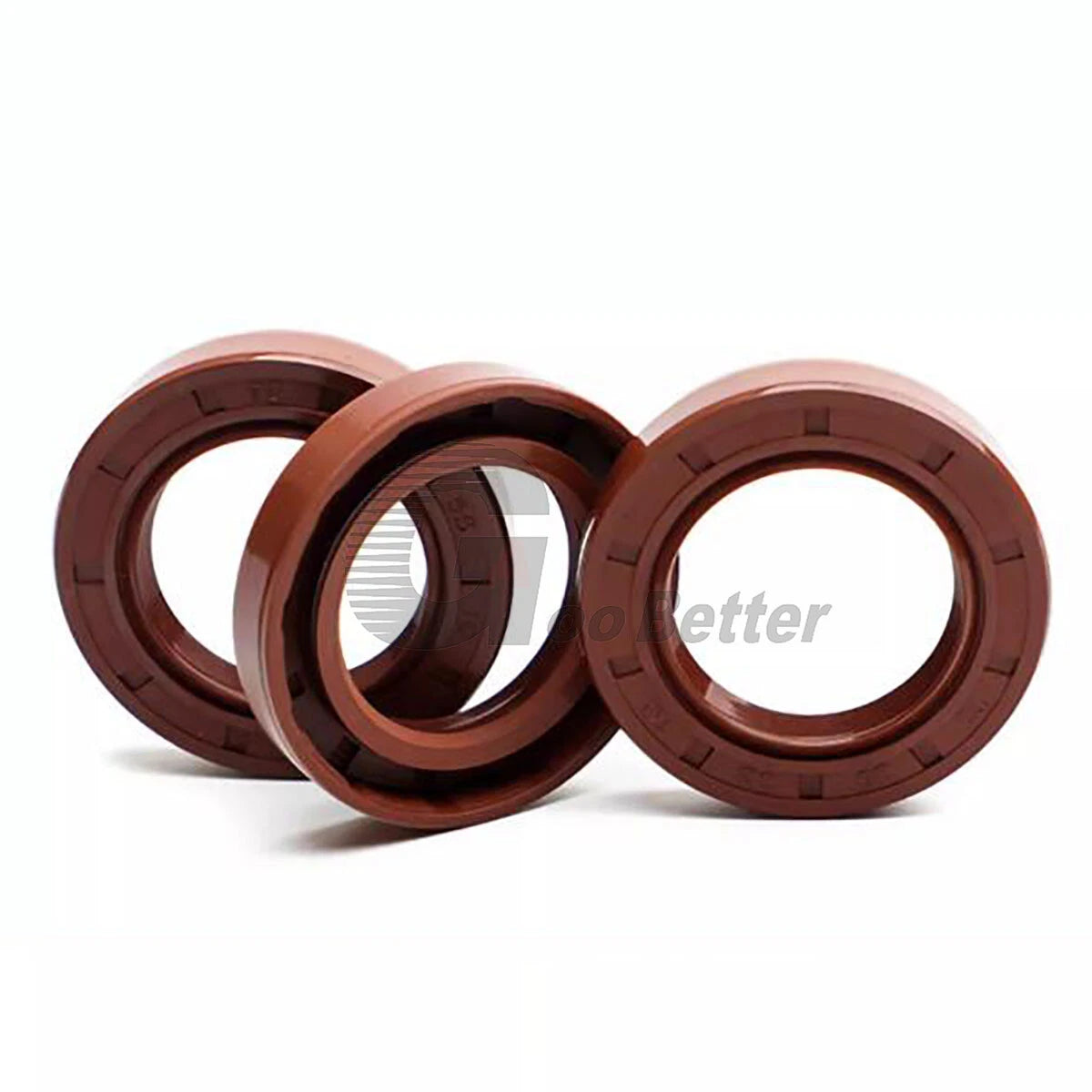
Each TC skeleton oil seal ring is built around a steel-reinforced skeleton frame bonded to an FKM (fluoroelastomer) rubber body. The double-lip design features a primary sealing lip that retains lubricant and a secondary dust lip that blocks particulate ingress. Inner diameters span 50–120mm (approx. 1.97"–4.72"), with outer diameters and heights varying by variant — see the size selector above for the exact ID × OD × Height combination you need.

Typical use cases include replacing seals on tractor PTO shafts, sealing pump impeller housings in chemical-handling environments, and maintaining gearbox output shafts on conveyor drives. The FKM compound's resistance to petroleum-based oils, synthetic lubricants, and elevated operating temperatures makes these TC oil seal rings a dependable choice where standard NBR seals degrade prematurely.

⚙️ Compatibility Note: These seals follow standard TC dimensional conventions. Verify your shaft's ID, housing bore (OD), and groove depth (Height) before ordering. Shaft surface finish of Ra 0.2–0.4 µm is recommended for optimal lip sealing.

✅ Key Features of These TC Skeleton Oil Seal Rings

🔩Steel-Reinforced Skeleton Frame
A rigid steel insert maintains the seal's circular geometry under housing press-fit loads, preventing distortion that causes bypass leakage.
🧪FKM Fluoroelastomer Rubber Body
FKM withstands continuous operating temperatures typically up to 200 °C (392 °F) and resists petroleum oils, synthetic lubricants, and many chemical media where NBR fails.
💧Double-Lip TC Design
The primary lip retains grease or oil on the inboard side; the secondary dust lip faces outward to block dirt, water, and abrasive particles from reaching the bearing.
📐Wide Size Range — 50 to 120mm ID
150 size variants covering ID × OD × Height combinations from 50 × 60 × 7mm up to 120 × 145 × 15mm, matching a broad range of shaft and housing configurations.
🔄Direct-Replacement Fit
Dimensions follow standard TC seal conventions, making these suitable as drop-in replacements for OEM seals in agricultural, industrial, and automotive applications without machining.
🛠️Press-Fit Installation
The outer metal case is designed for interference-fit installation into a standard bore housing. Use a seal driver or flat press plate to seat evenly — avoid hammering directly on the rubber lip.

📐 Technical Specifications — TC Skeleton Oil Seal Ring

Seal Type TC (Double Lip with Dust Lip)
Inner Diameter (ID) 50–120mm (approx. 1.97"–4.72")
Outer Diameter (OD) See variant options
Height (Width) See variant options
Lip Material FKM (Fluoroelastomer / Viton-type)
Frame / Case Material Steel-reinforced skeleton
Max. Continuous Temp. Typically up to 200 °C (392 °F)
Media Compatibility Petroleum oils, synthetic lubricants, many chemical fluids
Shaft Surface Finish Ra 0.2–0.4 µm recommended
Installation Method Press-fit into housing bore
Packing 1 piece per unit
Application Rotary shafts — gearboxes, pumps, axles, agricultural equipment

❓ Frequently Asked Questions

How do I find the right size TC oil seal for my shaft?

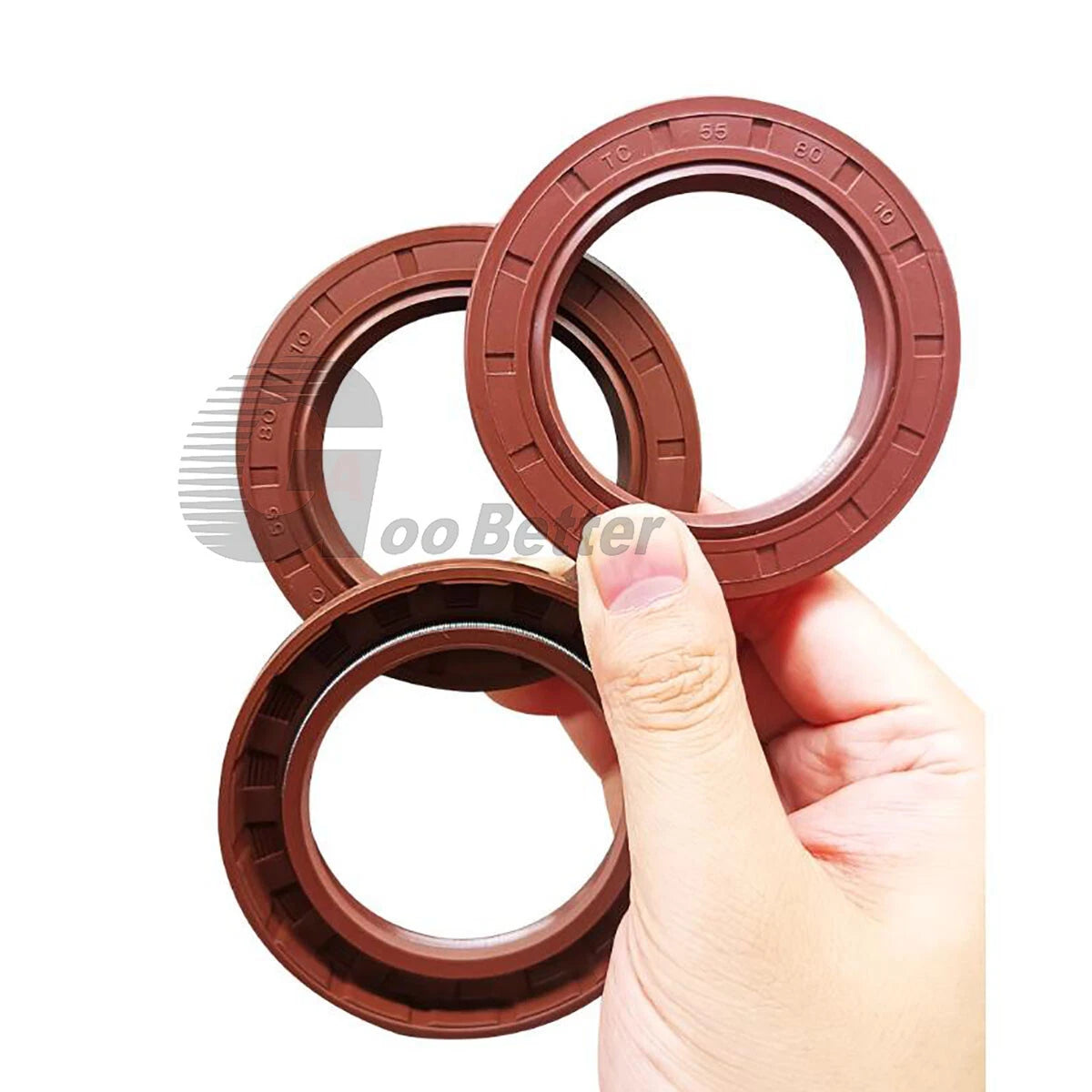
Measure three dimensions: the shaft outer diameter (this becomes the seal's ID), the housing bore inner diameter (this becomes the seal's OD), and the housing groove depth (this becomes the seal's Height/Width). Match all three to the variant listed as ID × OD × Height. If your shaft is 60mm, your housing bore is 80mm, and your groove is 10mm deep, select the 60 × 80 × 10mm variant.

Why choose FKM over NBR for a rotary shaft seal?

NBR (nitrile) seals are adequate for standard mineral oils at moderate temperatures (typically up to ~100 °C). FKM (fluoroelastomer) is the better choice when operating temperatures exceed 120 °C, when synthetic lubricants such as PAO or ester-based fluids are used, or when the environment involves fuel, hydraulic fluid, or chemical exposure. FKM maintains its elasticity and sealing force across a wider temperature range, reducing the risk of lip hardening and bypass leakage.

What does the "TC" designation mean on an oil seal?

"TC" is a standardized seal type code indicating a double-lip seal with a metal case (skeleton frame). The first lip is the primary sealing lip that contacts the rotating shaft to retain lubricant. The second lip is a dust exclusion lip that faces the external environment to block contaminants. This two-barrier design makes TC seals the most common choice for general rotary shaft applications.

Can these seals be used in wet or submerged environments?

TC seals are designed for dynamic shaft sealing in lubricated environments, not for full submersion under sustained water pressure. The secondary dust lip provides moderate water splash resistance. For applications with continuous water ingress or pressure differentials, a dedicated water-resistant seal or additional labyrinth protection is recommended. Contact us to confirm suitability for your specific conditions.

How do I install a TC skeleton oil seal without damaging the lip?

Clean the housing bore and lightly lubricate the outer case with a compatible oil or grease before pressing in. Use a flat-faced seal driver or a piece of flat bar stock that contacts the outer metal case evenly — never strike the rubber lip directly. Press the seal in squarely until the outer face is flush with or just below the housing face. Lightly coat the sealing lip with the lubricant it will be retaining before fitting over the shaft to prevent dry-start wear.

What shaft surface finish is required for a good seal?

A shaft surface roughness of Ra 0.2–0.4 µm (approximately 8–16 µin) is the standard recommendation for TC lip seals. Too smooth (below Ra 0.2 µm) can prevent the lip from forming a hydrodynamic oil film, causing dry running. Too rough (above Ra 0.5 µm) accelerates lip wear. The shaft should also be free of spiral machining marks, which can pump lubricant past the seal lip over time.

Are these seals compatible with synthetic gear oils and ATF?

Yes. FKM rubber has broad compatibility with synthetic gear oils (PAO-based), automatic transmission fluids (ATF), and most hydraulic fluids. It is also resistant to many ester-based and polyglycol lubricants. If you are using an unusual or proprietary fluid, contact us with the fluid specification and we can advise on compatibility before you order.

🛒 Select your Size (ID × OD × Height) above, then add to cart.

You may also like

Recently viewed