Bare Brass Round Wire — Versatile Conductor for Jewellery Making & Craft Work
When a project demands a wire that bends cleanly, holds its shape, and solders without fuss, bare brass round wire is the go-to choice for jewellers, model makers, and craft enthusiasts alike. Whether you are coiling fine 0.3mm wire for delicate filigree or forming structural frames with 5mm stock, having the right diameter on hand makes the difference between a frustrating session and a satisfying result.
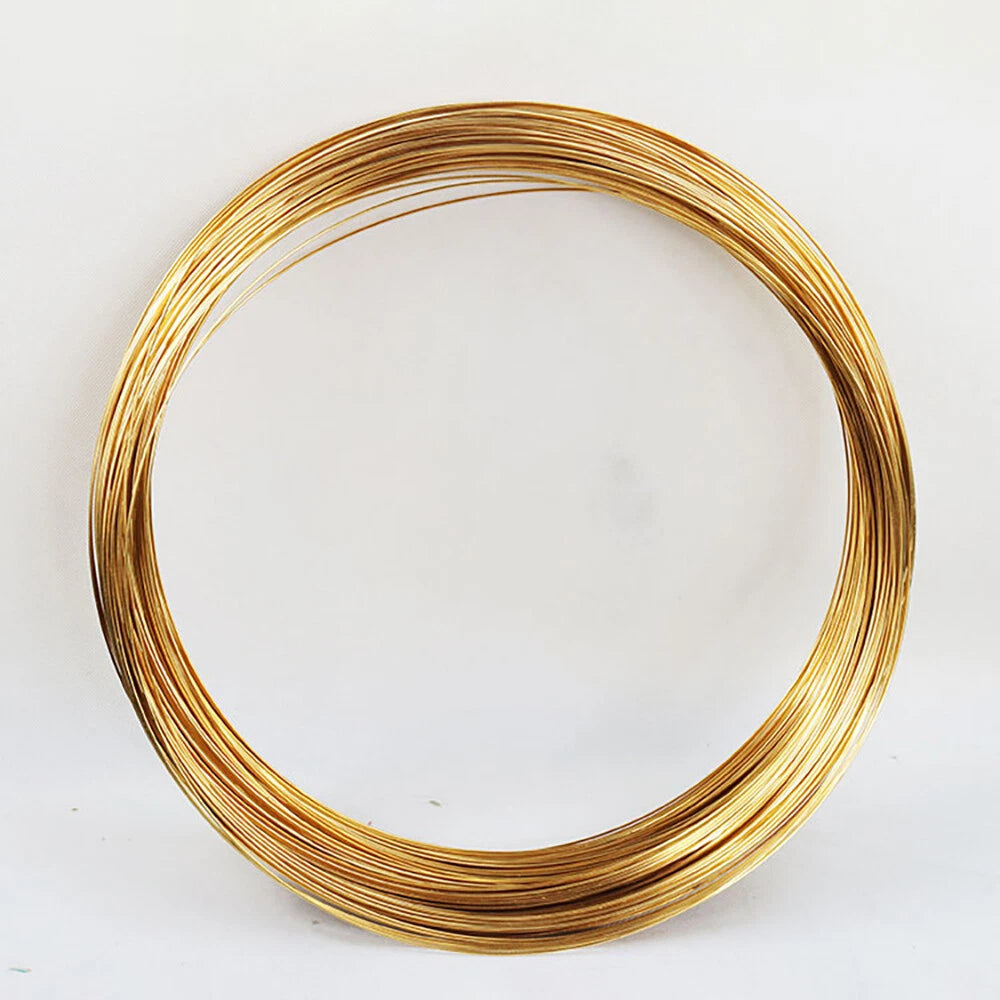
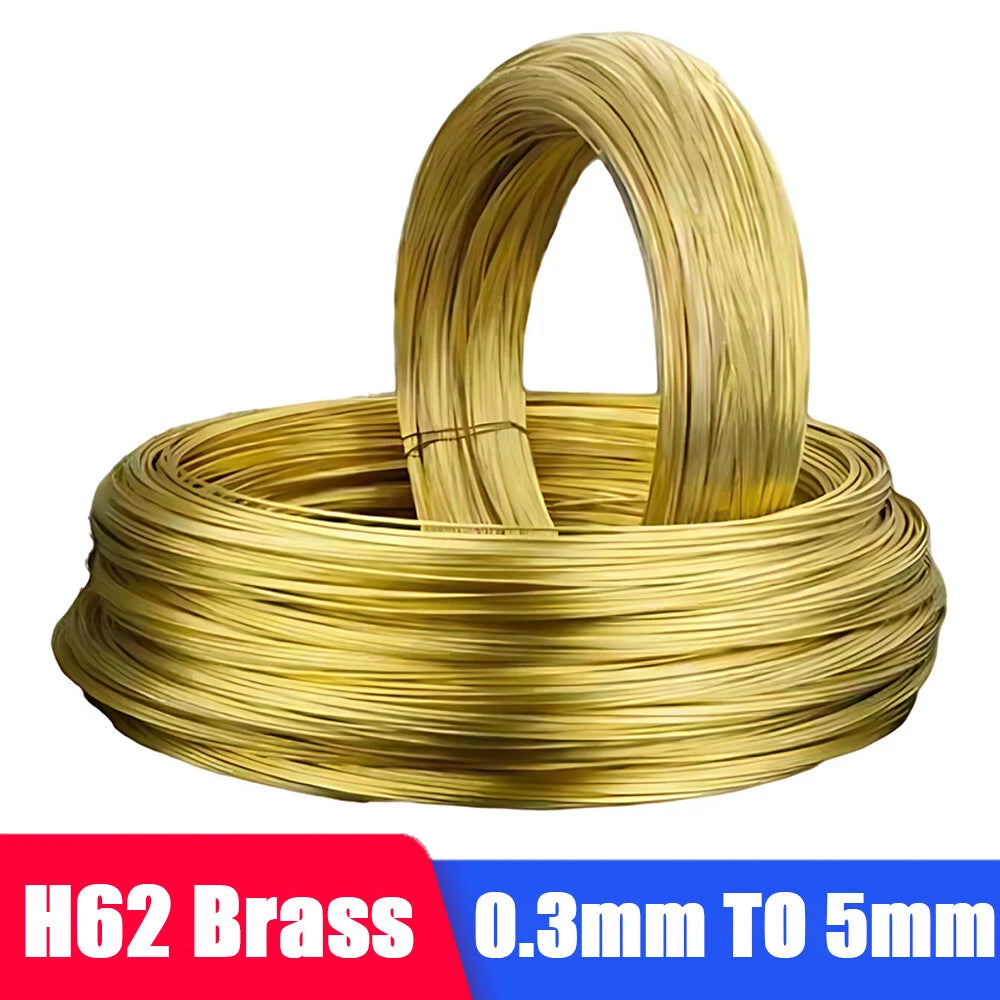
This bare (uncoated) brass round wire is drawn from a copper-zinc alloy, giving it the warm yellow tone and moderate stiffness that brass is known for. Available in wire diameters from 0.3mm (approx. 0.012 in) up to 5.0mm (approx. 0.197 in), and sold in lengths from 1 metre up to 50 metres, so you can order exactly what your project requires without waste.
Typical applications include wire-wrapped gemstone pendants and rings, bonsai tree armature wiring, scale model structural framing, electrical prototyping and grounding leads, and decorative wire sculpture. The uncoated surface also accepts patination, lacquer, and flux readily — making it a practical choice for mixed-media art and jewellery finishing.
⚙️
Compatibility note: Bare brass wire is compatible with standard jewellery pliers, wire cutters, and soldering setups. It can be work-hardened by twisting or hammering, or annealed with a torch to restore softness. Not pre-tinned — flux is recommended for soldering.
✅ Key Features of These Bare Brass Round Wires
-
Wide diameter range: 14 sizes from 0.3mm to 5.0mm cover fine filigree through to heavy structural forming — one listing, one supplier.
-
Bare / uncoated surface: No lacquer or plating to burn off during soldering or patination; the raw brass surface accepts flux, liver of sulphur, and most metal finishes directly.
-
Copper-zinc brass alloy: Offers a balance of workability and spring-back — softer than steel, stiffer than pure copper — so formed shapes hold their position without constant re-adjustment.
-
Flexible length options: Choose from 1 m, 5 m, 10 m, 20 m, 25 m, 30 m, or 50 m to match your project scale and reduce offcuts.
-
Round cross-section: Consistent circular profile throughout the coil ensures even bending radius and predictable behaviour in wire-wrapping jigs and coiling tools.
-
Good electrical conductivity: Brass conducts electricity well enough for low-current prototyping, grounding straps, and decorative electrical fittings where pure copper is not required.
📐 Technical Specifications — Bare Brass Round Wire
| Material |
Brass (copper-zinc alloy) |
| Finish |
Bare / uncoated |
| Wire Shape |
Round |
| Colour |
Yellow (natural brass) |
| Available Diameters |
0.3 mm, 0.4 mm, 0.5 mm, 0.6 mm, 0.8 mm, 1 mm, 1.2 mm, 1.5 mm, 1.8 mm, 2 mm, 2.5 mm, 3 mm, 4 mm, 5 mm |
| Available Lengths |
1 m, 5 m, 10 m, 20 m, 25 m, 30 m, 50 m |
| Temper / Hardness |
See variant options |
| Tensile Strength |
See variant options |
| Packaging |
Coil or straight length (varies by diameter and quantity) |
| Typical Uses |
Jewellery making, wire wrapping, craft, model making, electrical prototyping |
❓ Frequently Asked Questions
Which diameter should I choose for wire-wrapped jewellery?
For wrapping frames and binding coils, 0.3mm–0.5mm is the most common range — fine enough to wrap tightly without bulk. For structural elements like ring shanks or pendant bails, 0.8mm–1.5mm provides enough rigidity to hold shape under wear. Heavier gauges (2mm+) suit bangles and sculptural forms that need to stand on their own.
Is bare brass wire strong enough for structural craft projects?
Yes, for most craft and light structural applications. Brass has a higher stiffness than pure copper, so formed shapes hold their position well. For load-bearing or outdoor structural use, steel or stainless wire would be more appropriate. Brass can also be work-hardened by twisting or hammering to increase its rigidity further.
Will bare brass wire tarnish or corrode over time?
Bare brass will develop a natural patina (darkening) when exposed to air and moisture over time — this is a normal characteristic of uncoated brass. If you want to preserve the bright yellow finish, apply a clear lacquer or wax after forming. Alternatively, accelerate the patina deliberately using liver of sulphur for an antique effect.
Can I solder this wire, and do I need flux?
Yes, bare brass solders well with standard silver solder or soft solder. Because the surface is uncoated, flux is still recommended to prevent oxidation during heating and to ensure a clean joint. Avoid soldering near any previously lacquered or plated sections, as coatings can release fumes when heated.
How do I choose between the different length options?
For one-off or sample projects, the 1 m option lets you test a diameter before committing. For regular jewellery making, 5 m–10 m coils offer a good balance of economy and storage convenience. If you work through wire quickly — for example, in production runs or large sculptures — the 20 m–50 m options reduce the cost per metre noticeably.
Is this wire suitable for bonsai tree wiring?
Brass wire is a traditional choice for bonsai training. It is softer than aluminium at equivalent gauges, which means it bends easily around branches without marking bark as readily. The 1mm–3mm range covers most bonsai applications, from fine branch training to shaping thick primary branches. The bare finish blends naturally with bark tones.
Can I use this wire for electrical or electronics projects?
Brass conducts electricity and is suitable for low-current applications such as grounding straps, decorative electrical fittings, and prototyping connections. It is not a substitute for copper in high-current or precision electrical wiring, where copper's superior conductivity is required. Always verify suitability for your specific application before use in any electrical circuit.
🛒 Select your Wire Diameter and Length above, then add to cart.