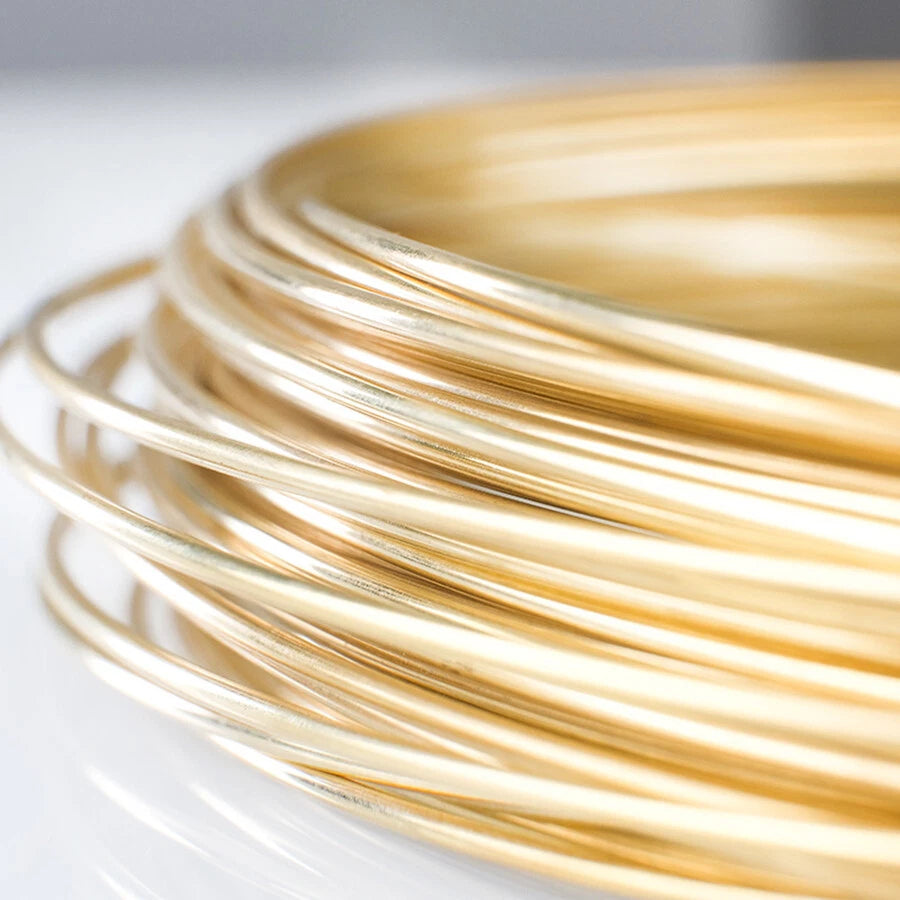
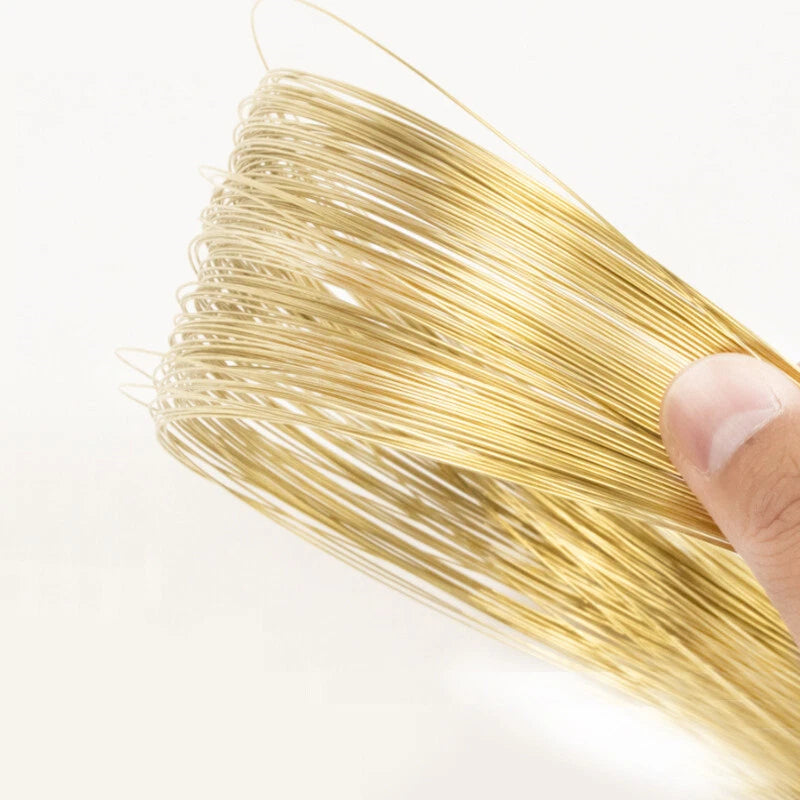
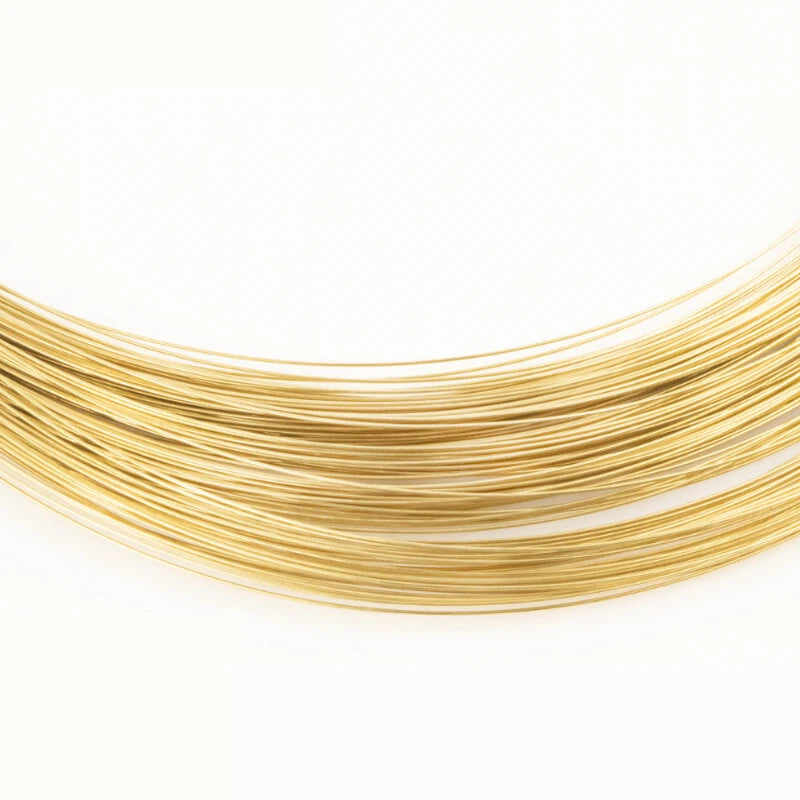
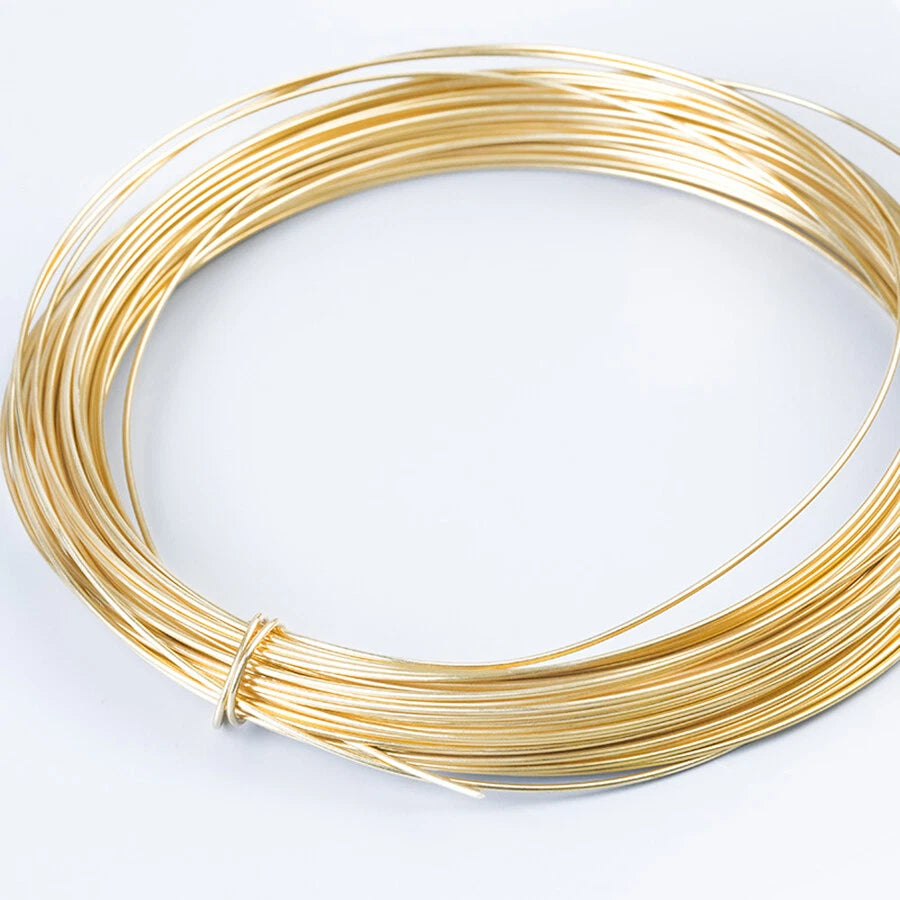
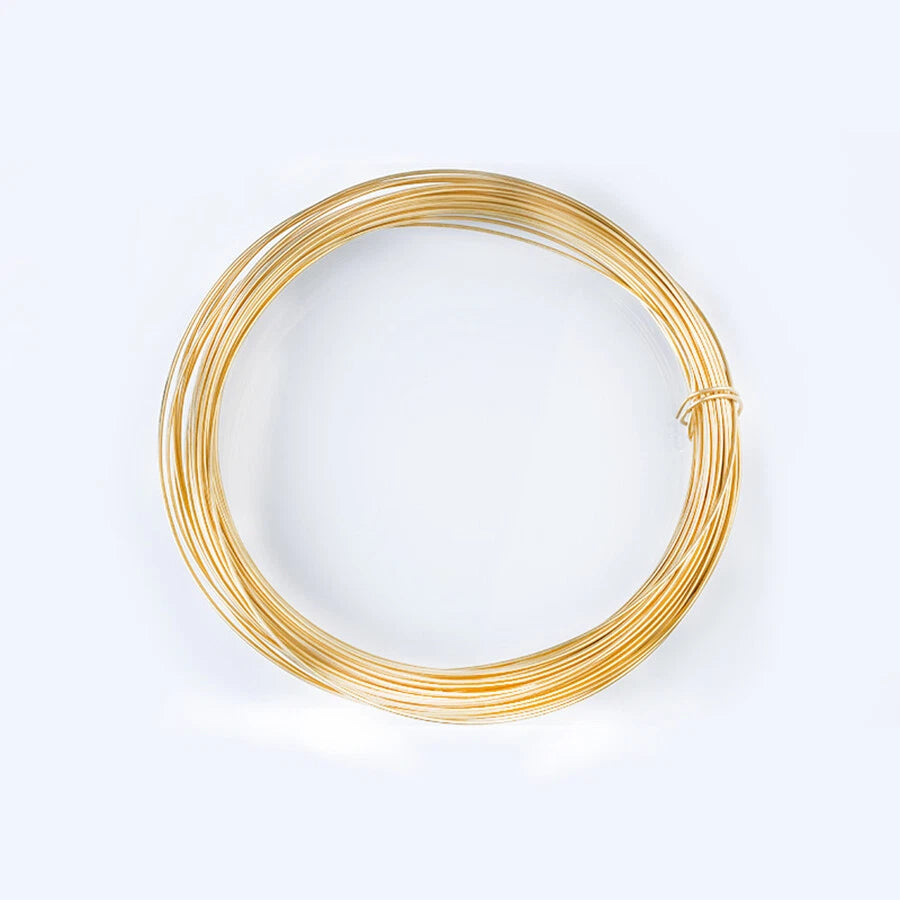
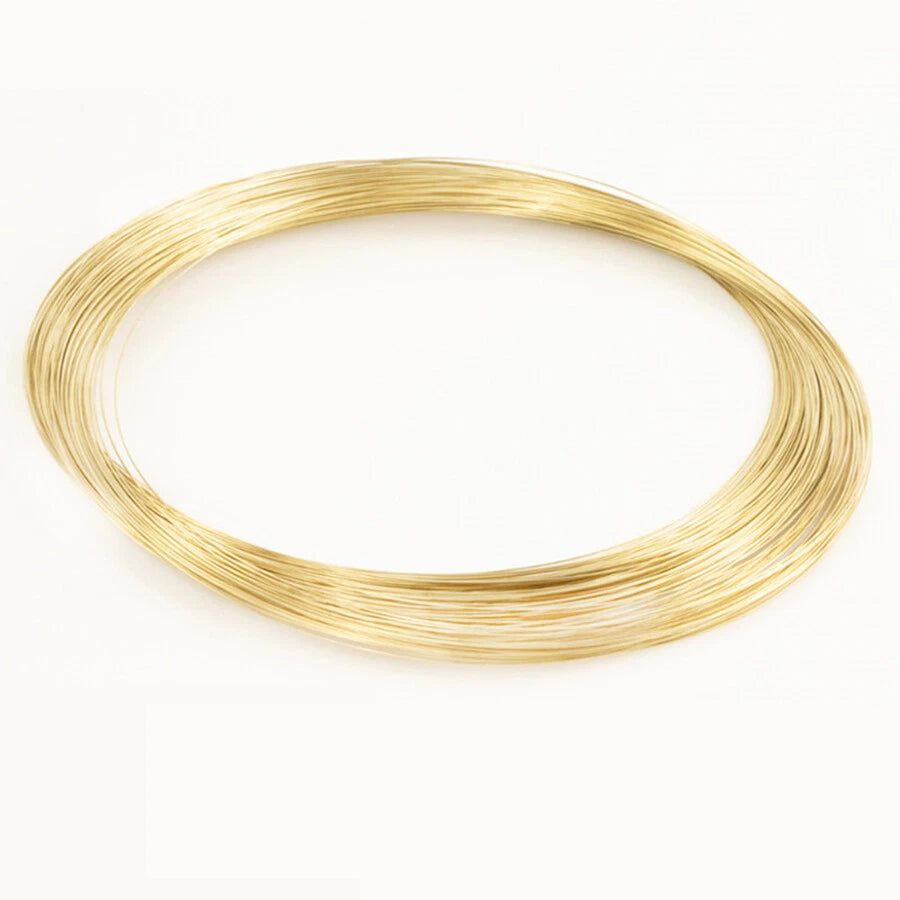
Wire Dia 0.3mm 0.4 0.5mm to 2.5mm Brass Wire Round Solid BareUncoated

Keine Bewertungen

Preis:
Sonderpreis$2.03 USD
Lagerbestand:
Verfügbar (500 Stück), versandbereit

Payment & Security

Ach Direct Debit Amazon American Express Apple Pay Bancontact Diners Club Discover Google Pay iDEAL Wero Mastercard PayPal Shop Pay USDC Visa

Deine Zahlungsinformationen werden sicher verarbeitet. Wir speichern keine Kreditkartendaten und haben auch keinen Zugang zu deinen Kreditkartendaten.

Quantity Discount Promotion
🎯 BULK DISCOUNT: Buy More, Save More!
Buy 2 Items
5% OFF
Buy 4 Items
10% OFF
Buy 6 Items
15% OFF
Expert

DIY Expert Support

Get fitment advice & recommendations

Mon-Fri, 8:30AM-8PM
24-Hour Fast Ship
🚚
Arrives in 3-14 days
🌍
Global Reach
↩️
30-Day Returns
🌱 1 tree planted with every purchase

Beschreibung

Solid Bare Brass Wire — Uncoated Round Brass Wire in 0.3mm to 2.5mm Diameters

Finding a consistent, uncoated brass wire that cuts cleanly, bends without cracking, and holds its shape across fine gauges is a recurring challenge for jewellery makers, model builders, electronics hobbyists, and craft workers who need reliable raw material in small quantities. This solid bare brass wire is stocked in eleven diameters from 0.3mm to 2.5mm, giving you the right gauge for the task without ordering bulk spools.

Each length is solid round brass — uncoated and unplated — with a natural yellow brass finish. Diameters range from 0.3mm (approximately 0.012") through to 2.5mm (approximately 0.098"), and lengths are available in 1m, 2m, 5m, and 10m cuts (approximately 3.3ft to 32.8ft). The material is brass alloy, which offers good workability, moderate conductivity, and resistance to atmospheric corrosion in typical indoor and sheltered outdoor conditions.

Typical applications include jewellery wire wrapping and frame construction where a bare metal finish is required, scale model armatures and structural detailing for architectural or railway modelling, electrical and electronics prototyping where a solderable non-ferrous wire is needed, and craft binding, floral wire work, and general DIY repair tasks requiring a formable metal wire.

⚙️ Compatibility: Suitable for use with standard wire cutters, round-nose pliers, and jewellery forming tools. Solderable with standard rosin-core solder. Not recommended for applications requiring stainless steel corrosion resistance or high tensile strength. Confirm diameter tolerance requirements before ordering for precision engineering use.

✅ Key Features of These Solid Bare Brass Wire Lengths

📏 11 Diameter Options: 0.3mm – 2.5mm

Choose from 0.3, 0.4, 0.5, 0.6, 0.8, 1.0, 1.2, 1.5, 1.8, 2.0, and 2.5mm to match your specific gauge requirement — from fine jewellery wire to heavier craft and modelling rod.

✂️ Four Cut Lengths: 1m – 10m

Available in 1m, 2m, 5m, and 10m lengths so you can order exactly what your project needs without committing to a full spool. Ideal for small-batch craft and prototyping work.

🔩 Solid Round Cross-Section

Full solid brass throughout — not hollow, not twisted strand. The round profile is consistent along the length, making it suitable for forming, bending, and coiling without internal collapse.

🔆 Bare / Uncoated Finish

No lacquer, enamel, or plating. The natural yellow brass surface is directly workable, solderable, and can be polished, patinated, or left as-is depending on your application.

Solderable & Electrically Conductive

Brass is a copper-zinc alloy with moderate electrical conductivity. The bare surface accepts standard rosin-core solder, making it useful for electronics prototyping, coil winding, and low-current connections.

🛠️ Workable with Standard Hand Tools

Brass in these gauges cuts cleanly with wire cutters or scissors (finer gauges), bends without springback issues common in harder metals, and holds formed shapes well — suited to jewellery, modelling, and craft use.

📐 Technical Specifications — Solid Brass Wire

Material Brass (copper-zinc alloy)
Finish Bare / uncoated, natural yellow brass
Cross-Section Round, solid
Available Diameters 0.3, 0.4, 0.5, 0.6, 0.8, 1.0, 1.2, 1.5, 1.8, 2.0, 2.5mm
Available Lengths 1m, 2m, 5m, 10m
Colour Yellow brass
Conductivity Moderate (copper-zinc alloy); solderable
Corrosion Resistance Atmospheric / indoor use; not for saltwater immersion
Tensile Strength (approx.) See variant options
Weight per Metre See variant options
Condition New

❓ Frequently Asked Questions

Which diameter should I choose for jewellery wire wrapping?

For wire wrapping pendants and beads, 0.3mm–0.5mm is typically used for fine binding and coiling work, while 0.8mm–1.2mm suits structural frame elements and heavier wraps. If you are making ear wires or clasps that need to hold their shape under light stress, 1.0mm–1.5mm is a common choice. Start with a shorter length (1m or 2m) to test the gauge before committing to a longer cut.

Is this wire suitable for electrical or electronics use?

Yes, with caveats. Bare brass wire is solderable with standard rosin-core solder and has moderate electrical conductivity — adequate for low-current prototyping, coil winding, and non-critical connections. It is not a substitute for copper wire in high-conductivity applications. Brass oxidises over time, which can increase contact resistance at connection points; for permanent electrical joints, tin or solder the contact area.

Will this brass wire rust or corrode outdoors?

Brass resists atmospheric oxidation well in typical indoor and sheltered outdoor conditions — it will develop a natural patina (darkening) over time rather than rust. In humid, coastal, or salt-spray environments, brass can tarnish more rapidly and is not recommended for continuous outdoor exposure without a protective coating. For marine or fully outdoor applications, consider stainless steel wire instead.

Can I use this wire for scale modelling or armature work?

Yes. Solid brass wire in 0.5mm–2.0mm diameters is widely used for scale model armatures, railway modelling details, and architectural model structural elements. It holds bends cleanly, can be soldered at joints, and is easy to cut with standard modelling tools. The 1m and 2m lengths are practical for most modelling tasks without excess waste.

How does bare brass wire differ from coated or enamelled wire?

Bare (uncoated) brass wire has no lacquer, enamel, or plating on the surface. This means it is immediately solderable and workable without stripping, but it will tarnish over time when exposed to air and moisture. Enamelled wire has an insulating coating that must be burned or scraped off before soldering. For jewellery and craft use where the metal surface is visible, bare wire gives a natural brass appearance that can be polished or patinated to taste.

What tools do I need to cut and shape this wire?

For diameters up to 0.8mm, standard jewellery flush cutters or sharp scissors work cleanly. For 1.0mm–2.5mm, use wire cutters or side-cutting pliers. Shaping is done with round-nose pliers (for loops and curves), flat-nose pliers (for bends and kinks), and a mandrel or dowel for coiling. No specialist tools are required for most craft and modelling applications.

🛒 Select your Wire Diameter and Length above, then add to cart.

You may also like

Recently viewed