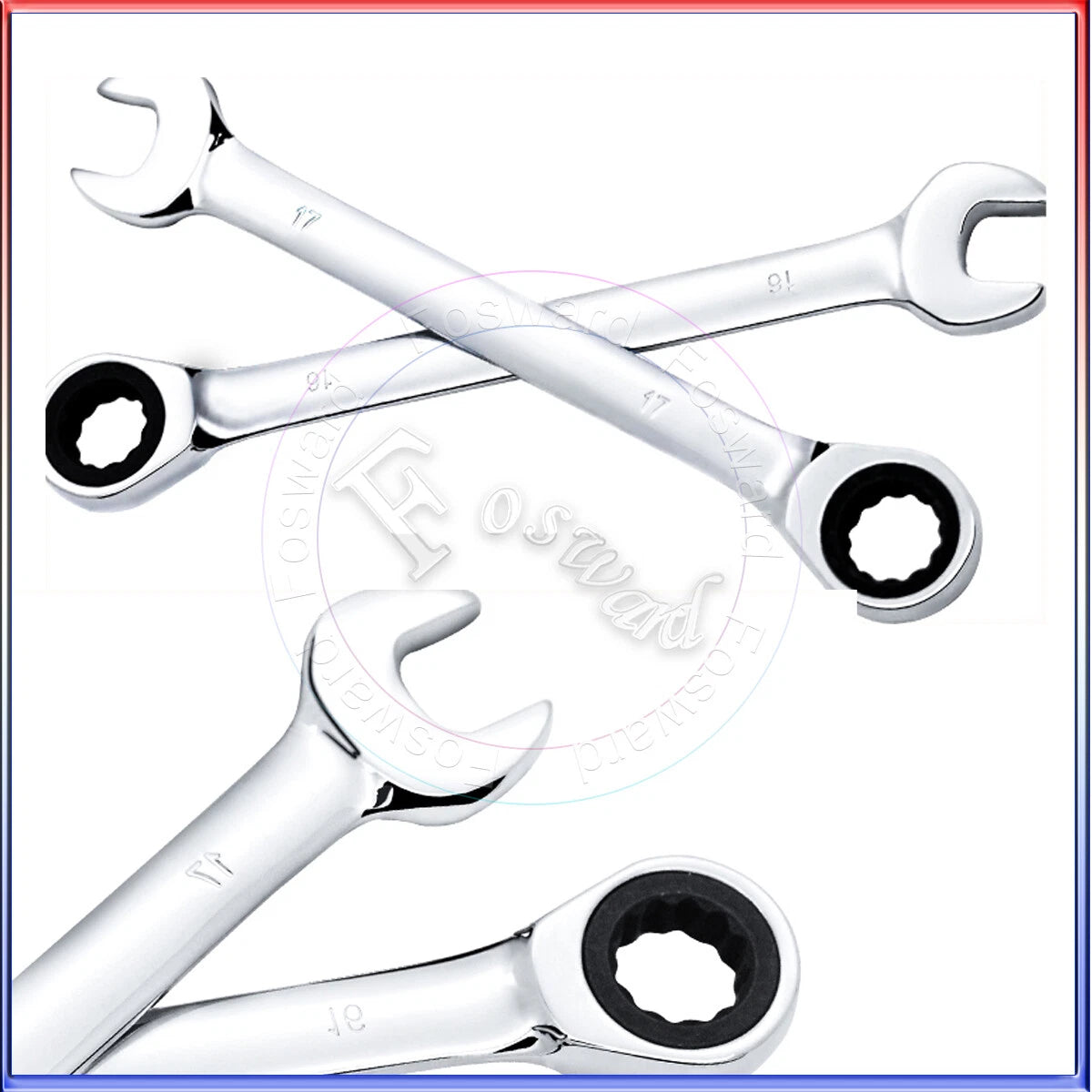
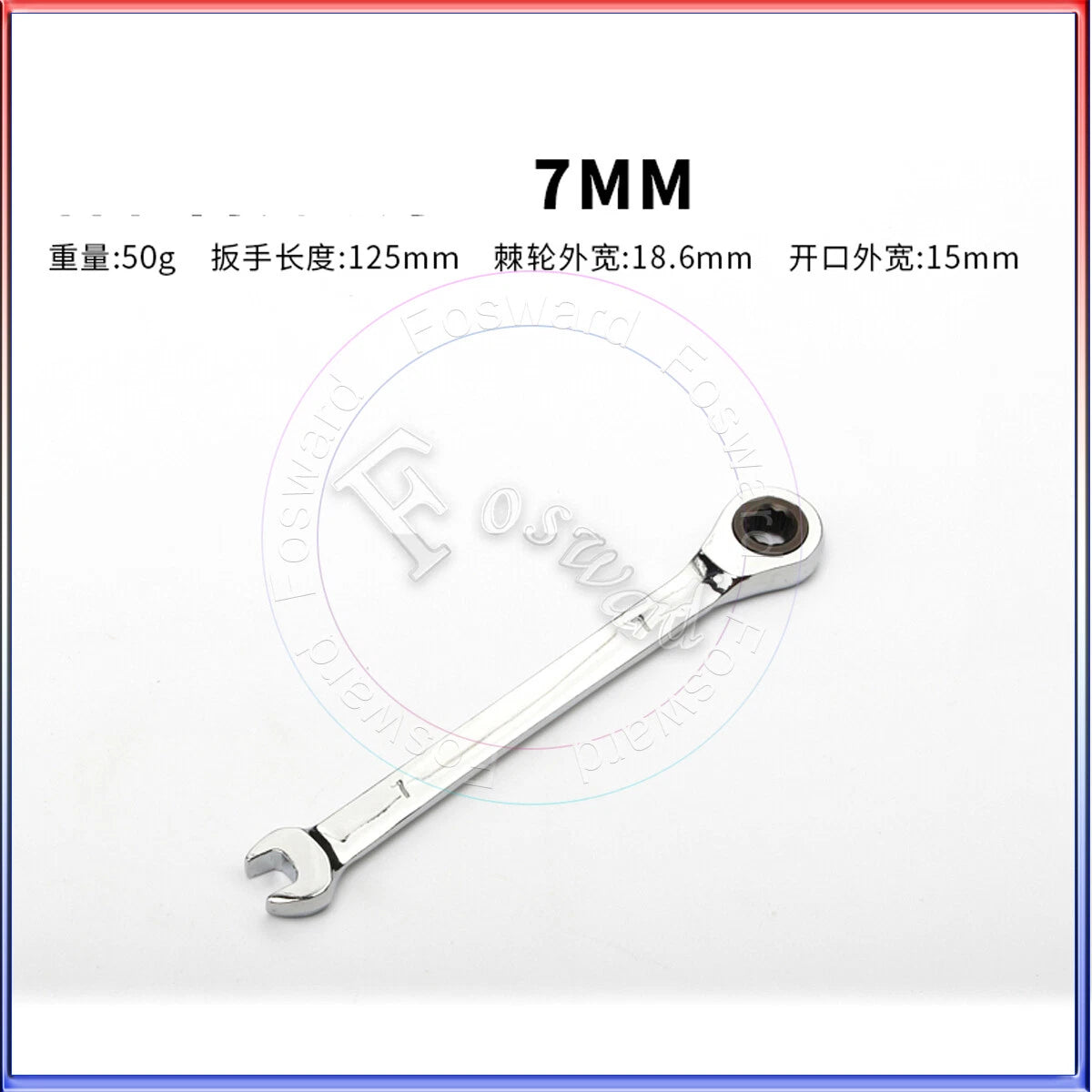
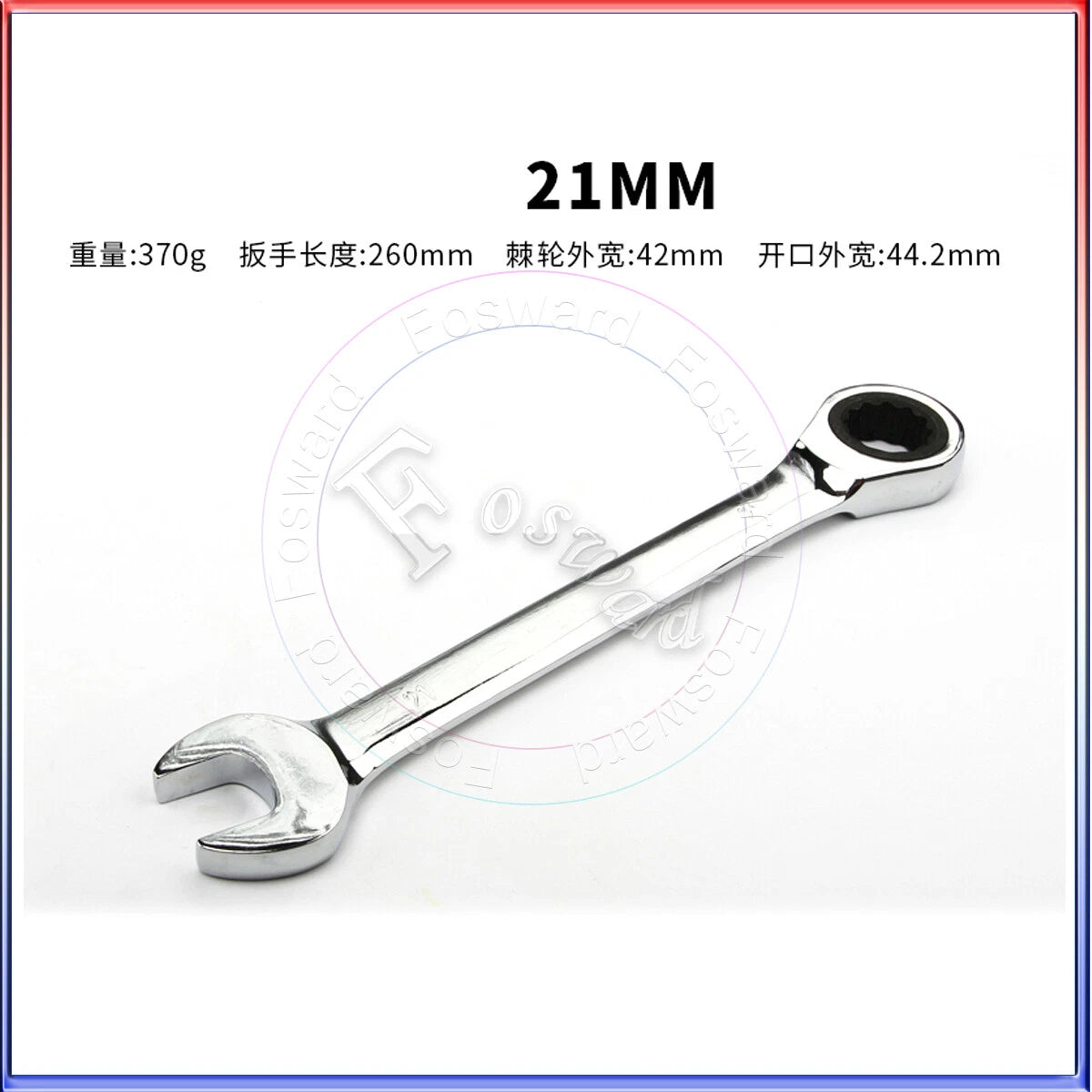
7mm/21mm Opening Double-End Ratchet Spanners Metric Dual use Combination Wrenchs

Keine Bewertungen

Preis:
Sonderpreis$11.07 USD
Lagerbestand:
Verfügbar (500 Stück), versandbereit

Payment & Security

Ach Direct Debit Amazon American Express Apple Pay Bancontact Diners Club Discover Google Pay iDEAL Wero Mastercard PayPal Shop Pay USDC Visa

Deine Zahlungsinformationen werden sicher verarbeitet. Wir speichern keine Kreditkartendaten und haben auch keinen Zugang zu deinen Kreditkartendaten.

Quantity Discount Promotion
🎯 BULK DISCOUNT: Buy More, Save More!
Buy 2 Items
5% OFF
Buy 4 Items
10% OFF
Buy 6 Items
15% OFF
Expert

DIY Expert Support

Get fitment advice & recommendations

Mon-Fri, 8:30AM-8PM
24-Hour Fast Ship
🚚
Arrives in 3-14 days
🌍
Global Reach
↩️
30-Day Returns
🌱 1 tree planted with every purchase

Beschreibung

Double-End Ratchet Spanners — Metric Combination Wrench for Tight-Space Fastening

When a standard open-end wrench can't complete a full rotation in a confined engine bay or behind a bracket, you lose time and risk rounding fasteners. Mechanics, automotive technicians, and serious DIYers who work on vehicles, machinery, or structural assemblies need a double-end ratchet spanner that keeps torque moving without repositioning the tool on every stroke.

This double-end ratchet spanner set covers metric sizes from 7mm to 21mm (approximately 0.28 in to 0.83 in). Each wrench features a ratcheting mechanism on both ends, allowing continuous tightening or loosening with a short arc swing. The combination design pairs an open jaw on one end with a ratcheting ring on the other, giving you two engagement options per tool.

Typical use cases include automotive brake caliper bolt removal, suspension component assembly, appliance repair where access is restricted, and general workshop fastening tasks where a double-end ratchet combination wrench reduces cycle time compared to a fixed spanner.

🔧 Compatibility: Designed for standard metric hex fasteners (bolts and nuts). Fits M7 through M21 thread sizes. Verify fastener hex width before selecting your size.

✅ Key Features of These Double-End Ratchet Spanners

  • ↔️ Dual ratcheting ends — both ends engage the fastener with a ratchet mechanism, eliminating the need to lift and reposition between strokes.
  • 📐 Metric sizing 7mm–21mm — covers the most common metric bolt and nut sizes used in automotive, appliance, and general mechanical work.
  • 🔄 Combination open/ring design — open jaw for quick placement on exposed fasteners; ratcheting ring for controlled torque in recessed or tight locations.
  • 💪 Short-arc swing capability — ratchet mechanism allows effective operation in spaces where a full 360° rotation is not possible.
  • ⚖️ Balanced tool geometry — offset head angle reduces knuckle clearance issues when working in shallow recesses or alongside adjacent components.
  • 🗂️ Multiple size options — select the individual size you need rather than purchasing a full set you won't use; available from 7mm through 21mm as separate variants.

📐 Technical Specifications — Double-End Ratchet Combination Wrench

Tool Type Double-End Ratchet Combination Spanner
Size Range 7mm – 21mm (approx. 0.28 in – 0.83 in)
Drive Standard Metric (DIN / ISO)
End Configuration Open jaw + ratcheting ring (both ends ratchet)
Ratchet Direction Reversible (tighten / loosen)
Head Offset Angle See variant options
Material See variant options
Finish See variant options
Weight See variant options
Quantity per Pack Pack of 1

❓ Frequently Asked Questions

How do I choose the right size ratchet spanner for my fastener?

Measure the hex width (flat-to-flat distance) of your bolt head or nut using a caliper or ruler. Match that measurement in millimeters to the corresponding spanner size. For example, a fastener measuring 13mm across the flats requires a 13mm spanner. When in doubt, size down — a slightly loose fit risks rounding the fastener corners.

Can I use this wrench on both metric and imperial (SAE) fasteners?

These spanners are sized to metric standards. While some metric sizes are close in dimension to SAE equivalents (e.g., 11mm ≈ 7/16 in), using a metric wrench on an SAE fastener — or vice versa — risks slipping and rounding the fastener. Always use the correct standard for your application.

Is the ratchet mechanism reversible for both tightening and loosening?

Yes. The ratchet mechanism on each end is reversible. A direction-switch lever or flip mechanism allows you to change between clockwise (tightening) and counterclockwise (loosening) engagement without removing the wrench from the fastener.

What materials are these spanners made from, and are they corrosion-resistant?

The exact alloy specification is listed on the product variant detail. Combination spanners in this category are typically constructed from chrome vanadium steel (Cr-V) or chrome molybdenum steel (Cr-Mo), both of which offer good tensile strength and resistance to surface oxidation when used in normal workshop or automotive environments. Avoid prolonged exposure to standing water or corrosive chemicals without wiping dry after use.

What is the minimum swing arc needed to operate the ratchet?

Most ratchet spanners in this category require approximately 5° to 10° of arc to advance one tooth. This means you can make progress on a fastener even in spaces where a conventional wrench would need to be lifted and repositioned after every partial turn. Confirm the exact tooth count for your selected variant if minimum arc is critical for your application.

Can this wrench handle high-torque applications like wheel bolts or suspension components?

Ratchet combination spanners are suitable for moderate to firm hand-torque applications. For fasteners requiring torque values above approximately 80–100 Nm (such as wheel lug nuts or large suspension bolts), a torque wrench or breaker bar is recommended for the final tightening pass to ensure accurate and safe torque delivery. Use this spanner for access and run-down, then finish with a calibrated torque tool.

How does the double-end design compare to a single-end ratchet wrench?

A double-end ratchet spanner gives you two functional ends on one tool — typically an open jaw for fast initial engagement and a ratcheting ring for controlled torque in confined spaces. A single-end ratchet wrench has only one working end. The double-end design reduces the number of tools you need to carry and switch between during a job, which is particularly useful when working in tight engine bays or under equipment.

🛒 Select your size above, then add to cart.


You may also like

Recently viewed