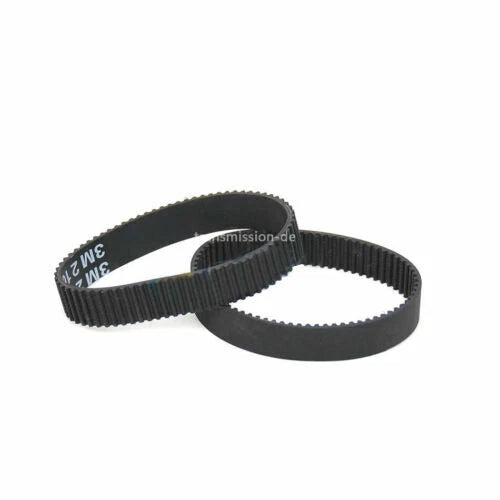
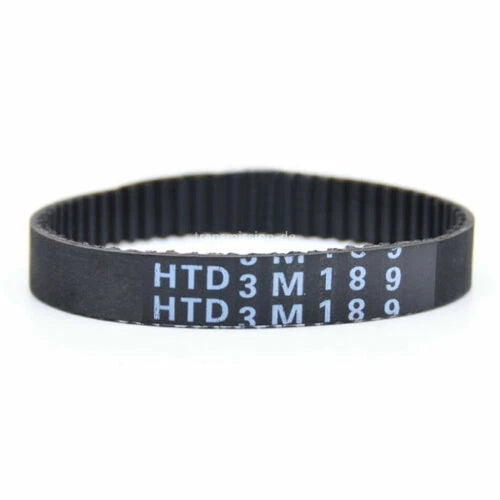
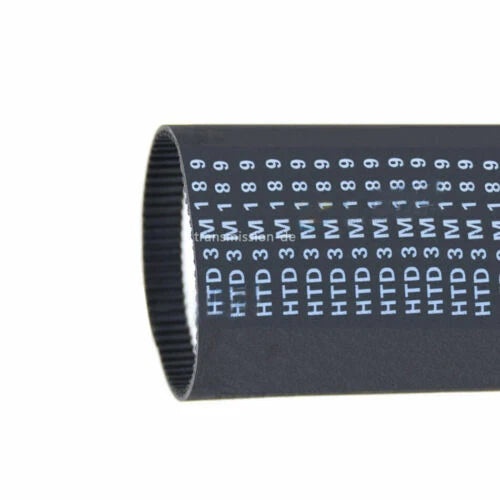
HTD 3M Timing Belt Closed Loop — Rubber Drive Belt, 10/15/20 mm Wide, 87–5100 mm Perimeter

Keine Bewertungen

Preis:
Sonderpreis$16.51 USD
Lagerbestand:
Verfügbar (500 Stück), versandbereit

Payment & Security

Ach Direct Debit Amazon American Express Apple Pay Bancontact Diners Club Discover Google Pay iDEAL Wero Mastercard PayPal Shop Pay USDC Visa

Deine Zahlungsinformationen werden sicher verarbeitet. Wir speichern keine Kreditkartendaten und haben auch keinen Zugang zu deinen Kreditkartendaten.

Quantity Discount Promotion
🎯 BULK DISCOUNT: Buy More, Save More!
Buy 2 Items
5% OFF
Buy 4 Items
10% OFF
Buy 6 Items
15% OFF
Expert

DIY Expert Support

Get fitment advice & recommendations

Mon-Fri, 8:30AM-8PM
24-Hour Fast Ship
🚚
Arrives in 3-14 days
🌍
Global Reach
↩️
30-Day Returns
🌱 1 tree planted with every purchase

Beschreibung


HTD 3M Timing Belt — Closed-Loop Rubber Drive Belt for Precise Motion Control

When a slipping V-belt or a stretched open-end belt is costing you accuracy on your CNC router, 3D printer, or conveyor drive, the fix is a properly sized closed-loop HTD 3M timing belt. Engineers, makers, and machine builders who need repeatable, slip-free power transmission rely on the HTD (High Torque Drive) curvilinear tooth profile to keep axes synchronized and drives running smoothly.

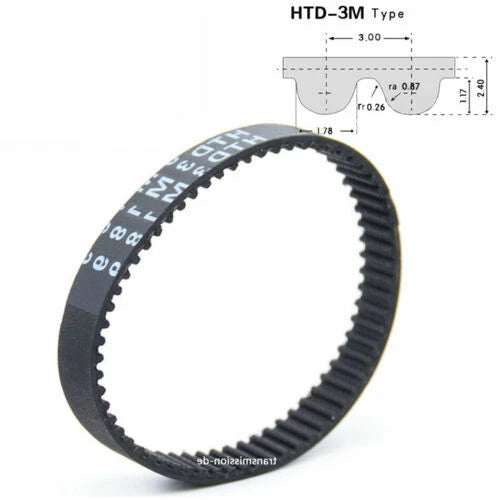
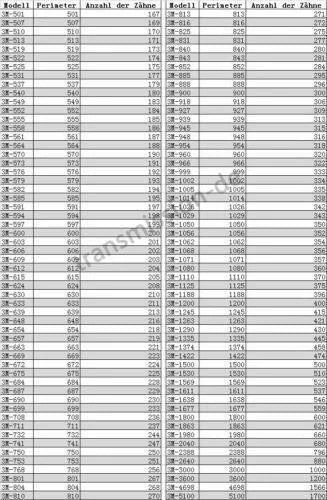
Each belt in this listing is a single closed-loop (endless) rubber timing belt with an HTD 3M tooth profile — meaning a 3 mm center-to-center tooth pitch and a rounded, curvilinear tooth shape. Available perimeters range from 87 mm (≈3.4") to 5100 mm (≈200.8"), and widths are offered in 10 mm (≈3/8"), 15 mm (≈19/32"), and 20 mm (≈25/32"). Select the exact perimeter and width combination that matches your pulley system from the variant dropdowns above.

Typical use cases include 3D printer X/Y axis drives, desktop CNC milling machines, laser engraver gantry systems, robotic joint actuators, and light industrial conveyor or indexing drives — anywhere a 3M pitch HTD closed-loop rubber timing belt is specified.

ℹ️ Compatibility: Designed for use with standard HTD 3M pulleys (3 mm pitch, curvilinear tooth profile). Verify your pulley's pitch and flange width before ordering. Not interchangeable with GT2, MXL, or XL profile belts.

✅ Key Features of These HTD 3M Closed-Loop Rubber Timing Belts

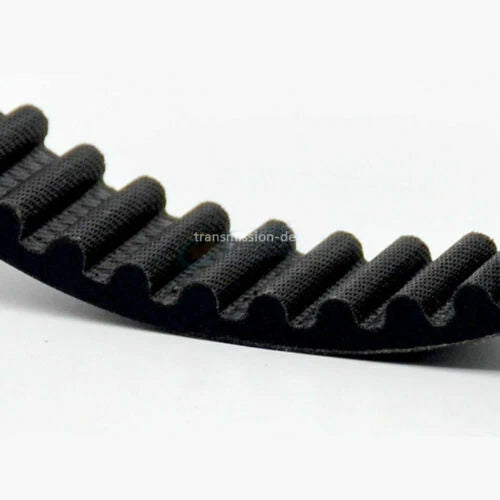
  • ⚙️HTD Curvilinear Tooth Profile — The rounded 3M tooth geometry distributes load more evenly across the tooth root than trapezoidal profiles, reducing stress concentration in high-cycle timing belt applications.
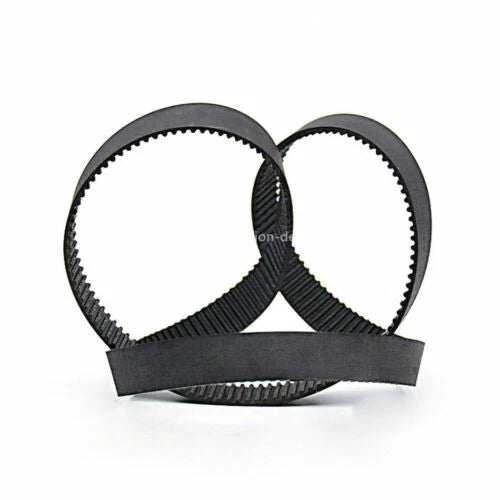
  • 🔁Closed-Loop (Endless) Construction — No joint, splice, or clip — the belt is a continuous loop for smooth, vibration-free operation in 3D printer drives, CNC gantries, and indexing systems.
  • 📏Wide Size Selection — Perimeters from 87 mm to 5100 mm and widths of 10 mm, 15 mm, and 20 mm cover the majority of 3M pitch HTD timing belt replacement and new-build requirements.
  • 🏗️Rubber Compound with Cord Reinforcement — The rubber body is typically reinforced with tensile cords (generally fiberglass or steel, depending on size) to resist elongation under load and maintain consistent pitch length over time.
  • 🔇Low-Noise, Smooth Engagement — The HTD tooth profile engages pulleys with less impact noise than trapezoidal belts, making these closed-loop rubber drive belts well-suited for desktop machines and workshop environments.
  • 🔧Drop-In Replacement Sizing — Perimeter and width dimensions follow the HTD 3M standard, so these belts fit any compliant 3M pulley without modification — a straightforward swap for worn or broken timing belts.

📐 Technical Specifications — HTD 3M Closed-Loop Timing Belt

Belt Profile HTD (High Torque Drive) — 3M curvilinear tooth
Tooth Pitch 3 mm (center-to-center between adjacent teeth)
Belt Type Closed-loop (endless / seamless)
Available Perimeters 87 mm (≈3.4") to 5100 mm (≈200.8") — see variant options
Available Widths 10 mm (≈3/8"), 15 mm (≈19/32"), 20 mm (≈25/32")
Material Rubber body with tensile cord reinforcement
Tooth Profile Standard HTD 3M — compatible with standard 3M pitch HTD pulleys
Operating Temperature See variant options / Contact us to confirm for extreme environments
Tensile Cord Type See variant options
Color Typically black (rubber)
Quantity per Order 1 belt per unit ordered
⚠️ Size Tip: The perimeter listed (e.g., "501 mm") is the total outer circumference of the closed loop, not the center-to-center shaft distance. Use the belt perimeter formula or your machine's documentation to confirm the correct size before ordering.

❓ Frequently Asked Questions

How do I choose the right perimeter length for my HTD 3M timing belt?

Measure the center-to-center distance between your two pulleys, then use the formula: Belt Perimeter ≈ 2 × C + π × (D1 + D2) / 2, where C is the shaft center distance and D1/D2 are the pulley pitch diameters. Round up to the nearest available size. As a quick reference, a 501 mm belt is approximately 19.7" in circumference, and a 600 mm belt is approximately 23.6". When in doubt, size up — you can adjust tension, but you cannot stretch a belt that is too short.

What does "HTD 3M" mean, and is it the same as GT2 or MXL?

HTD stands for High Torque Drive. The "3M" designates a 3 mm tooth pitch with a curvilinear (rounded) tooth profile. HTD 3M is not interchangeable with GT2 (2 mm pitch), MXL (0.08" / 2.032 mm pitch), or XL (0.2" / 5.08 mm pitch) belts. Always confirm your pulley's tooth profile and pitch before ordering a replacement timing belt.

How much torque or load can an HTD 3M belt handle?

Load capacity depends on belt width, number of teeth in mesh, operating speed, and pulley diameter. Generally, wider belts (15 mm or 20 mm) carry more torque than 10 mm belts of the same perimeter. For light-duty applications like 3D printers and small CNC routers, a 10 mm wide belt is typically sufficient. For higher-torque drives, select 15 mm or 20 mm width. Consult your drive system's engineering specifications for precise power ratings.

Can I use this rubber timing belt outdoors or in wet conditions?

These belts are generally suitable for light moisture exposure. Prolonged contact with water, oils, fuels, or aggressive solvents can degrade the rubber compound over time. For outdoor or chemically exposed environments, inspect the belt periodically for cracking, swelling, or hardening, and replace as needed. In most cases, these belts perform well in typical workshop and indoor industrial conditions.

Are these belts compatible with standard HTD 3M pulleys from other brands?

Yes — these closed-loop belts follow the HTD 3M tooth profile standard and are compatible with any pulley designed for 3 mm pitch HTD belts, regardless of brand. Always verify that the belt width matches your pulley's usable flange width. A belt that is wider than the pulley groove will not seat correctly and may track off.

What is the difference between the 10 mm, 15 mm, and 20 mm width options?

Width affects torque capacity and service life. A 10 mm belt is well-suited for light-duty applications such as 3D printer axes and small laser engravers. A 15 mm belt handles moderate loads in desktop CNC machines and robotics. A 20 mm belt is appropriate for higher-torque industrial drives and heavier gantry systems. Choose the width that matches your pulley's groove width.

How do I install a closed-loop timing belt correctly?

Loosen the tensioner or motor mount to reduce the center distance, slip the belt over both pulleys, then gradually re-tension until the belt deflects approximately 1–2 mm under light finger pressure at the midpoint of the longest unsupported span. Avoid over-tensioning — excessive tension accelerates bearing wear and can cause premature belt failure. Re-check tension after the first few hours of operation, as new belts typically seat in slightly.

How do I know when my HTD 3M timing belt needs to be replaced?

Replace the belt if you observe any of the following: visible cracking or chunking of the rubber teeth, fraying or separation at the belt edges, loss of positioning accuracy in CNC or 3D printing applications, unusual noise during operation, or visible elongation (belt feels loose even at maximum tensioner travel). In most cases, replacing the belt before complete failure prevents damage to pulleys and driven components.

🛒 Select your perimeter and width above, then add to cart — ships from our US warehouse.

You may also like

Recently viewed