HTD-5M Rubber Timing Belt — Precise 5mm Pitch Drive for Makers and Builders
When a slipping or mismatched drive belt derails your build mid-project, the frustration is real. Hobbyists, CNC builders, and 3D-printer enthusiasts who rely on consistent, repeatable motion need a timing belt that holds its pitch under load — not one that stretches or skips teeth. The HTD-5M rubber timing belt is engineered for exactly that kind of demanding, iterative work.
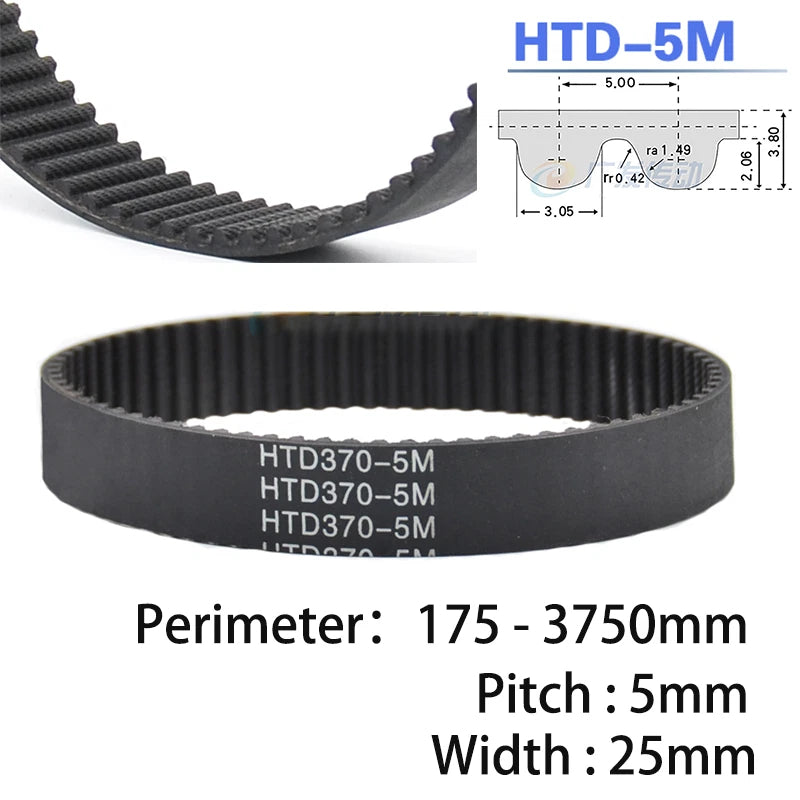
This HTD-5M timing belt features a 5mm pitch (tooth-to-tooth distance), a 25mm belt width, and is available in perimeter lengths from 175mm (~6.9 in) to 3750mm (~147.6 in). The belt body is constructed from neoprene-type rubber with a fiberglass or steel cord tensile layer (typical for HTD-5M class belts), giving it the flexibility to wrap tight pulleys while resisting elongation under tension.
Typical use cases include open-loop and closed-loop motion systems on desktop CNC routers, FDM 3D printers with wide-format gantries, laser engravers, automated camera sliders, and custom conveyor or indexing mechanisms. The standardized HTD-5M tooth profile also makes it a reliable replacement belt for industrial-grade equipment that accepts this pitch class.
⚙️
Compatible with standard HTD-5M pulleys and sprockets with a 5mm pitch and 25mm face width. Verify your pulley tooth count and belt perimeter before ordering.
✅ Key Features of These HTD-5M Rubber Timing Belts
📐
Standardized 5mm HTD Pitch
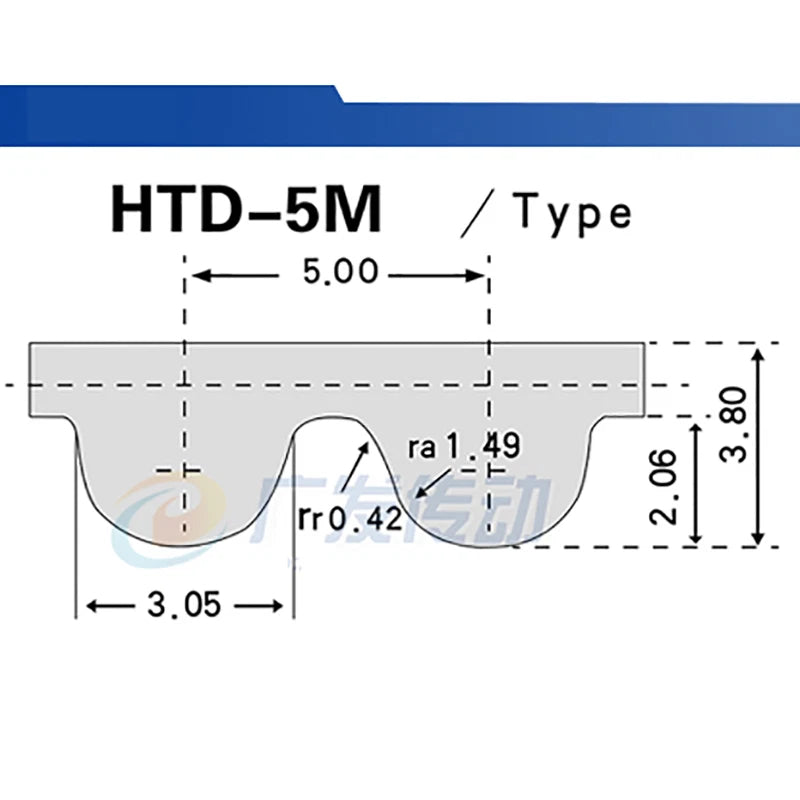
The HTD (High Torque Drive) 5mm tooth profile provides a deeper, rounded tooth engagement compared to MXL or GT2 profiles, reducing tooth jump under moderate-to-high torque loads in CNC and automation builds.
📏
25mm Belt Width
A 25mm face width distributes load across more tooth contact area than narrower 9mm or 15mm variants, making this width well-suited for wider gantries, heavier carriages, or applications where lateral belt stability matters.
🔁
Wide Perimeter Selection (175mm – 3750mm)
With over 240 discrete perimeter sizes available, you can match an exact loop length for your drive system without cutting or splicing — critical for maintaining consistent tooth count and tension.
🧱
Rubber Construction with Cord Reinforcement
The rubber body provides the flexibility needed to wrap pulleys with tooth counts as low as 12–15 teeth, while the internal tensile cord layer (typically fiberglass or steel) limits elongation under sustained tension.
🔧
Drop-In Replacement Compatibility
The HTD-5M profile is an internationally recognized standard. These belts are dimensionally compatible with any HTD-5M pulley system, making them straightforward replacements for worn or broken drive belts in existing equipment.
⚡
Suited for Iterative DIY Builds
Whether you are prototyping a new axis on a router or replacing a belt on a production 3D printer, the broad size range means you can source the exact perimeter you need and get back to building faster.
📐 Technical Specifications — HTD-5M Timing Belt
| Belt Type |
HTD-5M (High Torque Drive) |
| Pitch |
5mm |
| Belt Width |
25mm |
| Perimeter Range |
175mm – 3750mm (6.9 in – 147.6 in) |
| Tooth Profile |
HTD (rounded curvilinear) |
| Belt Material |
Rubber (neoprene-type) |
| Tensile Layer |
See variant options |
| Tooth Height |
Typically 2.06mm (standard HTD-5M) |
| Tooth Pitch Angle |
Standardized HTD-5M profile |
| Compatible Pulley Pitch |
5mm HTD |
| Compatible Pulley Face Width |
25mm or wider |
| Operating Temperature |
See variant options |
| Sold As |
1 belt per order |
❓ Frequently Asked Questions
How do I determine the correct perimeter length for my build?
Measure the center-to-center distance between your two pulleys, then use the standard belt length formula: Belt Perimeter ≈ 2 × C + π × (D1 + D2) / 2, where C is center distance and D1/D2 are pulley pitch diameters. Alternatively, wrap a flexible tape measure or string around both pulleys in the installed path and measure the total loop length. Always round up to the nearest available size and adjust your tensioner accordingly.
Is this belt compatible with GT2 or MXL pulleys?
No. The HTD-5M tooth profile is a rounded curvilinear shape that is not interchangeable with GT2 (2mm pitch), MXL (2.032mm pitch), or other pitch standards. You must use HTD-5M pulleys with a 5mm pitch to achieve proper tooth engagement. Mixing profiles causes premature wear and potential tooth jump under load.
Can I use this belt on a 3D printer or CNC router?
Yes, provided your machine uses HTD-5M pulleys with a 25mm face width (or wider). The 5mm pitch and 25mm width are common in wide-format 3D printers, laser engravers, and CNC gantry systems. Verify your pulley tooth count and the required belt perimeter before ordering. For standard desktop FDM printers using 6mm or 9mm wide belts, this 25mm-wide belt would not be appropriate.
How do I choose between different perimeter sizes if my target length falls between two options?
Select the next larger available perimeter and use your tensioner or idler pulley to take up the slack. Running a belt that is too short stresses the tensile cords and can cause premature failure. Running a belt slightly longer than ideal is the safer approach, as long as your tensioner has sufficient travel to maintain proper tooth engagement.
What is the difference between HTD-5M and standard trapezoidal timing belts?
HTD (High Torque Drive) belts use a rounded, curvilinear tooth profile that distributes load more evenly across the tooth root compared to the sharp-angled trapezoidal profile. This reduces stress concentration, lowers the risk of tooth shear under shock loads, and generally allows higher torque transmission for a given belt width. For precision motion applications like CNC and 3D printing, HTD profiles also tend to exhibit lower backlash than older trapezoidal designs.
Will this belt stretch over time, and how do I maintain proper tension?
All rubber timing belts experience a small amount of initial seating stretch during the first hours of operation. After this break-in period, the internal tensile cord layer (fiberglass or steel) resists further elongation under normal operating loads. Check and re-tension the belt after the first 10–20 hours of use. Ongoing maintenance involves periodic visual inspection for cracking, fraying at the belt edges, or tooth wear. Replace the belt if you observe any of these signs.
Can this belt be used outdoors or in wet environments?
Rubber HTD-5M belts have moderate resistance to moisture and light oil contamination, but prolonged exposure to standing water, UV radiation, or chemical solvents can degrade the rubber compound and reduce belt life. For outdoor or wash-down environments, consult the specific operating temperature and chemical resistance data for the belt variant you select, or contact us to confirm suitability for your application.
🛒 Select your Perimeter above, then add to cart.