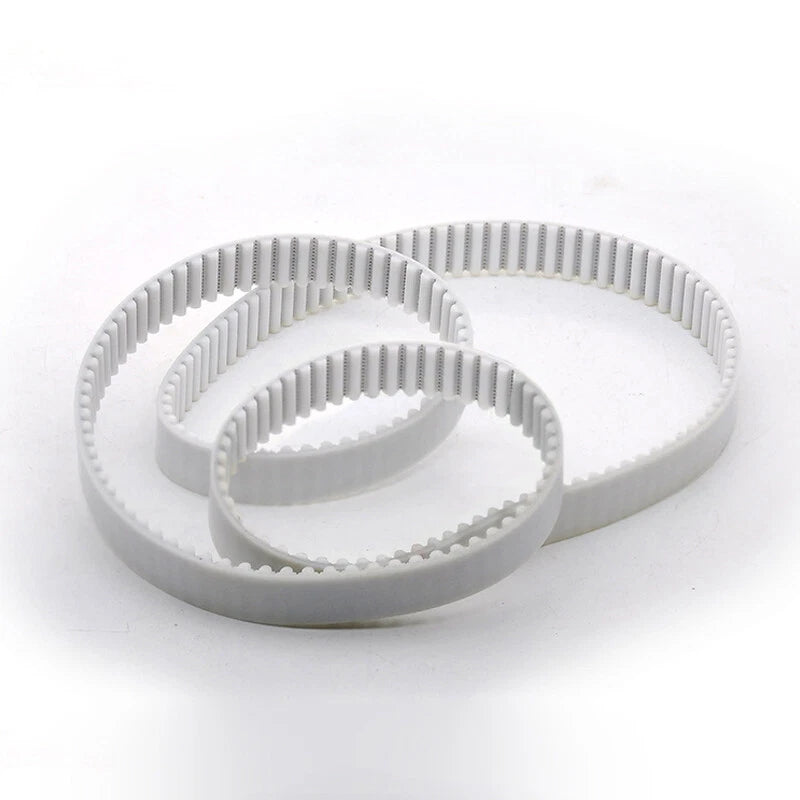
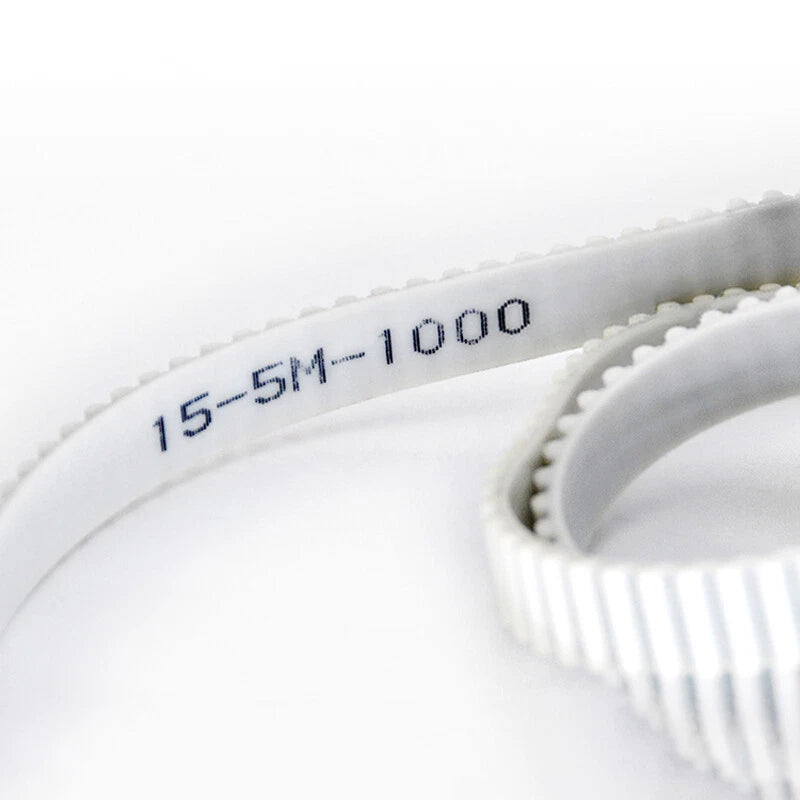
HTD3M Timing Belt Closed Loop 1002-1377mm | PU Steel Wire Reinforced 10mm Width

Keine Bewertungen

Preis:
Sonderpreis$20.66 USD
Lagerbestand:
Verfügbar (500 Stück), versandbereit

Payment & Security

Ach Direct Debit Amazon American Express Apple Pay Bancontact Diners Club Discover Google Pay iDEAL Wero Mastercard PayPal Shop Pay USDC Visa

Deine Zahlungsinformationen werden sicher verarbeitet. Wir speichern keine Kreditkartendaten und haben auch keinen Zugang zu deinen Kreditkartendaten.

Quantity Discount Promotion
🎯 BULK DISCOUNT: Buy More, Save More!
Buy 2 Items
5% OFF
Buy 4 Items
10% OFF
Buy 6 Items
15% OFF
Expert

DIY Expert Support

Get fitment advice & recommendations

Mon-Fri, 8:30AM-8PM
24-Hour Fast Ship
🚚
Arrives in 3-14 days
🌍
Global Reach
↩️
30-Day Returns
🌱 1 tree planted with every purchase

Beschreibung


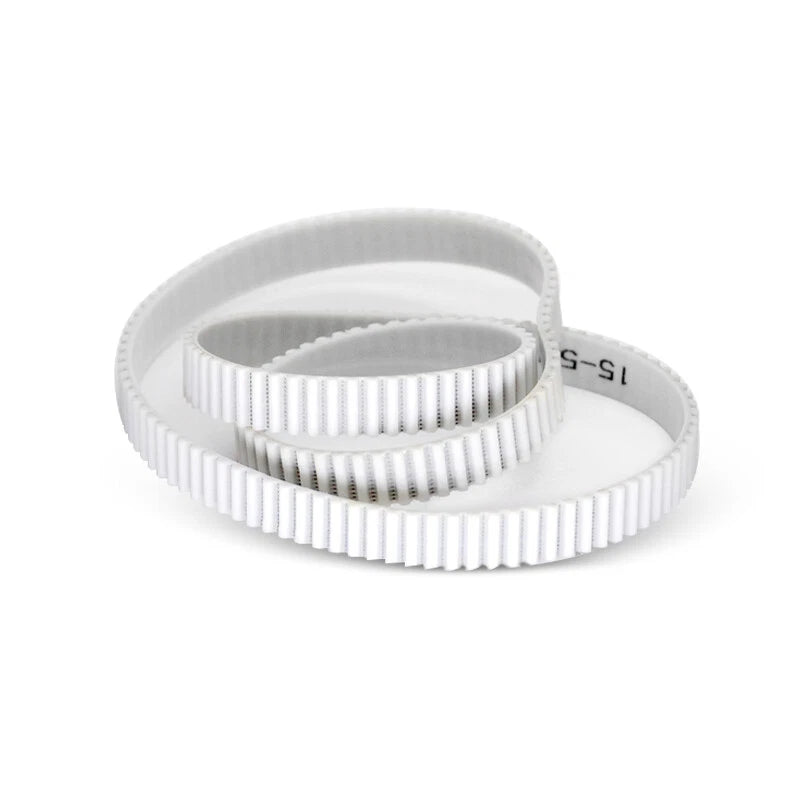
HTD3M Closed Loop Timing Belt — Precise Drive for 3D Printers, CNC & Robotics

When a slipping or stretched belt throws off your print layers, ruins a CNC cut, or causes positioning errors in your automation project, the root cause is usually a belt that can't hold tension. Makers, engineers, and repair technicians who need repeatable, low-backlash motion depend on a belt that stays dimensionally stable under load — and that's exactly what this HTD3M closed loop timing belt is built for.

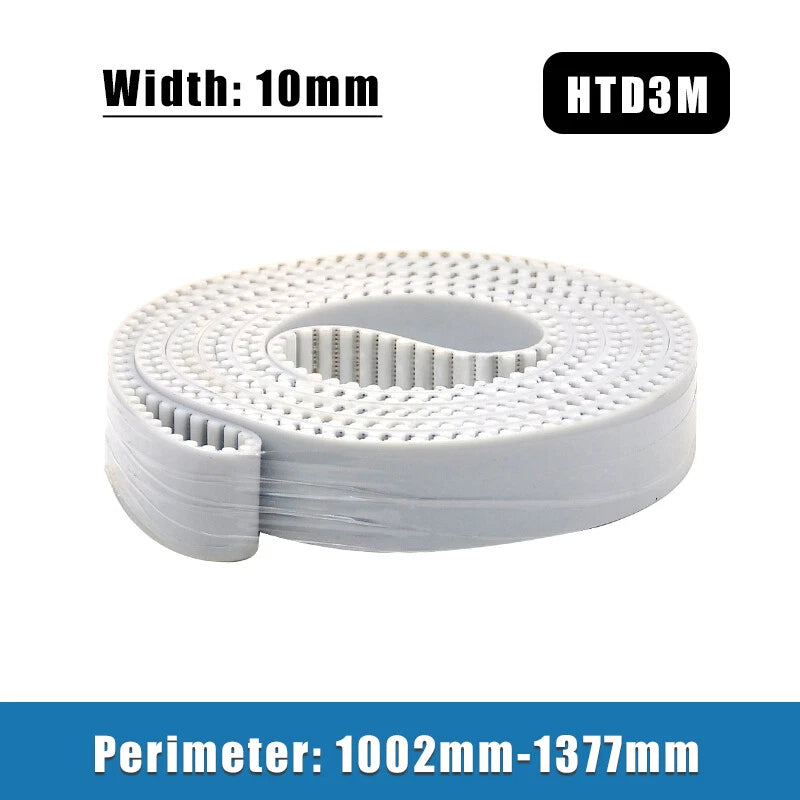
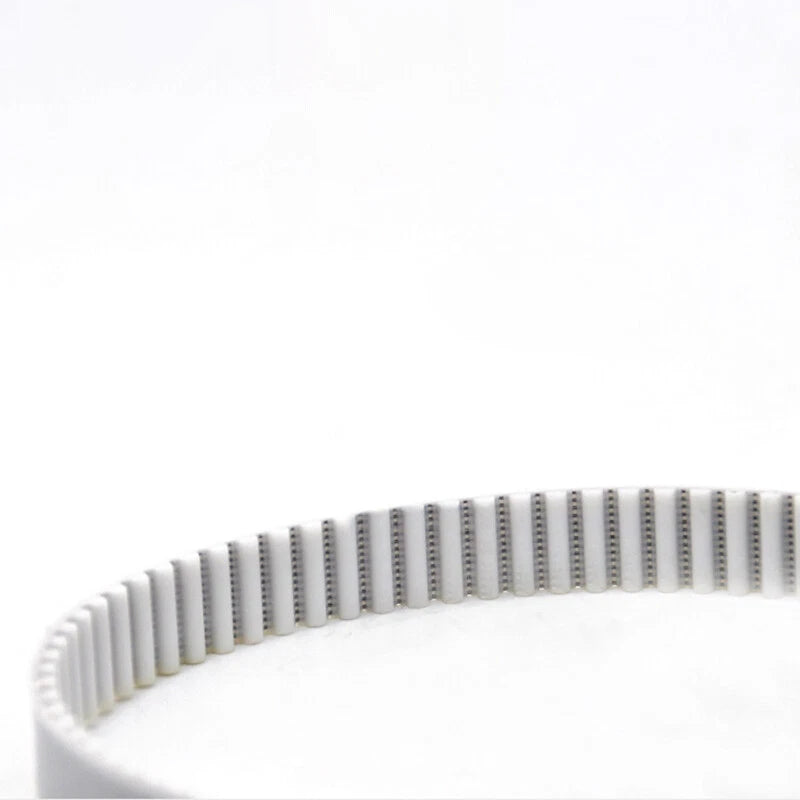
Each belt is a continuous closed loop made from polyurethane (PU) with a built-in steel wire tensile cord. The width is 10mm (≈3/8") and the perimeter ranges from 1002mm (≈39.4") to 1377mm (≈54.2"), available in 3mm increments so you can match your exact drive geometry. Sold individually (1 pcs) or as a two-pack (2 pcs) for dual-axis builds or spare inventory. The tooth profile follows the HTD3M standard with a 3mm pitch.

Typical use cases include CoreXY and Cartesian 3D printer drive systems, CNC router axis drives, laser cutter gantry belts, robotic arm joint drives, and light-duty conveyor or indexing mechanisms where a closed-loop HTD3M timing belt with steel wire reinforcement is specified.

ℹ️ Compatibility: Designed for HTD3M pulleys with 3mm pitch. Not interchangeable with GT2, T5, or MXL profiles. Confirm your pulley is labeled HTD3M before ordering.

✅ Key Features of These HTD3M Closed Loop Timing Belts

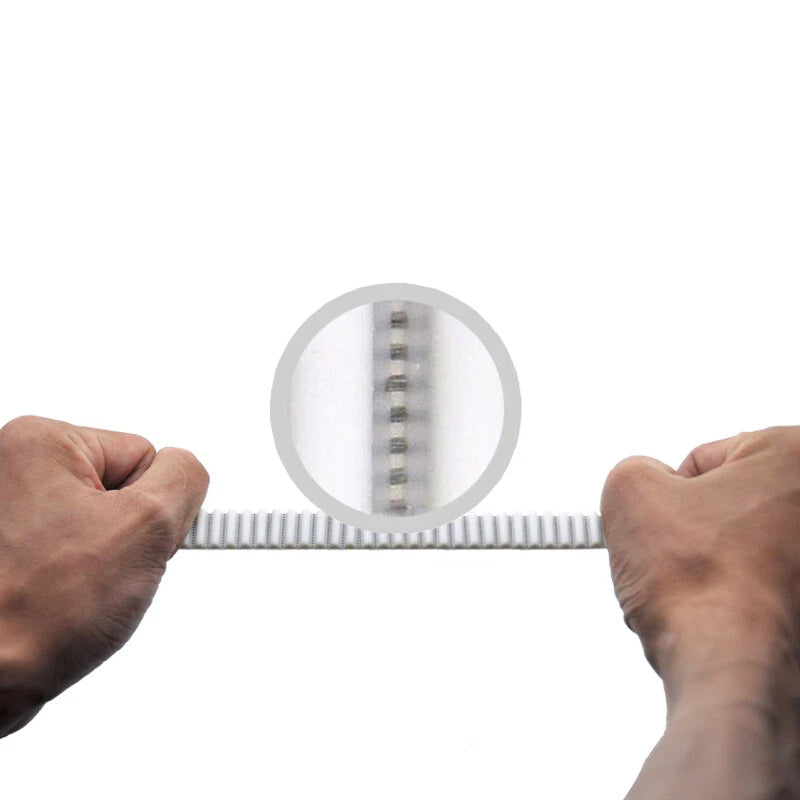
  • 🔩Steel Wire Tensile Core — Built-in steel wire reinforcement minimizes belt stretch under load, maintaining positional accuracy in closed-loop HTD3M drive systems.
  • 🧱Polyurethane (PU) Construction — PU body resists oils, greases, and mild moisture better than standard neoprene, extending service life in workshop and light-industrial environments.
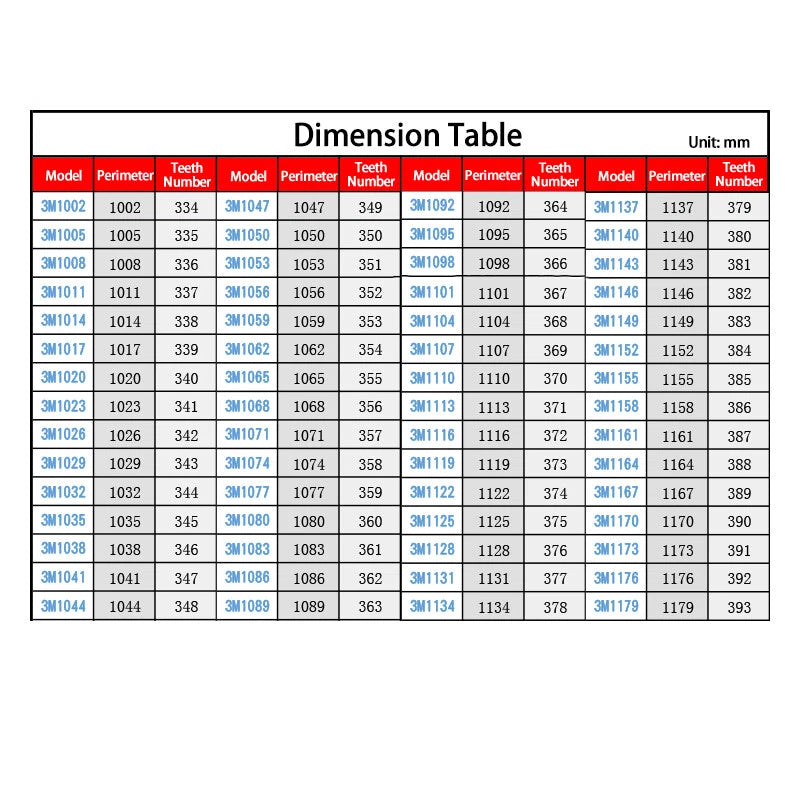
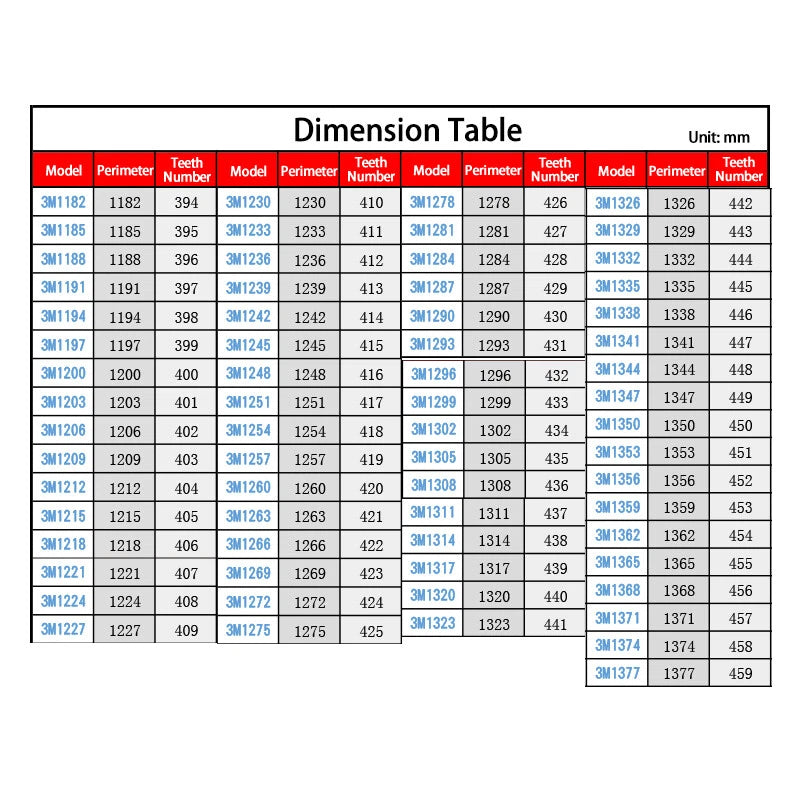
  • 📏Wide Size Selection — Perimeters from 1002mm (≈39.4") to 1377mm (≈54.2") in 3mm steps let you match your exact center-to-center pulley distance without custom cutting.
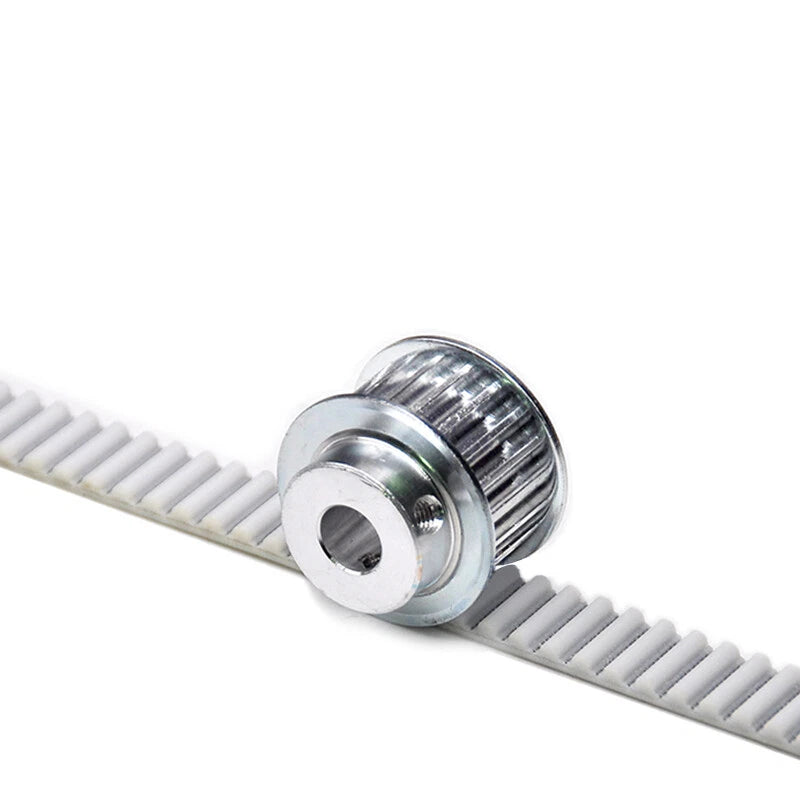
  • ⚙️HTD3M Tooth Profile — The 3mm pitch HTD tooth geometry provides positive engagement with matching pulleys, reducing slip in high-speed or high-torque motion control applications.
  • 📦Single or Twin Pack — Available as 1 pcs for single-axis replacement or 2 pcs for dual-axis machines (CoreXY, H-bot) and spare-part stocking.
  • 🏭Consistent 10mm Width — Uniform 10mm (≈3/8") width across all perimeter sizes ensures compatibility with standard 10mm-wide HTD3M pulleys and belt guides.

📐 Technical Specifications — HTD3M Closed Loop Timing Belt

Belt Type HTD3M Closed Loop (Endless)
Tooth Pitch 3mm (HTD profile)
Belt Width 10mm (≈3/8")
Perimeter Range 1002mm (≈39.4") – 1377mm (≈54.2")
Perimeter Increment 3mm steps (see variant options)
Body Material Polyurethane (PU)
Tensile Cord Built-in steel wire
Pack Options 1 pcs / 2 pcs
Compatible Pulley Profile HTD3M (3mm pitch)
Tooth Count per Belt See variant options (perimeter ÷ 3mm)
Operating Temperature Contact us to confirm
Country of Origin Contact us to confirm
⚠️ Size tip: Measure your existing belt's outer perimeter or calculate from your pulley center distance before selecting a size. If between sizes, typically size up.

❓ Frequently Asked Questions

How do I choose the right perimeter length for my HTD3M timing belt?

Measure the center-to-center distance between your two pulleys, then calculate the belt path length. A general formula is: Belt Length ≈ 2 × C + π × (D1 + D2) / 2, where C is center distance and D1/D2 are pulley pitch diameters. For example, 1002mm ≈ 39.4", 1200mm ≈ 47.2", 1377mm ≈ 54.2". Always confirm with your machine's belt routing diagram and round up to the nearest available size if between options.

What load or tension can these HTD3M timing belts typically handle?

HTD3M belts are generally suited for light-to-medium duty motion control. The PU body with steel wire tensile cord provides good dimensional stability and tensile strength for typical 3D printer, CNC router, and robotics applications. For heavy industrial loads, contact us to confirm suitability for your specific application.

Can these timing belts be used outdoors or in wet environments?

PU timing belts generally offer better resistance to oils, greases, and mild moisture compared to standard neoprene belts. However, prolonged exposure to standing water, harsh UV, or chemical washdown environments is not typically recommended without confirmation. Contact us if your application involves outdoor or wet conditions.

What pulley standard is compatible with HTD3M belts?

HTD3M belts require HTD3M pulleys with a 3mm pitch. This tooth profile is not interchangeable with GT2 (2mm pitch), T5 (5mm pitch), MXL, or other profiles. Always verify your pulley is labeled HTD3M before ordering to ensure proper engagement.

How do I convert the perimeter from mm to inches?

Divide the mm value by 25.4. Quick reference examples: 1002mm ÷ 25.4 ≈ 39.4"; 1200mm ÷ 25.4 ≈ 47.2"; 1377mm ÷ 25.4 ≈ 54.2". Use these conversions to cross-reference with imperial-spec machine documentation.

Why choose a PU belt with steel wire over a standard rubber timing belt?

PU belts with steel wire cores typically exhibit lower elongation under tension, better dimensional stability over time, and longer service life compared to standard rubber (neoprene) belts in precision motion applications. This makes them a popular upgrade for 3D printers, laser cutters, and CNC machines where positional accuracy and repeatability are critical.

Is the 1 pcs or 2 pcs pack better for my project?

The 1 pcs option is ideal for single-axis replacements or verifying fit before a larger order. The 2 pcs pack offers better value if you're building a dual-axis machine (such as a CoreXY 3D printer) or want a spare belt on hand. Both packs contain the same belt specification — only the quantity differs.

🛒 Select your perimeter size and quantity above, then add to cart — ships from our US warehouse.

You may also like

Recently viewed