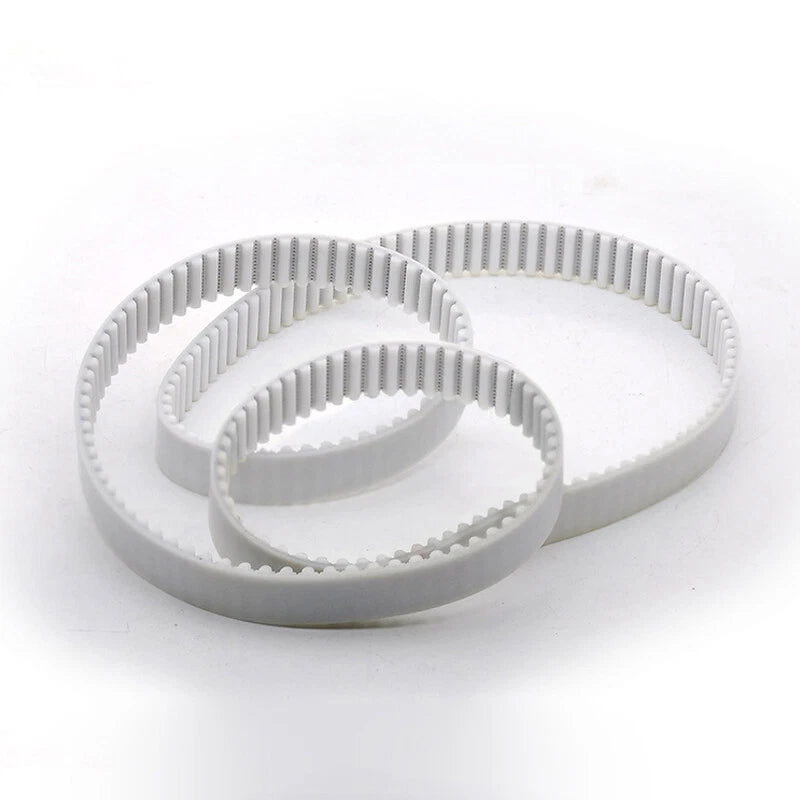
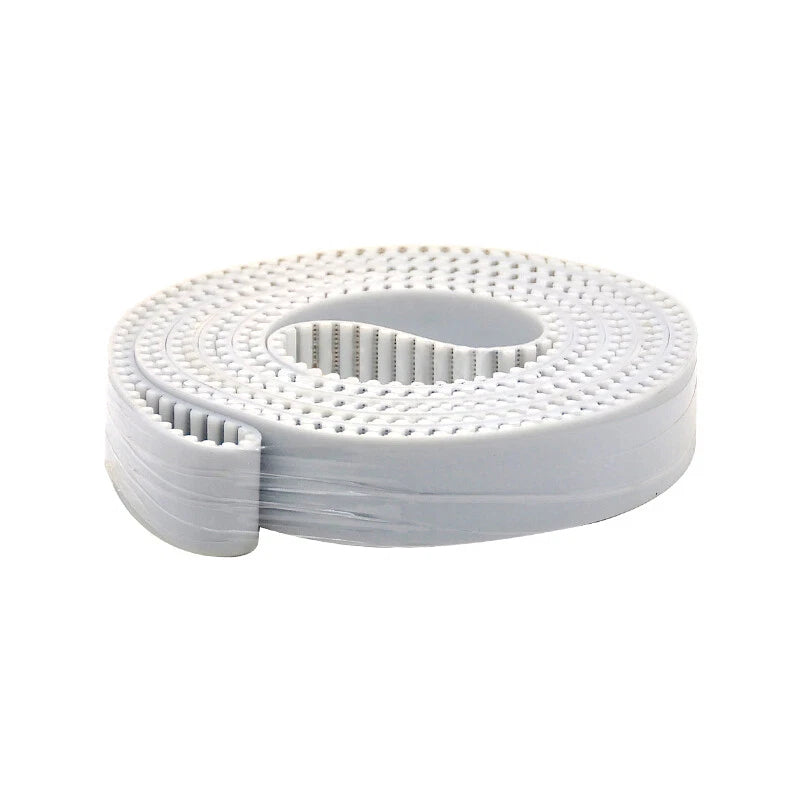
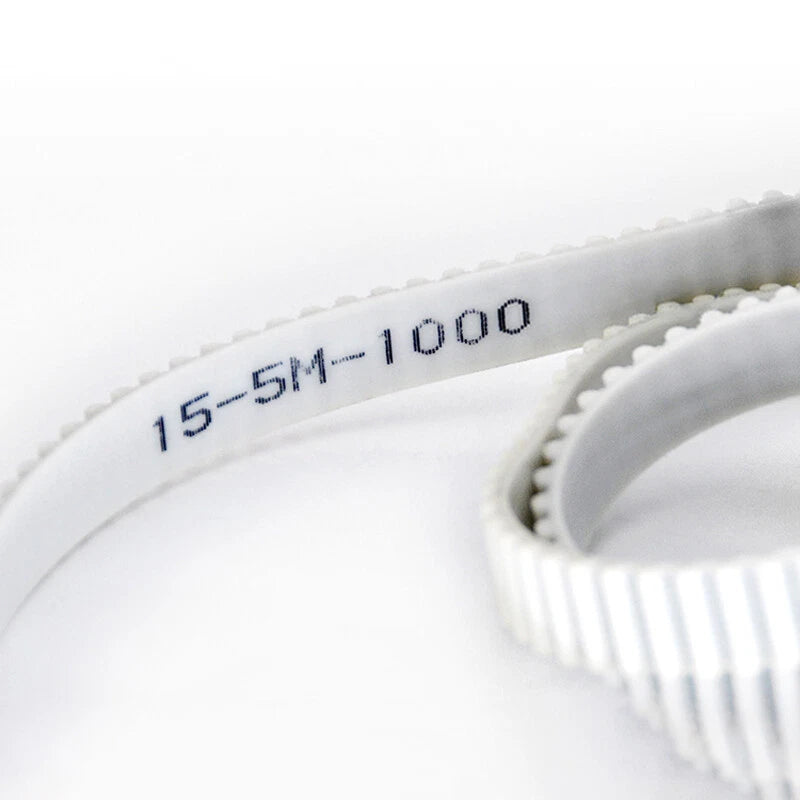
HTD3M Timing Belt 30mm Wide – Polyurethane Steel Wire Reinforced, 501–999mm Perimeter

Keine Bewertungen

Preis:
Sonderpreis$22.94 USD
Lagerbestand:
Verfügbar (500 Stück), versandbereit

Payment & Security

Ach Direct Debit Amazon American Express Apple Pay Bancontact Diners Club Discover Google Pay iDEAL Wero Mastercard PayPal Shop Pay USDC Visa

Deine Zahlungsinformationen werden sicher verarbeitet. Wir speichern keine Kreditkartendaten und haben auch keinen Zugang zu deinen Kreditkartendaten.

Quantity Discount Promotion
🎯 BULK DISCOUNT: Buy More, Save More!
Buy 2 Items
5% OFF
Buy 4 Items
10% OFF
Buy 6 Items
15% OFF
Expert

DIY Expert Support

Get fitment advice & recommendations

Mon-Fri, 8:30AM-8PM
24-Hour Fast Ship
🚚
Arrives in 3-14 days
🌍
Global Reach
↩️
30-Day Returns
🌱 1 tree planted with every purchase

Beschreibung


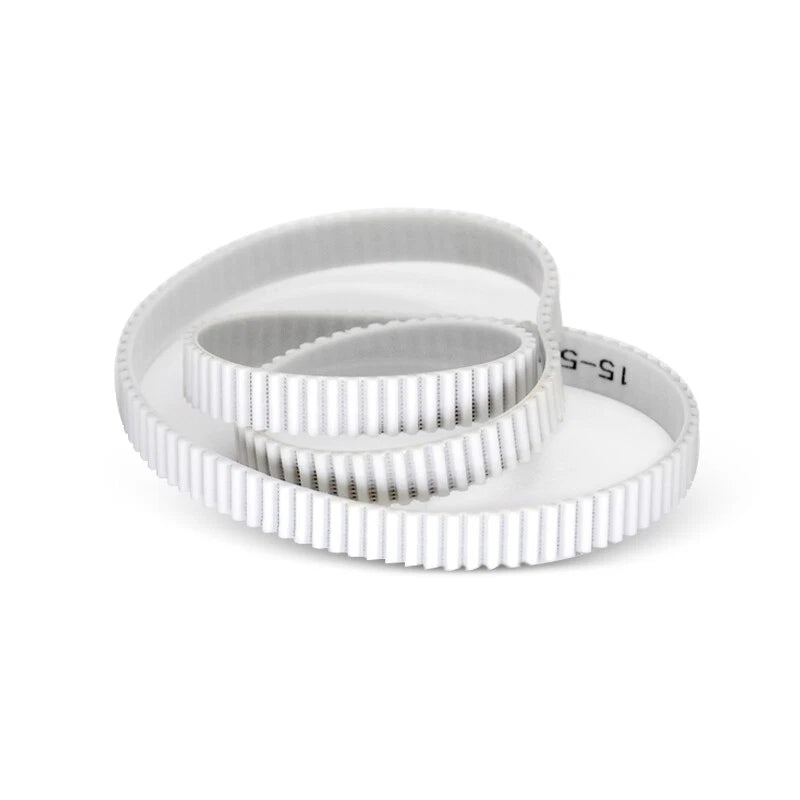
HTD3M Timing Belt 30mm Wide — Reliable Synchronous Drive for Precision Motion Systems

When a slipping or worn drive belt throws off your CNC router, 3D printer, or automation axis, every job suffers. Engineers, makers, and machine builders who need a dimensionally stable, low-backlash HTD3M timing belt will find this 30mm wide polyurethane belt a dependable drop-in solution across a wide range of perimeter sizes.

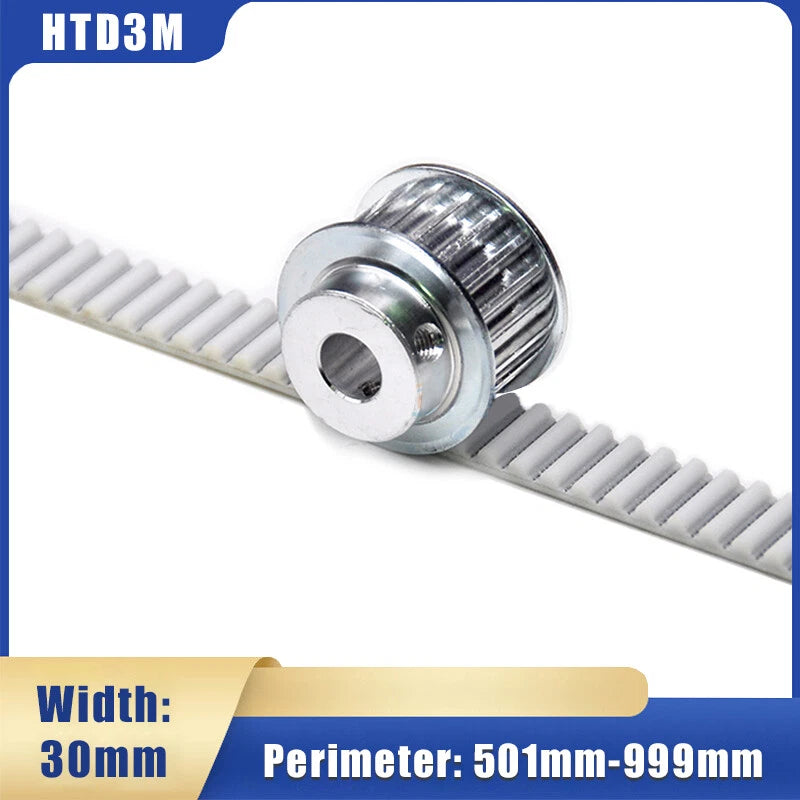
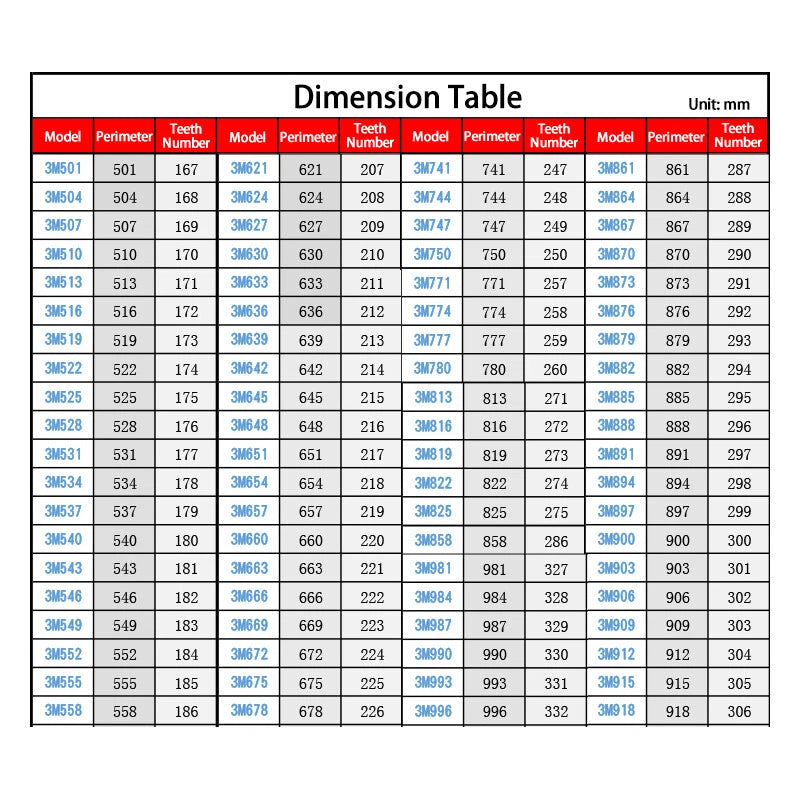
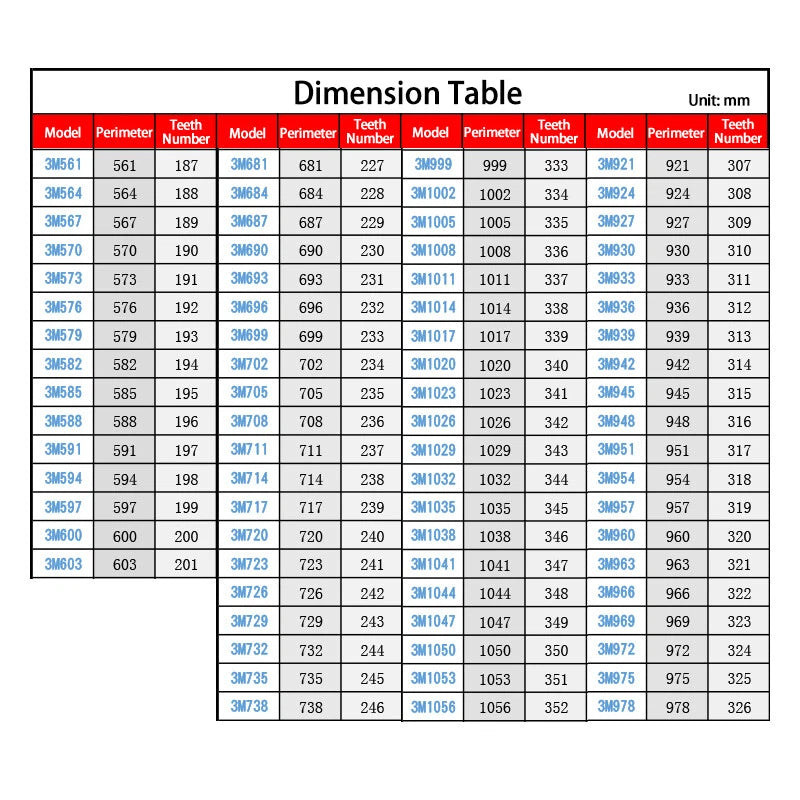
Each belt features a polyurethane body reinforced with a steel wire tension cord. The width is 30mm, and perimeter options span 501mm (≈19.7") to 999mm (≈39.3"), selectable in 3mm increments to match your exact drive geometry. Available in single (1 pcs) or twin (2 pcs) packs to suit single-axis builds or dual-axis systems like CoreXY printers.

Typical use cases include CNC router X/Y axis drives, desktop 3D printer motion systems, pick-and-place robotics, conveyor indexing mechanisms, and DIY linear actuator builds — anywhere a synchronous HTD3M timing belt with consistent tooth engagement is required.

ℹ️ Compatibility: Designed for standard HTD3M pulleys with 3mm pitch and 30mm belt width. Verify your pulley flange accommodates a 30mm belt before ordering. Select your exact perimeter from the variant dropdown above.

✅ Key Features of These HTD3M Timing Belts

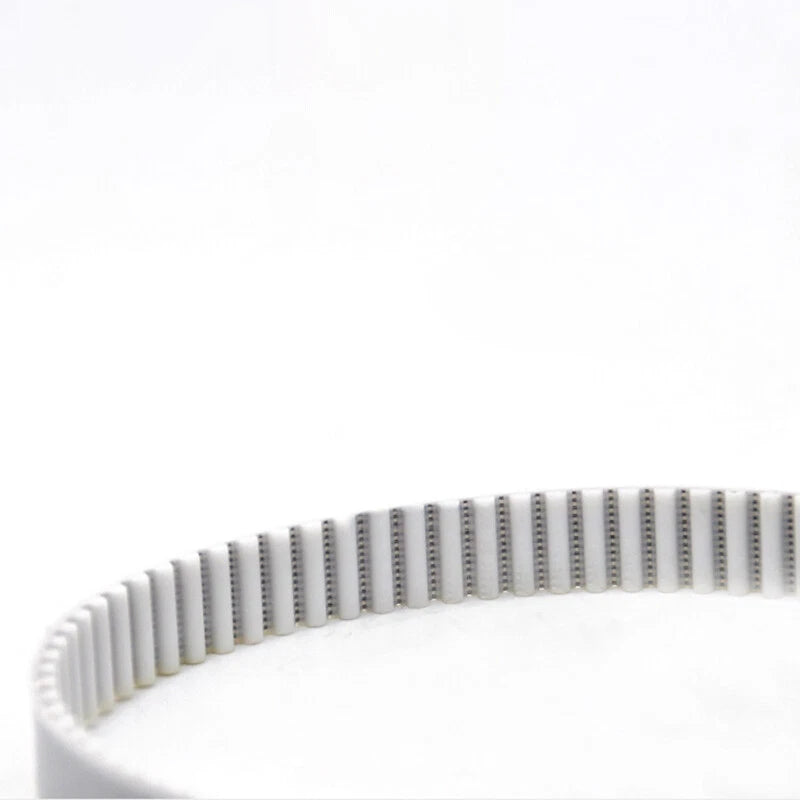
  • ⚙️HTD3M Curvilinear Tooth Profile — 3mm pitch rounded tooth design distributes load evenly across the pulley, reducing backlash and improving positioning accuracy in CNC and robotics drives.
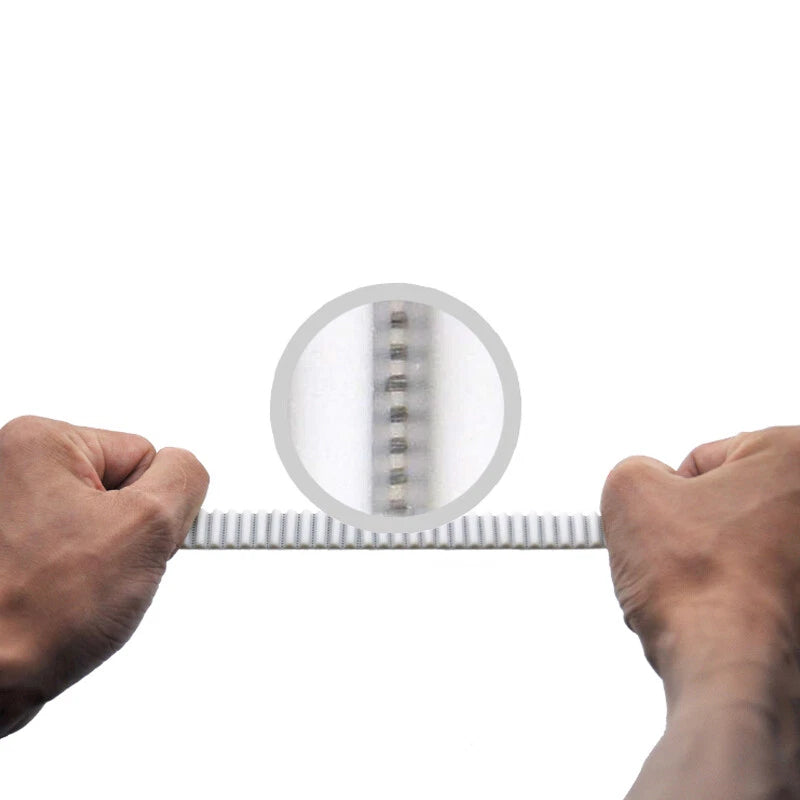
  • 🔩Steel Wire Tension Cord — Embedded steel wire reinforcement resists elongation under load, maintaining consistent belt tension and tooth pitch over extended duty cycles.
  • 🧪Polyurethane Body — Polyurethane construction offers greater abrasion resistance and dimensional stability than rubber, helping the belt retain its profile in repetitive motion applications.
  • 📏Wide Perimeter Selection (501–999mm) — Available in 3mm perimeter increments from 501mm (≈19.7") to 999mm (≈39.3"), covering a broad range of drive configurations without custom fabrication.
  • 📐30mm Consistent Belt Width — Uniform 30mm width across all perimeter variants ensures compatibility with standard 30mm HTD3M pulleys and flanged idlers used in desktop CNC and 3D printer timing belt systems.
  • 📦Single or Twin Pack Options — Choose 1 pcs for a single-axis replacement or 2 pcs for dual-axis builds (e.g., CoreXY) or to keep a spare on hand, with the twin pack offering a lower per-unit cost.

📐 Technical Specifications — HTD3M Timing Belt

Belt Profile HTD3M (High Torque Drive, 3mm pitch)
Tooth Shape Curvilinear (rounded)
Pitch 3mm
Belt Width 30mm (≈1.18")
Perimeter Range 501mm (≈19.7") – 999mm (≈39.3"), in 3mm increments
Body Material Polyurethane (PU)
Tension Cord Steel wire
Packing Quantity 1 pcs or 2 pcs (select above)
Compatible Pulley Standard HTD3M, 30mm width
Typical Applications See variant options
Operating Temperature Contact us to confirm
Color/Finish See variant options
⚠️ Size Note: Perimeter is the total closed-loop belt length, not the center-to-center pulley distance. Measure your drive path carefully before selecting a size. If you are unsure, contact us to confirm.

❓ Frequently Asked Questions

How do I choose the right perimeter size for my HTD3M timing belt?

Measure the center-to-center distance between your two pulleys, then calculate the full belt path length — this is the perimeter. For example, 600mm perimeter is approximately 23.6". Always verify against your pulley tooth count and pitch (3mm for HTD3M) to confirm compatibility. When in doubt, size up slightly and use a tensioner to take up slack.

What load or torque can this HTD3M timing belt handle?

HTD3M belts are generally suited for light-to-medium duty applications. The steel wire tension cord provides good tensile strength for typical CNC router, 3D printer, and small automation loads. For heavy industrial torque requirements, a wider belt or higher pitch (e.g., HTD5M or HTD8M) is typically recommended.

Can this belt be used outdoors or in wet environments?

Polyurethane timing belts generally offer better moisture and chemical resistance than rubber belts. However, prolonged exposure to standing water, UV radiation, or harsh chemicals may degrade performance over time. For outdoor or washdown environments, confirm suitability with your specific application requirements before installation.

Is this belt compatible with standard HTD3M pulleys?

Yes. This belt follows the HTD3M profile standard: 3mm pitch, rounded curvilinear tooth profile. It is compatible with any HTD3M pulley of matching width (30mm). Verify that your pulley flange width accommodates a 30mm belt before ordering.

How do I decide between ordering 1 pc vs. 2 pcs?

Order 1 pc for a single-axis replacement or prototype build. Order 2 pcs if you are building a dual-axis system (e.g., CoreXY 3D printer), want a spare on hand, or are outfitting multiple machines at once. The 2-pcs pack typically offers a lower per-unit cost.

What is the tooth pitch and profile of this belt?

This belt uses the HTD (High Torque Drive) 3M profile: 3mm pitch with a curvilinear (rounded) tooth shape. This profile provides better load distribution and reduced backlash compared to trapezoidal tooth belts, making it well-suited for positioning and motion control applications such as CNC routers and 3D printer timing belt drives.

What is the difference between polyurethane and rubber timing belts?

Polyurethane belts generally offer higher abrasion resistance, better dimensional stability, and improved resistance to oils and chemicals compared to rubber belts. They tend to maintain their shape longer under repeated cycling, which is beneficial for precision motion applications where consistent tooth pitch is critical.

🛒 Select your perimeter size and packing quantity above, then add to cart — ships from our US warehouse.

You may also like

Recently viewed