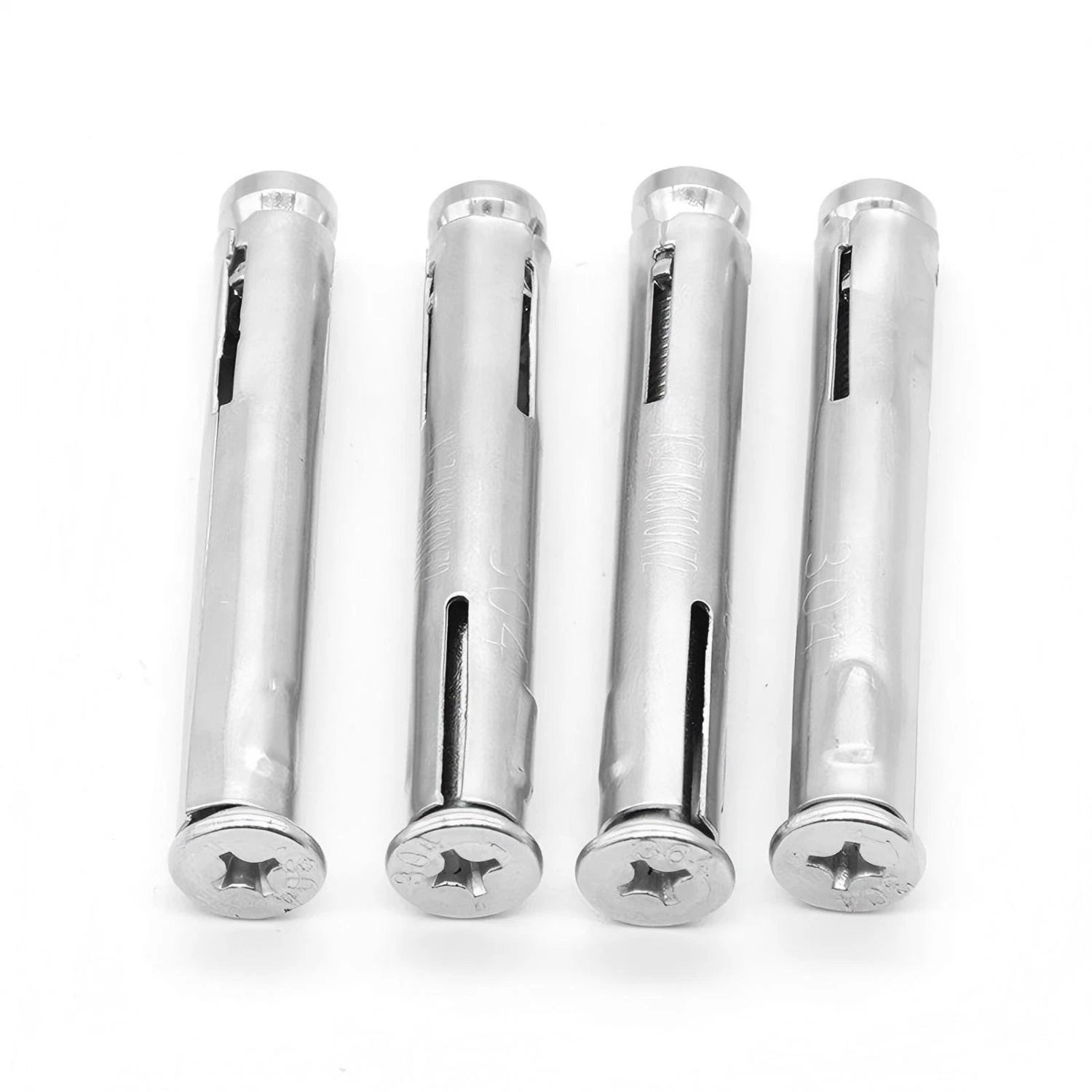
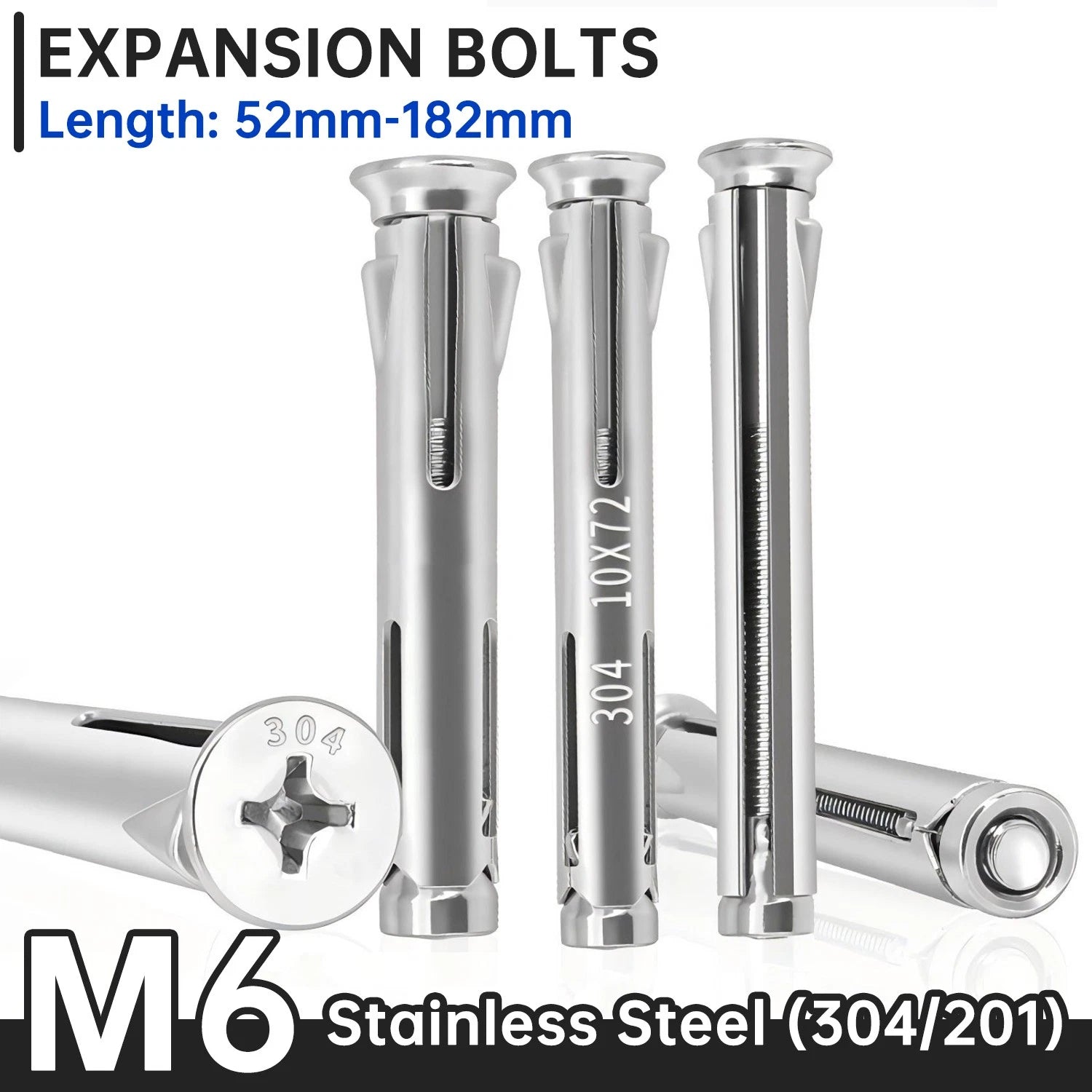
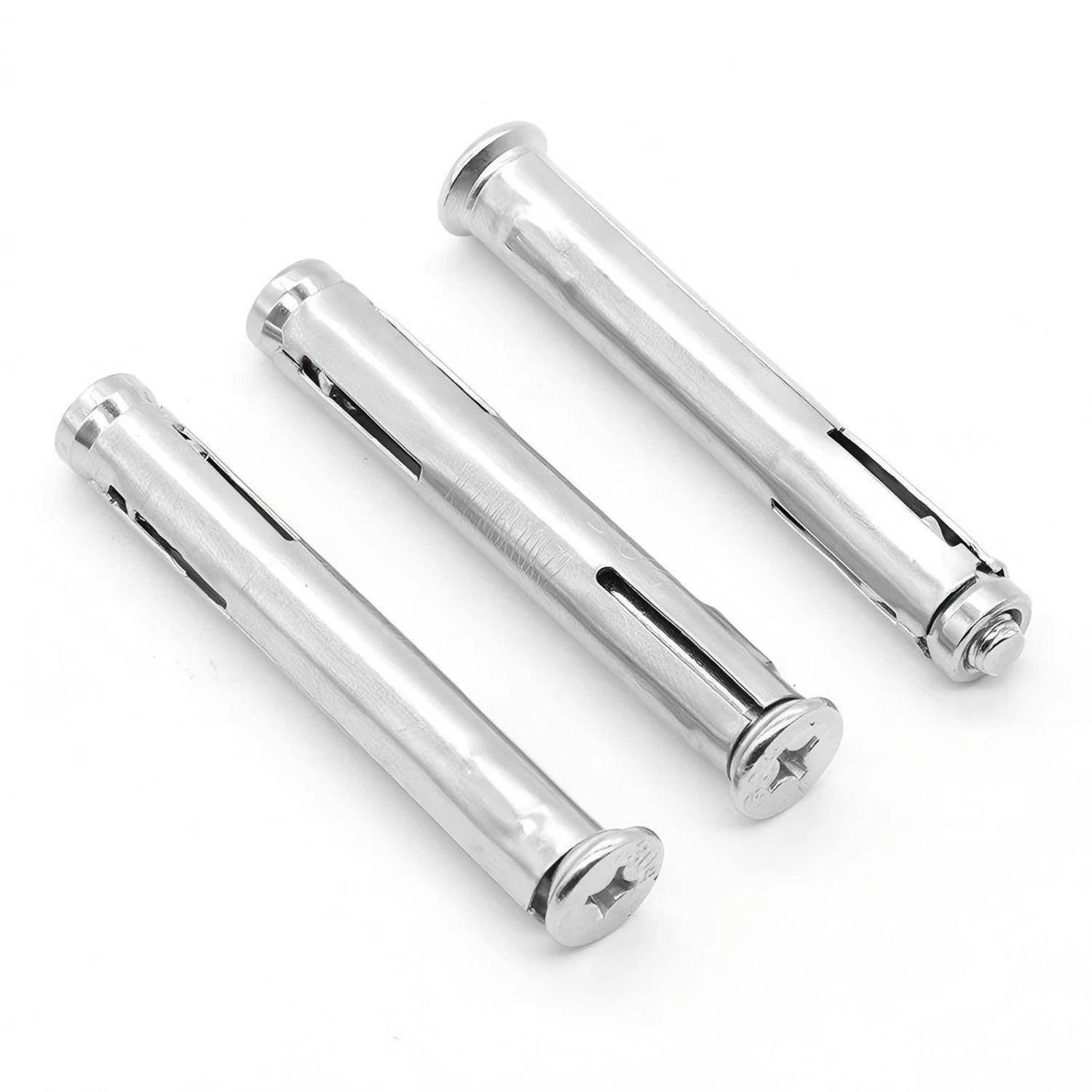
M6 Countersunk Sleeve Anchor Expansion Bolts — 304 / 201 Stainless Steel, Cross Drive

Keine Bewertungen

Preis:
Sonderpreis$8.96 USD
Lagerbestand:
Verfügbar (500 Stück), versandbereit

Payment & Security

Ach Direct Debit Amazon American Express Apple Pay Bancontact Diners Club Discover Google Pay iDEAL Wero Mastercard PayPal Shop Pay USDC Visa

Deine Zahlungsinformationen werden sicher verarbeitet. Wir speichern keine Kreditkartendaten und haben auch keinen Zugang zu deinen Kreditkartendaten.

Quantity Discount Promotion
🎯 BULK DISCOUNT: Buy More, Save More!
Buy 2 Items
5% OFF
Buy 4 Items
10% OFF
Buy 6 Items
15% OFF
Expert

DIY Expert Support

Get fitment advice & recommendations

Mon-Fri, 8:30AM-8PM
24-Hour Fast Ship
🚚
Arrives in 3-14 days
🌍
Global Reach
↩️
30-Day Returns
🌱 1 tree planted with every purchase

Beschreibung

M6 Countersunk Sleeve Anchor Expansion Bolts — Flush-Mount Fastening for Concrete & Masonry

When you need a clean, flush finish on concrete walls, stone facades, or brick structures, standard hex-head anchors leave an exposed protrusion that catches the eye and can snag cables, trim, or fixtures. These M6 countersunk sleeve anchor expansion bolts are built for installers, contractors, and serious DIYers who need a secure, low-profile fastening point in hard base materials without compromise.

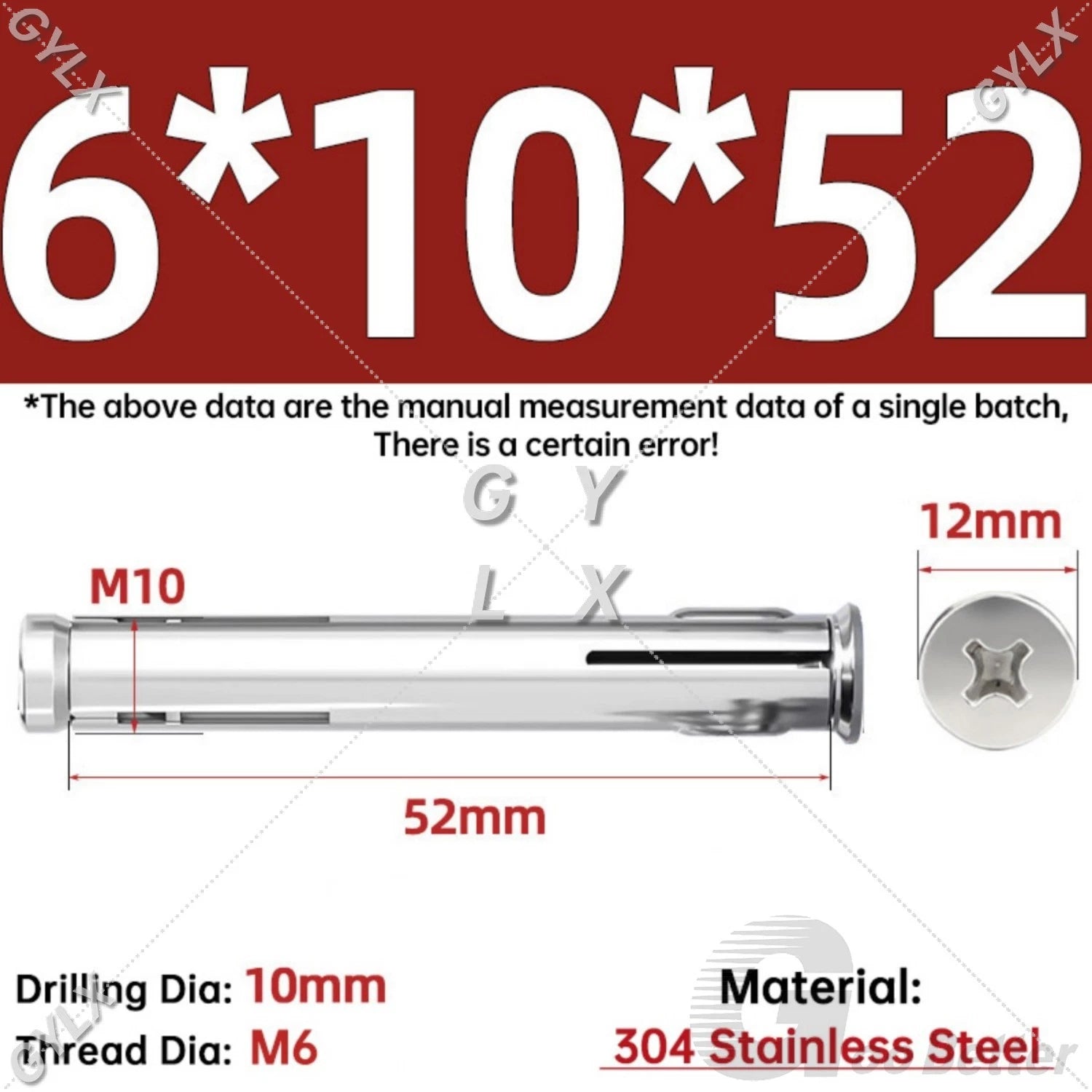
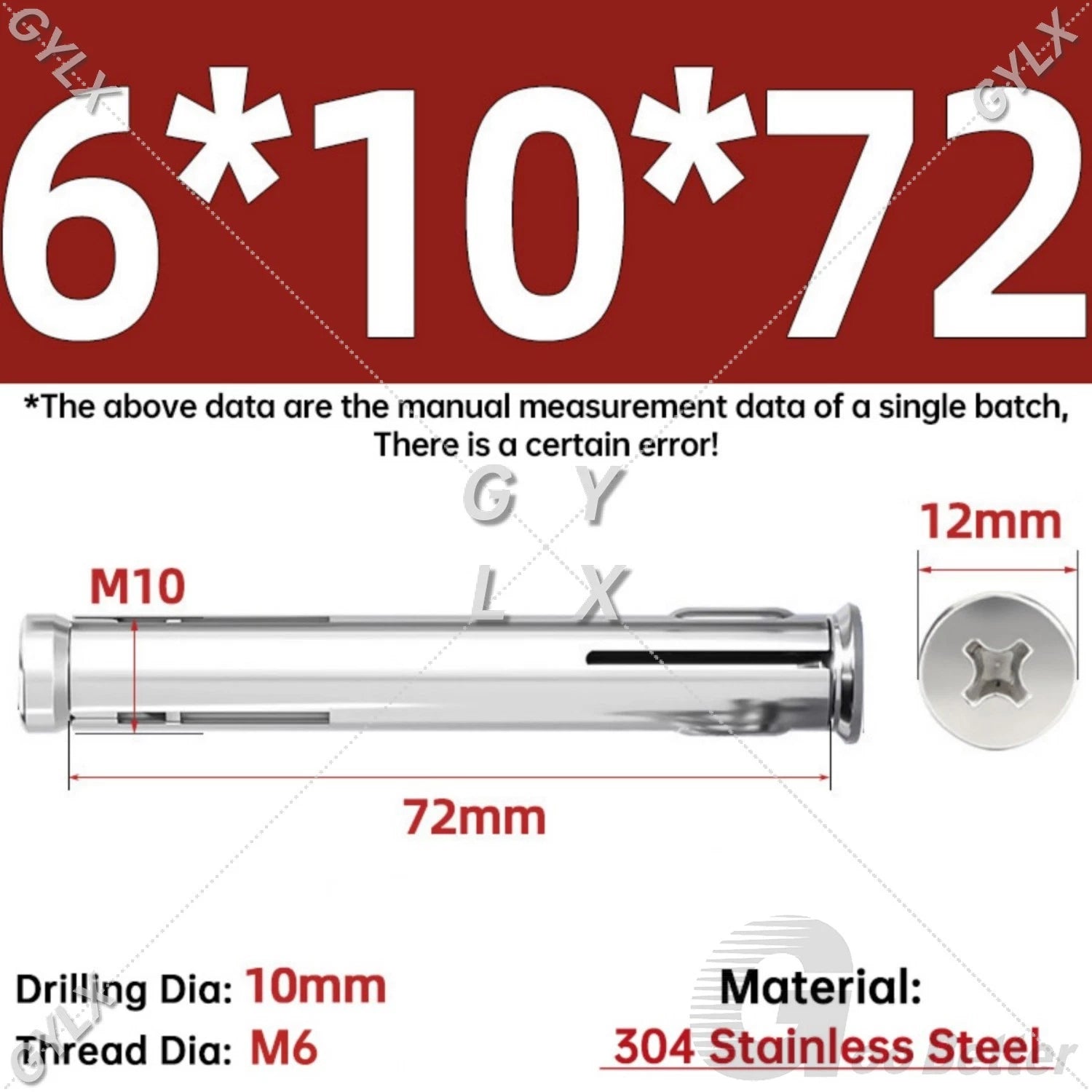
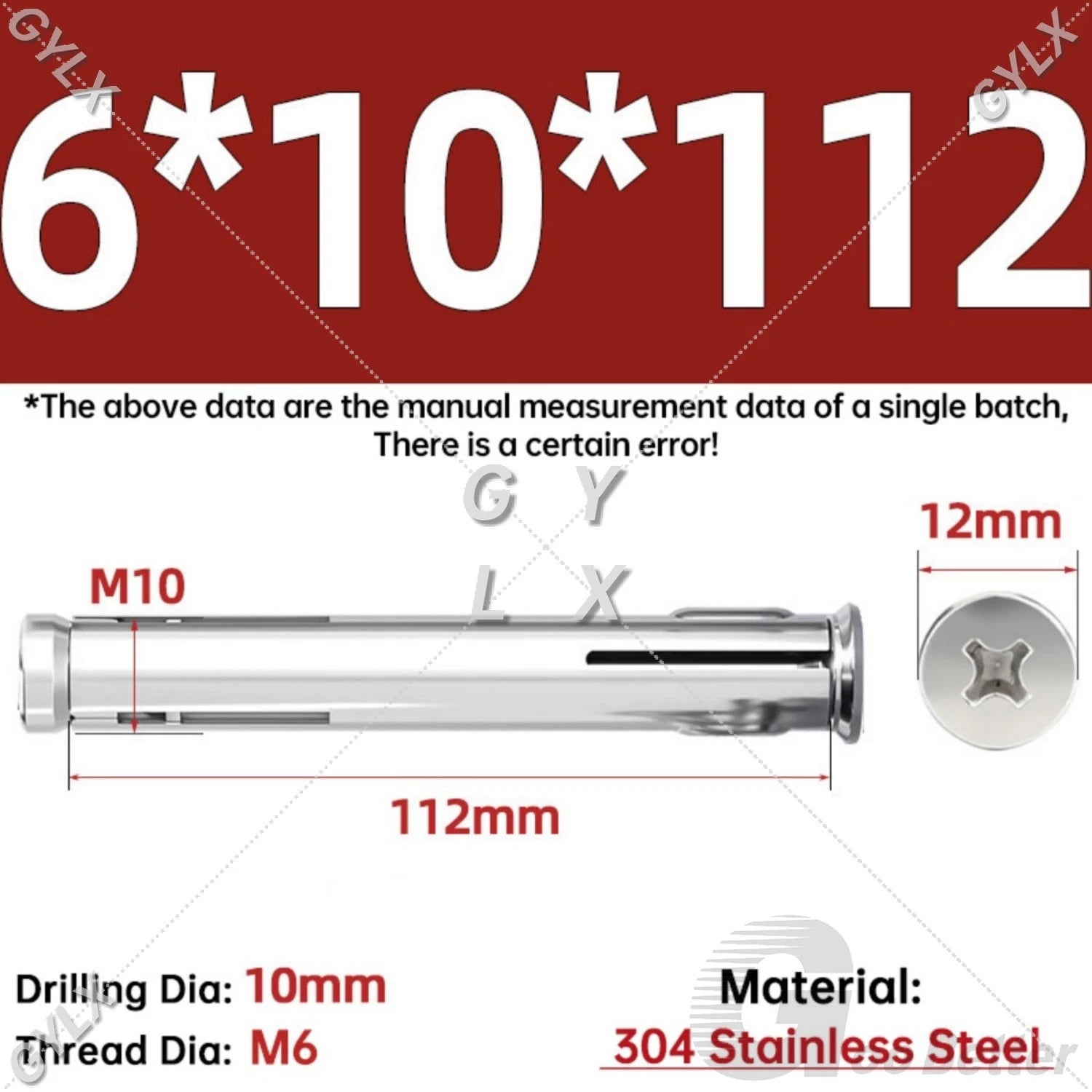
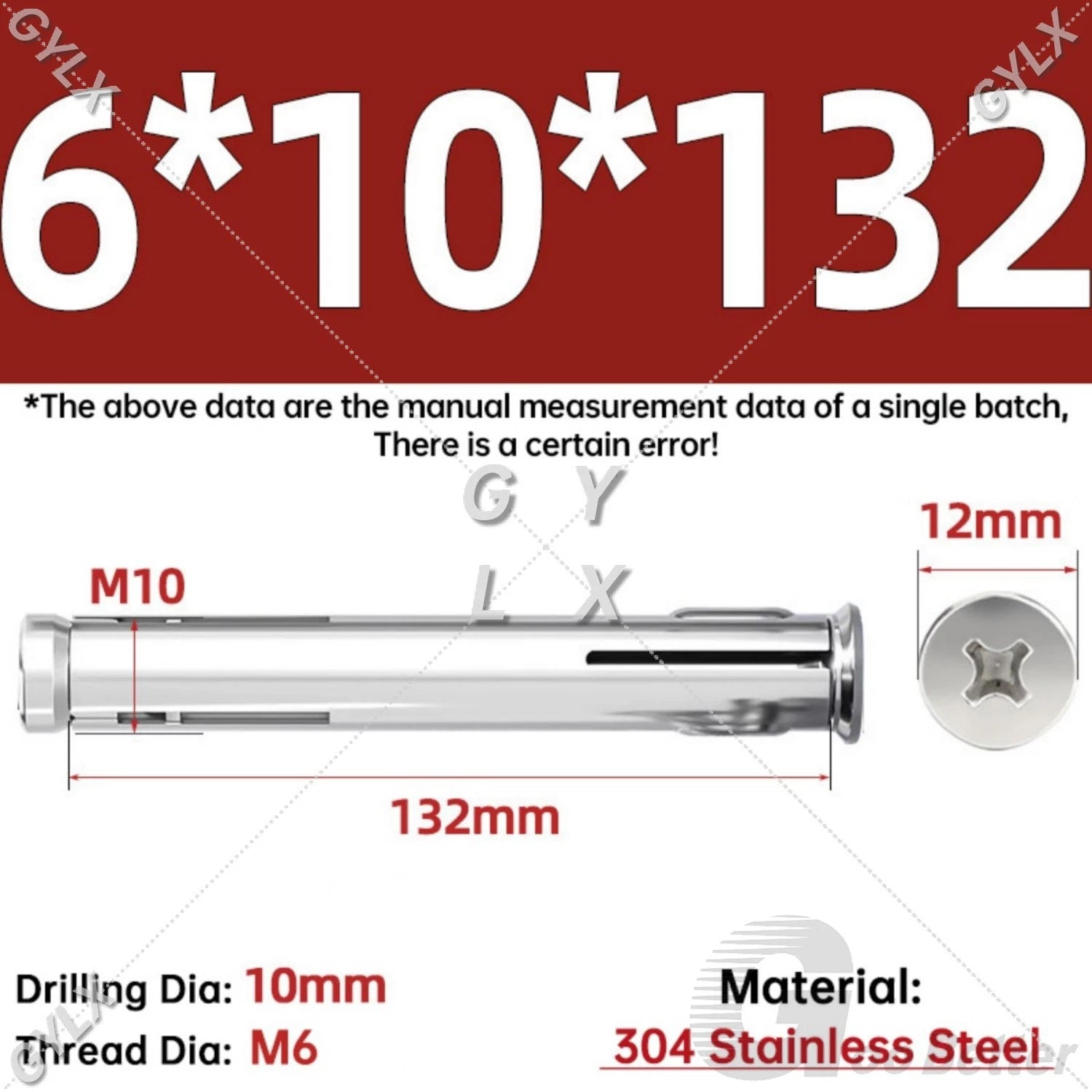
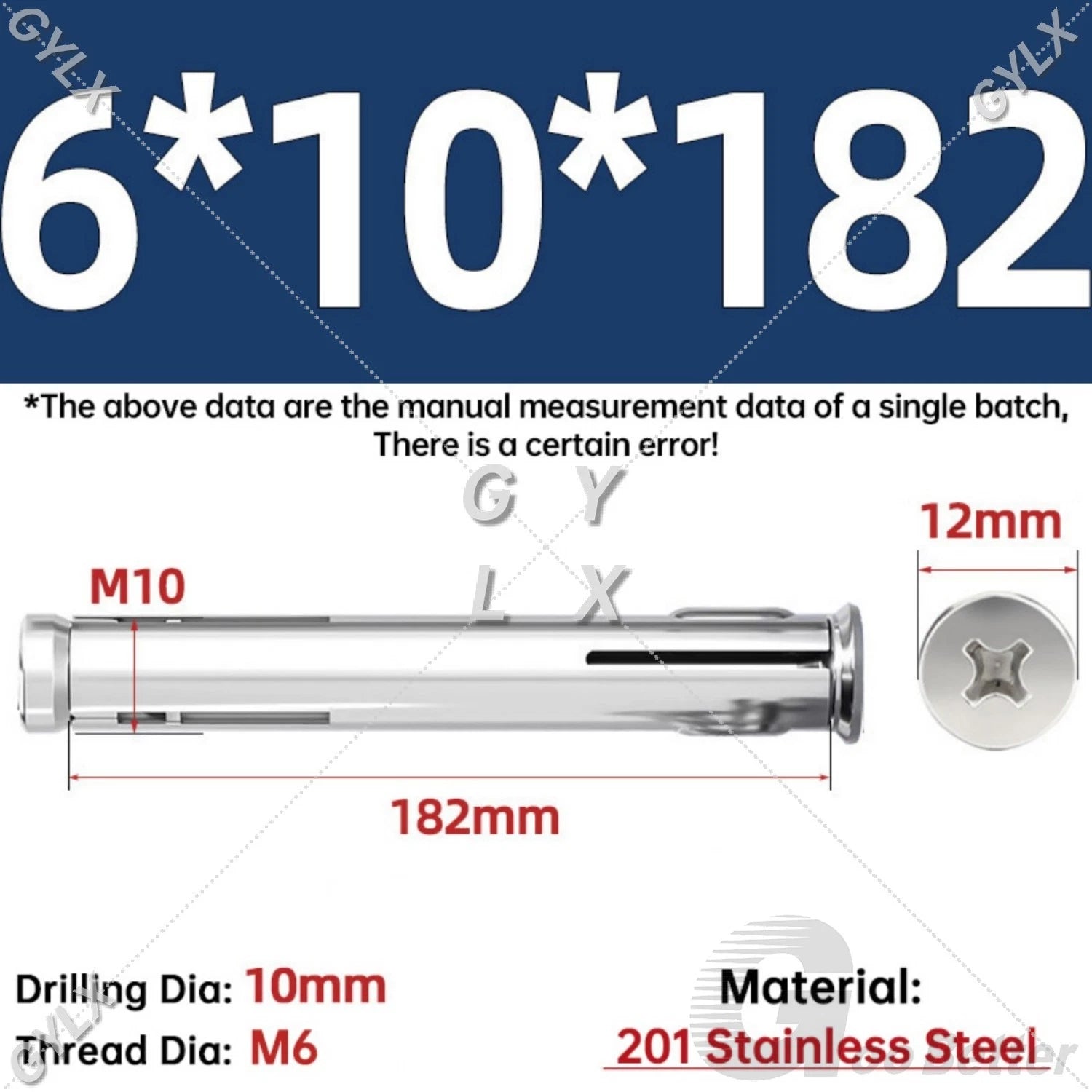
Each bolt features an M6 metric coarse thread with a 10mm anchor body diameter and a countersunk cross (Phillips-compatible) drive head that sits flush with the surface once installed. Available in 304 Stainless Steel (higher corrosion resistance) and 201 Stainless Steel (cost-effective for indoor use), with lengths ranging from 52mm (≈2.0") to 182mm (≈7.2") to cover a wide range of embedment depths and fixture thicknesses. Sold in packs of 1, 2, 5, 10, or 20 pieces to match your project scale.

Typical applications include anchoring curtain wall brackets and facade cladding clips to concrete, securing handrail posts and balustrade bases to stone steps, mounting electrical conduit straps and cable trays flush to masonry walls, and fastening structural brackets in commercial fit-outs where a countersunk sleeve anchor for concrete is specified.

ℹ️ Compatibility Note: These are M6 metric thread anchors with a 10mm body diameter. Suitable for solid concrete, brick, and natural stone. Not recommended for hollow block or soft masonry. Confirm hole depth and edge distances before installation.

✅ Key Features of These M6 Countersunk Sleeve Anchor Expansion Bolts

  • 🔩Flush Countersunk Head — The countersunk cross-drive head sits level with the surface after installation, eliminating protrusions that interfere with trim, panels, or foot traffic in finished concrete anchoring applications.
  • 🛡️Dual Material Options — Choose 304 stainless steel for outdoor, humid, or corrosion-exposed environments, or 201 stainless steel for indoor and cost-sensitive projects — both resist rust far better than carbon steel fasteners.
  • 📏8 Length Options (52–182mm) — From 52mm (≈2.0") for shallow embedment in thin slabs to 182mm (≈7.2") for deep anchoring in thick masonry walls, covering the full range of stainless steel sleeve anchor length requirements.
  • ⚙️Cross Drive Compatibility — The Phillips-compatible cross recess works with standard #2 or #3 Phillips bits and most impact drivers, making installation straightforward without specialty tooling.
  • 🏗️Expansion Sleeve Mechanism — The sleeve expands radially against the drilled hole wall as the bolt is tightened, creating a mechanical interlock in concrete or brick that resists pull-out forces in structural and semi-structural masonry fastening tasks.
  • 📦Flexible Pack Sizes — Available in 1, 2, 5, 10, or 20-piece packs so you can buy exactly what a single repair needs or stock up for a full commercial installation without overpaying for excess hardware.

📐 Technical Specifications — M6 Countersunk Sleeve Anchor Expansion Bolts

Product Type Countersunk Head Sleeve Anchor Expansion Bolt
Drive Style Cross (Phillips-compatible)
Thread Diameter M6 (6mm / ≈0.24")
Anchor Body Diameter 10mm (≈3/8")
Available Lengths 52mm (≈2.0"), 72mm (≈2.8"), 92mm (≈3.6"), 102mm (≈4.0"), 112mm (≈4.4"), 132mm (≈5.2"), 152mm (≈6.0"), 182mm (≈7.2")
Thread Standard Metric Coarse (M6)
Material Options 304 Stainless Steel / 201 Stainless Steel
Head Style Countersunk (flush-mount)
Recommended Drill Bit 10mm carbide-tipped masonry bit
Compatible Base Materials Solid concrete, brick, natural stone
Pack Sizes Available 1, 2, 5, 10, 20 pieces
Finish See variant options
Minimum Embedment Depth See variant options / Contact us to confirm
Rated Load Capacity Contact us to confirm (depends on base material and embedment)
⚠️ Spec Confirmation: Rated load values vary by base material grade, embedment depth, and edge distance. For structural or load-bearing applications, please contact us to confirm suitability before ordering.

❓ Frequently Asked Questions

How do I choose the right bolt length for my application?

A general rule: the anchor length should be at least 3–4 times the bolt diameter plus the thickness of the material being fastened. For M6 anchors, add your fixture thickness to the minimum embedment depth (typically 25–35mm) to determine the total length needed. Available lengths run from 52mm (≈2.0") to 182mm (≈7.2"). For example, fastening a 20mm bracket to concrete with 40mm embedment requires at least a 60mm anchor — the 72mm option would be appropriate.

What is the load capacity of these sleeve anchors?

Load capacity depends on the base material (concrete grade, brick, or block), embedment depth, and edge/spacing distances. For M6 sleeve anchors in standard concrete, tensile loads are typically in the range of 3–8 kN. Shear capacity is generally higher. Always consult a structural engineer for load-critical applications, and contact us to confirm specifications for your specific use case.

Can these expansion bolts be used outdoors or in wet environments?

Yes. 304 stainless steel offers good corrosion resistance for most outdoor, humid, and mildly corrosive environments — including exterior facades, garden walls, and covered outdoor structures. For coastal, marine, or highly chloride-rich environments, 316 stainless steel is generally recommended. 201 stainless steel is best suited for indoor or low-humidity conditions.

What thread standard do these bolts use, and are they compatible with my fixtures?

These anchors use M6 metric coarse thread — the international standard used across most European and Asian-manufactured hardware. They are compatible with standard M6 metric nuts, washers, and threaded fixtures. They are not designed for UNC or UNF inch-standard threads. If your fixture uses imperial threads, an adapter or different anchor type would be needed.

What is the difference between 304 and 201 stainless steel for these anchors?

304 stainless steel contains a higher nickel content (typically 8–10%), giving it superior corrosion resistance and longer service life in outdoor or damp conditions. 201 stainless steel uses manganese in place of some nickel, making it a more economical option that still outperforms carbon steel in corrosion resistance — but is generally recommended for indoor or low-humidity applications only.

What base materials are these sleeve anchors compatible with?

These countersunk sleeve anchors are generally suitable for solid concrete, dense brick, and natural stone. They are not recommended for hollow block, aerated concrete (AAC), drywall, or soft masonry without additional engineering review. The expansion mechanism requires a solid, non-crumbling hole wall to develop full holding strength.

What drill bit size do I need to install these anchors?

For M6 sleeve anchors with a 10mm body diameter, you typically need a 10mm carbide-tipped masonry or hammer drill bit. Use a rotary hammer drill for concrete and brick for best results. Drill to the depth specified on the anchor or at least equal to the anchor length. Clean the hole of dust before inserting the anchor.

How do I install a countersunk sleeve anchor correctly?

1. Drill a 10mm hole to the required depth using a masonry bit. 2. Clear dust from the hole with a brush or compressed air. 3. Insert the sleeve anchor through your fixture and into the hole. 4. Use a Phillips or cross-head driver to tighten the bolt — the sleeve expands as you turn. 5. Tighten until the head sits flush with the fixture surface. Do not overtighten, as this can crack the base material around the hole.

🛒 Select your material, size, and pack quantity above, then add to cart — ships from our US warehouse.

You may also like

Recently viewed