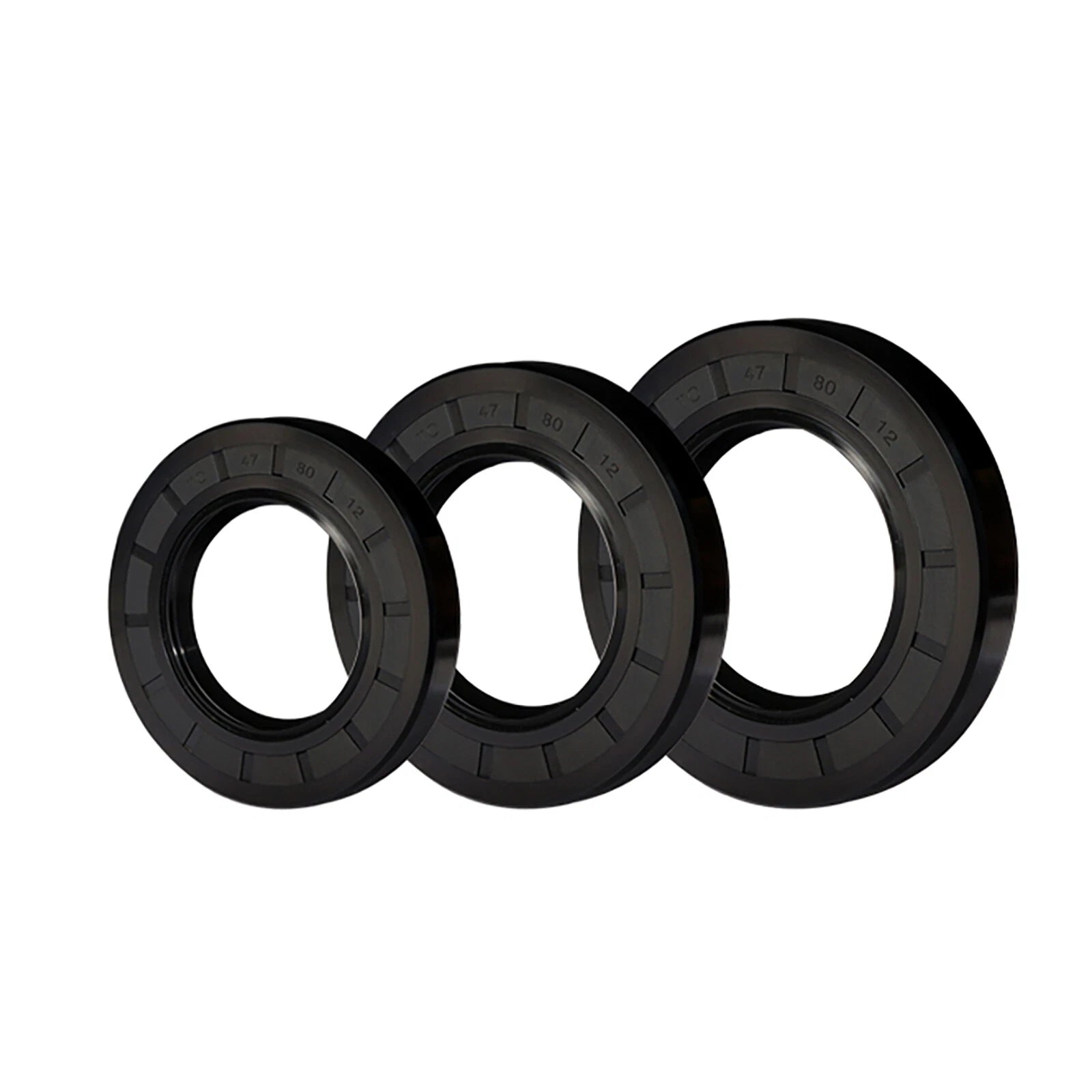
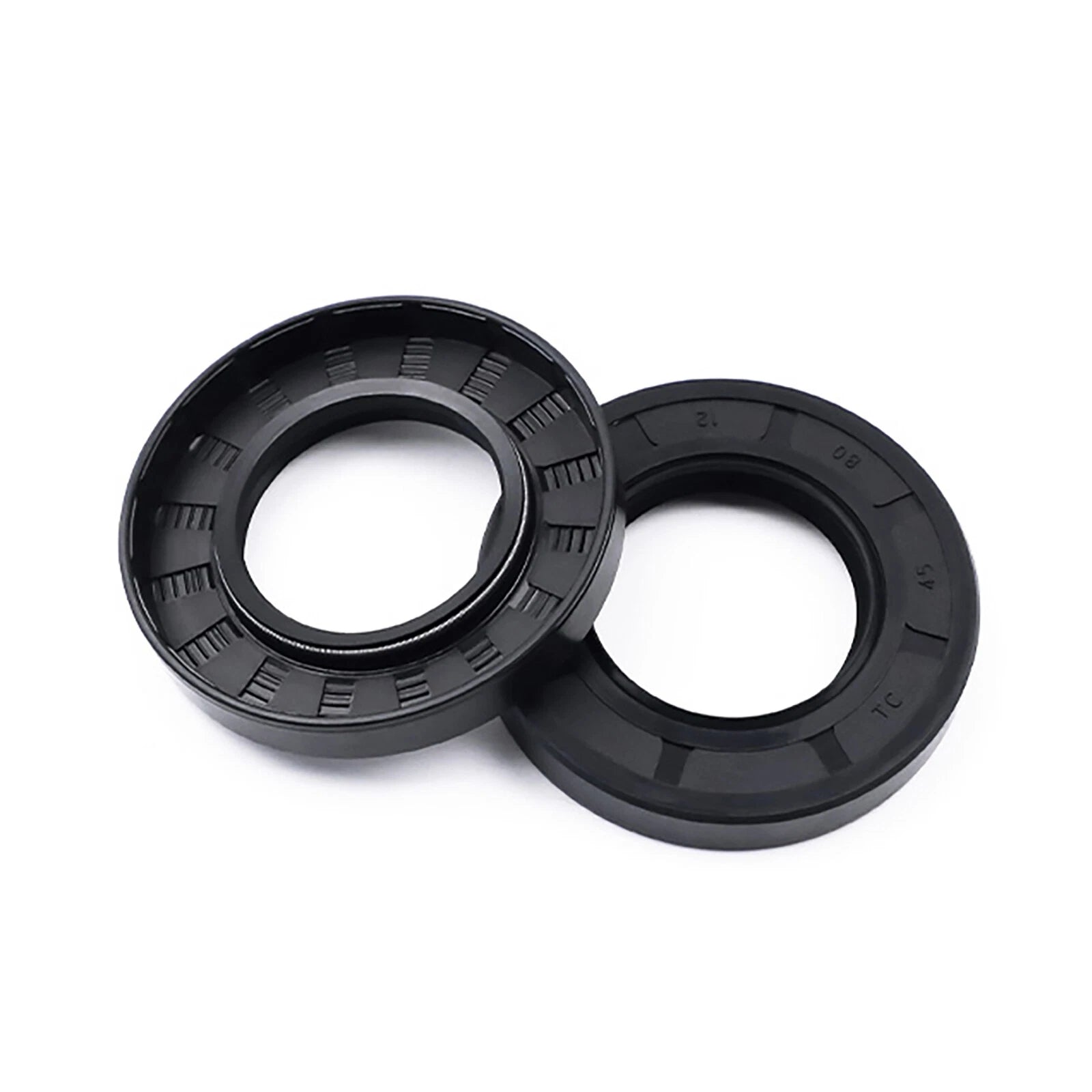
Metric NBR Oil Shaft Seal Dust Grease Seal TC Double Lip w Spring ID 8-15mm

Keine Bewertungen

Preis:
Sonderpreis$6.09 USD
Lagerbestand:
Verfügbar (500 Stück), versandbereit

Payment & Security

Ach Direct Debit Amazon American Express Apple Pay Bancontact Diners Club Discover Google Pay iDEAL Wero Mastercard PayPal Shop Pay USDC Visa

Deine Zahlungsinformationen werden sicher verarbeitet. Wir speichern keine Kreditkartendaten und haben auch keinen Zugang zu deinen Kreditkartendaten.

Quantity Discount Promotion
🎯 BULK DISCOUNT: Buy More, Save More!
Buy 2 Items
5% OFF
Buy 4 Items
10% OFF
Buy 6 Items
15% OFF
Expert

DIY Expert Support

Get fitment advice & recommendations

Mon-Fri, 8:30AM-8PM
24-Hour Fast Ship
🚚
Arrives in 3-14 days
🌍
Global Reach
↩️
30-Day Returns
🌱 1 tree planted with every purchase

Beschreibung

Metric NBR TC Oil Shaft Seal — Double-Lip Dust & Grease Protection for Rotating Shafts

When a worn or missing shaft seal lets oil weep past a bearing housing, the resulting contamination damages adjacent components and forces unplanned downtime. Mechanics, maintenance engineers, and serious DIYers working on motors, gearboxes, pumps, and agricultural equipment need a seal they can trust to stay put under continuous rotation and pressure. These metric NBR TC oil shaft seals are engineered for exactly that job.

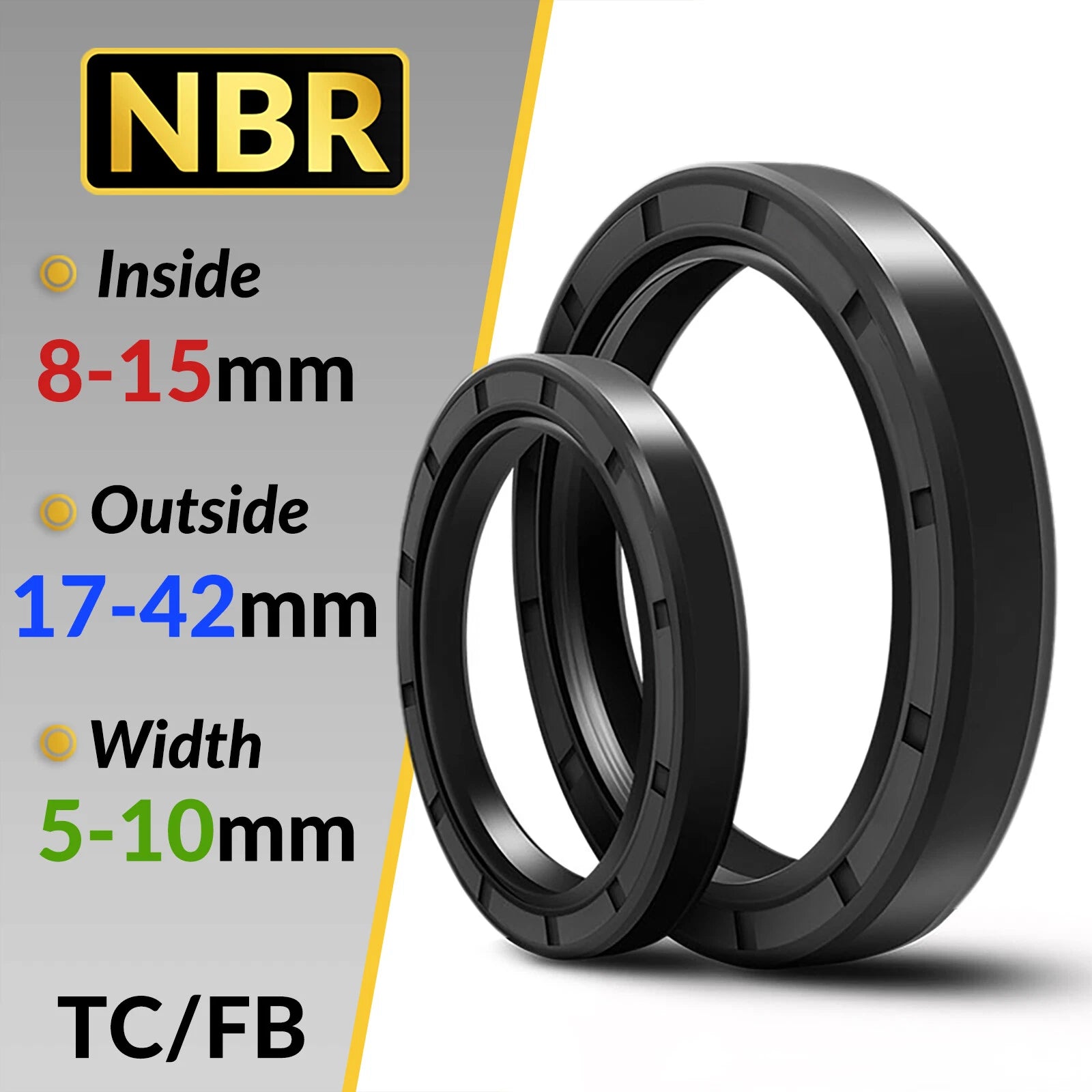
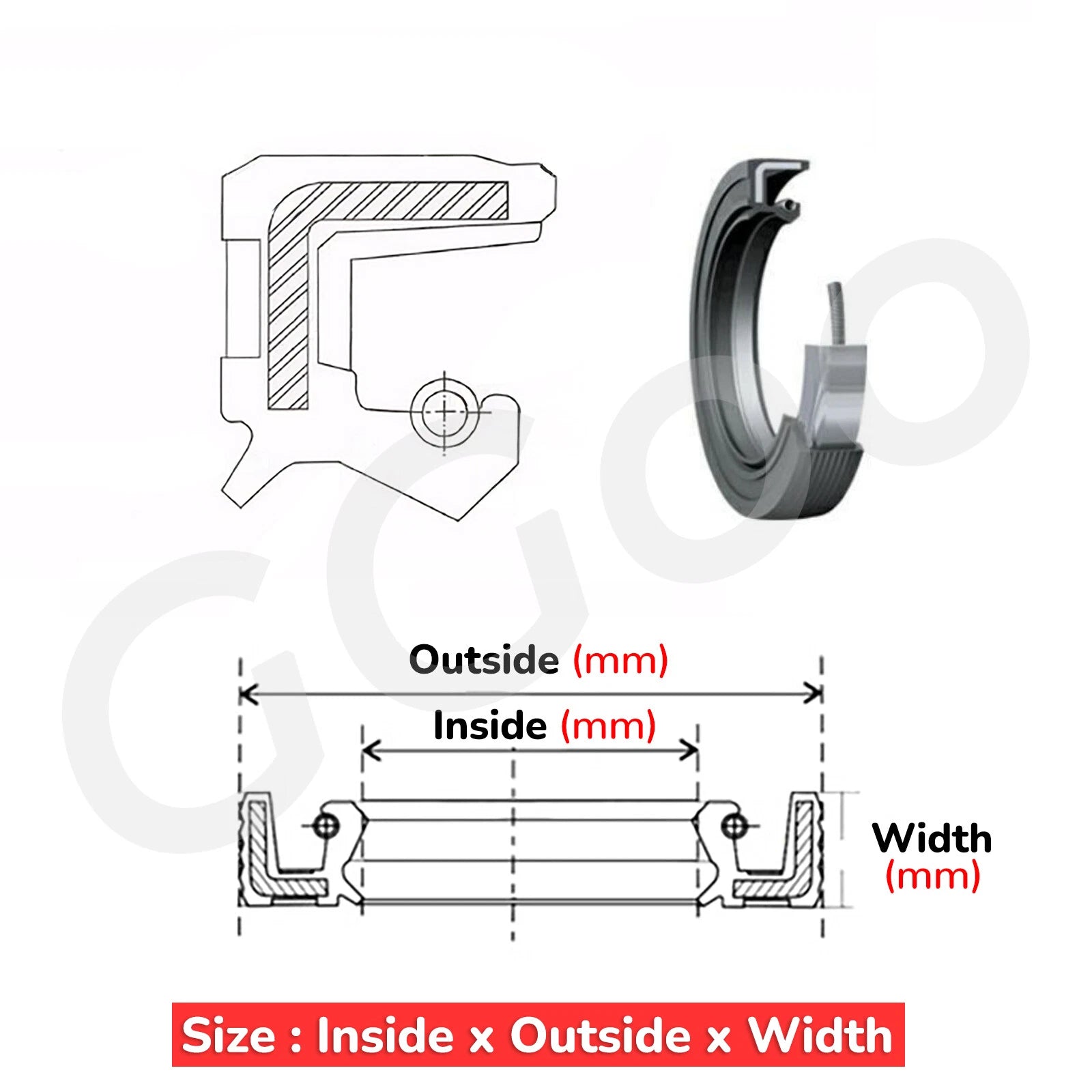
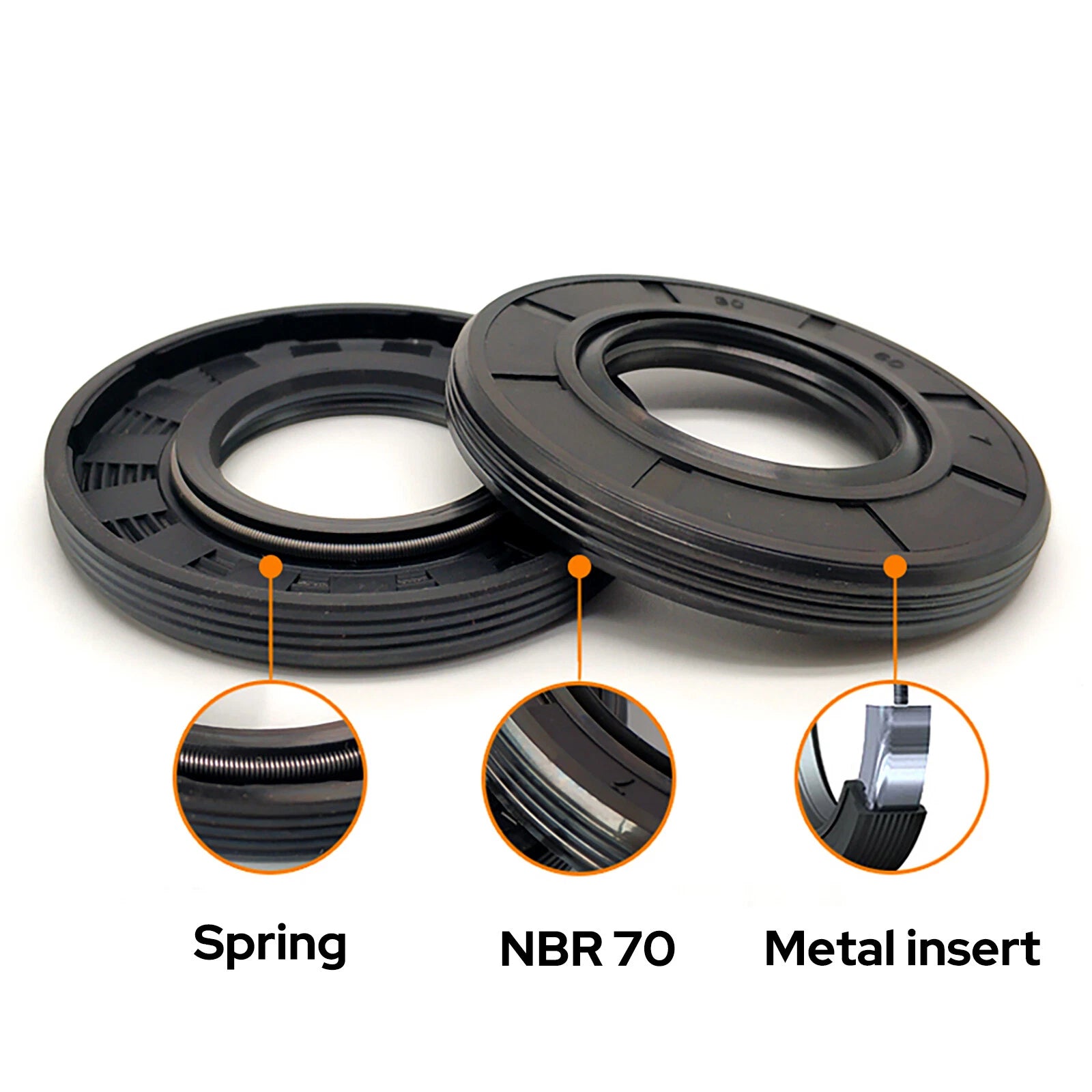
Each seal is manufactured from nitrile rubber (NBR) with a carbon-steel reinforcing case and a precision-wound garter spring that maintains consistent radial lip pressure against the shaft. The TC double-lip design adds a secondary dust-exclusion lip, keeping abrasive particles and moisture out while retaining lubricant inside. Inner diameters span 8 mm to 15 mm (approx. 0.31″–0.59″), with outer diameters and widths varying by size — see the variant selector for the exact ID × OD × Width combination you need.

Typical applications include small electric motor output shafts, gearbox input/output shafts, hydraulic pump shafts, and wheel-hub assemblies on compact machinery. The NBR compound performs reliably with mineral oils, gear oils, and common greases across a service temperature range of approximately −40 °C to +120 °C (−40 °F to +248 °F), making these seals a dependable choice for both indoor industrial and outdoor field-service environments.

⚙️ Compatibility Note: These seals follow metric dimensional standards. Always verify the shaft diameter, bore diameter, and housing depth against your variant selection before installation. Shaft surface finish of Ra 0.2–0.8 µm is recommended for optimal seal life.

✅ Key Features of These NBR TC Oil Shaft Seals

  • 🔵TC Double-Lip Design — Primary sealing lip retains lubricant; secondary lip excludes dust, dirt, and moisture for extended service intervals.
  • 🔵Garter Spring Loaded — Precision-wound spring maintains consistent radial contact force on the shaft, compensating for minor shaft runout and lip wear over time.
  • 🔵NBR Rubber Compound — Nitrile butadiene rubber resists mineral oils, gear oils, greases, and mild fuels; rated for approximately −40 °C to +120 °C continuous service.
  • 🔵Carbon-Steel Reinforcing Case — Rigid outer shell ensures a secure press-fit into the housing bore and maintains concentricity under operating loads.
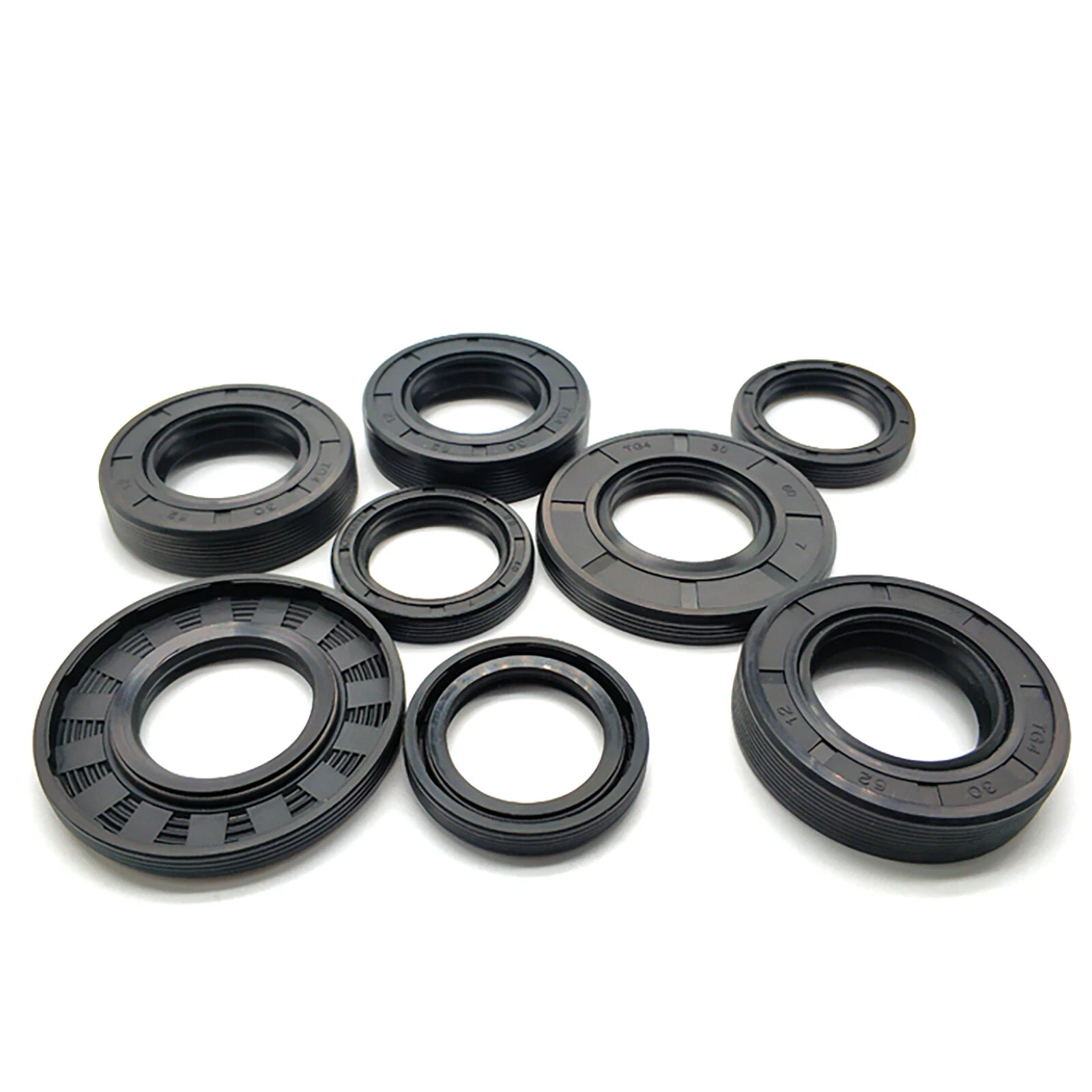
  • 🔵Wide Size Range — ID 8–15 mm with multiple OD and width combinations available; select the exact ID × OD × Width variant to match your application.
  • 🔵Flexible Pack Quantities — Available in packs of 1, 2, 4, 5, or 10 seals, so you can stock spares for planned maintenance without over-ordering.

📐 Technical Specifications — Metric TC Oil Shaft Seals

Seal Type TC (Double Lip with Garter Spring)
Inner Diameter (ID) 8 mm – 15 mm (see variant options)
Outer Diameter (OD) See variant options
Width See variant options
Material NBR (Nitrile Butadiene Rubber) with carbon-steel case
Lip Configuration Double lip — primary sealing lip + secondary dust-exclusion lip
Spring Garter spring (included, factory-installed)
Temperature Range Approx. −40 °C to +120 °C (−40 °F to +248 °F)
Compatible Fluids Mineral oil, gear oil, grease, mild fuels
Dimensional Standard Metric
Pack Size 1 / 2 / 4 / 5 / 10 (see variant options)
Weight See variant options

❓ Frequently Asked Questions

How do I choose the correct seal size?

Measure three dimensions on your application: the shaft outer diameter (= seal ID), the housing bore inner diameter (= seal OD), and the housing depth (= seal width). Match all three to the ID × OD × Width listed in the variant selector. If your housing bore is slightly larger than the seal OD, the seal will not press-fit correctly and will leak.

What is the difference between a TC seal and a single-lip seal?

A single-lip (SC) seal has one sealing lip that retains lubricant. A TC seal adds a second, outward-facing lip that acts as a dust and moisture excluder. The TC design is preferred in environments where the shaft is exposed to dirt, water spray, or abrasive particles, because contamination that bypasses the outer lip is stopped before it reaches the primary sealing lip.

What shaft surface finish is required for reliable sealing?

For best results, the shaft surface in the sealing zone should have a finish of Ra 0.2–0.8 µm (approximately 8–32 µin). Surfaces that are too smooth can prevent the lip from forming a hydrodynamic oil film, while surfaces that are too rough accelerate lip wear. Avoid longitudinal machining marks; a plunge-ground or superfinished surface is ideal.

Are these seals compatible with synthetic oils and ATF?

NBR performs well with mineral-based oils, gear oils, and greases. Compatibility with fully synthetic PAO oils and automatic transmission fluids (ATF) varies by formulation. For applications using synthetic esters or aggressive ATF, consider an FKM (Viton) seal instead. If you are unsure, contact us to confirm compatibility before ordering.

How do I install a TC oil seal without damaging the lip?

Clean the housing bore and lightly lubricate the seal OD with clean oil or assembly grease. Apply a thin film of oil to the sealing lip. Use a flat press plate or a seal driver of the correct diameter to press the seal in squarely — never hammer directly on the seal face. Press until the seal is flush with or just below the housing face. Protect the lip from sharp shaft edges by using a chamfer or installation sleeve during fitting.

Can I reuse a TC oil seal after removal?

Reusing a removed seal is not recommended. The sealing lip takes a permanent set against the shaft surface during service, and reinstalling the seal — even on the same shaft — typically results in leakage because the lip no longer contacts the shaft uniformly. Always fit a new seal when reassembling a component.

What pack size should I order for a workshop stock?

For a single repair, a pack of 1 or 2 is sufficient. If you service multiple machines of the same model or perform scheduled maintenance on a fleet, packs of 5 or 10 offer a lower per-seal cost and ensure you have spares on hand. The 4-pack is a practical middle ground for small workshops that encounter the same seal size regularly.

🛒 Select your Size (ID × OD × Width) and Pack Size above, then add to cart.

You may also like

Recently viewed