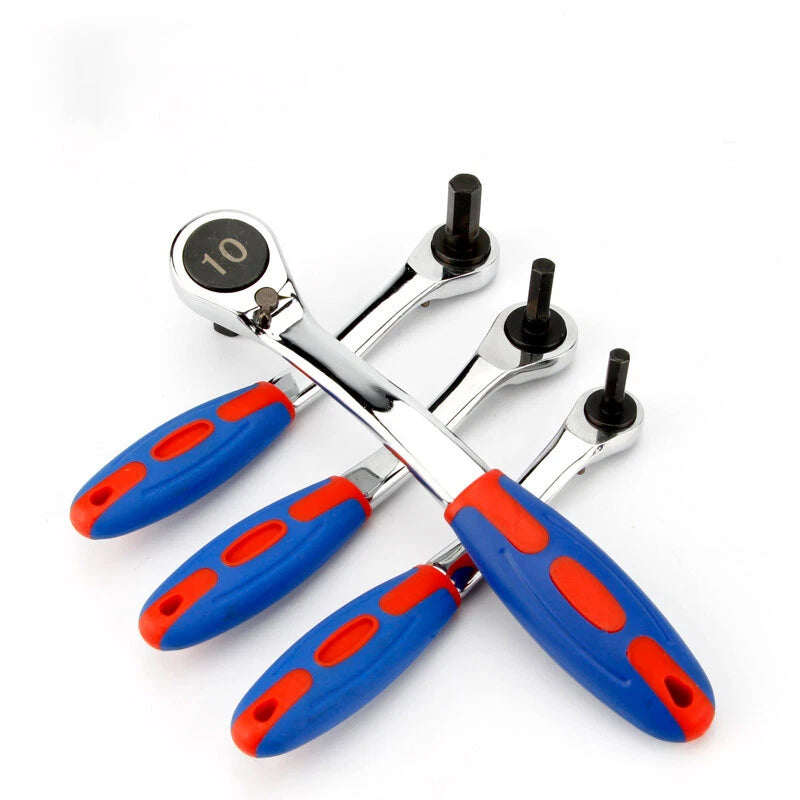
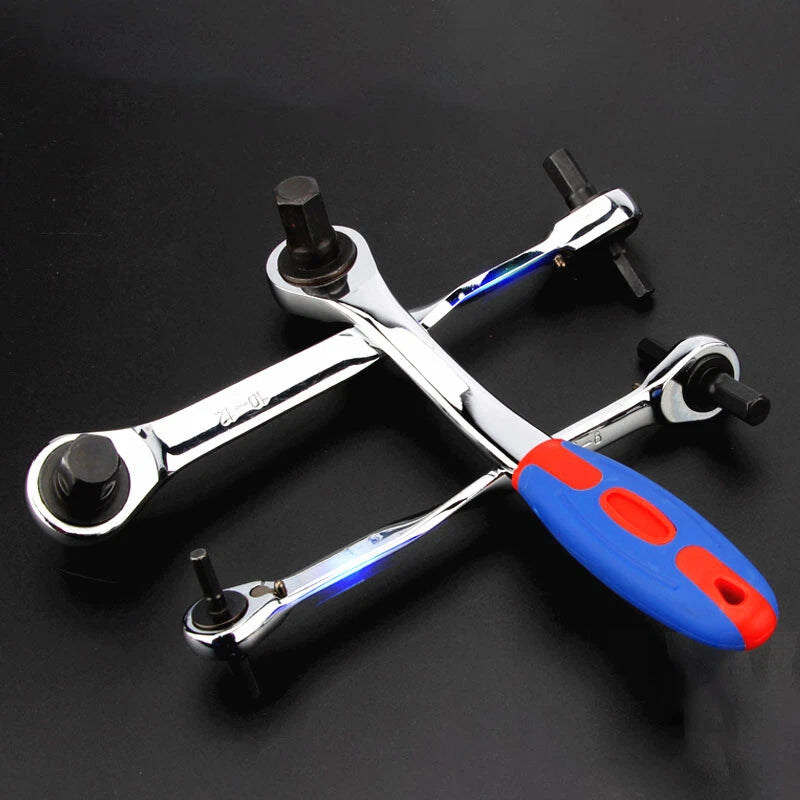
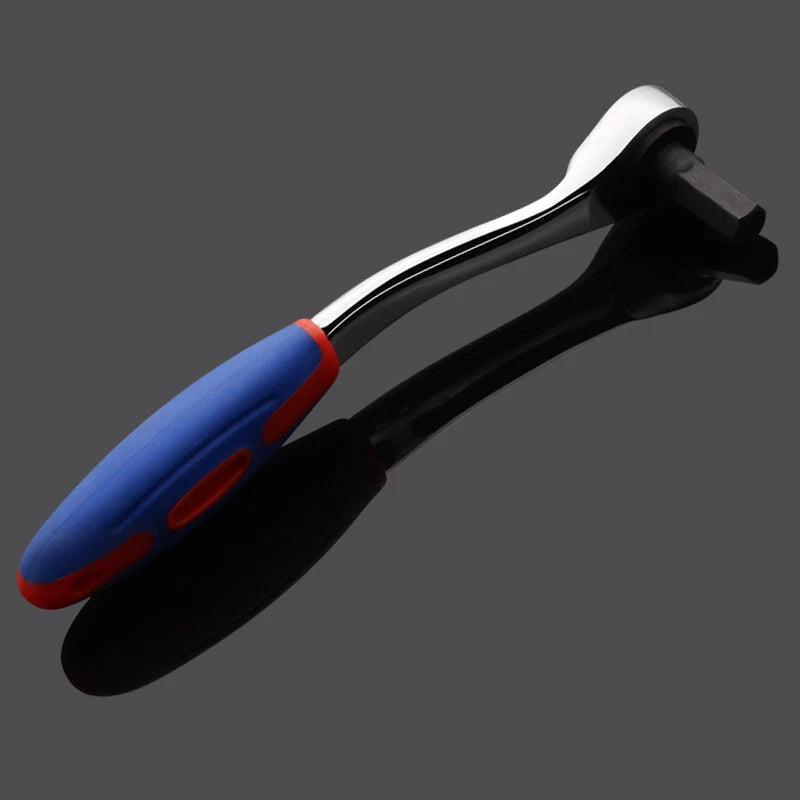
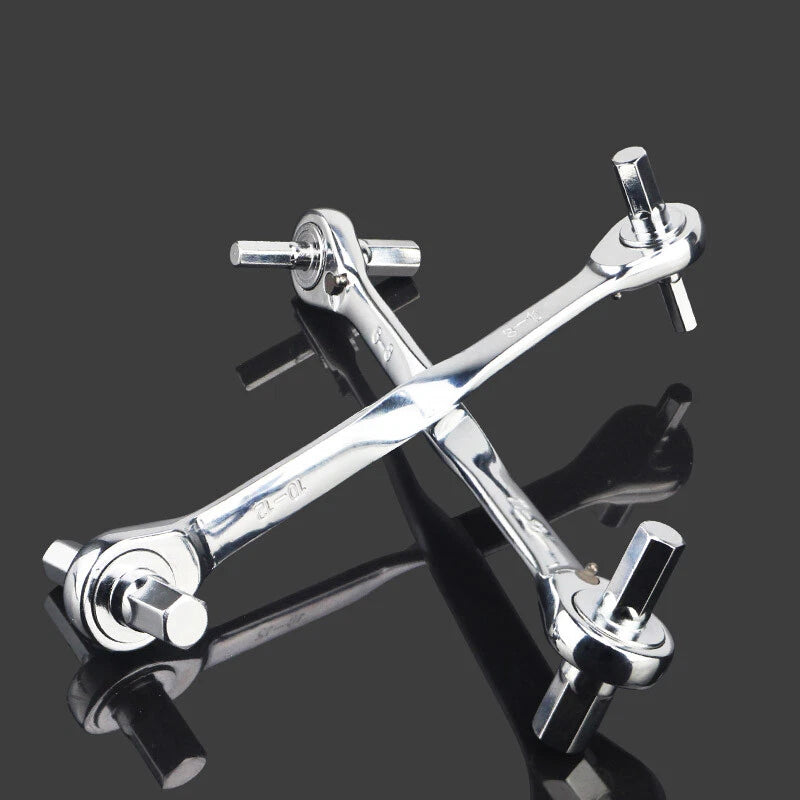
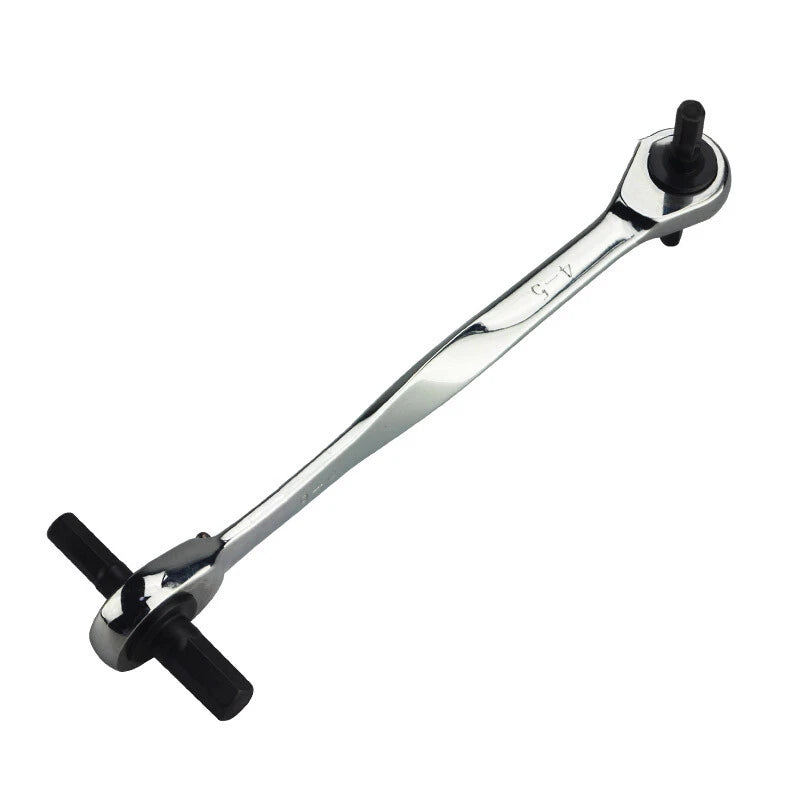
Metric Ratchet Hex Wrench Single Double End Fast Repair Tools 3mm - 17mm

Keine Bewertungen

Preis:
Sonderpreis$16.03 USD
Lagerbestand:
Verfügbar (500 Stück), versandbereit

Payment & Security

Ach Direct Debit Amazon American Express Apple Pay Bancontact Diners Club Discover Google Pay iDEAL Wero Mastercard PayPal Shop Pay USDC Visa

Deine Zahlungsinformationen werden sicher verarbeitet. Wir speichern keine Kreditkartendaten und haben auch keinen Zugang zu deinen Kreditkartendaten.

Quantity Discount Promotion
🎯 BULK DISCOUNT: Buy More, Save More!
Buy 2 Items
5% OFF
Buy 4 Items
10% OFF
Buy 6 Items
15% OFF
Expert

DIY Expert Support

Get fitment advice & recommendations

Mon-Fri, 8:30AM-8PM
24-Hour Fast Ship
🚚
Arrives in 3-14 days
🌍
Global Reach
↩️
30-Day Returns
🌱 1 tree planted with every purchase

Beschreibung

Metric Ratchet Hex Wrench — Single & Double End for Fast, Precise Fastening

When you're deep inside a machine housing, under a bike frame, or assembling flat-pack furniture with no room to swing a standard wrench, a ratcheting hex wrench makes the difference between a 10-minute job and a 40-minute ordeal. DIYers, cyclists, and maintenance technicians who work in confined spaces know the frustration of repositioning a fixed-angle tool on every stroke — this metric ratchet hex wrench eliminates that entirely.

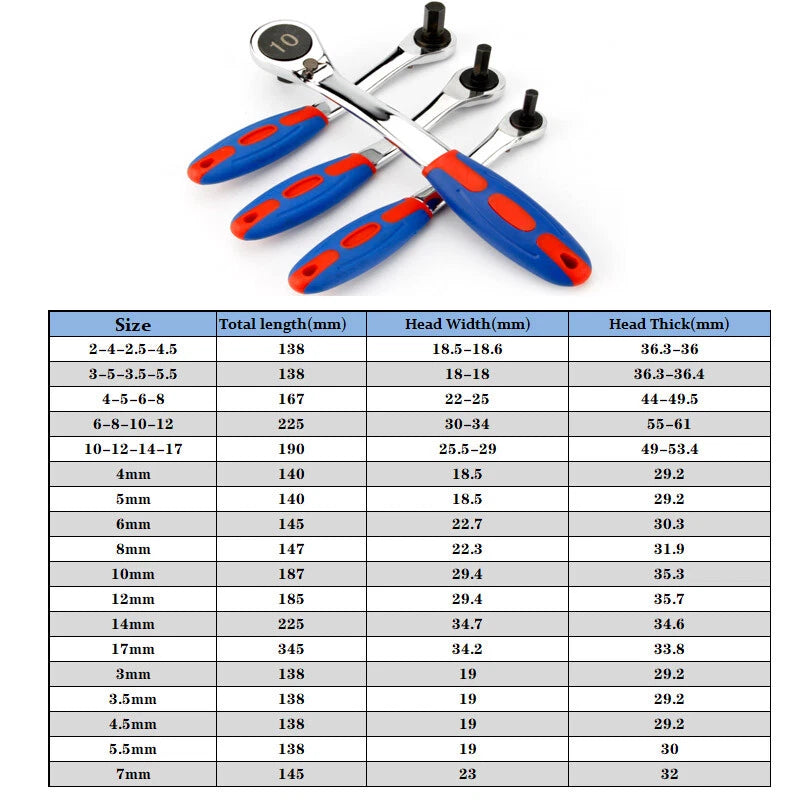
Each wrench features a chrome vanadium steel (Cr-V) hex shaft with a built-in ratchet mechanism at the handle end. Single End variants carry one hex tip (sizes 3mm–17mm); Double End variants carry two hex tips on opposing ends (paired sizes such as 2–4.5mm, 3–5.5mm, 4–8mm, 6–12mm, and 10–17mm), effectively giving you two tools in one. Overall lengths range from approximately 100mm to 220mm (~4 in to 8.7 in) depending on size, keeping the tool compact enough for toolbox storage.

Typical use cases include tightening M3–M12 socket-head cap screws on bicycle derailleurs and brake calipers, assembling or disassembling furniture cam-lock bolts, and performing routine maintenance on power tools, gym equipment, and automotive interior panels — all situations where a ratchet hex wrench outperforms a standard L-key or fixed T-handle.

🔧 Compatible with all standard metric hex socket-head (Allen) fasteners, M3 through M17. Fits both right-hand and left-hand threaded bolts when used in the appropriate ratchet direction.

✅ Key Features of These Metric Ratchet Hex Wrenches

  • Ratcheting mechanism — Continuous tightening or loosening without lifting and repositioning the wrench; ideal for confined spaces where arc swing is limited.
  • Single & Double End options — Single End provides one dedicated hex size per tool; Double End pairs two complementary sizes on one wrench, reducing the number of tools you carry.
  • Chrome vanadium steel (Cr-V) construction — Cr-V alloy delivers a tensile strength typically above 900 MPa, resisting rounding and deformation under sustained torque.
  • Full metric size range — Covers 3mm through 17mm in a single product line, matching the most common metric socket-head fastener sizes used in cycling, machinery, and furniture assembly.
  • Compact, ergonomic handle — The handle integrates the ratchet head without adding excessive bulk, keeping overall tool length manageable for tight-access work.
  • Corrosion-resistant finish — Surface treatment provides a protective layer against moisture and light oxidation, extending service life in workshop and outdoor environments.

📐 Technical Specifications — Metric Ratchet Hex Wrench

Tool Type Ratchet Hex (Allen) Wrench
Drive Style Hex (Allen / Internal Hex)
End Configuration Single End or Double End (see variant options)
Size Range 3mm – 17mm (Single End); paired sizes 2–17mm (Double End)
Material Chrome Vanadium Steel (Cr-V)
Finish See variant options
Overall Length Approximately 100mm – 220mm (varies by size)
Ratchet Direction Reversible (tighten / loosen)
Thread Compatibility Metric hex socket-head fasteners, M3–M17
Quantity per Order 1 piece (1pcs)

❓ Frequently Asked Questions

What is the difference between the Single End and Double End variants?

Single End wrenches have one hex tip and are suited when you work exclusively with one bolt size. Double End wrenches have two hex tips on opposing ends — for example, a 3mm tip on one side and a 5mm tip on the other — so you can switch between two sizes without swapping tools. Double End variants are more versatile for mixed-fastener jobs.

How do I choose the right hex size for my fastener?

Measure the width across the flats of the socket-head bolt recess, or check the bolt's specification sheet. Common pairings: M3 bolts typically use a 2.5mm hex key; M4 uses 3mm; M5 uses 4mm; M6 uses 5mm; M8 uses 6mm; M10 uses 8mm; M12 uses 10mm. When in doubt, test-fit before applying torque to avoid rounding the recess.

Can this wrench handle high-torque applications?

The Cr-V steel construction supports sustained torque for typical assembly and maintenance tasks. However, ratchet hex wrenches are not designed to replace torque wrenches for safety-critical fasteners (e.g., engine head bolts, suspension components). For those applications, use a calibrated torque wrench. For furniture, cycling, and general machinery maintenance, this wrench provides adequate torque capacity.

Is this wrench suitable for stainless steel or hardened fasteners?

Cr-V steel is harder than standard carbon steel and performs well against most stainless steel socket-head fasteners (A2/304 grade). For Grade 12.9 or hardened alloy fasteners, ensure you apply steady, controlled force to avoid slipping. If the fastener is heavily corroded or seized, apply penetrating oil first to reduce the required breakaway torque.

How does the ratchet mechanism work in tight spaces?

The ratchet head engages in one rotational direction (tightening or loosening, depending on the switch setting) and freewheels in the opposite direction. This means you only need a small arc of rotation — as little as a few degrees — to advance the fastener, making it practical in spaces where a full 360° swing is impossible. Reverse the ratchet direction to switch between tightening and loosening.

What maintenance does this wrench require?

Wipe the hex tips and ratchet head clean after use to remove metal filings and debris. Periodically apply a small drop of light machine oil to the ratchet mechanism to keep it operating smoothly. Store in a dry location to preserve the surface finish. Avoid using the wrench as a pry bar or hammer, as this can damage the ratchet internals.

Are these wrenches compatible with left-hand threaded fasteners?

Yes. Simply set the ratchet direction to the loosening mode and use it to tighten a left-hand threaded fastener, or vice versa. The hex tip itself is direction-neutral — only the ratchet direction setting changes the effective drive direction.

🛒 Select your Type and Size above, then add to cart.


You may also like

Recently viewed