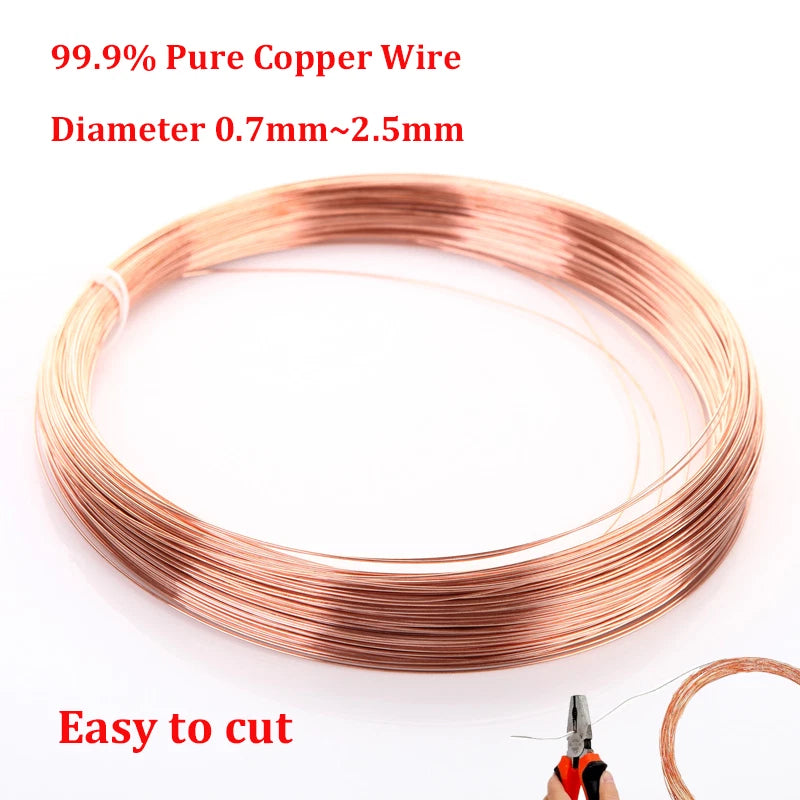
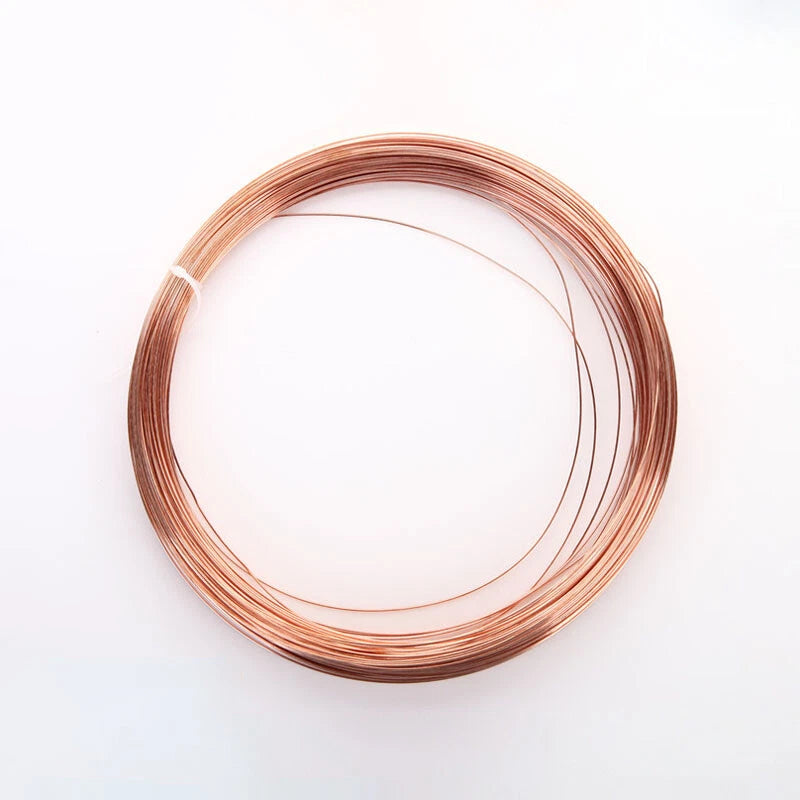
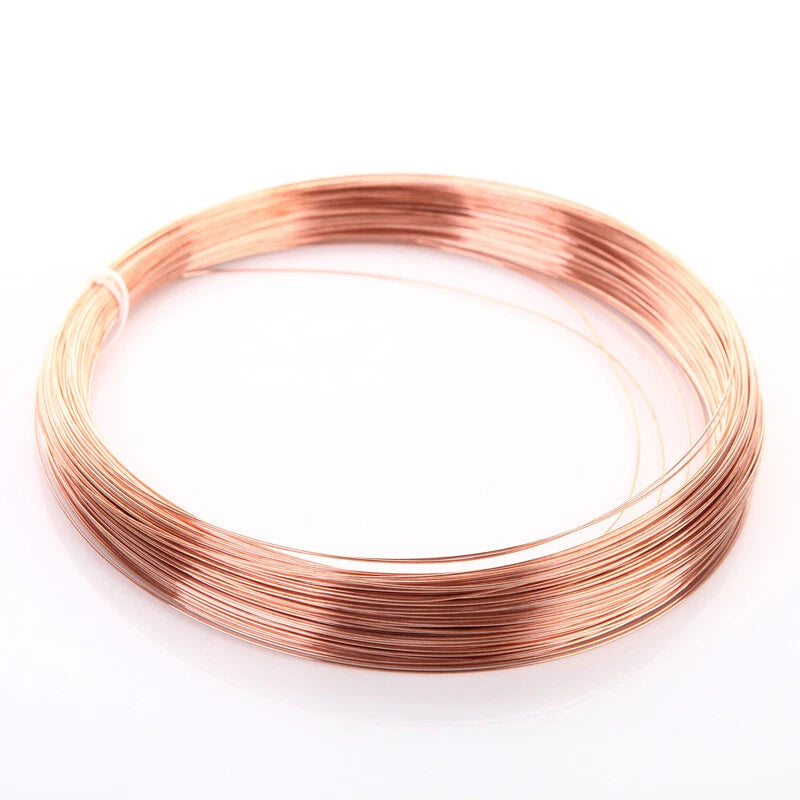
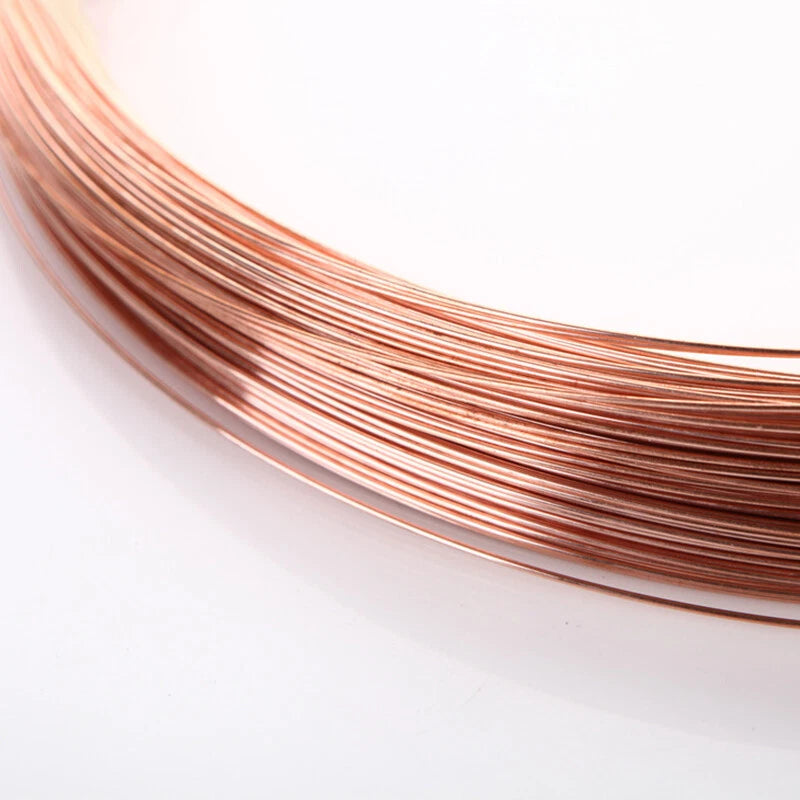
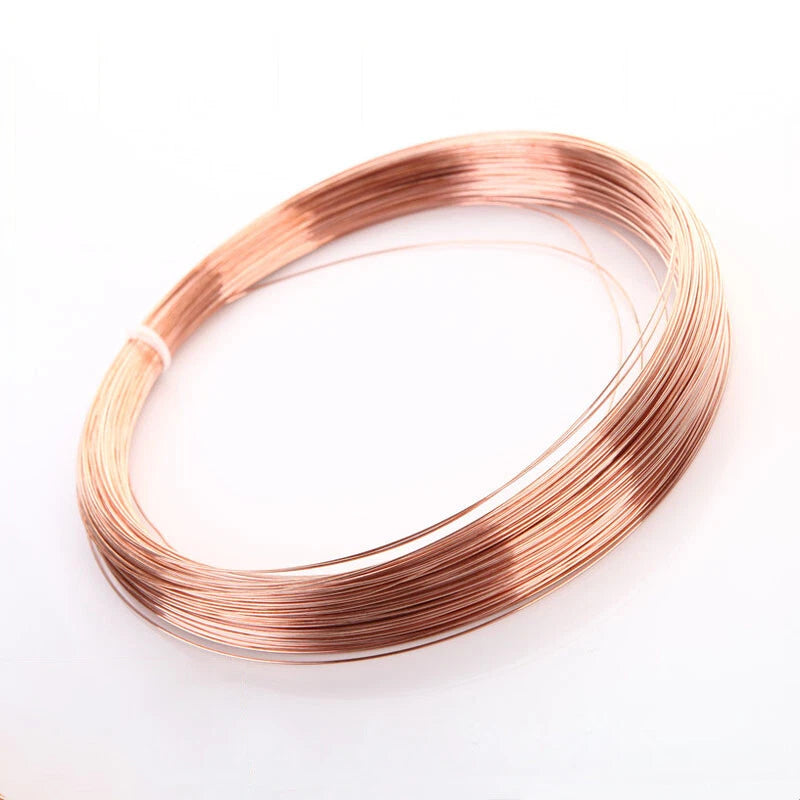
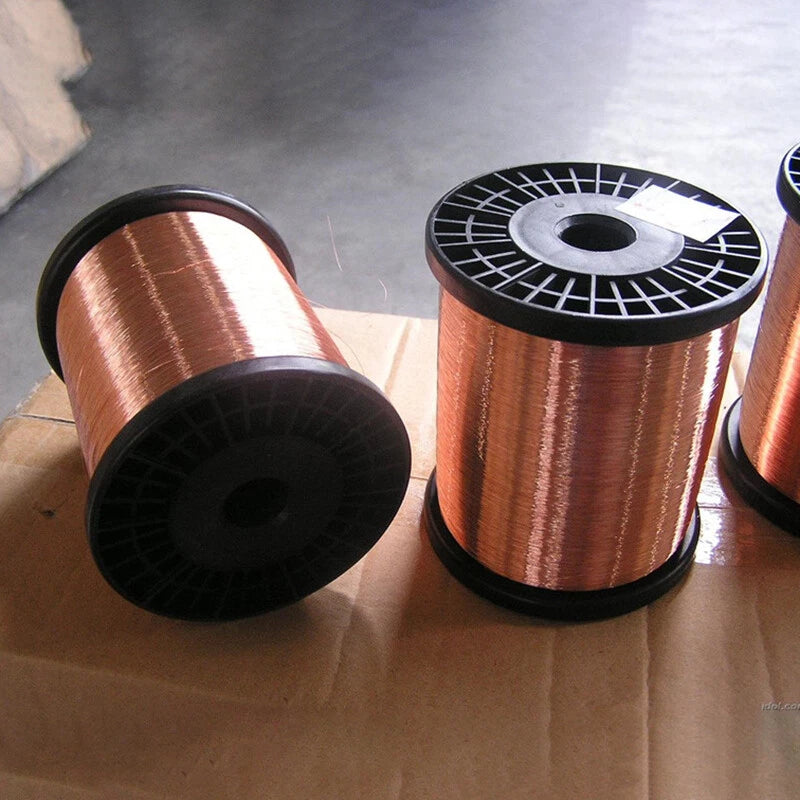
Pure Copper Wire 0.7mm 0.8mm 0.9mm 1mm Round Solid Bare Wire Multi-Size Craft

Keine Bewertungen

Preis:
Sonderpreis$9.64 USD
Lagerbestand:
Verfügbar (500 Stück), versandbereit

Payment & Security

Ach Direct Debit Amazon American Express Apple Pay Bancontact Diners Club Discover Google Pay iDEAL Wero Mastercard PayPal Shop Pay USDC Visa

Deine Zahlungsinformationen werden sicher verarbeitet. Wir speichern keine Kreditkartendaten und haben auch keinen Zugang zu deinen Kreditkartendaten.

Quantity Discount Promotion
🎯 BULK DISCOUNT: Buy More, Save More!
Buy 2 Items
5% OFF
Buy 4 Items
10% OFF
Buy 6 Items
15% OFF
Expert

DIY Expert Support

Get fitment advice & recommendations

Mon-Fri, 8:30AM-8PM
24-Hour Fast Ship
🚚
Arrives in 3-14 days
🌍
Global Reach
↩️
30-Day Returns
🌱 1 tree planted with every purchase

Beschreibung

Pure Copper Round Wire — Precise Diameters for Jewelry, Electrical & DIY Craft Work

When your project demands a conductor that bends cleanly, holds its shape, and won't corrode at the connection point, the gauge of your wire matters more than anything else. Hobbyist jewelers, electronics repair technicians, and home DIYers who need a reliable, uncoated copper wire often struggle to find a single source that covers the full range from hair-thin 0.7 mm up to sturdy 2.5 mm — without having to buy bulk spools they'll never finish.

This pure copper round wire is available in diameters from 0.7 mm (~0.028 in) to 2.5 mm (~0.098 in), with both standard-temper and soft-temper options across most sizes, and in lengths of 1 m (~3.3 ft), 2 m (~6.6 ft), or 3 m (~9.8 ft) per order. The wire is solid (not stranded) and bare (uncoated), giving you a clean surface for soldering, wrapping, or forming.

Typical use cases include hand-forming wire-wrapped gemstone pendants and rings, replacing broken grounding leads in low-voltage electronics, building custom armatures for model-making, and running short bespoke runs of bare conductor in hobby robotics or science fair projects where a precise cross-section is required.

Compatibility note: This is uninsulated bare copper wire. It is not rated for mains voltage wiring. Intended for craft, jewelry, low-voltage electronics, and hobby applications only.

✅ Key Features of These Pure Copper Round Craft Wires

  • 🔩 Wide diameter range: 23 size options from 0.7 mm to 2.5 mm let you match the wire cross-section exactly to your project's mechanical or electrical requirement.
  • 🧲 Standard & soft temper available: Standard-temper wire holds formed shapes; soft-temper wire bends with less spring-back — ideal for tight coils, wire weaving, and delicate wrapping work.
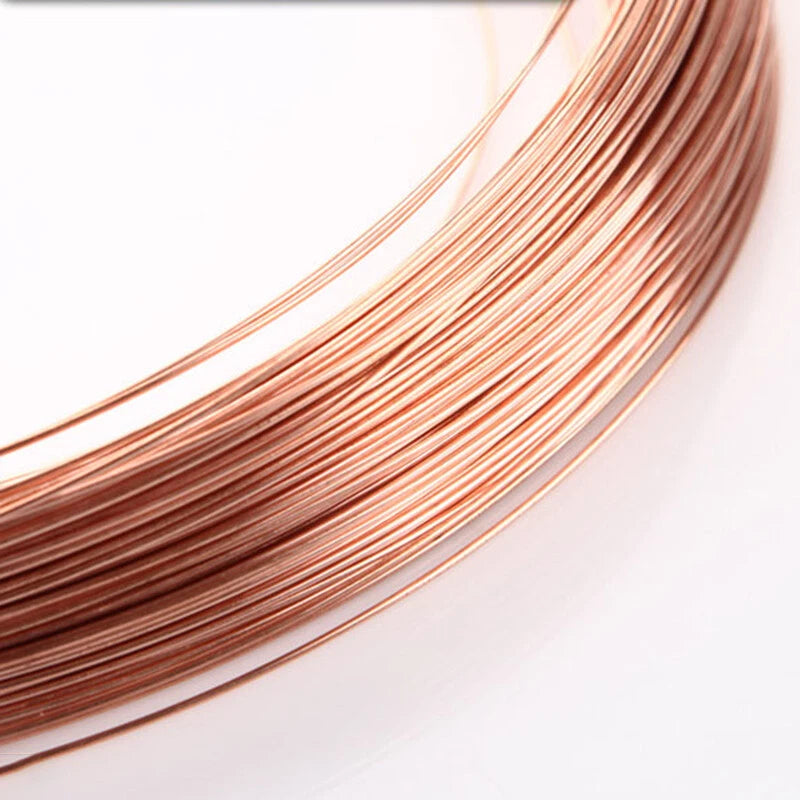
  • 🔬 Solid round cross-section: A single solid conductor (not stranded) gives consistent diameter along the full length, making it easier to thread through beads, wrap evenly, or solder with predictable heat transfer.
  • Bare uncoated surface: No enamel, no tinning, no lacquer — the raw copper surface is ready for direct soldering, patination with liver of sulfur, or electroforming without stripping.
  • 📏 Flexible length options: Order 1 m, 2 m, or 3 m to match your project scope and avoid paying for wire you won't use.
  • 🛠️ Versatile across disciplines: Suitable for jewelry making, wire sculpture, electronics prototyping, model armatures, and general craft work where a specific gauge of bare copper is needed.

📐 Technical Specifications — Pure Copper Round Wire

Material Pure copper (bare, uncoated)
Wire Form Solid round (not stranded)
Surface Finish Bare / uncoated
Diameter Range 0.7 mm – 2.5 mm (see variant options)
Temper Options Standard temper; Soft temper (select sizes)
Available Lengths 1 m / 2 m / 3 m
Cross-Section Shape Round
Insulation None — bare conductor
Voltage Rating Not rated for mains voltage; hobby/craft use only
Weight (per unit) See variant options

❓ Frequently Asked Questions

How do I choose between standard temper and soft temper?

Standard-temper wire is work-hardened and holds a formed shape with more spring-back resistance — useful for structural elements like ring shanks or stiff armature frames. Soft-temper wire has been annealed to remove internal stress, so it bends with very little resistance and is easier to coil tightly, weave, or wrap around stones without cracking. If you plan to do repetitive bending or tight wrapping, choose soft temper for the same diameter.

What diameter should I use for wire-wrapping jewelry?

For wrapping frames and structural elements, 1.0 mm – 1.5 mm (soft temper) is a common starting point. For binding wraps and decorative coils, 0.7 mm – 0.9 mm gives enough flexibility to wrap tightly without leaving gaps. Larger stones or heavier pendants may benefit from a 1.6 mm – 2.0 mm frame wire for added rigidity.

Is this wire suitable for electrical or electronics use?

This wire is appropriate for low-voltage hobby electronics, prototyping, grounding jumpers, and science project circuits. It is not insulated and is not rated or certified for mains (household) wiring. For any application involving line voltage, use wire that carries the appropriate safety certification for your region.

Will bare copper wire corrode or tarnish over time?

Bare copper will oxidize when exposed to air and moisture, developing a darkened patina over time. For jewelry applications, this can be intentional (a natural aged look) or managed by sealing finished pieces with a clear lacquer or wax. For electrical connections, ensure the joint is properly soldered or mechanically secured to minimize exposed surface area. Storing unused wire in a sealed bag slows tarnishing significantly.

Can I solder this wire directly?

Yes. Because the surface is bare copper with no coating to burn off, it accepts solder readily with standard rosin-core or lead-free solder and a clean iron tip. Flux is recommended for a clean joint, especially if the wire has any surface oxidation. Lightly sand or use fine steel wool to brighten the surface before soldering if the wire has been stored for a while.

How do I decide between 1 m, 2 m, and 3 m lengths?

For a single small jewelry piece (a pendant or a pair of earrings), 1 m is typically sufficient for 0.7 mm – 1.0 mm wire. For a bracelet or a project with multiple wrapped elements, 2 m gives comfortable working length with some margin. The 3 m option suits larger sculptural pieces, batch production of several items, or electronics projects where you need multiple cut lengths from a single continuous run.

What is the difference between this solid wire and stranded wire?

Solid wire is a single continuous conductor with a uniform circular cross-section. It holds a bent shape well and is easier to thread through small bead holes or wrap evenly. Stranded wire is made of many thin filaments twisted together, making it more flexible and fatigue-resistant under repeated flexing, but harder to form into precise shapes. For jewelry making, sculpture, and most craft applications, solid wire is the standard choice.

🛒 Select your diameter and length above, then add to cart.

You may also like

Recently viewed