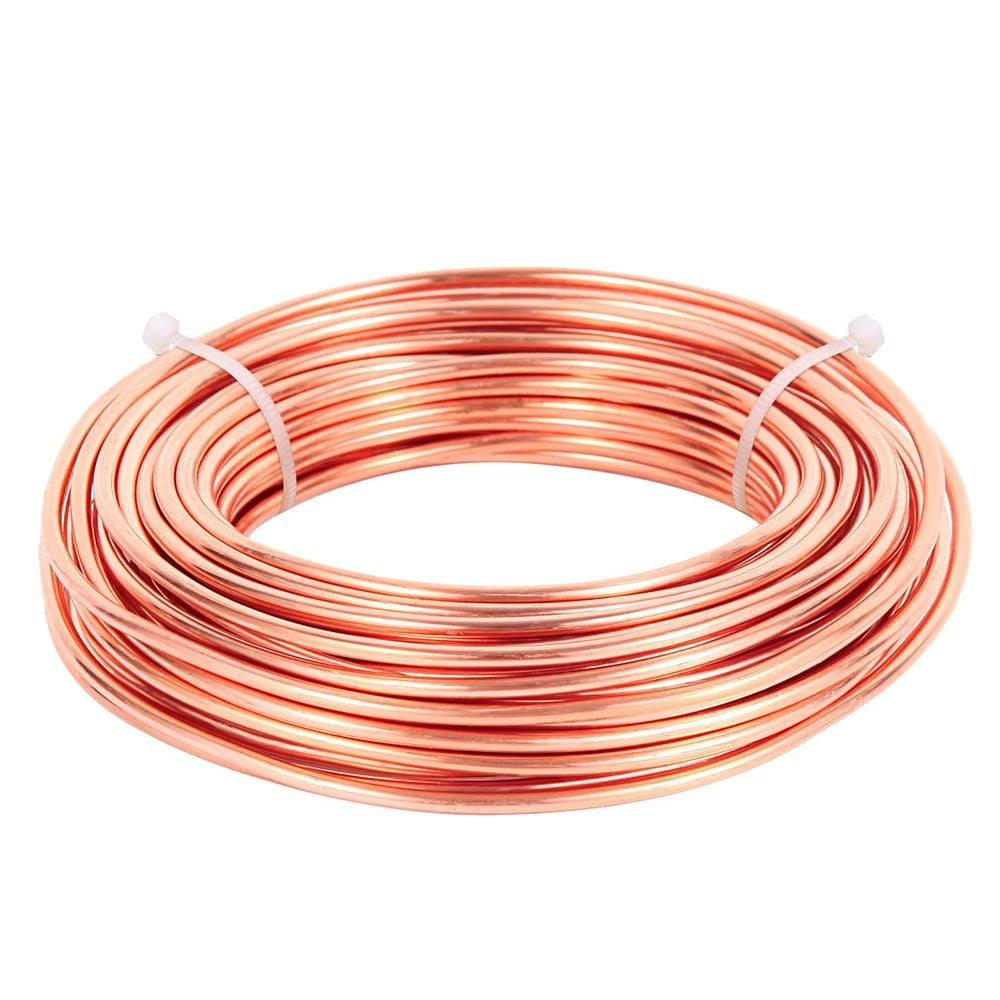
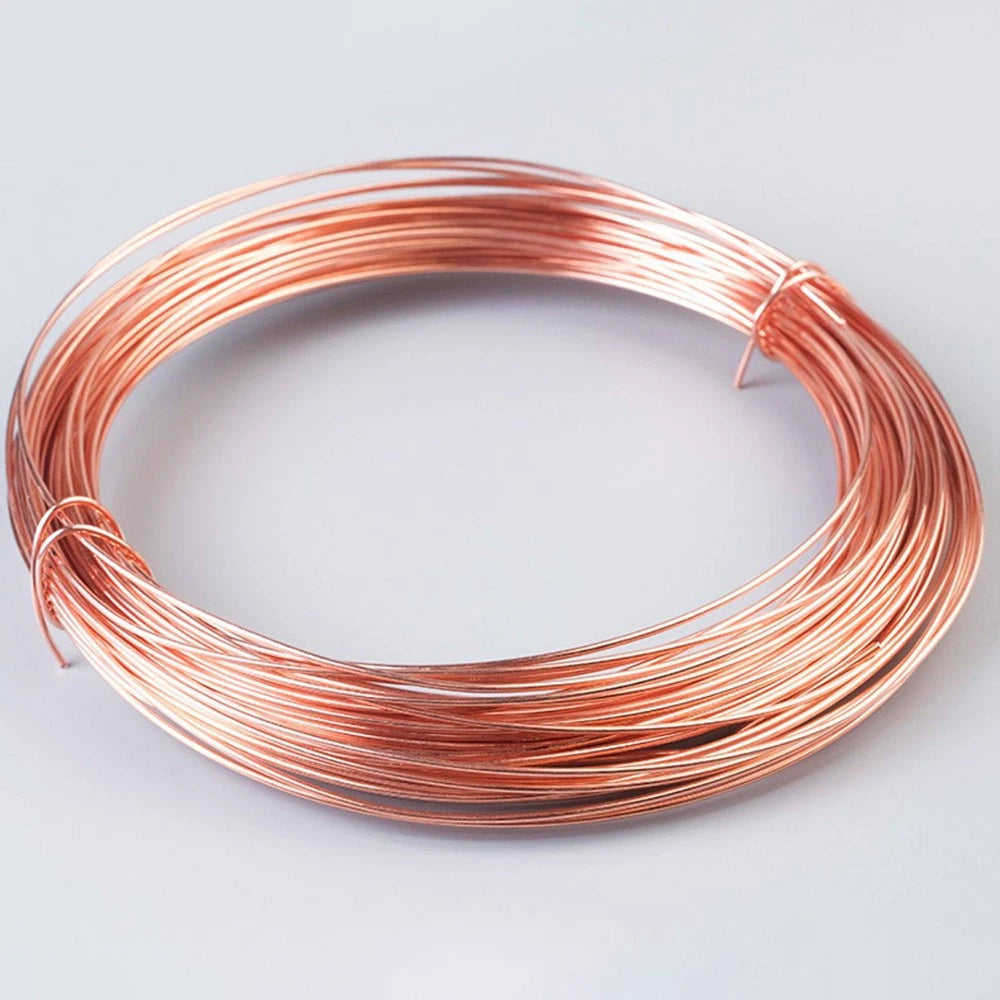
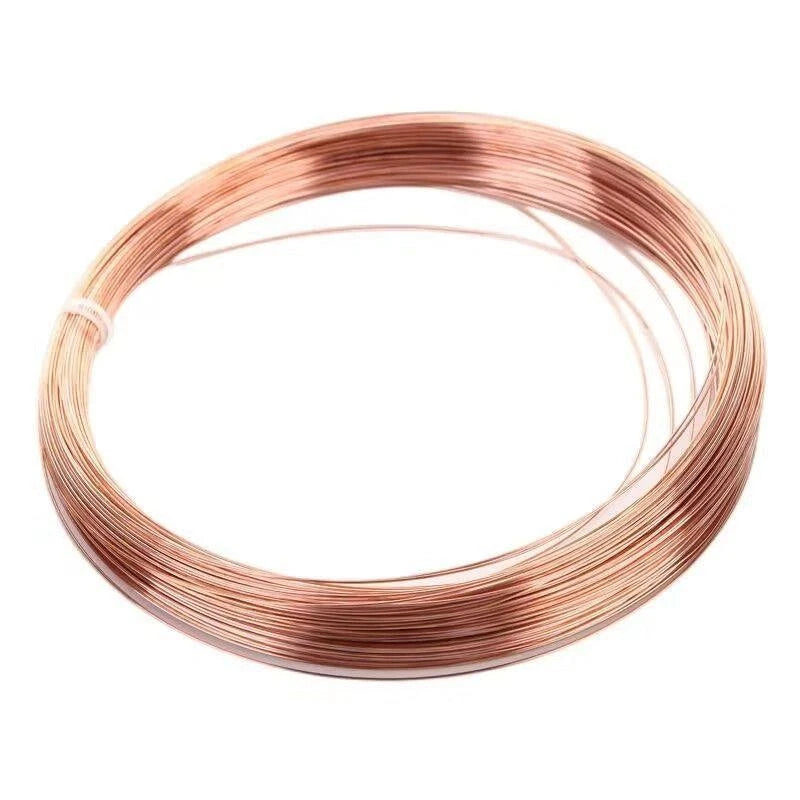
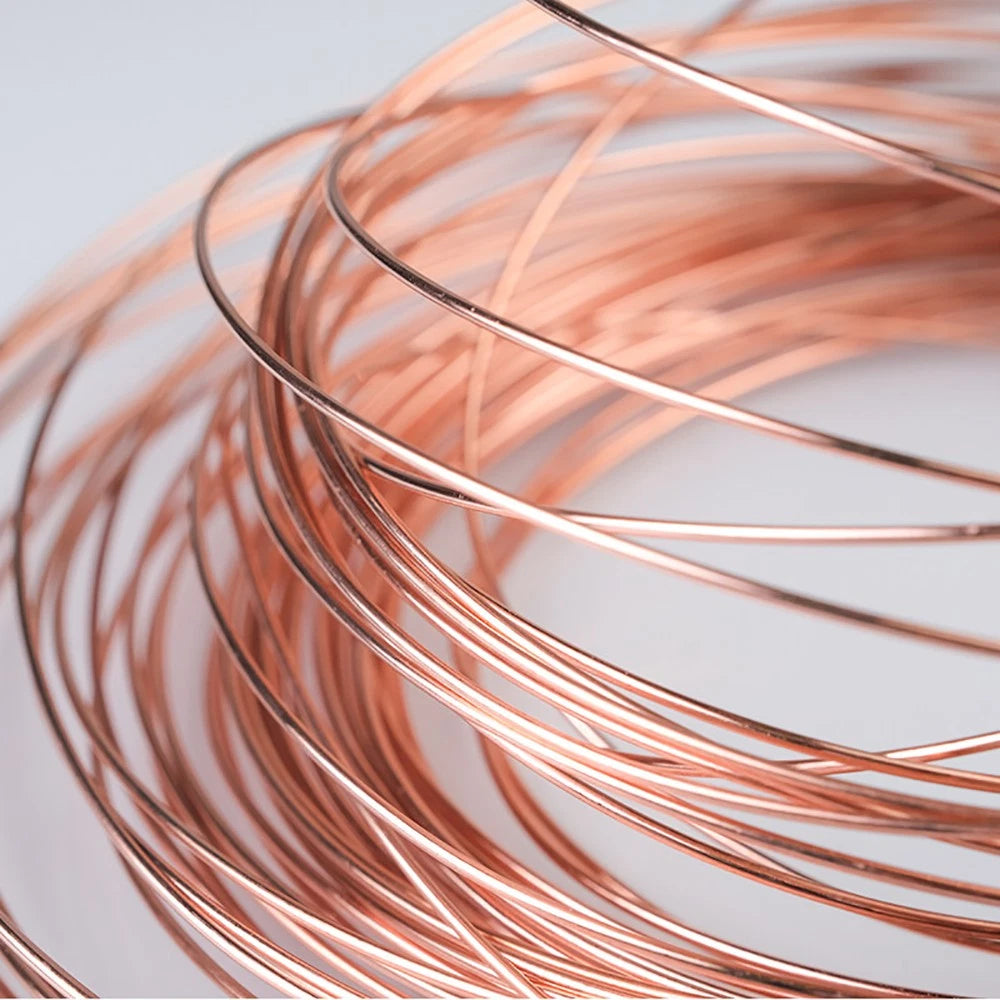
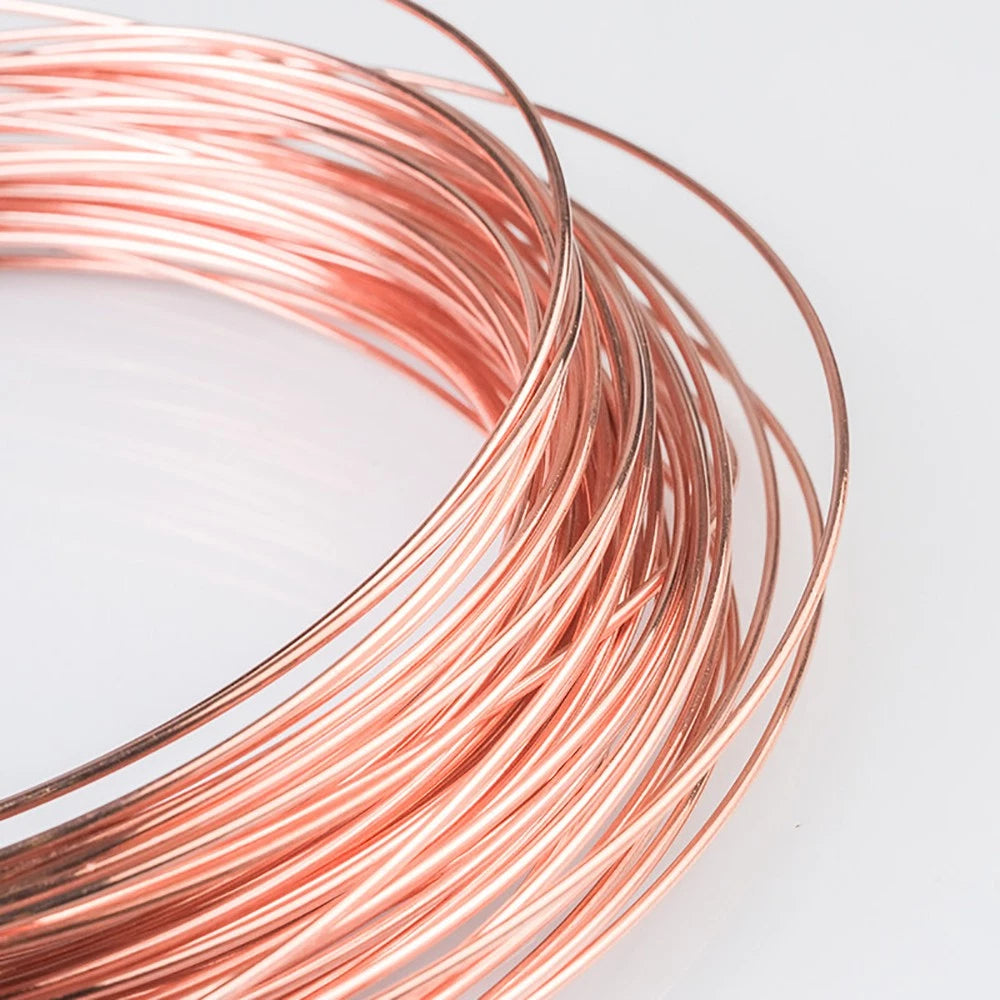
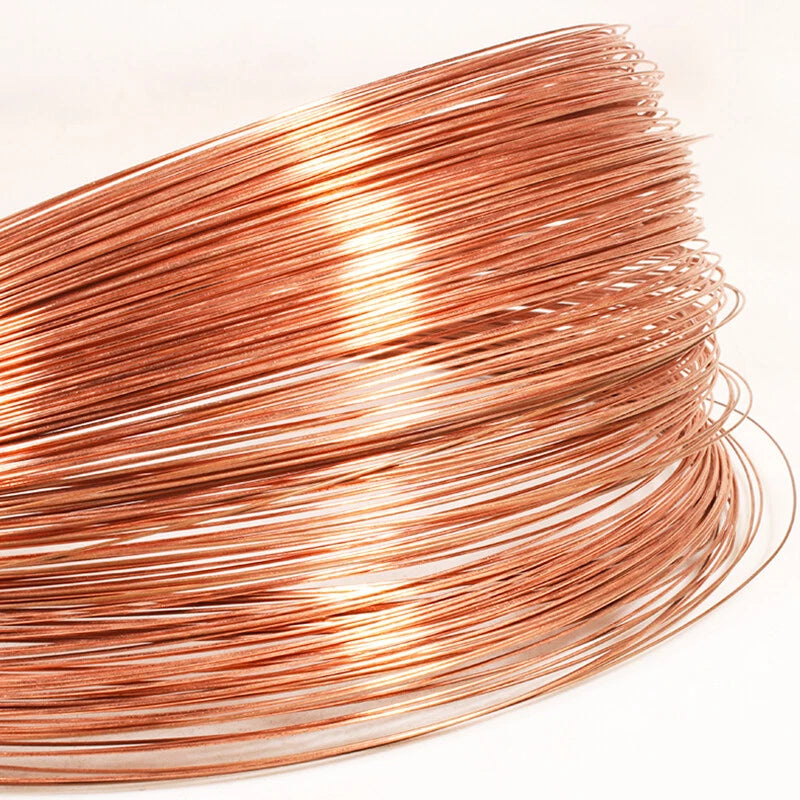
Pure Copper Wire Solid Bare Round 0.2mm - 5.5mm Jewelry Making Craft Uncoated

Keine Bewertungen

Preis:
Sonderpreis$2.30 USD
Lagerbestand:
Verfügbar (500 Stück), versandbereit

Payment & Security

Ach Direct Debit Amazon American Express Apple Pay Bancontact Diners Club Discover Google Pay iDEAL Wero Mastercard PayPal Shop Pay USDC Visa

Deine Zahlungsinformationen werden sicher verarbeitet. Wir speichern keine Kreditkartendaten und haben auch keinen Zugang zu deinen Kreditkartendaten.

Quantity Discount Promotion
🎯 BULK DISCOUNT: Buy More, Save More!
Buy 2 Items
5% OFF
Buy 4 Items
10% OFF
Buy 6 Items
15% OFF
Expert

DIY Expert Support

Get fitment advice & recommendations

Mon-Fri, 8:30AM-8PM
24-Hour Fast Ship
🚚
Arrives in 3-14 days
🌍
Global Reach
↩️
30-Day Returns
🌱 1 tree planted with every purchase

Beschreibung

Pure Copper Wire — Solid Bare Round for Jewelry Making, Craft & Electrical Work

When a project demands a conductor that bends cleanly, holds its shape, and won't introduce unwanted coatings into the work, bare copper wire is the go-to choice for jewelers, electronics hobbyists, and craft makers alike. Whether you're wrapping stones, forming structural frames, or winding coils, finding a single source that covers the full diameter range without switching suppliers is a constant frustration — this listing solves that.

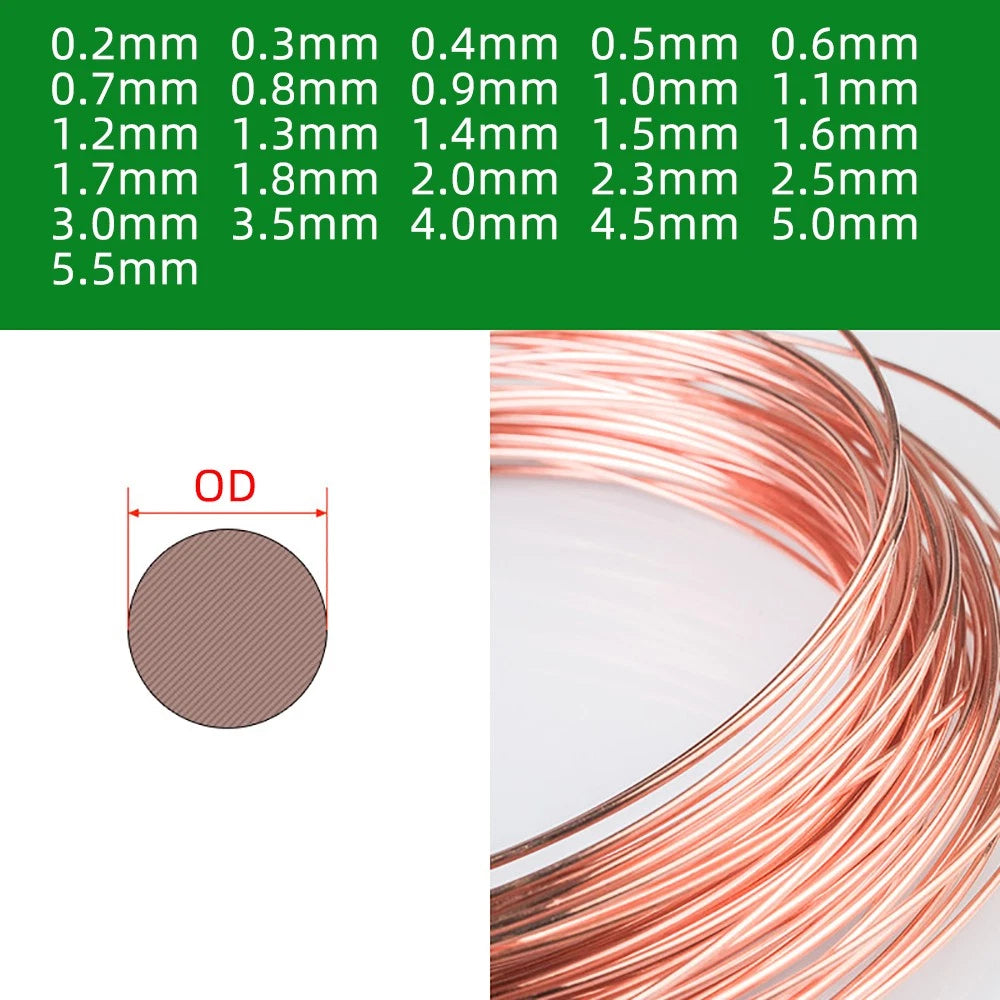
Each spool is solid bare round copper wire, uncoated and unplated, available in 26 outer diameters from 0.2 mm (~0.008 in) up to 5.5 mm (~0.217 in), sold per 1-meter length. The wire is bright-drawn copper with a smooth, consistent surface finish and a circular cross-section throughout its length.

Typical applications include hand-formed jewelry wire wrapping and stone setting, DIY coil winding for electronics and transformers, sculptural craft armatures, grounding leads in hobby electrical builds, and decorative weaving or macramé accents where a metallic element is needed.

⚙️ Compatibility: Suitable for standard jewelry-making tools (round-nose, flat-nose, and wire-cutting pliers). Thinner gauges (0.2–0.5 mm) are compatible with most bead-weaving needles and fine-wire jigs. Thicker gauges (3.0–5.5 mm) require heavy-duty cutters or a jeweler's saw.

✅ Key Features of These Bare Copper Wire Coils

🔩Solid round cross-section — consistent diameter from end to end, no hollow core, no seam; bends and forms without kinking at recommended bend radii for each gauge.
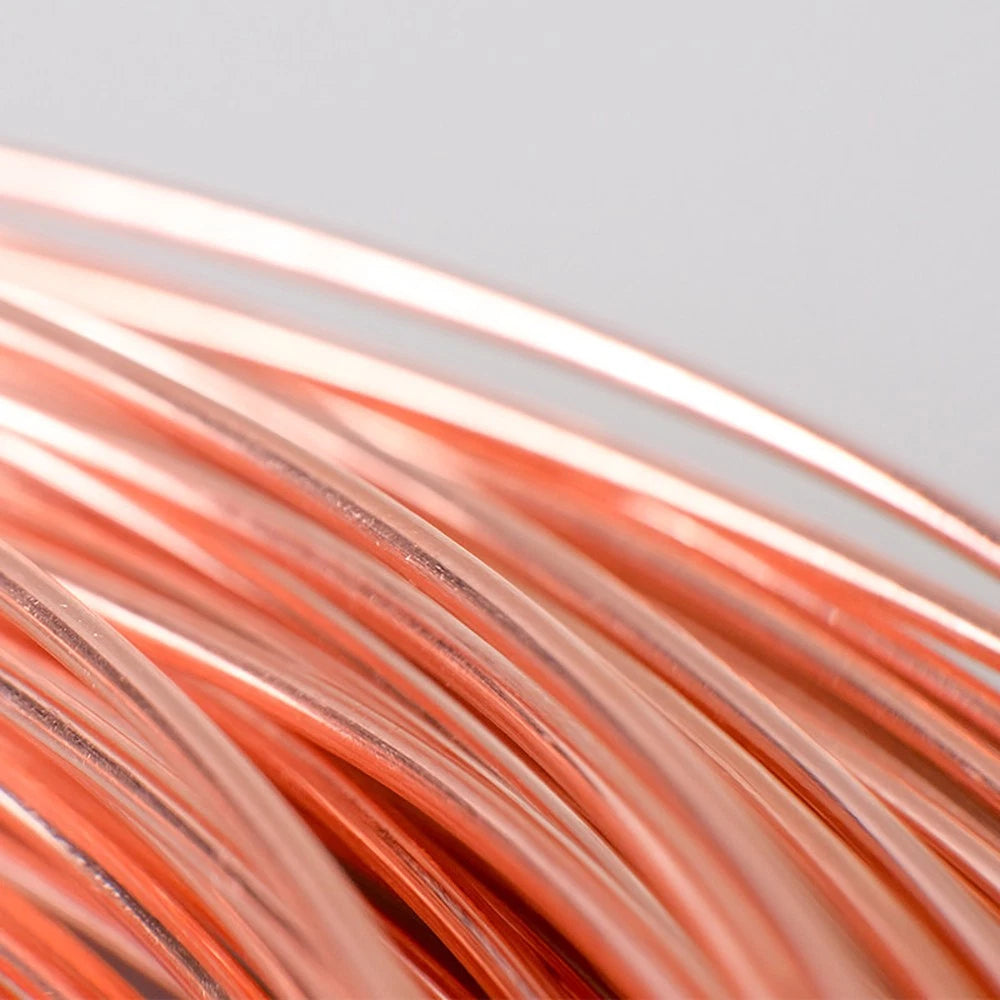
🪙Uncoated bare copper — no enamel, lacquer, or plating; surface is ready for direct soldering, patination, or oxidation finishing without stripping steps.
📏26 diameter options, 0.2 mm to 5.5 mm — covers AWG-equivalent fine wire through heavy-gauge rod, letting you match the exact stiffness and visual weight your project requires.
✂️Sold per 1-meter length — buy only what you need; no minimum spool commitment, making it practical for sampling a new gauge or completing a small run.
High electrical conductivity — bare copper is one of the most conductive common metals; suitable for low-voltage hobby electrical connections, coil winding, and grounding applications.
🎨Workable with standard hand tools — annealed-grade softness on finer gauges allows hand-bending and coiling; thicker gauges provide structural rigidity for 3D sculptural forms.

📐 Technical Specifications — Bare Copper Wire

Material Solid bare copper (uncoated, unplated)
Wire Shape Round (circular cross-section)
Outer Diameter Range 0.2 mm – 5.5 mm (0.008 in – 0.217 in)
Available Diameters 0.2, 0.3, 0.4, 0.5, 0.6, 0.7, 0.8, 0.9, 1.0, 1.1, 1.2, 1.3, 1.4, 1.5, 1.6, 1.7, 1.8, 2.0, 2.3, 2.5, 3.0, 3.5, 4.0, 4.5, 5.0, 5.5 mm
Length per Unit 1 meter (approx. 39.4 in)
Surface Finish Bare / bright-drawn, no coating
Colour Copper (natural reddish-orange)
Temper See variant options
Tensile Strength See variant options
Weight per Meter See variant options (varies by diameter)

❓ Frequently Asked Questions

Which diameter should I choose for jewelry wire wrapping?

For wrapping cabochons and beads, 0.4–0.8 mm (approximately 26–20 AWG equivalent) is the most common range — fine enough to weave through bead holes yet stiff enough to hold a wrapped frame. For structural bail or frame work, 1.0–1.5 mm gives more rigidity. Thicker gauges (2.0 mm and above) are better suited to bangles, cuffs, and sculptural elements that need to hold their shape under wear.

Is this wire soft enough to bend by hand without tools?

Finer gauges (0.2–1.0 mm) can typically be bent, coiled, and shaped by hand. From 1.2 mm upward, round-nose or flat-nose pliers are recommended to achieve clean bends without work-hardening the wire prematurely. Gauges 3.0 mm and above generally require heavier-duty pliers or a bench vise for tight bends.

Will bare copper wire tarnish or oxidize over time?

Yes — uncoated copper naturally develops a patina when exposed to air and moisture, shifting from bright reddish-orange toward darker brown or green over time. Many jewelers and craft makers intentionally accelerate this with liver of sulfur or salt-and-ammonia patination. If you want to preserve the bright finish, apply a clear lacquer or jewelry sealant after forming. The wire itself does not corrode structurally under normal indoor conditions.

Can I solder this wire for electrical or craft connections?

Yes. Because the wire is bare and uncoated, it accepts standard rosin-core solder without any stripping or pre-treatment. Use a suitable flux for the gauge — thicker wire (3 mm+) requires more heat dwell time to reach soldering temperature. For jewelry applications, silver-bearing solder or copper-compatible hard solder can be used with a torch.

Is this wire compatible with standard wire jigs and coiling tools?

Gauges from 0.2 mm to approximately 1.5 mm are compatible with most plastic and metal wire jigs (such as Wig Jig or Coiling Gizmo-style tools). Thicker gauges may require a mandrel or round-bar form rather than a peg-style jig. Always check the maximum wire gauge rating of your specific tool before use.

How do I choose between a thinner and thicker gauge for coil winding?

For electronics coil winding (inductors, transformers, electromagnets), the gauge is determined by the required current capacity and the number of turns that must fit in the coil former. Thinner wire (0.2–0.5 mm) allows more turns in a given space but carries less current. Thicker wire (1.0 mm+) carries more current but requires a larger former. Consult your coil design specifications for the correct AWG or metric diameter before ordering.

Does the wire come pre-cut to exactly 1 meter, or is there tolerance?

Each unit is cut to 1 meter (approximately 39.4 inches). A small cutting tolerance of ±1–2 cm is typical for hand-cut wire lengths. If your project requires a precise length, plan to trim to final dimension after receiving. For bulk or precision-length requirements, contact us to confirm options.

🛒 Select your diameter and add to cart above.

You may also like

Recently viewed