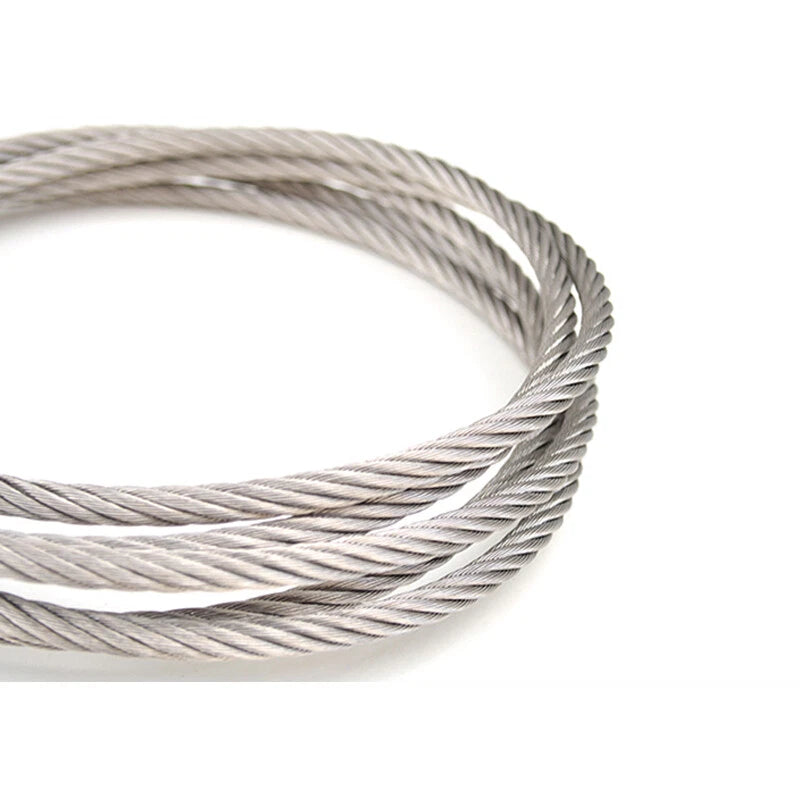
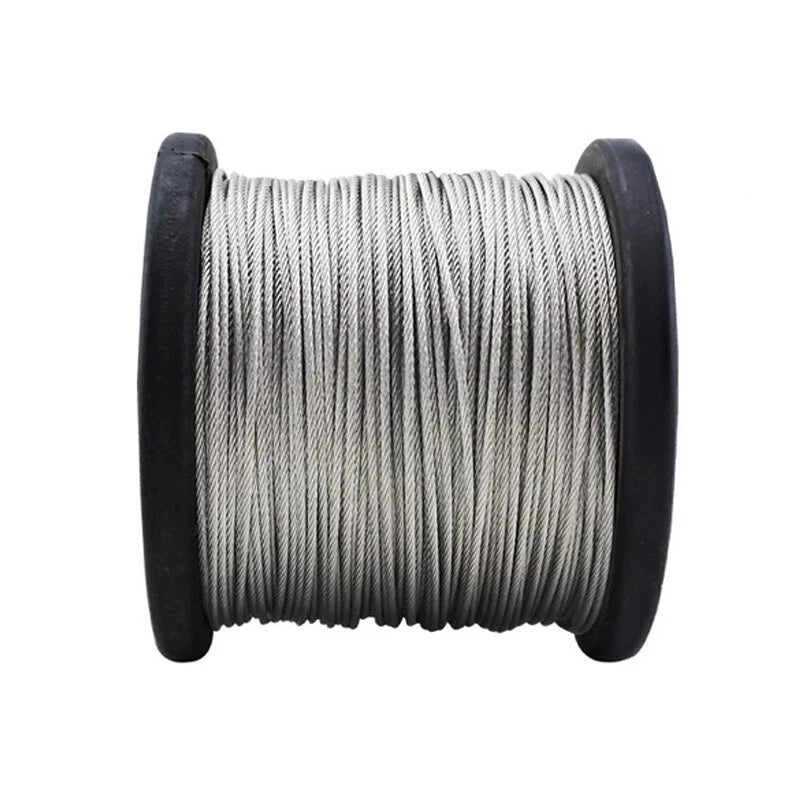

Stainless Steel A2 304 Wire Rope Lifting Metal Cable Rigging 0.3mm 0.4mm to 20mm

Keine Bewertungen

Preis:
Sonderpreis$1.84 USD
Lagerbestand:
Verfügbar (500 Stück), versandbereit

Payment & Security

Ach Direct Debit Amazon American Express Apple Pay Bancontact Diners Club Discover Google Pay iDEAL Wero Mastercard PayPal Shop Pay USDC Visa

Deine Zahlungsinformationen werden sicher verarbeitet. Wir speichern keine Kreditkartendaten und haben auch keinen Zugang zu deinen Kreditkartendaten.

Quantity Discount Promotion
🎯 BULK DISCOUNT: Buy More, Save More!
Buy 2 Items
5% OFF
Buy 4 Items
10% OFF
Buy 6 Items
15% OFF
Expert

DIY Expert Support

Get fitment advice & recommendations

Mon-Fri, 8:30AM-8PM
24-Hour Fast Ship
🚚
Arrives in 3-14 days
🌍
Global Reach
↩️
30-Day Returns
🌱 1 tree planted with every purchase

Beschreibung

Stainless Steel A2 304 Wire Rope — Corrosion-Resistant Cable Rigging for Demanding Applications

When a project demands a cable that holds its shape, resists the elements, and won't let you down mid-span, standard galvanised wire simply falls short. Engineers, riggers, marine enthusiasts, and DIY builders who need reliable stainless steel wire rope turn to A2 304 grade for its proven balance of tensile strength and corrosion resistance across indoor and outdoor environments.

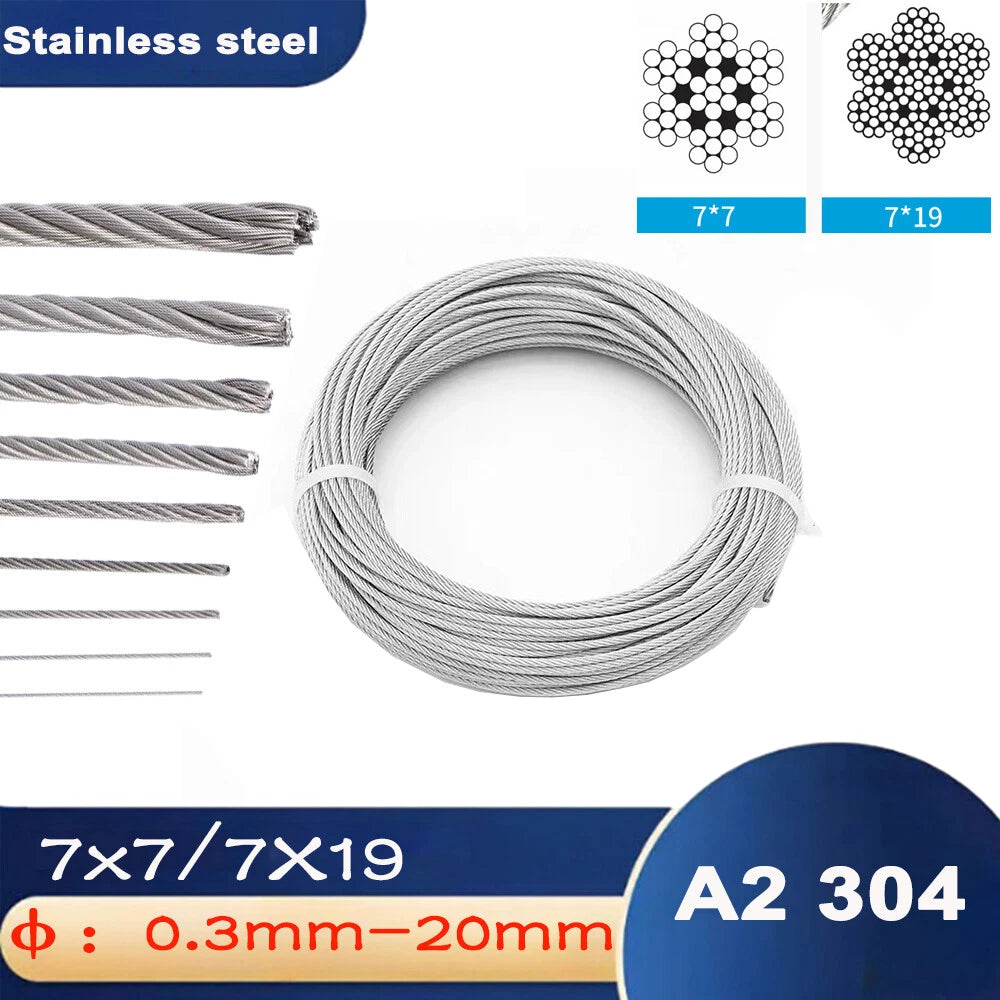
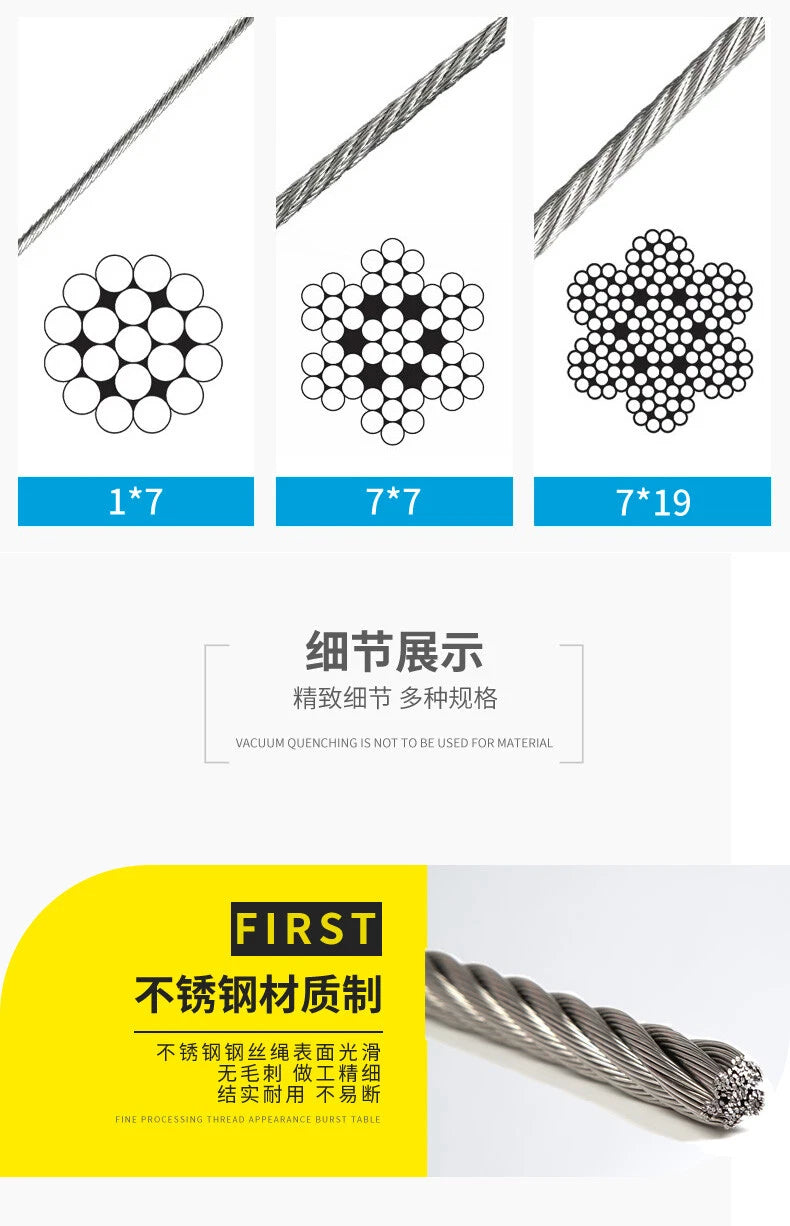
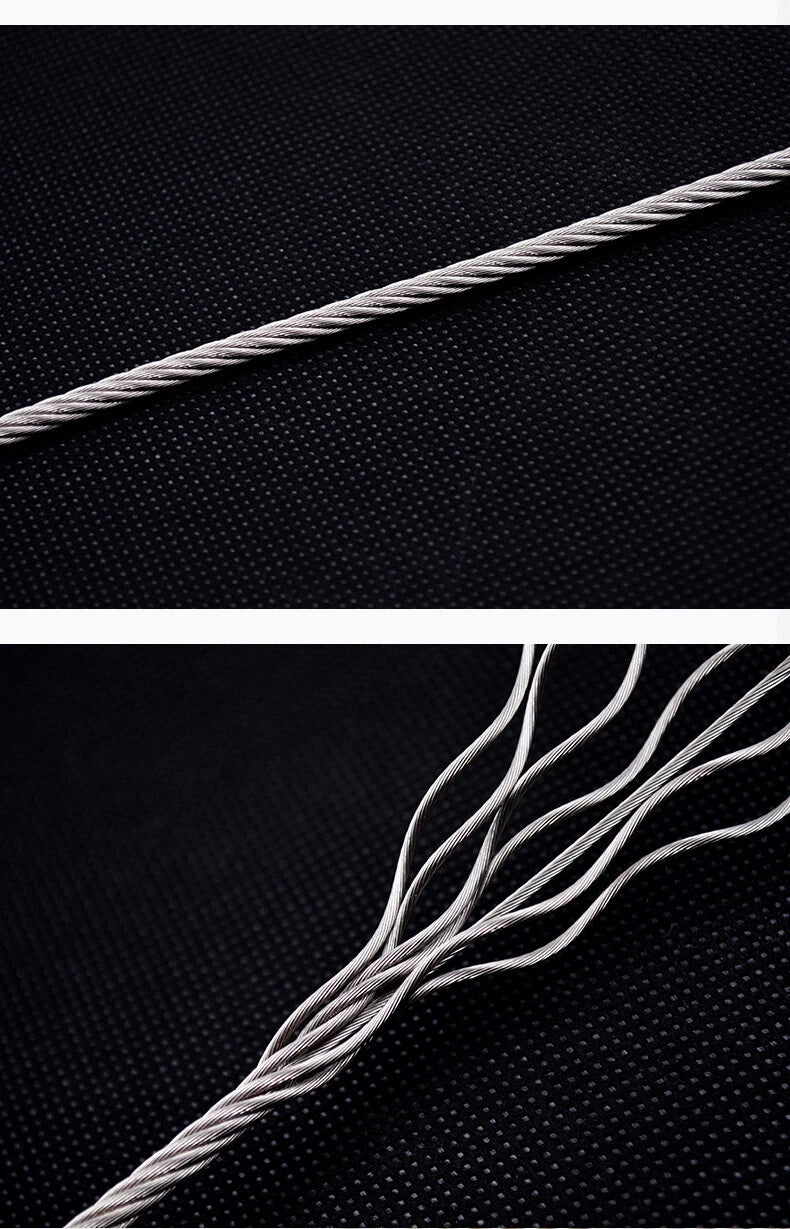
This stainless steel wire rope is constructed from A2 304 grade stainless steel strands, available in two construction types — 7×7 (stiffer, suited to static runs) and 7×19 (more flexible, suited to dynamic or curved runs) — with diameters spanning 0.3 mm (approx. 0.012 in) through 20 mm (approx. 0.79 in) and cut lengths from 1 metre up to 100 metres. The silver finish is consistent across the full diameter range.

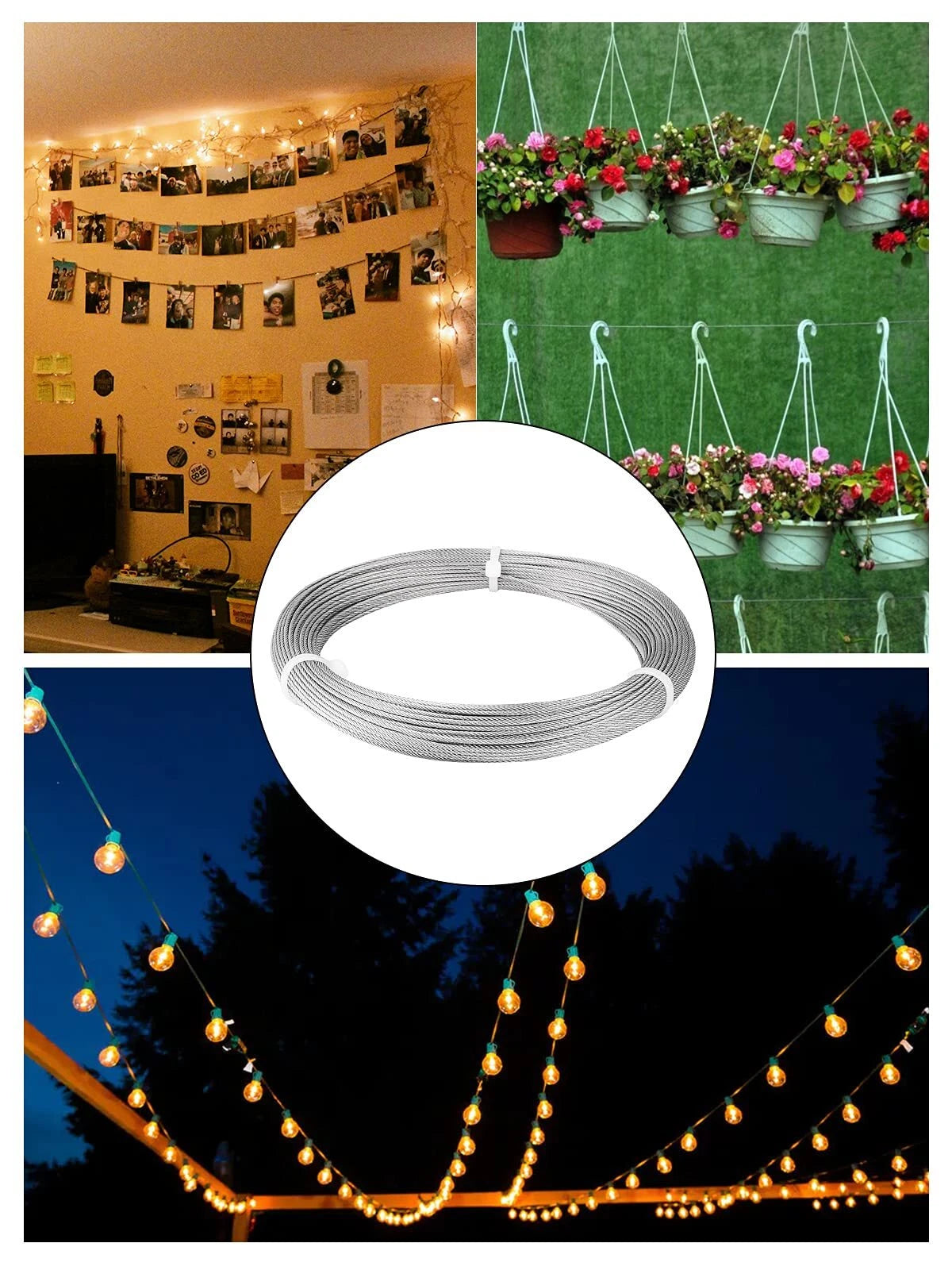
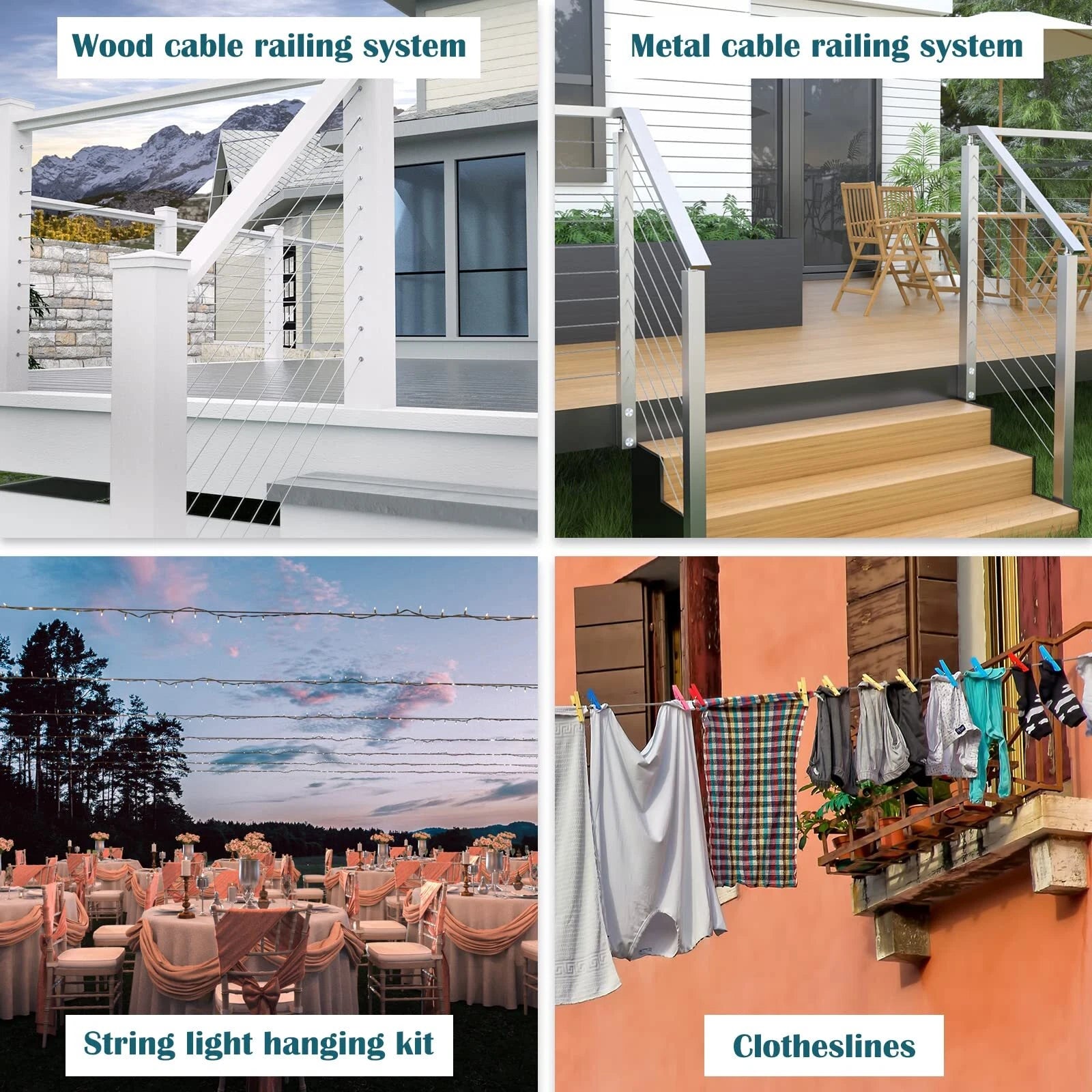
Typical use cases include stainless steel wire rope balustrade infill, deck and stair cable railing systems, marine rigging and shroud replacement, greenhouse trellis tensioning, suspended ceiling grid support, and light-duty lifting slings where a corrosion-resistant cable rigging solution is required in coastal or high-humidity environments.

⚙️ Compatibility note: Verify swage terminal, ferrule, or wire rope clip bore diameter matches your selected cable diameter before ordering. 7×7 construction is recommended for straight static runs; 7×19 construction is recommended for sheave-routed or frequently flexed applications.

✅ Key Features of These Stainless Steel Wire Rope Cables

  • A2 304 Stainless Steel Construction — Resists oxidation, salt spray, and moisture without surface coatings that can crack or peel over time.
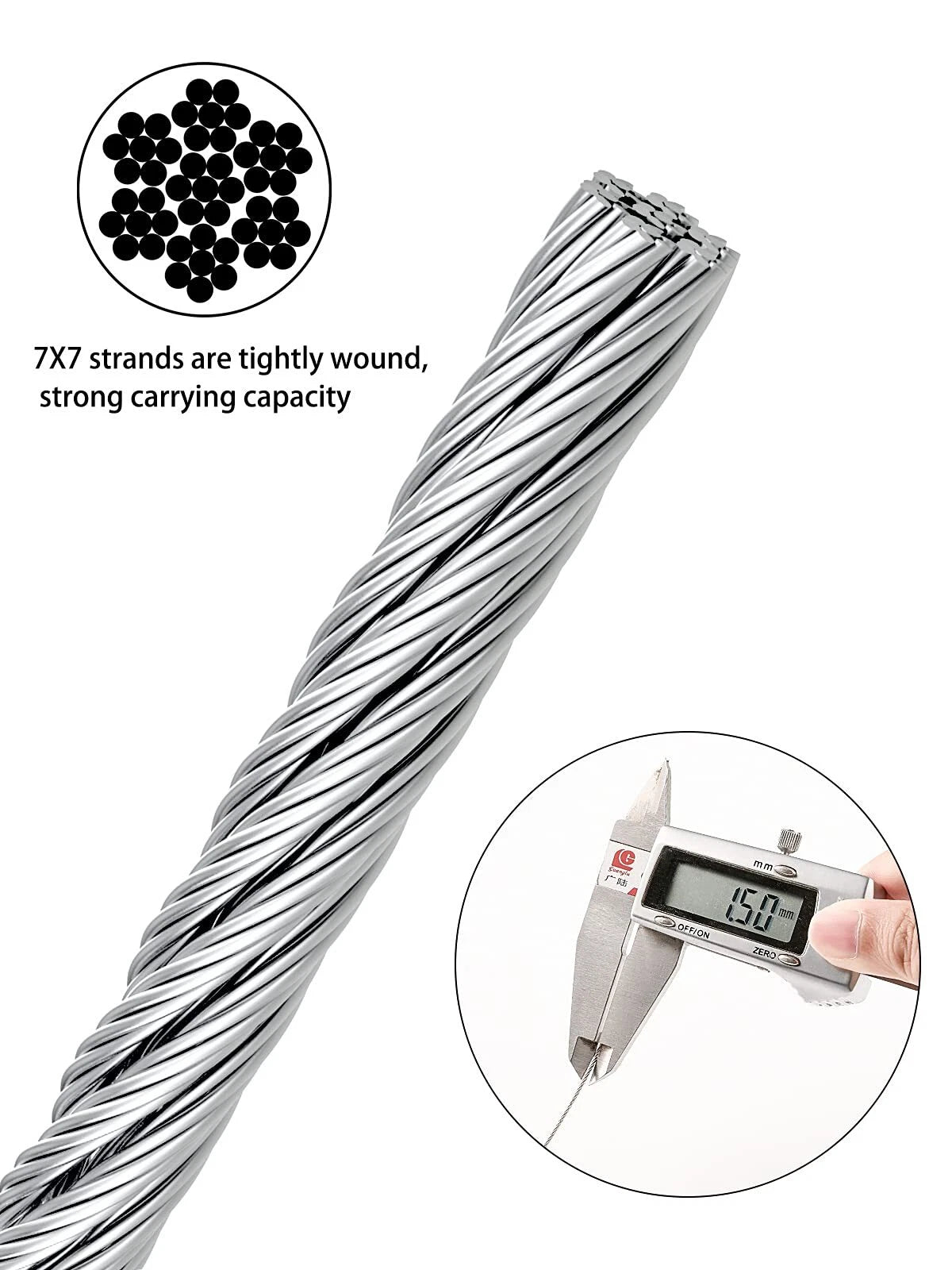
  • Two Strand Configurations — 7×7 (49 wires) for rigid static runs; 7×19 (133 wires) for flexible dynamic applications requiring repeated bending over pulleys or sheaves.
  • Wide Diameter Range — 0.3 mm through 20 mm covers craft-scale jewellery wire, balustrade infill cable, and structural rigging in a single product family.
  • Cut-to-Length Options — Available from 1 m up to 100 m, reducing on-site waste and eliminating the need to purchase full coil quantities for smaller jobs.
  • Silver Finish — Bright drawn surface finish provides a clean aesthetic for visible architectural cable railing and balustrade installations.
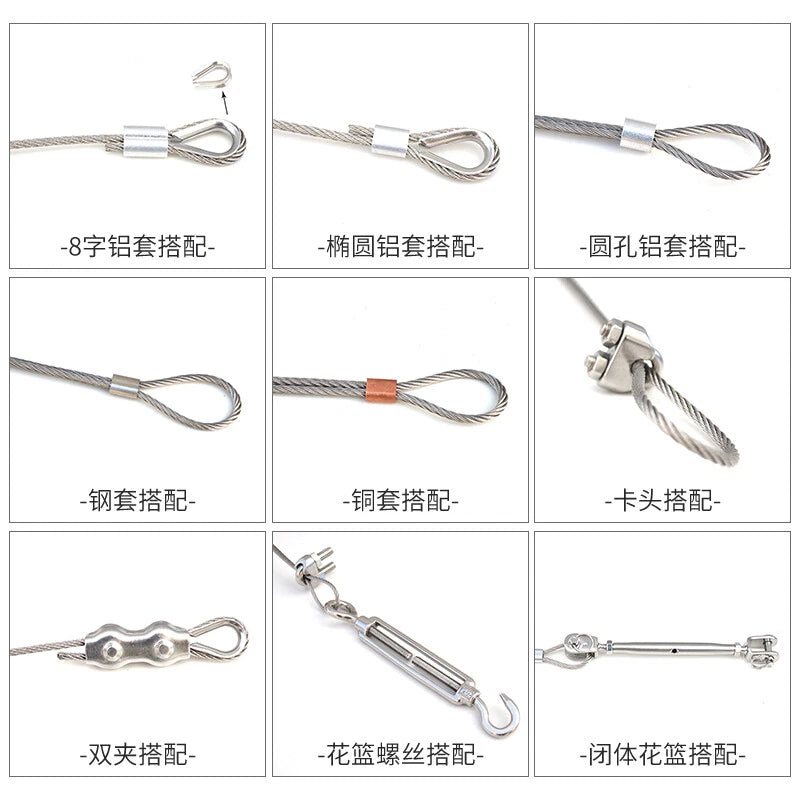
  • Broad Application Compatibility — Accepts standard swage fittings, Nicopress ferrules, wire rope clips, and turnbuckles sized to match the selected cable diameter.

📐 Technical Specifications — Stainless Steel Wire Rope

Material Grade A2 304 Stainless Steel
Strand Construction 7×7 or 7×19 (see variant options)
Diameter Range 0.3 mm – 20 mm (approx. 0.012 in – 0.79 in)
Available Lengths 1 m, 2 m, 5 m, 10 m, 20 m, 50 m, 100 m
Finish / Colour Bright Silver (bare stainless)
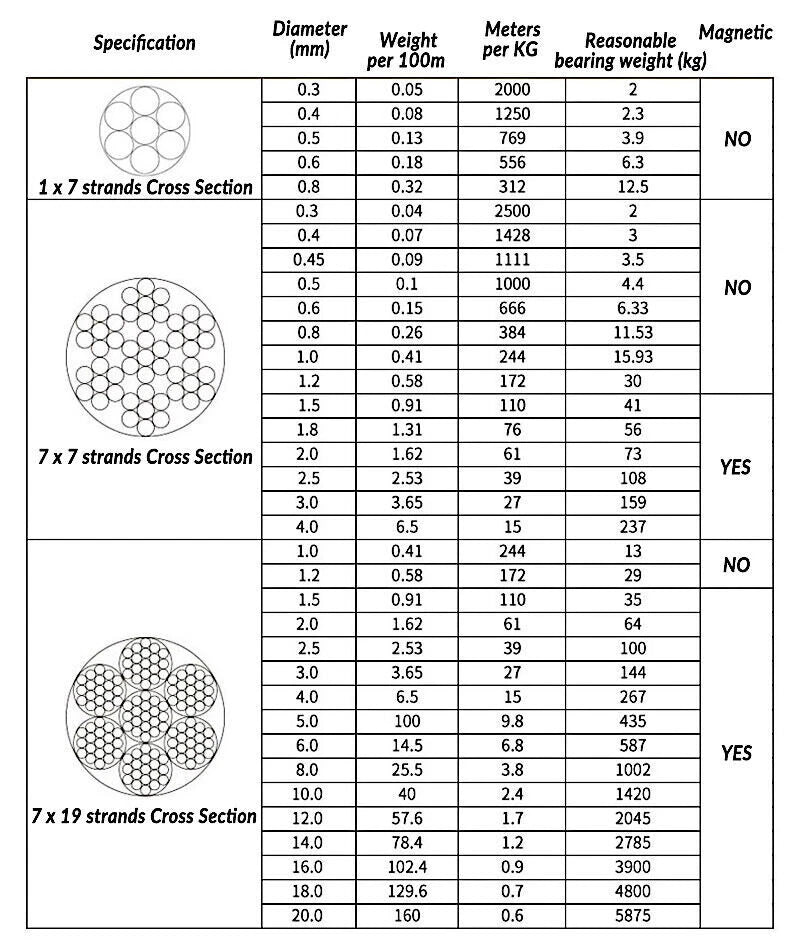
Breaking Load See variant options
Minimum Bend Radius See variant options
Corrosion Resistance Suitable for indoor, outdoor, and moderate marine environments
Compatible Fittings Swage terminals, ferrules, wire rope clips, turnbuckles (sized to cable diameter)
Packaging Cut length, supplied straight or coiled depending on length

❓ Frequently Asked Questions

What is the difference between 7×7 and 7×19 wire rope construction?

7×7 rope consists of 7 strands each containing 7 individual wires (49 wires total). It is stiffer and better suited to straight static runs such as balustrade infill or trellis tensioning. 7×19 rope consists of 7 strands each containing 19 wires (133 wires total), making it significantly more flexible and better suited to applications where the cable bends around sheaves, pulleys, or curved paths, such as marine rigging or winch lines.

Is A2 304 stainless steel wire rope suitable for marine or coastal environments?

A2 304 stainless steel offers good corrosion resistance in most outdoor and moderate coastal environments. It performs well in freshwater, rain, and light salt-air exposure. For highly aggressive marine environments with direct and prolonged saltwater immersion — such as below-waterline fittings or offshore rigging — A4 316 grade stainless steel is generally recommended for superior chloride resistance. For deck-level balustrades and above-waterline rigging in coastal areas, 304 grade is widely used and accepted.

How do I choose the right diameter for a cable balustrade or stair railing?

For residential cable balustrade infill, 3 mm and 4 mm diameters are the most common choices, providing the required tensile strength at typical post spacings of 1–1.5 m. For longer spans or commercial applications, 5 mm or 6 mm may be specified. Always consult your local building code for minimum breaking load requirements and maximum cable spacing. Swage terminal and tensioner bore sizes must match the selected cable diameter exactly.

What fittings are compatible with this wire rope?

This wire rope accepts standard metric-bore fittings sized to match the cable diameter, including swage (compression) terminals, Nicopress oval ferrules, wire rope clips (bulldog grips), eye bolts with thimbles, and turnbuckles. Always match the fitting bore to the exact cable diameter — for example, a 3 mm ferrule for 3 mm rope. Using an undersized or oversized fitting will reduce the joint's rated holding strength.

Can I cut this wire rope to a custom length on-site?

Yes. Stainless steel wire rope can be cut on-site using bolt cutters, angle grinder with a cutting disc, or a dedicated cable cutter. To prevent the cut end from fraying, apply a small amount of heat-shrink tubing, a ferrule, or a swage end cap immediately after cutting. For diameters above 6 mm, a purpose-made wire rope cutter is recommended to achieve a clean, square cut without distorting the strand geometry.

What length should I order, and is there a minimum order quantity?

Lengths are available from 1 metre up to 100 metres per order. There is no minimum order quantity — you can order a single 1 m length for a repair or sample, or a 100 m length for a larger project. For balustrade projects, measure each cable run individually and add approximately 200–300 mm per end for termination allowance before selecting your length.

What is the working load limit (WLL) of this wire rope?

Working load limit varies by diameter and strand construction. As a general guide, a 3 mm 7×7 rope has a typical breaking load of approximately 700–900 kg, with a WLL of roughly 140–180 kg at a 5:1 safety factor. A 6 mm 7×19 rope has a typical breaking load of approximately 2,500–3,000 kg. For safety-critical lifting applications, always refer to the manufacturer's certified load data for the specific diameter and construction, and apply the appropriate safety factor required by your local regulations. Contact us to confirm load data for your selected variant.

🛒 Select your Diameter, Strands, and Length above, then add to cart.

You may also like

Recently viewed