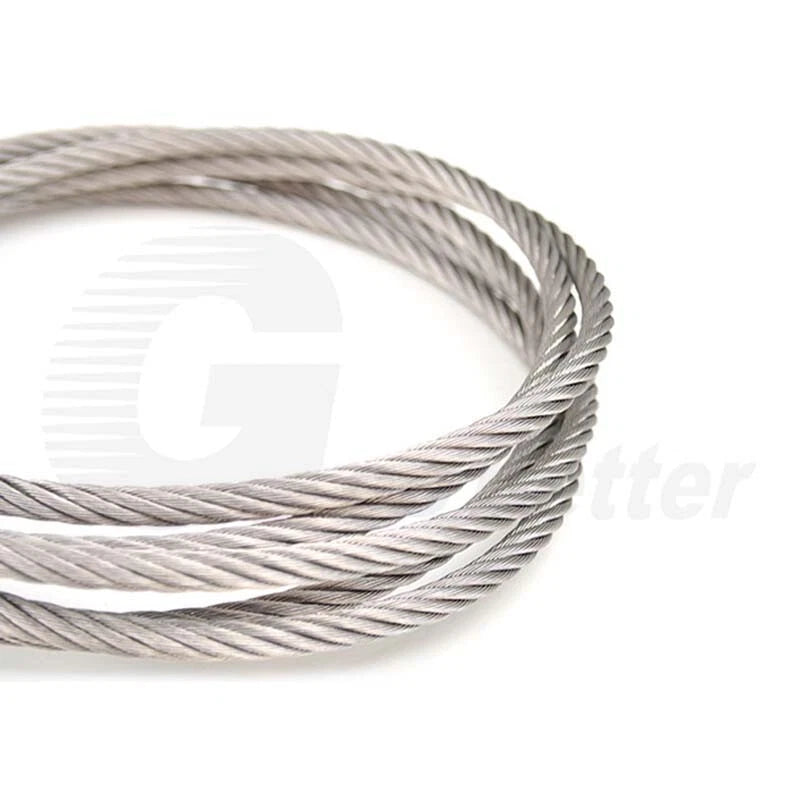
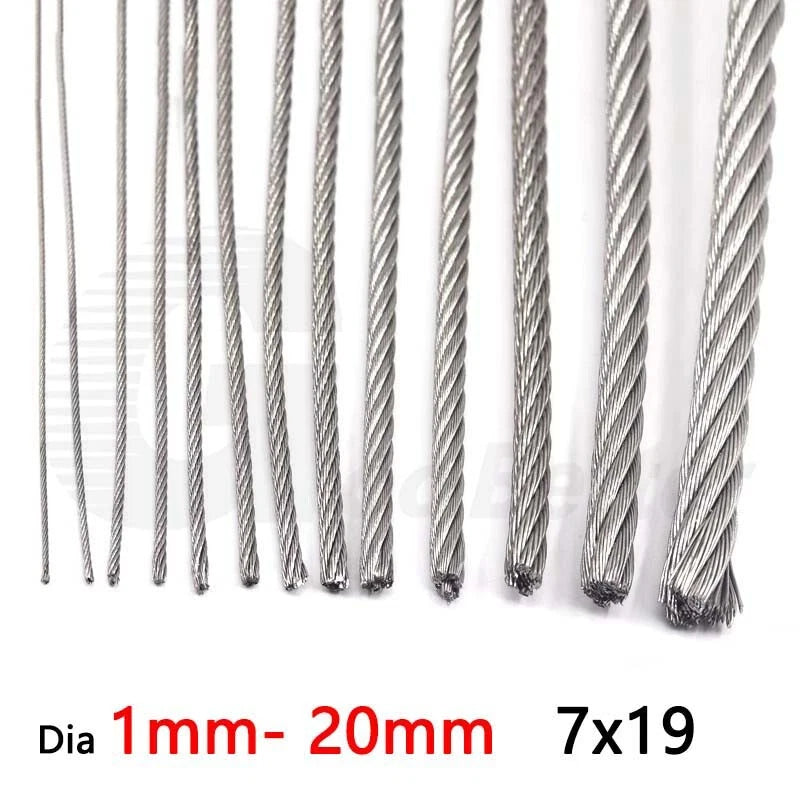
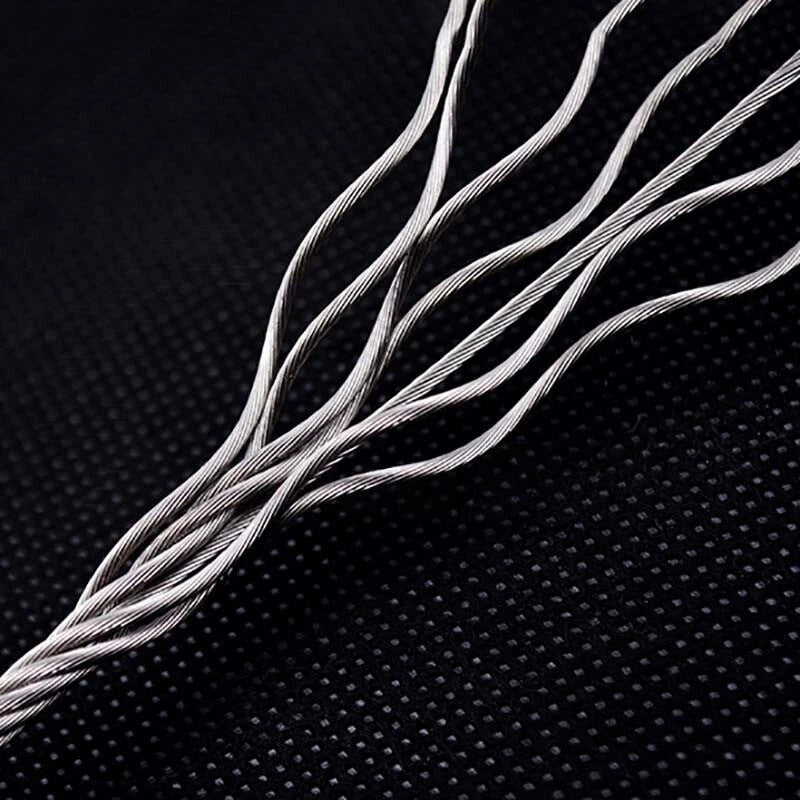
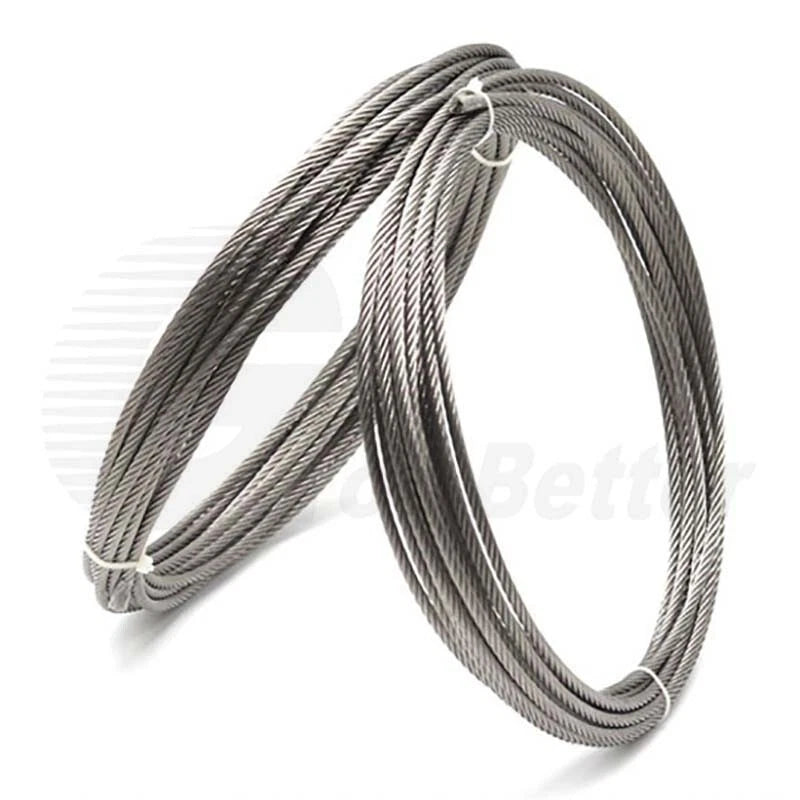
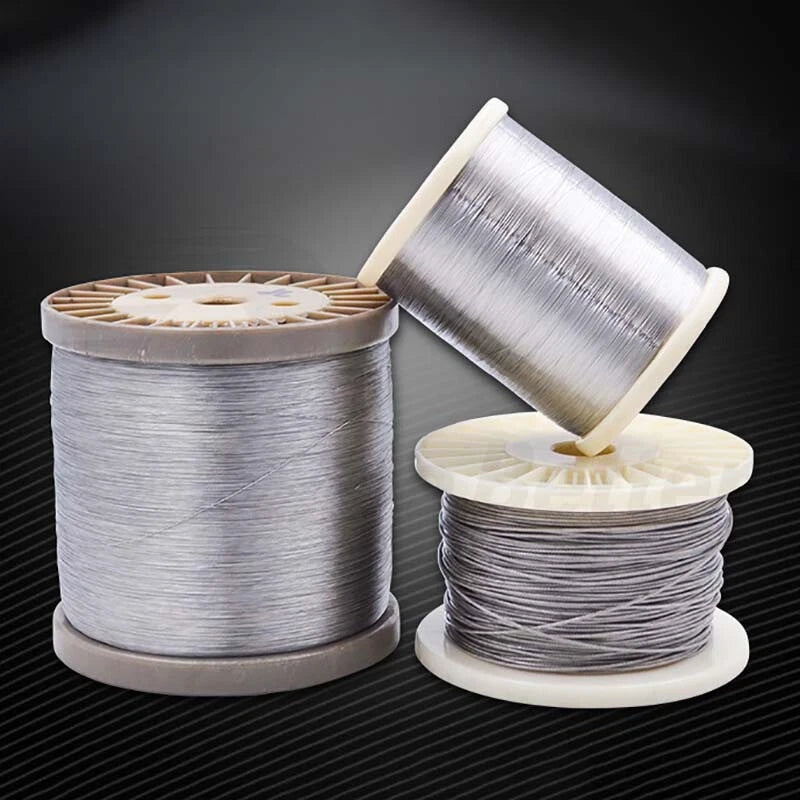
1mm to 20mm Wire Rope 304 A2 Stainless Steel Wire Metal Cable 7x19 Construction

Keine Bewertungen

Preis:
Sonderpreis$6.87 USD
Lagerbestand:
Verfügbar (500 Stück), versandbereit

Payment & Security

Ach Direct Debit Amazon American Express Apple Pay Bancontact Diners Club Discover Google Pay iDEAL Wero Mastercard PayPal Shop Pay USDC Visa

Deine Zahlungsinformationen werden sicher verarbeitet. Wir speichern keine Kreditkartendaten und haben auch keinen Zugang zu deinen Kreditkartendaten.

Quantity Discount Promotion
🎯 BULK DISCOUNT: Buy More, Save More!
Buy 2 Items
5% OFF
Buy 4 Items
10% OFF
Buy 6 Items
15% OFF
Expert

DIY Expert Support

Get fitment advice & recommendations

Mon-Fri, 8:30AM-8PM
24-Hour Fast Ship
🚚
Arrives in 3-14 days
🌍
Global Reach
↩️
30-Day Returns
🌱 1 tree planted with every purchase

Beschreibung

304 A2 Stainless Steel Wire Rope — Flexible, Corrosion-Resistant Cable from 1mm to 20mm

When a project demands a cable that holds up to moisture, salt air, and repeated load cycles without corroding or fraying, most standard steel cables fall short within a season. Whether you are a rigger, a marine DIYer, or a contractor specifying balustrade infill, you need a wire rope that performs consistently across its rated diameter — not one that looks the part in the catalogue but rusts at the first sign of humidity.

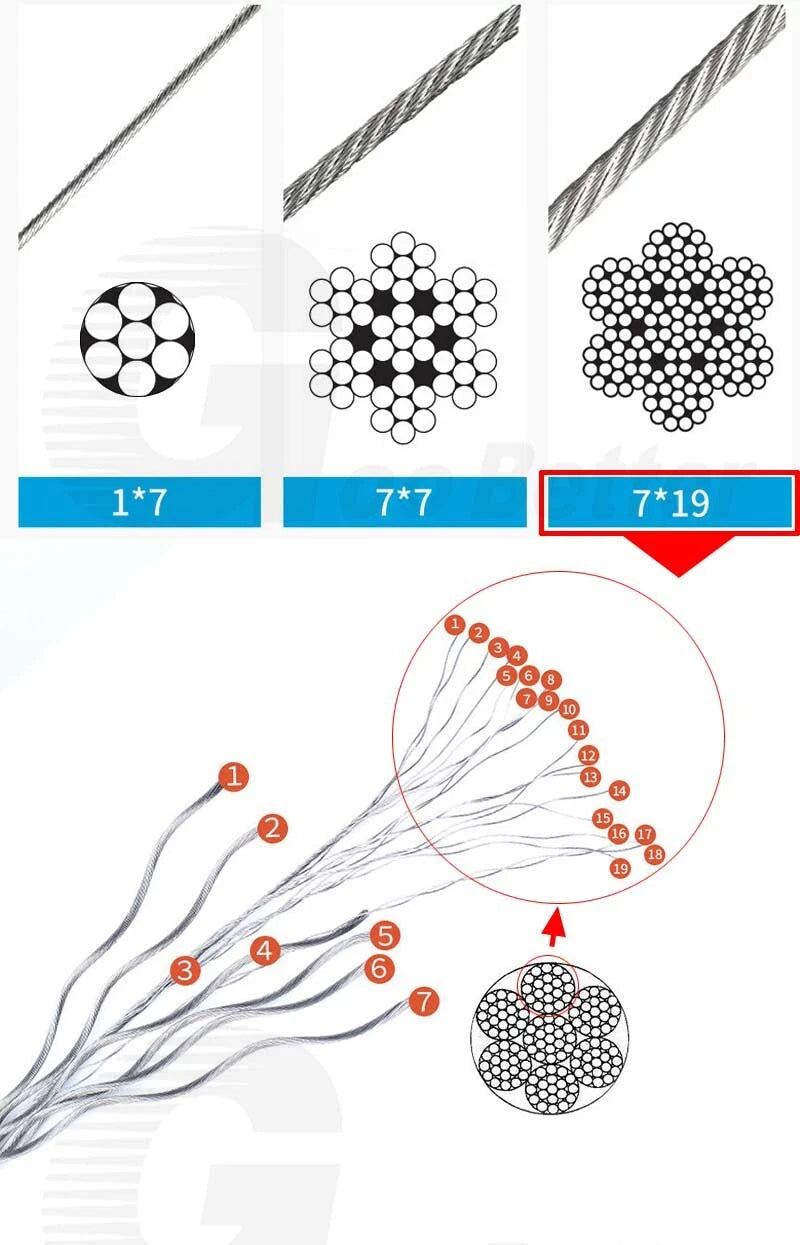
This wire rope is drawn from 304-grade (A2) stainless steel and is available in wire diameters from 1.0mm (approx. 3/64 in) up to 20mm (approx. 25/32 in). Two construction types are offered: the flexible 7×19 strand lay — 7 strands of 19 wires each — and the stiffer 1×19 single-strand construction for applications requiring minimal stretch. Lengths are sold by the meter, with pack options of 1, 2, 3, 5, or 10 metres so you can order exactly what the job requires.

Typical applications include deck and stair balustrade cable infill (1.5mm–4mm), marine standing and running rigging (3mm–10mm), overhead catenary and tensioning lines (4mm–8mm), gym and fitness equipment cable replacement (2mm–6mm), and general industrial lifting slings and lashing where a stainless finish is specified. The 7×19 construction is the go-to choice for any run that passes through pulleys or swaged fittings, while the 1×19 suits straight, fixed-tension spans such as architectural cable walls.

⚙️ Compatibility note: 7×19 construction is compatible with swage fittings, Sta-Lok terminals, and most wire rope grips. 1×19 construction suits fixed-end compression fittings and architectural terminals. Always match fitting bore to the selected wire diameter.

✅ Key Features of These 304 Stainless Steel Wire Ropes

🔩 304 (A2) Stainless Steel Construction

Drawn from 304-grade austenitic stainless steel, this wire rope resists oxidation, salt spray, and mild chemical exposure — making it suitable for outdoor, coastal, and wet-area installations without surface treatment.

📏 Wide Diameter Range: 1mm–20mm

Sixteen diameter options from 1.0mm to 20mm cover everything from fine tensioning wire and balustrade infill up to heavy-duty rigging and structural cable applications, all within a single product listing.

🔀 Two Construction Types: 7×19 and 1×19

The 7×19 strand lay delivers flexibility and fatigue resistance for dynamic or curved runs. The 1×19 single-strand construction provides a stiffer, lower-stretch cable suited to straight architectural or standing-rigging spans.

📦 Cut-to-Length Meter Packs

Order 1, 2, 3, 5, or 10 metres to match your exact project requirement. No minimum reel purchase, no waste — each pack is cut and supplied as a continuous length.

⚖️ Consistent Lay and Diameter Tolerance

Each coil is manufactured to maintain uniform strand lay and diameter tolerance across the full length, ensuring reliable performance when swaged, clamped, or threaded through fittings.

🛠️ Versatile Across DIY and Trade Applications

Used in balustrade cable systems, marine rigging, gym equipment, overhead tensioning lines, and industrial lashing — this wire rope handles both light-duty DIY tasks and trade-specification projects.

📐 Technical Specifications — Stainless Steel Wire Rope

Material 304 Stainless Steel (A2 grade)
Wire Diameter Range 1.0mm – 20mm (approx. 3/64 in – 25/32 in)
Construction Types 7×19 (flexible strand lay); 1×19 (single strand)
Available Lengths 1 m, 2 m, 3 m, 5 m, 10 m (continuous cut length)
Finish Bright / mill finish stainless
Lay Type Right-hand ordinary lay (RHOL) — See variant options for 1×19
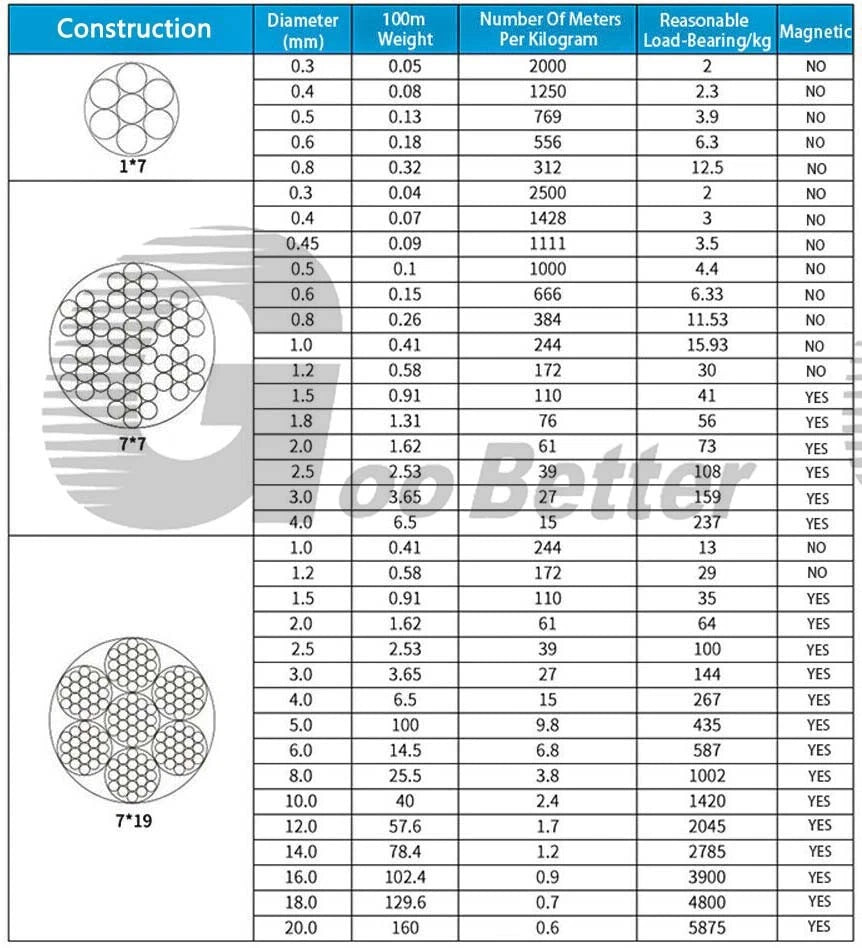
Breaking Load See variant options (varies by diameter and construction)
Minimum Bend Radius See variant options (typically 10–20× wire diameter)
Compatible Fittings Swage fittings, Sta-Lok terminals, wire rope grips, compression sleeves
Condition New

❓ Frequently Asked Questions

Which diameter should I choose for a deck balustrade cable infill?

For residential deck and stair balustrade infill, 1.5mm to 3.0mm wire rope in 7×19 construction is the most common specification. The 7×19 lay allows the cable to pass through swaged end fittings and tensioners without kinking. For spans over 1.8m (6 ft), 3.0mm or 4.0mm is recommended to limit mid-span deflection under lateral load. Always verify local building code requirements for balustrade cable spacing and tensile strength before finalising your diameter selection.

What is the difference between 7×19 and 1×19 construction?

7×19 wire rope is made up of 7 strands, each containing 19 individual wires, giving a total of 133 wires per rope cross-section. This multi-strand construction makes the rope flexible and resistant to fatigue from repeated bending — ideal for runs through pulleys, around corners, or through swaged fittings. 1×19 construction uses a single strand of 19 wires, producing a stiffer, lower-stretch cable with a cleaner surface profile. It is preferred for straight architectural cable walls, standing rigging, and fixed-tension spans where flexibility is not required.

Is 304 stainless steel wire rope suitable for marine or saltwater environments?

304 (A2) stainless steel offers good resistance to atmospheric corrosion and mild salt spray, making it suitable for coastal and freshwater marine applications such as boat rigging, dock fencing, and pontoon railings. For continuous immersion in seawater or highly aggressive salt environments — such as offshore or tidal-zone installations — 316 (A4) stainless steel is generally the preferred specification due to its higher molybdenum content. If your application involves prolonged saltwater contact, consider upgrading to 316 grade.

Can I use this wire rope with standard swage fittings and wire rope grips?

Yes. The 7×19 construction is fully compatible with standard swage fittings (open and closed body), Sta-Lok and Petersen-style mechanical terminals, and wire rope grips (bulldog clips). Always match the fitting bore diameter to the wire rope diameter you have selected — for example, a 3.0mm fitting for 3.0mm rope. The 1×19 construction is best used with compression-type end fittings or fixed-pin terminals rather than swage fittings, as its stiffer lay can be more difficult to seat correctly in a swage die.

How do I select the right length for my project?

Measure the total run length of each cable span, then add allowance for the end fittings — typically 50–80mm per end for swaged or mechanical terminals. For balustrade systems, calculate the number of individual cable runs and multiply by the span length plus fitting allowance. The pack options of 1, 2, 3, 5, and 10 metres allow you to order the closest match to your requirement. If your project needs a length not listed, order the next size up and trim to length using a cable cutter or angle grinder with a cutting disc.

What tools do I need to cut and terminate this wire rope?

For clean cuts without fraying, use a dedicated wire rope cutter (scissor or ratchet type) sized for your chosen diameter, or an angle grinder with a thin cutting disc. Avoid using standard bolt cutters on diameters above 4mm as they can distort the strand lay at the cut end. To prevent the cut end from unravelling before fitting, wrap the cut point with electrical tape or apply a small amount of heat-shrink tubing. For swaged terminations, a hydraulic swaging tool matched to your fitting size is required; mechanical Sta-Lok-style fittings can be assembled with basic hand tools.

What is the approximate breaking load for common diameters?

Breaking load varies by diameter and construction. As a general guide for 7×19 304 stainless wire rope: 1.0mm is typically rated at approximately 0.6–0.8 kN, 2.0mm at approximately 2.0–2.5 kN, 3.0mm at approximately 4.5–5.5 kN, 4.0mm at approximately 8–10 kN, 6.0mm at approximately 18–22 kN, and 8.0mm at approximately 32–38 kN. These are indicative figures based on standard industry tables for 7×19 304 SS rope; actual values depend on manufacturing tolerances. Contact us to confirm rated breaking load for your specific diameter before use in safety-critical lifting or load-bearing applications.

🛒 Select your Wire Diameter, Construction type, and Pack length above, then add to cart.

You may also like

Recently viewed