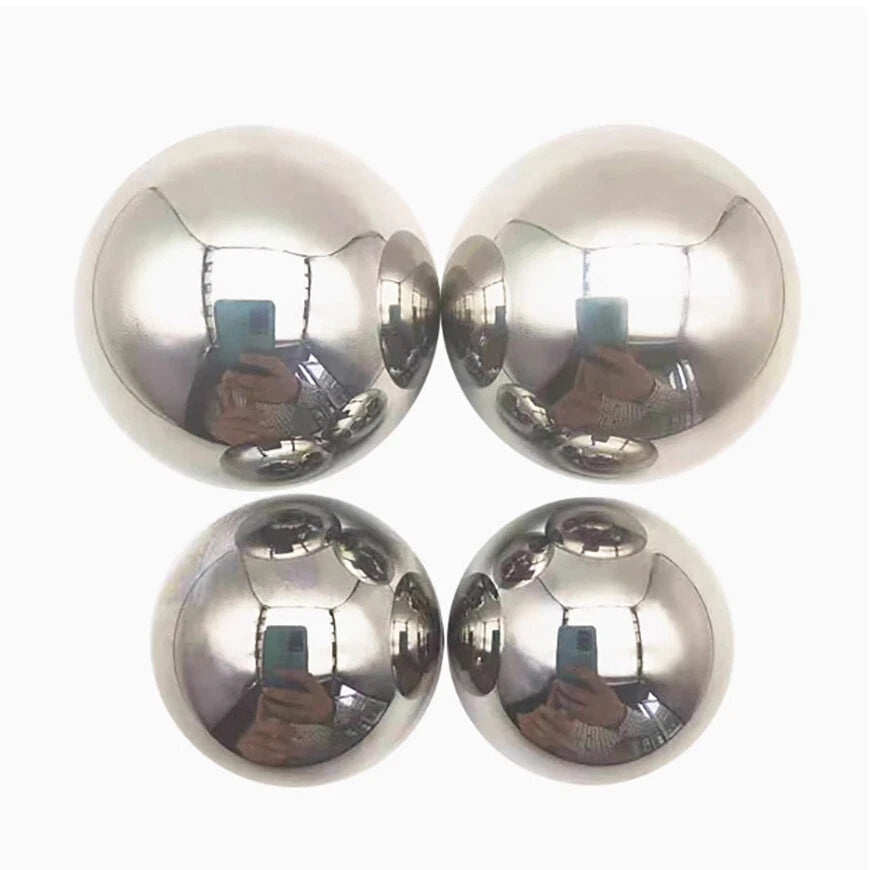
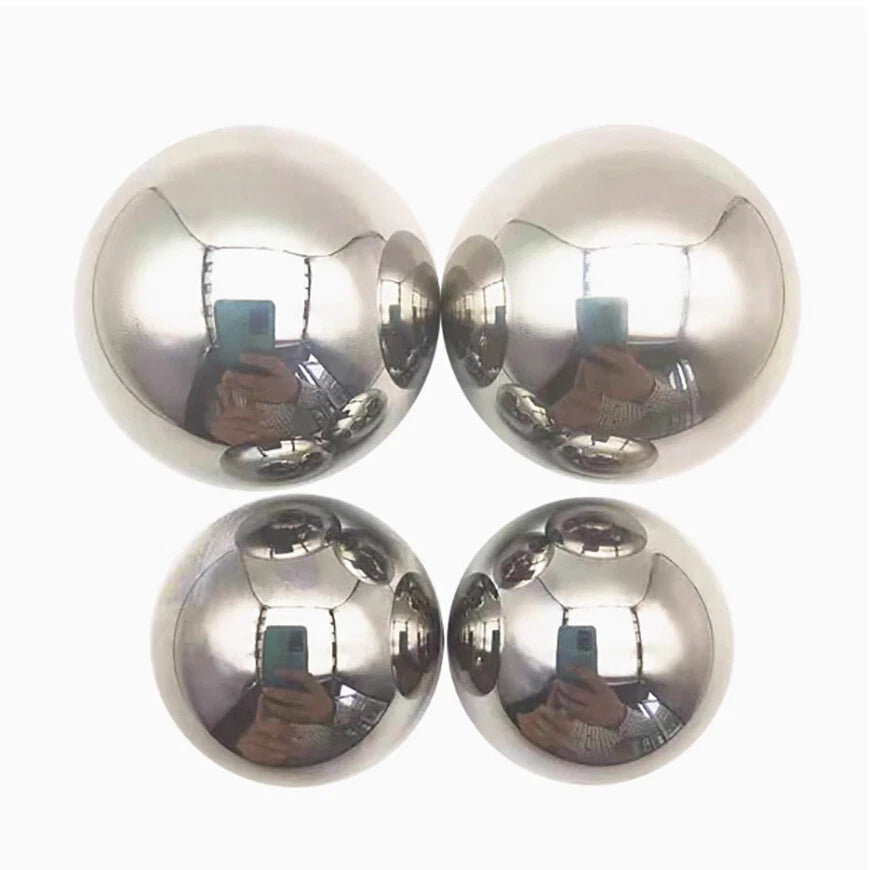
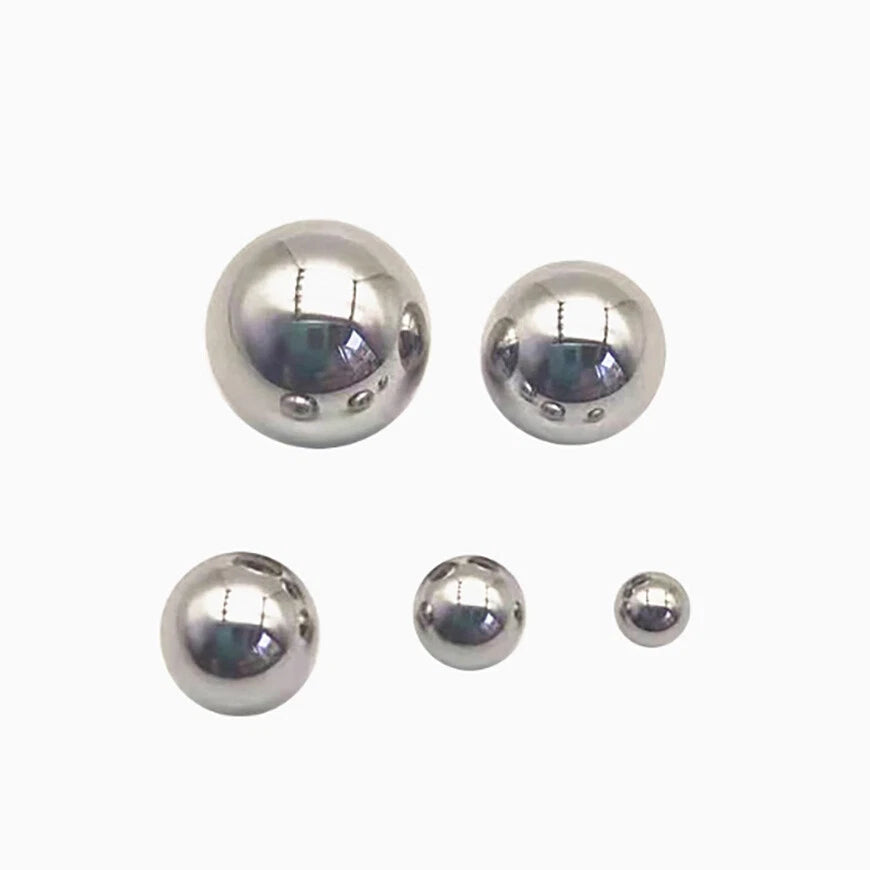
1KG Solid Carbon Steel-Gcr15 Steel Ball Bearing Replacement Bearings 9mm-20mm

Keine Bewertungen

Preis:
Sonderpreis$65.29 USD
Lagerbestand:
Verfügbar (500 Stück), versandbereit

Payment & Security

Ach Direct Debit Amazon American Express Apple Pay Bancontact BLIK Diners Club Discover EPS Google Pay iDEAL Wero JCB Maestro Mastercard Multibanco MobilePay PayPal Przelewy24 Shop Pay Twint Union Pay USDC Visa

Deine Zahlungsinformationen werden sicher verarbeitet. Wir speichern keine Kreditkartendaten und haben auch keinen Zugang zu deinen Kreditkartendaten.

Quantity Discount Promotion
🎯 BULK DISCOUNT: Buy More, Save More!
Buy 2 Items
5% OFF
Buy 4 Items
10% OFF
Buy 6 Items
15% OFF
Expert

DIY Expert Support

Get fitment advice & recommendations

Mon-Fri, 8:30AM-8PM
24-Hour Fast Ship
🚚
Arrives in 3-14 days
🌍
Global Reach
↩️
30-Day Returns
🌱 1 tree planted with every purchase

Beschreibung

Steel Ball Bearings 9mm–20mm — Precision Replacement for Machinery & DIY Builds

When worn or pitted bearing balls cause vibration, noise, or uneven load distribution in your equipment, finding a dimensionally consistent replacement is the first challenge. Whether you're a workshop technician rebuilding a spindle, a hobbyist restoring a vintage tool, or a maker sourcing rolling elements for a custom linear rail, imprecise balls introduce play that compounds wear over time.

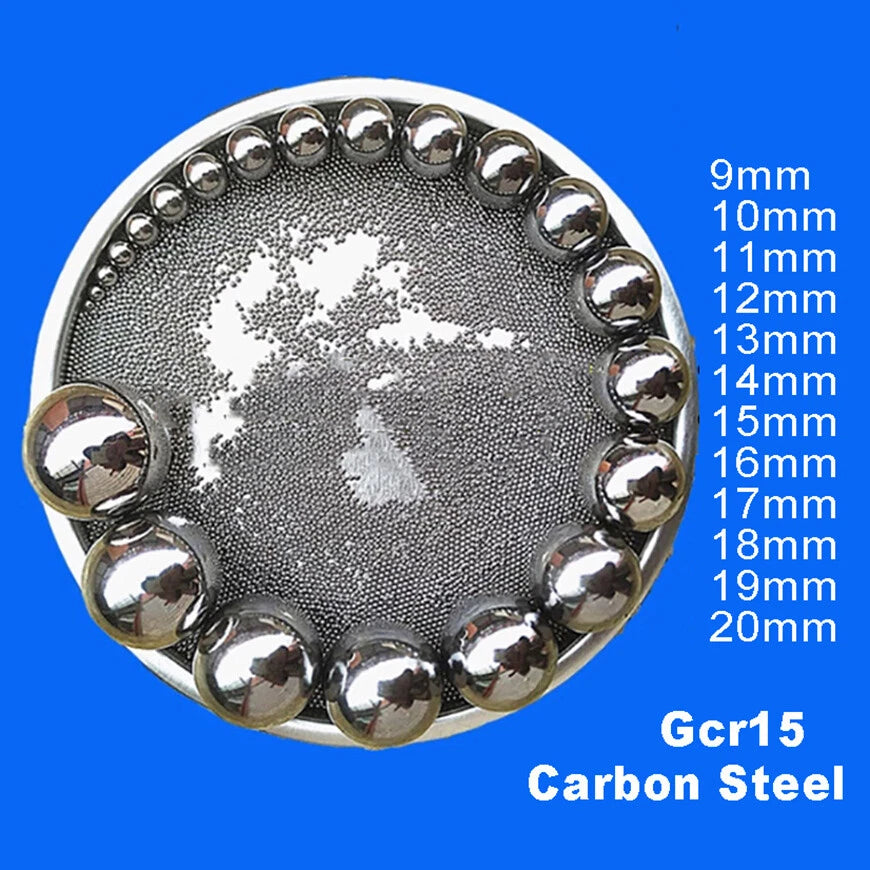
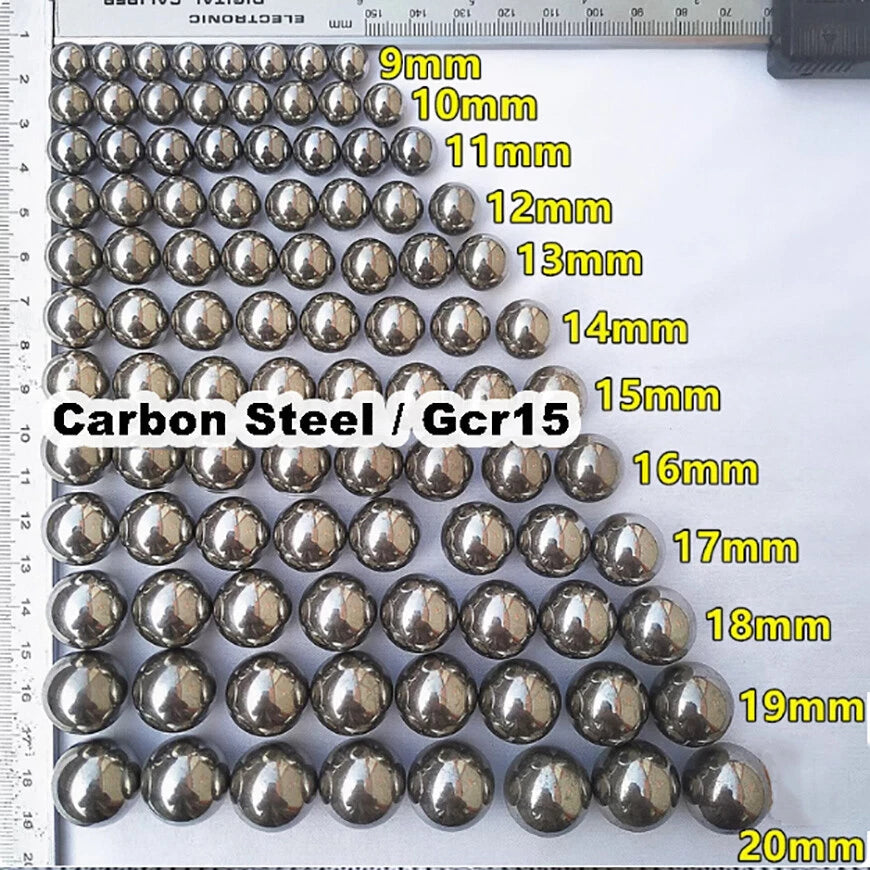
These solid steel ball bearings are sold by the kilogram and available in two materials — standard Carbon Steel and Gcr15 bearing-grade chromium steel — across twelve diameters from 9mm (≈0.354 in) to 20mm (≈0.787 in). Each 1kg pack contains multiple balls; exact count varies by diameter. Balls are manufactured to tight sphericity tolerances suitable for general-purpose bearing replacement and mechanical assemblies.

Typical applications include replacing rolling elements in deep-groove ball bearings for electric motors and power tools, filling ball-screw or linear-guide recirculation tracks, and serving as load-transfer media in jigs, fixtures, and shop-built machinery. Gcr15 variants suit higher-load or higher-cycle applications where carbon steel may fatigue sooner.

⚙️ Compatibility: Fits standard open or shielded ball bearing housings. Match the diameter precisely to your bearing's ball complement specification. Not intended for food-grade or medical-device applications.

✅ Key Features of These Steel Ball Bearings

  • 🔩Two material grades available — Carbon Steel for general workshop use; Gcr15 (chromium bearing steel) for higher-load, longer-cycle applications requiring greater fatigue resistance.
  • 📏Twelve diameter options (9mm–20mm) — Covers the most common replacement sizes for small-to-medium bearings in power tools, motors, and shop machinery.
  • ⚖️Sold by weight (1kg per pack) — Consistent pack weight lets you stock the quantity you need; ball count per pack varies by diameter.
  • 🎯Tight sphericity tolerance — Uniform roundness reduces vibration and uneven load distribution when used as replacement rolling elements.
  • 🔄Broad application range — Suitable for deep-groove bearings, ball-screw tracks, linear guides, jigs, and custom mechanical assemblies.
  • 📦Bulk-friendly packaging — 1kg packs are practical for workshop restocking, repair batches, or prototype builds requiring multiple balls.

📐 Technical Specifications — Steel Ball Bearings

Material Options Carbon Steel; Gcr15 (chromium bearing steel)
Diameter Range 9mm – 20mm (≈0.354 in – 0.787 in)
Available Diameters 9, 10, 11, 12, 13, 14, 15, 16, 17, 18, 19, 20 mm
Pack Weight 1 kg per pack
Ball Count per Pack See variant options (varies by diameter)
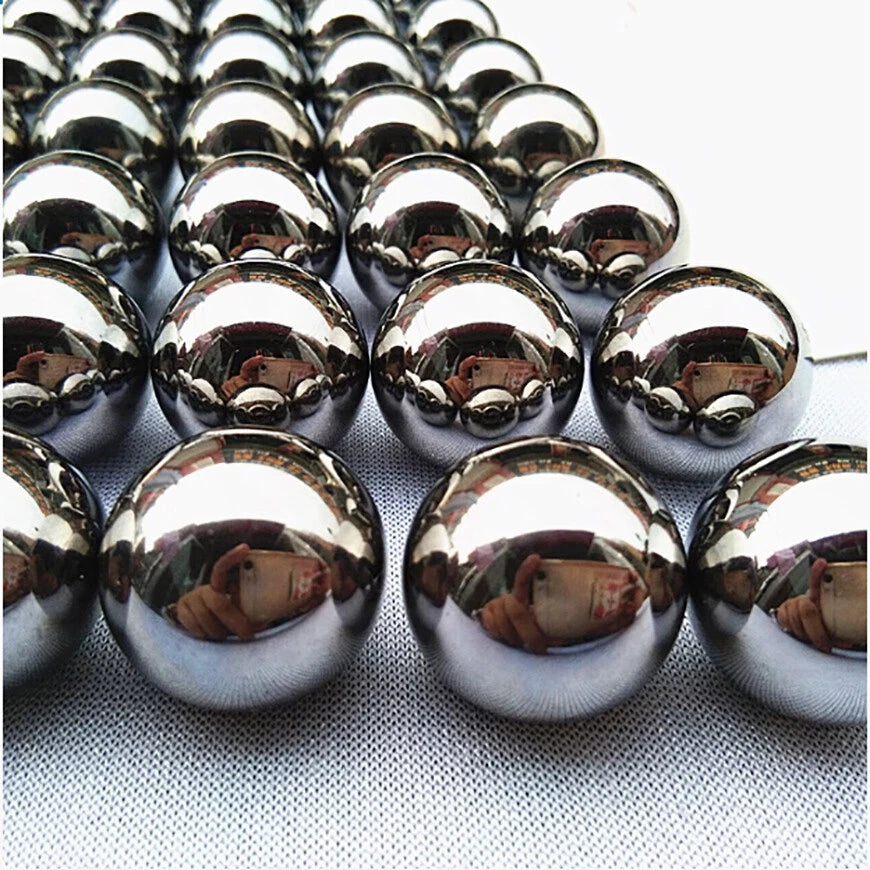
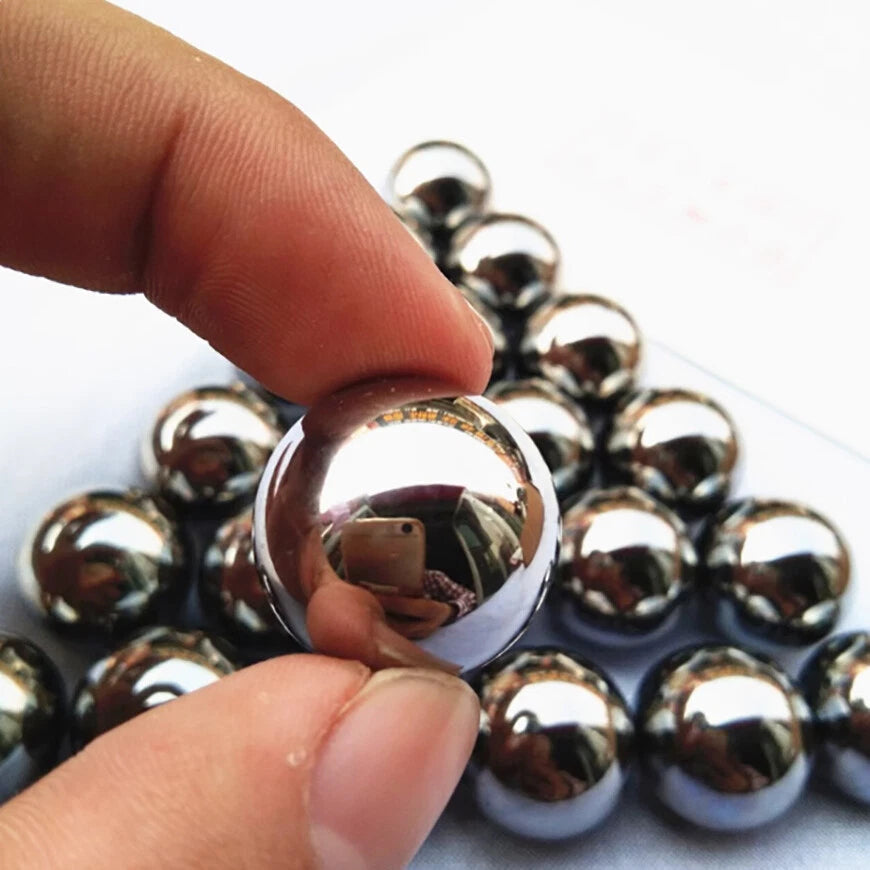
Surface Finish Bright / polished
Hardness (Gcr15) Typically 60–66 HRC
Hardness (Carbon Steel) Typically 55–62 HRC
Sphericity Tolerance See variant options
Intended Use Bearing replacement, mechanical assemblies, linear guides
Corrosion Resistance Moderate (uncoated steel; keep dry or lightly oiled in storage)

❓ Frequently Asked Questions

What is the difference between Carbon Steel and Gcr15 balls?

Carbon Steel balls are a cost-effective choice for general-purpose applications with moderate loads and cycle counts. Gcr15 is a chromium-alloyed bearing steel with higher hardness (typically 60–66 HRC) and better fatigue resistance, making it the preferred choice for higher-load or high-cycle environments such as spindle bearings, ball screws, and precision machinery.

How do I select the correct diameter for my bearing?

Check your bearing's datasheet or measure the existing balls with a micrometer. The ball diameter must match the bearing's ball complement specification exactly — even a 0.1mm deviation can cause uneven load distribution and accelerated wear. If you are unsure, contact us to confirm before ordering.

Are these balls corrosion-resistant?

Both Carbon Steel and Gcr15 are uncoated steel and offer moderate corrosion resistance. They are suitable for dry or lightly lubricated indoor environments. For humid, wet, or chemically exposed applications, consider stainless steel balls instead. Store unused balls lightly oiled in a sealed container to prevent surface oxidation.

How many balls are in a 1kg pack?

The ball count per kilogram depends on the diameter. Smaller balls (e.g., 9mm) yield significantly more balls per kilogram than larger ones (e.g., 20mm). If you need an exact count for a specific diameter, contact us and we can provide an estimate based on the nominal ball weight.

Can I use these balls in food-processing or medical equipment?

No. These are uncoated carbon or chromium steel balls without food-grade certification or biocompatibility testing. They are intended for industrial, workshop, and DIY mechanical applications only. For food-grade or medical-device use, stainless steel or ceramic balls with appropriate certifications are required.

What bearing types are these balls compatible with?

These balls are compatible with standard open and shielded deep-groove ball bearings, angular contact bearings, ball-screw recirculation tracks, and linear guide ball complements — provided the diameter matches exactly. They are not pre-assembled into a bearing race; they are loose rolling elements for replacement or custom assembly use.

Should I lubricate the balls before installation?

Yes. Apply a thin film of appropriate bearing grease or oil before installation to reduce initial wear and prevent dry-start damage. The type of lubricant should match your application's speed, load, and temperature requirements. Consult your equipment's service manual for the recommended lubricant specification.

🛒 Select your Material and Diameter above, then add to cart.


You may also like

Recently viewed