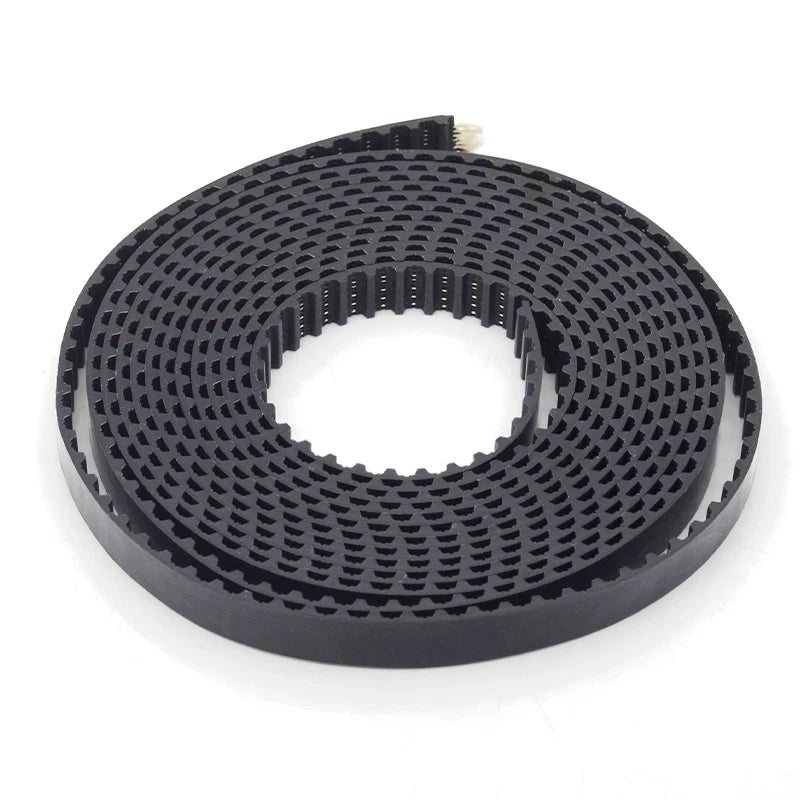
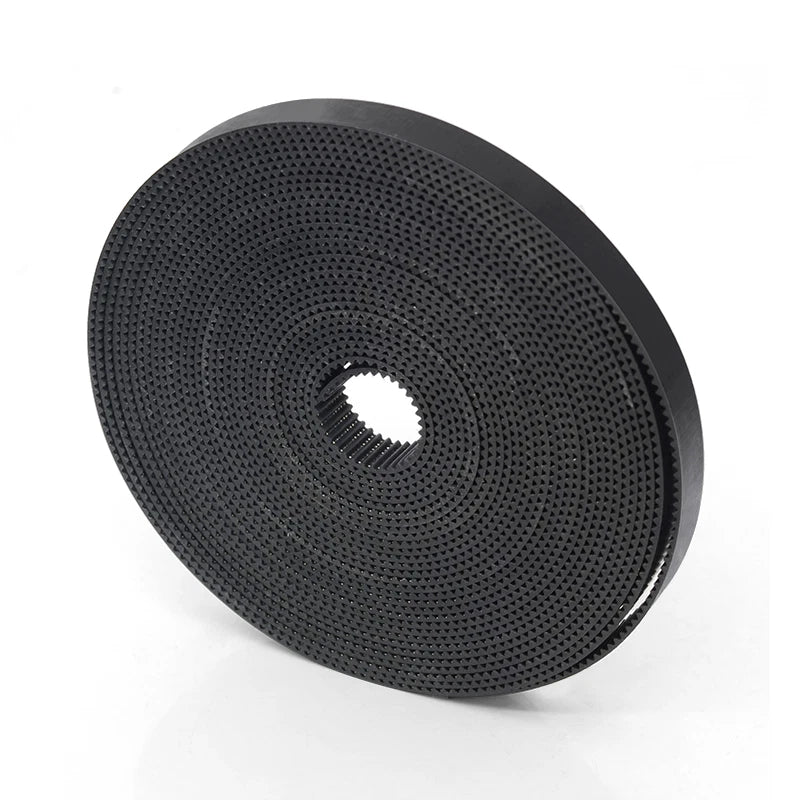
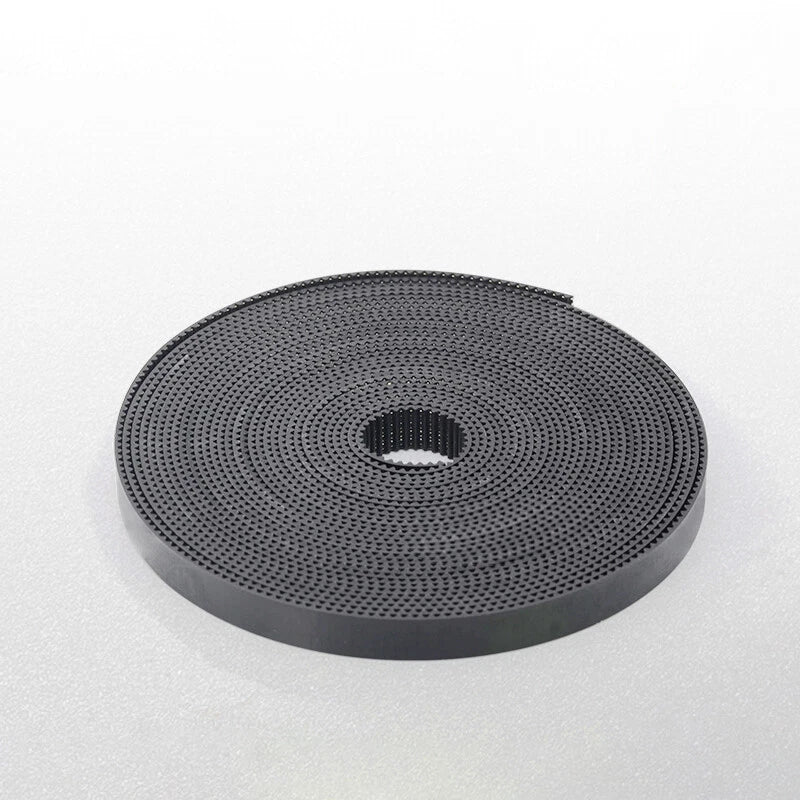
TPU Open-End Timing Belt with Aramid Core — 2GT / MXL / XL / 3M / 5M, 6–25mm Wide

Keine Bewertungen

Preis:
Sonderpreis$8.94 USD
Lagerbestand:
Verfügbar (500 Stück), versandbereit

Payment & Security

Ach Direct Debit Amazon American Express Apple Pay Bancontact Diners Club Discover Google Pay iDEAL Wero Mastercard PayPal Shop Pay USDC Visa

Deine Zahlungsinformationen werden sicher verarbeitet. Wir speichern keine Kreditkartendaten und haben auch keinen Zugang zu deinen Kreditkartendaten.

Quantity Discount Promotion
🎯 BULK DISCOUNT: Buy More, Save More!
Buy 2 Items
5% OFF
Buy 4 Items
10% OFF
Buy 6 Items
15% OFF
Expert

DIY Expert Support

Get fitment advice & recommendations

Mon-Fri, 8:30AM-8PM
24-Hour Fast Ship
🚚
Arrives in 3-14 days
🌍
Global Reach
↩️
30-Day Returns
🌱 1 tree planted with every purchase

Beschreibung


TPU Open-End Timing Belt with Aramid Core — Precision Motion for CNC, 3D Printers & Robotics

When your CNC router skips steps, your 3D printer axis drifts, or your linear actuator loses position under load, the culprit is often a belt that stretches, slips, or simply was not designed for the job. Makers, engineers, and machine builders who need repeatable, low-backlash motion demand a belt that holds its pitch under tension — not one that gives a little more with every pass.

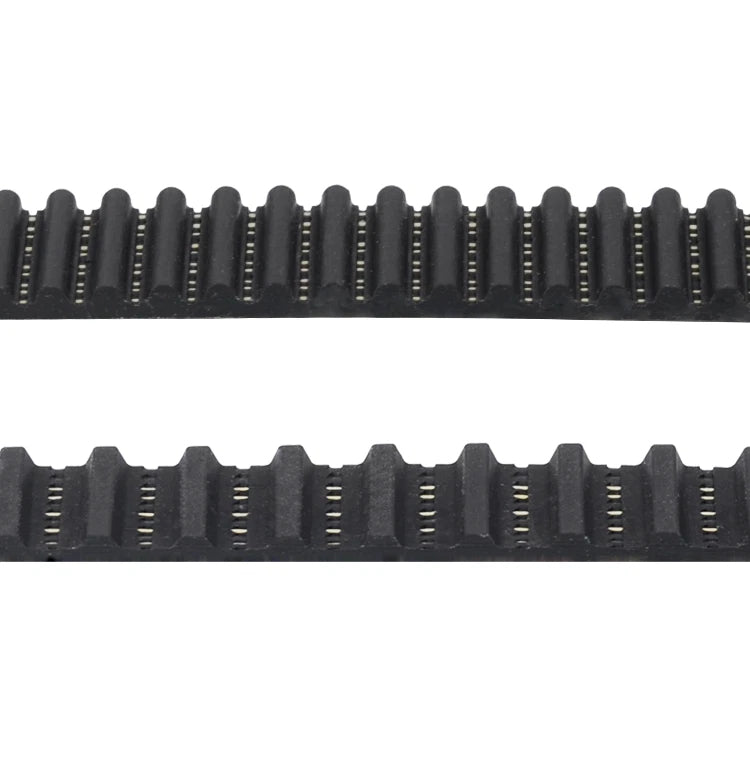
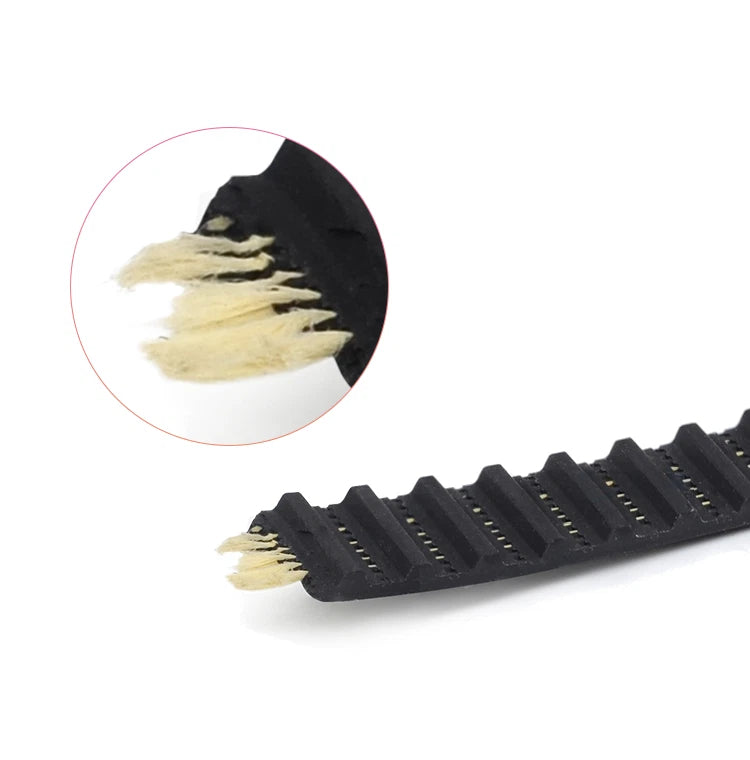
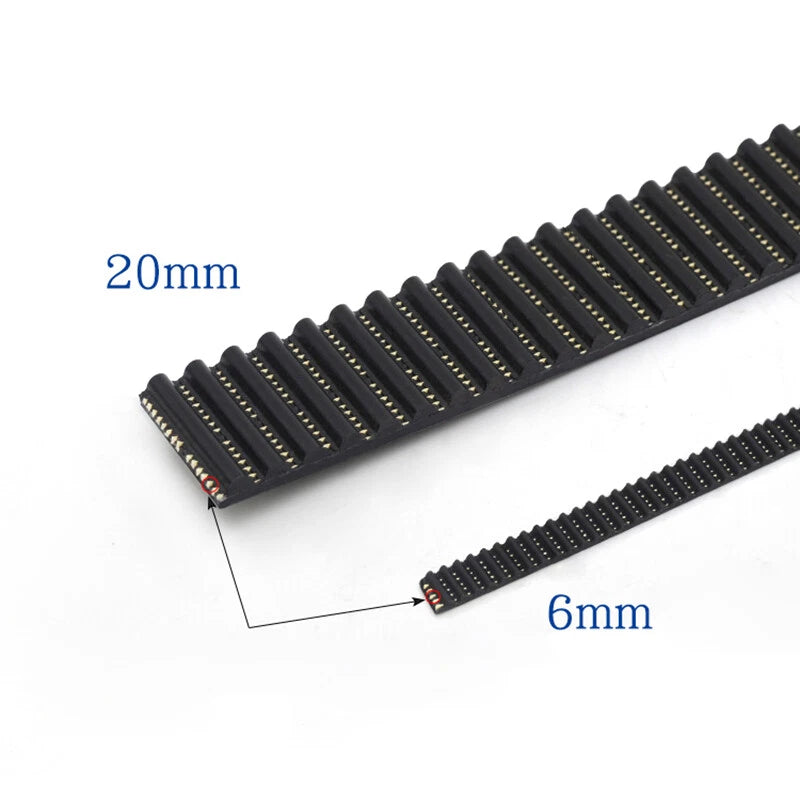
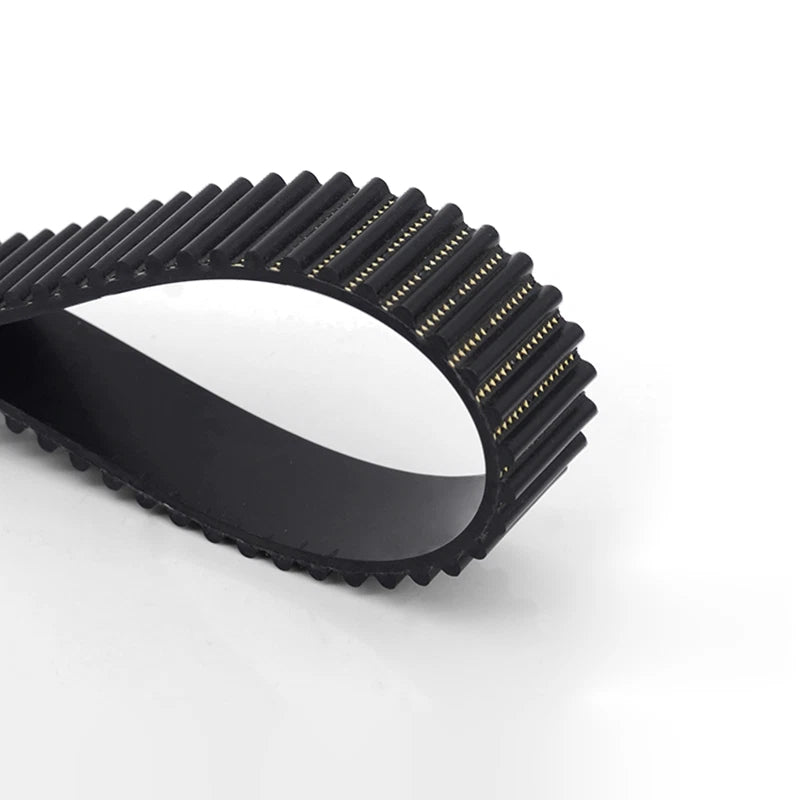
This open-end TPU timing belt features an aramid fiber tensile cord running the full length of the belt body. The TPU (thermoplastic polyurethane) outer body resists oils, moisture, and abrasion while remaining flexible across a wide temperature range. Available in five tooth profiles — 2GT, MXL, XL, 3M, and 5M — and five widths from 6mm (approx. 1/4") to 25mm (approx. 1"), each belt ships as a continuous open-end roll that you cut to your exact required length.

Typical applications include CNC router and laser cutter gantry drives, 3D printer X/Y axis linear motion, pick-and-place robotic arm actuation, and conveyor indexing systems where precise tooth engagement and low elongation are critical to part accuracy.

ℹ️ Compatibility Note: Match belt profile (2GT / MXL / XL / 3M / 5M) and width to your existing pulleys. Belt pitch must match pulley pitch exactly. Width must be equal to or less than pulley flange width. See FAQ below for selection guidance.

✅ Key Features of These TPU Open-End Timing Belts

  • 🔧Aramid Fiber Tensile Core — High-strength aramid cord resists elongation under sustained tension, maintaining tooth pitch accuracy in CNC linear motion and 3D printer axis drives.
  • 🧱TPU Belt Body — Thermoplastic polyurethane construction offers better oil, moisture, and abrasion resistance compared to standard neoprene synchronous belts.
  • ✂️Open-End Cut-to-Length Format — No fixed loop length; cut to your exact required span for custom CNC builds, linear rails, and retrofit machine upgrades.
  • ⚙️Five Tooth Profiles Available — 2GT (2mm pitch), MXL (2.032mm pitch), XL (5.08mm pitch), 3M (3mm pitch), and 5M (5mm pitch) cover the most common synchronous belt standards used in DIY and industrial CNC machines.
  • 📐Multiple Width Options — Choose from 6mm, 10mm, 15mm, 20mm, or 25mm to match your pulley flange and torque requirements across light-duty 3D printer axes to heavier CNC gantry drives.
  • 🔄Low Backlash Tooth Engagement — Precise tooth geometry maintains consistent mesh with matching pulleys, reducing positional error in repetitive motion cycles typical of CNC routing and automated pick-and-place systems.

📐 Technical Specifications — TPU Open-End Synchronous Timing Belt

Belt Type Open-End (Cut-to-Length) Synchronous Timing Belt
Belt Body Material TPU (Thermoplastic Polyurethane)
Tensile Cord Material Aramid Fiber (High-Strength)
Available Tooth Profiles 2GT (2mm pitch), MXL (2.032mm pitch), XL (5.08mm / 1/5" pitch), 3M (3mm pitch), 5M (5mm pitch)
Available Widths 6mm (approx. 1/4"), 10mm (approx. 3/8"), 15mm (approx. 19/32"), 20mm (approx. 25/32"), 25mm (approx. 1")
Belt Format Open-End Roll — cut to required length
Operating Temperature Contact us to confirm for your specific application
Typical Applications CNC routers, 3D printers, laser cutters, linear actuators, conveyor indexing, robotics
Termination Method Belt clamps, end caps, or tensioner brackets (not included)
Tooth Profile Standard See variant options
⚠️ Before You Cut: Verify your required belt length, pulley pitch, and pulley flange width before cutting. Open-end belts cannot be returned once cut to length.

❓ Frequently Asked Questions

How do I choose the right belt length for my machine?

Because this is an open-end (cut-to-length) belt, you measure the required run length between your pulleys, add a small amount for tensioning, and cut accordingly. As a general rule, add typically 5–10% extra to your measured span to allow for tensioner adjustment. Always verify your pulley center distance before ordering.

What tooth profile should I choose — 2GT, MXL, XL, 3M, or 5M?

Match the belt profile to your existing pulleys. 2GT (2mm pitch) is the most common choice for 3D printers and light CNC routers. MXL (2.032mm pitch) suits legacy imperial-spec machines. XL (5.08mm / 1/5" pitch) handles moderate loads. 3M and 5M are generally used in higher-torque CNC and automation applications. Check your pulley markings or manufacturer specs to confirm.

How strong is the aramid tensile core compared to fiberglass?

Aramid fiber (similar in composition to Kevlar) offers significantly higher tensile strength and lower elongation than fiberglass cores. In most open-end timing belt applications, aramid cores maintain dimensional stability under sustained load, reducing positional drift in CNC and 3D printing axes over time.

Can this belt be used outdoors or in humid or oily environments?

TPU is generally more resistant to moisture, oils, and mild chemicals than neoprene belts. It is typically suitable for indoor industrial environments and light outdoor use. For prolonged UV exposure or extreme temperature conditions, verify the specific operating range with your application requirements before installation.

What width should I select for my application?

Width selection depends on the load and your pulley flange width. Wider belts (20–25mm) carry more torque and are generally used in heavier CNC gantry or conveyor setups. Narrower belts (6–10mm) are common in 3D printer axes and lightweight linear motion systems. Always match belt width to your pulley's usable belt contact width to prevent edge wear.

Is the 2GT profile compatible with standard GT2 pulleys?

The 2GT profile is dimensionally compatible with GT2 pulleys in most cases, as both share a 2mm pitch. However, tooth geometry can vary slightly between manufacturers. We recommend verifying fit with your specific pulley before cutting to final length.

How do I join or terminate an open-end timing belt?

Open-end timing belts are typically secured using belt clamps, end caps, or tensioner brackets rather than being looped. For linear motion systems, the belt ends are generally clamped to a carriage on one end and anchored to a fixed point on the other. Specific hardware depends on your machine's design — clamps and anchors are not included.

🛒 Select your model (tooth profile) and width above, then add to cart — ships from our US warehouse.

You may also like

Recently viewed