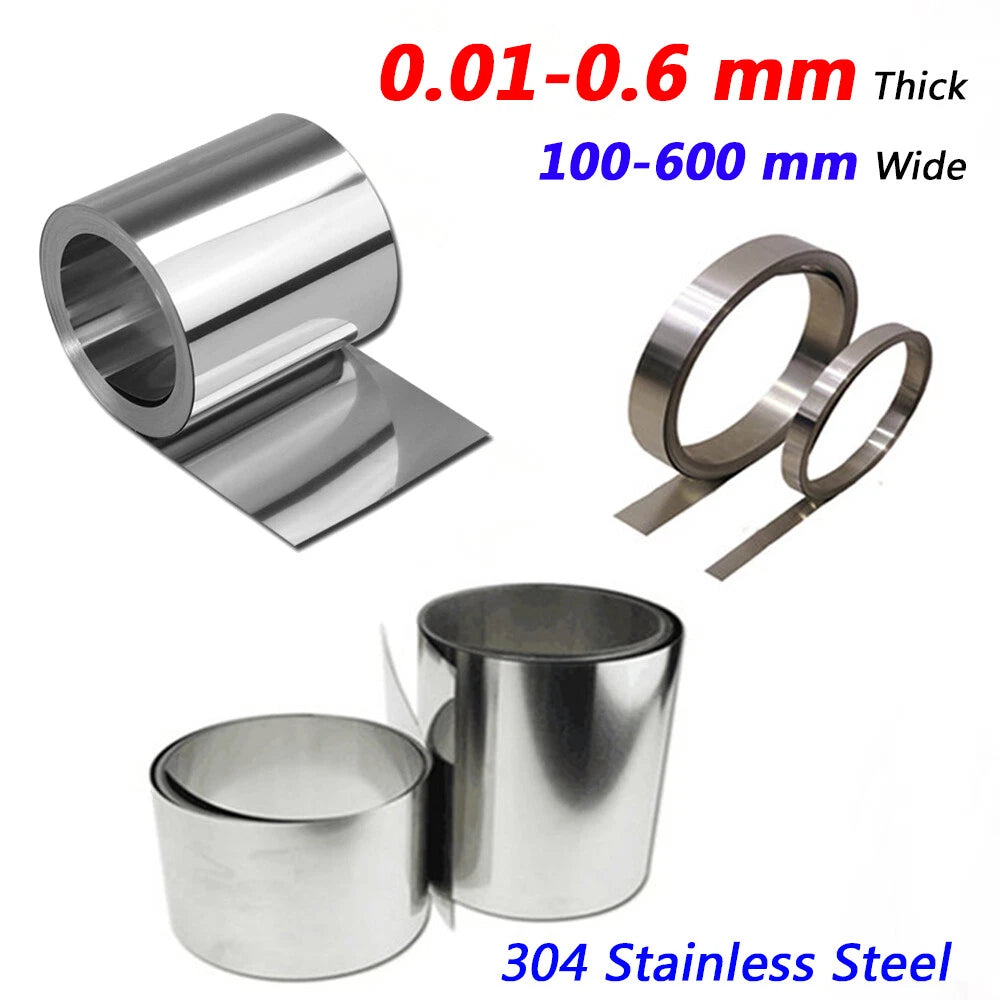
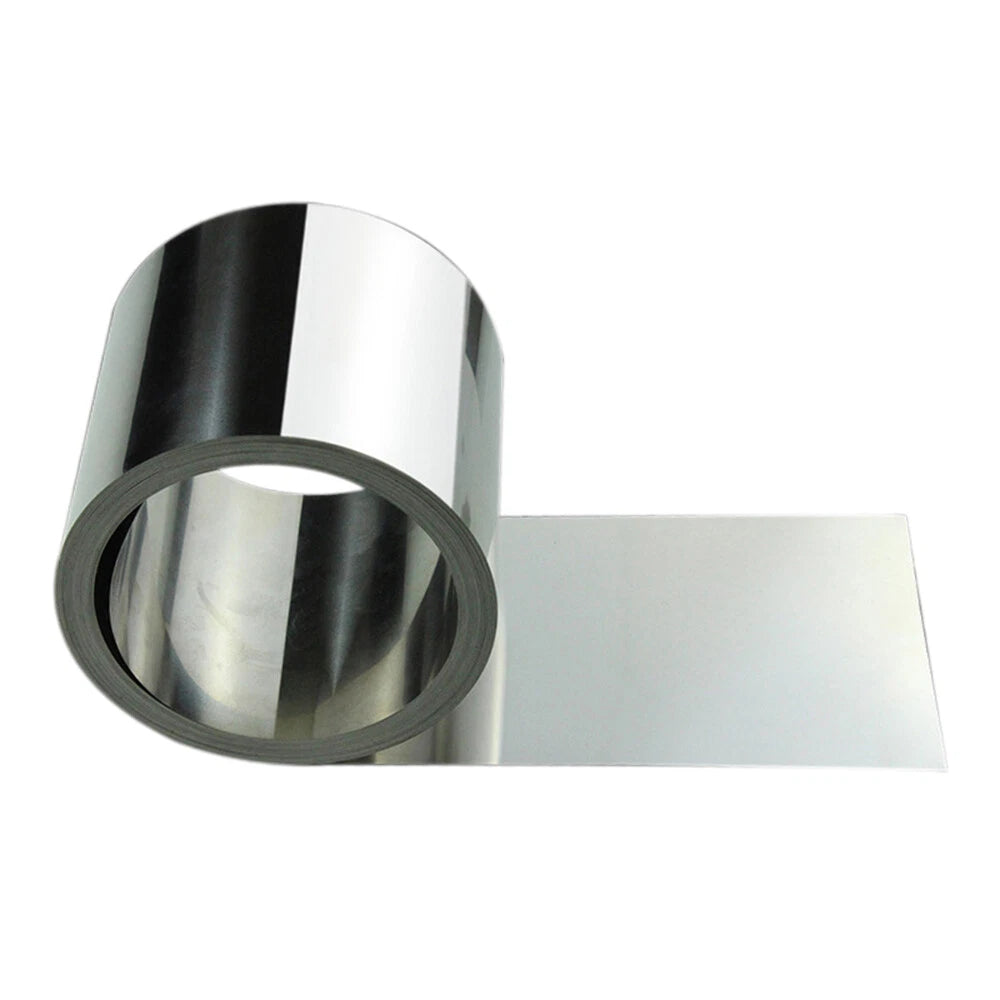

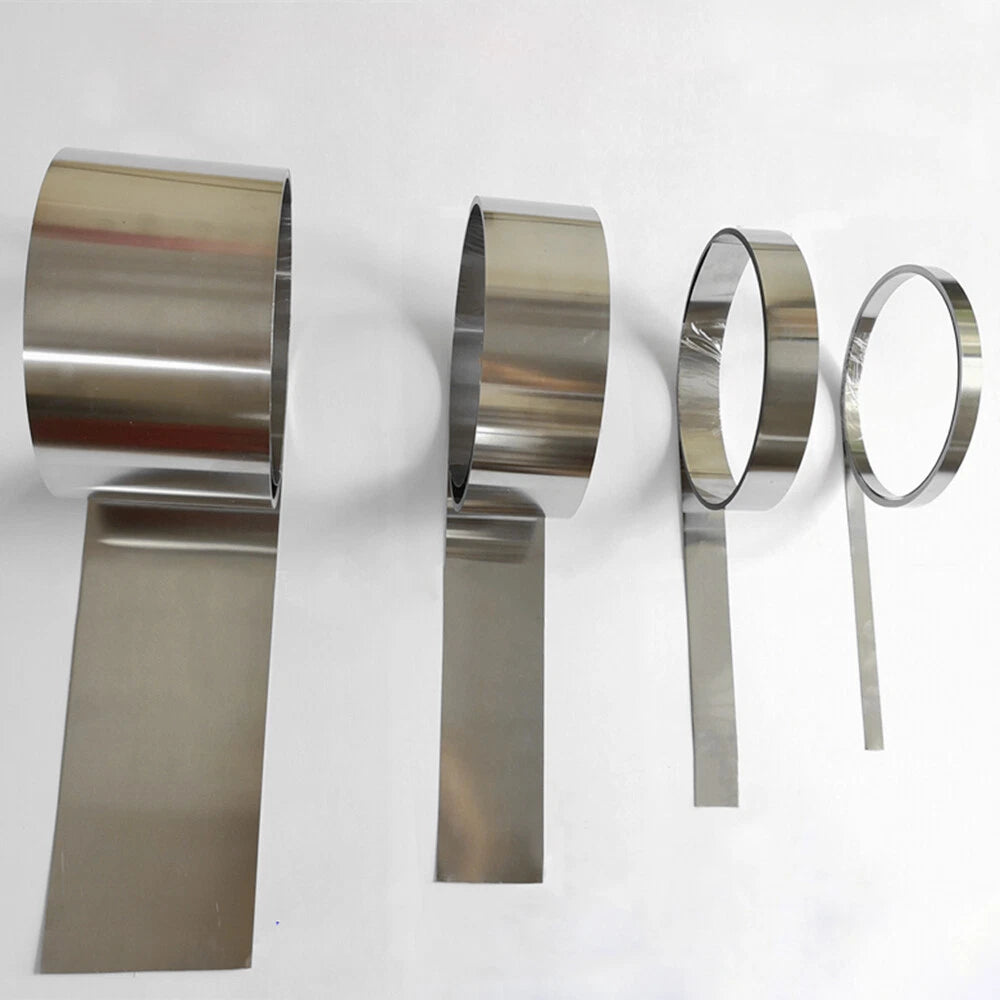
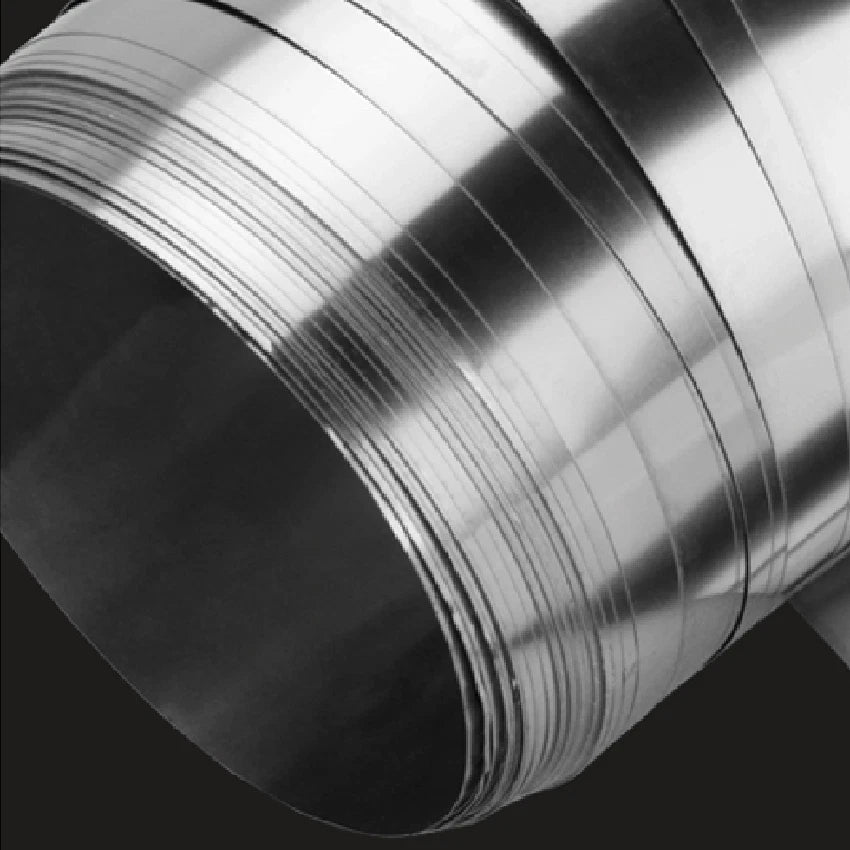
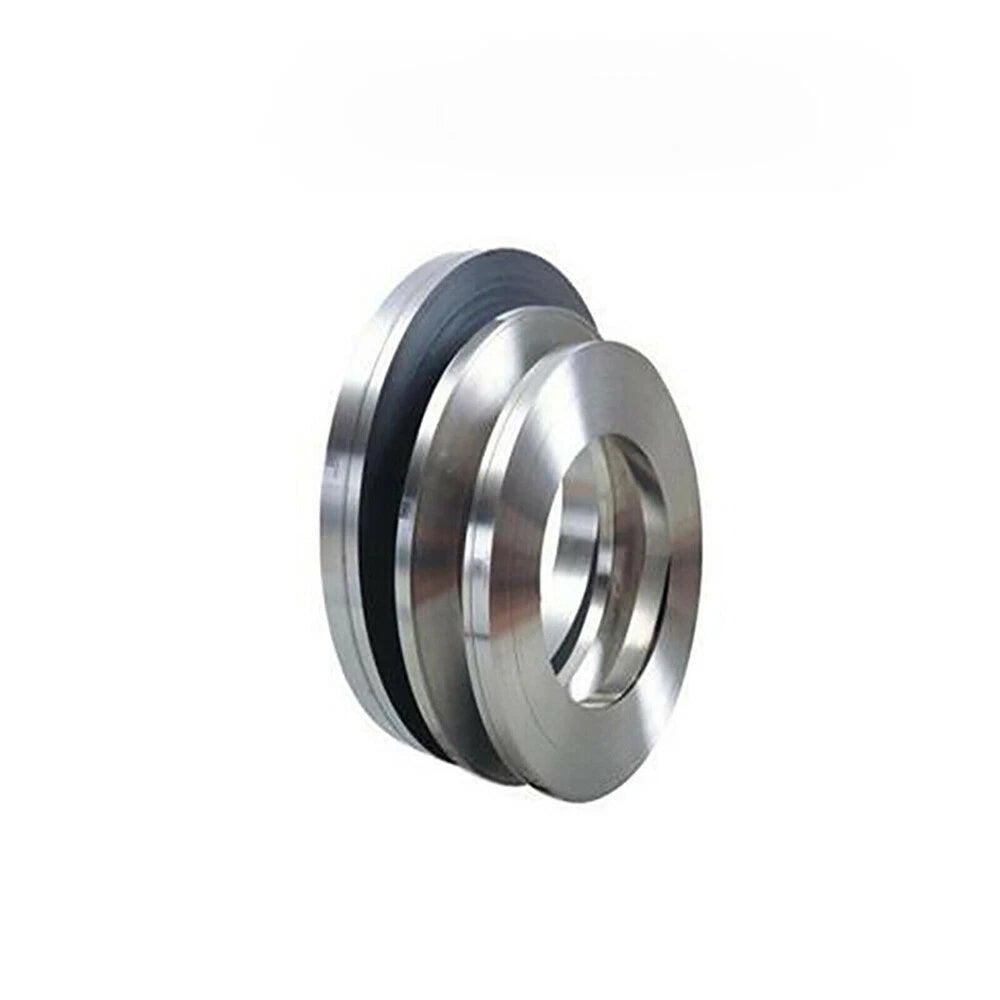
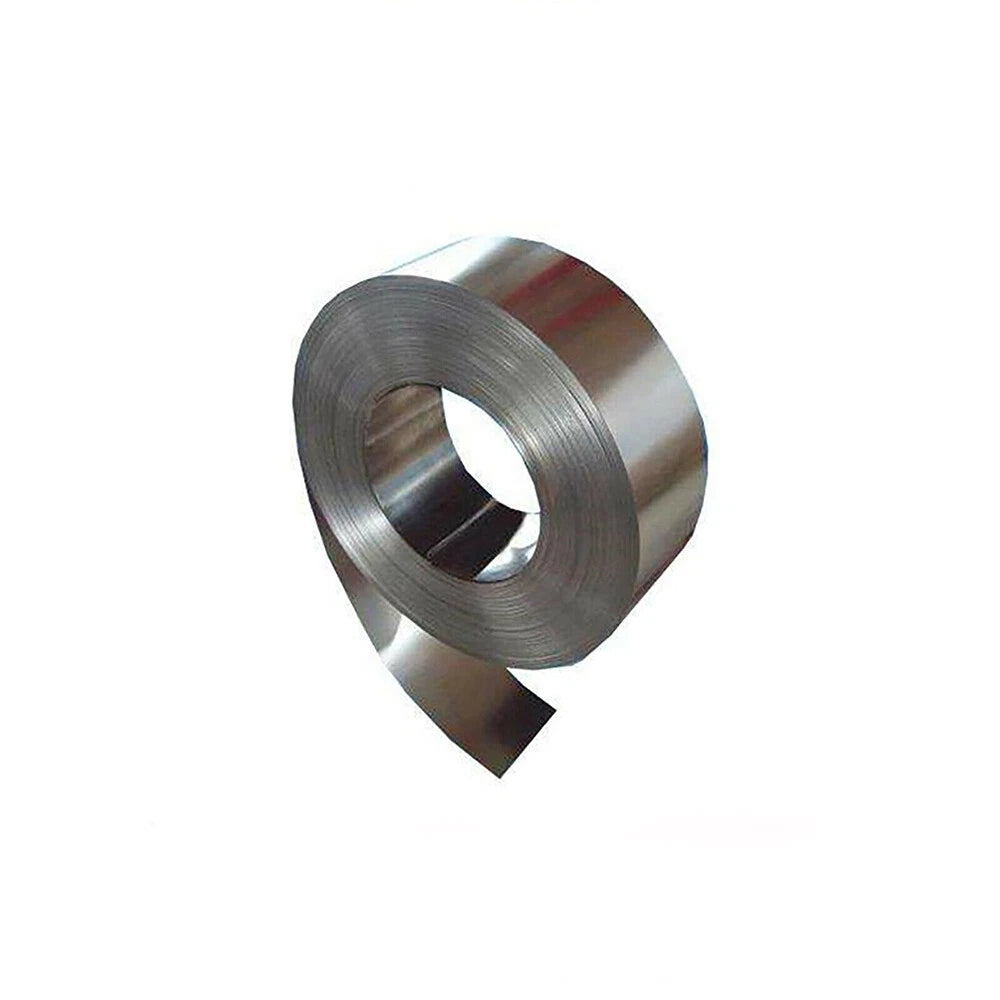
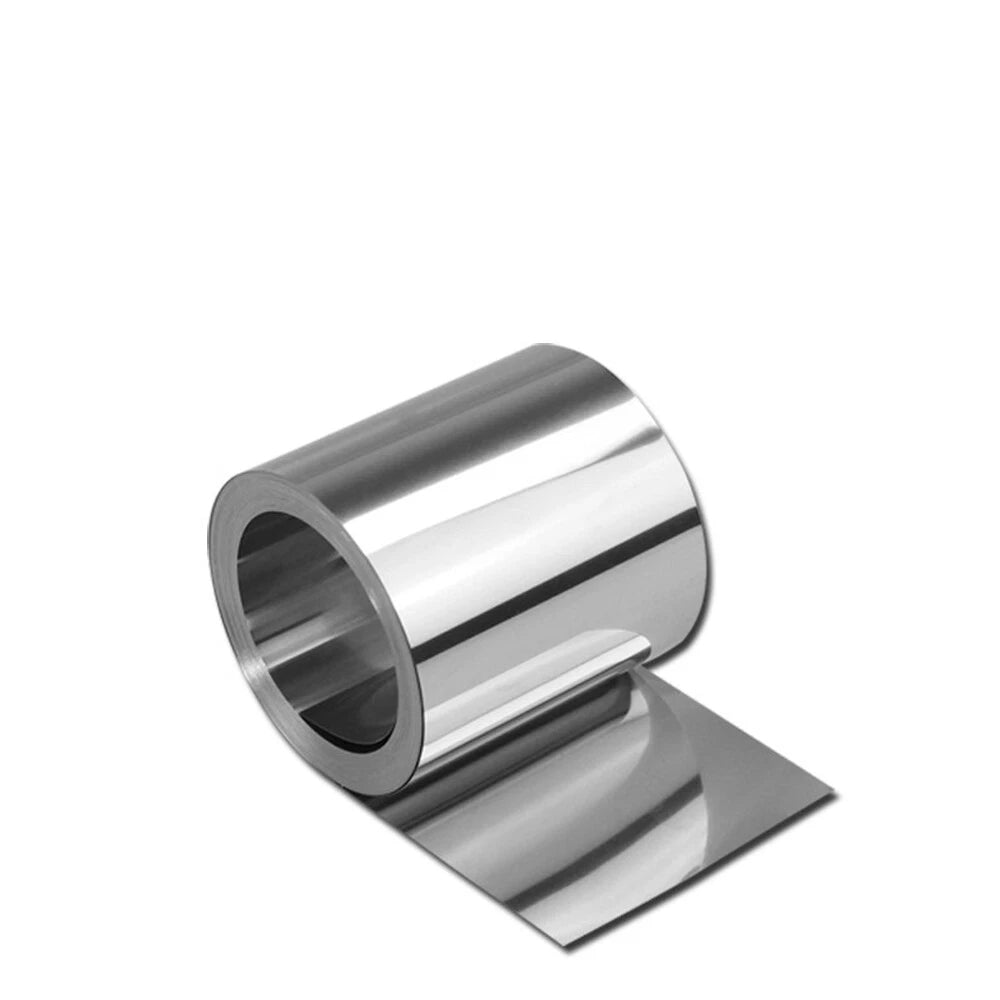
Ultra-thin 304 Stainless Steel Sheet Plate Roll 0.01-0.6mm Thick 100-600 mm Wide

Keine Bewertungen

Preis:
Sonderpreis$7.19 USD
Lagerbestand:
Verfügbar (500 Stück), versandbereit

Payment & Security

Ach Direct Debit Amazon American Express Apple Pay Bancontact Diners Club Discover Google Pay iDEAL Wero Mastercard PayPal Shop Pay USDC Visa

Deine Zahlungsinformationen werden sicher verarbeitet. Wir speichern keine Kreditkartendaten und haben auch keinen Zugang zu deinen Kreditkartendaten.

Quantity Discount Promotion
🎯 BULK DISCOUNT: Buy More, Save More!
Buy 2 Items
5% OFF
Buy 4 Items
10% OFF
Buy 6 Items
15% OFF
Expert

DIY Expert Support

Get fitment advice & recommendations

Mon-Fri, 8:30AM-8PM
24-Hour Fast Ship
🚚
Arrives in 3-14 days
🌍
Global Reach
↩️
30-Day Returns
🌱 1 tree planted with every purchase

Beschreibung

Ultra-Thin 304 Stainless Steel Sheet Roll — Precision Gauge for DIY Fabrication & Shielding

When a project demands a metal sheet that is both corrosion-resistant and dimensionally exact, most hardware-store stock falls short — thicknesses are inconsistent, widths are limited, and foil-grade material is nearly impossible to source locally. Hobbyists, makers, and light fabricators who need reliable ultra-thin stainless steel sheet for shielding, forming, or repair work will find this roll a practical solution.

This listing covers 304-grade stainless steel sheet rolls available in thicknesses from 0.01 mm to 0.6 mm (approximately 0.0004 in to 0.024 in) and widths of 100 mm, 200 mm, or 300 mm (roughly 3.9 in, 7.9 in, or 11.8 in), each cut to a 1-meter (39.4 in) length. The 304 alloy combines 18% chromium and 8% nickel for solid oxidation resistance across a wide temperature range.

Typical applications include EMI/RF shielding inserts in electronics enclosures, thin shim stock for machinery alignment, decorative inlay strips in woodworking, and heat-deflection barriers in automotive or appliance repair — all scenarios where a precise, corrosion-resistant stainless steel sheet roll is required rather than standard mild steel.

⚙️ Compatibility Note: These sheets are uncoated 304 stainless steel and are compatible with standard metal shears, laser cutters, waterjet cutters, and CNC routers equipped for stainless. Not recommended for applications requiring magnetic permeability — 304 is austenitic and non-magnetic in its annealed state.

✅ Key Features of These Ultra-Thin 304 Stainless Steel Sheet Rolls

  • 🔩304 Austenitic Alloy — 18/8 chromium-nickel composition delivers reliable oxidation and mild-acid resistance without surface treatment.
  • 📏Wide Thickness Range — Available from 0.01 mm foil-grade up to 0.6 mm shim-grade, letting you match gauge precisely to your load or clearance requirement.
  • ↔️Three Width Options — 100 mm, 200 mm, and 300 mm widths cover narrow strip work through broader panel applications without unnecessary waste.
  • 📐1-Meter Cut Length — Each piece is supplied at 1 m (39.4 in), giving a consistent starting dimension for layout and cutting.
  • ✂️Machinable & Formable — Thin gauges (≤0.1 mm) can be cut with heavy-duty scissors or a craft knife; thicker gauges (0.2–0.6 mm) suit metal shears or laser cutting.
  • 🛡️Corrosion-Resistant Surface — Mill-finish surface resists rust in humid indoor environments and light outdoor exposure, reducing maintenance between uses.

📐 Technical Specifications — Stainless Steel Sheet Roll

Material 304 Stainless Steel (18/8 Cr-Ni)
Thickness Range 0.01 mm – 0.6 mm (0.0004 in – 0.024 in)
Width Options 100 mm / 200 mm / 300 mm (3.9 in / 7.9 in / 11.8 in)
Length 1 Meter (39.4 in)
Surface Finish Mill finish (2B equivalent)
Temper / Condition Annealed (soft)
Magnetic Non-magnetic (austenitic)
Corrosion Resistance Suitable for indoor and light outdoor use
Thickness (selected) See variant options
Width (selected) See variant options

❓ Frequently Asked Questions

How do I choose the right thickness for my project?

For EMI/RF shielding and flexible wrapping, foil-grade thicknesses of 0.01–0.03 mm work well. For shim stock and precision spacers, 0.05–0.2 mm provides enough rigidity to hold position. For structural brackets, heat shields, or decorative panels that need to hold their shape under light load, 0.3–0.6 mm is the practical range. When in doubt, order one step thicker — it is easier to remove material than to add it.

Is 304 stainless steel strong enough for load-bearing applications?

304 stainless steel has a tensile strength of approximately 515 MPa (75,000 psi) in its annealed state, which is adequate for light structural and forming tasks. However, at the ultra-thin gauges in this listing (0.01–0.6 mm), the sheet is not intended for primary structural load-bearing. It is suited for shielding, shimming, forming, and decorative applications where the surrounding structure carries the main load.

Will this sheet rust or corrode over time?

304 stainless steel resists rust in most indoor environments and light outdoor exposure thanks to its chromium oxide passive layer. It is not recommended for prolonged contact with chloride-rich environments (such as saltwater or de-icing salts) — for those conditions, 316-grade stainless would be more appropriate. Keeping the surface clean and dry extends service life significantly.

Can I cut this sheet with standard tools?

Thicknesses of 0.01–0.1 mm can typically be cut with heavy-duty craft scissors, a sharp utility knife against a steel rule, or a rotary cutter. Thicknesses of 0.2–0.6 mm are better suited to aviation snips, bench shears, a laser cutter, or a waterjet. Avoid standard household scissors on gauges above 0.05 mm, as this can damage the blades and produce a ragged edge.

Is this material compatible with welding or soldering?

304 stainless steel can be TIG or MIG welded using 308L filler rod. At foil gauges (0.01–0.05 mm), welding requires very low amperage and experienced technique to avoid burn-through. Soldering is possible with stainless-compatible flux, though adhesion is less reliable than on copper or mild steel. For thin-gauge joining, adhesive bonding or mechanical fastening (rivets, screws) is often more practical.

How do I decide between 100 mm, 200 mm, and 300 mm width?

Choose the width closest to — but not narrower than — your finished part dimension to minimize waste. The 100 mm width suits narrow strips, gaskets, and shim rings. The 200 mm width covers most electronics shielding panels and small heat shields. The 300 mm width is useful for larger decorative inlays, broader shim plates, or when you need to cut multiple narrower strips from a single piece.

What is the difference between this and a standard stainless steel plate?

Standard stainless steel plate typically starts at 3 mm thickness and is used for structural fabrication. This listing covers ultra-thin sheet and foil gauges (0.01–0.6 mm) that are used for shielding, shimming, forming, and surface applications where minimal added thickness and weight are important. The material grade (304) is the same; only the gauge range differs.

🛒 Select your Thickness and Width above, then add to cart.

You may also like

Recently viewed