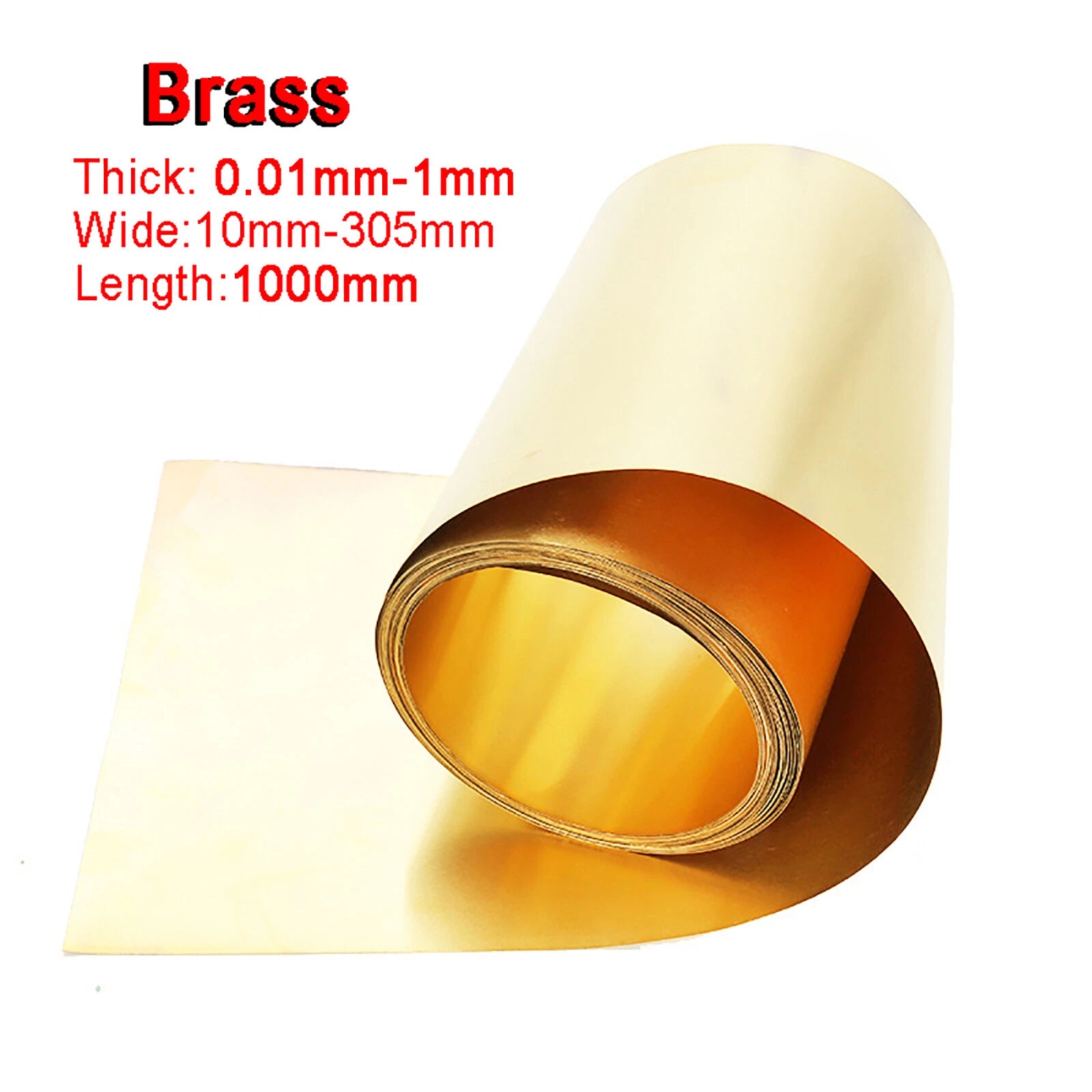
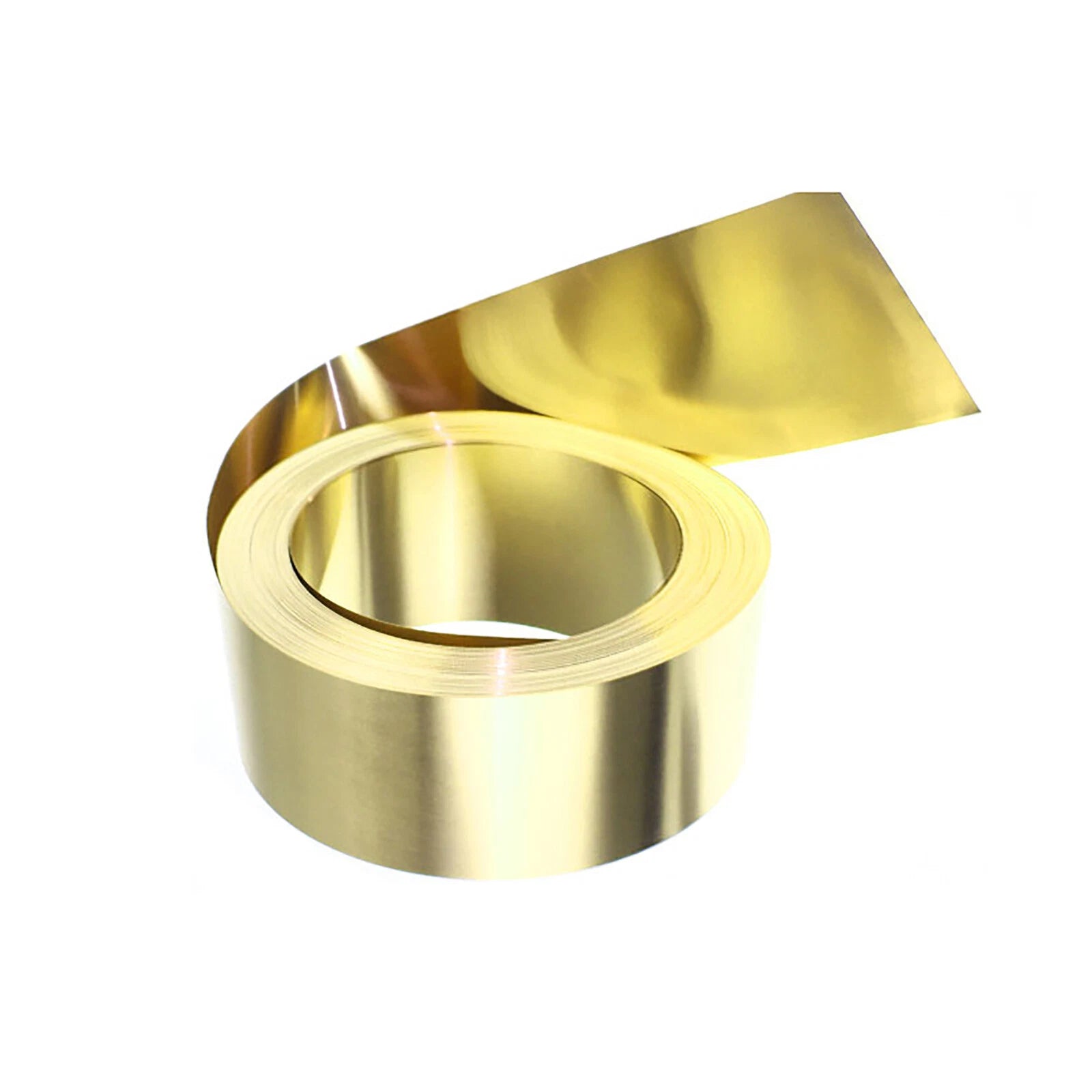
Brass Sheet Plate 0.05 0.1 0.15 0.2 0.3 0.4 0.5 0.6 0.8 1mm Thick | 1000MM Long

Keine Bewertungen

Preis:
Sonderpreis$2.57 USD
Lagerbestand:
Verfügbar (500 Stück), versandbereit

Payment & Security

Ach Direct Debit Amazon American Express Apple Pay Bancontact BLIK Diners Club Discover EPS Google Pay iDEAL Wero JCB Maestro Mastercard Multibanco MobilePay PayPal Przelewy24 Shop Pay Twint Union Pay USDC Visa

Deine Zahlungsinformationen werden sicher verarbeitet. Wir speichern keine Kreditkartendaten und haben auch keinen Zugang zu deinen Kreditkartendaten.

Quantity Discount Promotion
🎯 BULK DISCOUNT: Buy More, Save More!
Buy 2 Items
5% OFF
Buy 4 Items
10% OFF
Buy 6 Items
15% OFF
Expert

DIY Expert Support

Get fitment advice & recommendations

Mon-Fri, 8:30AM-8PM
24-Hour Fast Ship
🚚
Arrives in 3-14 days
🌍
Global Reach
↩️
30-Day Returns
🌱 1 tree planted with every purchase

Beschreibung

Brass Sheet Plate — Precision-Cut Strips for DIY, Crafts & Engineering

When your project demands a metal that machines cleanly, solders reliably, and holds up in humid or corrosive environments, standard steel or aluminum often falls short. Makers, hobbyists, and tradespeople who need a workable yet durable metal strip reach for brass sheet plate — and this listing gives you exactly that, in the thickness and width you need.

These brass sheet plates are made from C26000 / CuZn30 alloy brass, combining copper and zinc for a balance of strength, ductility, and corrosion resistance. Thickness options range from 0.01 mm to 1 mm (approximately 0.0004 in to 0.039 in), and widths span 10 mm to 305 mm (roughly 0.39 in to 12 in), all cut to a consistent 1000 mm (39.4 in) length per piece.

Typical use cases include shim stock and precision gap-filling in mechanical assemblies, decorative inlay and craft metalwork where a warm gold tone is desired, electrical contact strips and grounding tabs in low-voltage DIY electronics, and repair or fabrication of musical instruments, clocks, and scale models requiring thin brass sheet metal strips.

🔧 Compatible with standard metalworking tools — tin snips, hobby knives, bench shears, and soldering irons. Suitable for bending, stamping, etching, and light machining.

✅ Key Features of These Brass Sheet Plates

📏 Wide Thickness Range — Available from ultra-thin 0.01 mm shim foil up to a sturdy 1 mm plate, letting you match the exact tolerance your project requires.
📐 Multiple Width Options — Choose from 10 mm, 20 mm, 30 mm, 40 mm, 50 mm, 100 mm, 200 mm, 300 mm, and 305 mm widths, all at a consistent 1000 mm length.
🛡️ Corrosion-Resistant Alloy — Brass naturally resists oxidation and moisture, making these strips suitable for both indoor and light outdoor applications without surface treatment.
✂️ Easy to Cut & Form — The alloy's ductility allows clean cutting with tin snips or a hobby knife, and it bends without cracking at thicknesses up to approximately 0.5 mm.
Good Electrical Conductivity — Brass conducts electricity well enough for low-current contact strips, grounding tabs, and DIY electronic enclosure work.
🎨 Warm Gold Finish — The natural brass tone suits decorative inlay, jewelry-making, clockwork repair, and architectural accent work where appearance matters.

📐 Technical Specifications — Brass Sheet Plate

Material Brass (CuZn30 / C26000 alloy)
Thickness 0.01 mm, 0.02 mm, 0.03 mm, 0.05 mm, 0.1 mm, 0.15 mm, 0.2 mm, 0.3 mm, 0.4 mm, 0.5 mm, 0.6 mm, 0.7 mm, 0.8 mm, 1 mm (see variant options)
Width 10 mm, 20 mm, 30 mm, 40 mm, 50 mm, 100 mm, 200 mm, 300 mm, 305 mm (see variant options)
Length 1000 mm (39.4 in) per piece
Finish Mill finish (natural brass)
Hardness Typically H02 (half-hard) for thicker gauges; annealed for thinner foil
Tensile Strength Typically 340–480 MPa (varies by thickness)
Packing Quantity 1 piece per order (see variant options for multi-pack)
Weight See variant options

❓ Frequently Asked Questions

How do I choose the right thickness for my project?

For shim stock and precision gap-filling, 0.01 mm–0.1 mm foil is typical. For structural brackets or decorative strips that need to hold a bend, 0.3 mm–0.5 mm is a practical range. For load-bearing or wear-resistant applications, 0.6 mm–1 mm plate is recommended. If you are unsure, start with 0.2 mm — it is the most versatile thickness for general DIY use.

Is this brass sheet strong enough for mechanical applications?

Brass (CuZn30) has a tensile strength of approximately 340–480 MPa depending on temper and thickness. It is suitable for light mechanical applications such as shims, spacers, contact springs, and decorative hardware. For heavy structural loads, a thicker gauge (0.8 mm–1 mm) is advisable, or consider a harder alloy.

Will this brass sheet rust or corrode outdoors?

Brass does not rust (it contains no iron), but it will develop a natural patina over time when exposed to moisture and air. For light outdoor use — such as garden ornaments or exterior trim — brass performs well without coating. For prolonged outdoor or marine exposure, applying a clear lacquer or wax will preserve the finish.

Can I solder or weld this brass sheet?

Yes. Brass solders easily with standard soft solder (tin-lead or lead-free) and a mild flux. Silver brazing is also suitable for stronger joints. TIG welding is possible but requires care to avoid zinc fuming — ensure adequate ventilation. For most DIY and craft applications, soft soldering is the recommended joining method.

Is this compatible with my existing metalworking tools?

Yes. Thin gauges (up to approximately 0.3 mm) can be cut cleanly with tin snips, a hobby knife, or a rotary cutter. Thicker gauges (0.5 mm–1 mm) are best cut with bench shears, a hacksaw, or a metal-cutting blade on a jigsaw. Brass drills and mills easily with standard HSS tooling — use cutting fluid for cleaner results on thicker stock.

What width and thickness combination should I order for electrical contact strips?

For low-voltage DIY electronics and grounding tabs, a width of 10 mm–20 mm and a thickness of 0.1 mm–0.2 mm is the most common choice. This provides enough surface area for reliable contact while remaining flexible enough to form tabs and clips. Brass's conductivity is lower than pure copper but sufficient for most signal and grounding applications.

How do I decide between the 300 mm and 305 mm width options?

The 305 mm width corresponds to the imperial 12-inch standard, which is common in North American woodworking and metalworking projects where imperial measurements are used. The 300 mm width aligns with metric standards. Choose 305 mm if your project references 12-inch dimensions; choose 300 mm for metric-based designs.

🛒 Select your thickness and width above, then add to cart.

You may also like

Recently viewed