The chain is fine...but I ordered the wrong size. Nine links of the chain I ordered equals six of the size I wanted. My error...
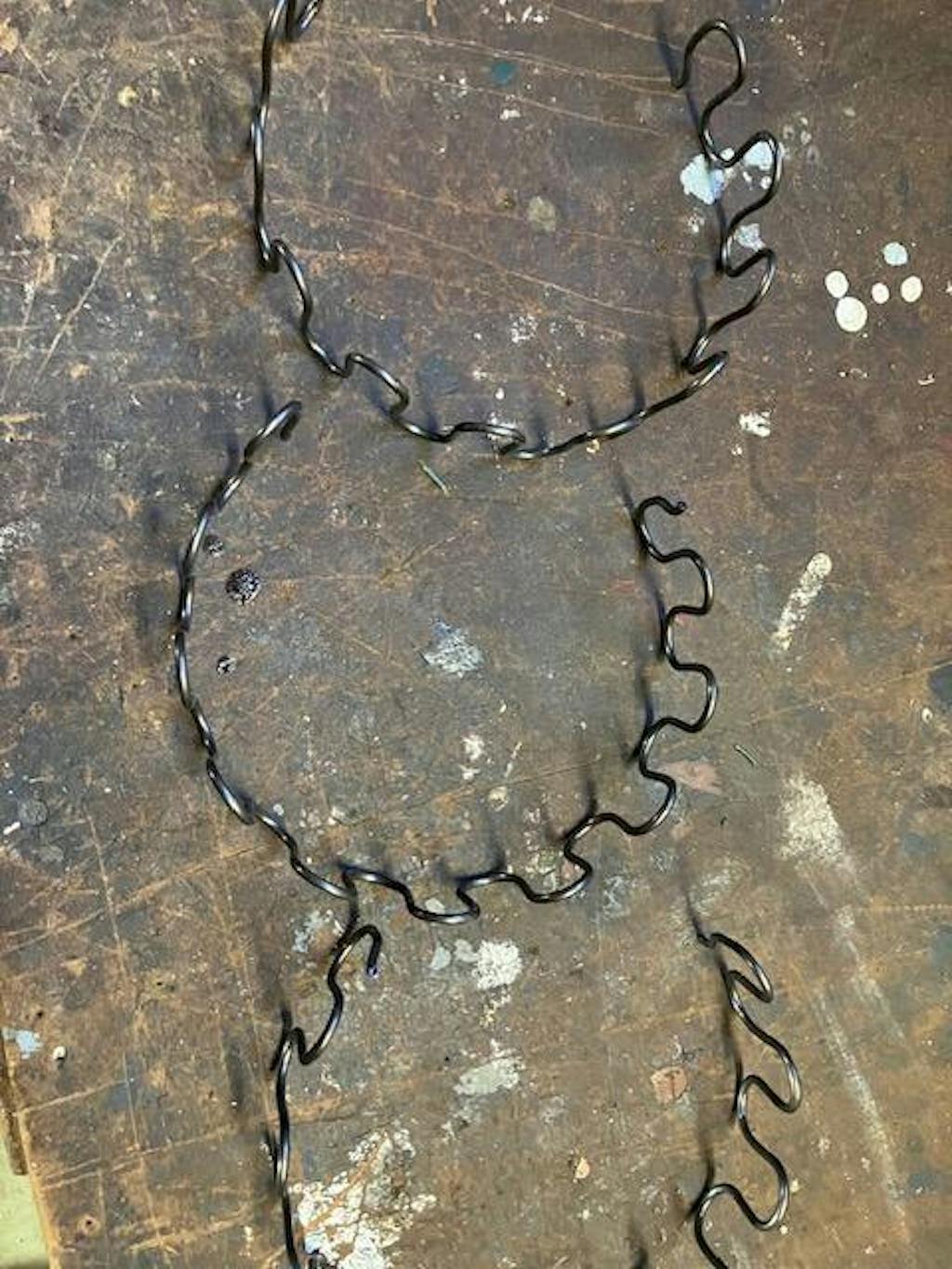
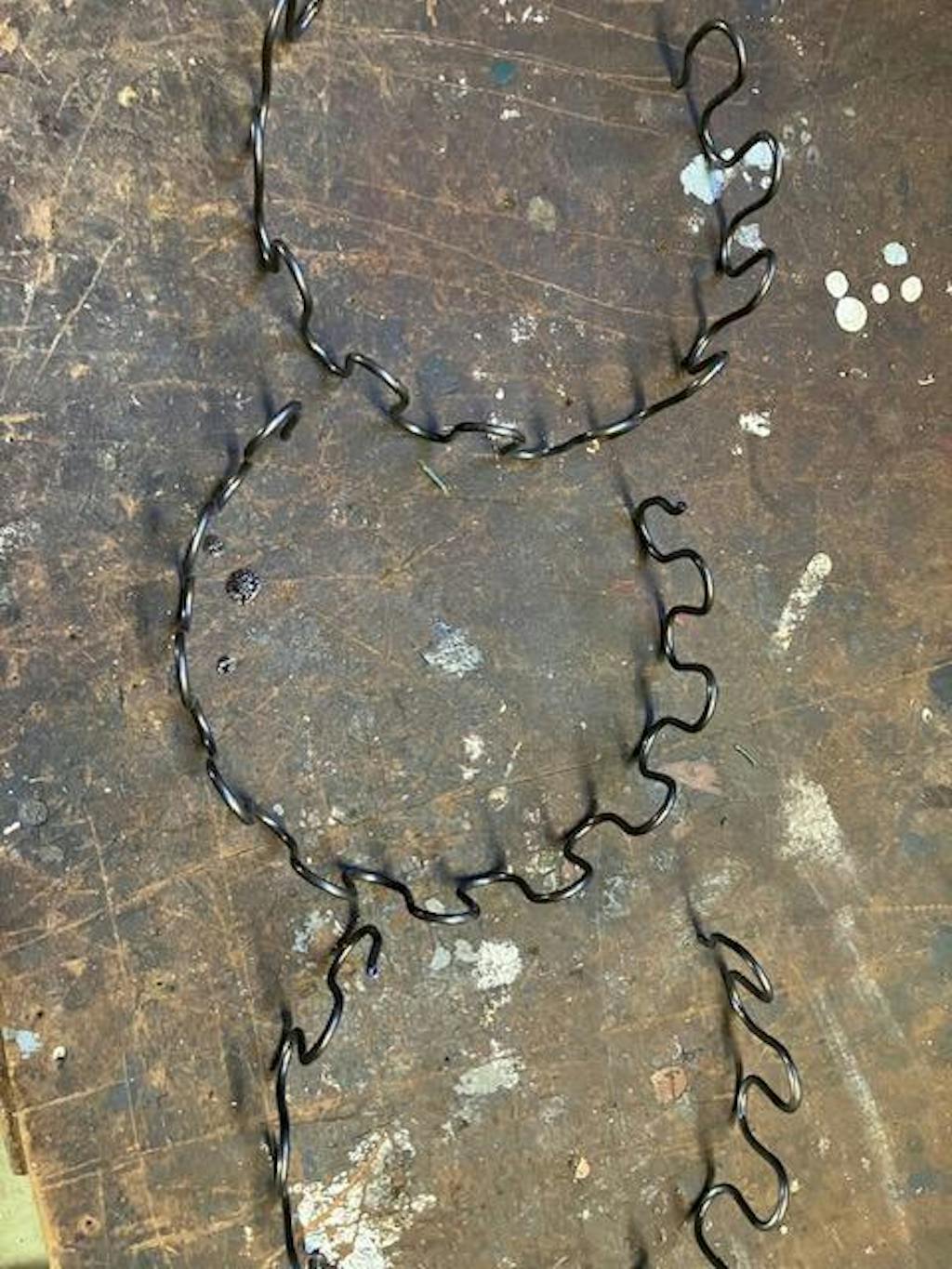
How can I straighten out the springs? I can't use them coil uo as is.
Deine Zahlungsinformationen werden sicher verarbeitet. Wir speichern keine Kreditkartendaten und haben auch keinen Zugang zu deinen Kreditkartendaten.
Get fitment advice & recommendations
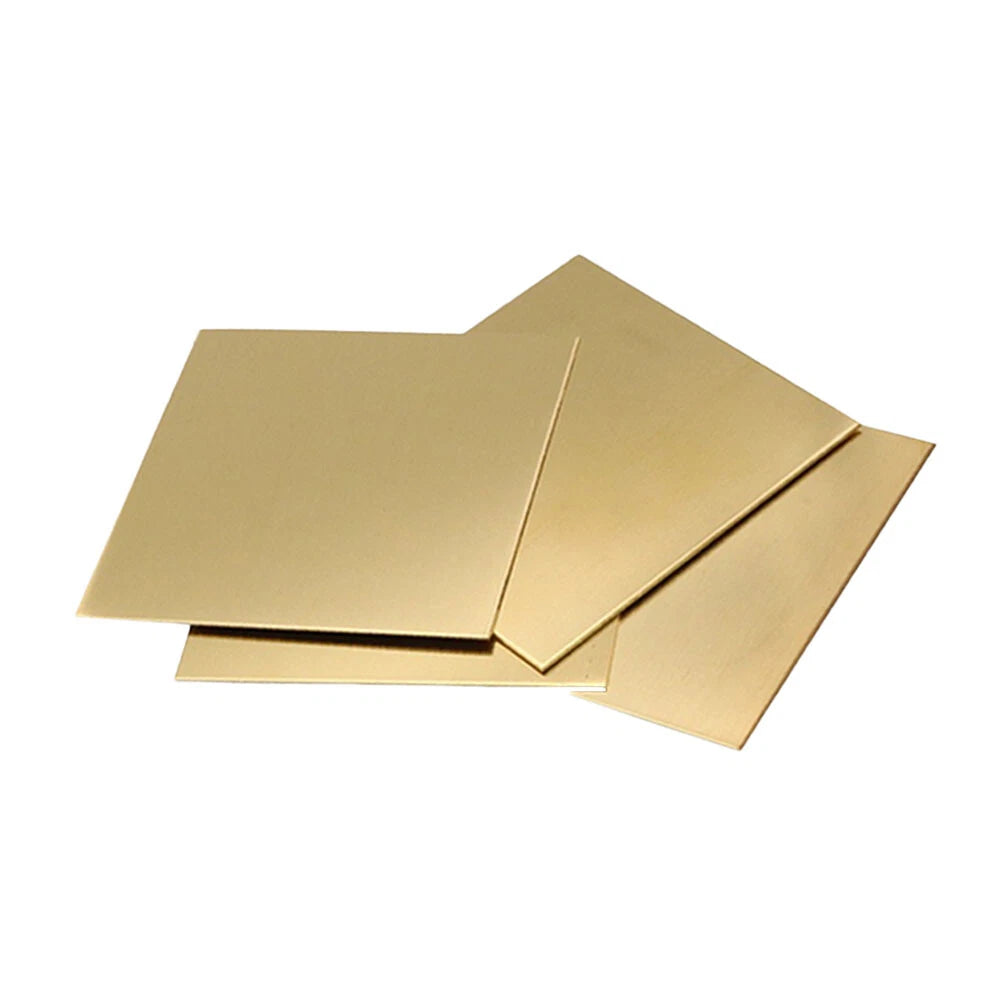
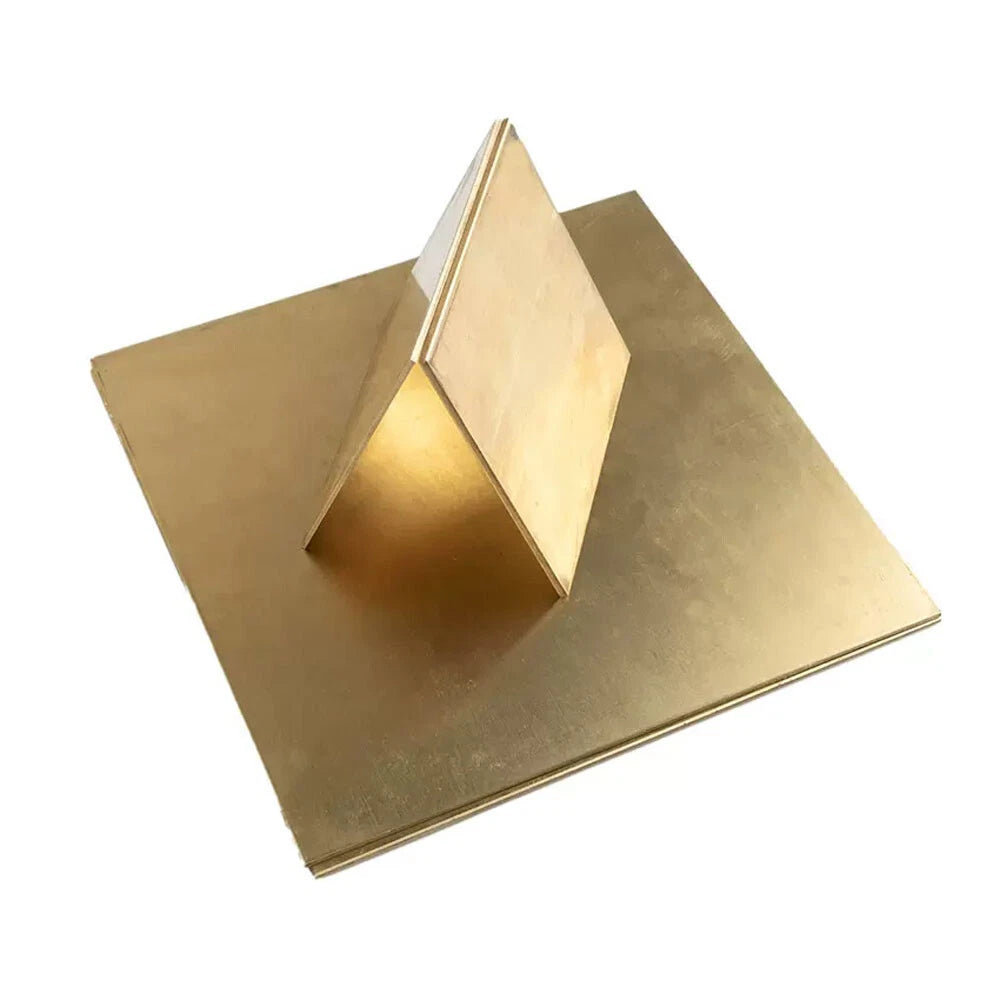
Finding flat metal stock that arrives already cut to a usable size is a constant frustration for hobbyists, makers, and tradespeople alike. Whether you are repairing decorative hardware, fabricating custom brackets, or building a craft project, sourcing raw sheet metal that still needs shearing wastes time and money. These brass sheets are guillotine-cut to your chosen dimensions so you can go straight from unboxing to working.
Each sheet is made from C260 cartridge brass — an alloy of approximately 70% copper and 30% zinc — known for its excellent machinability, solderability, and warm golden appearance. Available widths and lengths range from 100 mm × 100 mm (approx. 3.94 in × 3.94 in) up to 300 mm × 300 mm (approx. 11.81 in × 11.81 in), with thickness options spanning 0.8 mm to 5 mm (approx. 0.031 in to 0.197 in) to suit light decorative work through to structural applications.
Typical use cases include DIY electrical shielding and grounding strips, custom engraving blanks for laser or hand engraving, replacement wear plates and shims in furniture and cabinetry, and decorative inlay work in woodworking projects. The guillotine-cut edge delivers a clean, straight finish that reduces secondary finishing time for brass sheet metal fabrication at home or in a small workshop.
Composed of approximately 70% copper and 30% zinc, this alloy offers a balance of strength, ductility, and corrosion resistance suitable for both indoor and outdoor decorative applications.
Each sheet is sheared on a precision guillotine press, producing straight, burr-minimal edges that reduce the need for extensive deburring before use in your project.
Choose from 100 mm × 100 mm, 200 mm × 200 mm, or 300 mm × 300 mm sheet sizes to match your project footprint without unnecessary waste.
Thickness options from 0.8 mm to 5 mm let you select the right gauge for lightweight decorative work, medium-duty shims, or heavier structural applications.
Brass C260 drills, taps, files, and saws cleanly. It accepts soft solder and brazing alloys readily, making it a versatile choice for electrical, plumbing, and craft repairs.
The natural brass surface provides an attractive warm gold tone suitable for decorative inlays, engraving blanks, and visible hardware accents without additional finishing.
| Material | Brass (C260 / 70-30 Cartridge Brass) |
|---|---|
| Alloy Composition | ~70% Copper, ~30% Zinc |
| Available Sizes (W × L) | 100×100 mm, 200×200 mm, 300×300 mm |
| Available Thickness | 0.8 mm, 1.0 mm, 1.5 mm, 2 mm, 2.5 mm, 3 mm, 4 mm, 5 mm |
| Cut Method | Guillotine (shear cut) |
| Surface Finish | Mill finish (natural brass) |
| Temper | See variant options |
| Tensile Strength | See variant options |
| Weight per Sheet | See variant options |
| Quantity per Order | 1 sheet |
For decorative applications such as engraving blanks, inlays, or light shielding, 0.8 mm to 1.5 mm is typically sufficient. For shims, wear plates, and medium-duty brackets, 2 mm to 3 mm provides a good balance of rigidity and workability. For structural or load-bearing uses, 4 mm to 5 mm is recommended. If you are unsure, contact us to confirm before ordering.
C260 brass has a tensile strength typically in the range of 300–500 MPa depending on temper, making it suitable for light to medium structural uses such as brackets, shims, and wear plates. For heavy load-bearing applications, we recommend consulting an engineer to confirm suitability for your specific conditions.
Brass is naturally corrosion-resistant due to its copper content and will develop a patina over time when exposed to moisture and air. For outdoor use, applying a clear lacquer or wax coating will slow tarnishing and maintain the golden appearance. In marine or high-humidity environments, additional protective treatment is advisable.
Yes. C260 brass is one of the most machinable copper alloys. It can be cut with tin snips or a hacksaw, drilled with standard HSS drill bits, filed and sanded easily, and soldered with common soft solder or silver brazing alloys. No specialist industrial equipment is required for most DIY tasks.
Bare brass reflects CO₂ laser beams and typically requires a laser-marking spray or a fiber laser for direct engraving. However, the flat, clean guillotine-cut surface is ideal as an engraving blank when used with appropriate laser marking compounds or a fiber laser system. Always test on a scrap piece first.
The size refers to the width and length of the square sheet. A 100 mm × 100 mm sheet (approx. 3.94 in × 3.94 in) suits small components and test pieces. A 200 mm × 200 mm sheet (approx. 7.87 in × 7.87 in) covers medium panels and brackets. A 300 mm × 300 mm sheet (approx. 11.81 in × 11.81 in) is suited to larger decorative panels, shields, or templates. All sizes are available in the same thickness range.
Store sheets in a dry environment away from direct humidity and acidic materials. Wrapping them in acid-free tissue paper or placing them in a sealed plastic bag with a silica gel desiccant packet will significantly slow surface oxidation and keep the mill finish looking clean until you are ready to use them.