The chain is fine...but I ordered the wrong size. Nine links of the chain I ordered equals six of the size I wanted. My error...
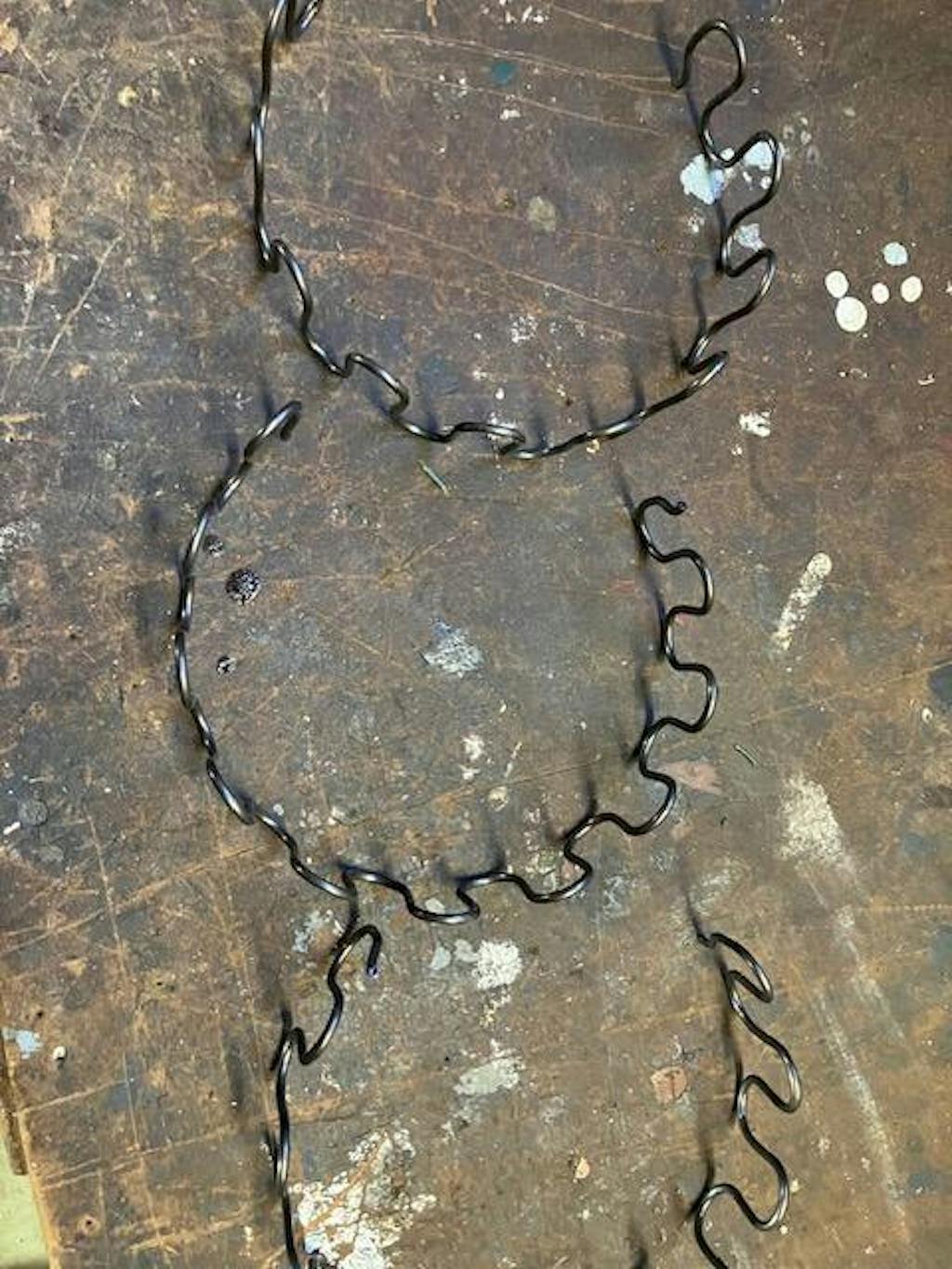
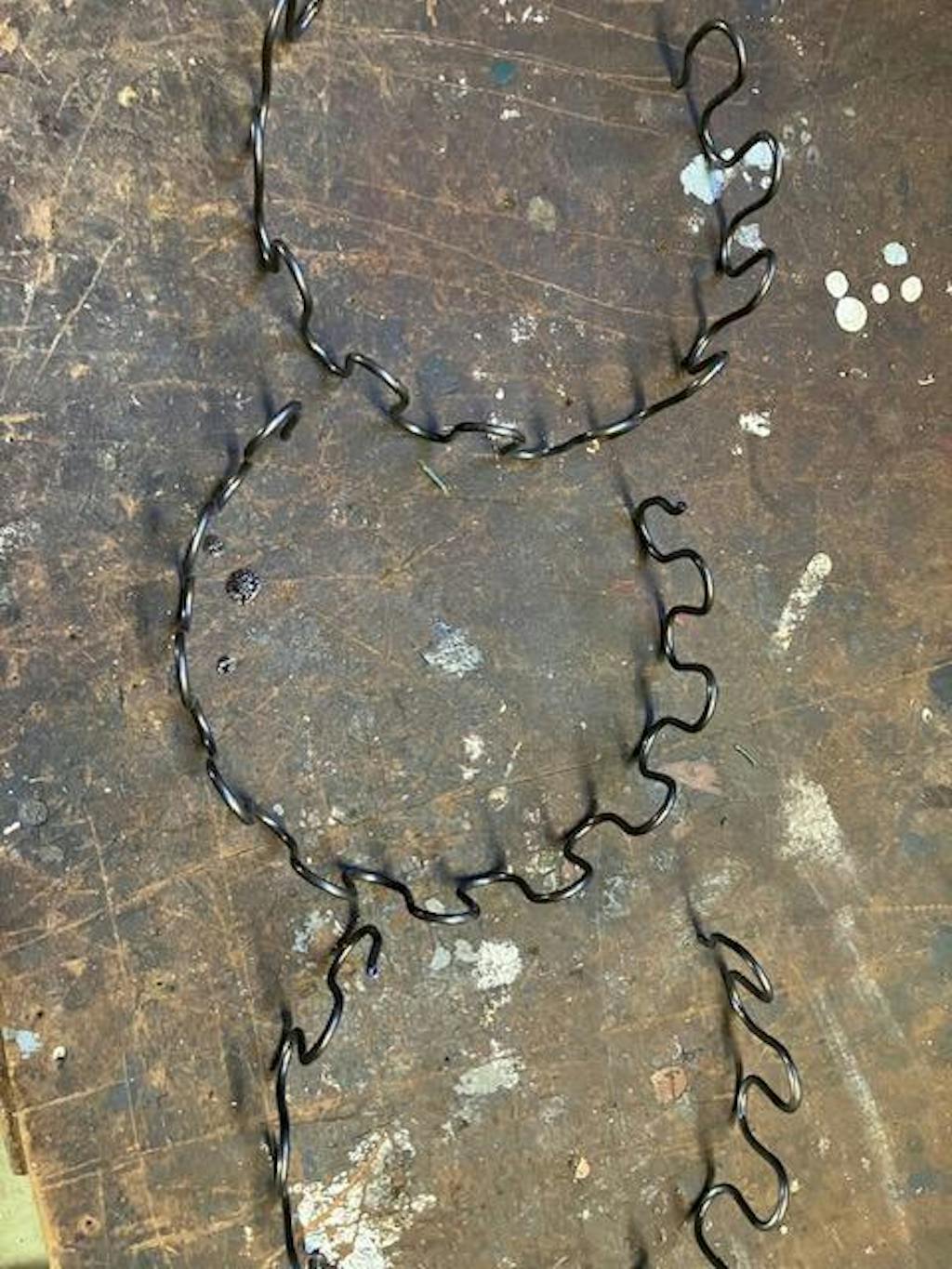
How can I straighten out the springs? I can't use them coil uo as is.
Deine Zahlungsinformationen werden sicher verarbeitet. Wir speichern keine Kreditkartendaten und haben auch keinen Zugang zu deinen Kreditkartendaten.
Get fitment advice & recommendations
When your project demands a material that conducts, seals, and endures, standard sheet metal often falls short in precision or workability. Whether you're a hobbyist tackling a custom electronics enclosure, a craftsperson shaping decorative inlays, or a DIYer patching a flashing joint, having the right copper sheet thickness makes all the difference. These copper sheet plate rolls are sized and gauged to meet the needs of makers, repair technicians, and builders who require reliable, machinable copper in exact dimensions.
Each copper sheet plate roll is made from commercially pure copper (C11000 / ETP grade equivalent), offering excellent electrical conductivity, thermal transfer, and corrosion resistance. Sheets are available in thicknesses ranging from 0.1mm to 0.8mm (approximately 0.004" to 0.031"), with widths and lengths spanning 200×300mm (7.9"×11.8"), 305×305mm (12"×12"), and 100×1000mm (3.9"×39.4"). The surface is smooth-rolled with a bright finish suitable for cutting, bending, soldering, and forming.
Typical use cases include EMI/RF shielding panels for electronics enclosures, decorative copper inlay work for woodworking and jewelry, roof flashing and gutter repair patches, heat spreader fabrication for DIY PC cooling builds, and custom gasket or shim stock cutting for mechanical assemblies. The thin gauge and workable temper make these copper sheet rolls a go-to choice for precision copper sheet for electronics shielding and thin copper plate for craft and metalwork projects.
Made from ETP-grade copper with ≥99.9% purity, delivering superior electrical conductivity (~58 MS/m) and thermal performance for shielding, heat spreading, and conductive applications.
Eight thickness options from ultra-thin 0.1mm foil to sturdy 0.8mm plate give you precise gauge selection for everything from delicate craft inlays to structural repair patches.
The soft-annealed temper allows clean cutting with tin snips or scissors (thinner gauges), and easy bending, rolling, or stamping without cracking — no special tooling required for most DIY tasks.
Copper develops a protective patina over time, resisting moisture and oxidation in indoor and sheltered outdoor environments — ideal for flashing, roofing patches, and decorative metalwork.
Choose from 200×300mm, 305×305mm, or 100×1000mm formats to minimize waste and match your project footprint. Sold in 1-piece or 2-piece packs depending on variant.
The bright-rolled finish accepts solder, conductive adhesives, and flux-based joining methods cleanly, making these sheets ready for electronics assembly, plumbing patches, and craft metalwork without pre-treatment.
| Material | Commercially pure copper (ETP / C11000 equivalent, ≥99.9% Cu) |
|---|---|
| Thickness Range | 0.1mm – 0.8mm (0.004" – 0.031") |
| Available Widths × Lengths | 200×300mm / 305×305mm / 100×1000mm |
| Surface Finish | Bright smooth-rolled |
| Temper | Soft / annealed (workable) |
| Electrical Conductivity | ~58 MS/m (IACS 100%) |
| Thermal Conductivity | ~385 W/(m·K) |
| Density | ~8.96 g/cm³ |
| Packing Quantity | 1 pcs or 2 pcs (see variant options) |
| Weight per Sheet | See variant options |
| Color | Copper / reddish-brown |
| Applications | EMI shielding, craft inlay, flashing repair, heat spreader, gasket/shim stock |
For delicate craft work, jewelry inlays, or EMI foil shielding, 0.1mm–0.2mm is ideal — it cuts easily with scissors and conforms to curves. For structural patches, flashing repairs, or heat spreaders, 0.3mm–0.5mm offers a better balance of rigidity and workability. For gaskets, shims, or load-bearing applications, 0.6mm–0.8mm provides the necessary stiffness. When in doubt, select a middle gauge (0.3mm–0.4mm) for general-purpose DIY use.
Yes — thinner gauges (0.1mm–0.3mm) can be cut cleanly with heavy-duty scissors, a craft knife and straightedge, or rotary cutters. For 0.4mm–0.8mm, tin snips or aviation shears are recommended for straight cuts. A CNC router or laser cutter will produce the cleanest edges on any thickness. Always wear gloves, as cut copper edges can be sharp.
Yes. Copper is one of the most effective EMI shielding materials available, with near-100% IACS conductivity. Even the thinnest 0.1mm sheet provides meaningful attenuation for low-to-mid frequency RF interference. For high-frequency shielding enclosures, 0.2mm–0.3mm is commonly used. Sheets can be soldered or taped at seams to maintain shielding continuity.
Copper does not rust (rust is iron oxide). Instead, copper oxidizes to form a stable patina — first darkening to brown, then developing a green verdigris in humid or outdoor conditions. This patina is protective and slows further corrosion. For indoor applications, the bright finish can be preserved with a clear lacquer coat. For outdoor flashing or roofing use, the natural patina is generally desirable and protective.
The 305×305mm variant is the closest match to a 12"×12" panel (305mm ≈ 12.01"). This size is ideal for square panel applications such as electronics enclosure lids, decorative tile inlays, or heat spreader blanks. If you need a strip format, the 100×1000mm option (approx. 3.9"×39.4") is better suited for flashing, banding, or long narrow applications.
Yes. Copper is one of the most solderable metals. Use a rosin-core or water-soluble flux with standard 60/40 or lead-free solder. Clean the surface with isopropyl alcohol before soldering to remove any surface oxidation. A soldering iron with sufficient wattage (40W+ for thicker sheets) ensures good heat transfer. These sheets are also compatible with silver brazing for higher-strength joints.
Yes — the 100×1000mm (approx. 4"×40") strip format is well-suited for small flashing patches, step flashing repairs, and gutter seam sealing. For best results, use 0.3mm–0.5mm thickness for outdoor flashing applications. Copper is a traditional roofing material valued for its longevity and natural weather resistance. Secure with copper nails or compatible adhesive sealant to avoid galvanic corrosion from dissimilar metals.