
The chain is fine...but I ordered the wrong size. Nine links of the chain I ordered equals six of the size I wanted. My error...
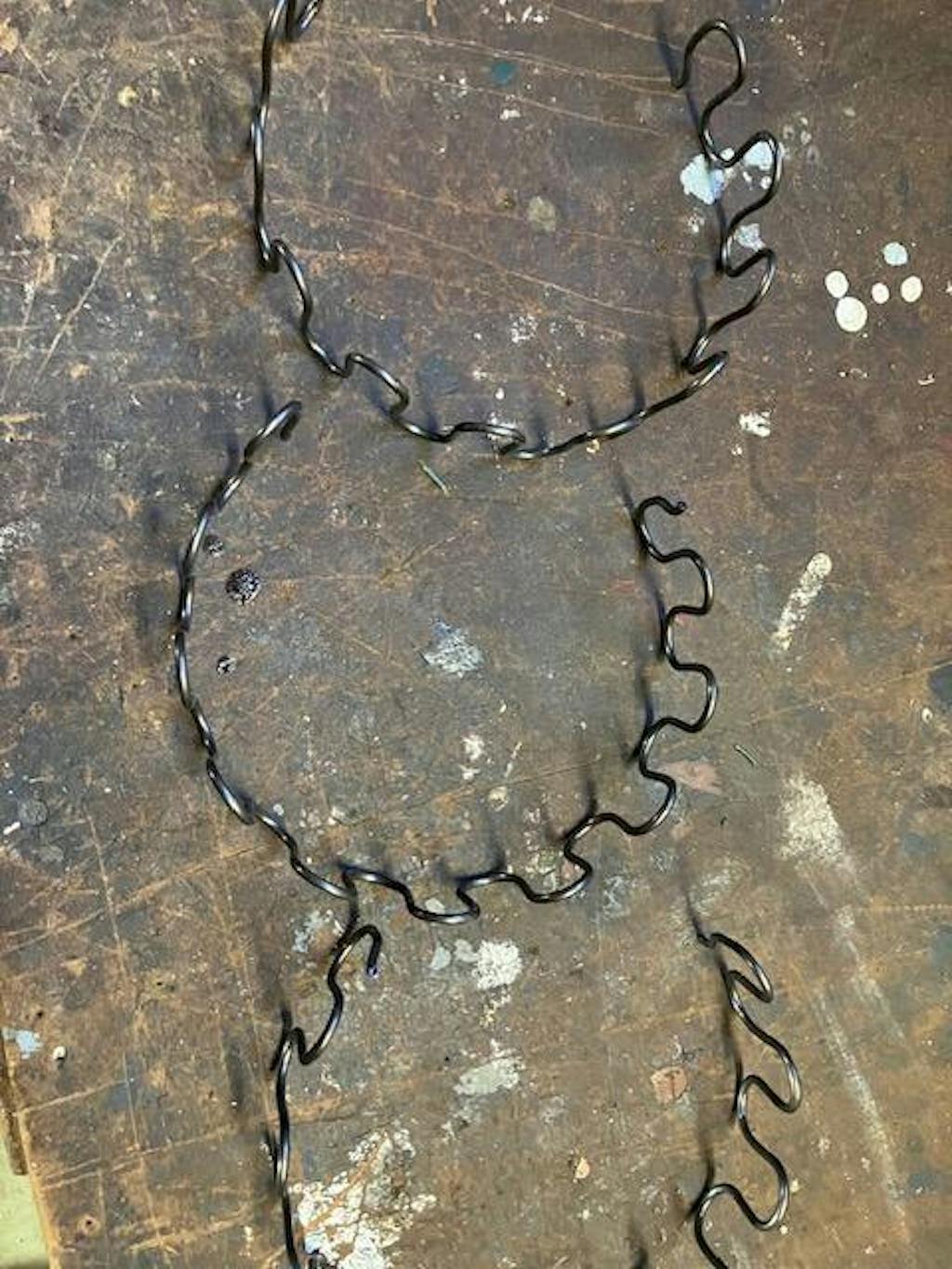
How can I straighten out the springs? I can't use them coil uo as is.
Deine Zahlungsinformationen werden sicher verarbeitet. Wir speichern keine Kreditkartendaten und haben auch keinen Zugang zu deinen Kreditkartendaten.
Get fitment advice & recommendations
When a headset starts to feel rough, a hub develops play, or a bottom bracket grinds under load, worn or incorrectly sized loose ball bearings are often the cause. Cyclists, mechanics, and workshop technicians who need an exact replacement — not a close approximation — rely on a comprehensive metric range to get the job done right the first time.
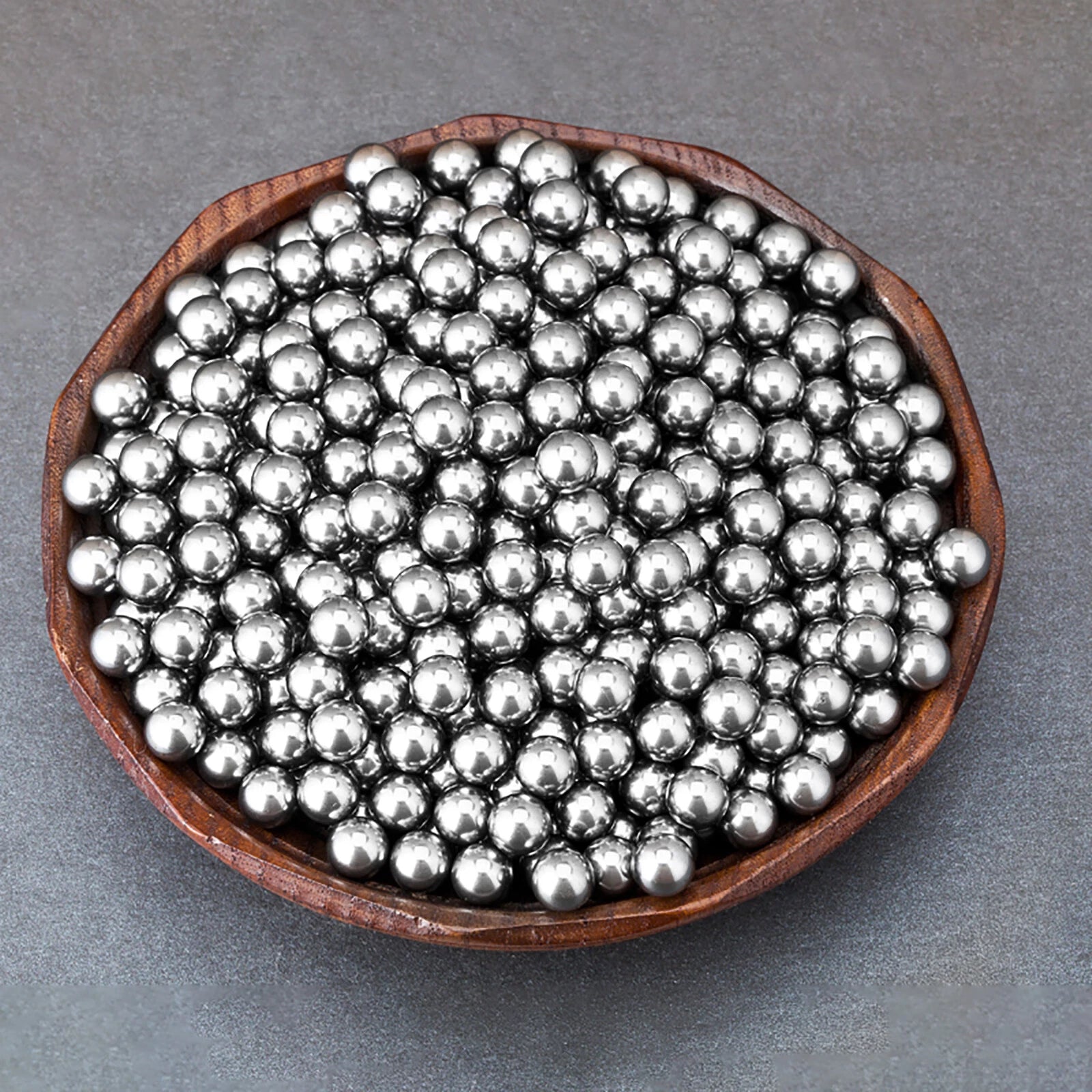
These bicycle loose ball bearings are available in metric diameters from 1mm through 20mm (approximately 0.039 in to 0.787 in), covering the most common cup-and-cone bearing positions found on road, mountain, and utility bicycles. Each ball is a uniform sphere intended for use in standard open-race bearing cups and cones.
Typical applications include front and rear hub overhauls, threaded headset rebuilds, and loose-ball bottom bracket servicing — situations where sourcing the correct metric diameter is essential for proper load distribution and long service life.
| Diameter Range | 1mm – 20mm (approx. 0.039 in – 0.787 in) |
|---|---|
| Size Increments | See variant options (includes pure metric and inch-derived metric sizes) |
| Form Factor | Loose ball (unretained) |
| Bearing Type | Cup-and-cone open race |
| Typical Applications | Front hub, rear hub, threaded headset, loose-ball bottom bracket |
| Compatible Bicycle Types | Road, mountain, touring, utility |
| Pack Quantities Available | 10, 25, 50, 100 pieces |
| Material | See variant options / Contact us to confirm |
| Surface Finish | See variant options |
| Tolerance Grade | See variant options / Contact us to confirm |
The most reliable method is to remove the existing balls from the bearing cup and measure them with a digital micrometer or vernier caliper. Alternatively, consult the component manufacturer's service manual — headset, hub, and bottom bracket specifications typically list the required ball diameter and quantity. Common sizes on production bicycles include 3/16" (4.763mm) for front hubs, 1/4" (6.35mm) for rear hubs and headsets, and 3/8" (9.525mm) for some bottom brackets, though this varies by brand and model.
No. These are loose balls intended for open cup-and-cone bearing systems. Sealed cartridge bearings (the press-fit type found in many modern hubs, headsets, and bottom brackets) are self-contained units and are not serviceable by replacing individual balls. These loose balls are only suitable for traditional cup-and-cone configurations where the balls sit directly in a greased race.
The number of balls per bearing position varies by component and ball diameter. As a general guide: front hubs typically use 9–10 balls per side, rear hubs 9–11 balls per side, and threaded headsets 18–22 balls per race. The exact count depends on the cup diameter and ball size — a smaller ball diameter means more balls fit in the same race. Always count the original balls when disassembling, or refer to the manufacturer's service specification.
Yes. The size range includes both pure metric diameters (e.g., 1mm, 2mm, 3mm, 5mm, 10mm) and inch-derived metric equivalents (e.g., 3.175mm = 1/8", 4.763mm = 3/16", 6.35mm = 1/4", 9.525mm = 3/8", 19.05mm = 3/4"). Many bicycle components — particularly those designed to older British or Japanese standards — use inch-fraction ball sizes that are expressed in millimetres. Select the diameter that matches your original specification exactly.
A medium-weight bicycle-specific grease is recommended for most cup-and-cone bearing applications. Apply a generous layer of grease to the bearing cup before placing the balls — the grease holds the balls in position during reassembly and provides lubrication during operation. Avoid using light oils alone, as they do not provide adequate film strength under the contact loads present in hub and headset bearings. Re-grease at regular service intervals or whenever the bearing is disassembled.
For a single bicycle service job, a pack of 10 or 25 is typically sufficient — most bearing positions use fewer than 25 balls per side. A pack of 50 suits a full bicycle overhaul covering front hub, rear hub, and headset in one order. Packs of 100 are suited to workshop use where the same size is serviced repeatedly across multiple bicycles, reducing per-unit cost and ensuring stock is available for future jobs.