
The chain is fine...but I ordered the wrong size. Nine links of the chain I ordered equals six of the size I wanted. My error...
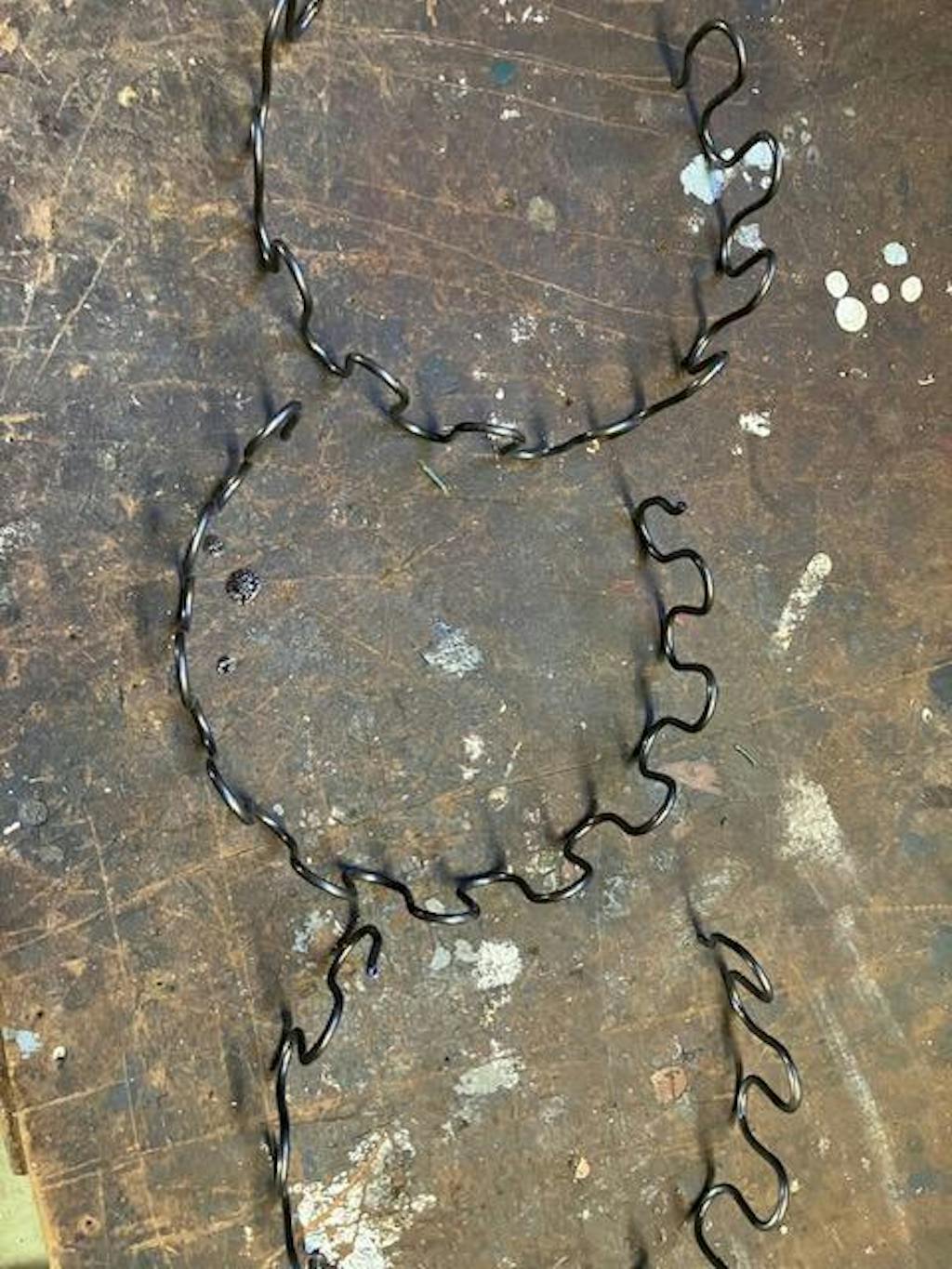
How can I straighten out the springs? I can't use them coil uo as is.
Deine Zahlungsinformationen werden sicher verarbeitet. Wir speichern keine Kreditkartendaten und haben auch keinen Zugang zu deinen Kreditkartendaten.
Get fitment advice & recommendations
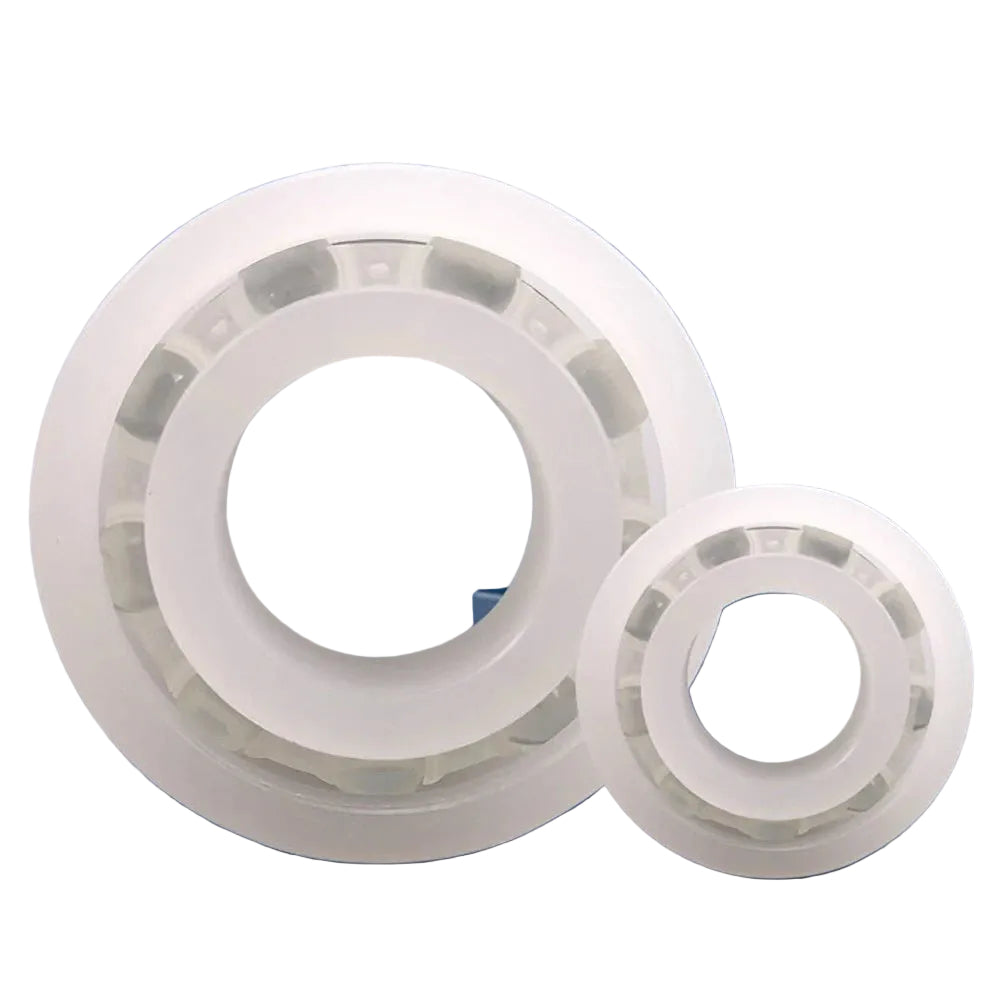
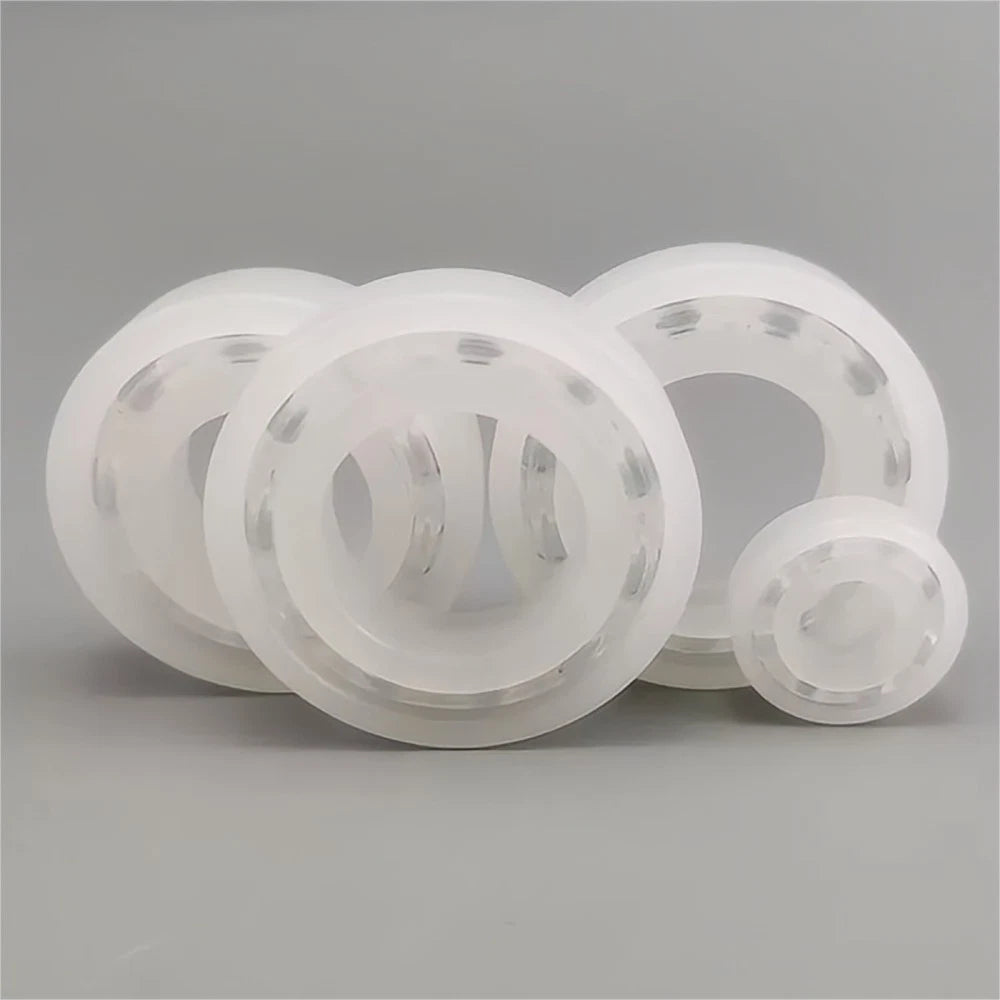
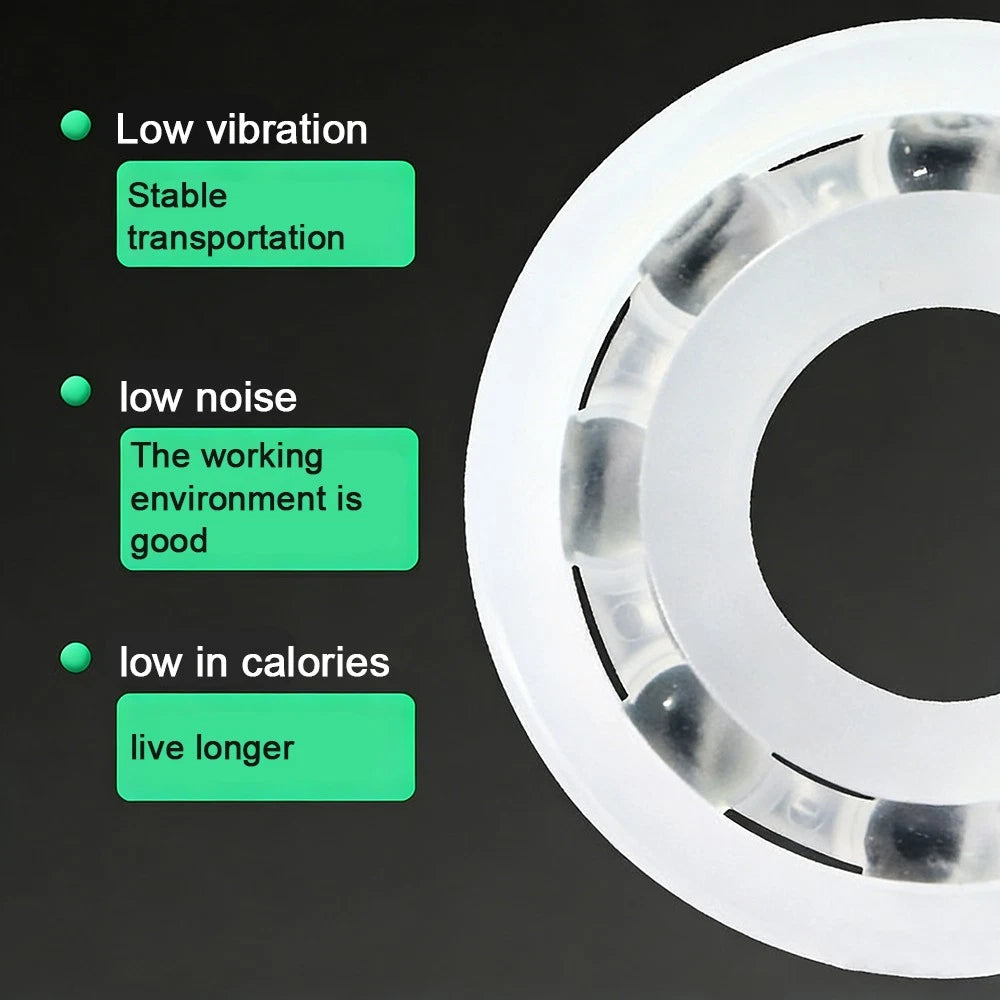
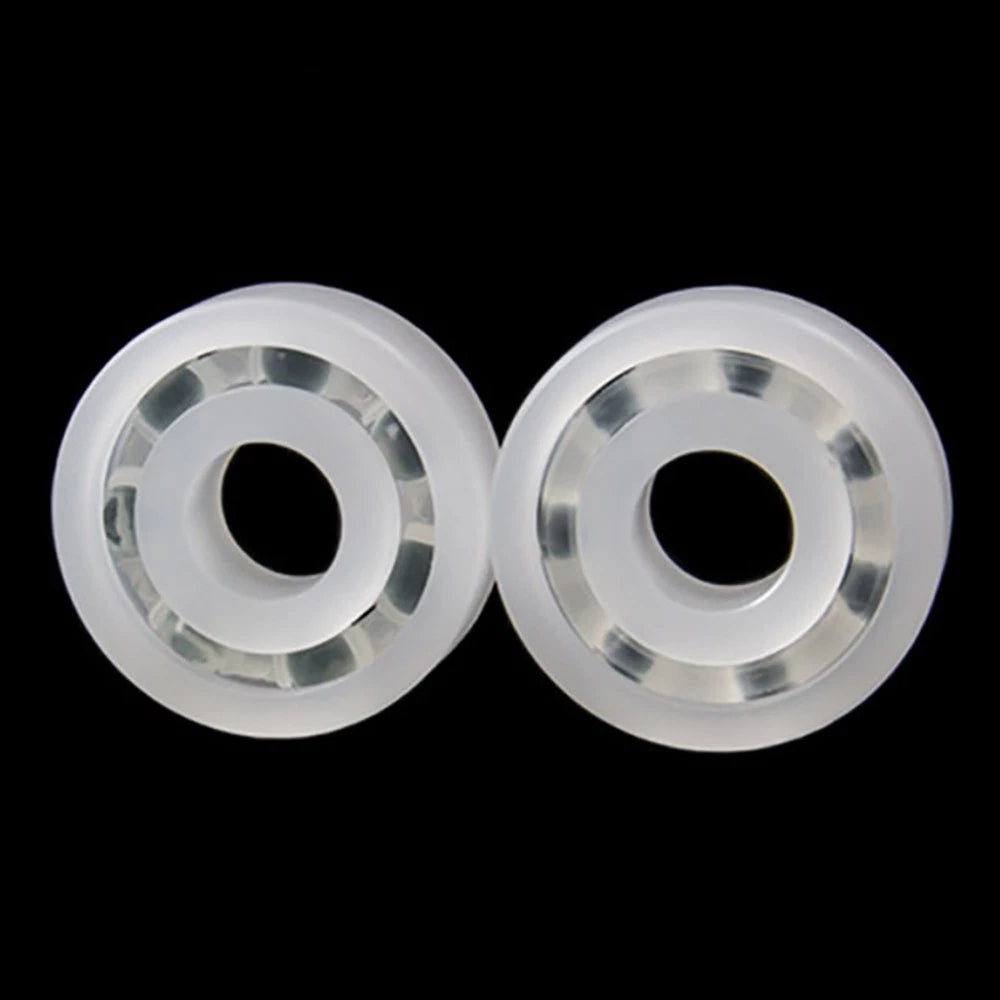
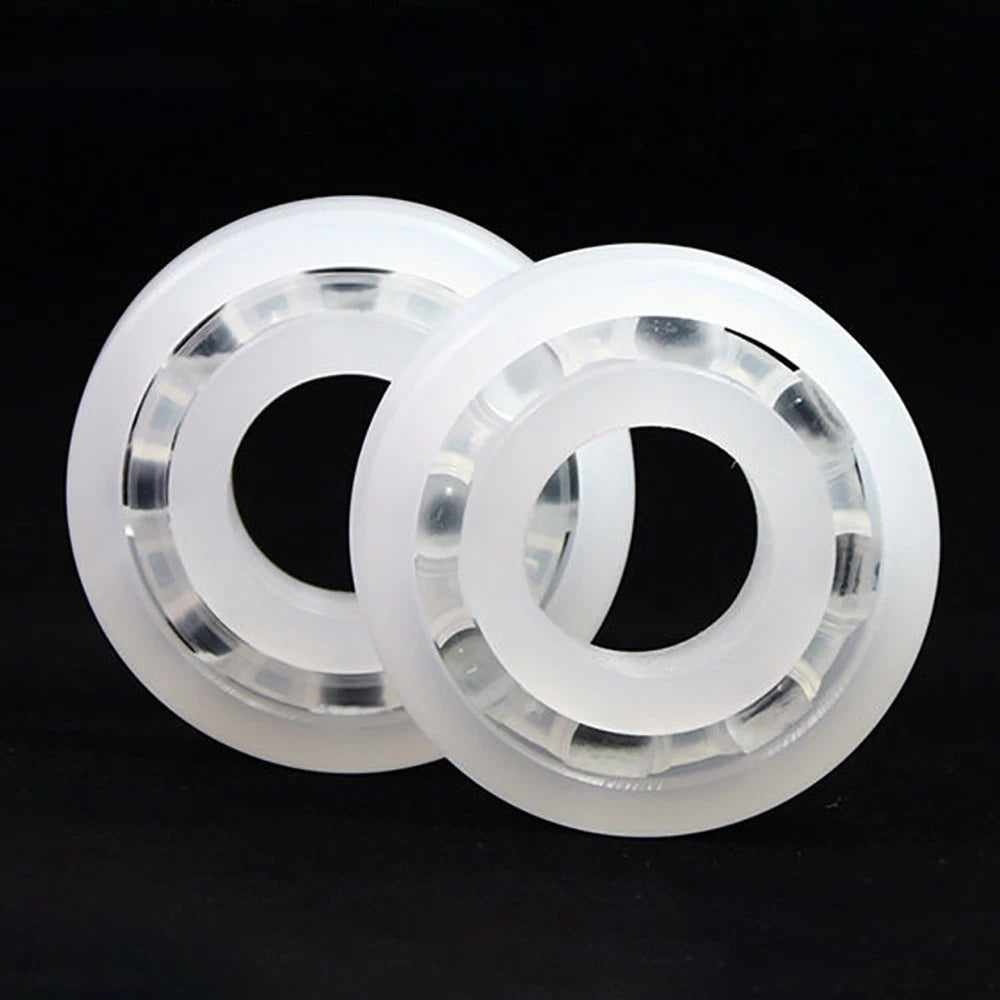
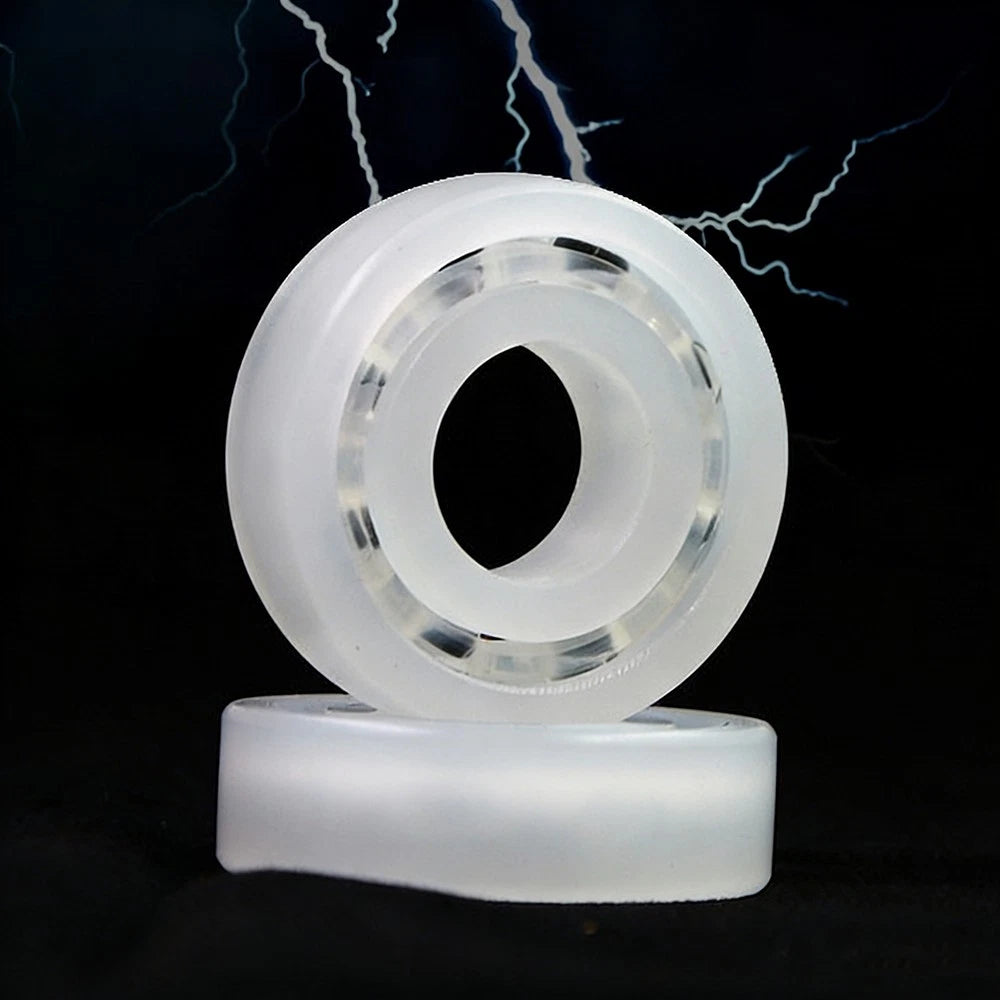
When metal bearings corrode, seize, or add unwanted weight to your build, plastic PP ball bearings with glass balls offer a practical alternative for DIYers, hobbyists, and light-industrial assemblers. Whether you are replacing a worn bearing in a small appliance, building a custom cart, or working in a wet or chemically exposed environment, these bearings are engineered to keep rotating smoothly where steel cannot.
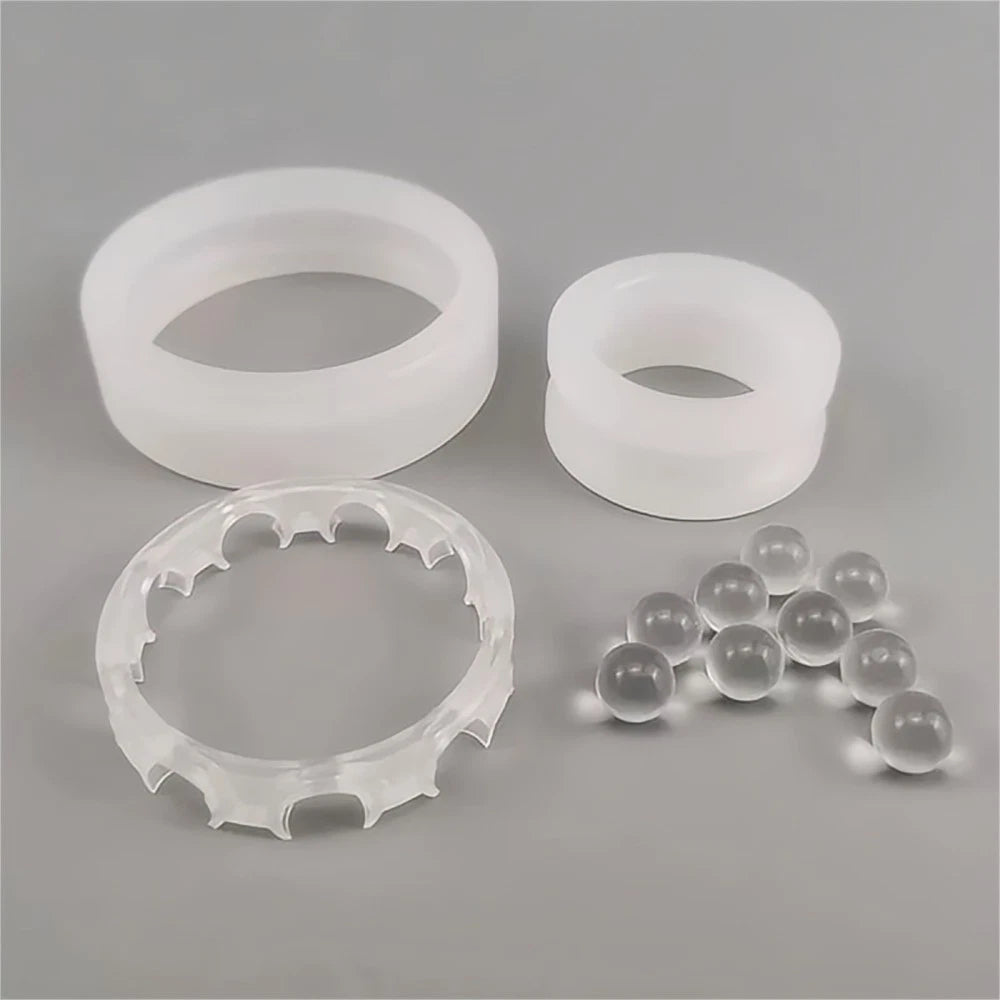
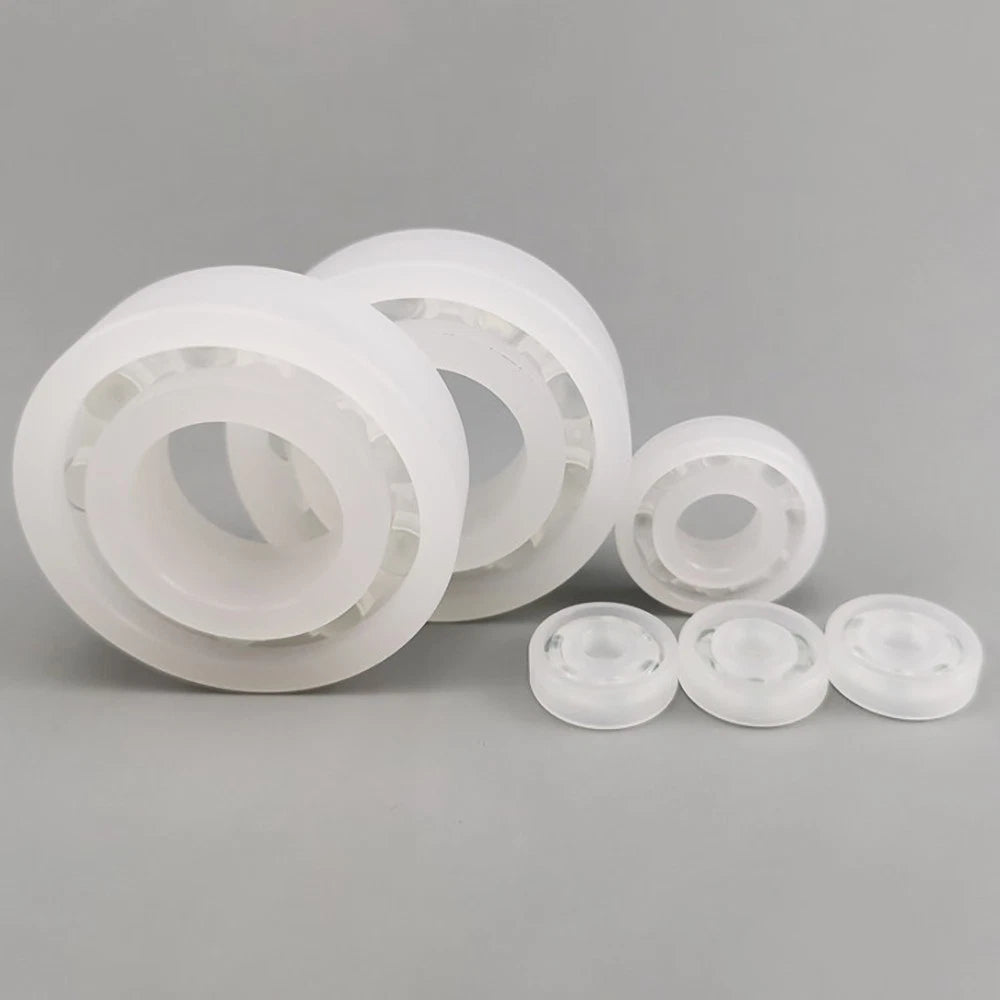
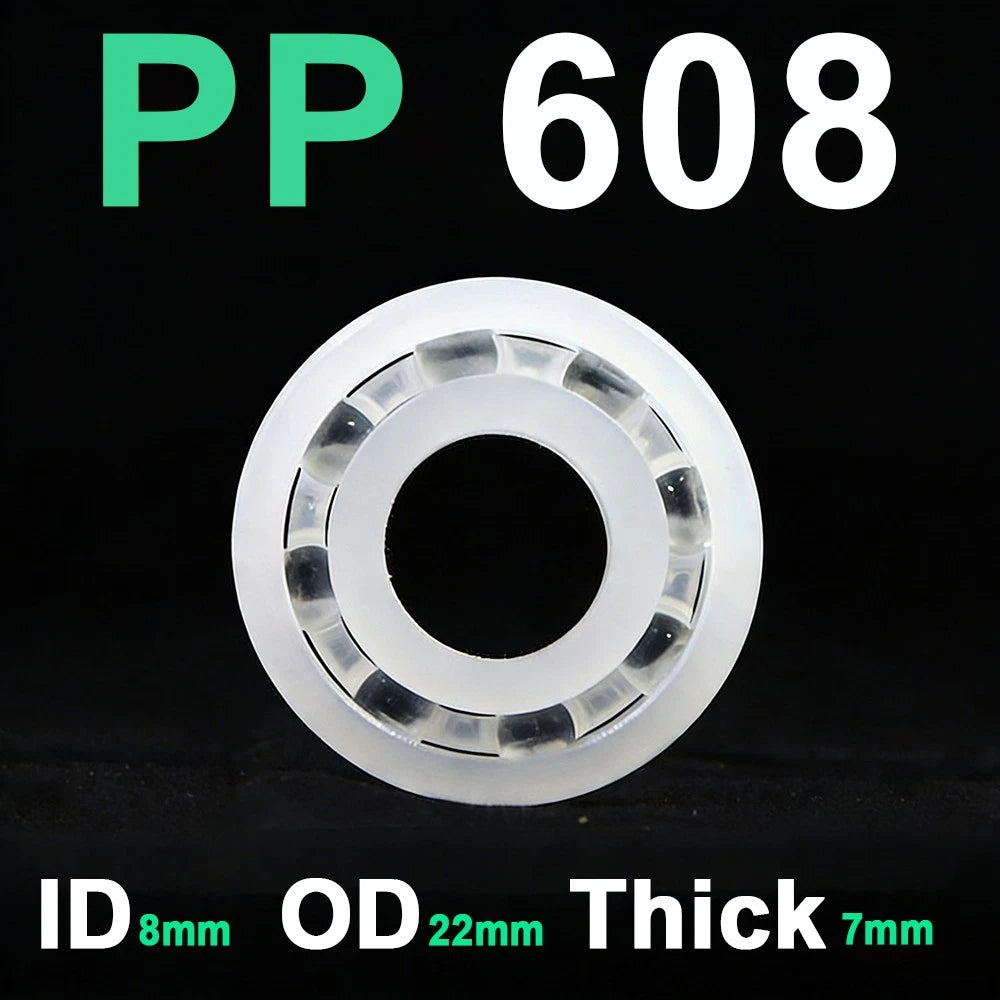
These plastic PP ball bearings feature a polypropylene (PP) outer race and inner race paired with precision glass balls. Available in 16 size variants spanning inner diameters from 6mm (~0.24 in) to 30mm (~1.18 in) and outer diameters from 19mm (~0.75 in) to 62mm (~2.44 in), with widths ranging from 6mm to 16mm. Models covered include 608, 6000, 6001, 6004, and 6206 standard bearing series.
Typical use cases include 3D printer idler pulleys and extruder assemblies, inline skate and skateboard wheel replacements in wet conditions, food-processing equipment where metal contamination must be avoided, and RC car or drone builds where reducing rotating mass improves performance.
| Material — Race | Polypropylene (PP) |
|---|---|
| Rolling Elements | Glass balls |
| Inner Diameter (ID) | 6mm – 30mm (0.24 in – 1.18 in) |
| Outer Diameter (OD) | 19mm – 62mm (0.75 in – 2.44 in) |
| Width | 6mm – 16mm (0.24 in – 0.63 in) |
| Bearing Series | 608, 6000, 6001, 6004, 6206 |
| Shielding | See variant options |
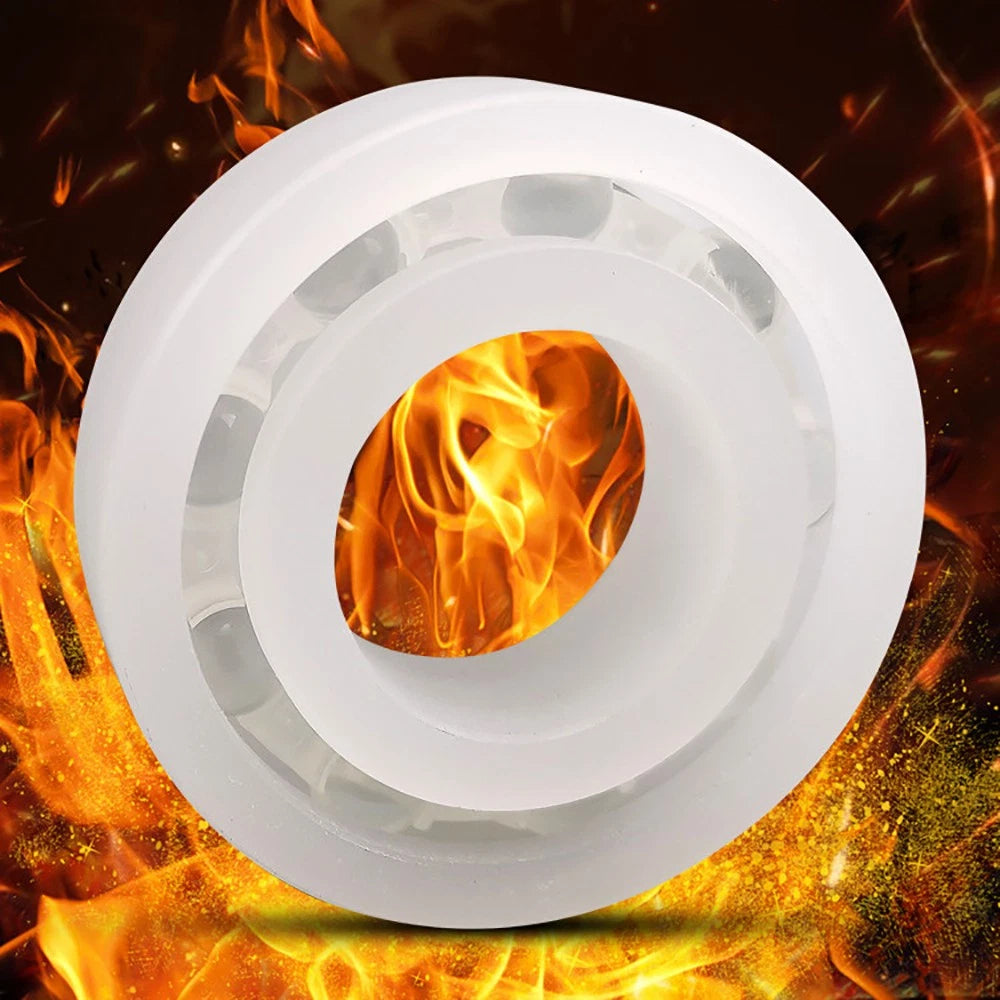
| Max Operating Temperature | Typically up to 80°C (176°F) for PP |
| Load Rating | See variant options |
| Lubrication | Contact us to confirm |
| Quantity per Order | 1 Pcs (per variant) |
Measure the inner diameter (ID), outer diameter (OD), and width of your existing bearing or bearing seat using calipers. Match those three dimensions to the variant options listed above. For standard series, the 608 is 8×22×7mm, 6000 is 10×26×8mm, 6001 is 12×28×8mm, 6004 is 20×47×14mm, and 6206 is 30×62×16mm.
PP plastic bearings with glass balls are designed for light-to-moderate radial loads in low-to-medium speed applications. They are well-suited for 3D printers, small appliances, hobby vehicles, and food-contact equipment. They are not recommended for heavy industrial machinery, high-impact loads, or sustained high-speed operation above the PP temperature limit.
Yes. Polypropylene (PP) is inherently resistant to water, mild acids, and many alkalis. The glass balls do not rust. These bearings can operate in wet or humid environments where steel bearings would corrode. However, they are not rated for immersion in strong solvents or concentrated acids — contact us if you have a specific chemical compatibility question.
These bearings follow standard dimensional specifications for the 608, 6000, 6001, 6004, and 6206 series, so they are dimensionally compatible with seats designed for those series. Always verify the ID, OD, and width of your current bearing before ordering to confirm fitment.
PP and glass are both non-metallic and non-magnetic, which makes these bearings a common choice where metal contamination must be avoided, such as in food-processing conveyors or packaging lines. For regulated food-contact or medical applications, verify compliance requirements with your local authority before use.
Polypropylene typically retains its structural properties up to approximately 80°C (176°F) under continuous load. Intermittent exposure to slightly higher temperatures may be tolerable, but sustained operation above this range can cause deformation of the plastic races. For higher-temperature environments, a different bearing material would be more appropriate.
PP plastic bearings with glass balls generally require minimal lubrication compared to steel bearings. In many dry or lightly loaded applications they can run without added lubricant. If your application involves sustained speeds or moderate loads, a light silicone-based grease compatible with PP plastic is recommended. Avoid petroleum-based lubricants that may degrade polypropylene over time.