
The chain is fine...but I ordered the wrong size. Nine links of the chain I ordered equals six of the size I wanted. My error...
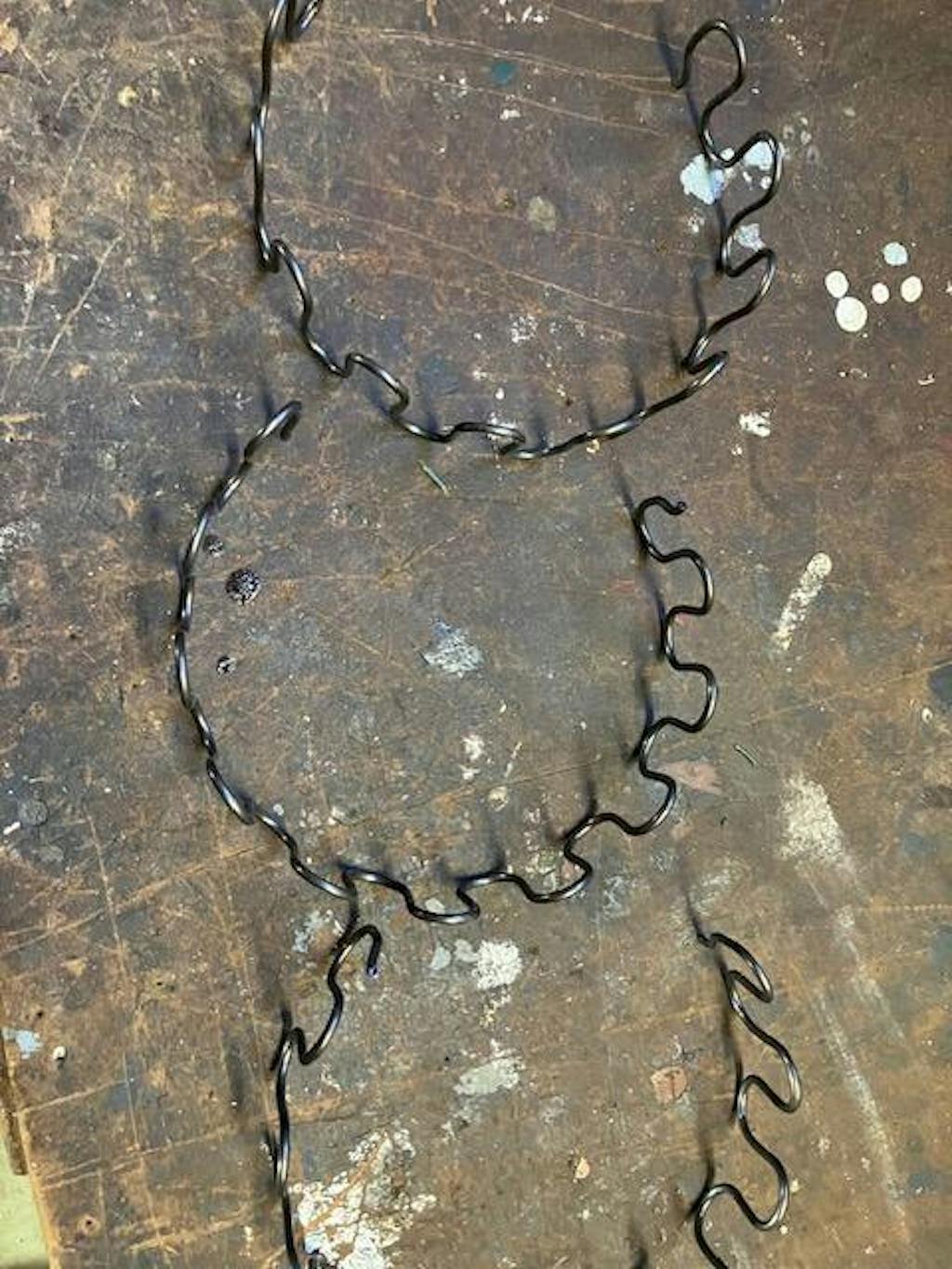
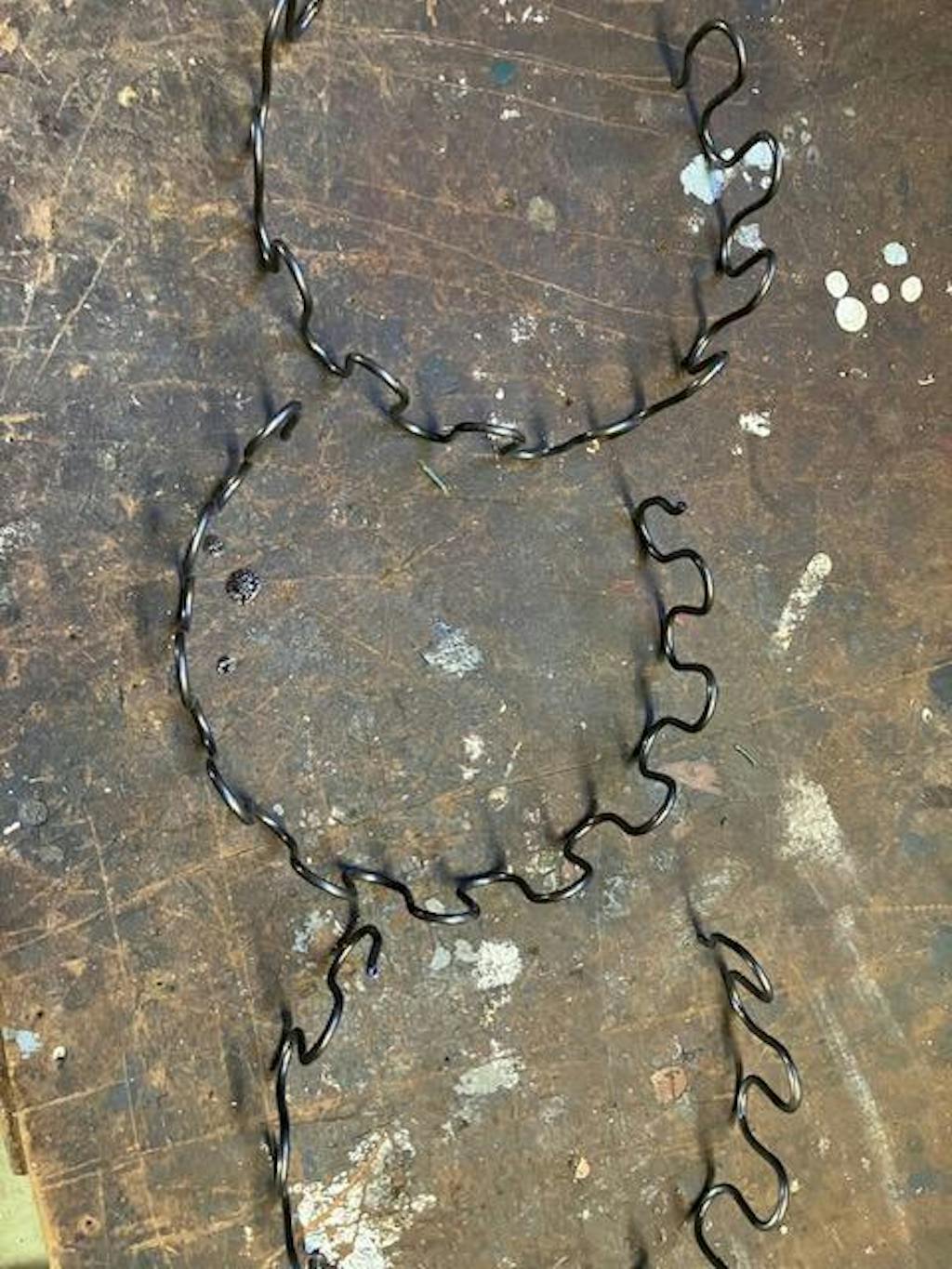
How can I straighten out the springs? I can't use them coil uo as is.
Deine Zahlungsinformationen werden sicher verarbeitet. Wir speichern keine Kreditkartendaten und haben auch keinen Zugang zu deinen Kreditkartendaten.
Get fitment advice & recommendations
When a straight run needs a branch line at an angle, a poorly matched fitting creates leaks, flow restrictions, and costly rework. Whether you are a homeowner tackling a bathroom drain upgrade or a contractor routing supply lines in a tight utility space, the right 45-degree Y-tee adapter makes the difference between a clean, code-friendly installation and a frustrating callback.
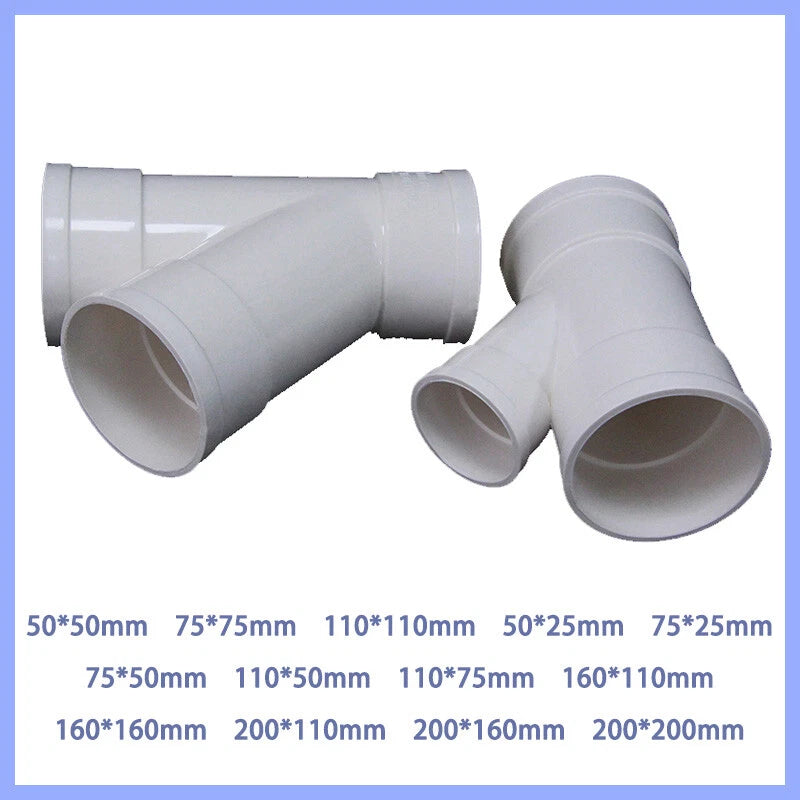
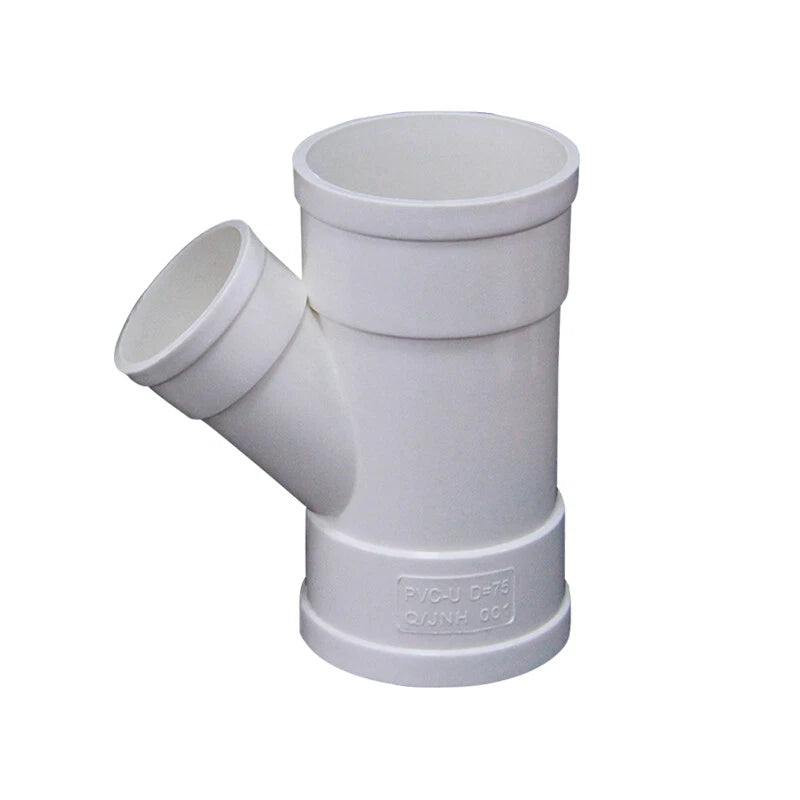
These PVC 45 degree tee reducer fittings are constructed from rigid white PVC, offering a smooth interior bore that minimises turbulence and sediment build-up. Inner diameter options span from 50×25 mm (approx. 2"×1") up to 200×200 mm (approx. 8"×8"), covering the most common residential and light-commercial pipe sizes. Wall thickness is consistent across the fitting body to maintain structural integrity at the branch junction.
Typical applications include residential drain-waste-vent (DWV) branch connections, irrigation lateral offtakes for garden and lawn supply lines, and light-duty industrial fluid-routing where a 45-degree Y-branch reduces back-pressure compared to a standard 90-degree tee. The white finish blends with standard PVC pipe stock and is compatible with solvent-cement joining methods used in PVC 45 degree pipe fitting installations worldwide.
The angled Y-branch reduces flow turbulence and back-pressure compared to sharp 90° tees, supporting smoother fluid transfer in both drainage and supply applications.
Available in equal (e.g., 50×50 mm) and reducer (e.g., 110×50 mm) inner diameter combinations, letting you branch down to a smaller pipe without an additional reducer coupling.
Manufactured from rigid white PVC that resists corrosion, scale build-up, and common household chemicals, maintaining dimensional stability across typical indoor temperature ranges.
Inner diameter options from 50×25 mm up to 200×200 mm cover the most common residential and light-commercial pipe sizes, reducing the need for multiple adapters.
Smooth socket ends are machined to standard PVC tolerances for a reliable solvent-cement bond — no special tools required beyond a pipe cutter, deburring tool, and PVC primer/cement.
Order 1 to 5 pieces per size in a single transaction, making it easy to stock exactly what your project needs without over-ordering.
| Material | Rigid PVC (Polyvinyl Chloride) |
|---|---|
| Color / Finish | White |
| Fitting Type | 45° 3-Way Y-Tee (Equal & Reducer) |
| Inner Diameter Options | 50×50 mm, 75×75 mm, 110×110 mm, 50×25 mm, 75×25 mm, 75×50 mm, 110×50 mm, 110×75 mm, 160×110 mm, 160×160 mm, 200×110 mm, 200×160 mm, 200×200 mm |
| Branch Angle | 45° |
| Wall Thickness | See variant options |
| Joining Method | Solvent cement (PVC glue) |
| Applicable Standards | See variant options |
| Quantity per Order | 1 / 2 / 3 / 4 / 5 pieces (select above) |
| Weight per Piece | See variant options |
Measure the outer diameter (OD) of your existing pipe. The fitting's inner diameter (ID) should match or be slightly larger than the pipe OD to allow a proper solvent-cement socket fit. For example, a pipe with a 50 mm OD typically pairs with a 50 mm ID socket. If you are branching to a smaller pipe, select a reducer variant (e.g., 75×50 mm) to avoid needing a separate reducer coupling.
These fittings are suited for drainage, waste, and vent (DWV) branch connections and low-pressure supply lines such as irrigation laterals. For high-pressure potable water supply lines, verify the fitting's pressure rating against your system's working pressure before installation. Contact us to confirm suitability for your specific application.
A 45-degree branch angle creates a gentler flow transition, reducing turbulence, back-pressure, and the risk of blockages at the junction — particularly important in drainage systems where solids or debris may be present. A 90° tee can cause flow to collide directly, increasing the chance of clogs over time.
Yes. Rigid PVC is inherently corrosion-resistant and does not rust, scale, or react with most household chemicals, mild acids, or alkalis. It is not recommended for use with concentrated solvents, aromatic hydrocarbons, or applications exceeding the material's rated temperature range (typically up to approximately 60°C / 140°F for rigid PVC under low pressure).
You will need: a PVC pipe cutter or hacksaw, a deburring tool or fine sandpaper to smooth cut ends, PVC primer, and PVC solvent cement. Apply primer to both the pipe end and fitting socket, then apply cement and push the pipe firmly into the socket with a slight twist. Hold for 30 seconds and allow the joint to cure per the cement manufacturer's instructions before pressurising the line.
Each product listing covers one inner diameter combination with a quantity selector (1–5 pieces). To order multiple sizes, add each size variant to your cart separately. If you need a size not listed, please contact us and we will advise on availability.
These fittings are designed to be compatible with standard PVC pipe of matching nominal diameter. Always verify the pipe's actual outer diameter against the fitting's inner diameter before purchasing, as pipe dimensions can vary slightly between regional standards (e.g., ASTM, AS/NZS, BS). When in doubt, measure your pipe with calipers rather than relying solely on the nominal size label.