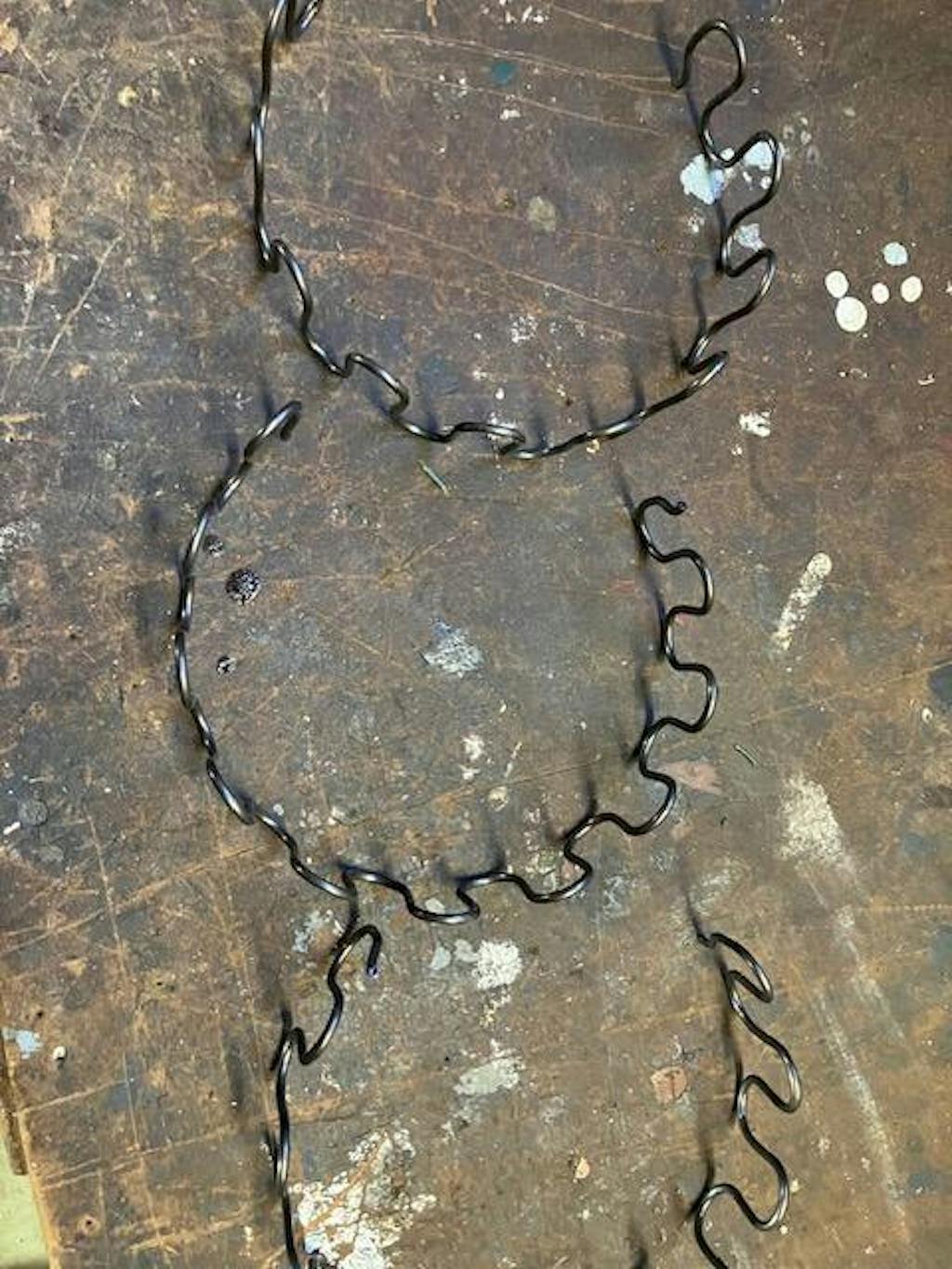
The chain is fine...but I ordered the wrong size. Nine links of the chain I ordered equals six of the size I wanted. My error...
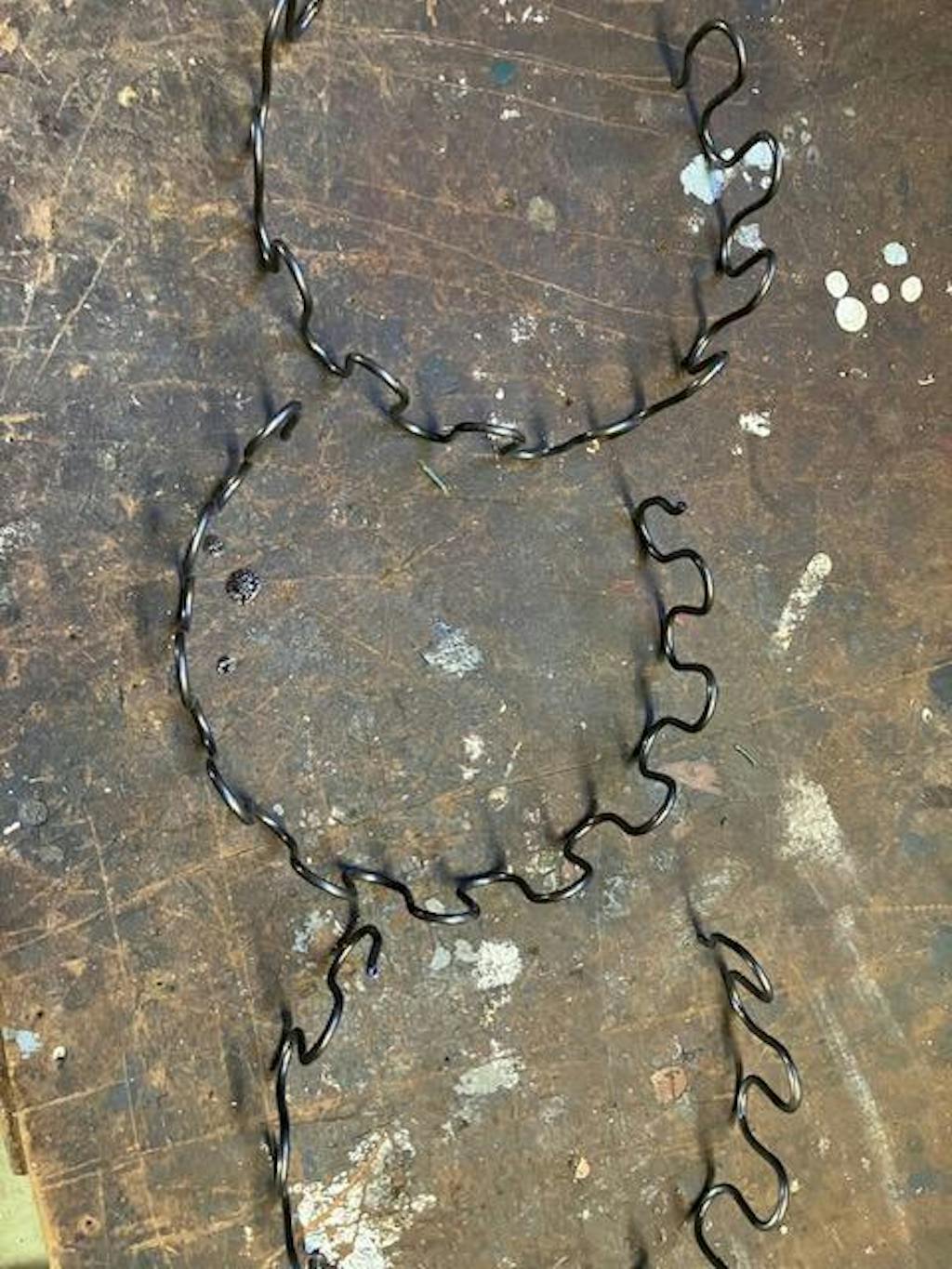
How can I straighten out the springs? I can't use them coil uo as is.
Deine Zahlungsinformationen werden sicher verarbeitet. Wir speichern keine Kreditkartendaten und haben auch keinen Zugang zu deinen Kreditkartendaten.
Get fitment advice & recommendations
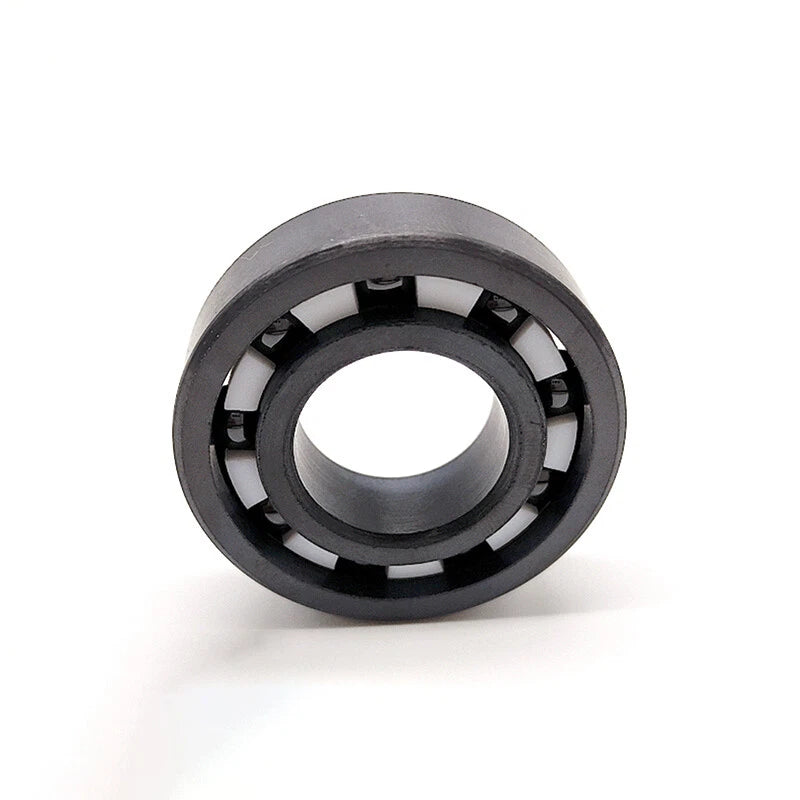
When standard steel bearings fail under heat, moisture, or chemical exposure, engineers and hobbyists working on RC vehicles, robotics, medical devices, and precision instruments need a more reliable solution. Silicon nitride ceramic ball bearings with a reinforced cage deliver the dimensional stability and low-friction rotation that steel simply cannot match in these environments.
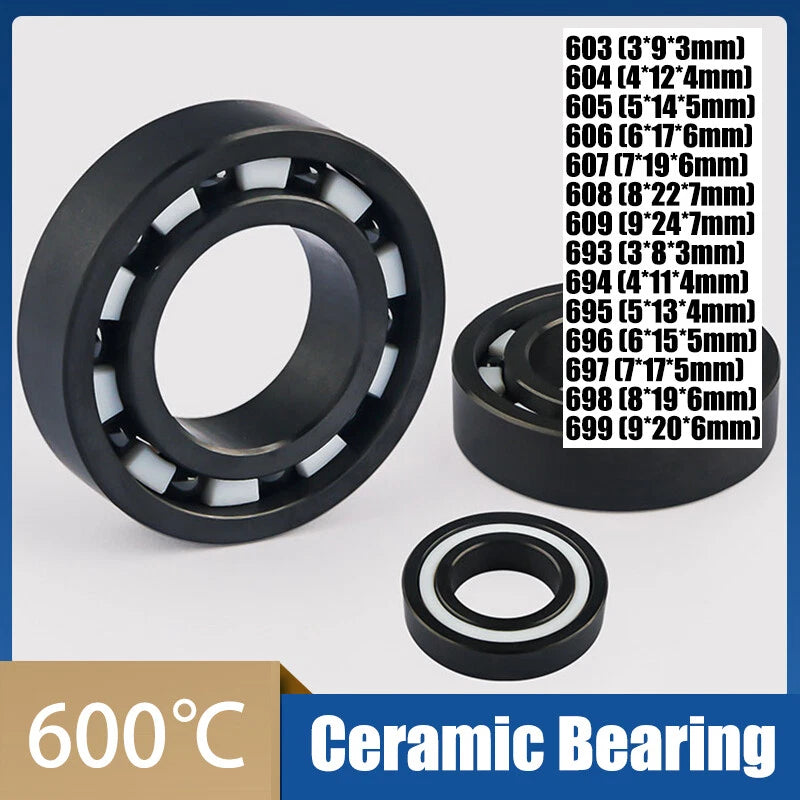
These bearings feature silicon nitride (Si₃N₄) ceramic balls housed in a durable cage, available in two series: the 60x series (603, 604, 605, 606, 607, 608, 609) and the 69x series (693, 694, 695, 696, 697, 698, 699). Bore diameters range from 3 mm (0.118 in) to 9 mm (0.354 in), with outer diameters from 8 mm (0.315 in) to 24 mm (0.945 in) and widths from 3 mm to 7 mm — covering the most common miniature bearing footprints.
Typical use cases include high-speed spindles where reduced rotational mass matters, inline skate wheels and skateboard trucks requiring corrosion resistance, and laboratory or cleanroom equipment where non-magnetic, non-conductive bearings are specified. Available in packs of 1, 2, 5, or 10 pieces to suit both single-unit repairs and small-batch production runs.
| Ball Material | Silicon Nitride (Si₃N₄) Ceramic |
|---|---|
| Bearing Series | 60x series (603–609) and 69x series (693–699) |
| Bore Diameter (d) | 3 mm – 9 mm (0.118 in – 0.354 in) — see variant options |
| Outer Diameter (D) | 8 mm – 24 mm (0.315 in – 0.945 in) — see variant options |
| Width (B) | 3 mm – 7 mm (0.118 in – 0.276 in) — see variant options |
| Cage Material | See variant options |
| Operating Temperature | Typically −40 °C to +120 °C (−40 °F to +248 °F) |
| Electrical Conductivity | Non-conductive (ceramic balls) |
| Magnetic Properties | Non-magnetic |
| Corrosion Resistance | Resistant to rust, salt spray, and mild chemicals |
| Pack Size Options | 1 Pcs / 2 Pcs / 5 Pcs / 10 Pcs |
| Lubrication | See variant options / Contact us to confirm |
Match the bore diameter (d), outer diameter (D), and width (B) to your existing bearing or shaft/housing dimensions. The size designation in the product title follows the standard format: for example, 608 corresponds to 8 mm bore × 22 mm OD × 7 mm width. Measure your shaft diameter first, then confirm the OD fits your housing bore before ordering.
Silicon nitride ceramic is harder than bearing steel (approximately 1,500 HV vs. 700 HV for steel), which means the balls resist surface wear and indentation better under high-cycle or abrasive conditions. However, ceramic is more brittle than steel under sudden impact loads. These bearings are best suited for high-speed, light-to-moderate radial loads rather than heavy shock loading.
Ceramic balls generate less heat than steel and can run with minimal lubrication in many applications. However, the cage and races still benefit from light grease or oil lubrication to reduce friction and protect the raceway surfaces. For dry or cleanroom environments, confirm the specific variant's lubrication state before installation.
Yes — the 60x and 69x series are among the most common miniature bearing standards used in RC vehicles, drones, inline skates, and skateboards. As long as the bore, OD, and width match your existing bearing (check your manual or measure the old bearing), these are direct drop-in replacements. The 608 size (8×22×7 mm) is particularly common in skateboard and inline skate wheels.
Both series share the same bore diameters (3–9 mm) but differ in outer diameter and width. The 69x series (693–699) has a smaller outer diameter and narrower width than the equivalent 60x bearing, making it suitable for space-constrained designs where a thinner cross-section is required. For example, a 693 measures 3×8×3 mm while a 603 measures 3×9×3 mm.
Consider ceramic bearings when your application involves: (1) exposure to moisture, salt, or mild chemicals where steel would corrode; (2) high rotational speeds where reduced mass and lower friction matter; (3) electrical isolation requirements, such as motor shafts where stray currents could damage steel bearings; or (4) non-magnetic requirements near sensitive instruments. For standard dry indoor mechanical applications with moderate loads, steel bearings remain a cost-effective choice.