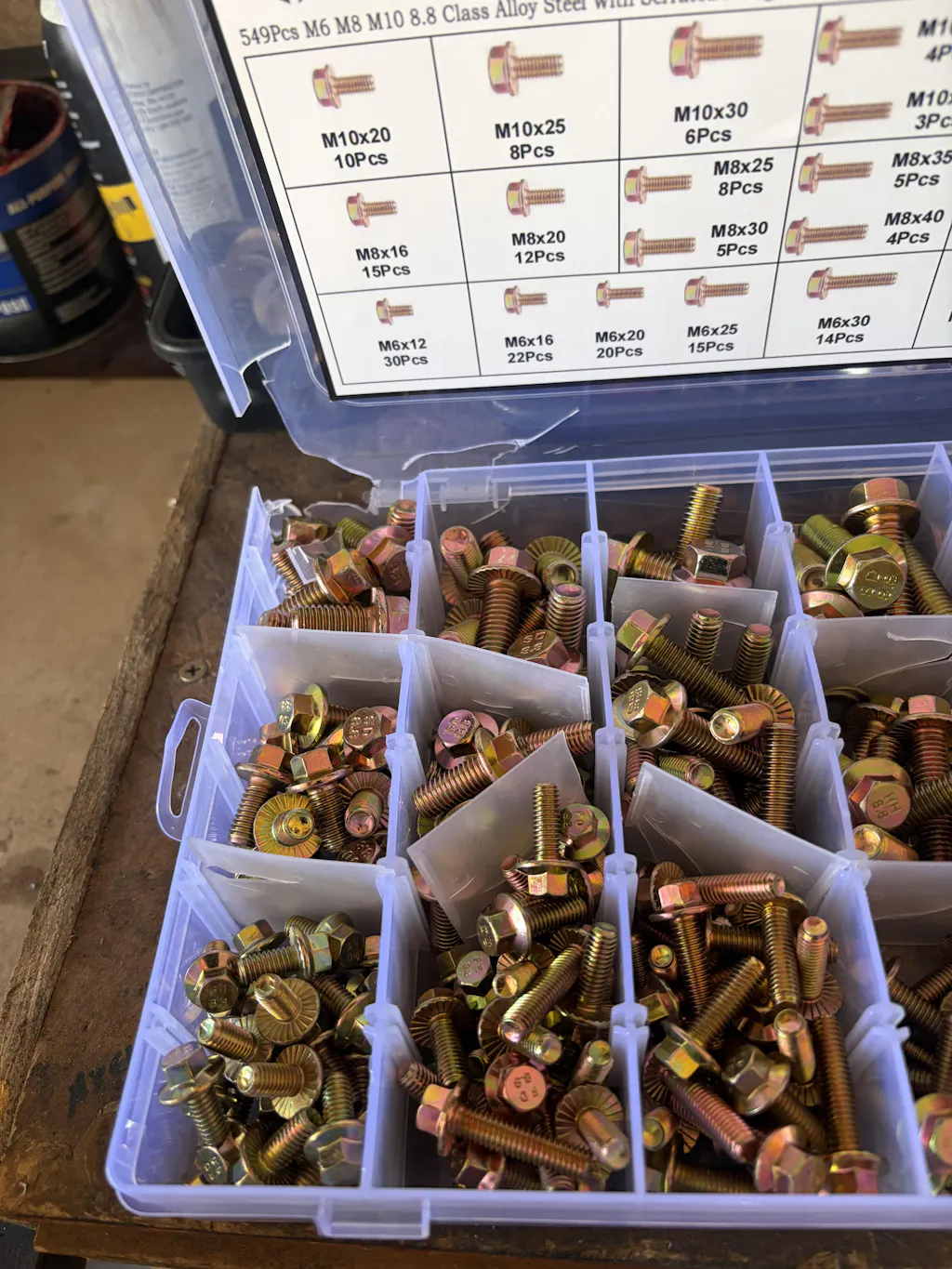

The chain is fine...but I ordered the wrong size. Nine links of the chain I ordered equals six of the size I wanted. My error...
How can I straighten out the springs? I can't use them coil uo as is.
Deine Zahlungsinformationen werden sicher verarbeitet. Wir speichern keine Kreditkartendaten und haben auch keinen Zugang zu deinen Kreditkartendaten.
Get fitment advice & recommendations
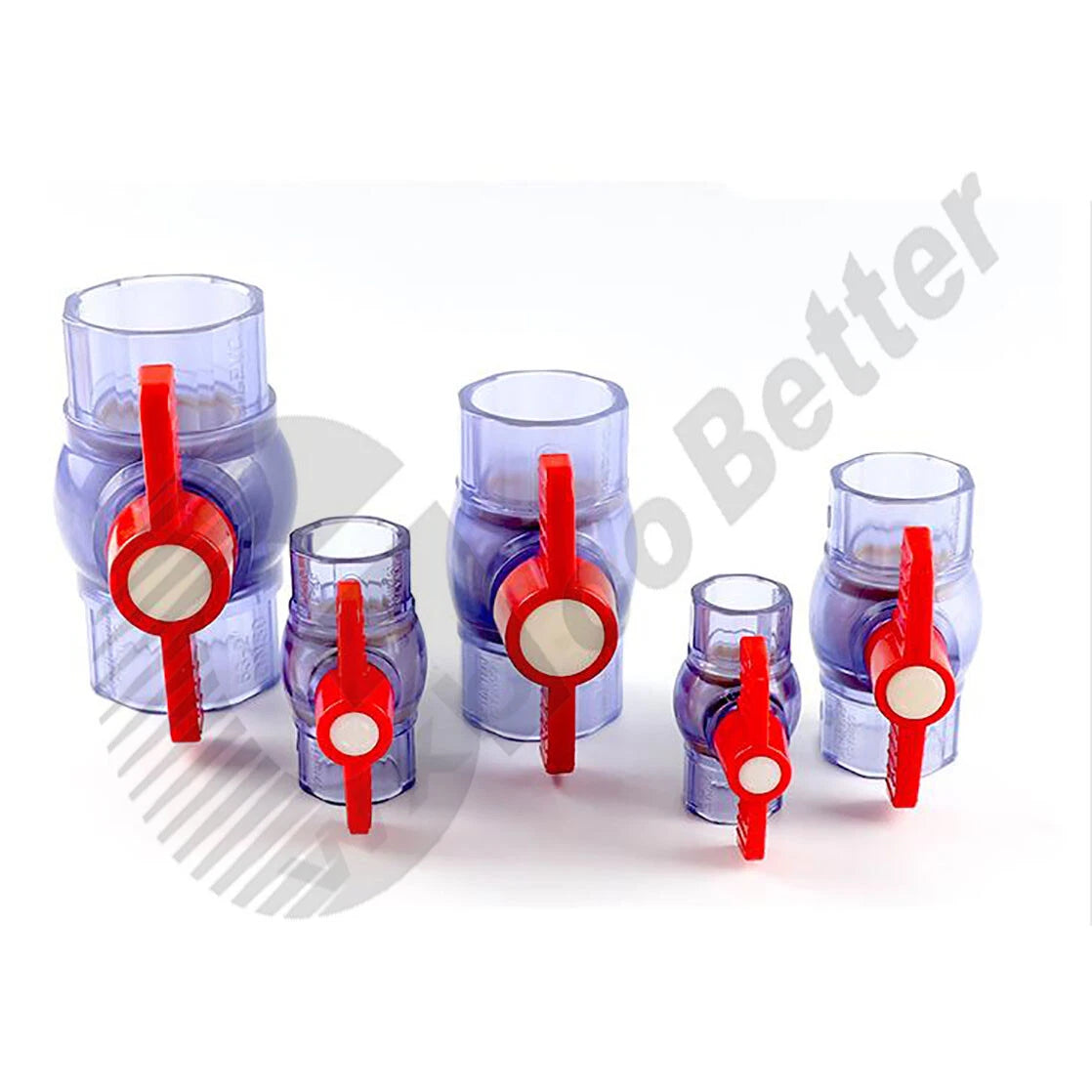
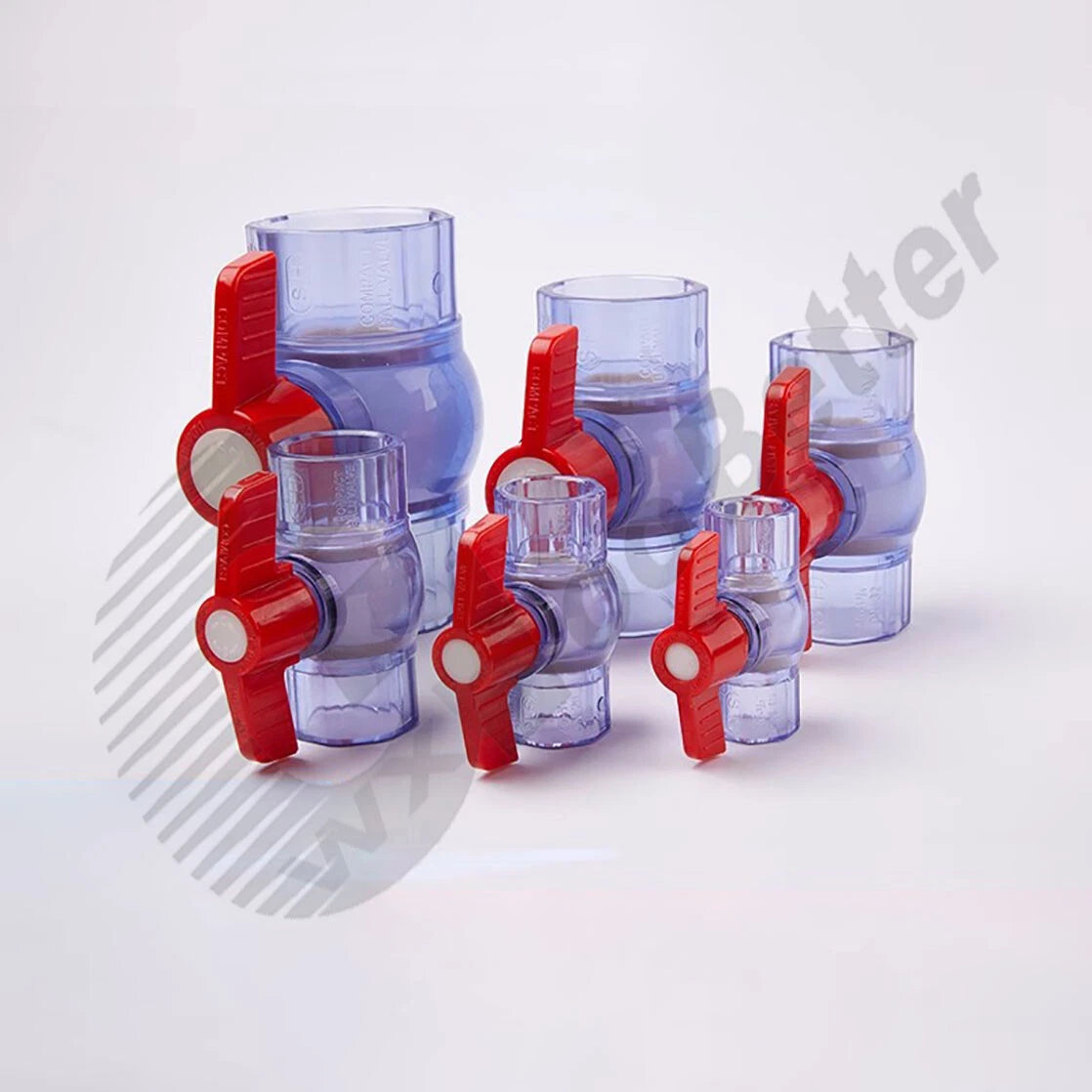
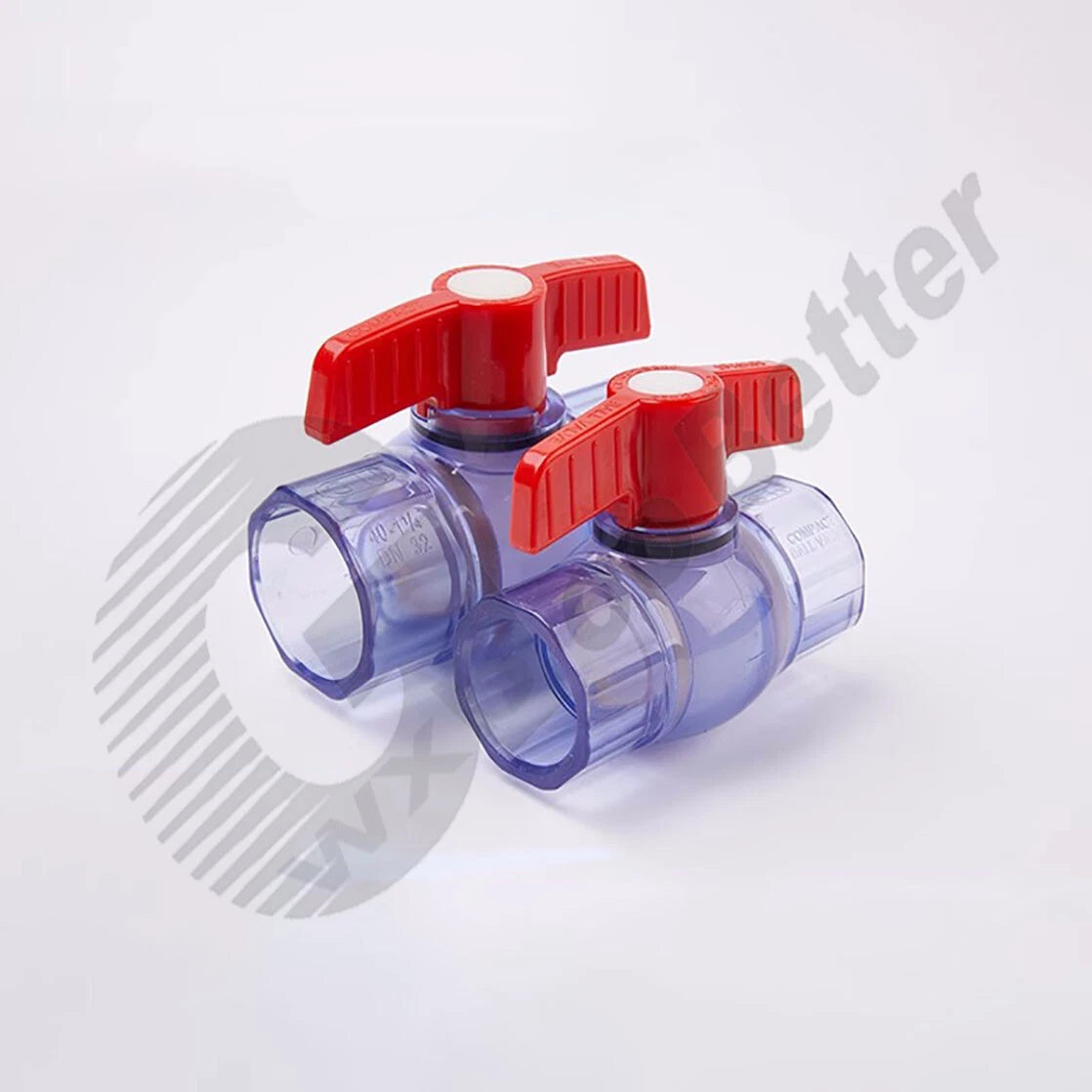
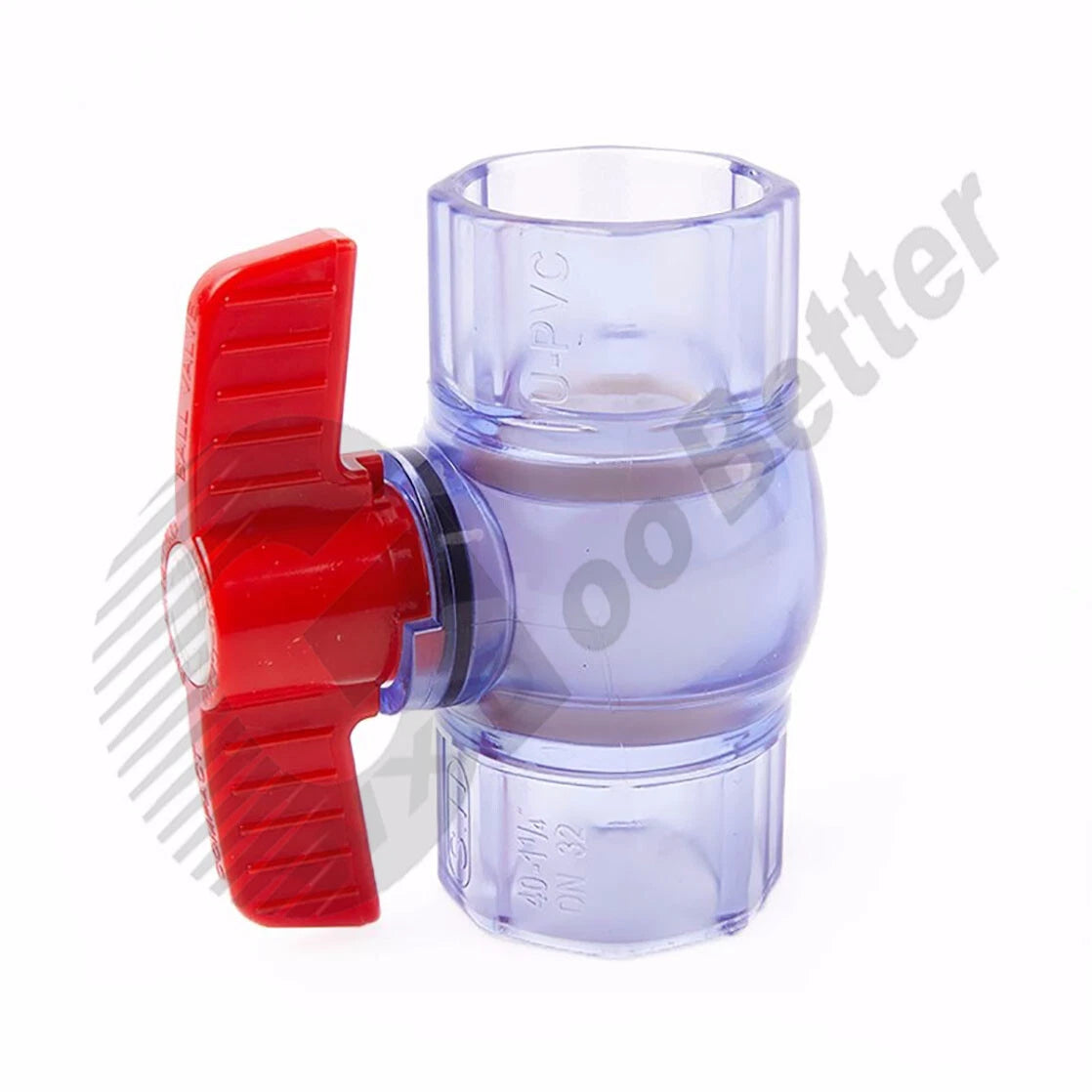
Struggling to find a ball valve that lets you visually confirm the open or closed position without guesswork? DIY plumbers, irrigation installers, and pool system builders need a valve that combines transparent visibility with dependable shut-off performance. These clear UPVC ball valves are engineered for exactly that — giving you instant visual feedback and leak-free control every time.
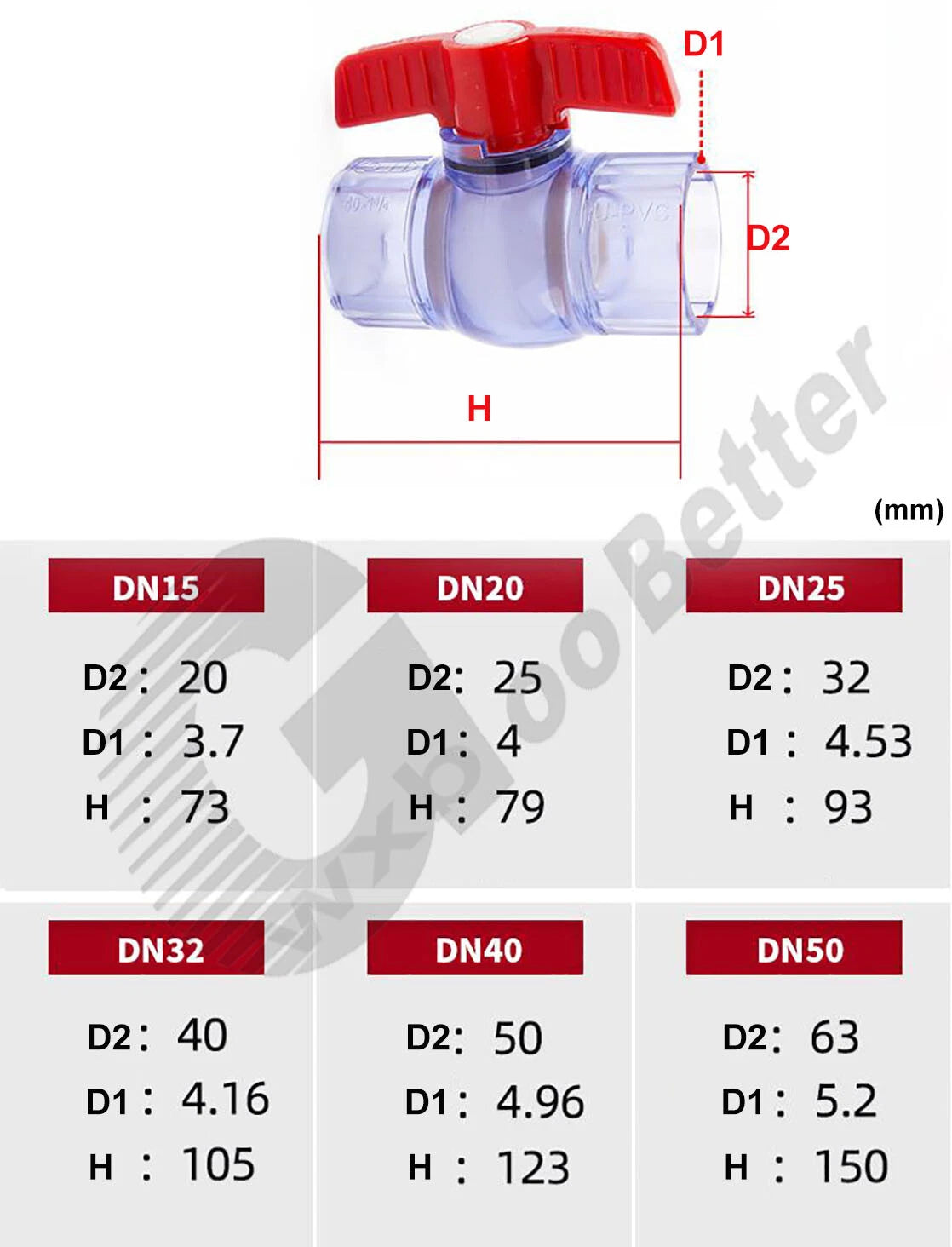
Each valve is constructed from rigid unplasticized PVC (UPVC) with a transparent body, allowing you to see flow status at a glance. Available in six interior diameter sizes — 20mm (¾"), 25mm (1"), 32mm (1¼"), 40mm (1½"), 50mm (2"), and 63mm (2½") — these fittings cover a wide range of residential and light commercial pipe systems. The full-bore ball design minimizes pressure drop across the valve.
Typical applications include DIY home water supply shut-off valves, drip irrigation zone control, aquarium and pond plumbing, swimming pool and spa pipework, and chemical-resistant fluid handling lines where metal corrosion is a concern.
| Material | UPVC (Unplasticized Polyvinyl Chloride) |
|---|---|
| Body Style | Transparent / Clear |
| Valve Type | Full-Bore Ball Valve |
| Operation | Quarter-Turn (90°) Lever Handle |
| End Connection | Solvent-Weld (Cement) Socket Both Ends |
| Interior Diameter (ID) | 20mm / 25mm / 32mm / 40mm / 50mm / 63mm (see variant options) |
| Approximate Inch Equivalent | ¾" / 1" / 1¼" / 1½" / 2" / 2½" |
| Working Pressure | See variant options |
| Temperature Range | 0°C – 60°C (32°F – 140°F) typical for UPVC |
| Fluid Compatibility | Cold water, pool water, irrigation water, mild chemicals |
| Color | Clear body with blue/grey lever handle |
| Quantity per Order | 1 piece per unit |
Match the valve's interior diameter (ID) to your pipe's interior diameter. Common residential cold-water supply lines use 20mm (¾") or 25mm (1") pipe. Irrigation mains and pool return lines typically use 32mm–50mm. For large-bore pool or commercial irrigation headers, choose 63mm (2½"). If unsure, measure the outside diameter (OD) of your pipe and subtract the wall thickness to get the ID, or check your pipe's printed specification.
UPVC ball valves are rated for typical residential mains pressure (generally up to 10 bar / 145 psi at cold temperatures). Actual pressure rating varies by size — larger diameters have lower pressure ratings. Always verify the working pressure specification for your chosen size against your system's operating pressure before installation.
No. UPVC is highly resistant to chlorine, bromine, and the pH ranges used in standard pool and spa water treatment. Unlike brass or iron valves, UPVC will not rust, scale, or leach metals into pool water, making it a reliable long-term choice for pool plumbing circuits.
These clear UPVC ball valves are designed for cold and ambient-temperature water applications, typically rated up to 60°C (140°F). They are not recommended for continuous hot water supply lines above this temperature. For hot water applications, consider CPVC or brass ball valves instead.
These valves use metric interior diameter sizing (20mm–63mm). While metric and Schedule 40 nominal sizes are often close, they are not always identical. For example, a 25mm metric valve closely matches a 1" Schedule 40 pipe, but you should verify the pipe OD and socket depth before cementing. Using a dry-fit test before applying solvent cement is always recommended.
Cut the pipe square, deburr the end, and dry-fit to confirm alignment. Apply UPVC primer to both the pipe end and valve socket, then apply solvent cement evenly. Insert the pipe with a slight twist and hold for 30 seconds. Allow the joint to cure for at least 15 minutes before handling and 24 hours before pressurizing. Always follow the cement manufacturer's cure time instructions.
The transparent body lets you visually confirm whether the valve is open or closed and whether fluid is flowing — without relying solely on the lever position. This is especially useful in multi-valve irrigation manifolds, aquarium systems, and pool equipment rooms where quick visual diagnostics save time during troubleshooting.