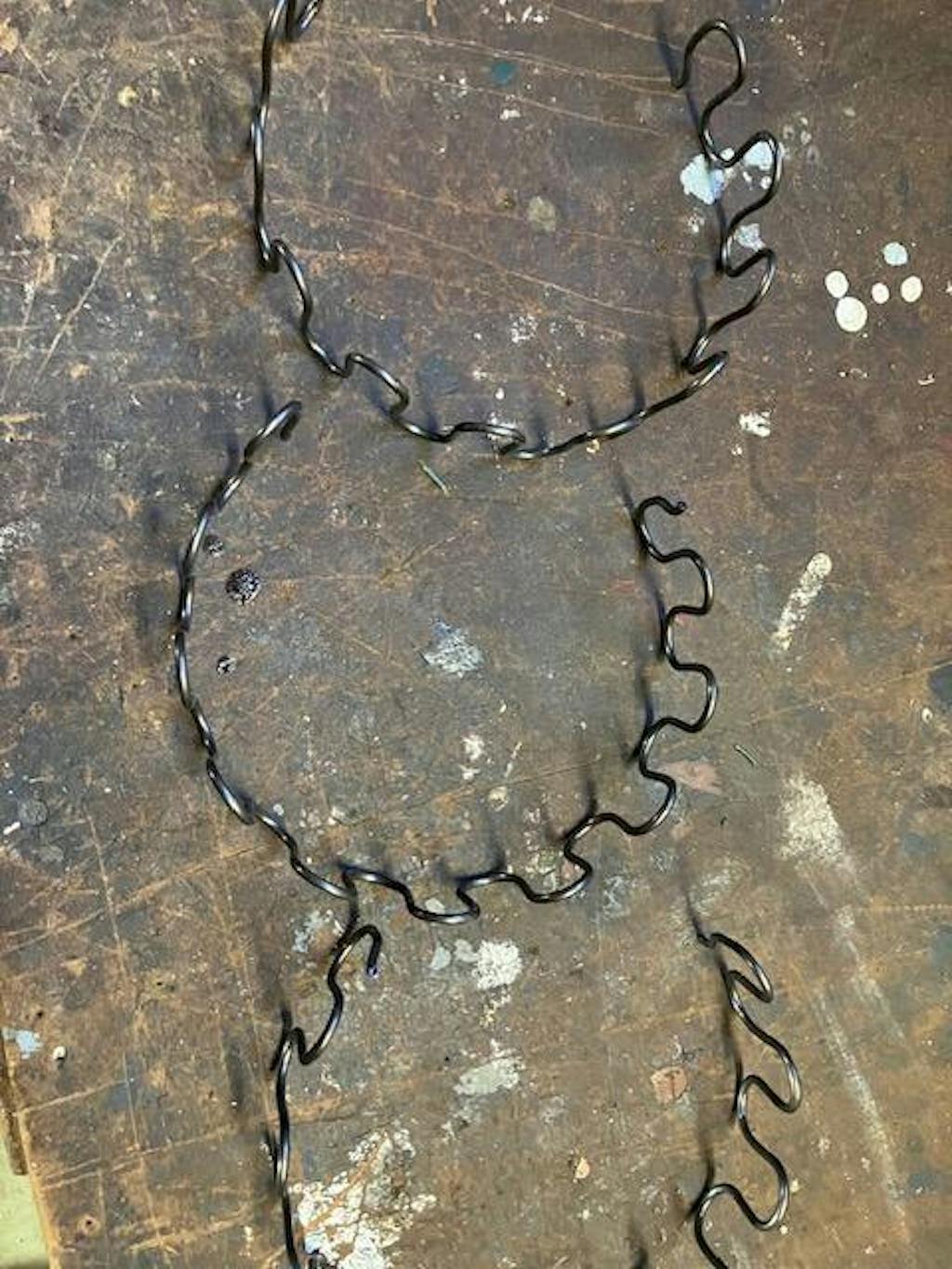
The chain is fine...but I ordered the wrong size. Nine links of the chain I ordered equals six of the size I wanted. My error...
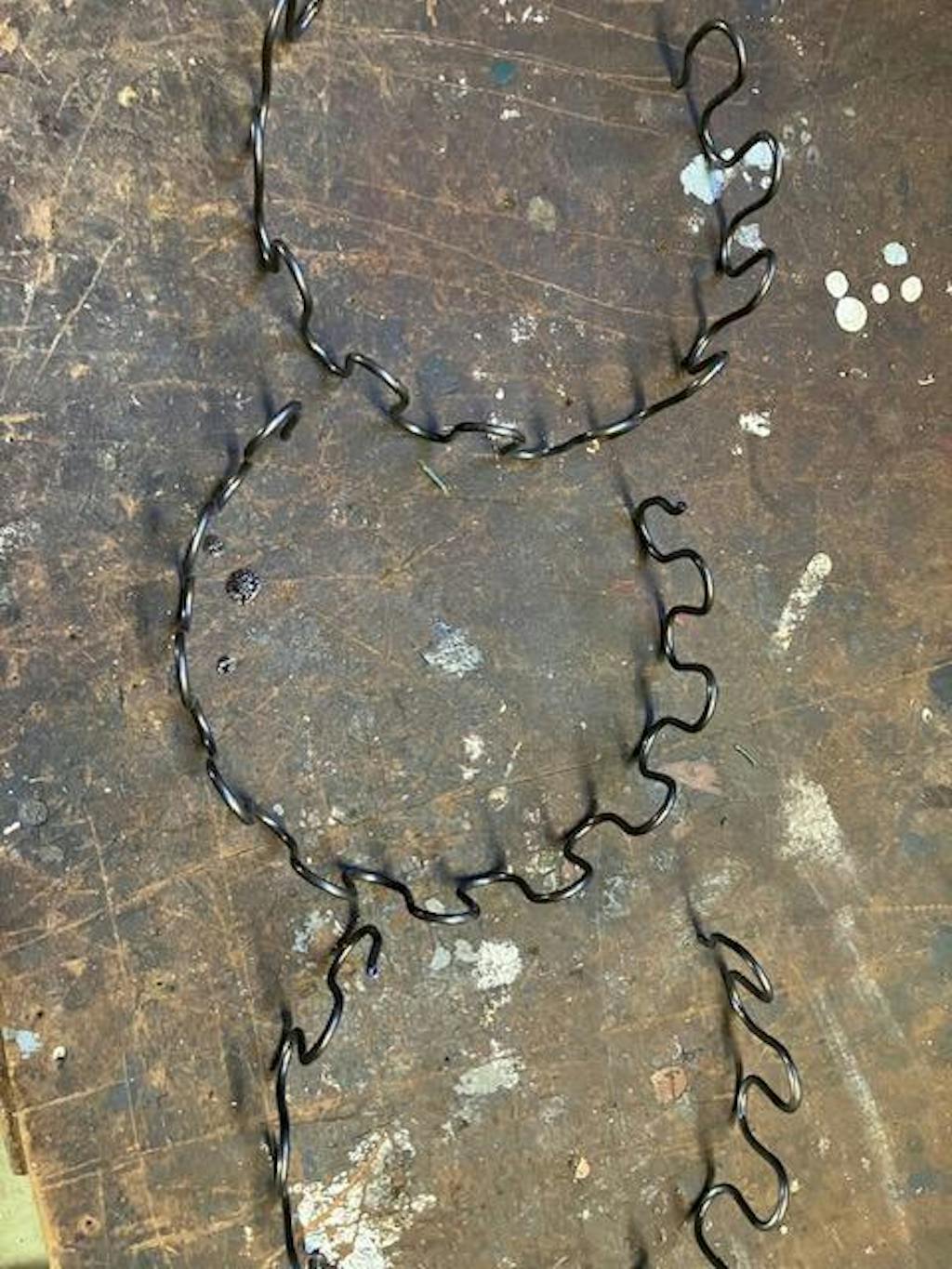
How can I straighten out the springs? I can't use them coil uo as is.
Deine Zahlungsinformationen werden sicher verarbeitet. Wir speichern keine Kreditkartendaten und haben auch keinen Zugang zu deinen Kreditkartendaten.
Get fitment advice & recommendations
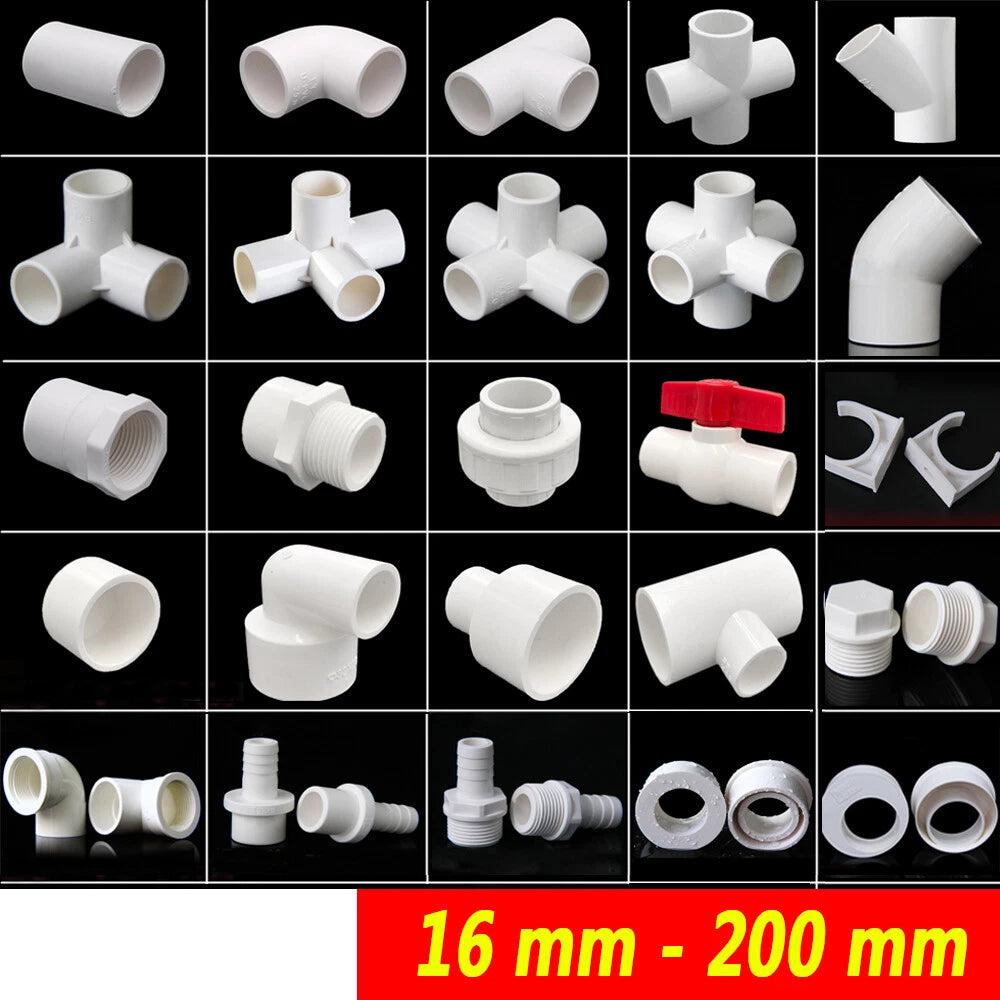
When a leaking joint or a missing fitting brings your irrigation, drainage, or water-supply project to a halt, you need a complete, compatible range of white PVC adhesive fittings you can trust. Whether you are a homeowner tackling a garden irrigation upgrade, a tradesperson running conduit, or a maker building a custom fluid-handling rig, this comprehensive fitting collection covers every junction, direction change, and diameter transition in a single product listing.
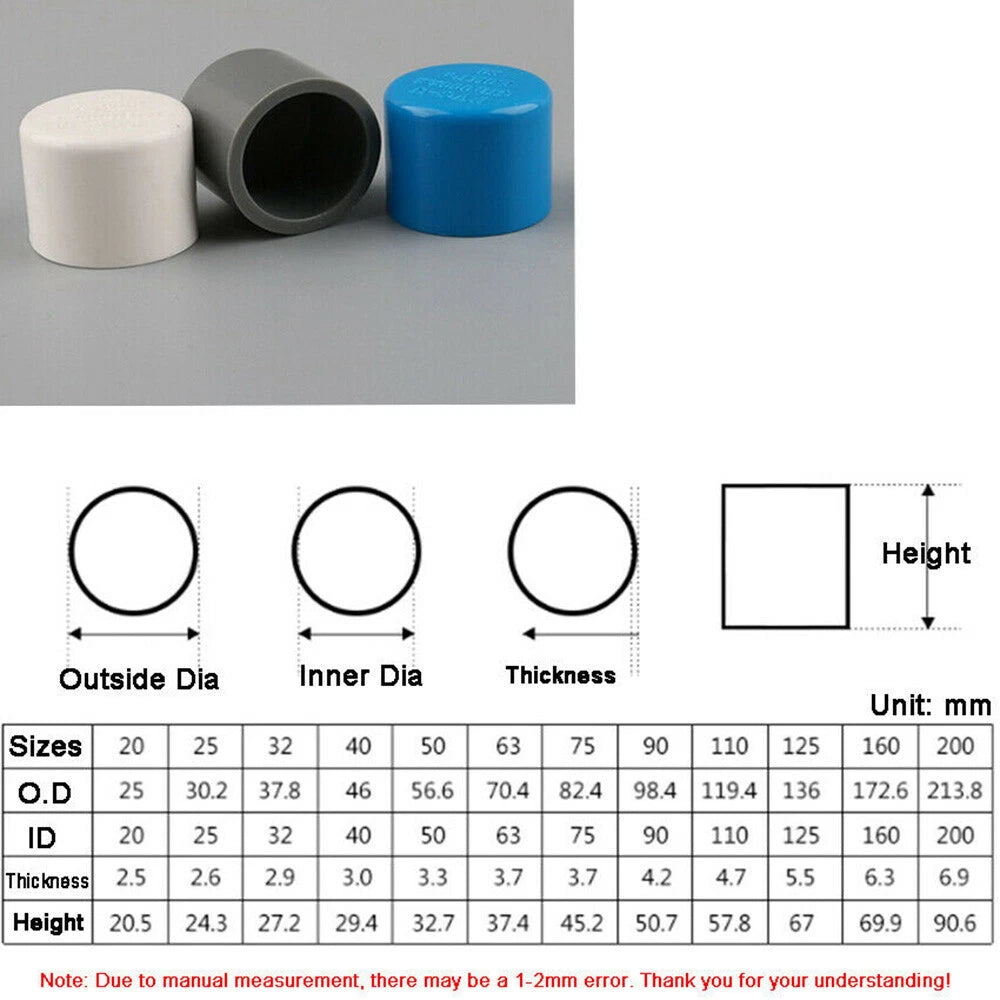
Each fitting is manufactured from rigid white PVC (polyvinyl chloride) and is designed for solvent-cement (adhesive) assembly — no threads to strip, no compression rings to lose. The range spans nominal pipe diameters from 20 mm (~¾ in) up to 75 mm (~3 in), with wall thickness and socket depth sized to match standard Schedule-equivalent PVC pipe. Models include straight sleeves, reducer sleeves, 45° and 90° elbows, reducer elbows, tees, reducer tees, cross sleeves, caps, concentric and eccentric bushings, clamp fittings, ball valves (sleeve and female-thread types), multi-way bends (3-way through 6-way), hose-nozzle adaptors, male-thread nipples, and male-thread plugs.
Typical applications include residential and commercial cold-water supply lines, garden drip and sprinkler irrigation systems, rainwater harvesting pipework, aquaculture and pond filtration loops, and electrical conduit runs where a smooth white finish is required. Long-tail use cases such as "PVC reducer sleeve for drip irrigation" or "white 90-degree elbow for pond pump" are all covered within this single listing.
Caps, sleeves, reducer sleeves, 45°/90° elbows, reducer elbows, tees, reducer tees, cross sleeves, multi-way bends, ball valves, bushings, clamp fittings, hose nozzles, thread nipples, and plugs — all in a single, easy-to-navigate product.
Seven nominal diameters (20, 25, 32, 40, 50, 63, 75 mm) with reducer variants spanning cross-diameter combinations, so you can step up or step down without hunting for a separate product.
Socket-spigot design accepts standard PVC solvent cement for a fast, permanent, leak-resistant bond — no special tools, clamps, or heat required.
UV-stabilised rigid PVC resists corrosion, scale build-up, and chemical attack from common fertilisers and pool chemicals, making these fittings suitable for both indoor and outdoor cold-water applications.
Sleeve-type and female-thread ball valves (½ in to 2½ in) are included in the range, allowing you to add shut-off points anywhere in the system without sourcing a separate valve product.
Hose-nozzle adaptors (20–25 mm sleeve × 5–20 mm barb) and male-thread nipples bridge the gap between rigid PVC pipe and flexible hose, making these fittings ideal for drip irrigation, pond pumps, and garden water features.
| Material | Rigid PVC (Polyvinyl Chloride) |
|---|---|
| Color / Finish | White |
| Connection Method | Solvent cement (adhesive) socket |
| Pipe Diameter Range | 20 mm – 75 mm (~¾ in – ~3 in) |
| Available Models | Cap, Sleeve, Reducer Sleeve, Sleeve × Male Thread, Male Thread Nipple, Tee 45°, Tee 90°, Reducer Tee, 45° Elbow, 90° Elbow, 3/4/5/6-Way Bend, 90° Elbow × Female Thread, Reducer 90° Elbow, Cross Sleeve, Sleeve × Hose Nozzle, Male Thread × Hose Nozzle, Ball Valve Sleeve, Female Thread Ball Valve, Concentric Bushing, Eccentric Bushing, Clamp Fitting, Male Thread Plug |
| Thread Standard (threaded models) | BSP (British Standard Pipe) — ½ in to 2½ in |
| Hose Barb Sizes (nozzle models) | 5, 8, 10, 12, 14, 16, 18, 20 mm |
| Temperature Rating | Cold water only (typically up to 60 °C / 140 °F — confirm with solvent cement manufacturer) |
| Pressure Rating | See variant options |
| Wall Thickness | See variant options |
| Certifications | See variant options |
| Quantity per Order | 1 piece (single unit) |
Match the fitting's nominal diameter to your pipe's outside diameter (OD). For example, a 20 mm fitting is designed for pipe with a 20 mm OD. If you are stepping between two pipe sizes — say from a 32 mm main to a 20 mm branch — select a reducer sleeve or reducer tee with the corresponding size combination (e.g., 32 × 20 mm). When in doubt, measure your existing pipe OD with calipers before ordering.
No. These are rigid white PVC fittings intended for cold-water applications only. PVC begins to soften at temperatures above approximately 60 °C (140 °F), and standard PVC solvent cement joints are not rated for continuous hot-water or steam service. For hot-water lines, consider CPVC or copper fittings instead.
Use a PVC-rated solvent cement (also called PVC glue or PVC primer + cement). Apply PVC primer to both the pipe spigot and the fitting socket, then apply solvent cement and push the pipe firmly into the socket with a slight twist. Hold for 30 seconds and allow the joint to cure per the cement manufacturer's instructions (typically 15–30 minutes before handling, 24 hours before pressure testing).
Yes. The rigid white PVC compound used in these fittings includes UV stabilisers that resist degradation from sunlight, making them suitable for above-ground garden irrigation, rainwater collection, and pond pipework. For long-term outdoor installations in high-UV climates, painting the fittings with a water-based exterior paint can further extend service life.
A properly made solvent-cement joint is as strong as or stronger than the pipe itself — the cement chemically fuses the fitting socket and pipe spigot into a single monolithic piece. Threaded connections, by contrast, rely on mechanical engagement and sealant tape, which can loosen over time. For permanent, buried, or pressurised runs, solvent-cement joints are generally preferred.
These fittings are designed for rigid PVC pipe with matching OD dimensions. Flexible PVC pipe with the same OD can sometimes be solvent-cemented, but the bond quality depends on the flexible PVC formulation — test a sample joint first. Standard polyethylene (PE) or HDPE pipe is not compatible with PVC solvent cement; use compression or barbed fittings for PE pipe instead.
A concentric bushing has both the inlet and outlet centred on the same axis, so the pipe centreline stays aligned — ideal for vertical runs or where alignment is not critical. An eccentric bushing offsets the smaller outlet to one side, keeping the bottom (or top) of both pipes flush — commonly used in horizontal drain lines to prevent air pockets and ensure self-draining flow.
Choose the Ball Valve Sleeve when both sides of your system use plain PVC pipe that will be solvent-cemented directly into the valve sockets — this gives a fully glued, permanent installation. Choose the Female Thread Ball Valve when one or both sides need to connect to a male-threaded fitting, pump port, or equipment inlet, allowing the valve to be unscrewed and replaced without cutting the pipe.