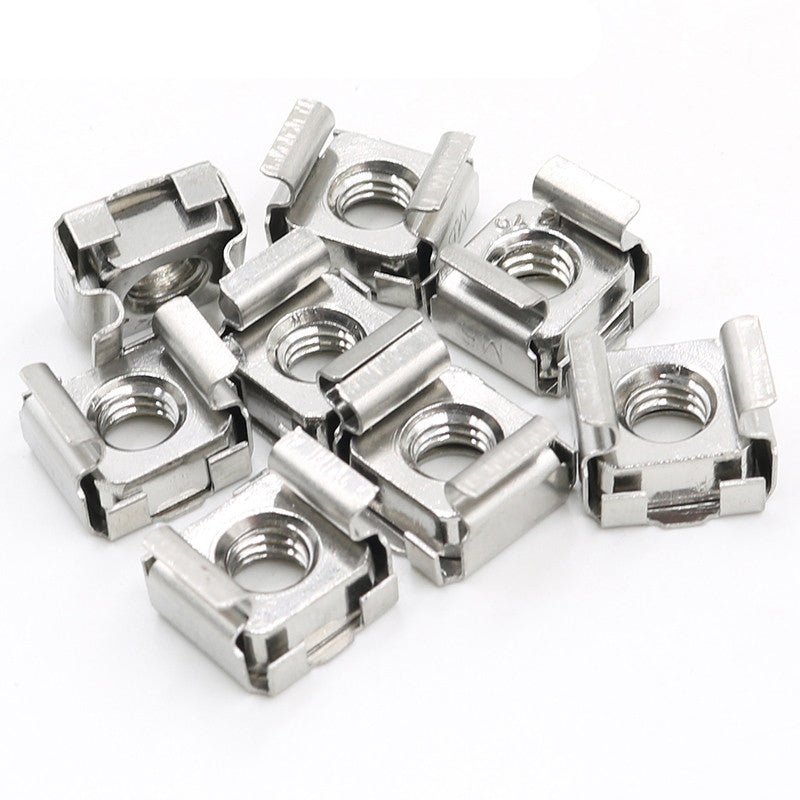
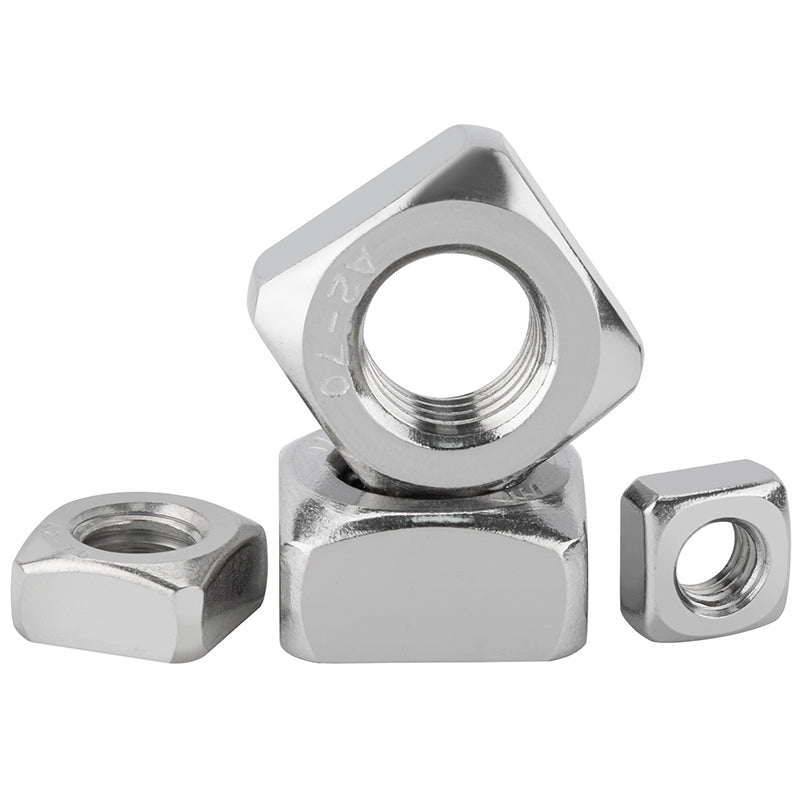
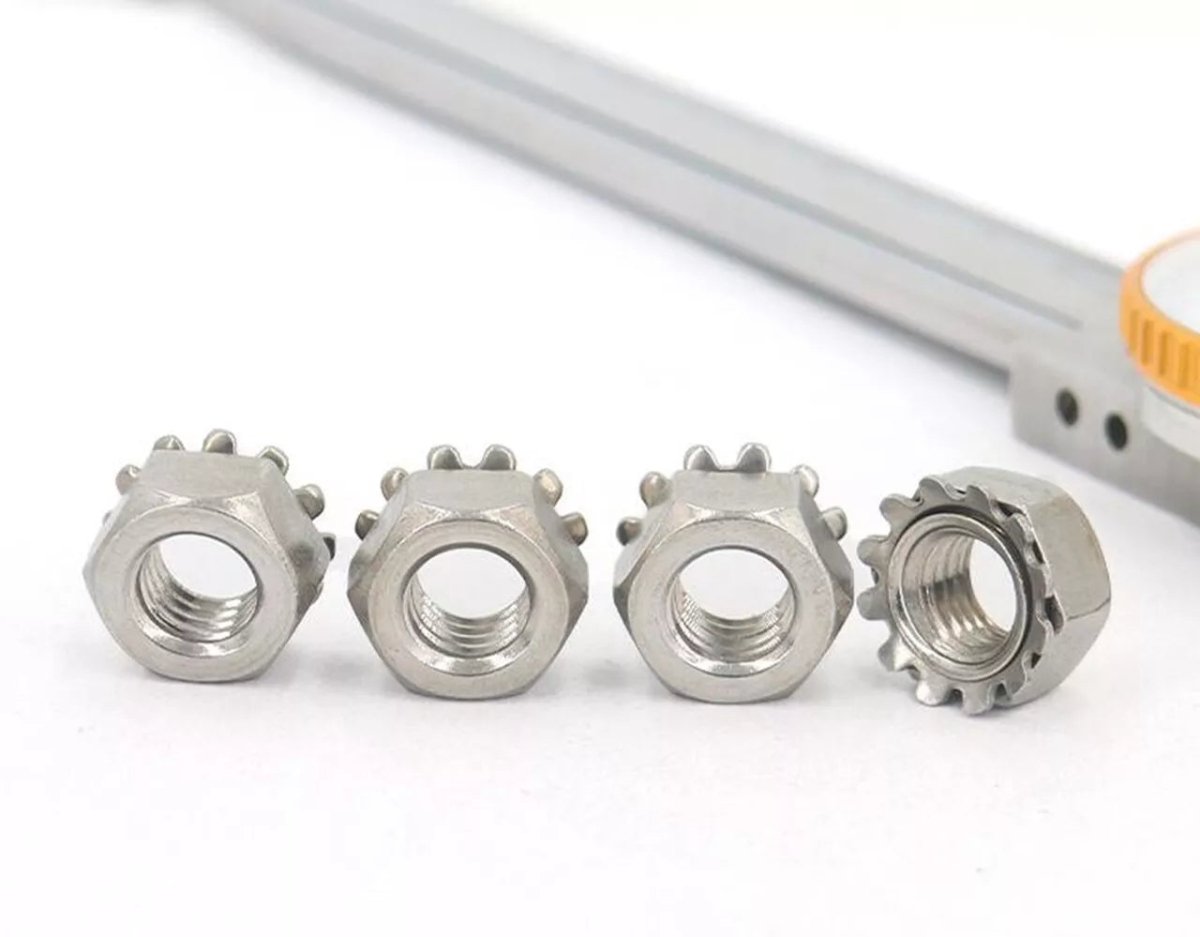
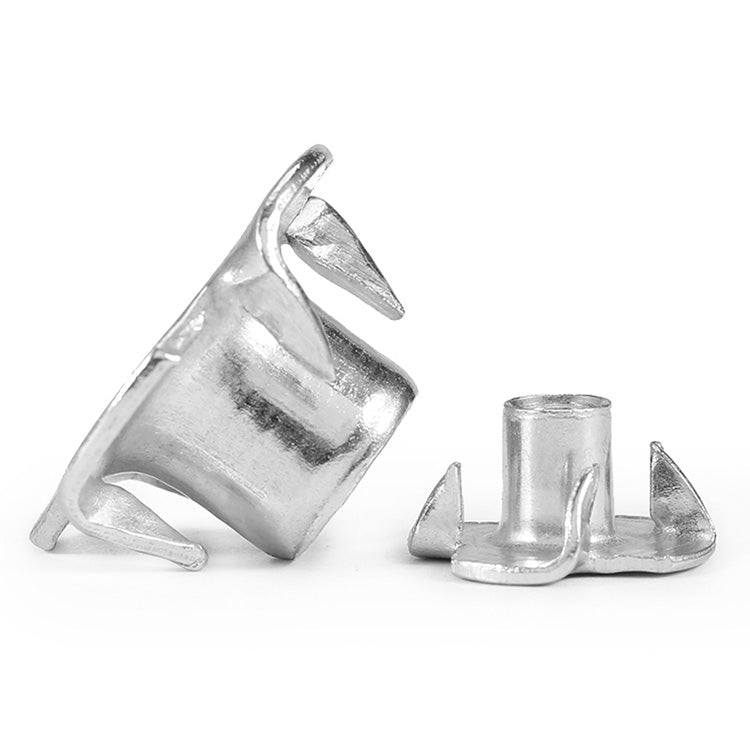
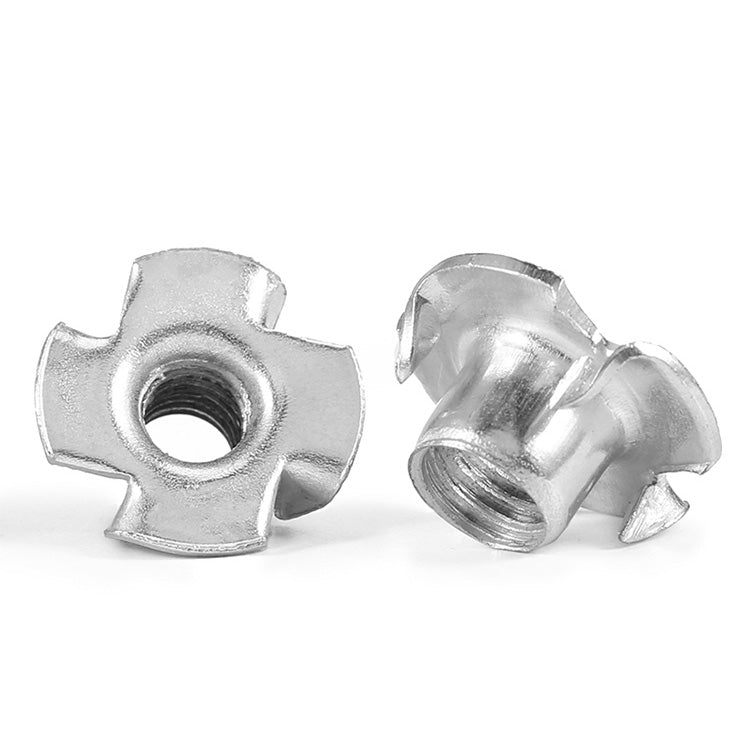
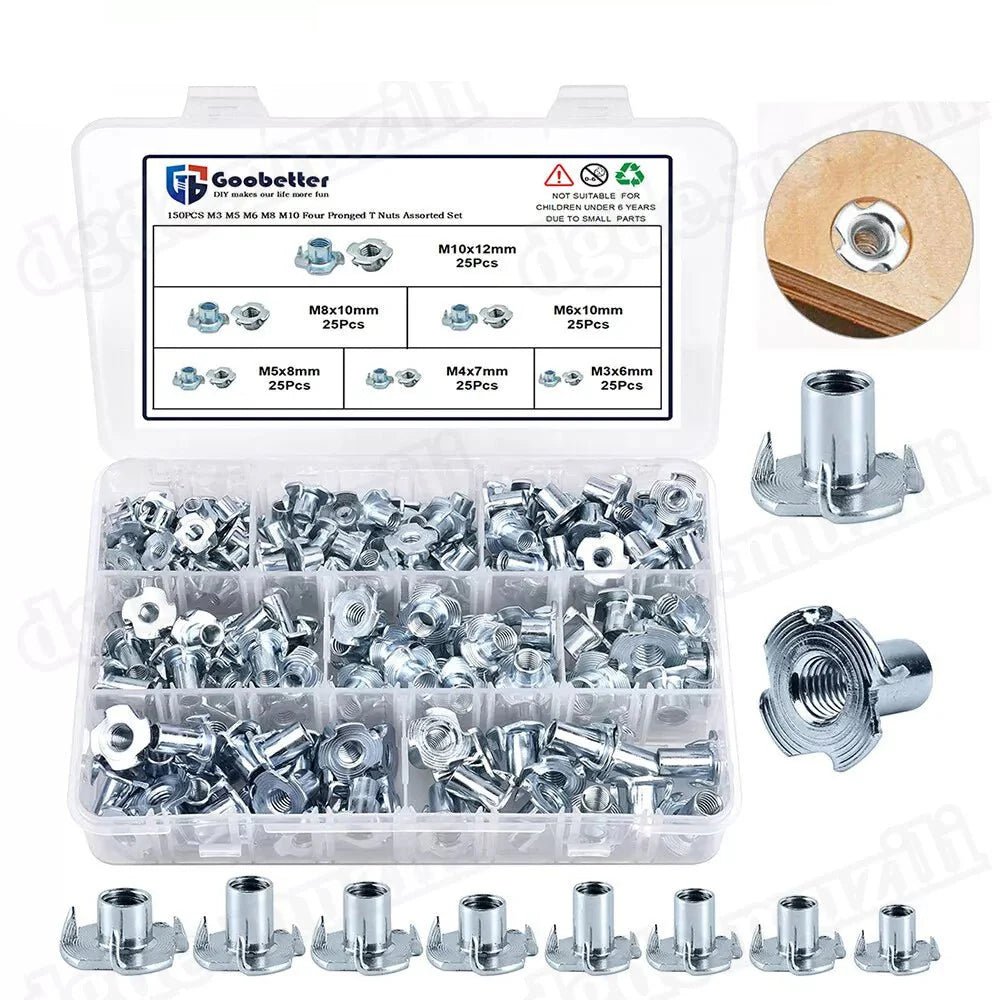
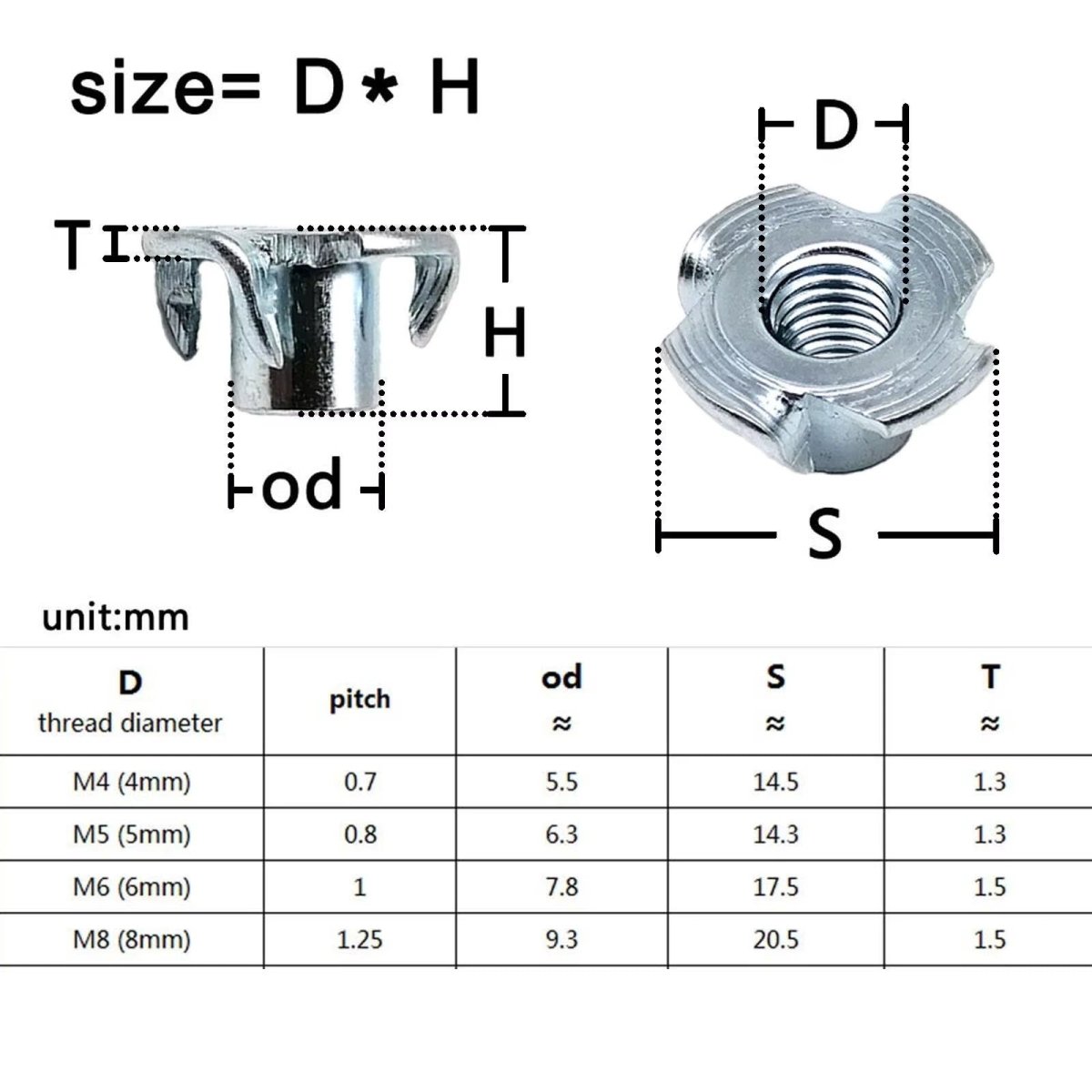
T-Slot Four-Prong Nuts for Vibration-Resistant Fastening

🔧

Installation Torque

15-45 N·m Range
(Tool compatibility: 3/8"-1/2" drive)

📏

Dimensional Accuracy

±0.15mm prong spacing
(ISO 2768-m standard)

⚖️

Load Capacity

Static: 2500N
Dynamic: 800N@10Hz

2 products

Showing 1 - 2 of 2 products

Showing 1 - 2 of 2 products
View
Rivet Nuts | Threaded Inserts Guide | HomeDIYer

What Are Rivet Nuts?

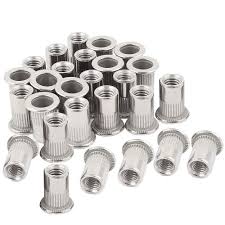
Rivet nuts (also known as threaded inserts or blind nuts) are innovative fasteners that create durable, threaded anchors in materials too thin or fragile for traditional nuts. At HomeDIYer.com, we offer premium rivet nuts in stainless steel, aluminum, and carbon steel, ideal for automotive, construction, and DIY applications. Their unique design allows installation from one side, making them perfect for confined spaces.

🔩 Key features: Vibration-resistant | Corrosion-resistant coatings | Metric/SAE sizing

📋 MATERIAL QUICK MATCH

Stainless steel rivet nuts (304/316) – best for marine, outdoor, and high-humidity environments.
Aluminum rivet nuts – lightweight, non‑magnetic, ideal for electronics, drones, and automotive trim.
Carbon steel (zinc‑plated) – highest tensile strength, cost‑effective for structural steel applications.

How to Install Rivet Nuts: 5-Step Guide

  1. Drill Pilot Hole: Match hole diameter to rivet nut size (see size chart below). Deburr edges for smooth insertion.
  2. Insert Rivet Nut: Thread onto compatible installation tool mandrel until flange contacts tool nose.
  3. Position: Place in pre-drilled hole with flange against material surface; ensure perpendicular alignment.
  4. Compress: Squeeze tool handles firmly until mandrel bottoms out – you'll feel a distinct stop.
  5. Verify: Check thread integrity with bolt test; the rivet nut should not spin or pull out.

⚠️ Critical Tip:

Always use certified tools - improper compression causes thread stripping. For hardened metals, apply lubricant to mandrel. For high‑volume jobs, upgrade to a pneumatic rivet nut gun (HomeDIYer offers pneumatic kits with adjustable stroke).

Rivet Nut Size & Drill Chart

Thread Size Drill Hole Diameter (in) Drill Hole Diameter (mm) Grip Range (in) Flange Diameter (in)
M4 x 0.7 0.187" (3/16") 4.8 mm 0.020" – 0.075" 0.315"
M5 x 0.8 0.218" (7/32") 5.6 mm 0.020" – 0.090" 0.374"
M6 x 1.0 0.250" (1/4") 6.4 mm 0.020" – 0.110" 0.433"
#8-32 0.187" (3/16") 4.8 mm 0.020" – 0.085" 0.312"
#10-24 0.218" (7/32") 5.6 mm 0.030" – 0.110" 0.375"
1/4"-20 0.312" (5/16") 7.9 mm 0.040" – 0.125" 0.500"

Rivet Nut FAQs

Can I install without special tools?

No - proper installation requires mandrel tools. We offer budget-friendly kits starting at $29.99. Manual hand tools work for low‑volume DIY; pneumatic tools are recommended for 200+ installations per day.

Aluminum vs steel rivet nuts?

Aluminum (lightweight/rust-proof) for electronics | Steel (high-strength) for engines/structural loads. Stainless steel provides the best corrosion resistance for outdoor/chemical exposure.

How choose thickness capacity?

Our nuts support 0.5-6mm materials. Use formula: Grip Range = Material Thickness + 25%. For example, 2mm sheet metal needs a rivet nut with grip range that includes 2.0mm to 2.5mm.

Can rivet nuts be used in plastic or fiberglass?

Yes – use “soft set” rivet nuts with larger flanges and shallow knurling. Avoid over‑compression; reduce tool stroke by 30% compared to steel applications.

Are rivet nuts removable?

They are permanent for most applications. To remove, drill out the head or use a rotary tool to split the body. Replace with a new rivet nut in the same hole (slightly larger if damaged).

Top 5 Rivet Nut Applications

  • 🚗 Auto Restoration: Secure panels without welding - withstands engine vibrations
  • 🏭 Sheet Metal Fabrication: Create load-bearing threads in 16-22 gauge steel
  • 🔧 DIY Workshops: Assemble furniture/fixtures with clean finishes
  • ✈️ Aviation Maintenance: FAA-approved variants for aircraft skins
  • 📺 Appliance Repair: Replace stripped threads in washer/dryer drums

🏔️ Outdoor & Marine Equipment: Stainless steel rivet nuts are widely used in boat hatches, RV accessories, and solar panel mounts. Their closed‑end design prevents water ingress.

🚀 Need Bulk Orders? Get 25% off on 1000+ units - Contact our fasteners team

Troubleshooting Common Rivet Nut Issues

🔧 Rivet nut spins in hole: Undersized hole or insufficient knurling. Use a drill size one step smaller or switch to a “plus” series rivet nut with deeper serrations.

🔩 Threads stripped after installation: Over‑compression deformed the threads. Reduce tool stroke and verify grip range matches material thickness.

⚙️ Mandrel won't release: Back the tool off slightly and tap the mandrel with a soft hammer. Apply anti‑seize lubricant to mandrel threads before each run.

Choosing the Right Rivet Nut Installation Tool

🛠️ TOOL COMPARISON
  • Hand lever tool – Best for DIY, up to M6 or 1/4"-20, lightweight, under $40.
  • Ratchet style – Higher leverage, for M8 and 5/16" in steel, ideal for small shops.
  • Pneumatic / Cordless electric – Production environments, adjustable stroke, reduces user fatigue.

HomeDIYer offers a complete starter kit: 200-piece mixed rivet nut assortment + manual lever tool + spare mandrels.

Recently viewed