Small Screw Eyes for Picture Hanging, Frames, and Craft Projects
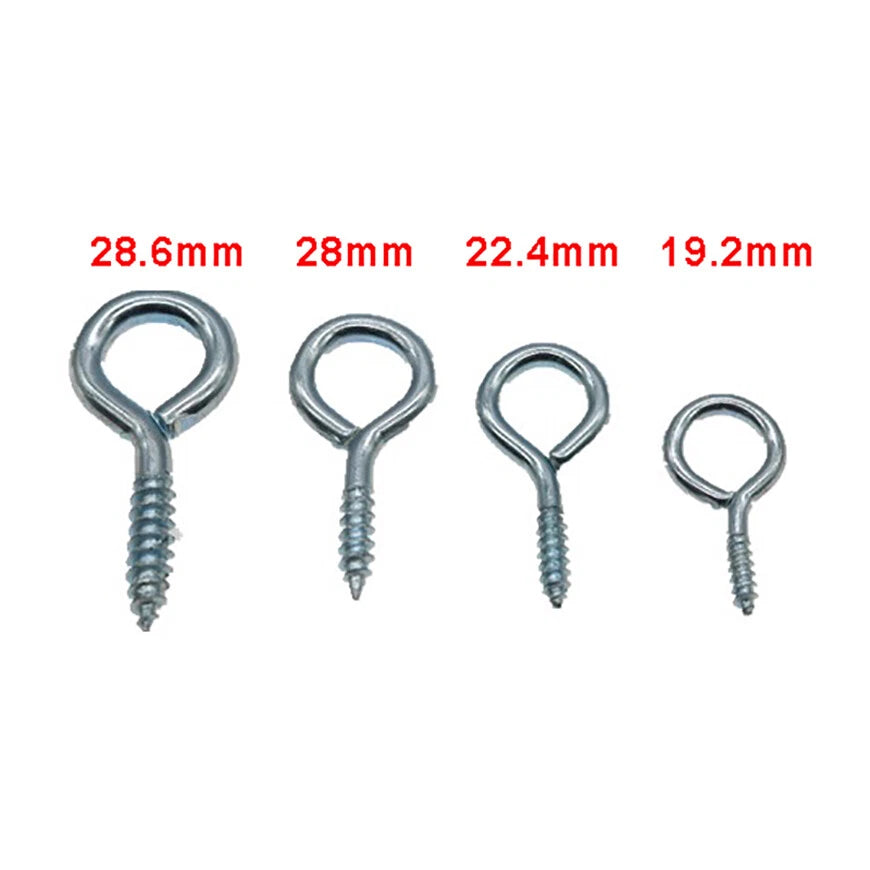
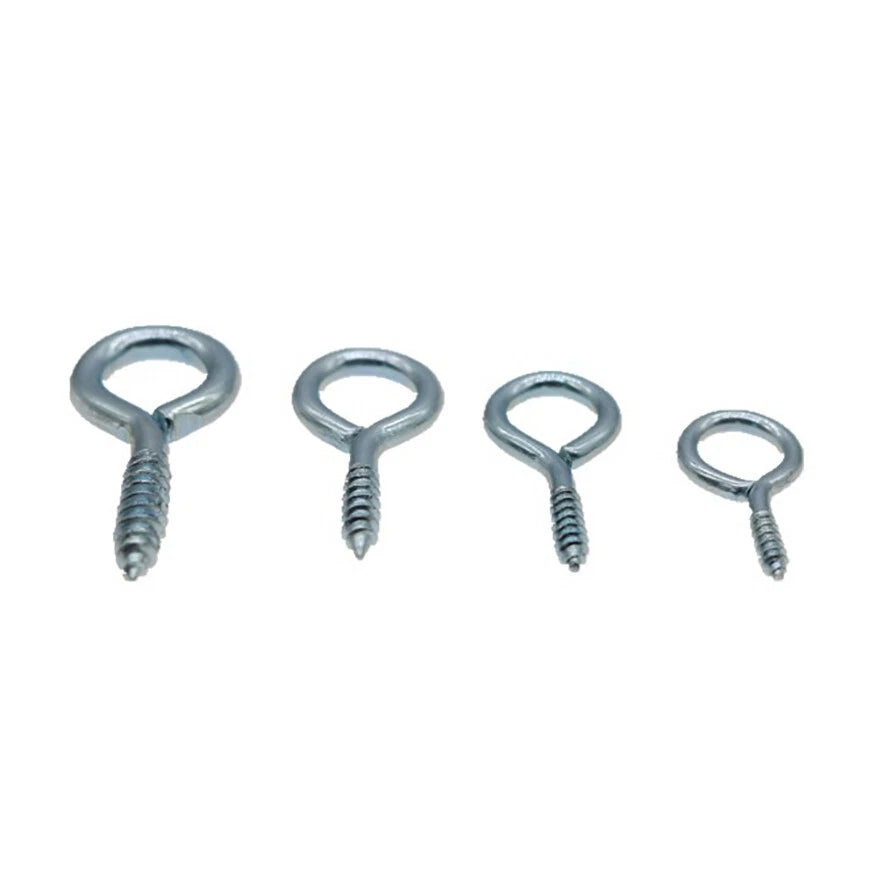
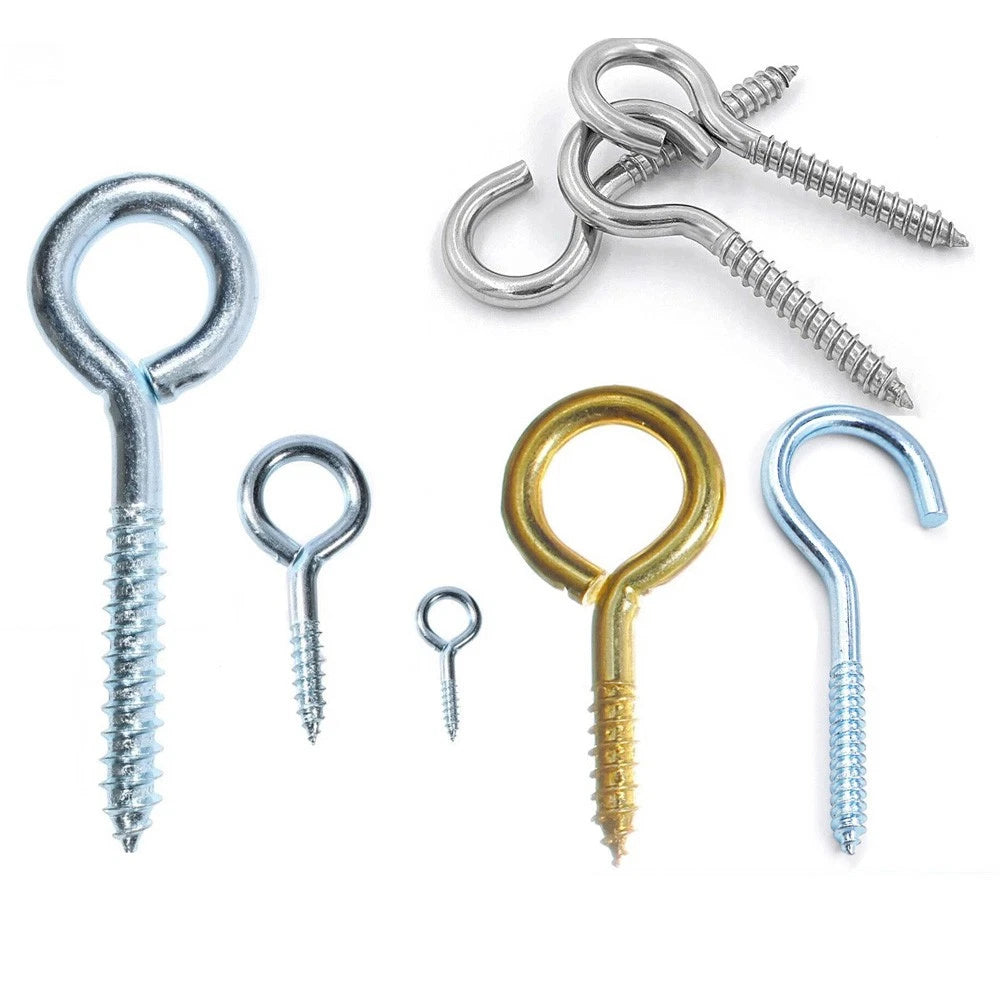
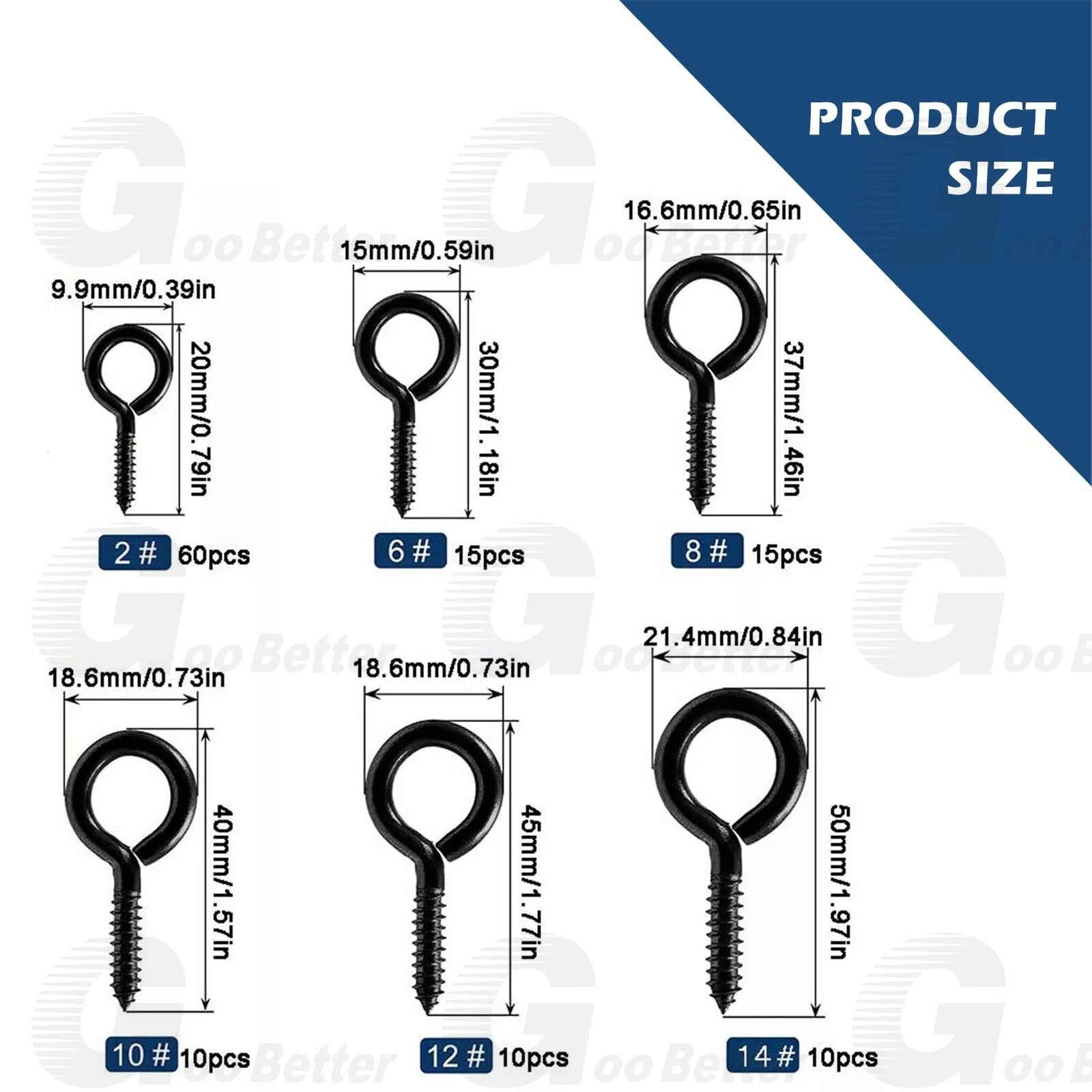
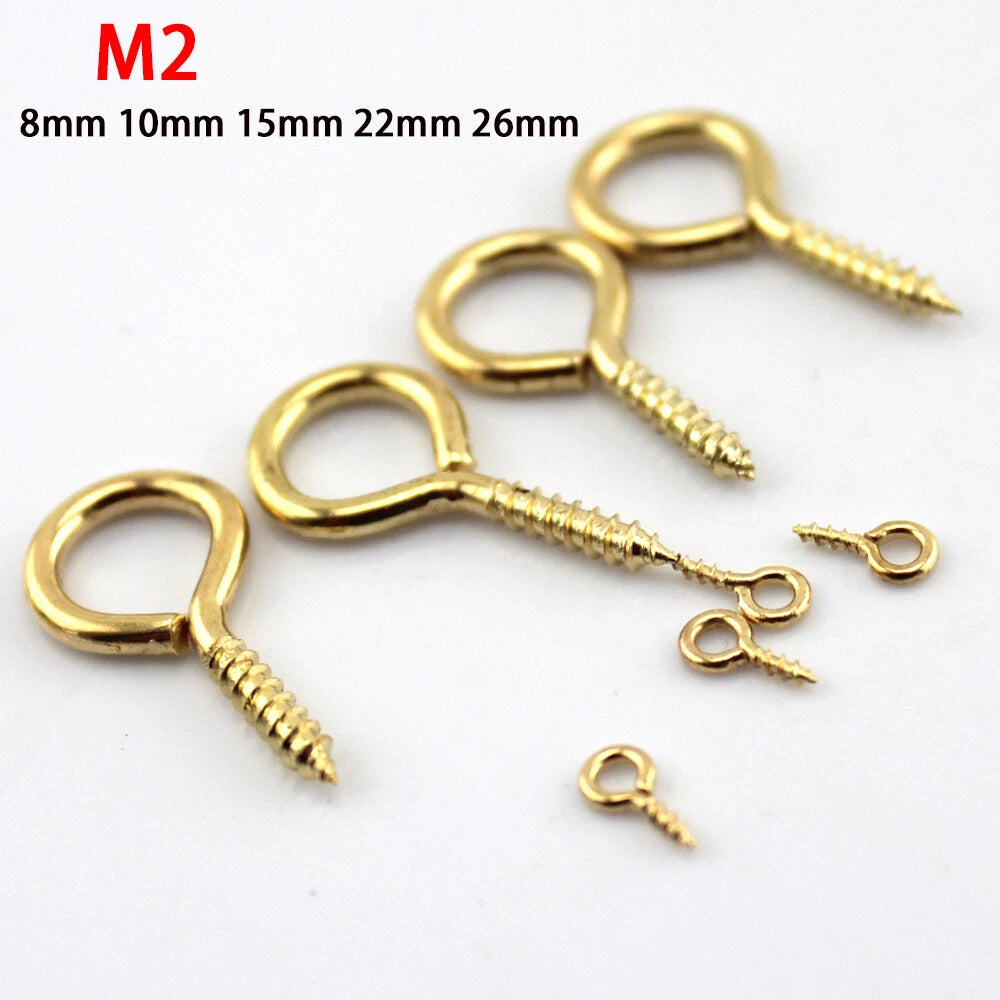
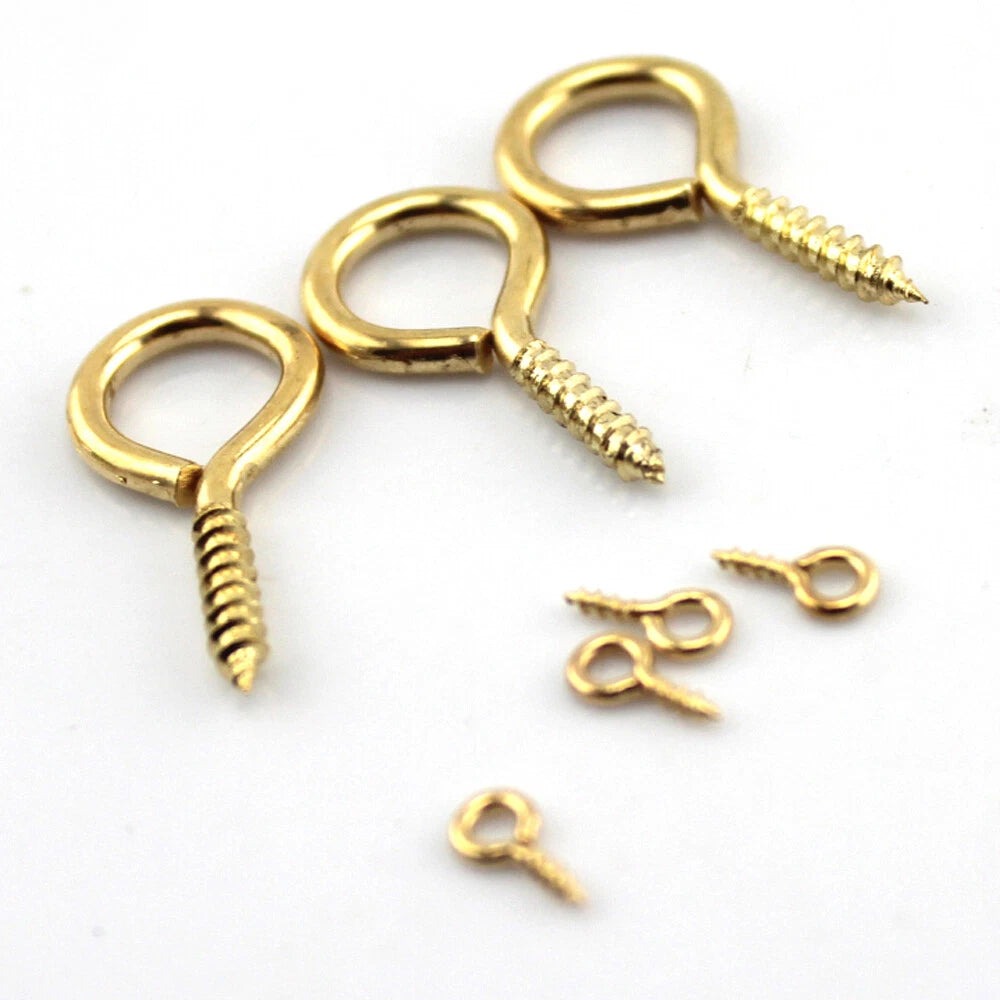
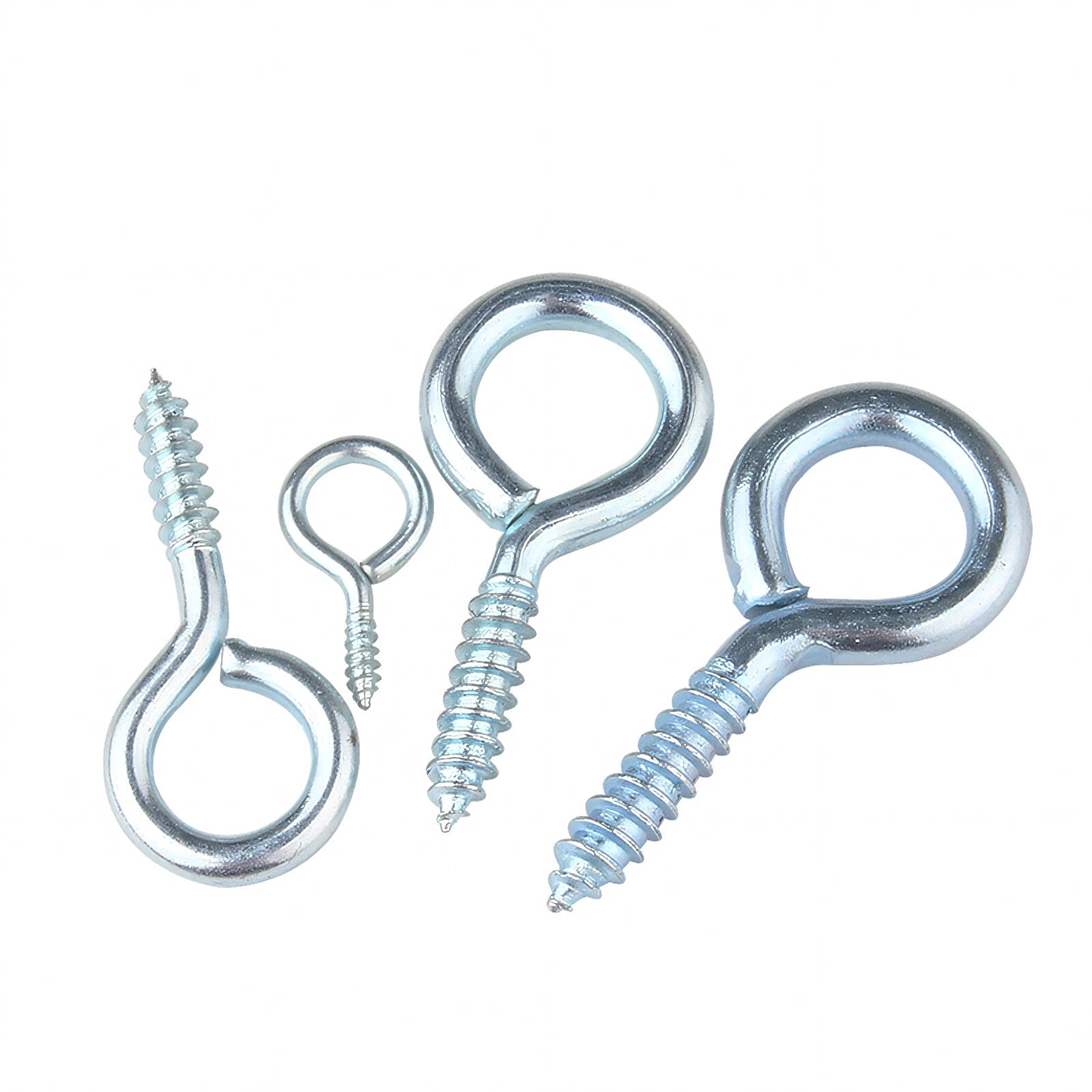
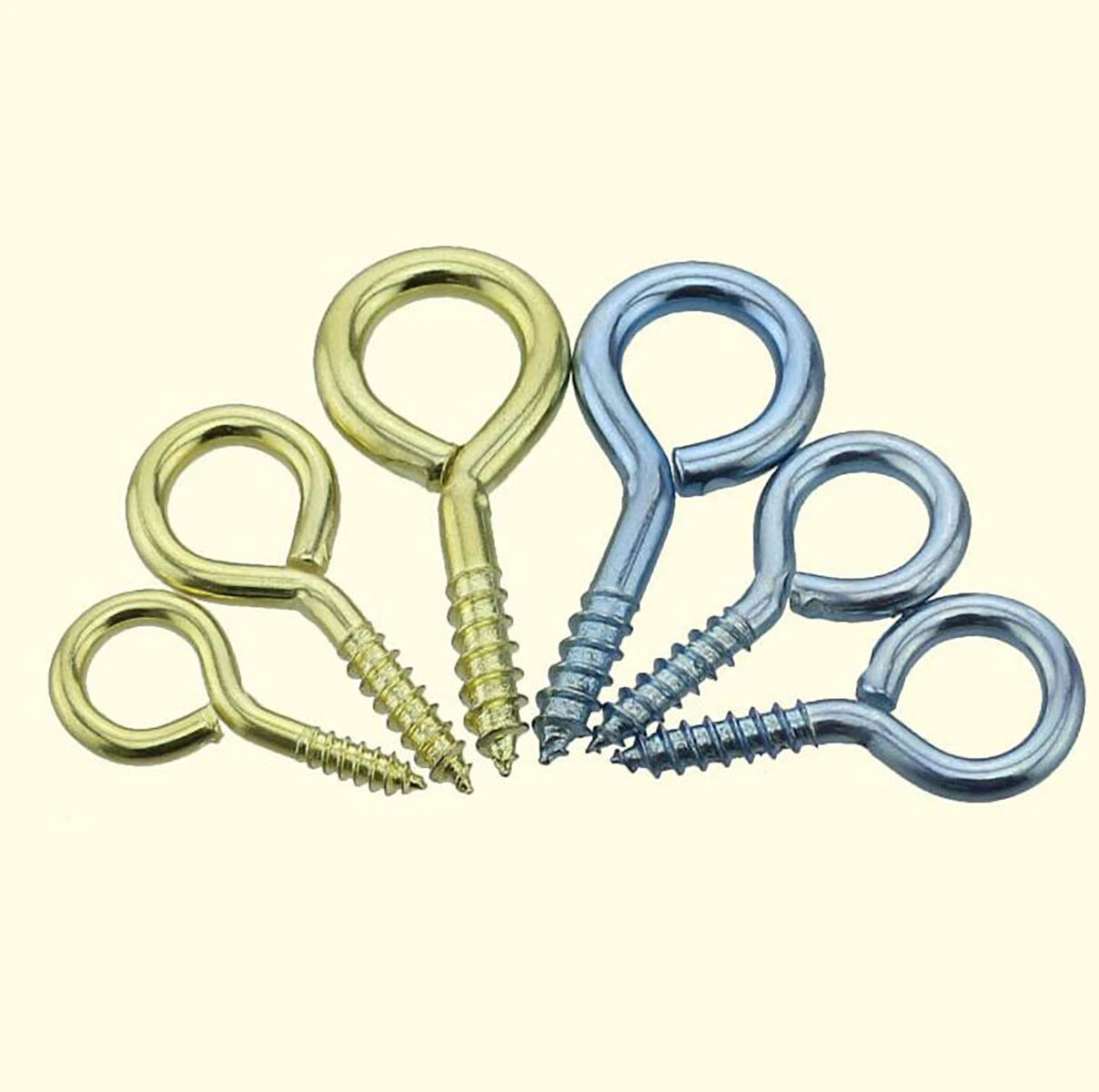
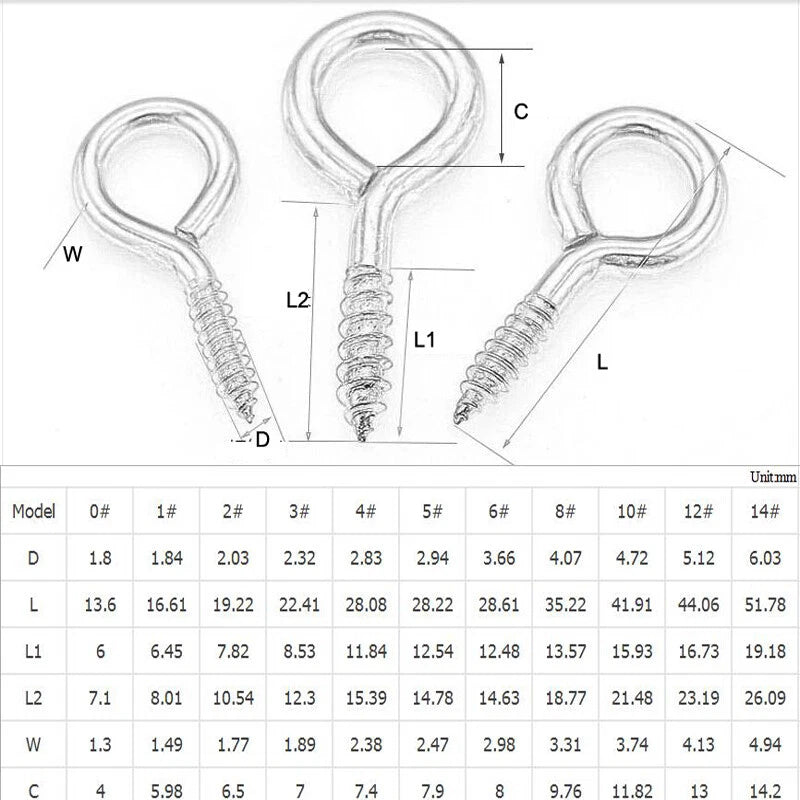
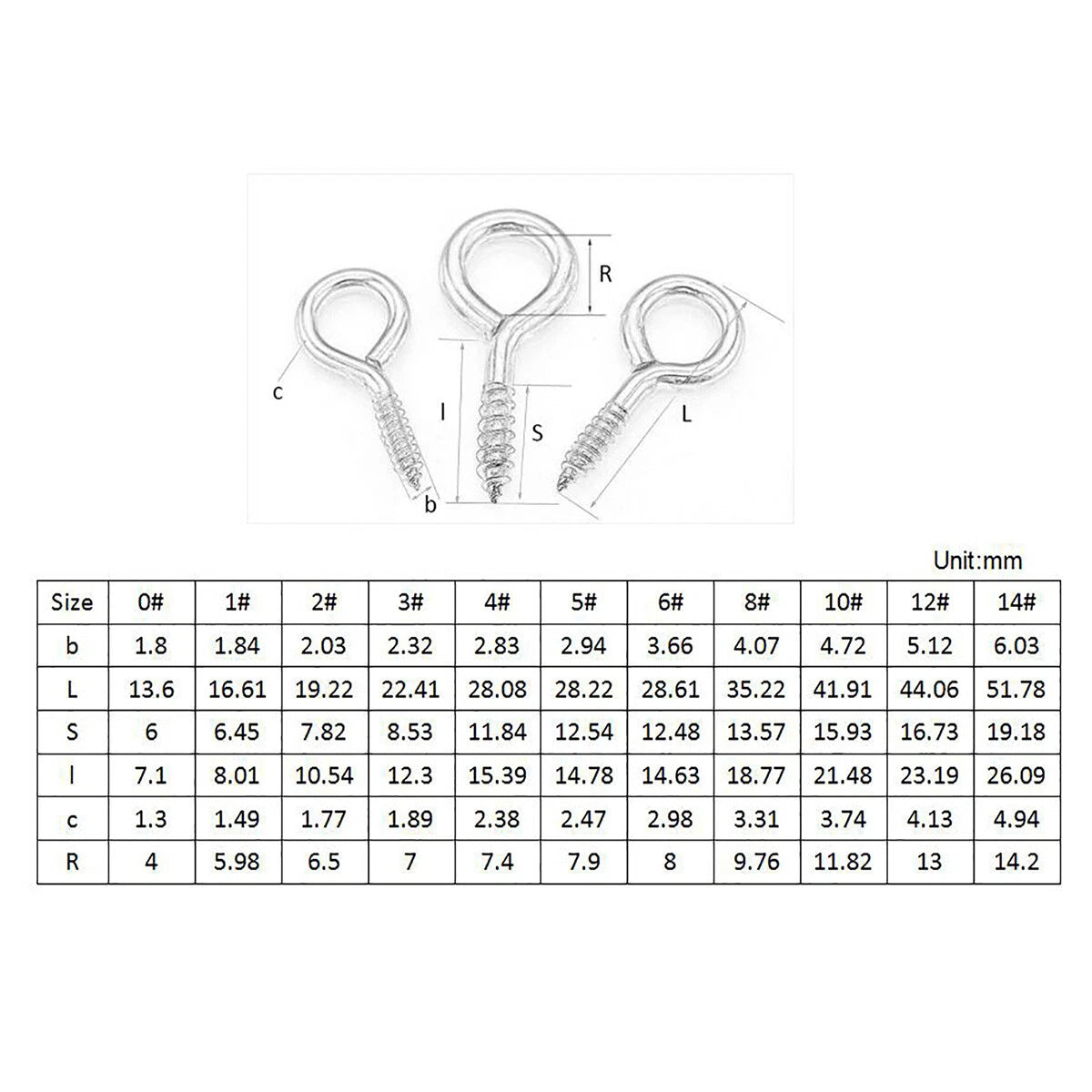
Sizes #2 through #6 (8–20mm) are the workhorses of the picture-hanging world. Their small shank diameter minimizes the footprint on frame backs and thin wood panels while still providing enough thread engagement to support lightweight to medium-weight artwork, mirrors, and decorative items. Available in nickel, brass, and zinc finishes to match frame hardware. Assortment kits covering multiple sizes let you handle any frame thickness or weight without making a separate hardware run for each project.
Heavy-Duty Zinc-Plated Screw Eyes for Outdoor Hanging and Gate Hardware
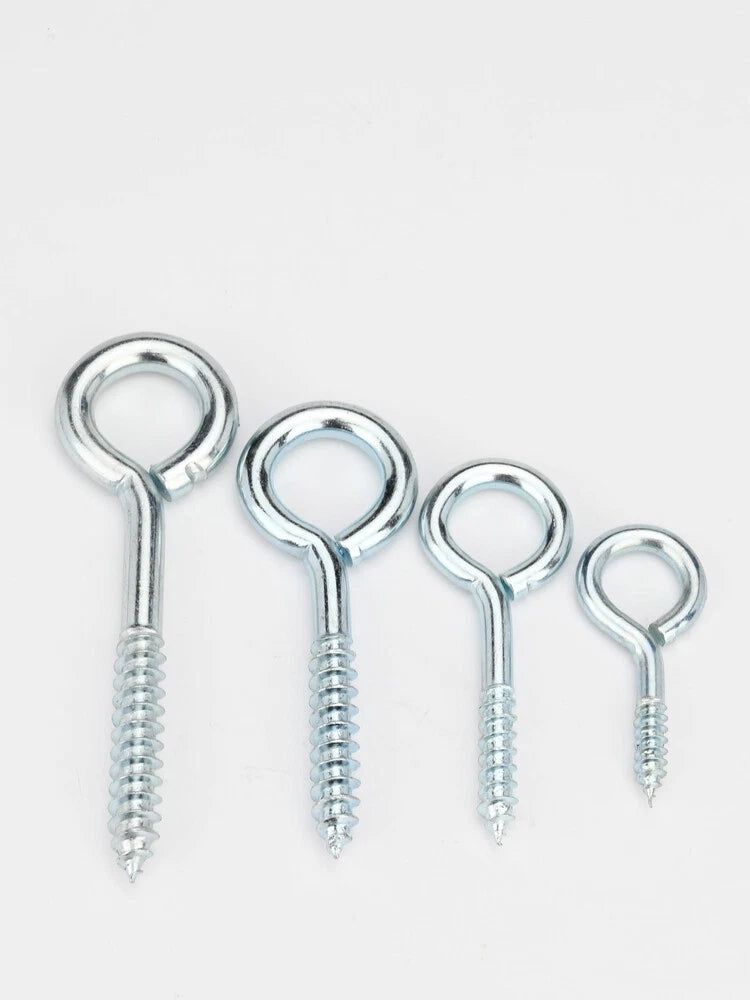
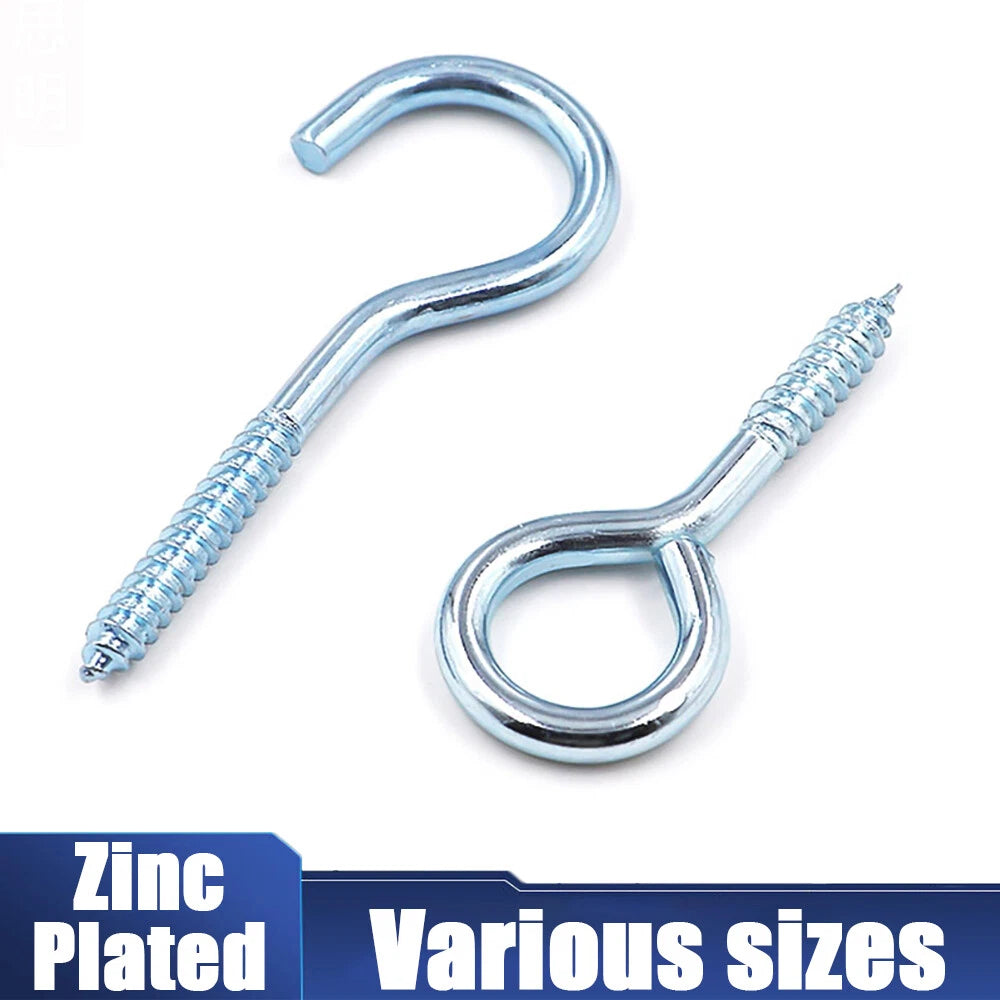
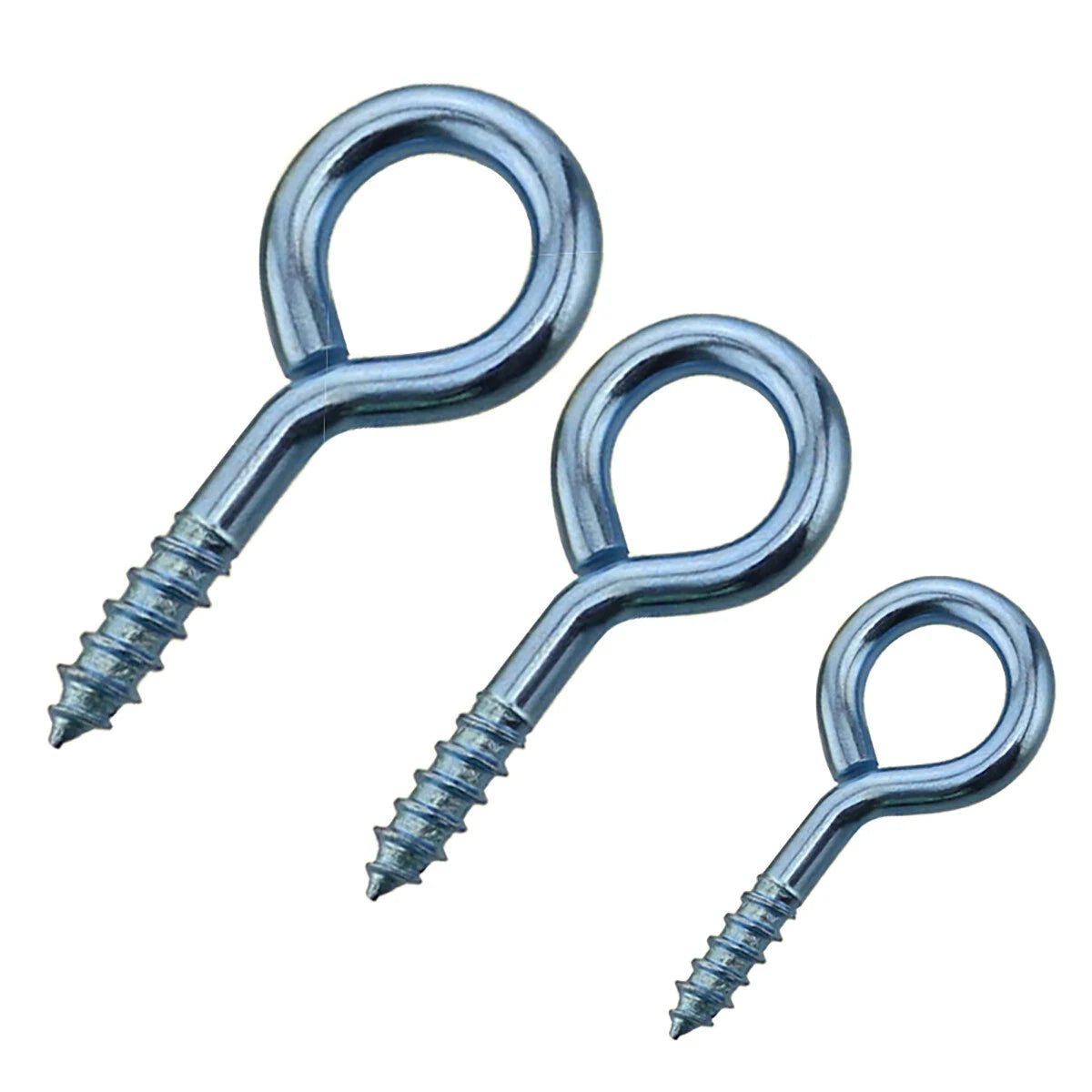
Sizes #8 through #16 in zinc-plated carbon steel are built for the loads and weather exposure that small craft screw eyes can't handle. Use them to hang heavy planters and wind chimes from porch beams, attach gate latches and screen door hooks, anchor rope swings to structural lumber, and route clothesline wire between posts. The zinc coating provides adequate corrosion resistance for covered outdoor applications; for fully exposed installations, upgrade to stainless steel for multi-season service life.
Stainless Steel Screw Eyes for Marine, Coastal, and Outdoor Applications
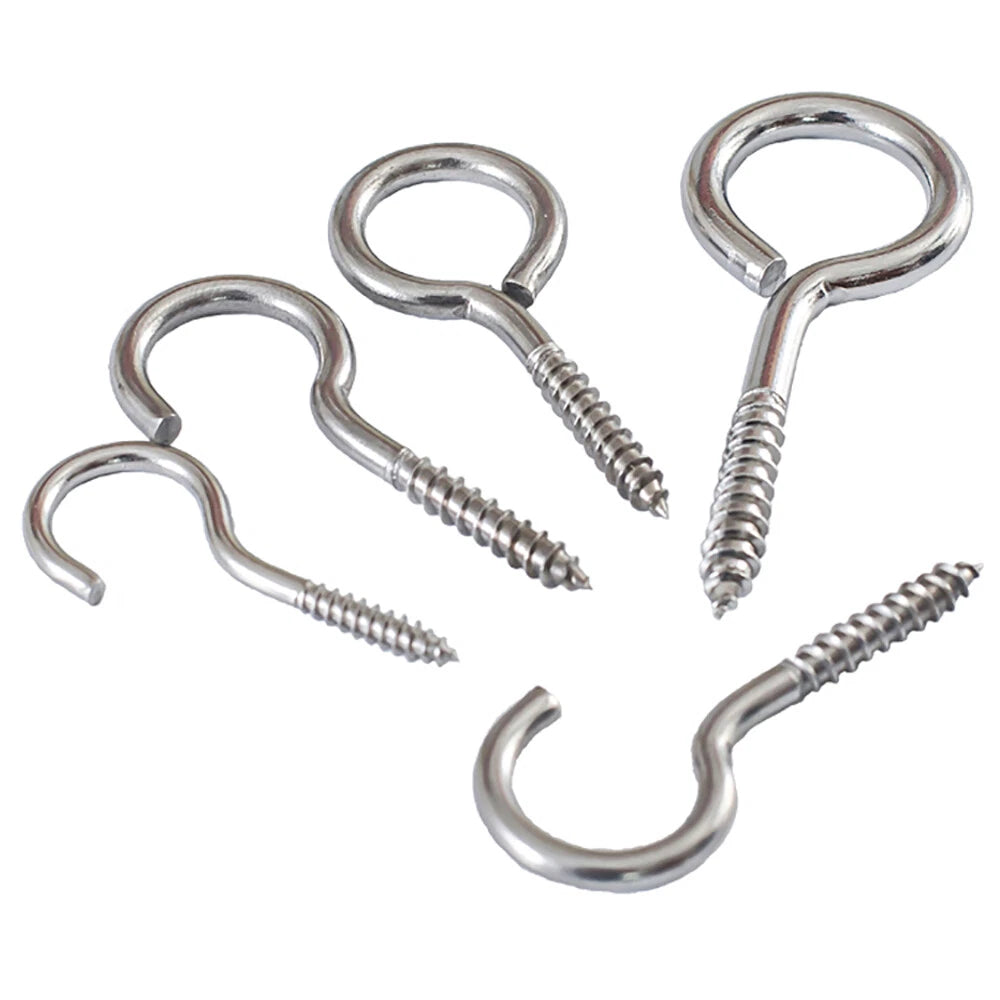
A2 (304) stainless steel screw eyes and self-tapping hook screws are the correct choice when salt air, rain, and UV exposure are ongoing factors. Unlike zinc-plated fasteners, stainless screw eyes don't rely on a surface coating — the entire fastener is corrosion-resistant throughout its cross-section. Use them for dock and marina hardware, outdoor garden structures, coastal fence and gate installations, and any application where a corroded screw eye would create a safety hazard or require frequent replacement.
Self-Tapping Screw Eye Hooks for Metal Sheet and Hard Surfaces
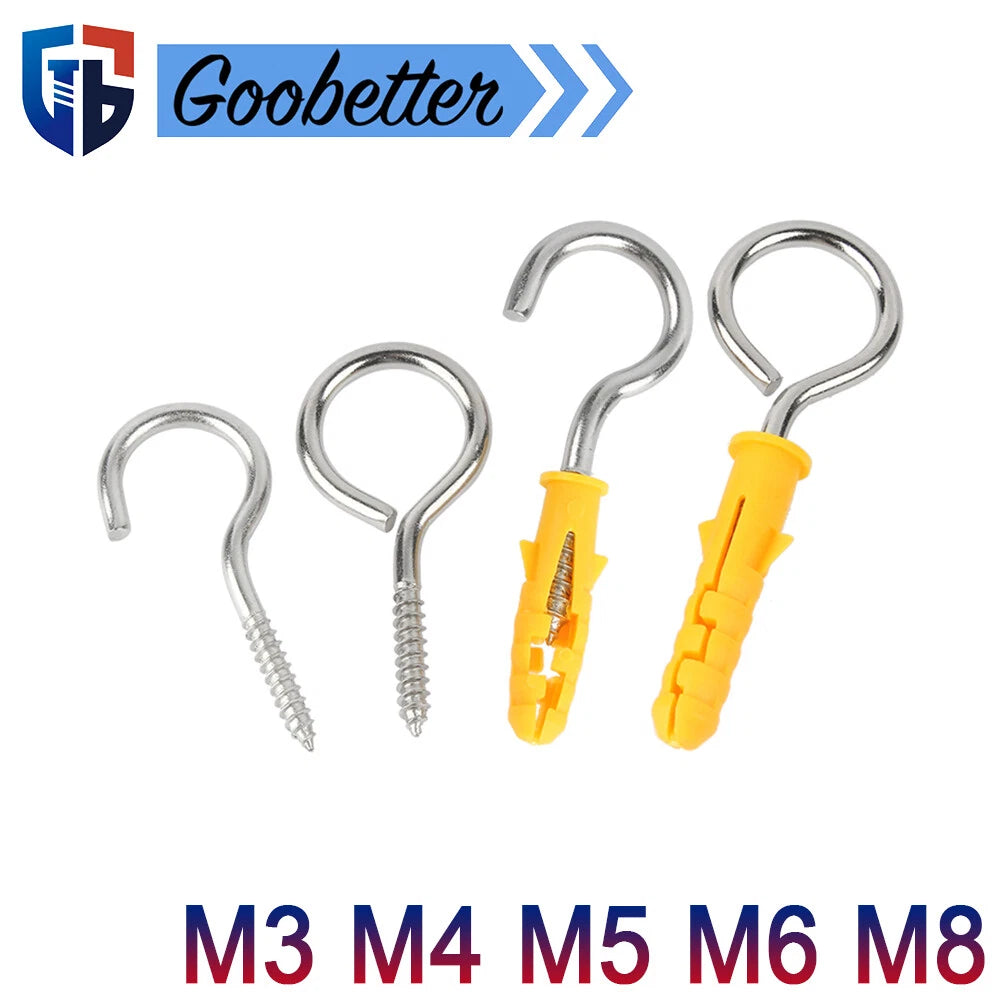
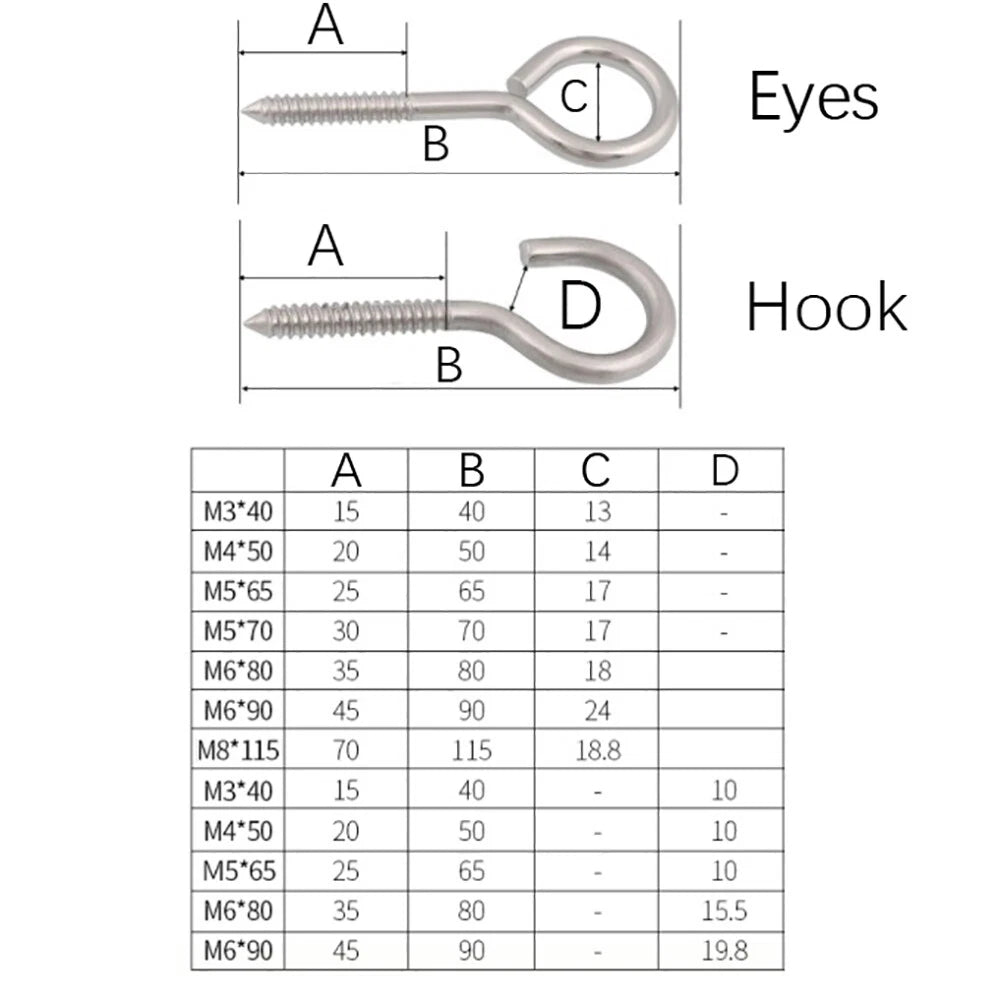
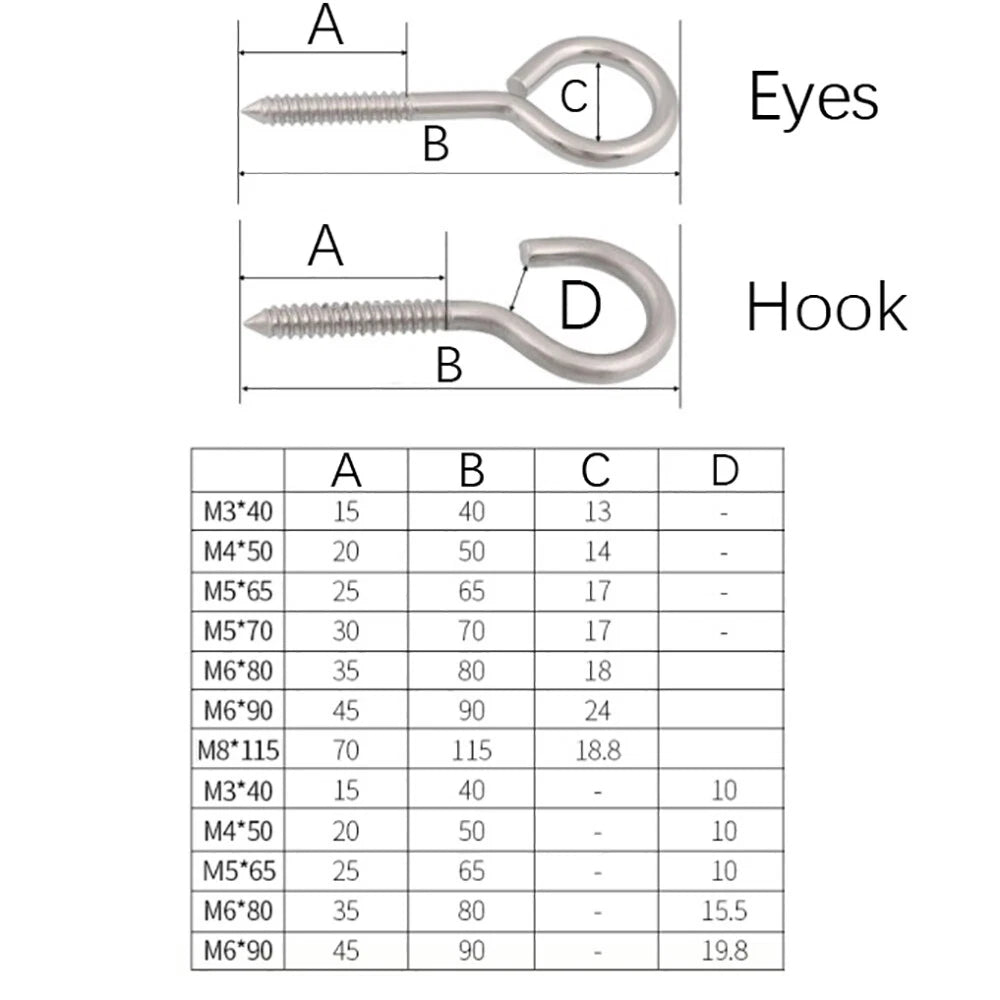
Standard screw eyes require a wood substrate. Self-tapping screw eye hooks with a sharp, hardened tip can be driven directly into thin metal sheet, plastic, and composite materials without pre-drilling in many cases. Available in A2 stainless steel in M3 through M8 metric sizes, these are the right choice for attaching hooks and hanging points to metal shelving, equipment panels, HVAC enclosures, and light-gauge steel framing where a wood-thread screw eye would have nothing to grip.
Open Eye Hooks for Quick-Connect Hanging and Removable Rigging
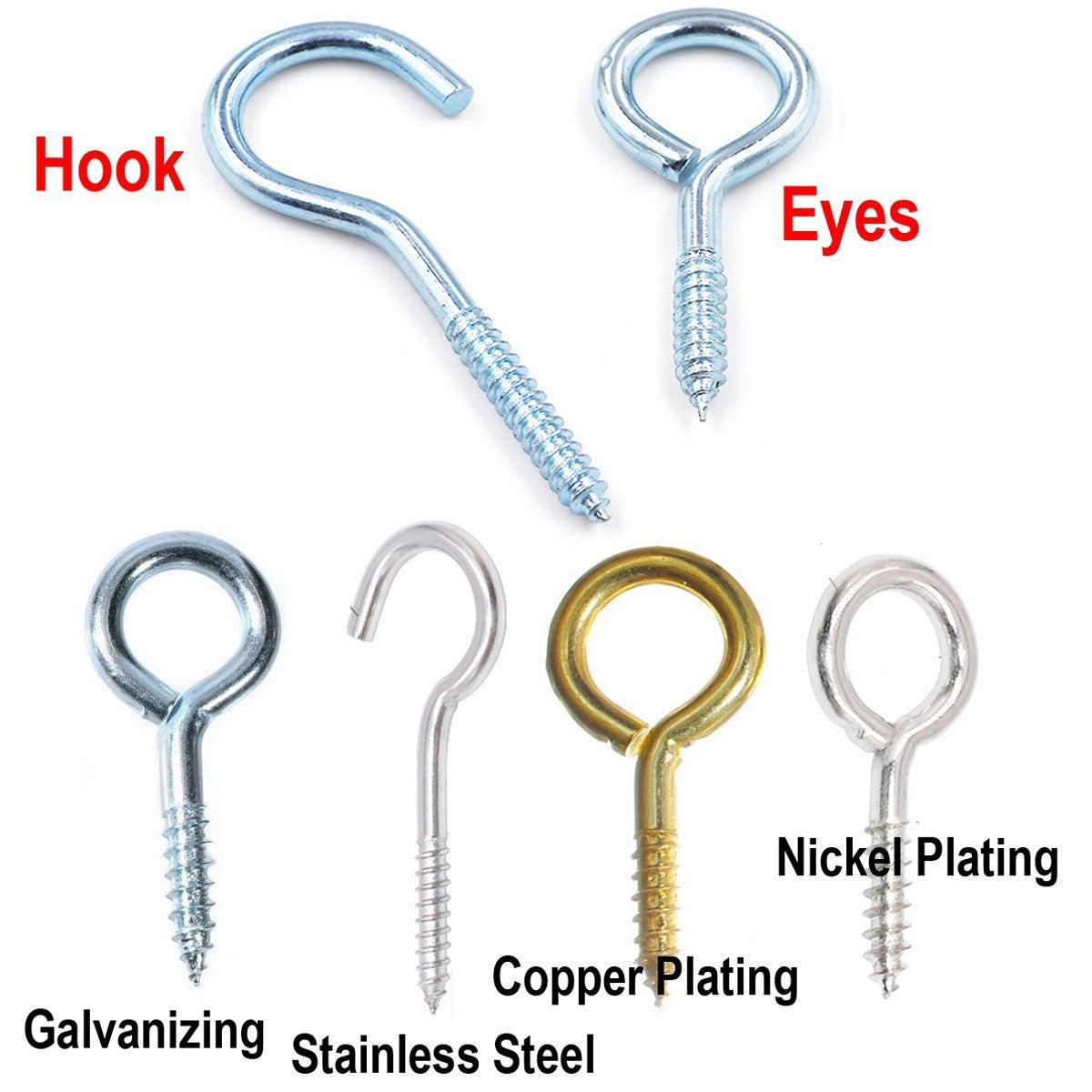
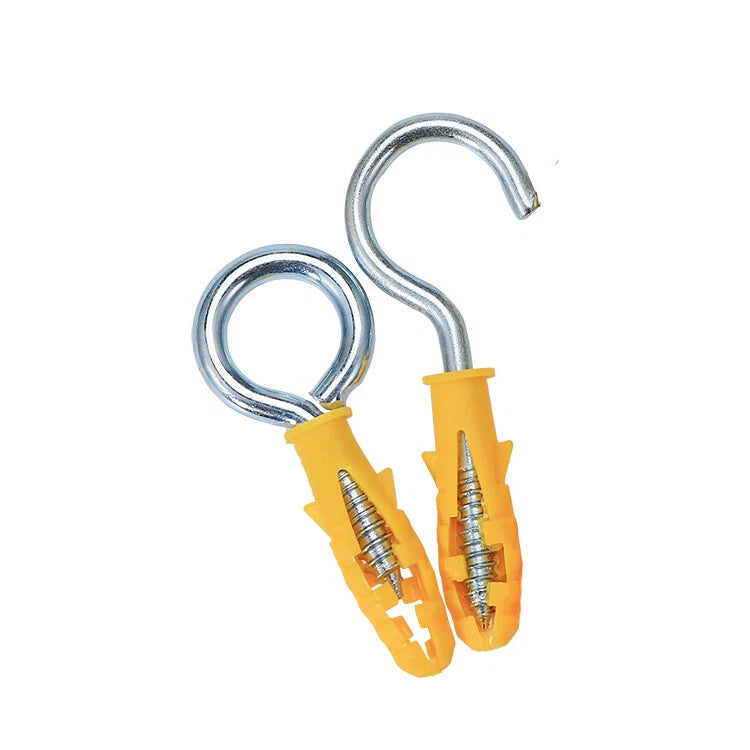
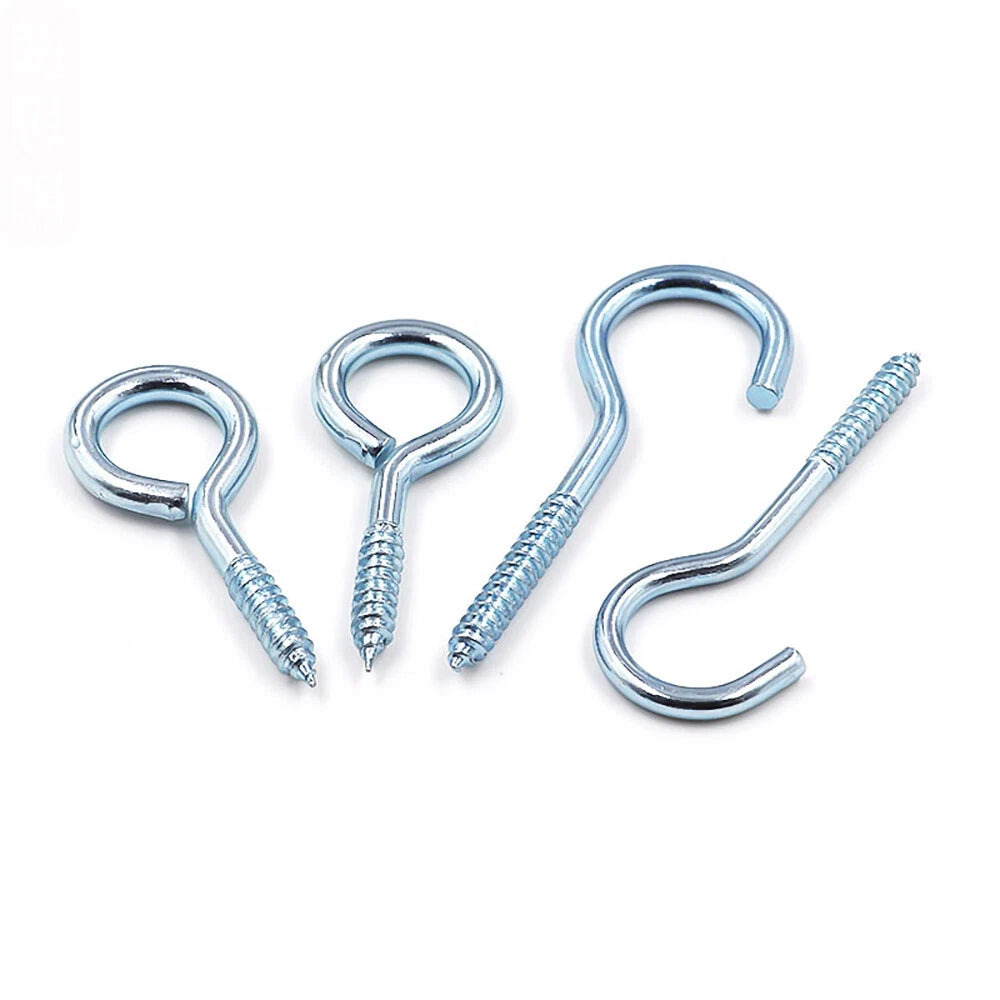
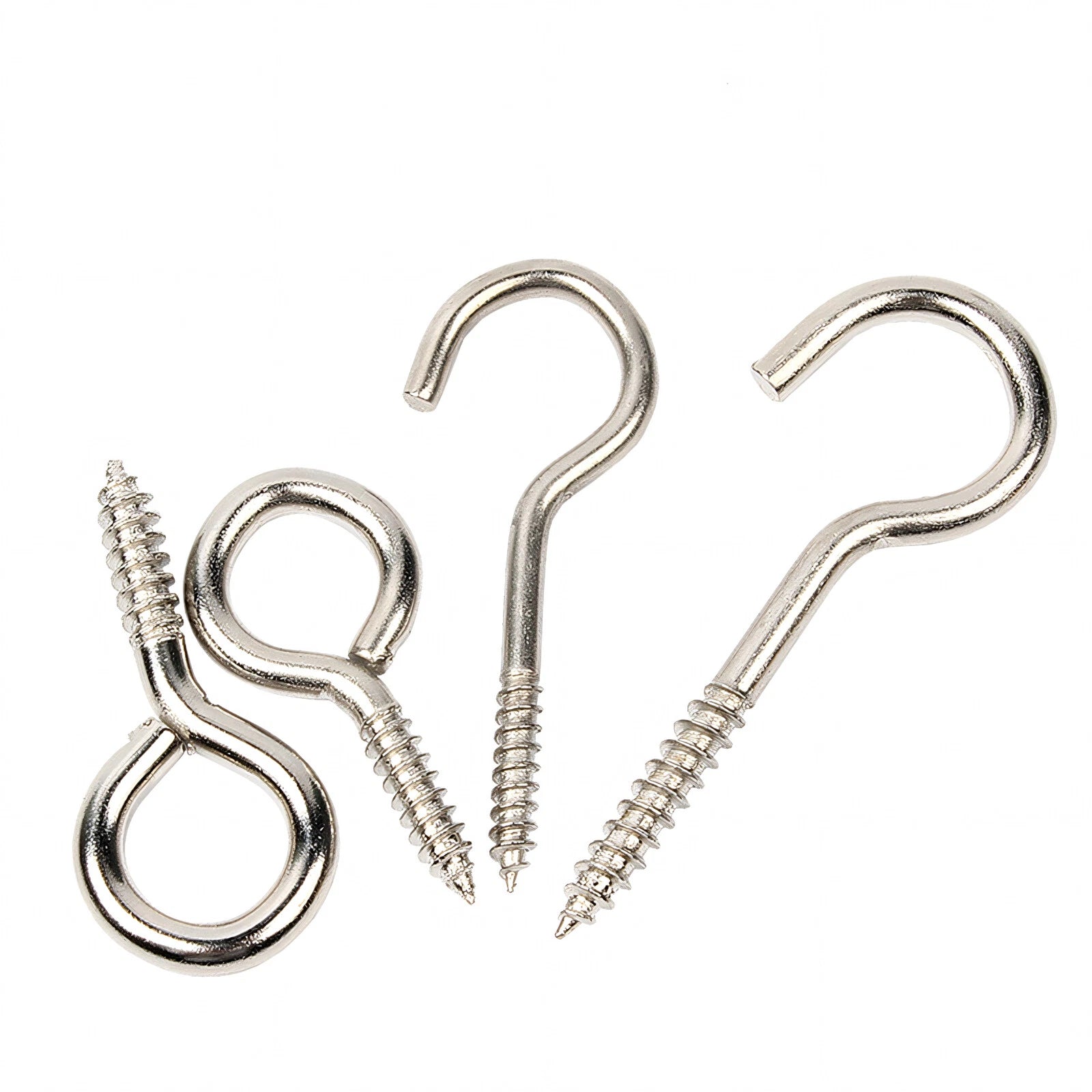
Open eye hooks — where the loop is not fully closed — allow hooks, carabiners, S-hooks, and rings to be attached and removed without threading through the loop. This makes them the preferred choice for seasonal decorations, removable hanging displays, adjustable clothesline systems, and any application where the attached hardware needs to be swapped out regularly. Available in zinc, nickel, galvanized, and stainless finishes in sizes from 16mm to 106mm to cover light craft use through heavy outdoor rigging.
Screw Eye Assortment Kits for Workshop, Home, and Rental Property Maintenance
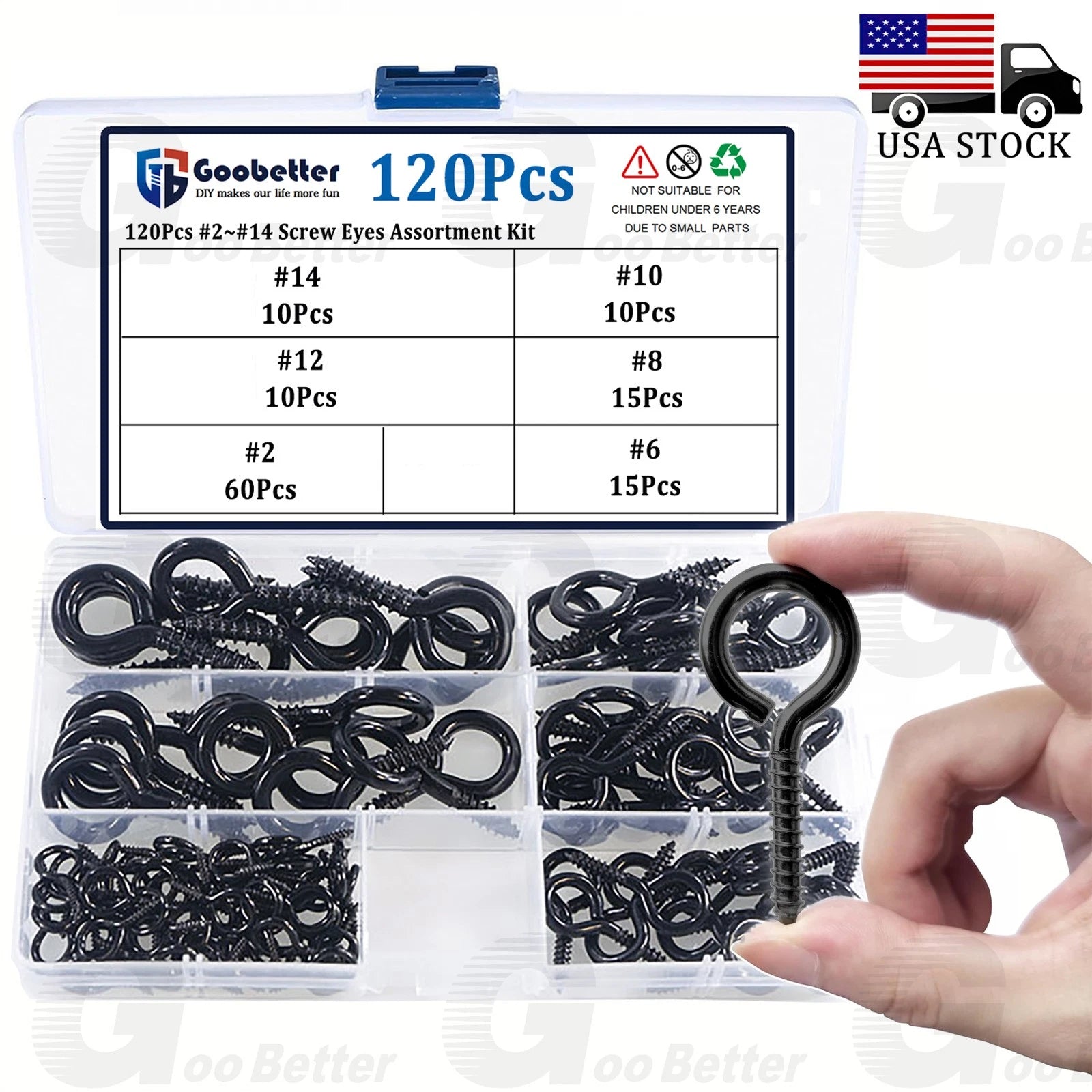
Assortment kits packing 120 to 280 pieces across multiple sizes and finishes are the most practical way to stock a workshop, toolbox, or maintenance kit. Kits covering sizes #2 through #14 in nickel, zinc, and mixed finishes handle the full range of picture hanging, cabinet hardware, screen door, and general anchoring tasks without requiring a separate purchase for each job. Keep one kit in the shop and another in the maintenance van — you'll reach for it more often than you expect.
Frequently Asked Questions About Screw Eyes and Eye Hooks
What are screw eyes used for?
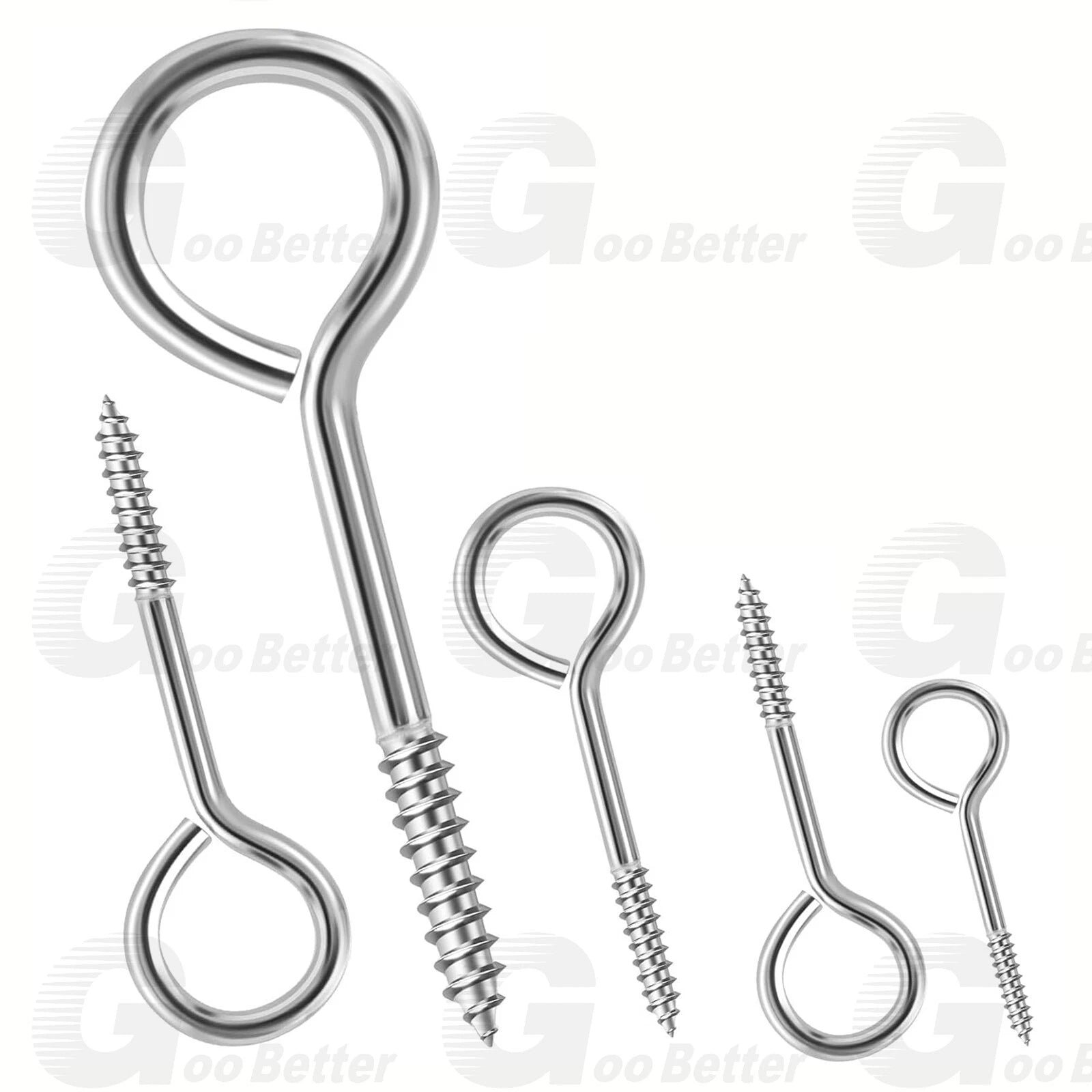
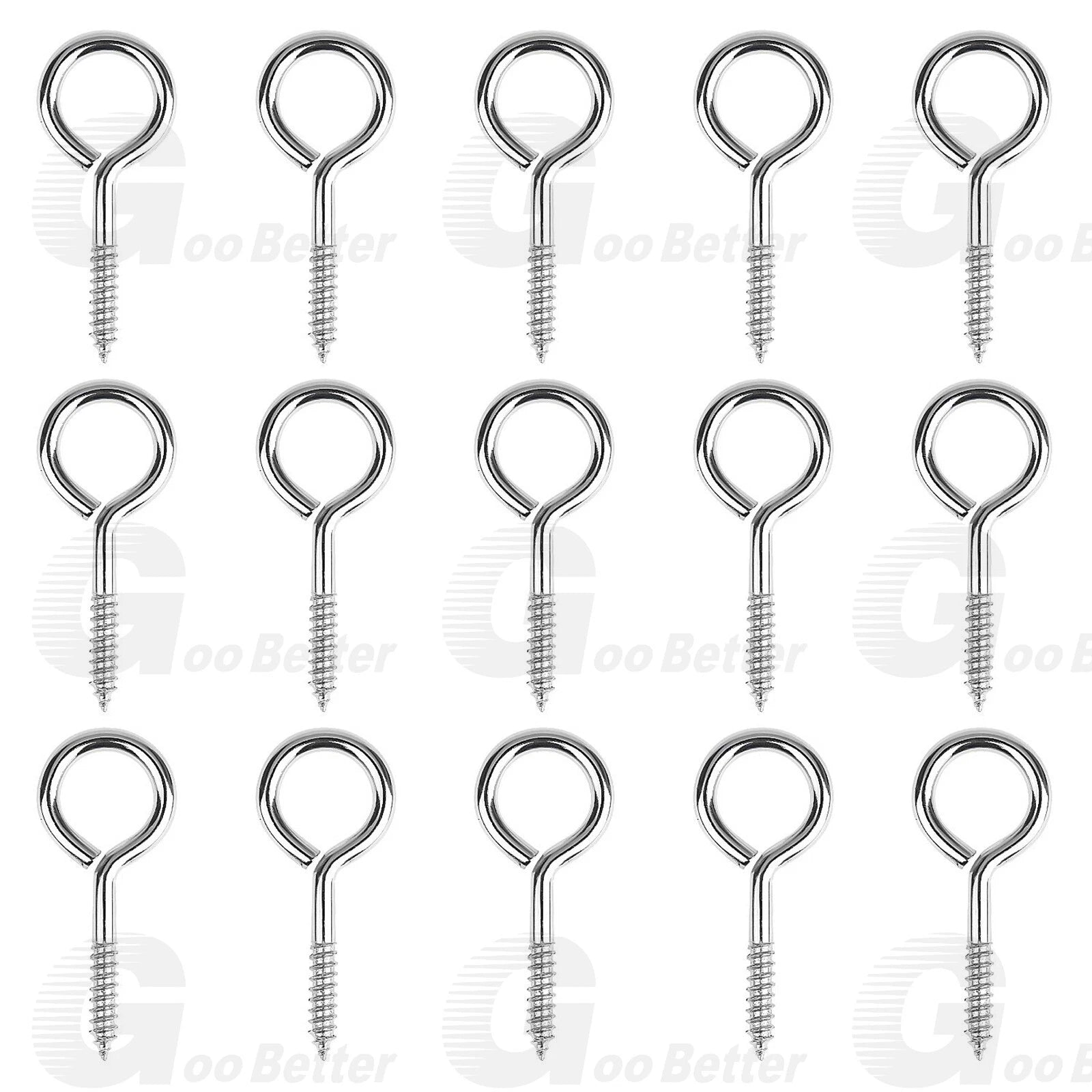
Screw eyes are fasteners with a wood-thread shank and a closed circular loop at the top. They are used to create a fixed anchor point in wood for hanging pictures, mirrors, and shelves; routing wire and cable; attaching hooks, chains, and rope; and securing screen doors and cabinet latches. The closed loop provides a permanent, load-bearing attachment point that can accept a hook, carabiner, wire, or cord.
What is the difference between a screw eye and an eye hook?
A screw eye has a fully closed circular loop, making it ideal for applications where the attached hardware must not slip off — such as picture wire, cable runs, and permanent rigging. An eye hook has an open or partially open loop, allowing hooks, rings, and carabiners to be attached and removed quickly without threading through the loop. Both have wood-thread shanks and are installed by screwing directly into wood.
What is the difference between a screw eye and an eye bolt?
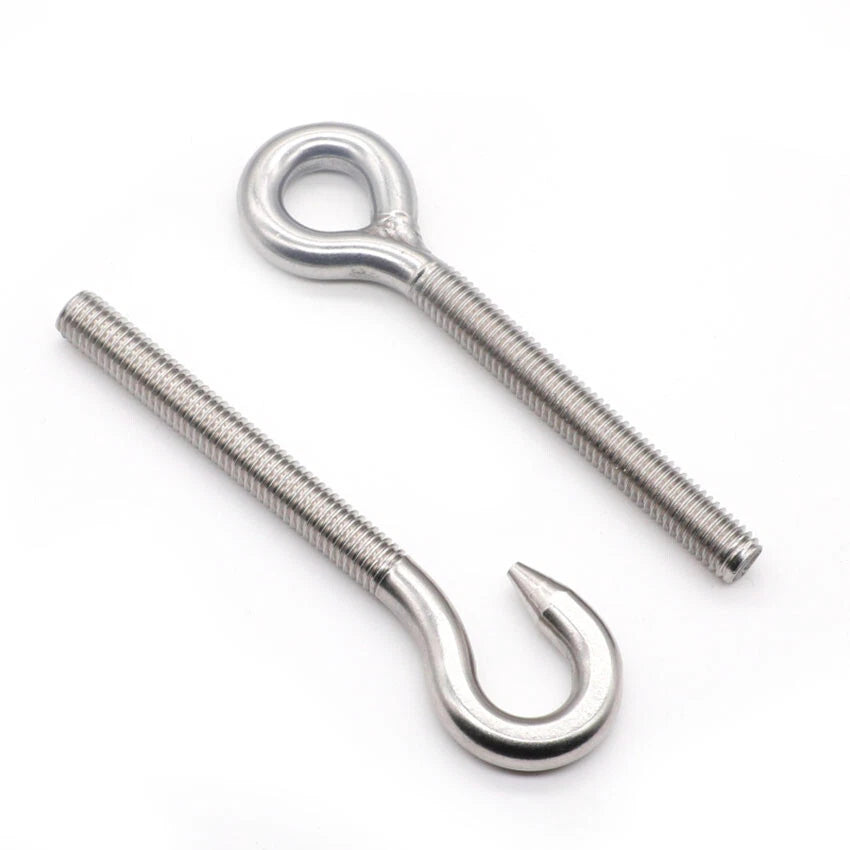
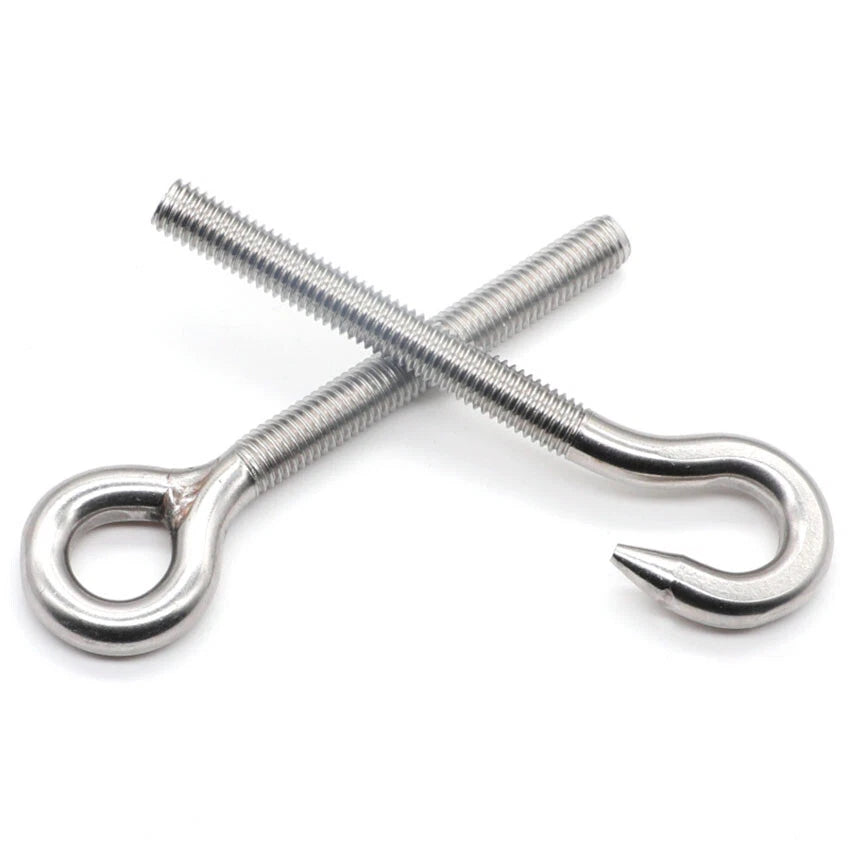
A screw eye has a wood-thread shank designed to be driven directly into wood without a nut. An eye bolt has a machine-thread shank that passes through a drilled hole and is secured with a nut on the back side, making it suitable for metal, concrete, and through-bolt applications where higher load ratings are required. Eye bolts are the correct choice for structural lifting and rigging; screw eyes are for lighter-duty wood anchoring.
Which material should I choose — stainless steel, zinc, or brass?
Stainless steel (A2/304) screw eyes are the best choice for outdoor, marine, and high-humidity applications because they resist rust without surface coatings that can flake. Zinc-plated carbon steel screw eyes are cost-effective for indoor use and protected outdoor applications. Brass-plated screw eyes offer a decorative finish for picture hanging, craft projects, and interior woodworking where appearance matters as much as function.
How do I install a screw eye in wood?
Mark the installation point and drill a pilot hole approximately 80–85% of the screw eye's shank diameter to prevent splitting. Thread the screw eye into the pilot hole by hand until it begins to resist, then use a screwdriver shaft, nail, or dowel inserted through the loop as a lever to drive it to full depth. Stop when the loop is oriented in the correct direction for your application. Do not over-drive — stripping the threads in the wood will reduce holding strength significantly.
What size screw eye do I need for hanging pictures and mirrors?
For lightweight pictures and frames under 5 lbs, small screw eyes in sizes #2 to #4 (8–16mm) are sufficient. For medium-weight artwork and mirrors between 5 and 20 lbs, use #6 to #8 screw eyes (20–30mm). For heavy mirrors and large framed artwork over 20 lbs, use #10 to #14 screw eyes (40–60mm) and always install into a wall stud or use appropriate wall anchors rather than relying on the screw eye alone.
Can screw eyes be used in softwood and hardwood?
Yes. Screw eyes work in both softwood and hardwood. In softwood (pine, cedar, spruce), the threads bite aggressively and a pilot hole is still recommended to prevent splitting near edges. In hardwood (oak, maple, walnut), a properly sized pilot hole is essential — without it, the shank can snap during installation. For very small screw eyes in dense hardwood, apply a drop of wax or soap to the threads to reduce driving torque.
What load can a screw eye hold?
Load capacity depends on the screw eye's diameter, material, thread engagement depth, and the density of the wood it's installed in. As a general guideline, a #8 zinc-plated screw eye installed 25mm deep in solid pine can support approximately 15–25 lbs in a straight pull. Stainless steel screw eyes of the same size have higher tensile strength. Always apply a safety factor of at least 4:1 for any load-bearing application and never use screw eyes for overhead lifting without verifying the rated working load limit.
How do I remove a screw eye that is stuck or corroded?
Insert a screwdriver shaft or sturdy dowel through the loop and turn counterclockwise to back the screw eye out. If it is corroded or seized, apply penetrating oil around the shank entry point and allow it to soak for 15–30 minutes before attempting removal. For badly corroded screw eyes in outdoor wood, use locking pliers on the loop shank if the loop itself is too corroded to accept a lever. Avoid excessive force that could split the surrounding wood.
Does HomeDIYer offer free shipping on screw eyes and eye hooks?
Yes. HomeDIYer offers free standard shipping on qualifying orders. Check the current free-shipping threshold at checkout — assortment kits and multi-pack screw eye sets frequently meet the minimum in a single order, making it easy to stock up for your hanging, rigging, or craft project without paying extra for delivery.