0.5/1 Mod Pinion Gear 10T-150T Spur Gear with Step 45# Steel Transmission Gear

No reviews

Price:
Sale price$3.78 USD
Stock:
In stock (500 units), ready to be shipped

Payment & Security

Ach Direct Debit Amazon American Express Apple Pay Bancontact BLIK Diners Club Discover EPS Google Pay iDEAL Wero JCB Maestro Mastercard Multibanco MobilePay PayPal Przelewy24 Shop Pay Twint Union Pay USDC Visa

Your payment information is processed securely. We do not store credit card details nor have access to your credit card information.

Limited Offer — Spend More, Save More
Spend $55+
Save $5
Spend $100+
Save $10
Spend $200+
Save $25
HomeDIYer DIY Expert Support

DIY Expert Support

Get fitment advice & recommendations

Mon–Fri  8:30 AM – 8:00 PM
24-Hour Fast Ship
Arrives in 3–14 Days
Worldwide Shipping
30-Day Returns
1 tree planted with every purchase

Description

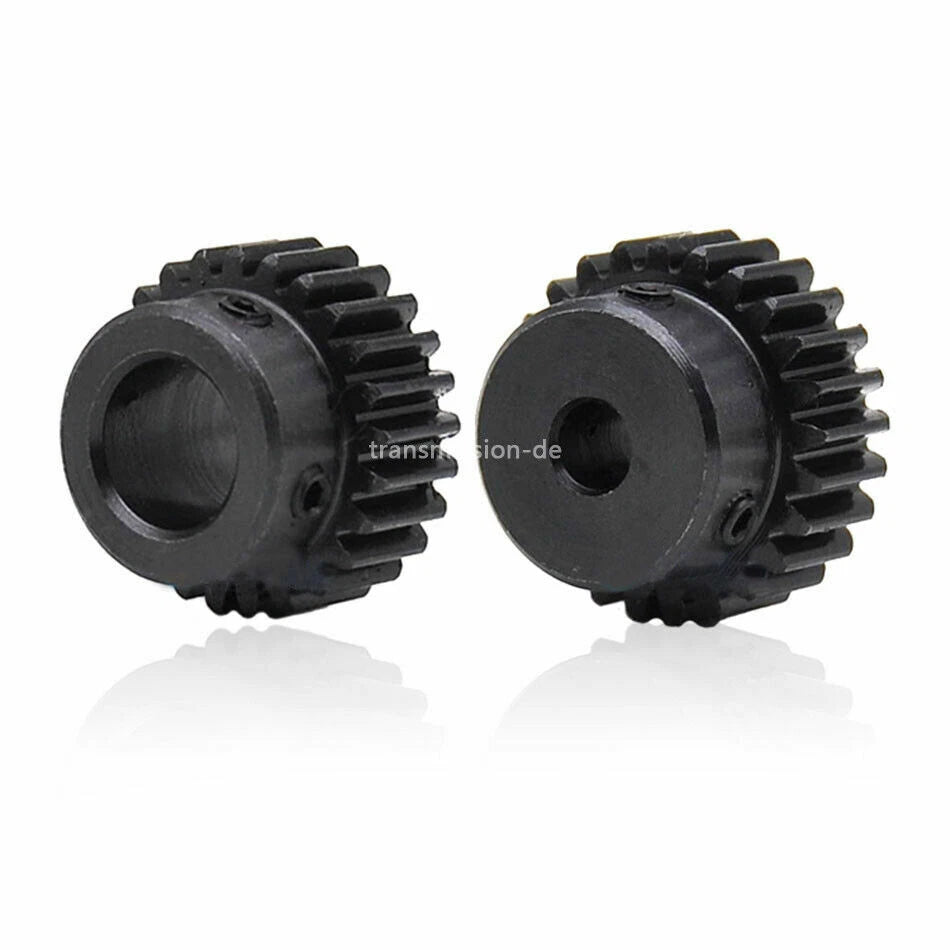
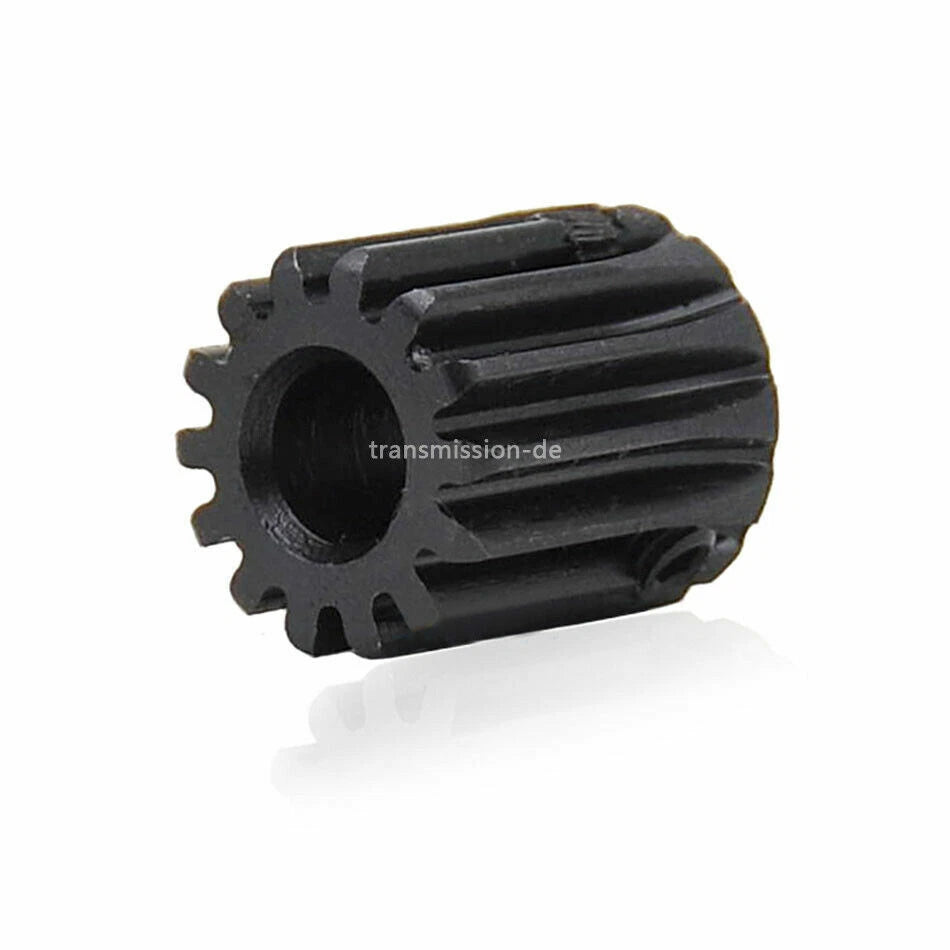
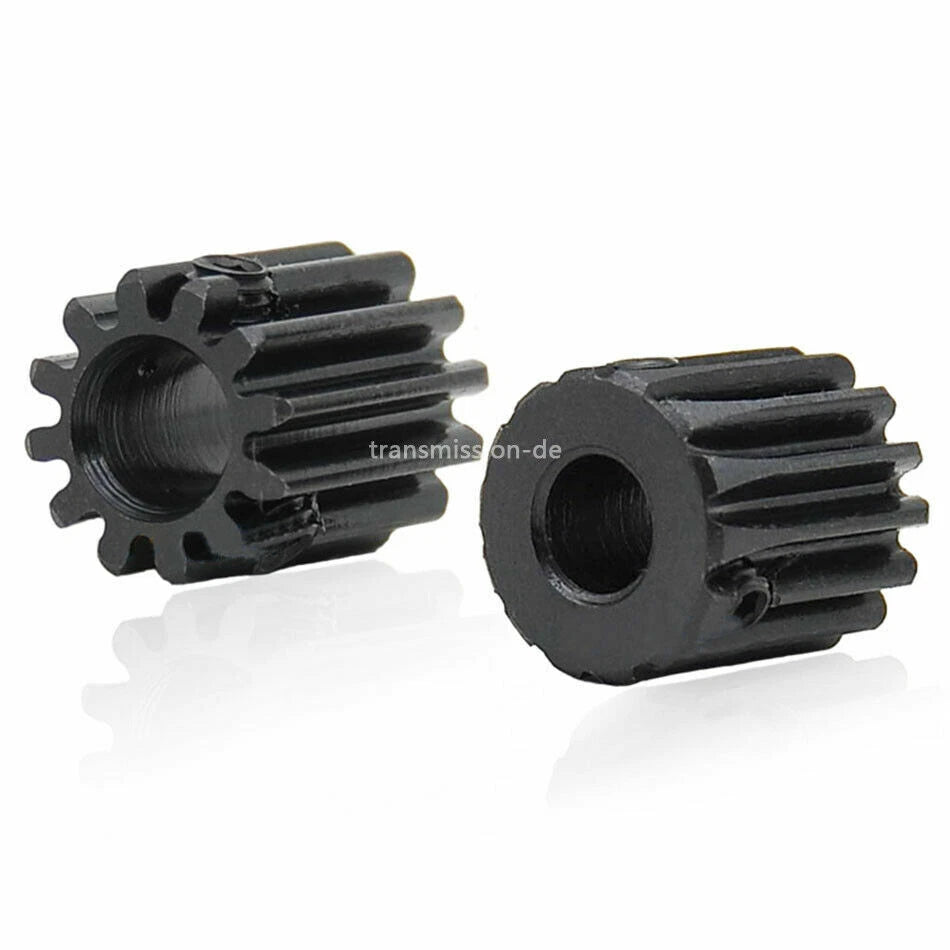
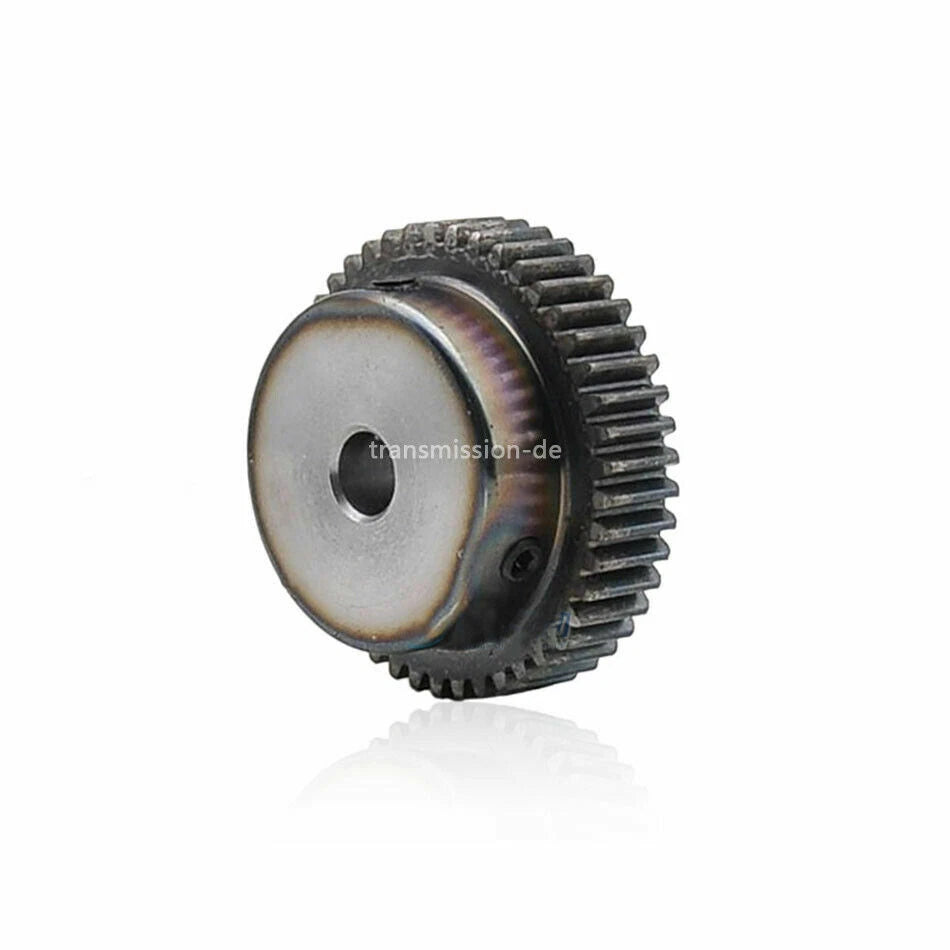
0.5/1 Mod Pinion Spur Gear — Precision 45# Steel Transmission Gear for Reliable Motion Control

When a stripped plastic gear or an undersized pinion brings your build to a halt, you need a drop-in replacement that holds up under real load. Whether you are a robotics engineer, an RC hobbyist, or a workshop maker, these 45# carbon steel spur gears with stepped bore give you the dimensional accuracy and material strength to keep your drivetrain running without play or wobble.

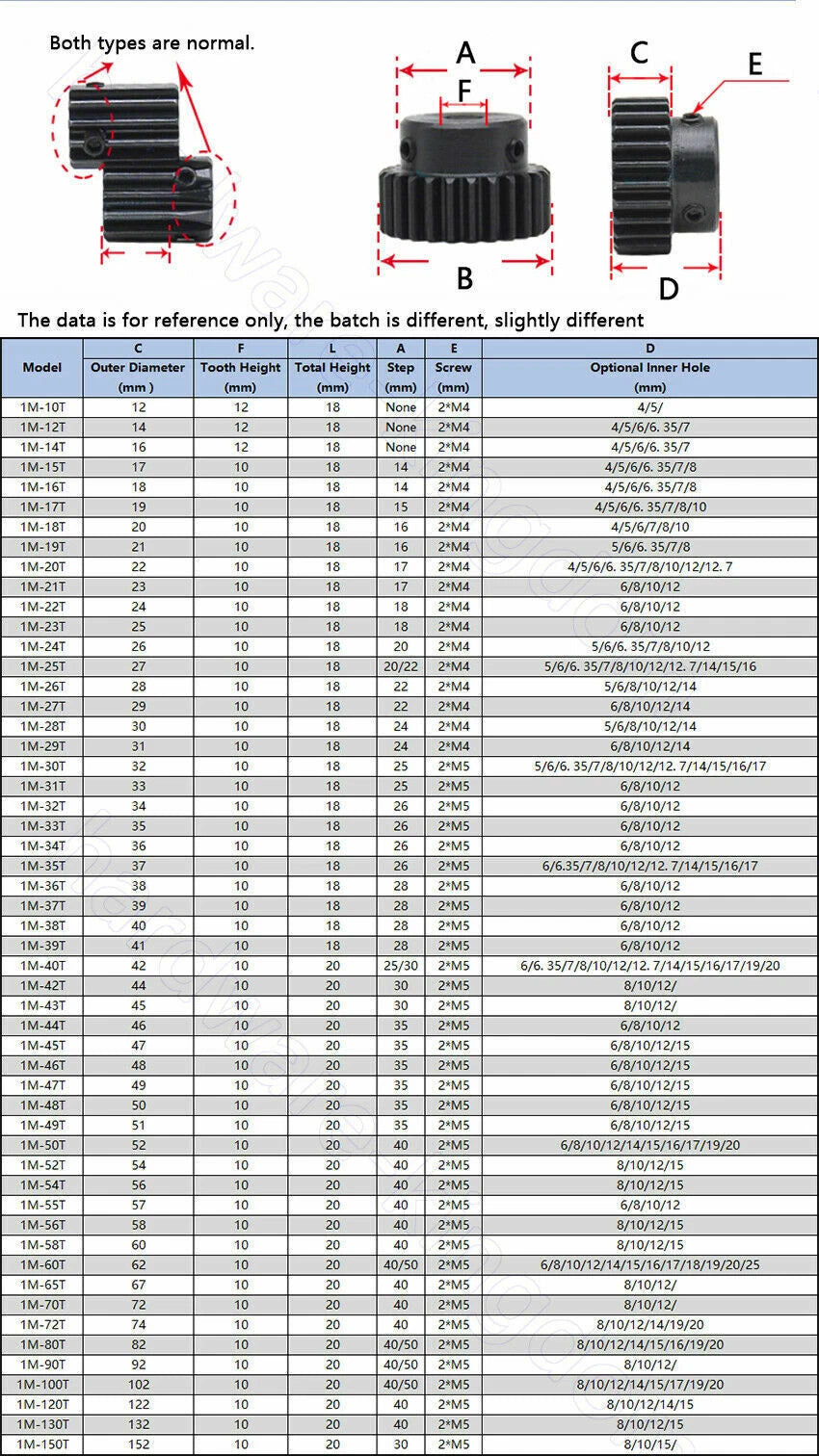
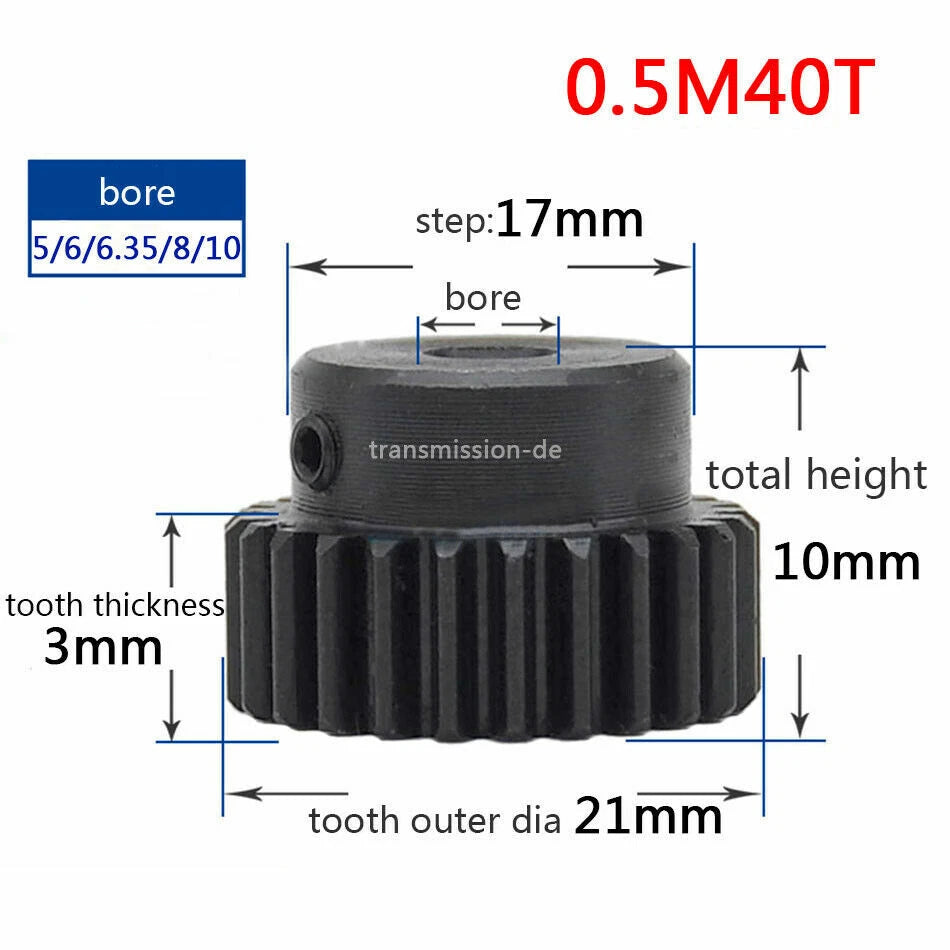
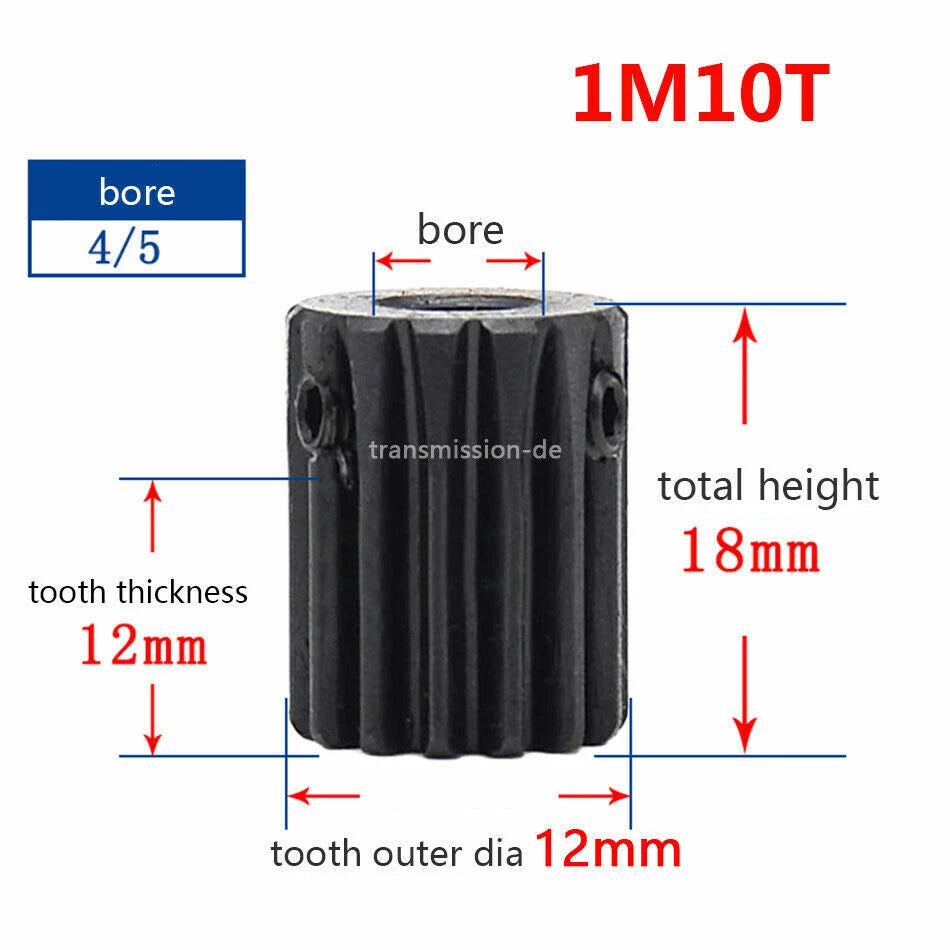
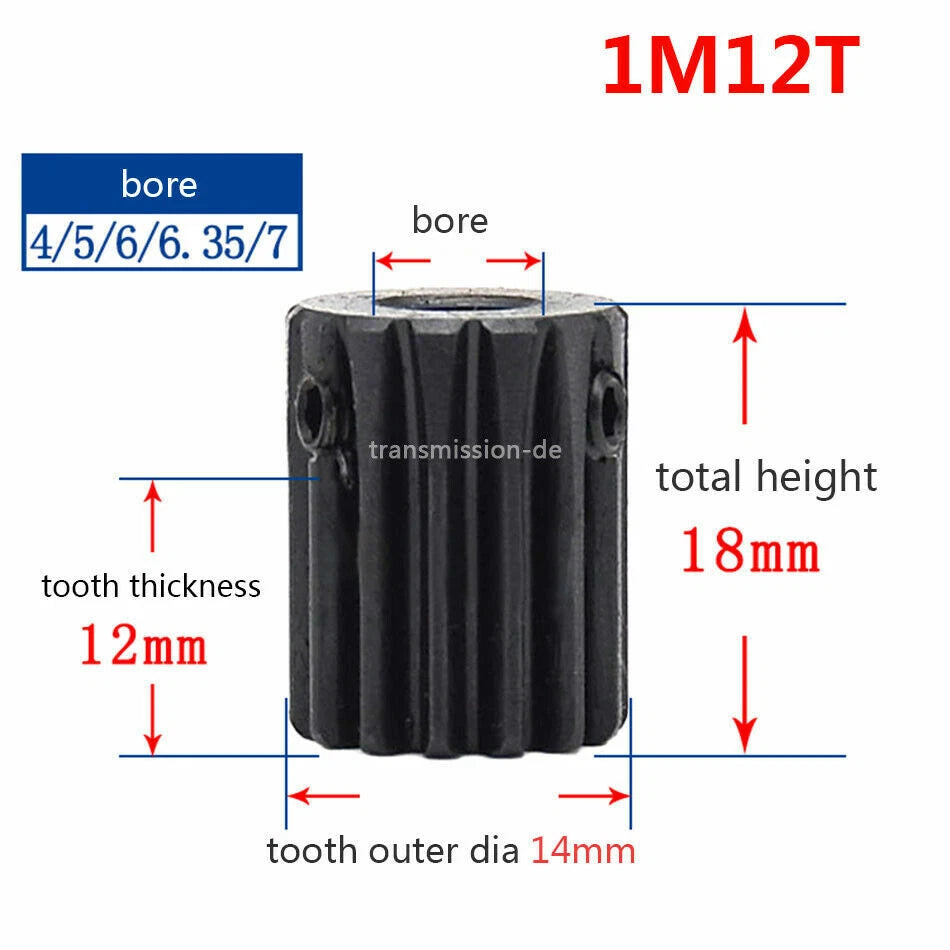
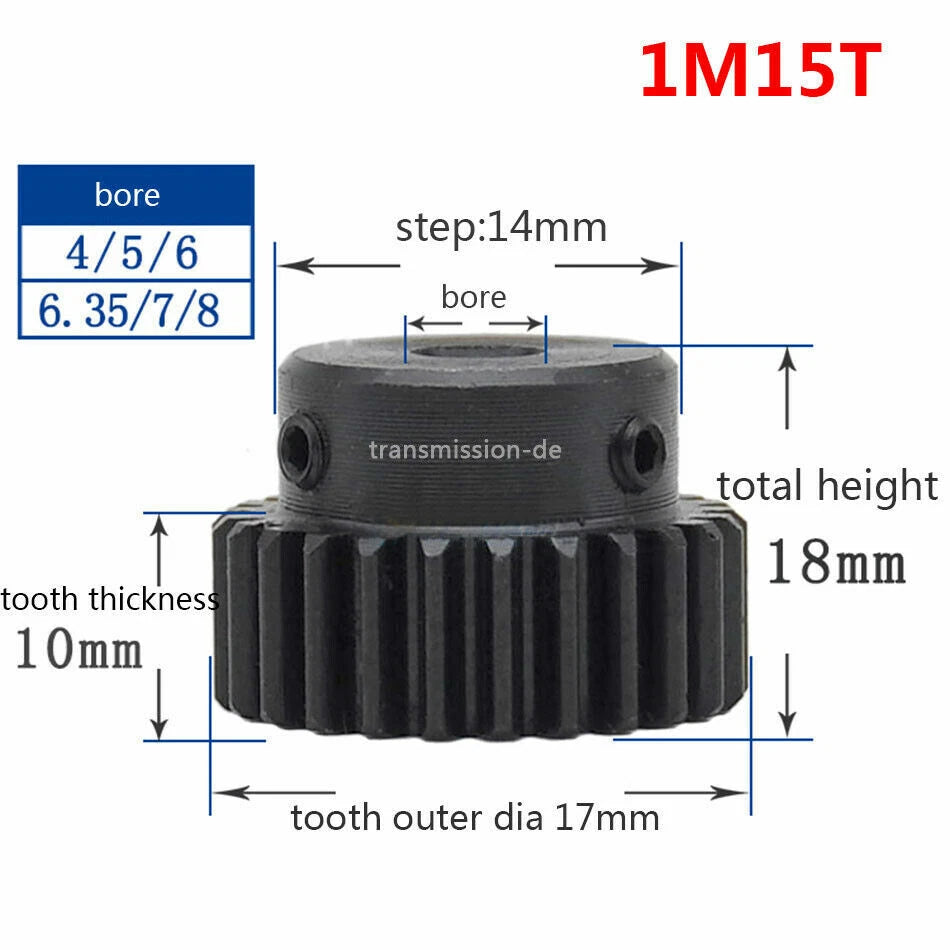
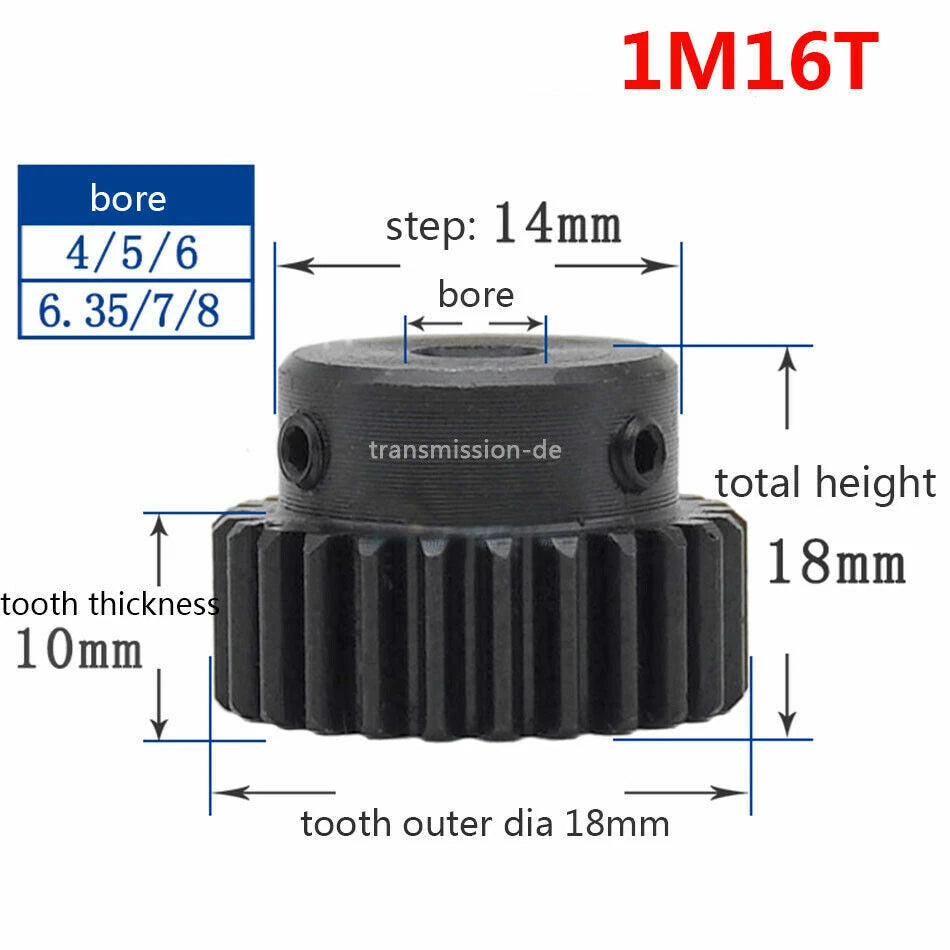
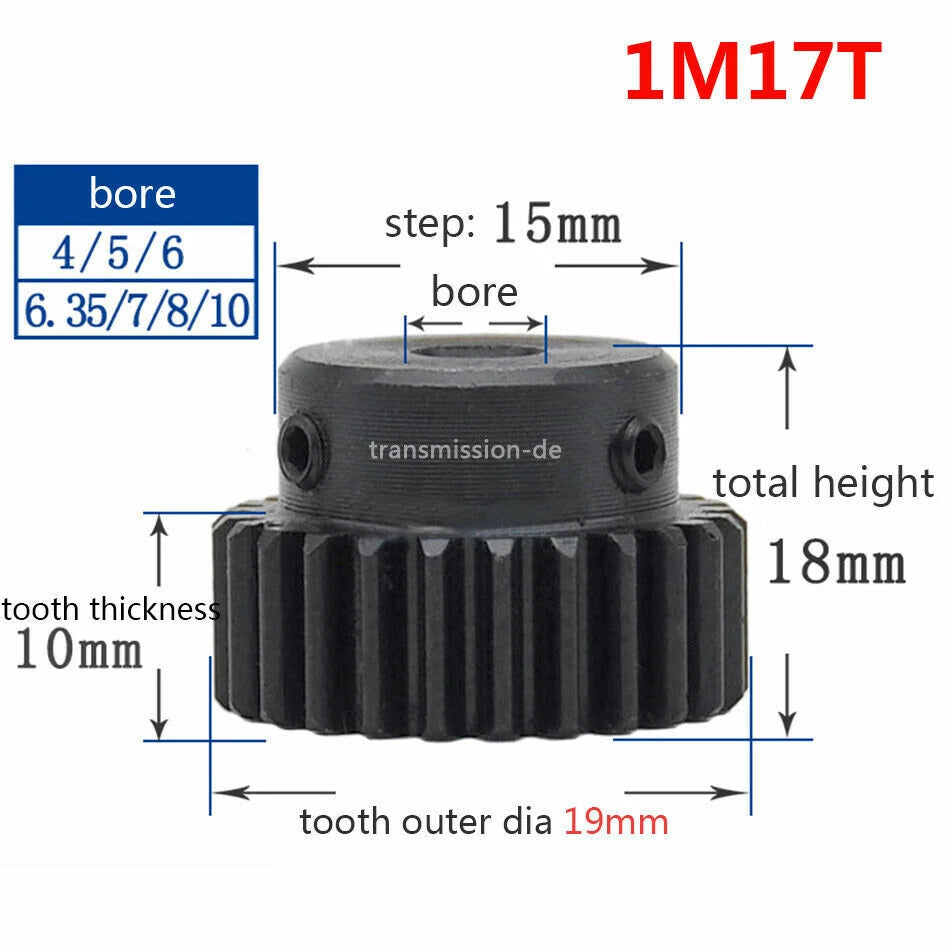
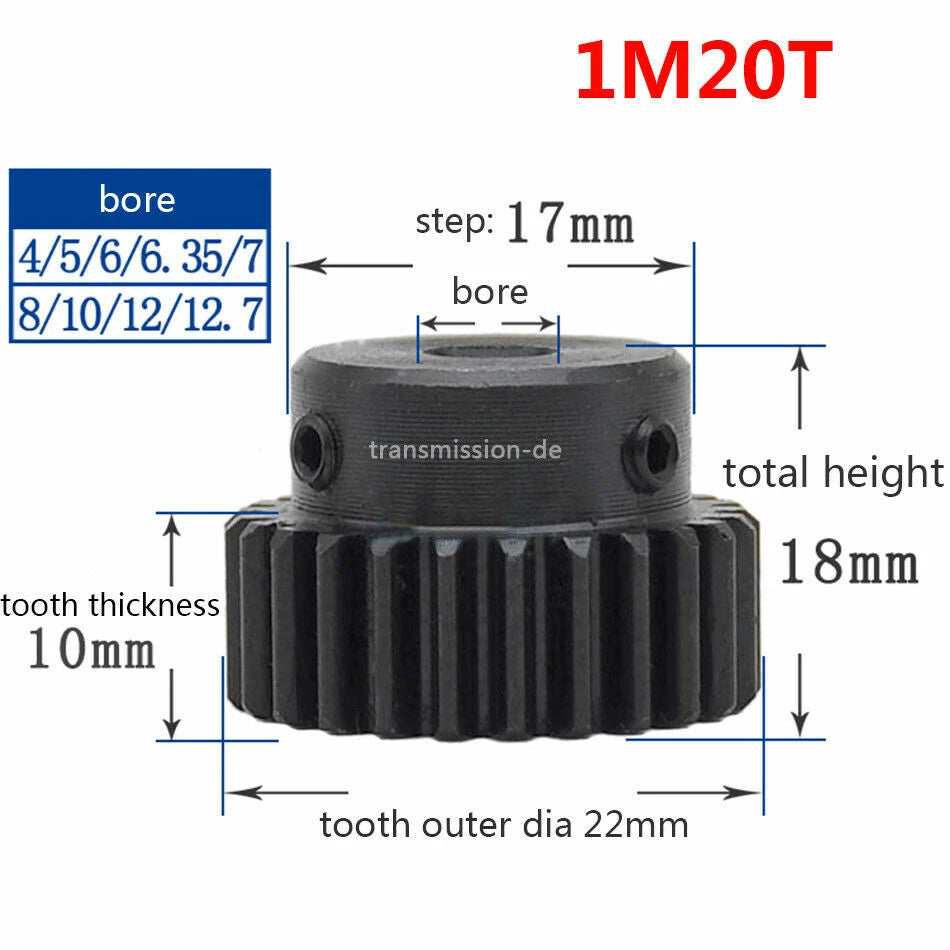
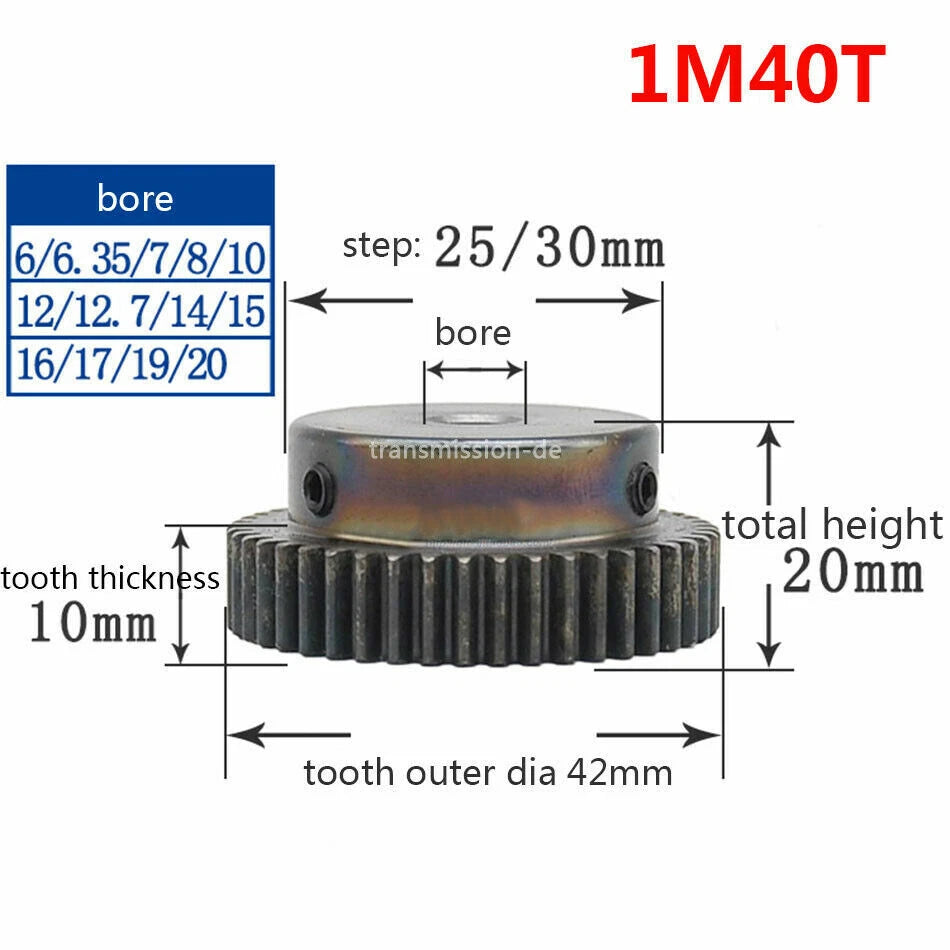
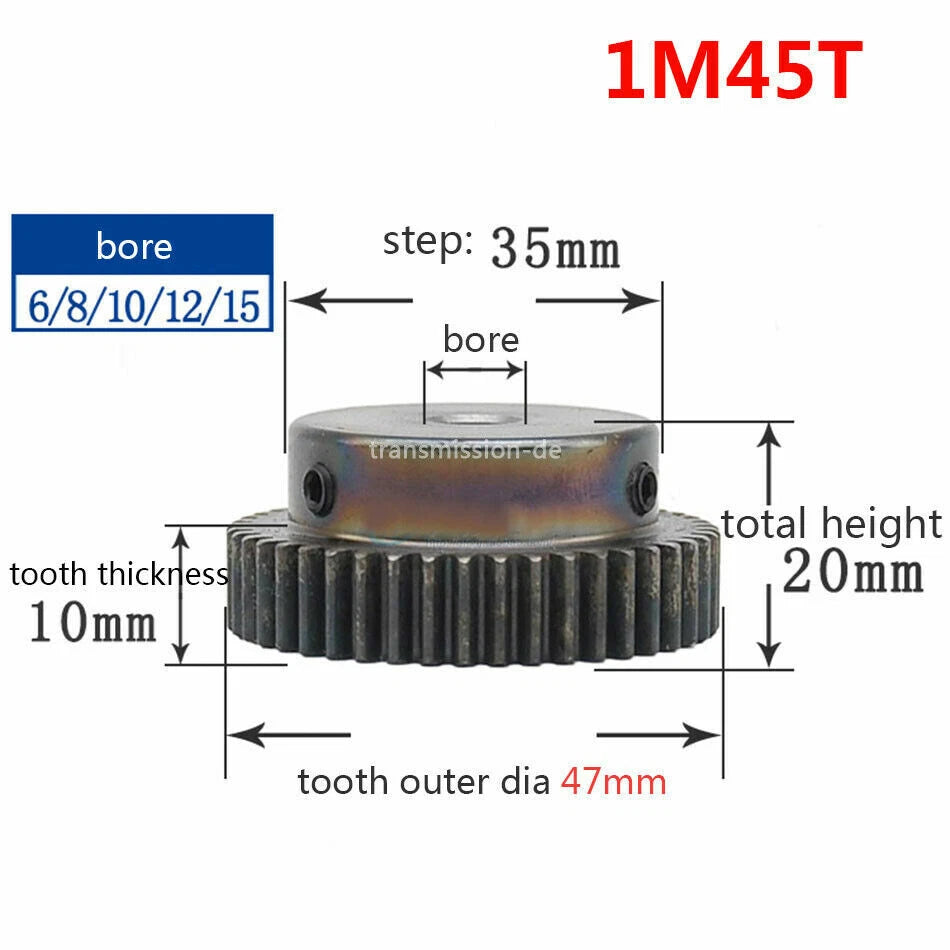
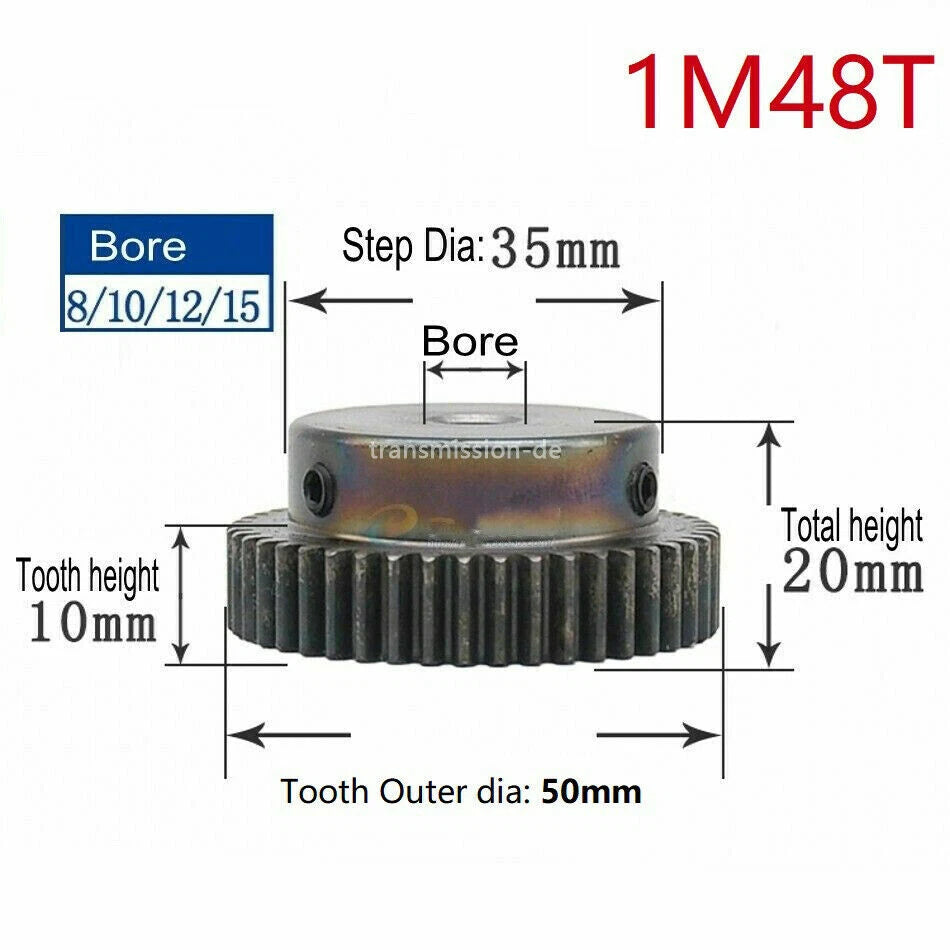
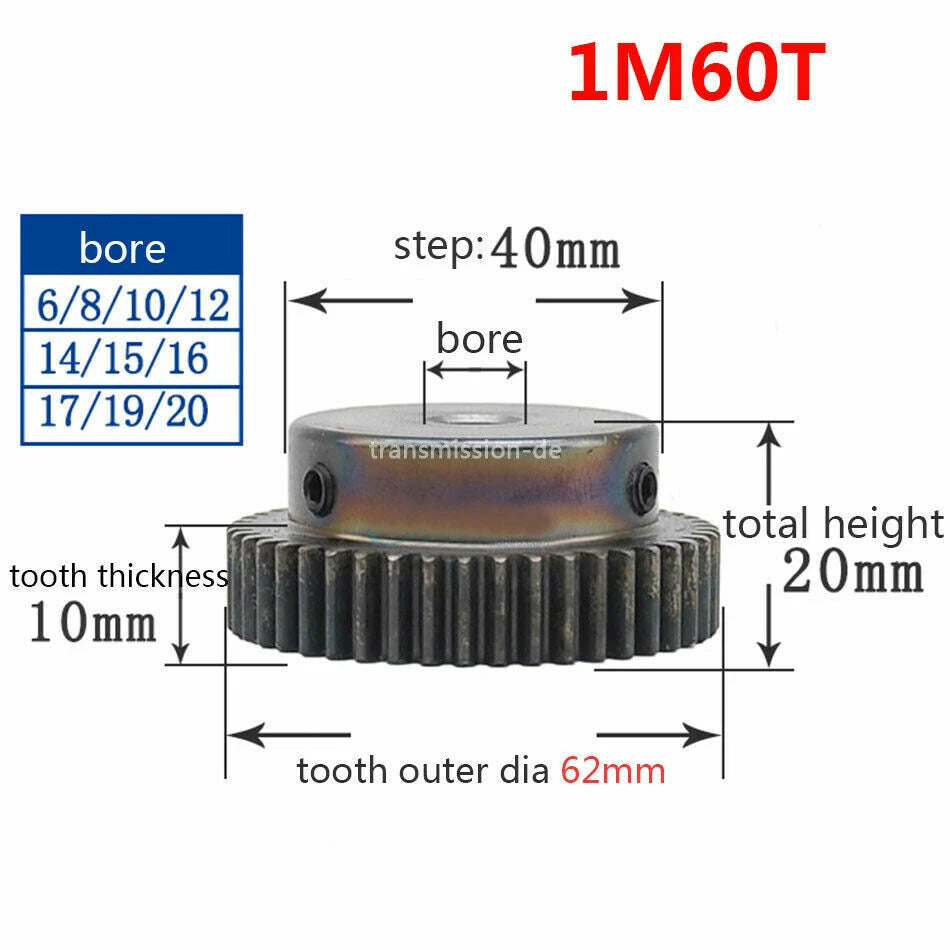
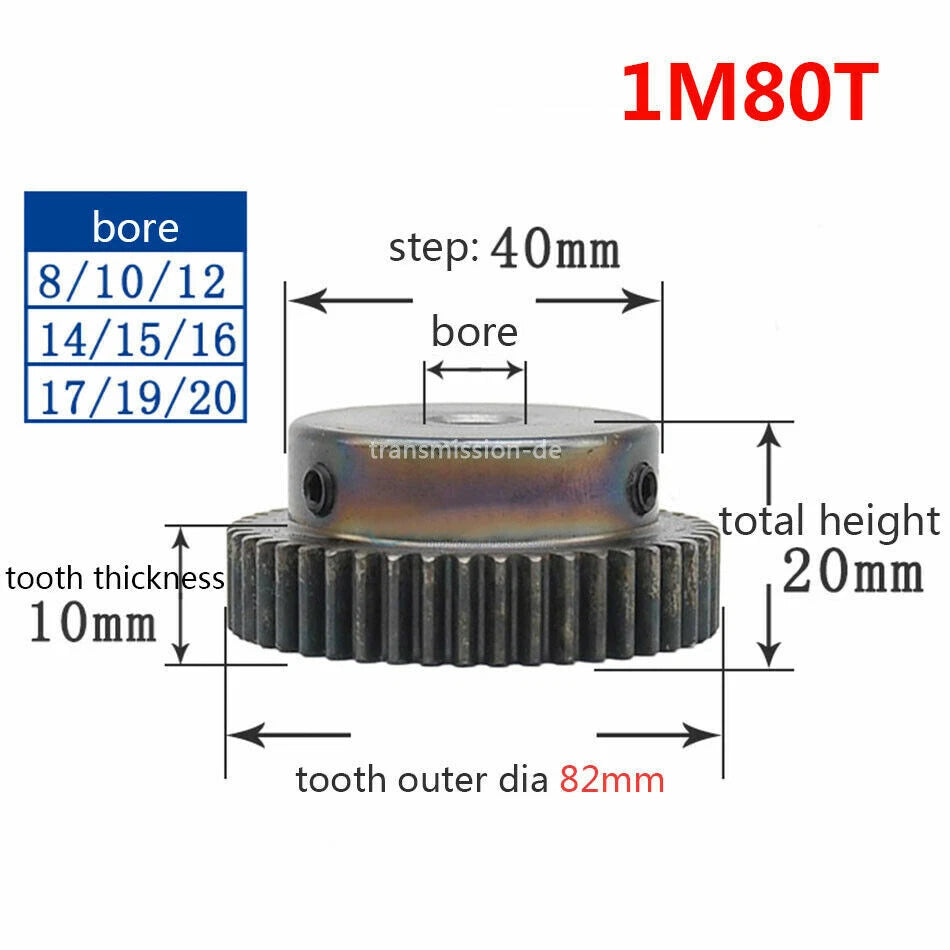
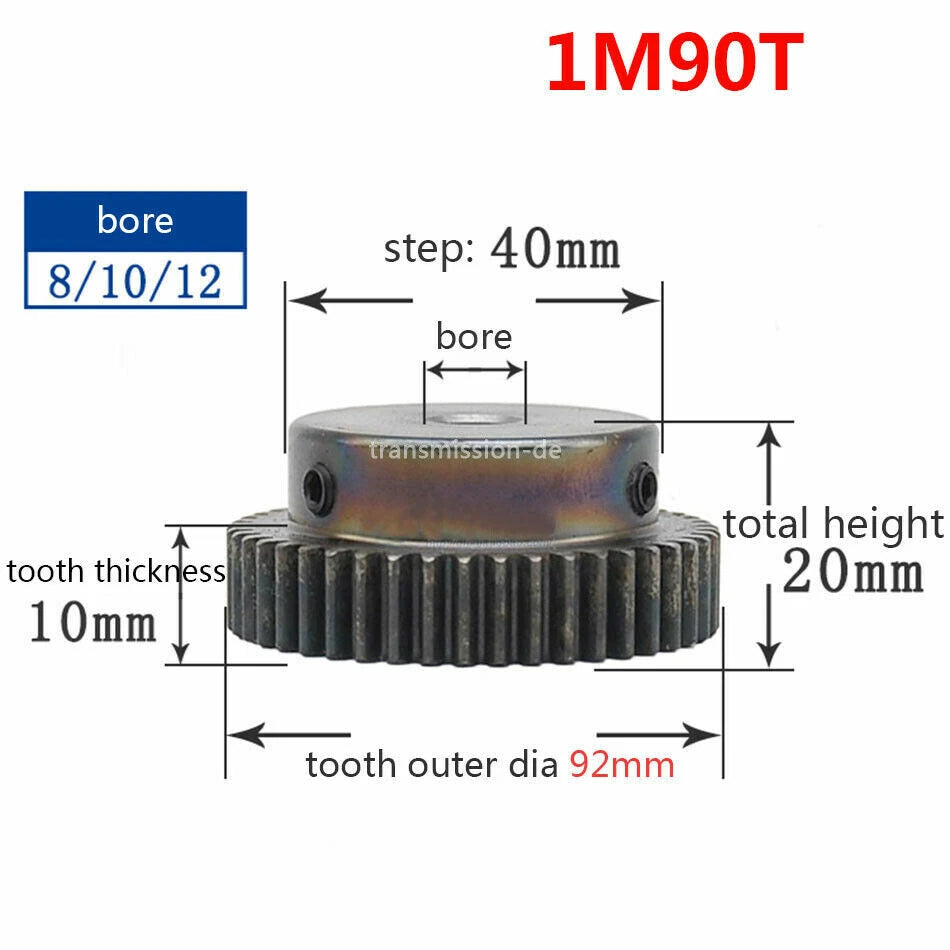
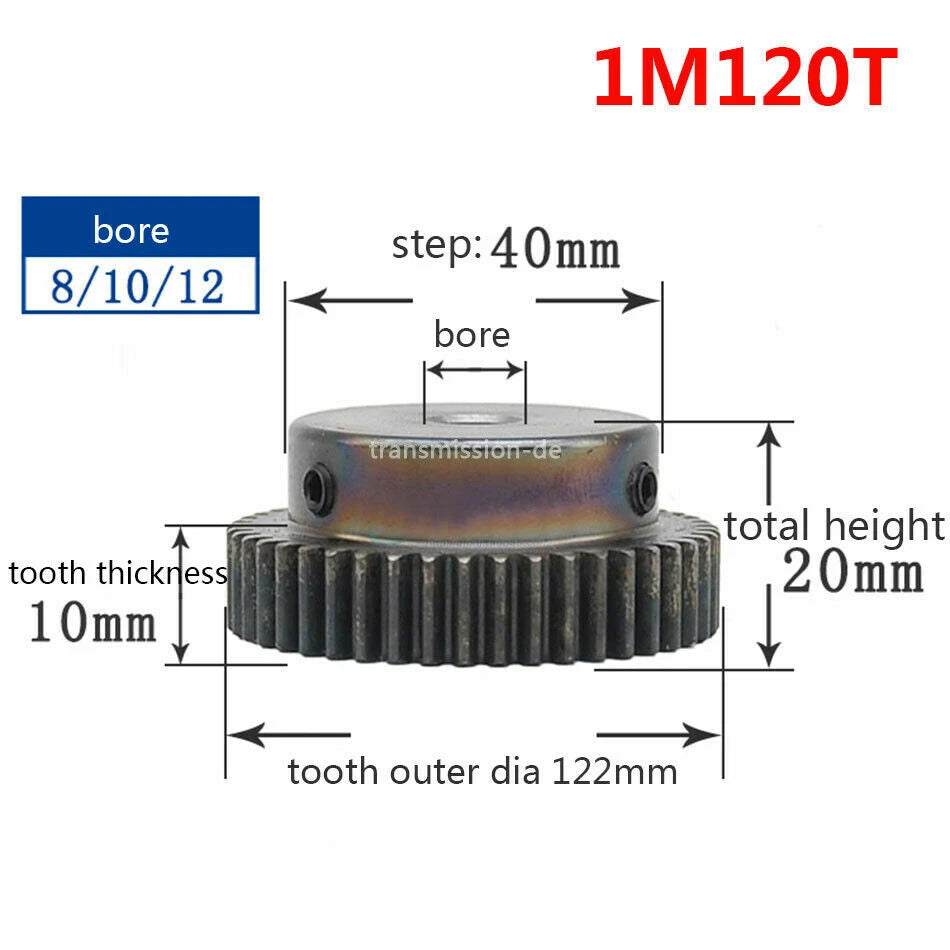
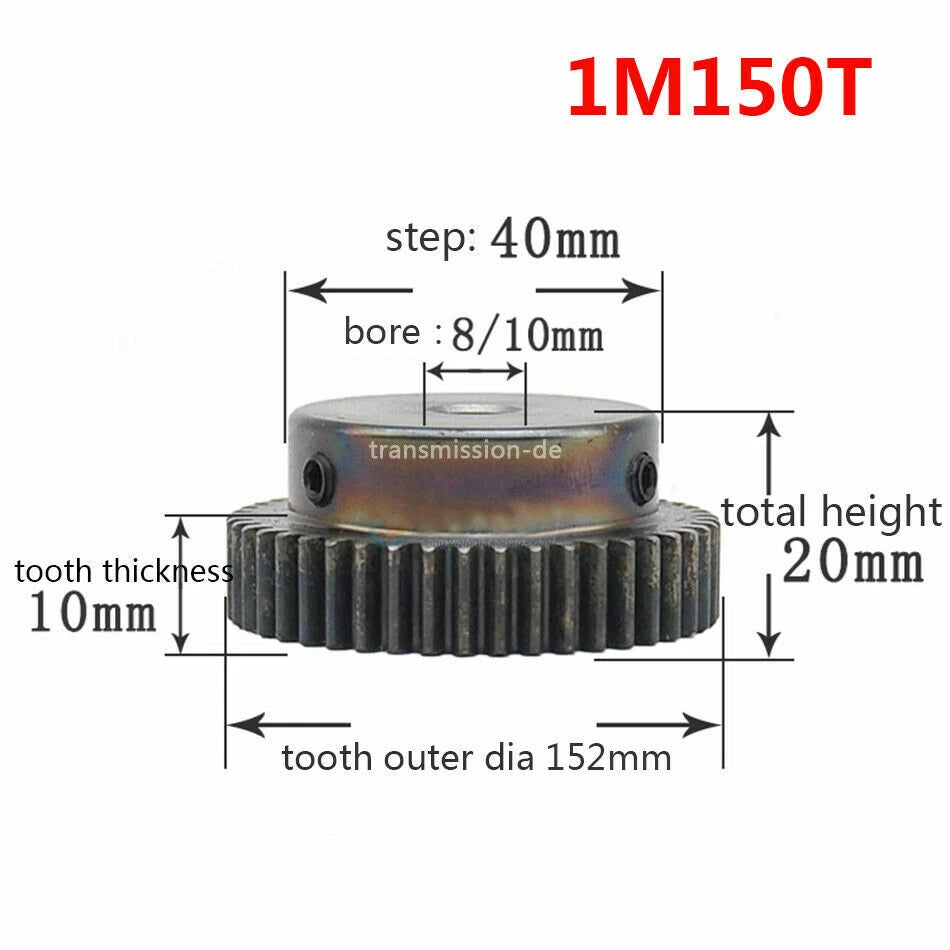
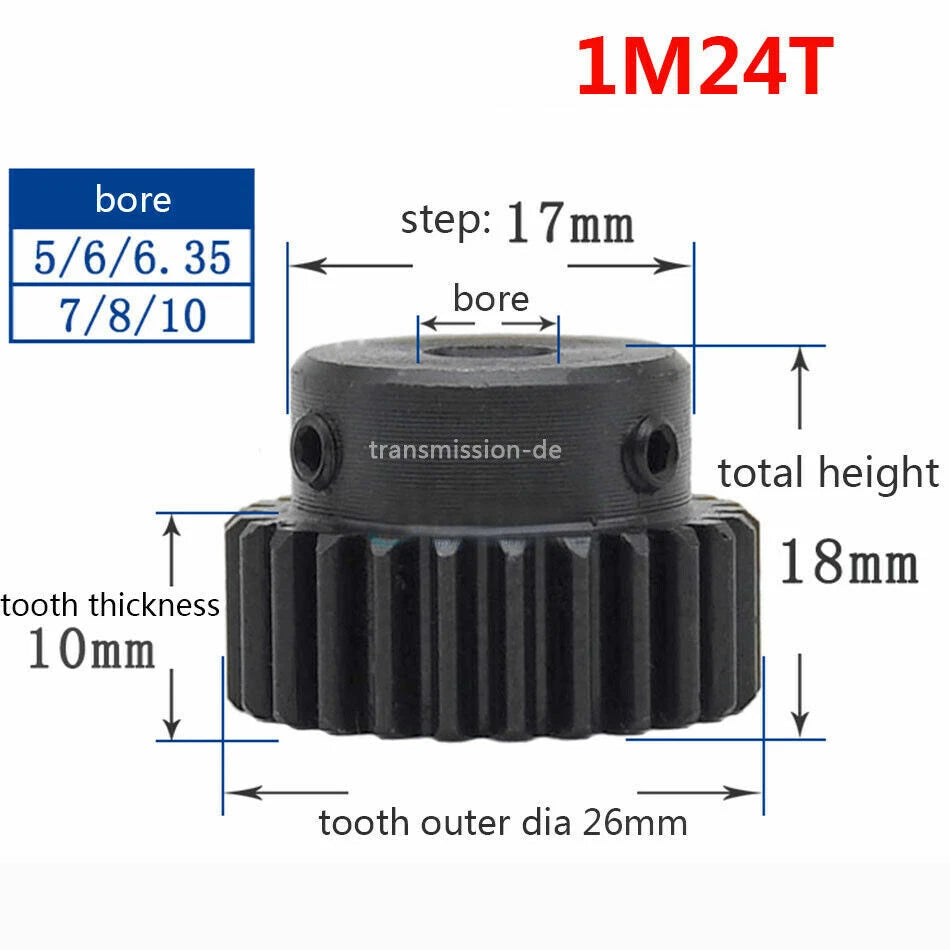
Each gear is machined from 45# medium-carbon steel and is available in two module sizes — 0.5M and 1M — spanning tooth counts from 10T to 150T. Bore diameters range from 4 mm (approx. 0.157 in) to 25 mm (approx. 0.984 in), and the integrated step hub ranges from 0 mm to 60 mm depending on the variant, allowing direct shaft seating without additional spacers.

Typical applications include RC car and truck transmission upgrades requiring a 0.5M 20T or 1M 30T pinion gear replacement, CNC router and 3D-printer Z-axis drives needing a 1M 60T spur gear with step bore, and light industrial conveyor or actuator assemblies where a 1M 100T steel transmission gear with a 14–20 mm bore is specified.

⚙️ Compatibility: Fits standard 0.5 module and 1 module gear systems. Match module (M), tooth count (T), bore diameter, and step height to your shaft and mating gear before ordering.

✅ Key Features of These Pinion Spur Gears

🔩45# Carbon Steel Construction — Medium-carbon steel provides a strong balance of hardness and toughness, resisting deformation under sustained torque loads in transmission and drive applications.
📐Wide Module & Tooth Range — Available in 0.5M and 1M modules with tooth counts from 10T to 150T, covering a broad gear-ratio spectrum for both compact and heavy-duty drive systems.
🎯Stepped Bore Hub Design — The integrated step hub (0–60 mm depending on variant) seats directly onto a shaft shoulder, eliminating axial float and reducing the need for additional collars or spacers.
🔄Multiple Bore Sizes — Bore options from 4 mm to 25 mm accommodate a wide range of motor and shaft diameters, including common sizes such as 5 mm, 6 mm, 6.35 mm (1/4 in), 8 mm, 10 mm, 12 mm, 14 mm, and 20 mm.
Consistent Tooth Profile Accuracy — Machined to standard module pitch, these gears mesh smoothly with mating spur gears of the same module, minimising backlash and noise in precision motion systems.
📦Single-Unit Listing — Each order contains one gear. Select your exact Types (module + tooth count), Bore diameter, and Step height from the variant options above to get the precise part you need.

📐 Technical Specifications — Pinion Spur Gear

Module 0.5M / 1M (see variant options)
Tooth Count 10T – 150T (see variant options)
Bore Diameter 4 mm – 25 mm (see variant options)
Step Height 0 mm – 60 mm (see variant options)
Material 45# Medium-Carbon Steel
Gear Type Spur Gear (straight tooth)
Pressure Angle 20° (standard)
Surface Finish See variant options
Quantity per Order 1 piece
Weight See variant options

❓ Frequently Asked Questions

How do I choose the right module and tooth count for my application?

The module (M) must match the module of the mating gear — a 1M pinion will only mesh correctly with a 1M gear. Tooth count determines your gear ratio: divide the driven gear tooth count by the driving gear tooth count. For example, a 1M 20T pinion driving a 1M 60T spur gear gives a 3:1 reduction. Check your existing gear markings or measure the pitch diameter (PD = module × teeth) to confirm.

What bore size should I select for my motor shaft?

Select the bore diameter that matches your shaft diameter exactly. Common motor shaft sizes are 5 mm, 6 mm, 6.35 mm (1/4 inch), 8 mm, and 10 mm. If your shaft has a keyway or flat, you will need to machine the bore accordingly after receiving the gear. Do not select a bore larger than your shaft — a loose fit causes vibration and premature wear.

What does the Step dimension refer to?

The Step value is the height of the hub boss that protrudes from the gear face. A 0 mm step means the gear face is flush with no protruding hub. A larger step (e.g., 25 mm or 40 mm) provides a longer shaft engagement surface, useful when you need to position the gear at a specific axial location or when shaft engagement length must exceed the gear face width alone.

How strong are these gears under load?

These gears are machined from 45# medium-carbon steel, which has a tensile strength of approximately 600–800 MPa depending on heat treatment. They are suitable for moderate-to-high torque applications in robotics, RC drivetrains, and light industrial machinery. For very high-shock or continuous heavy-load environments, consider whether a hardened or alloy steel gear is more appropriate for your specific torque and speed requirements.

Are these gears corrosion-resistant?

45# carbon steel has moderate corrosion resistance. For indoor or dry environments, the bare steel finish is generally adequate with light lubrication. For humid, outdoor, or washdown environments, apply a rust-inhibiting grease or consider a gear with a zinc or black-oxide coating. Contact us to confirm available surface treatment options for your chosen variant.

Can I use a 0.5M gear with a 1M gear in the same drivetrain?

No. Gears of different modules cannot mesh together — the tooth pitch and profile are incompatible. All gears in a meshing pair must share the same module. Use 0.5M gears exclusively with other 0.5M gears, and 1M gears with other 1M gears. Mixing modules will result in incorrect tooth engagement, noise, and rapid wear.

How do I decide between a 0.5M and a 1M gear for my project?

Module 0.5 gears have smaller, finer teeth suited to compact, lightweight applications such as micro RC cars, small servo mechanisms, and miniature robots. Module 1 gears have larger teeth and can transmit more torque, making them better for larger RC vehicles, 3D printer drives, CNC machines, and light industrial actuators. If replacing an existing gear, measure the pitch diameter and count the teeth to calculate the module: M = PD ÷ T.

🛒 Select your Types (module + tooth count), Bore diameter, and Step height above, then add to cart.


You may also like

Recently viewed