The chain is fine...but I ordered the wrong size. Nine links of the chain I ordered equals six of the size I wanted. My error...
How can I straighten out the springs? I can't use them coil uo as is.
Your payment information is processed securely. We do not store credit card details nor have access to your credit card information.
Get fitment advice & recommendations
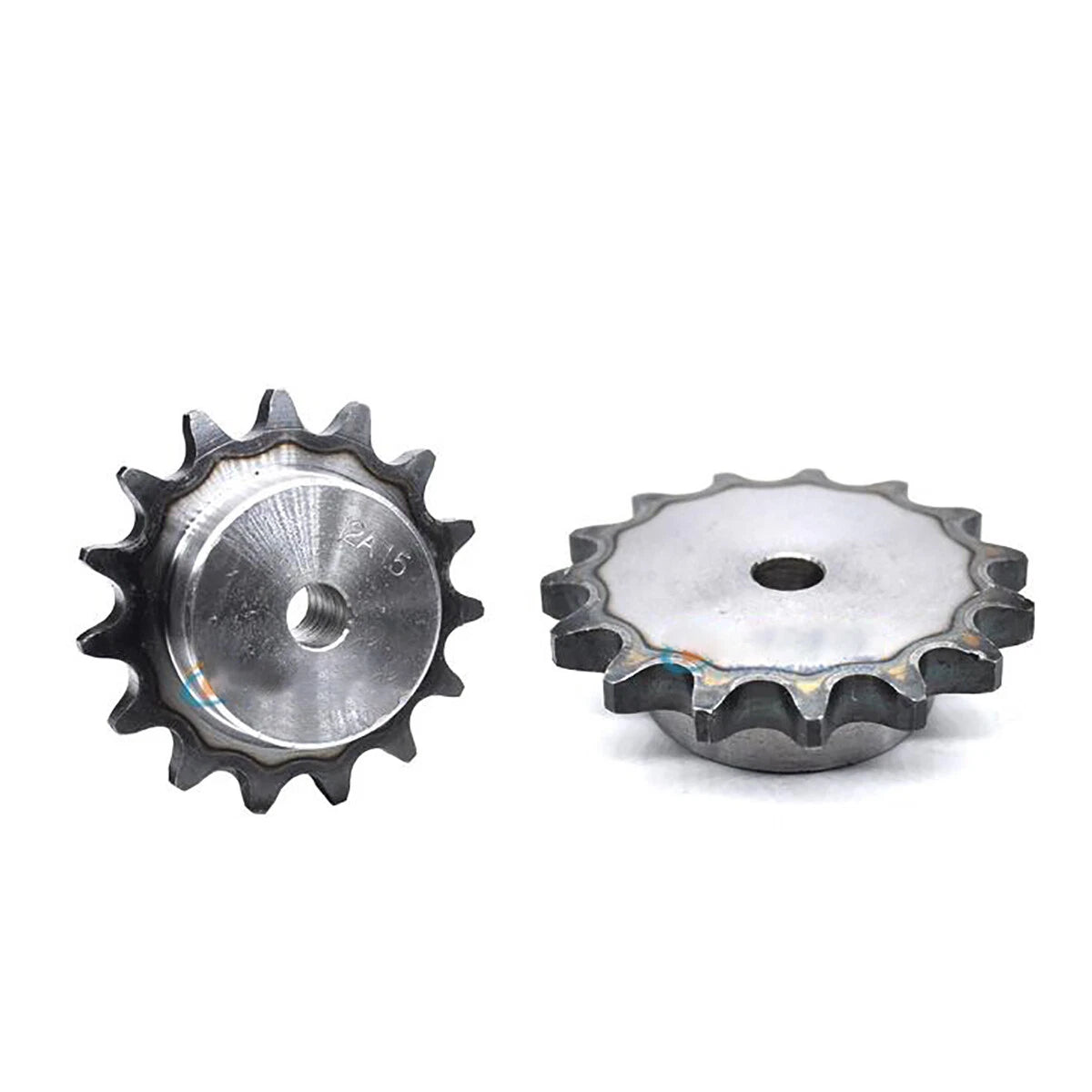
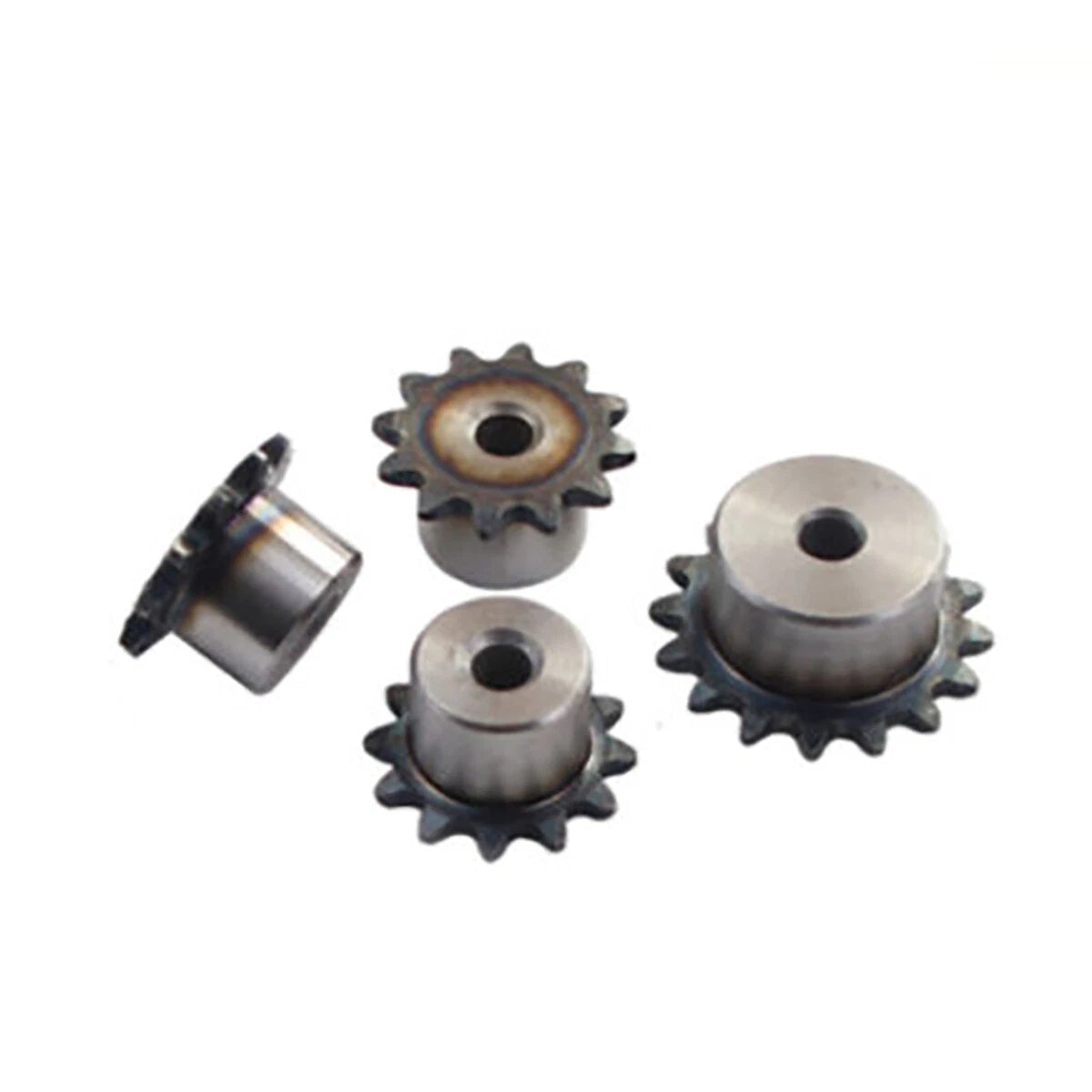
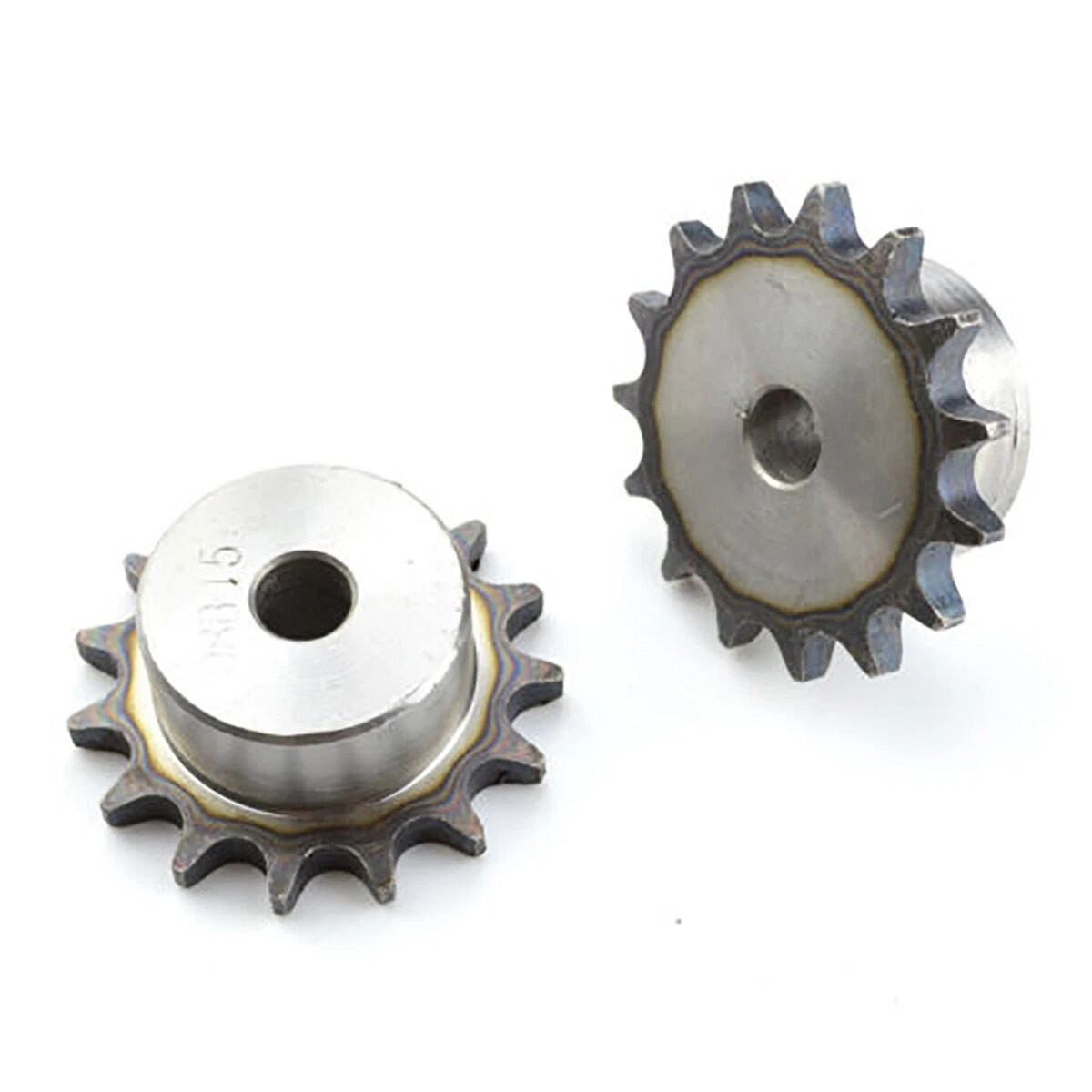
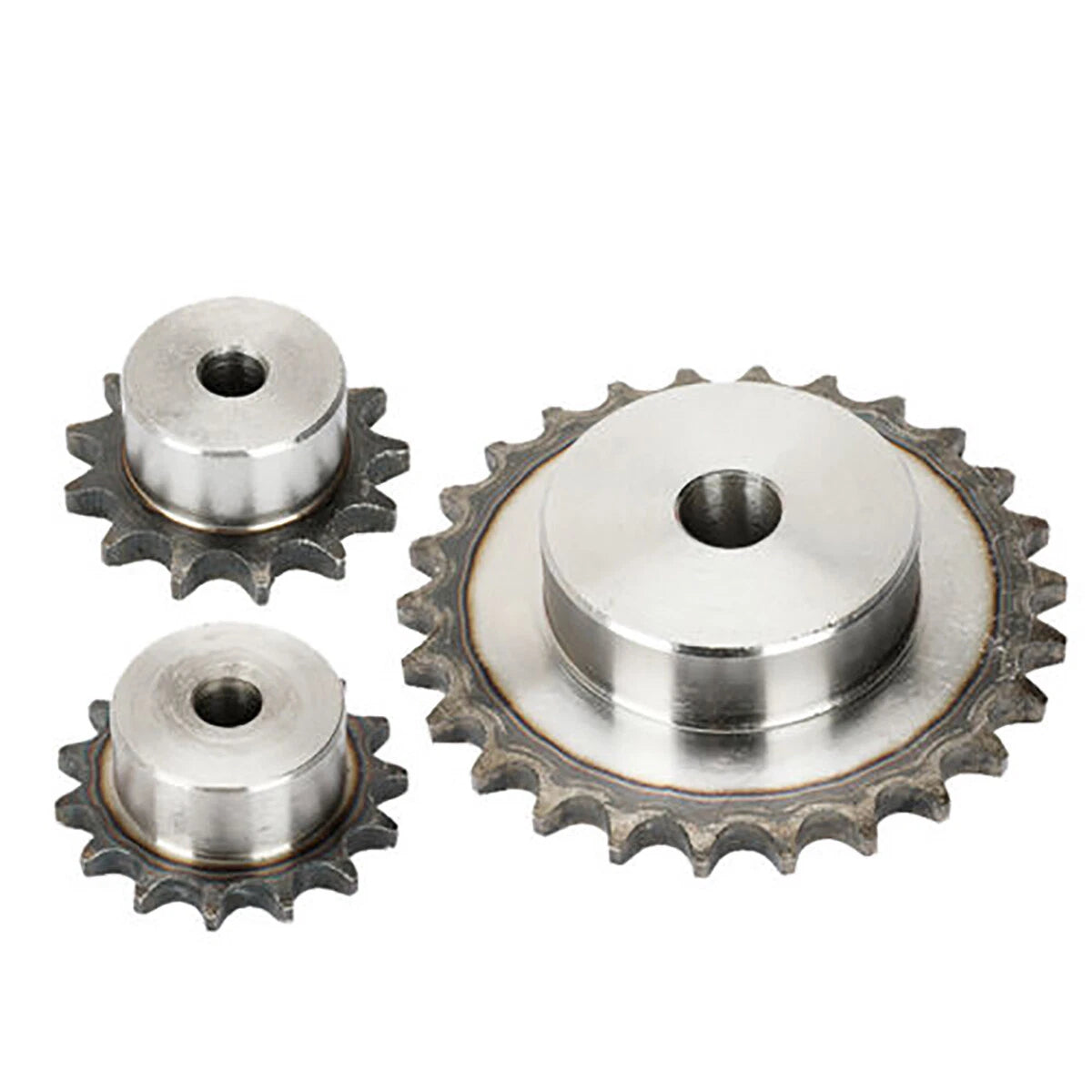
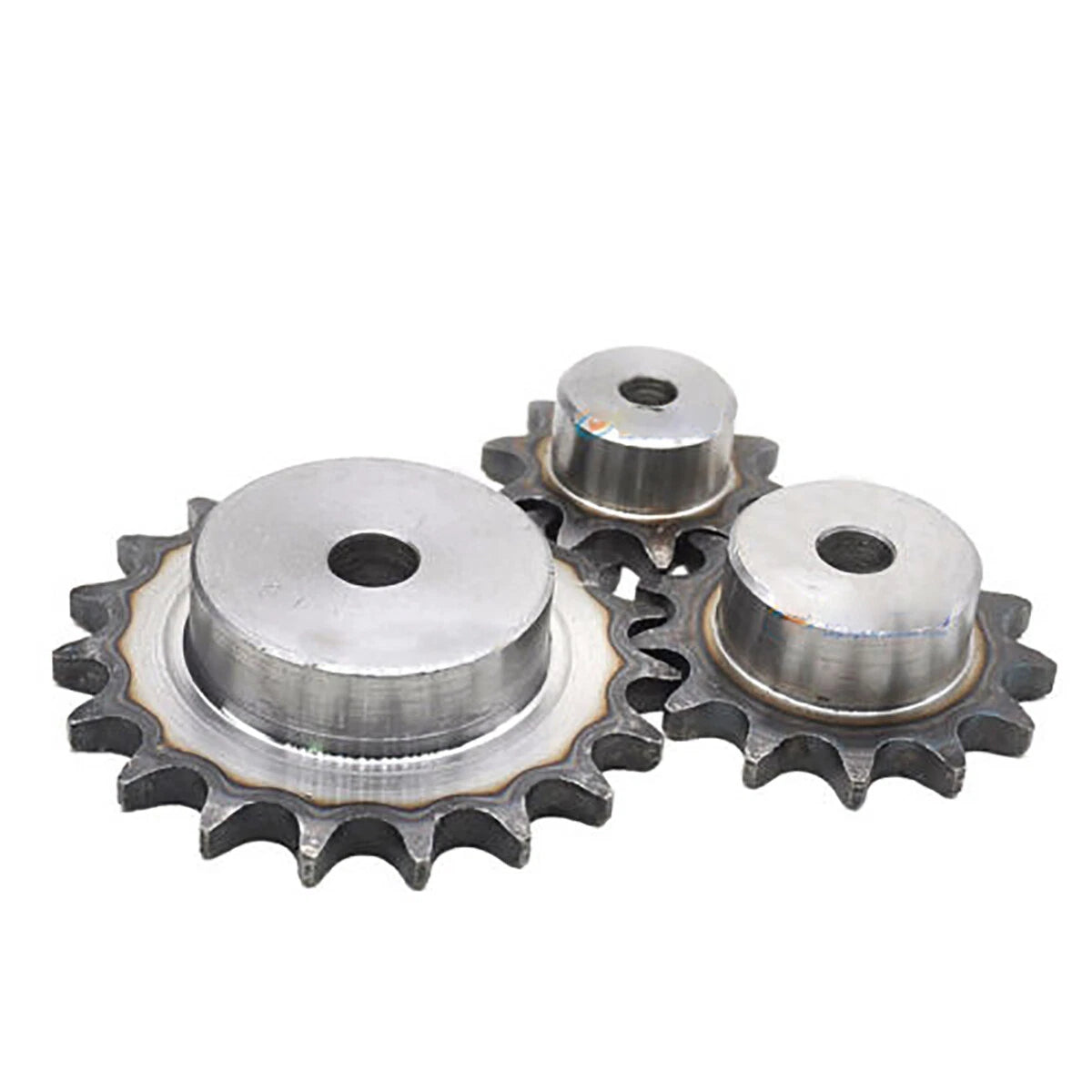
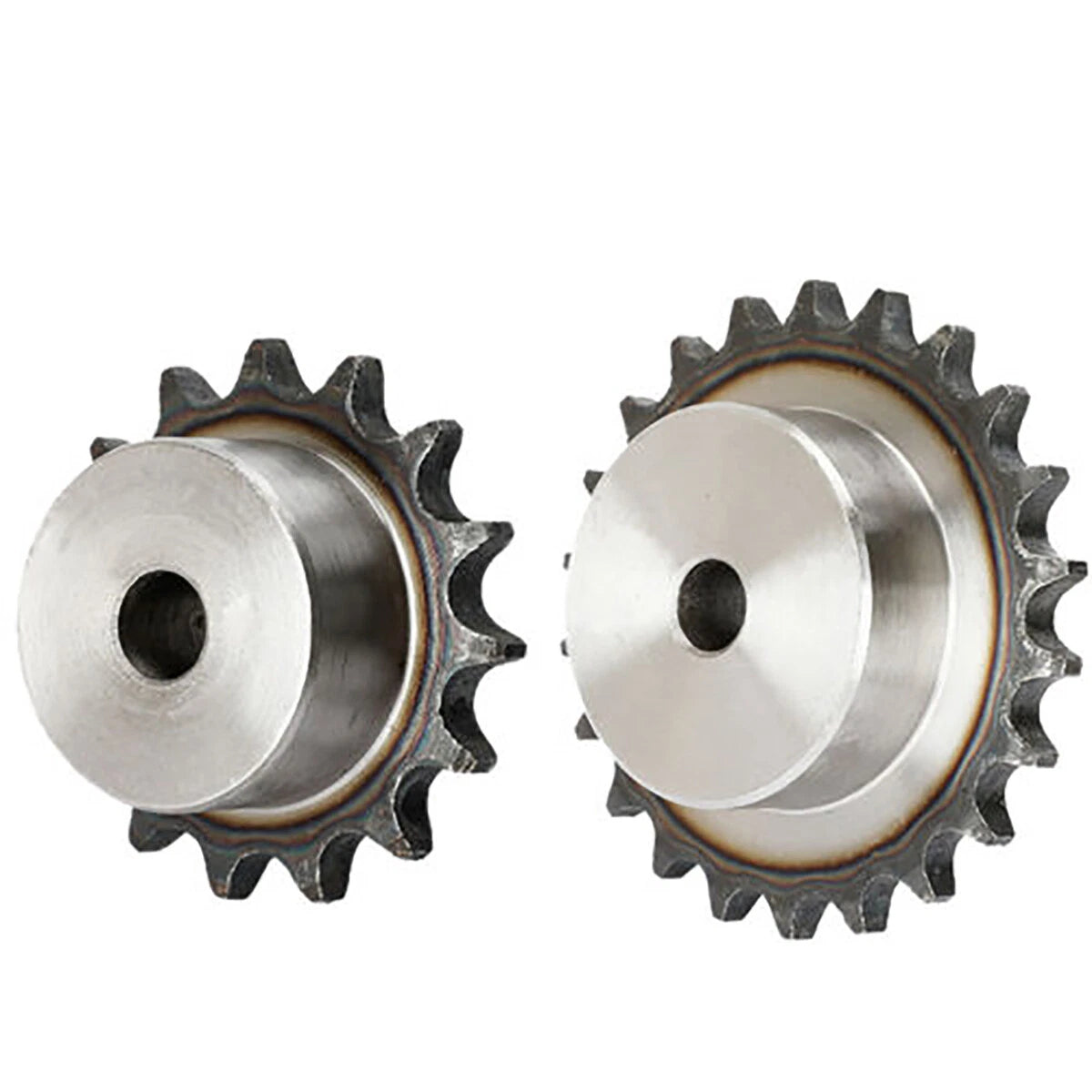
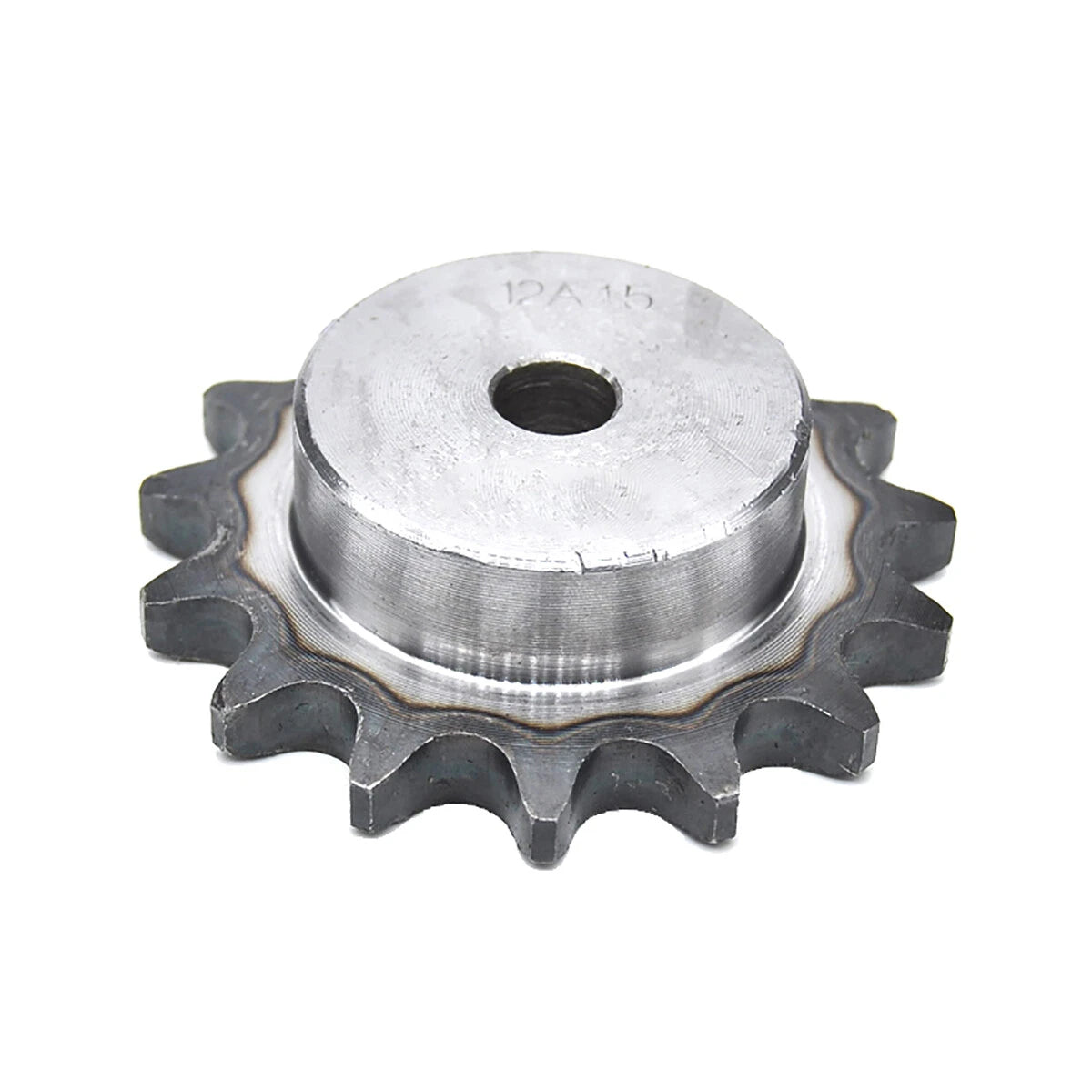
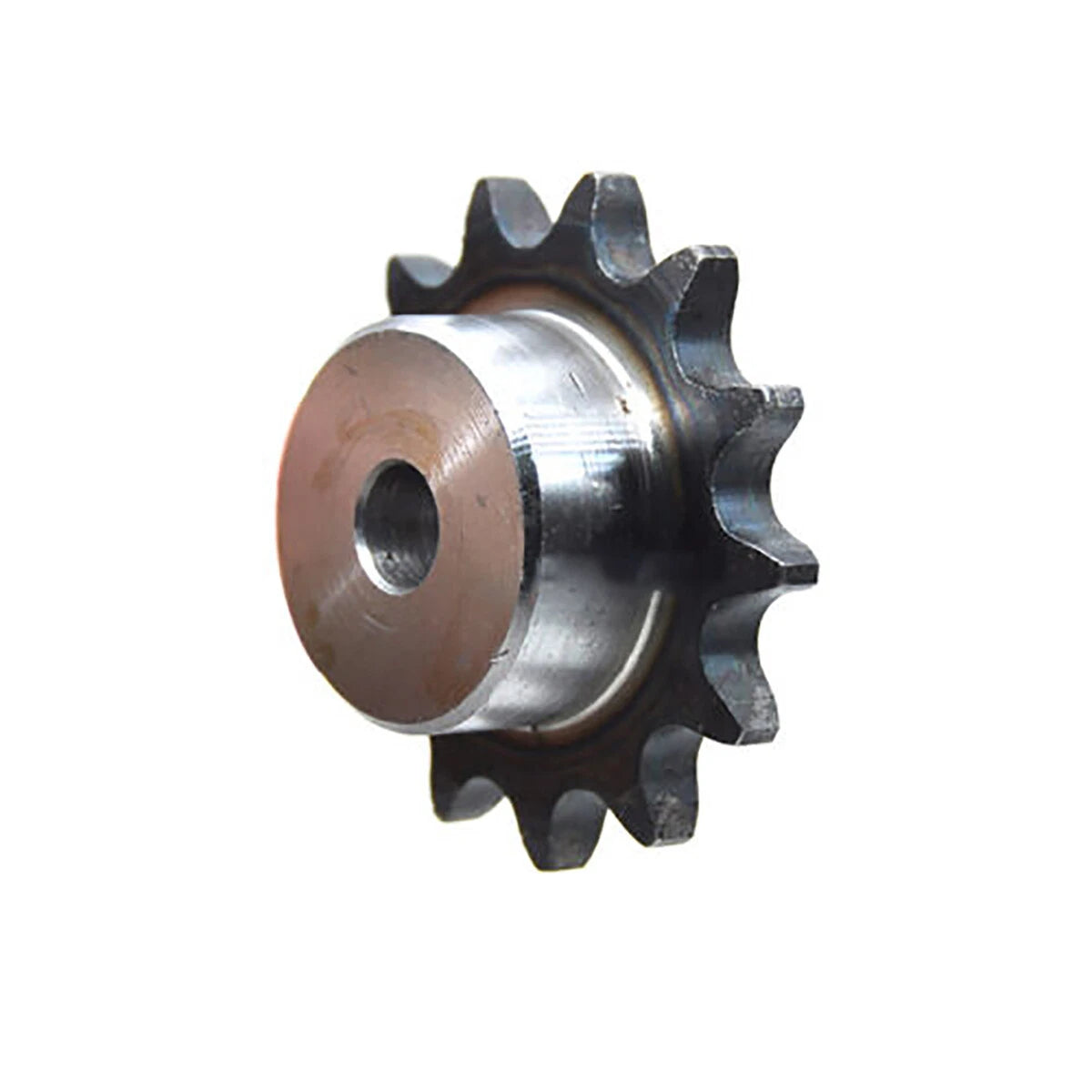
When a worn or mismatched sprocket causes chain skip, premature wear, or unexpected downtime, the fix starts with a dimensionally accurate replacement. Makers, maintenance technicians, and machine builders who need a reliable roller chain sprocket across a wide range of chain standards will find this multi-model listing covers the most common metric and imperial series in a single place.
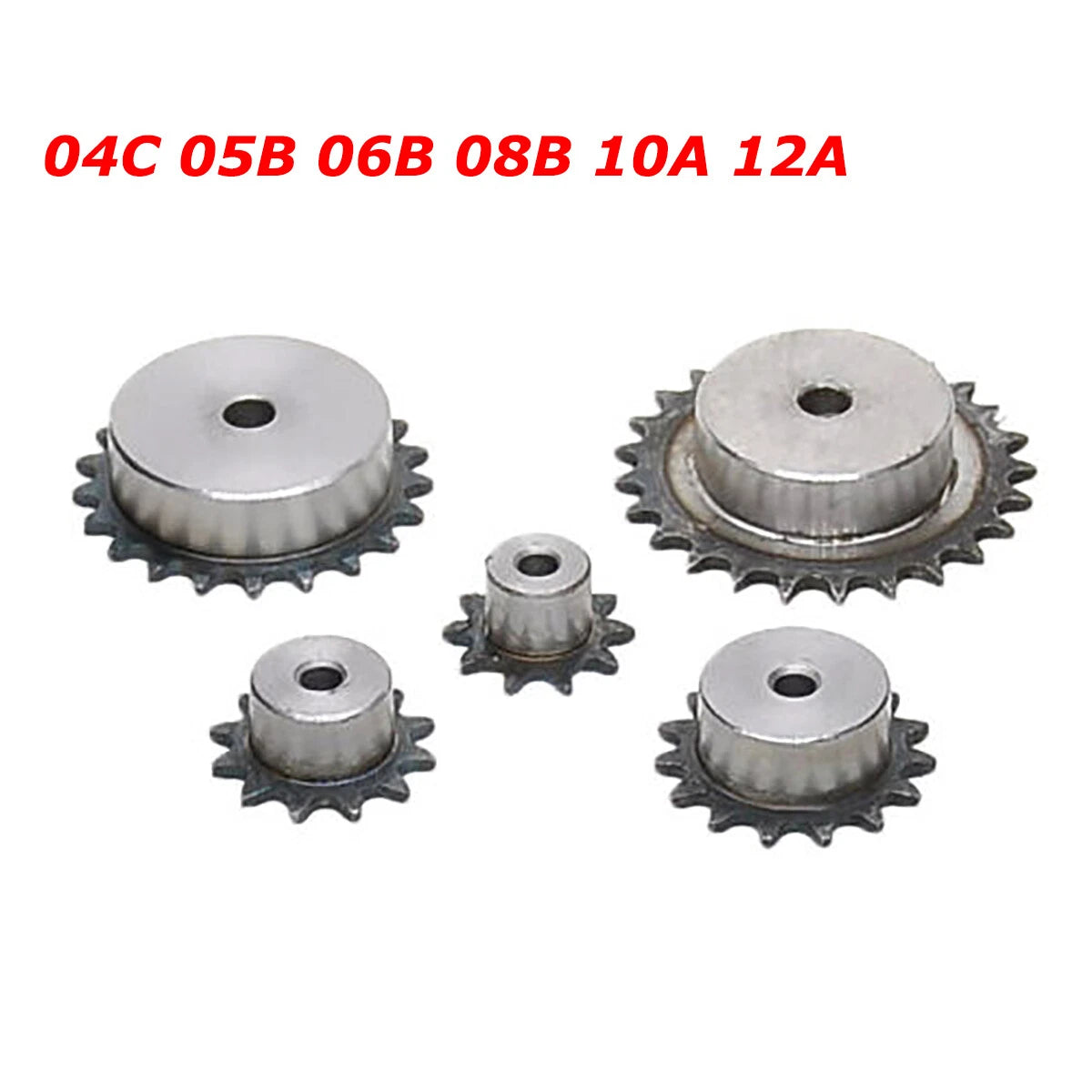
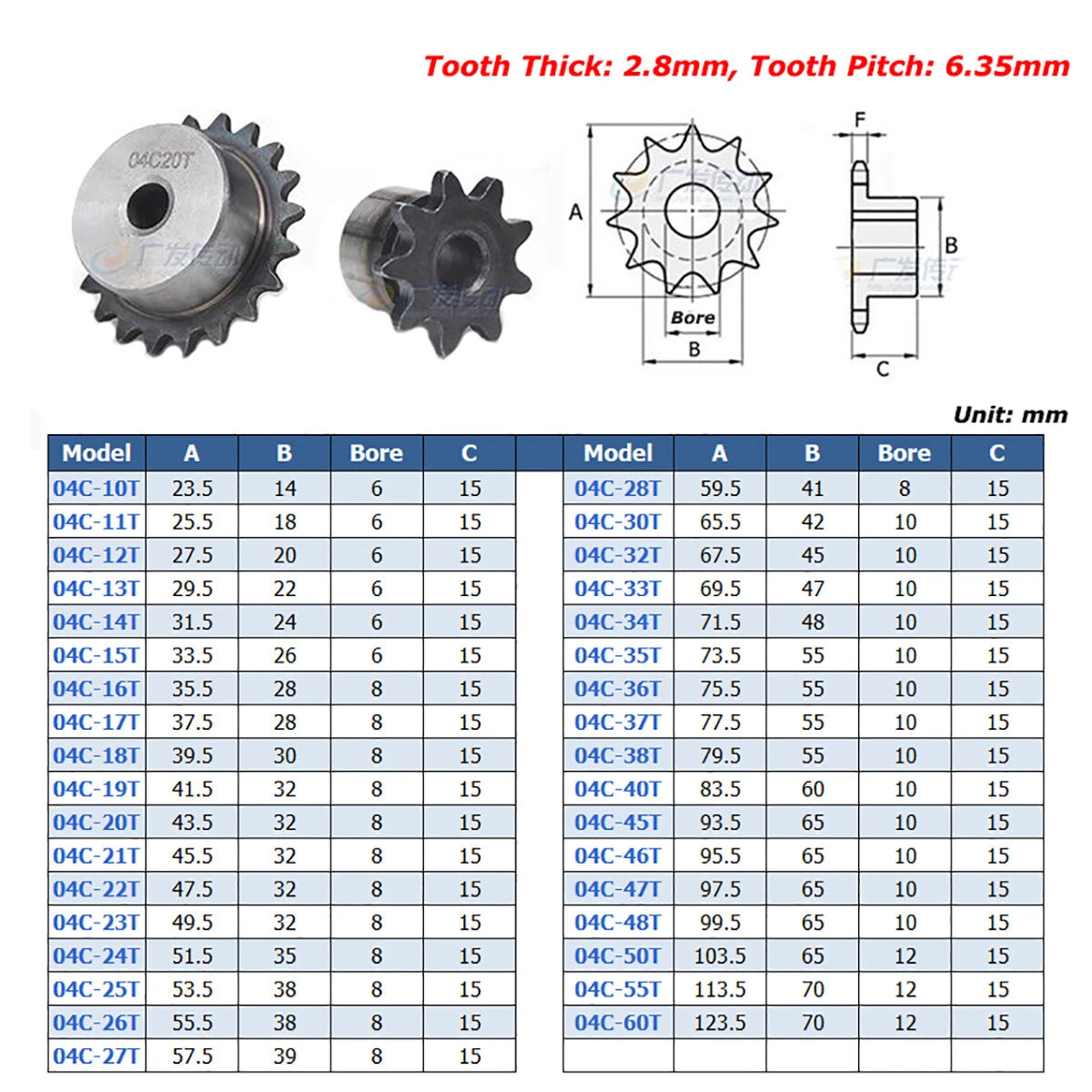
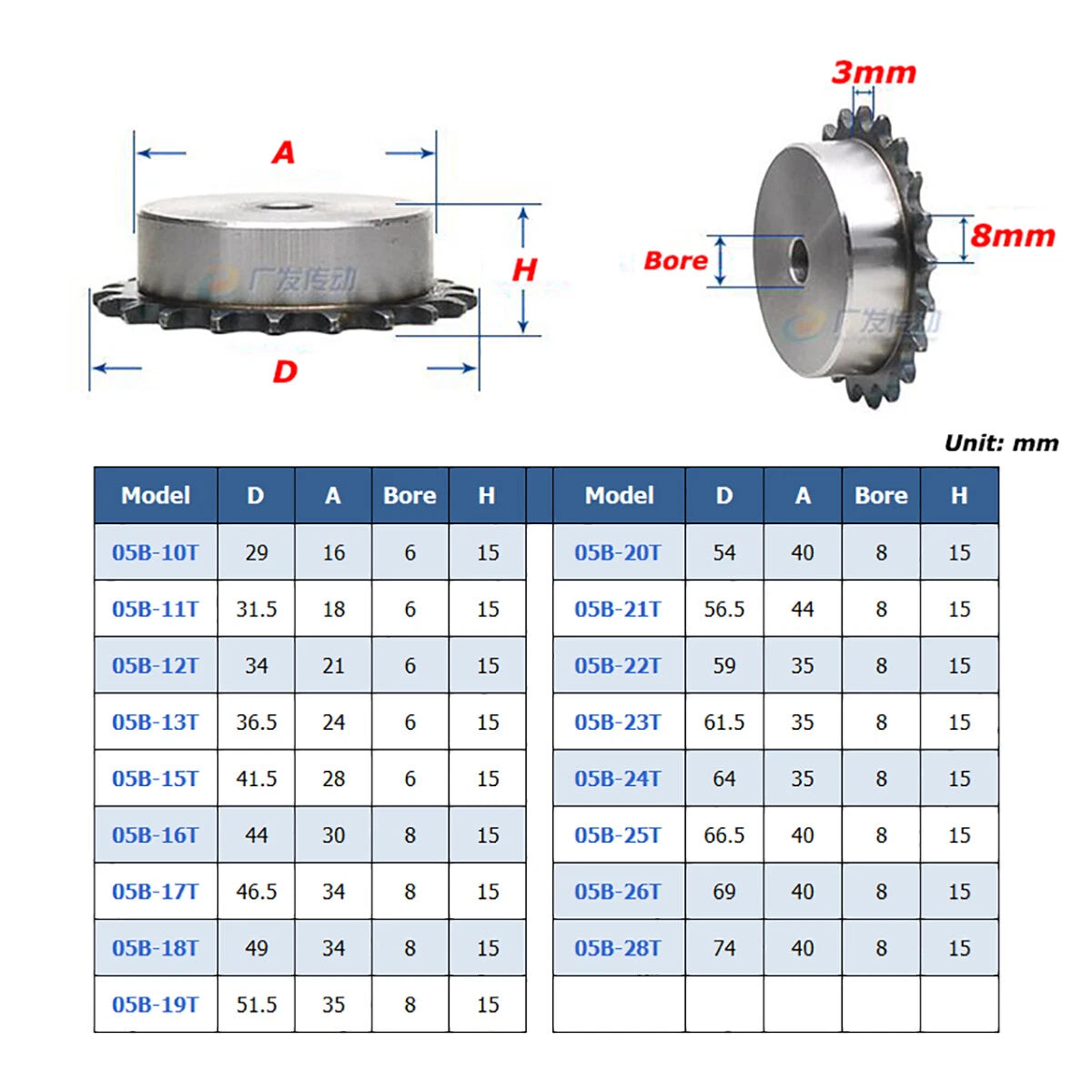
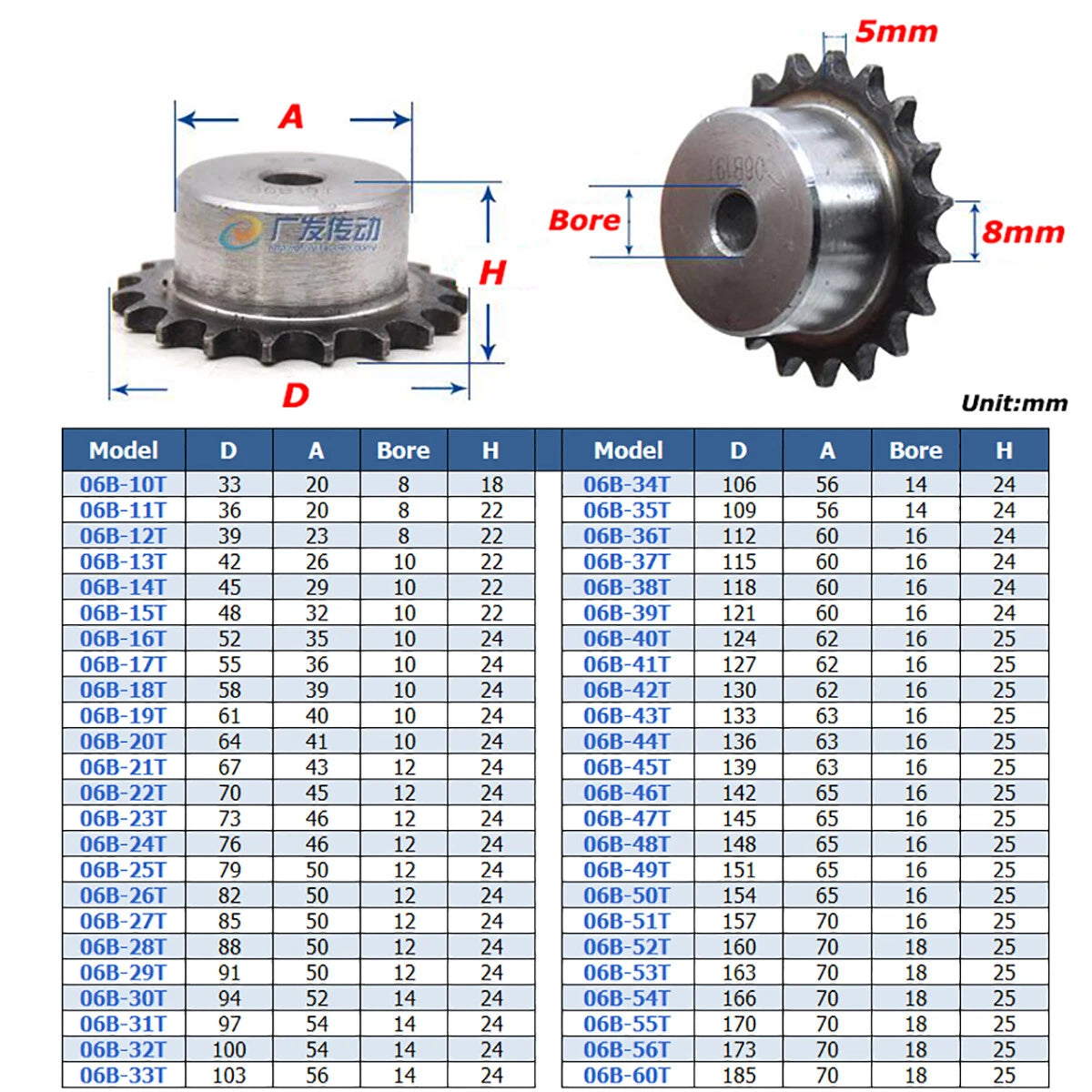
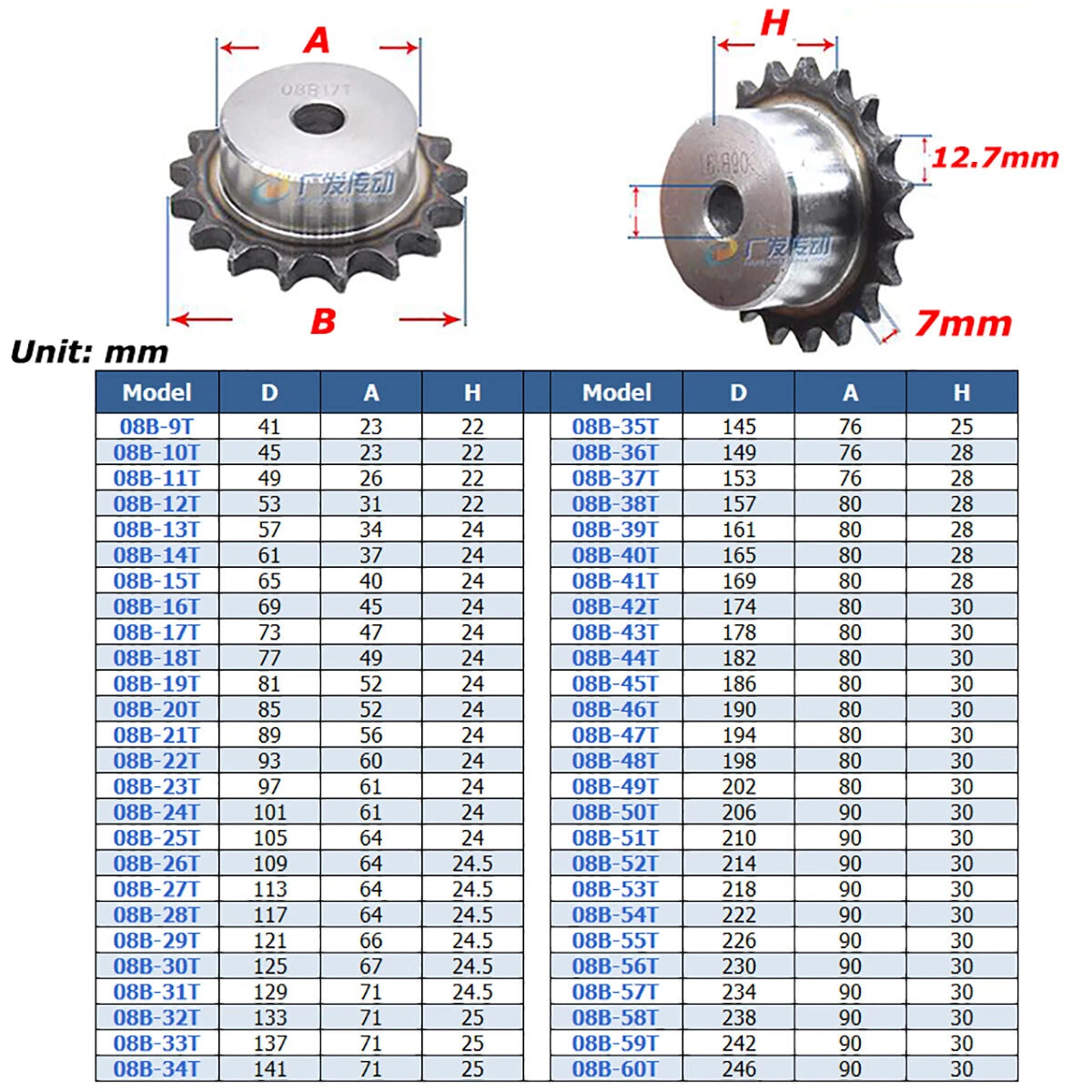
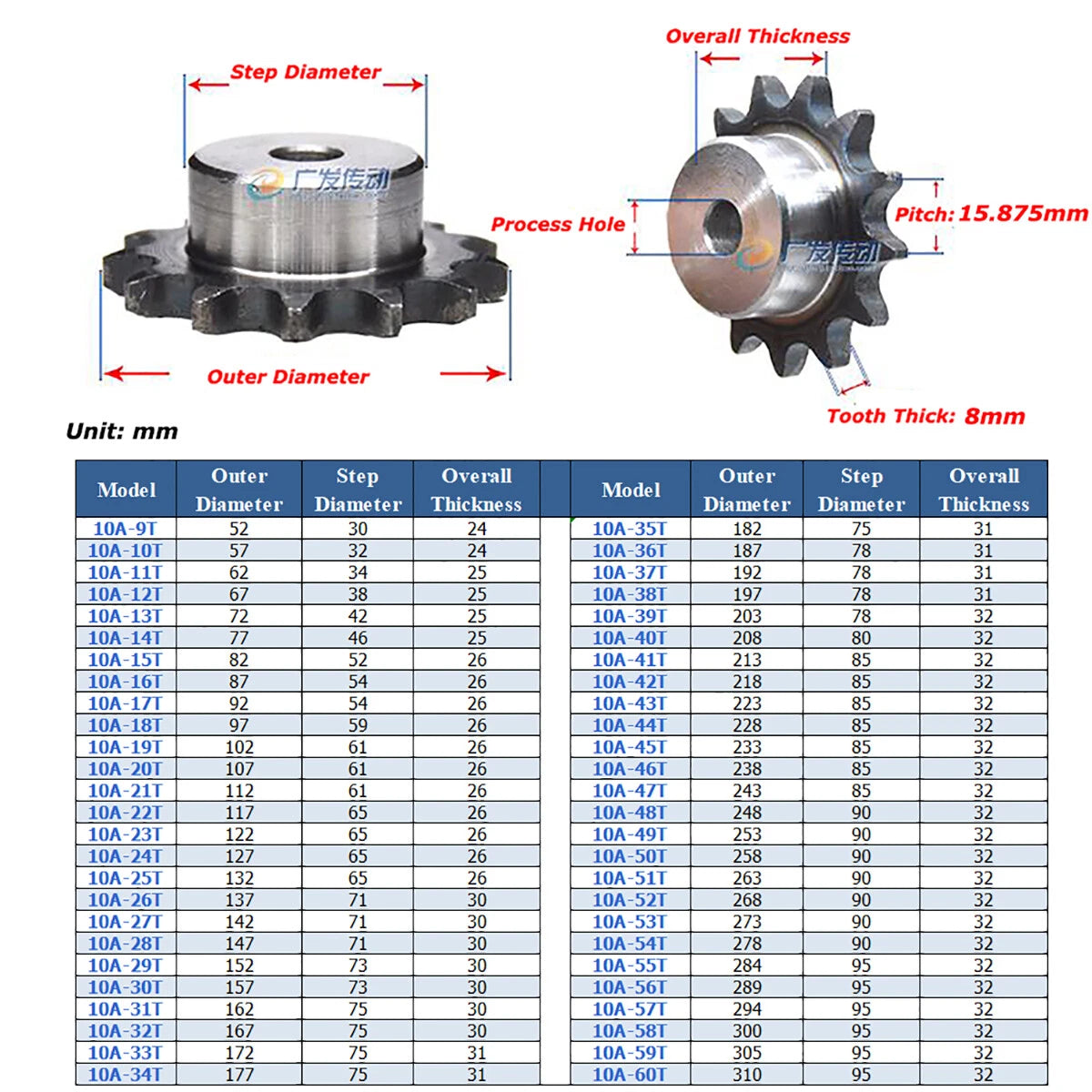
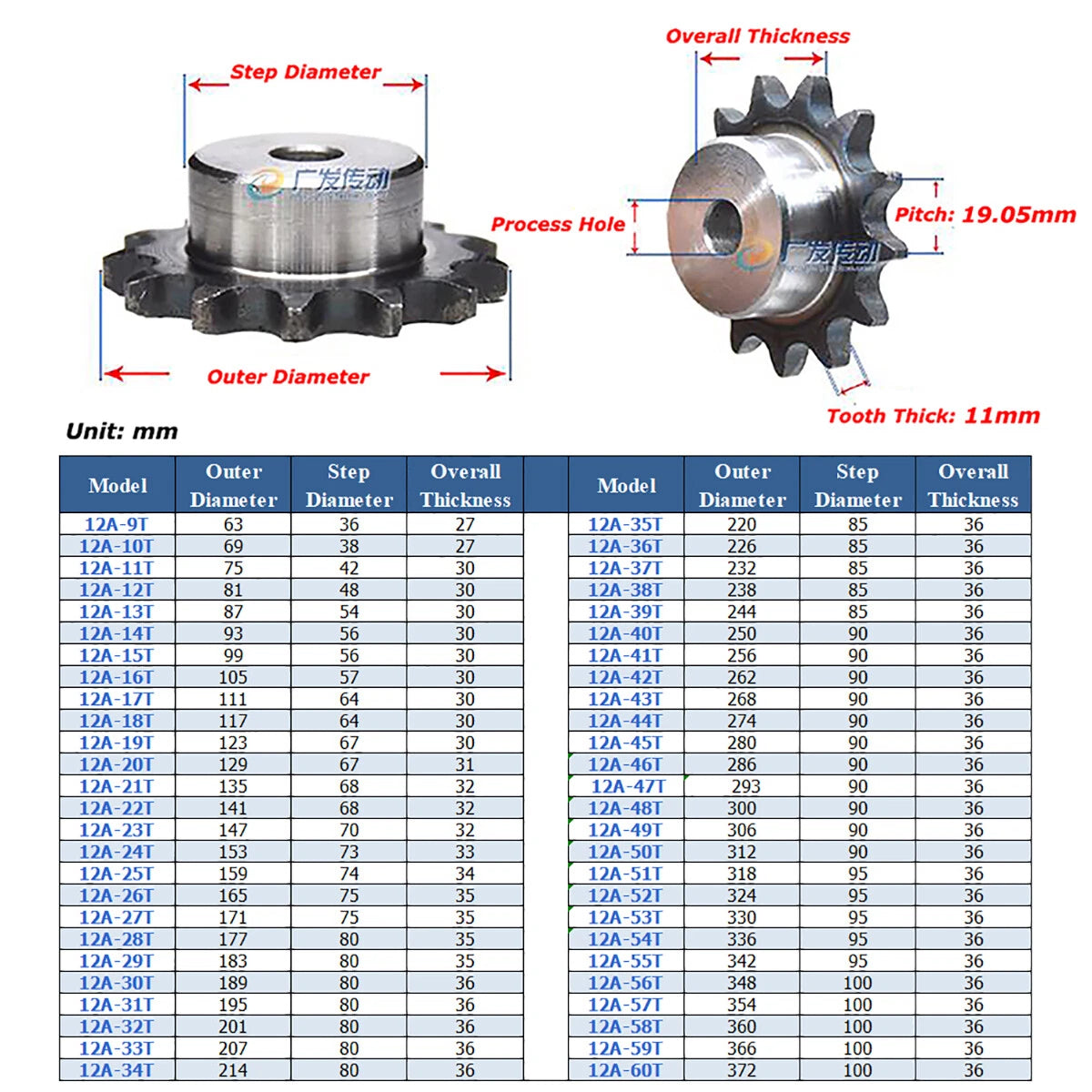
This listing covers six chain standards — 04C, 05B, 06B, 08B, 10A, and 12A — each machined from carbon steel with a natural or lightly finished surface. Tooth counts span 10T through 60T, with bore and hub dimensions varying by model. Pitch ranges from approximately 6.35 mm (1/4 in) for 04C up to 38.10 mm (1-1/2 in) for 12A, covering a broad spectrum of drive ratios and load capacities.
Typical use cases include bicycle and go-kart final drives (04C/05B), light conveyor and agricultural equipment (06B/08B), and industrial gearbox output stages and packaging machinery (10A/12A). Whether you are building a custom roller chain drive, replacing a worn sprocket on a conveyor line, or sourcing a transmission gear for a DIY power-transmission project, selecting the correct model and tooth count ensures proper chain engagement and extended service life.
04C, 05B, 06B, 08B, 10A, and 12A models available — covering both ISO B-series and ANSI A-series roller chain standards for maximum application flexibility.
Select from 10 to 60 teeth to achieve the exact drive ratio your application requires, from high-speed small sprockets to large-diameter slow-speed driven sprockets.
Machined from carbon steel for solid load-bearing capacity and dimensional stability under cyclic loading conditions typical of chain drive systems.
Tooth geometry follows standard roller chain sprocket profiles, ensuring smooth chain engagement, reduced noise, and consistent pitch-to-pitch accuracy across the full tooth count range.
Suitable for bicycles, go-karts, conveyors, agricultural equipment, packaging machinery, and custom DIY power-transmission builds requiring a roller chain drive sprocket.
Each order ships as individual sprockets, allowing you to source exactly the quantity needed without overstocking — ideal for replacement, prototyping, or small-batch production.
| Chain Standards Covered | 04C, 05B, 06B, 08B, 10A, 12A |
|---|---|
| Pitch Range | 6.35 mm – 38.10 mm (1/4 in – 1-1/2 in) |
| Tooth Count Range | 10T – 60T |
| Material | Carbon Steel |
| Surface Finish | See variant options |
| Bore Diameter | See variant options |
| Hub Diameter | See variant options |
| Hub Length | See variant options |
| Overall Thickness | See variant options |
| Tooth Profile Standard | ISO 606 / ANSI B29.1 |
| Packing Quantity | 1 PCS per order |
| Application | Roller chain drive systems — bicycles, conveyors, machinery, DIY builds |
Match the model to your existing chain's pitch and series. Measure the distance between the centers of two adjacent chain pins — that is the pitch. 04C = 6.35 mm (1/4"), 05B = 8.00 mm (5/16"), 06B = 9.525 mm (3/8"), 08B = 12.70 mm (1/2"), 10A = 15.875 mm (5/8"), 12A = 19.05 mm (3/4"). Also confirm whether your chain is ISO B-series (05B, 06B, 08B) or ANSI A-series (10A, 12A), as the roller width and inner plate dimensions differ.
Drive ratio = driven sprocket teeth ÷ drive sprocket teeth. For example, a 10T drive sprocket paired with a 30T driven sprocket gives a 3:1 reduction. Choose your tooth counts based on the input and output speeds required by your application. Smaller tooth counts on the drive sprocket increase torque at the output; larger tooth counts reduce speed and increase torque further.
These sprockets are machined from carbon steel and follow standard roller chain tooth profiles, making them suitable for light-to-medium duty conveyor, agricultural, and machinery applications. For heavy-duty or high-cycle industrial environments, confirm the specific load rating against your application's chain pull force and operating speed. Contact us if you need additional technical data.
Carbon steel sprockets are susceptible to surface oxidation in humid or wet environments. For outdoor or washdown applications, apply a chain lubricant or anti-rust coating after installation. If corrosion resistance is a primary requirement, consider stainless steel alternatives or ensure regular lubrication maintenance is part of your service schedule.
Bore dimensions vary by model and tooth count. Please refer to the variant options or contact us to confirm the bore diameter for your specific selection. Many standard sprockets can be bored and keyed by a local machine shop to match your shaft diameter — confirm wall thickness before machining to ensure sufficient material remains.
If you know your chain's ANSI or ISO designation (e.g., #50, #60, 06B, 08B), match it directly to the sprocket model in this listing. If you only have the chain in hand, count the links per foot or measure the pitch as described above. A correctly matched sprocket will seat the chain rollers fully into the tooth valleys with no side play or binding.
Yes. The 04C model is compatible with #25 chain commonly used in mini bikes and small go-karts. The 05B model suits 5/16" pitch applications. Always verify the bore diameter matches your axle or crankshaft, and confirm the tooth count achieves your target gear ratio before ordering.