
The chain is fine...but I ordered the wrong size. Nine links of the chain I ordered equals six of the size I wanted. My error...
How can I straighten out the springs? I can't use them coil uo as is.
Your payment information is processed securely. We do not store credit card details nor have access to your credit card information.
Get fitment advice & recommendations
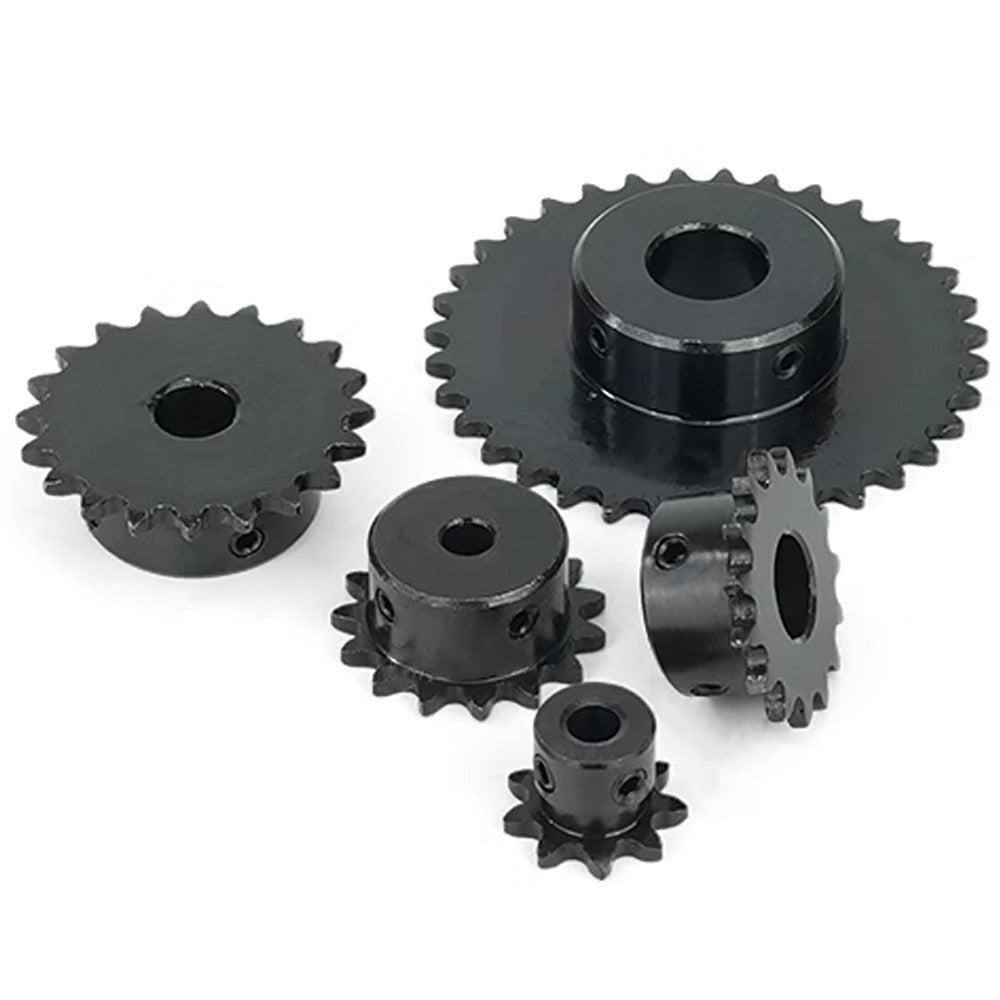
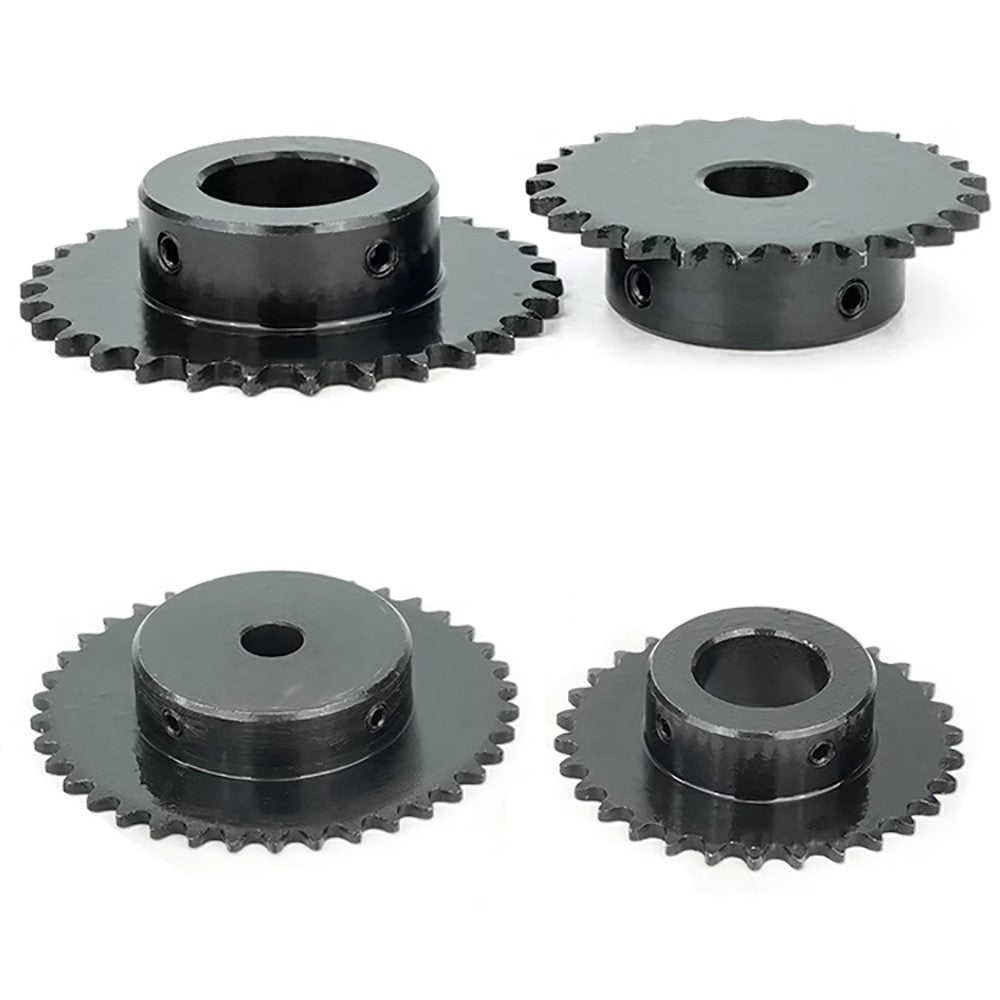
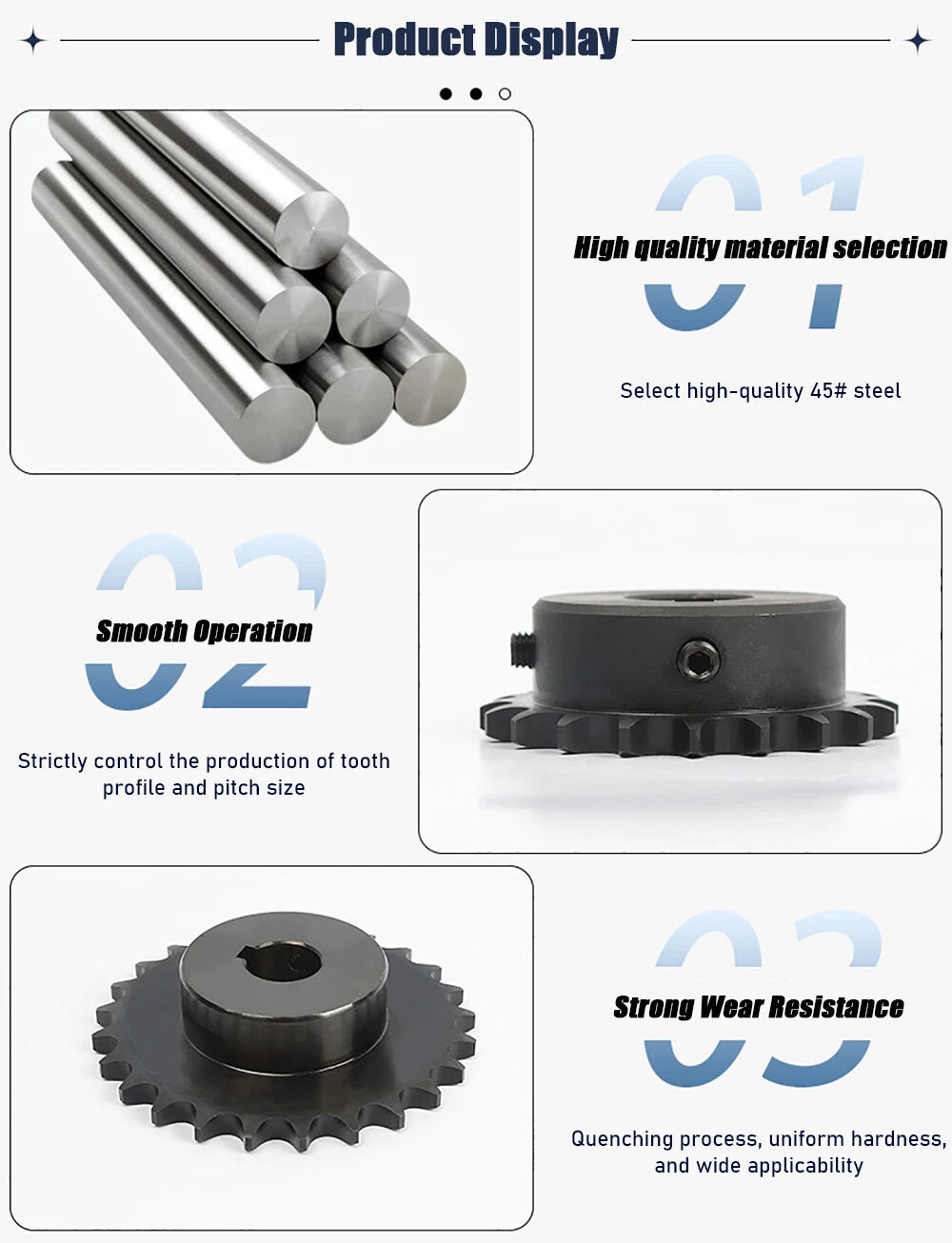
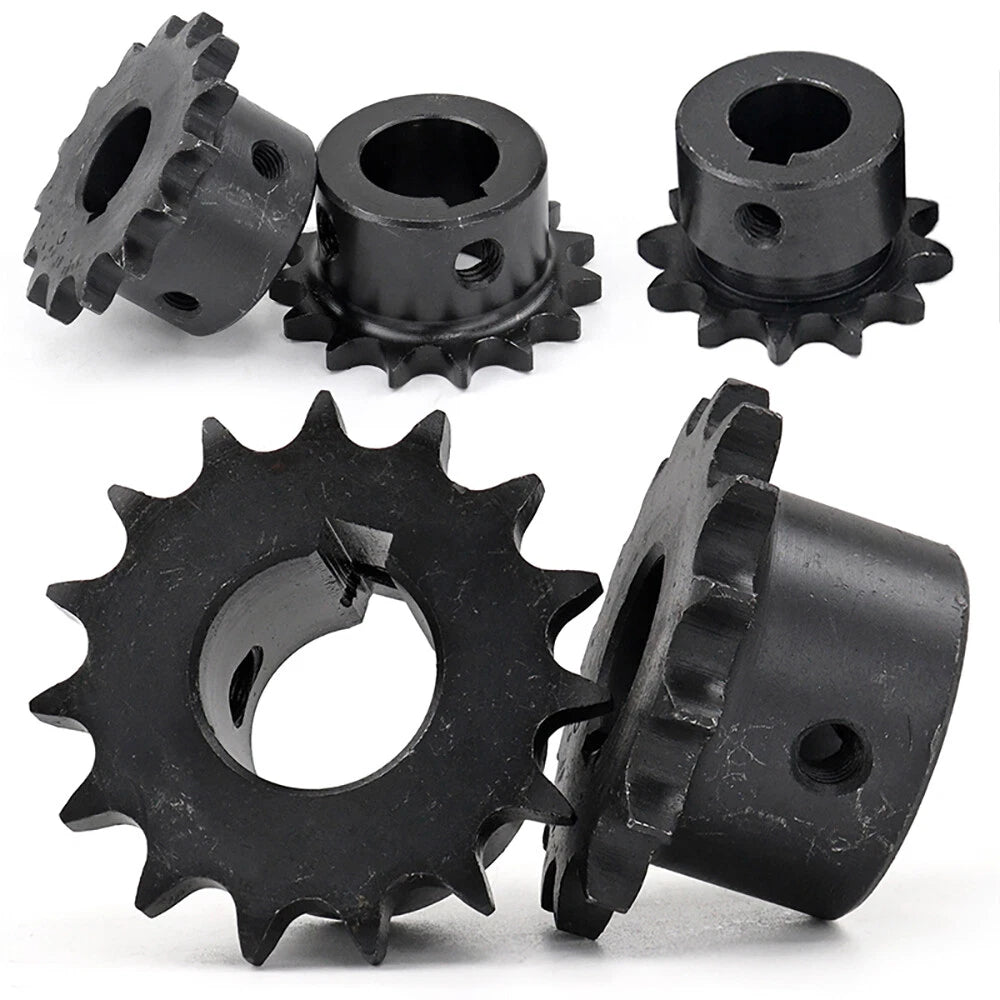
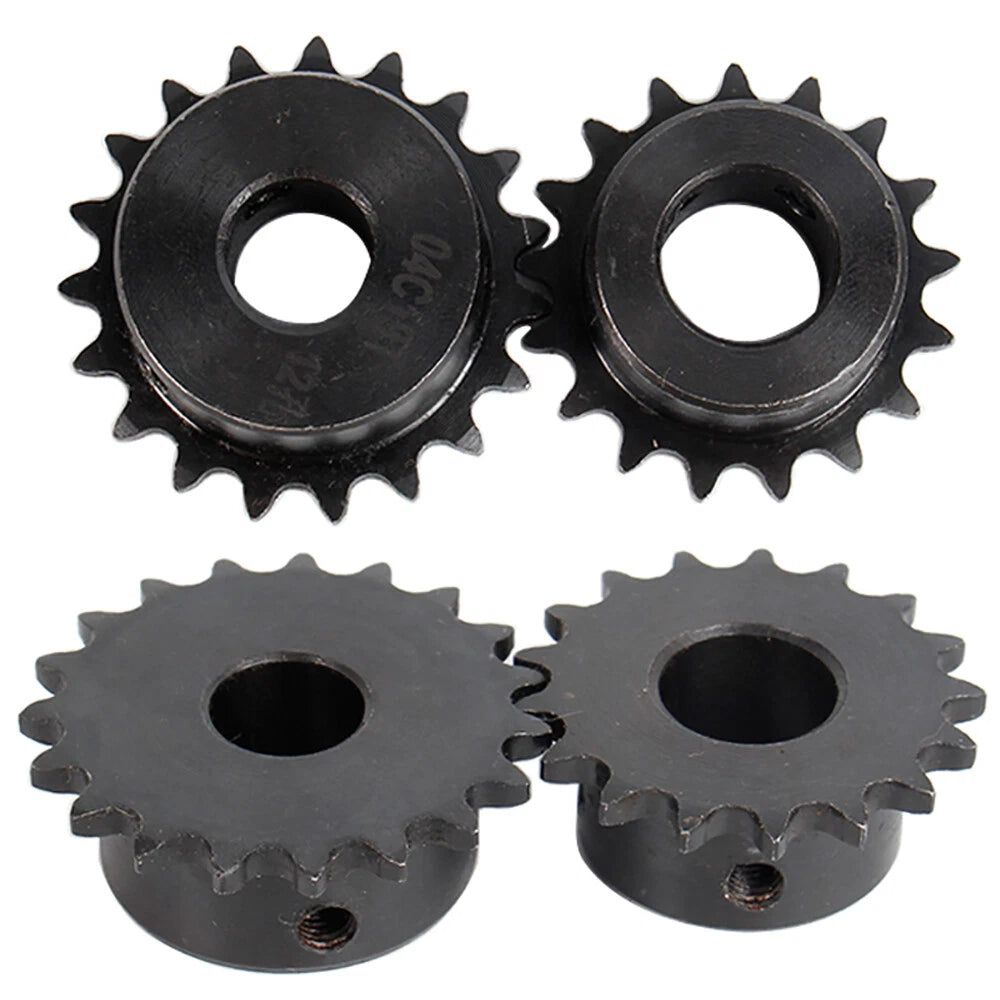
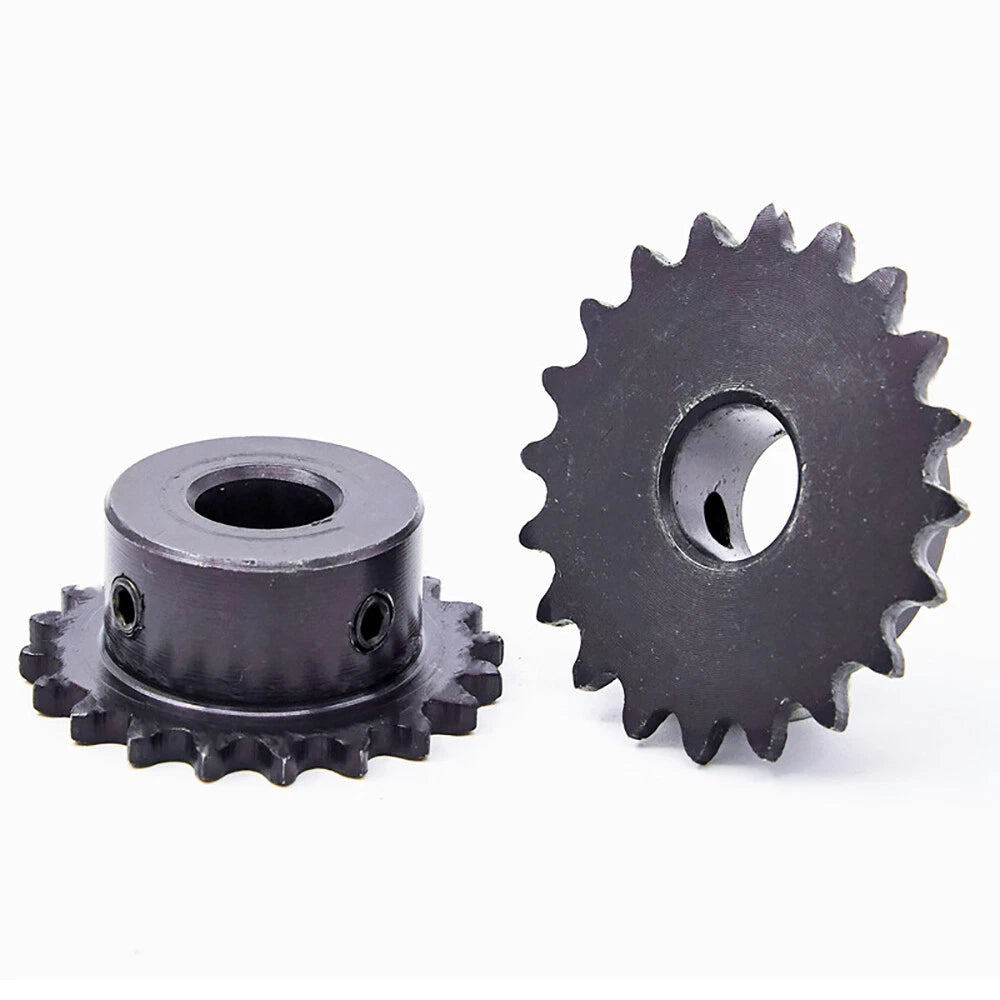
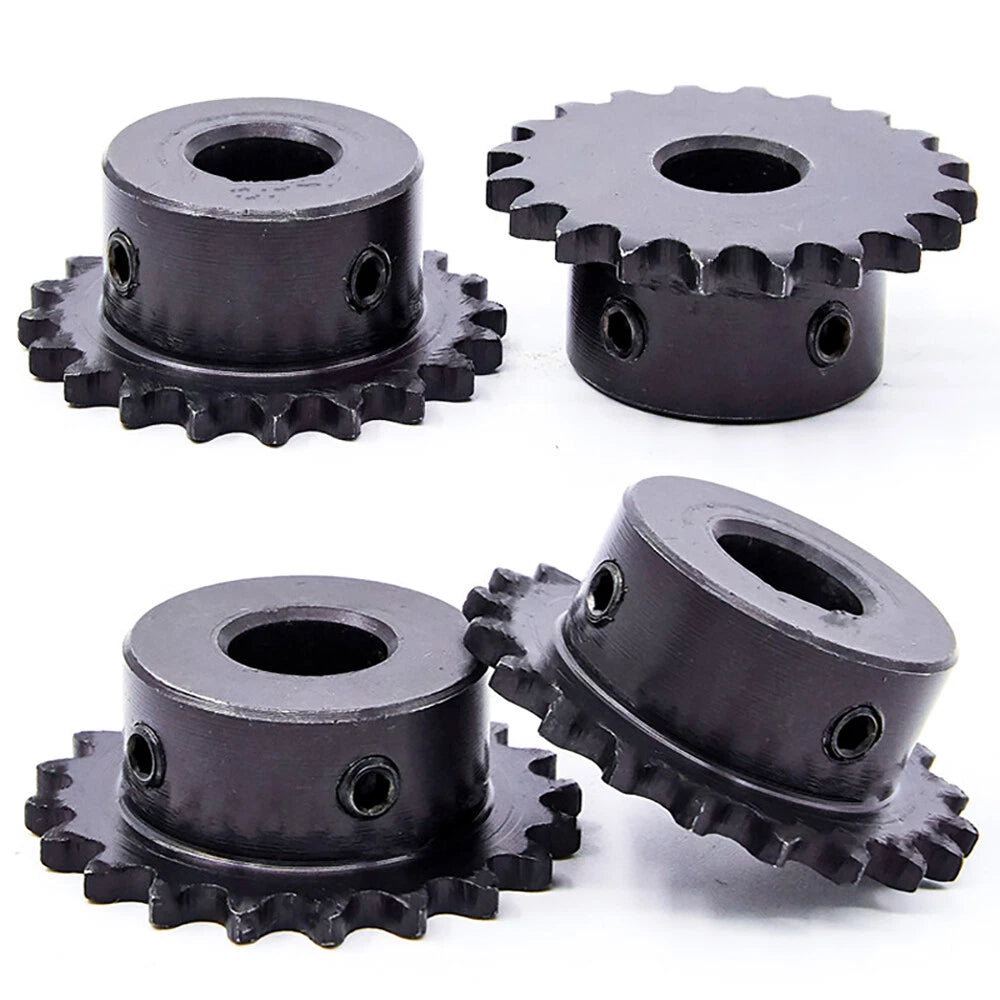
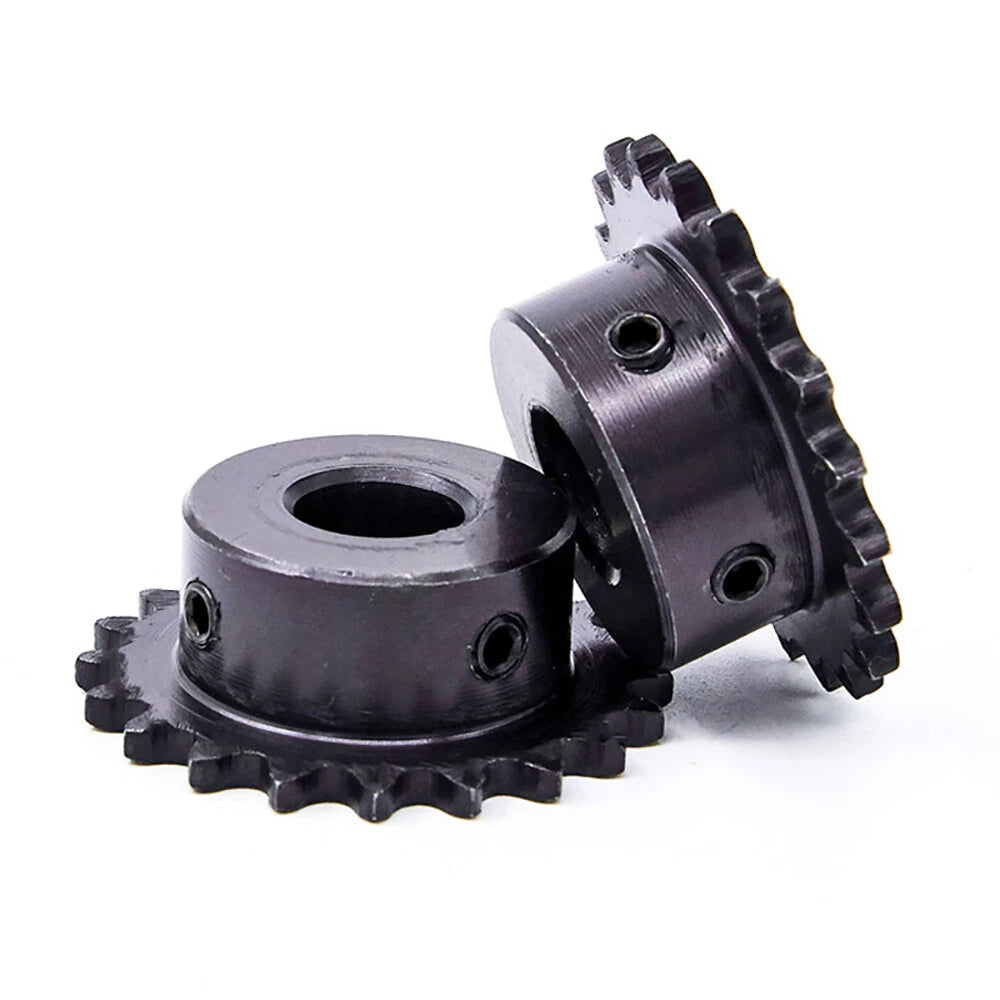
When a slipping or mismatched sprocket brings your build to a halt, the fix starts with a correctly sized, accurately machined replacement. Makers, robotics builders, and light-machinery technicians who rely on 04C roller chain drives need a sprocket that holds tight tolerances without demanding a machine-shop budget.
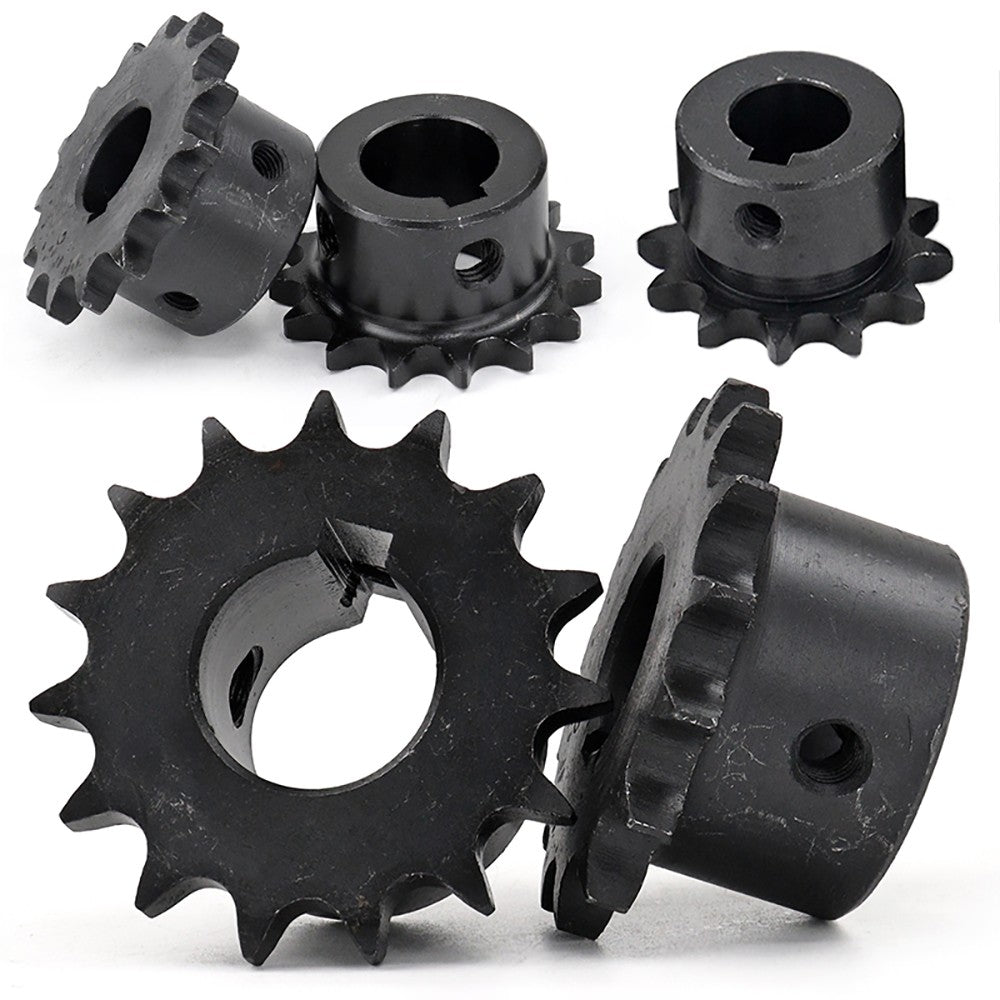
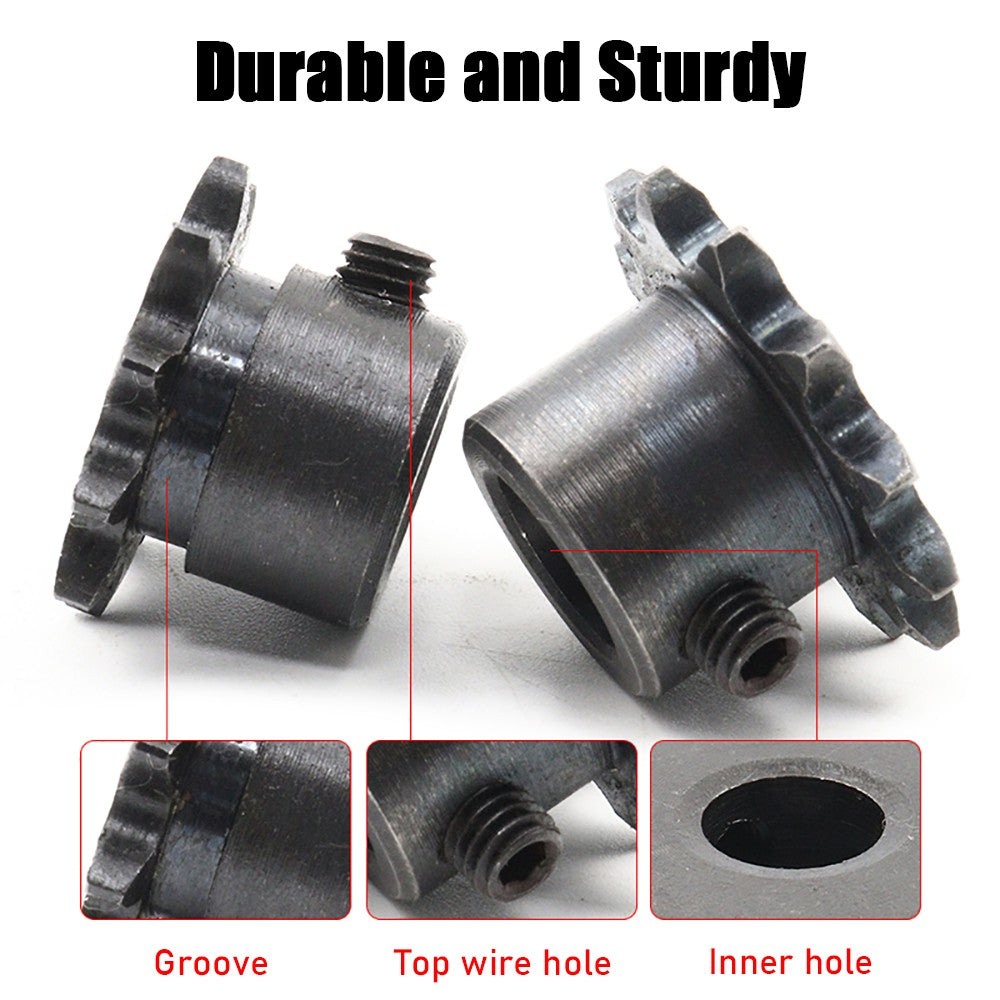
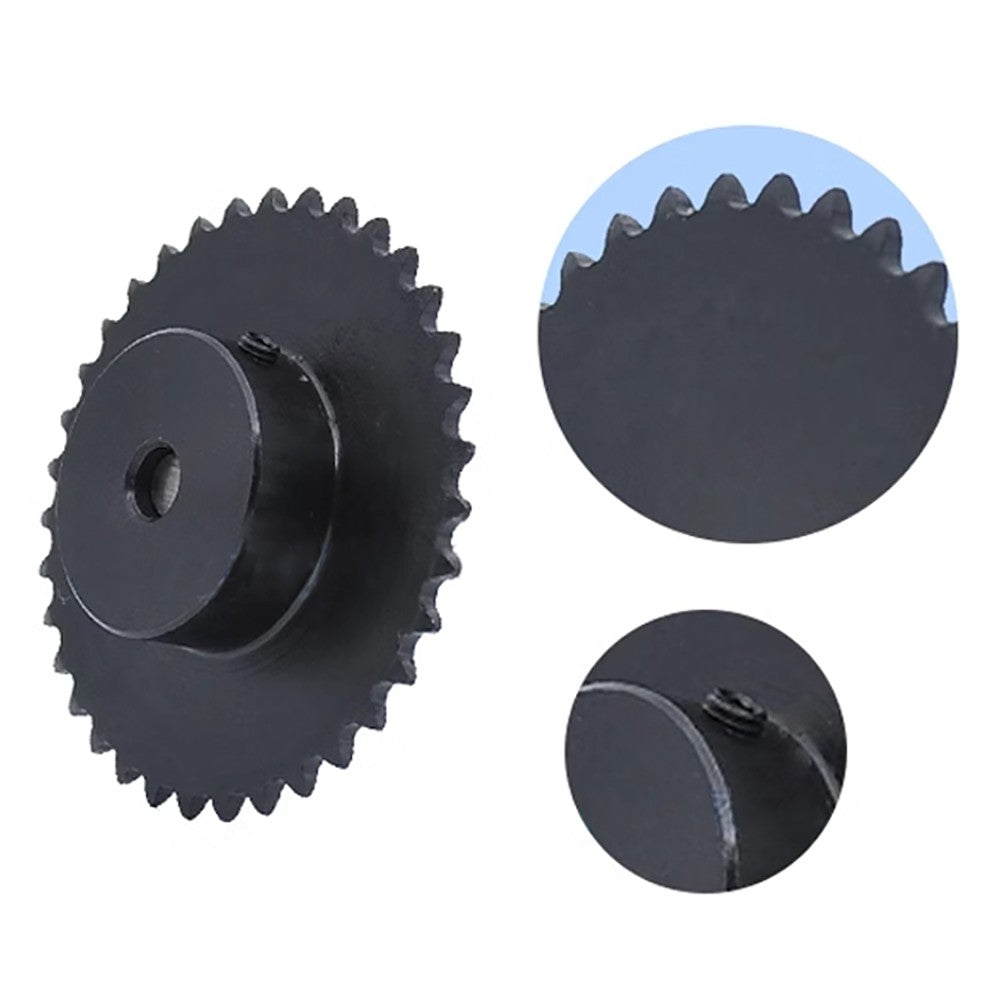
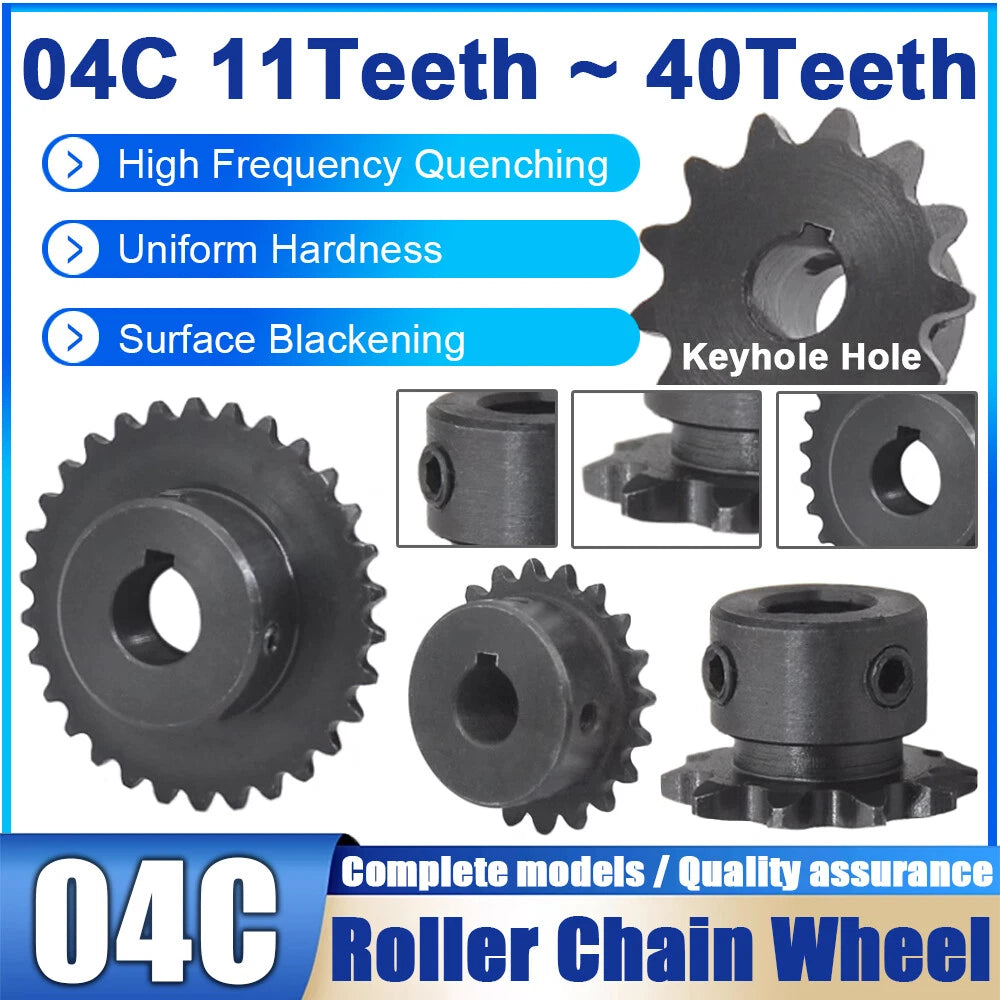
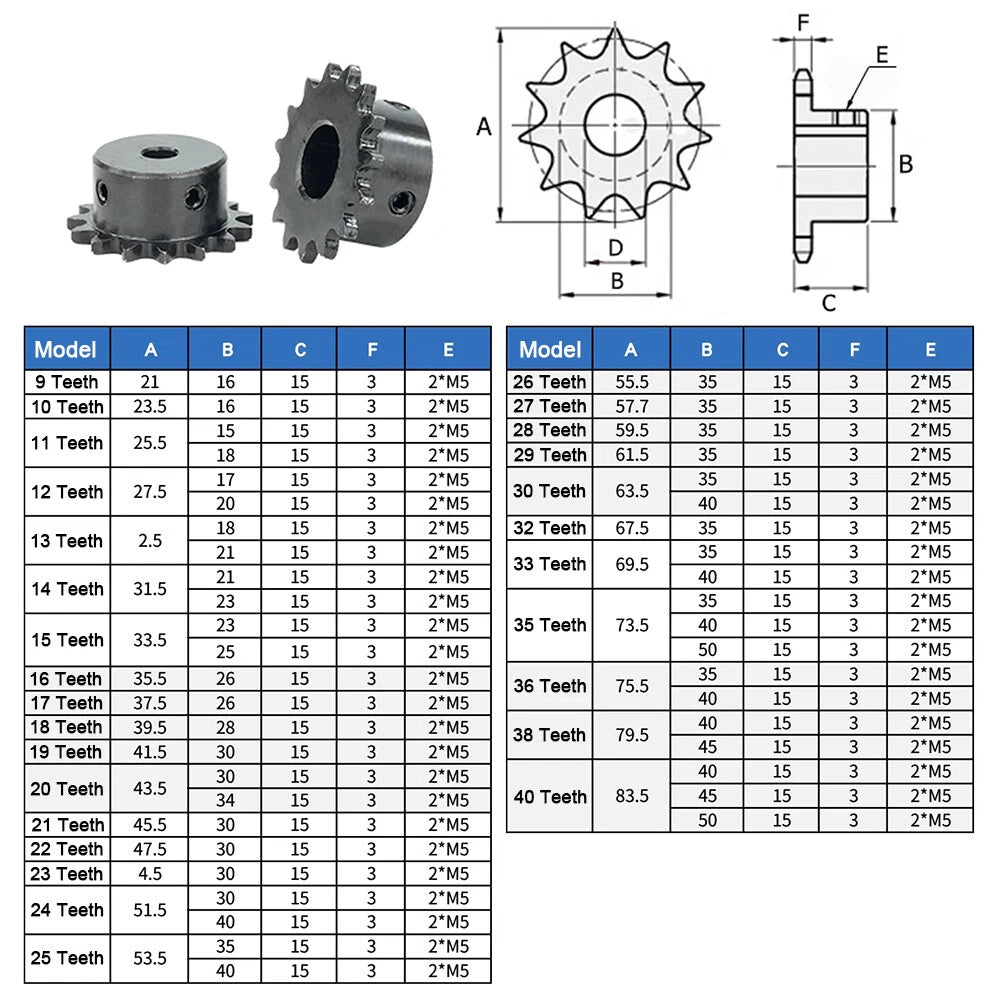
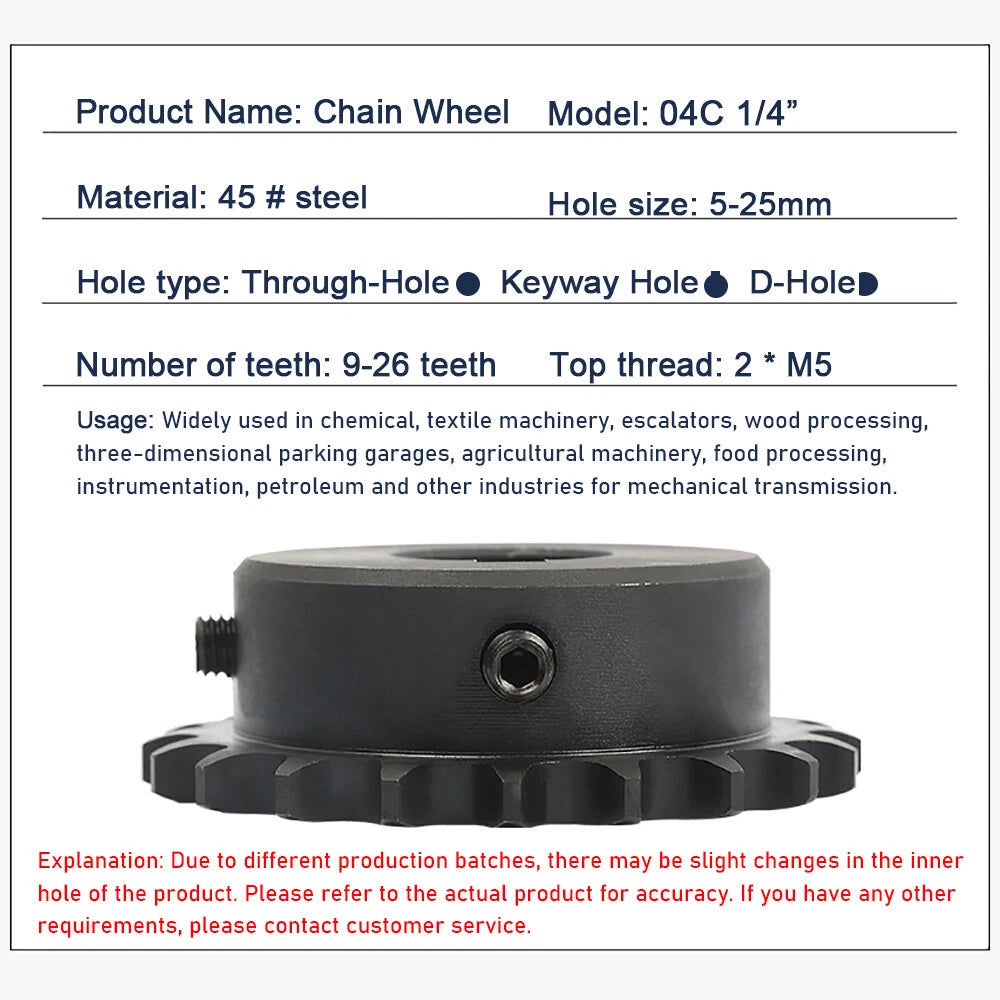
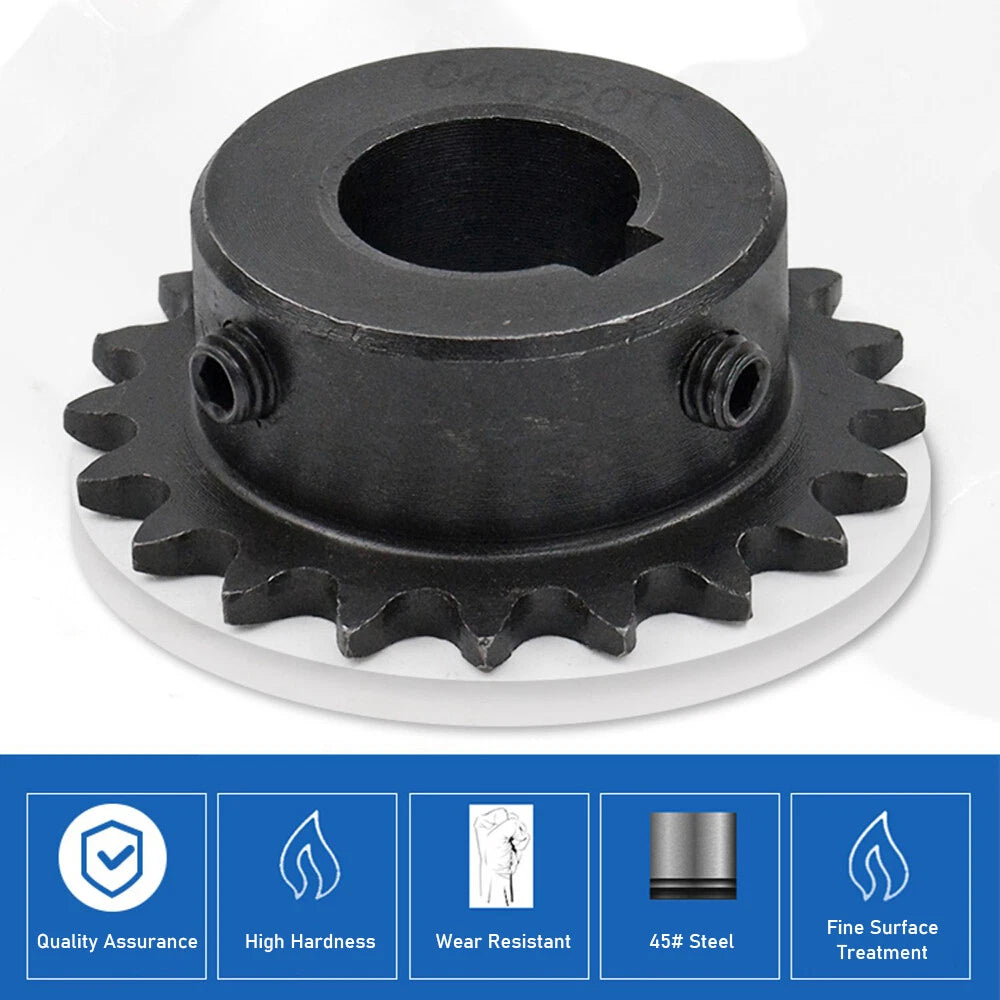
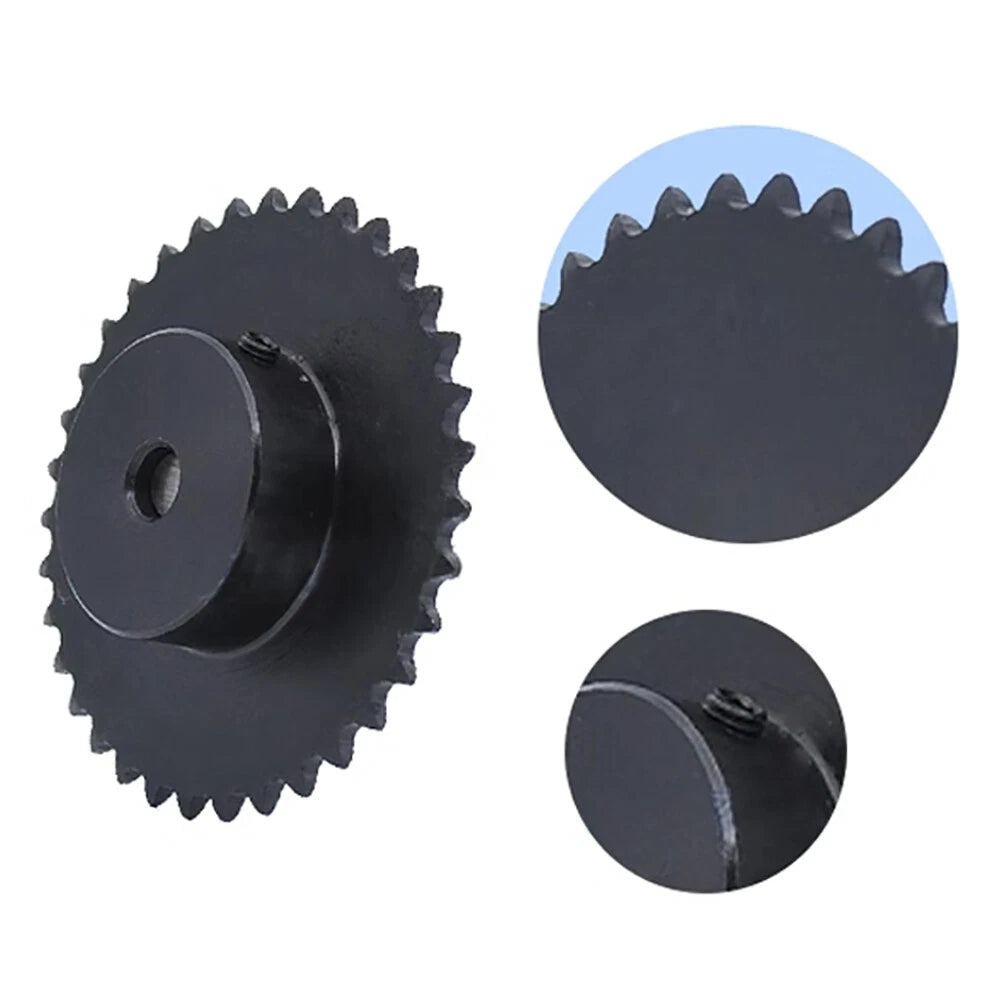
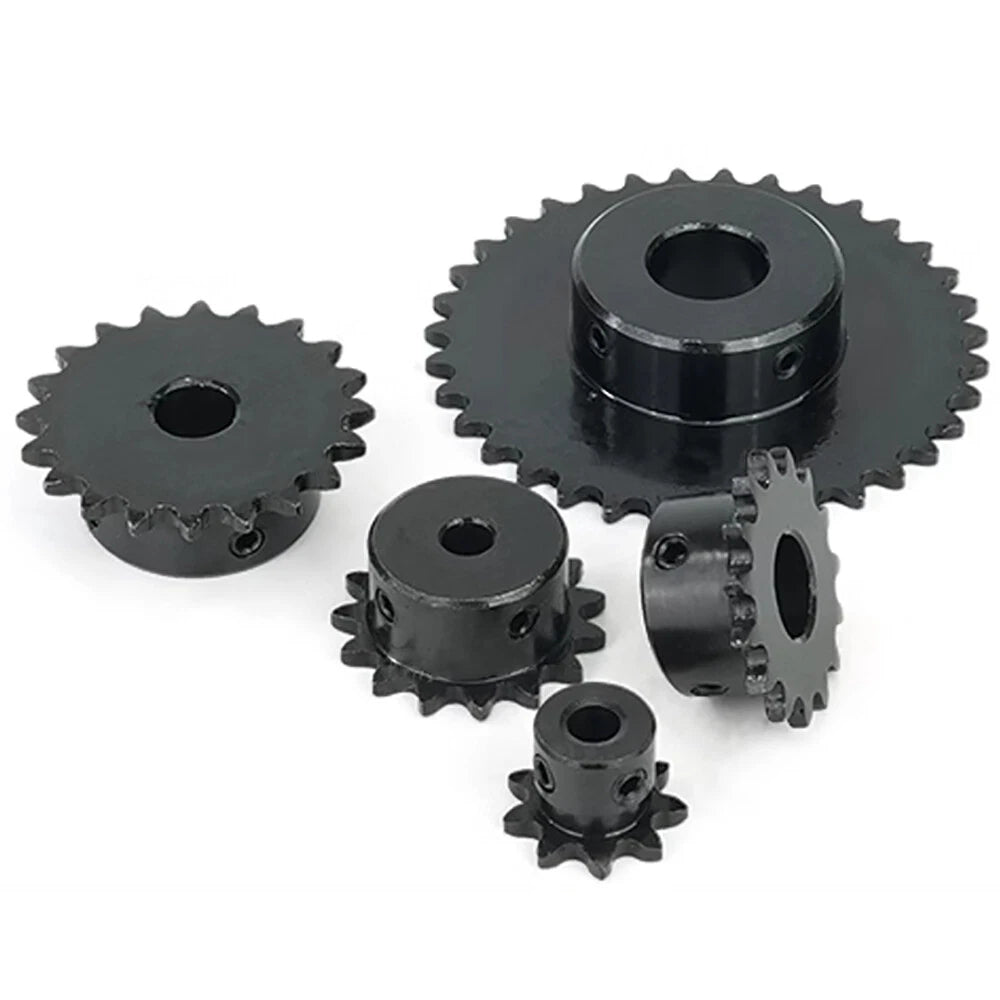
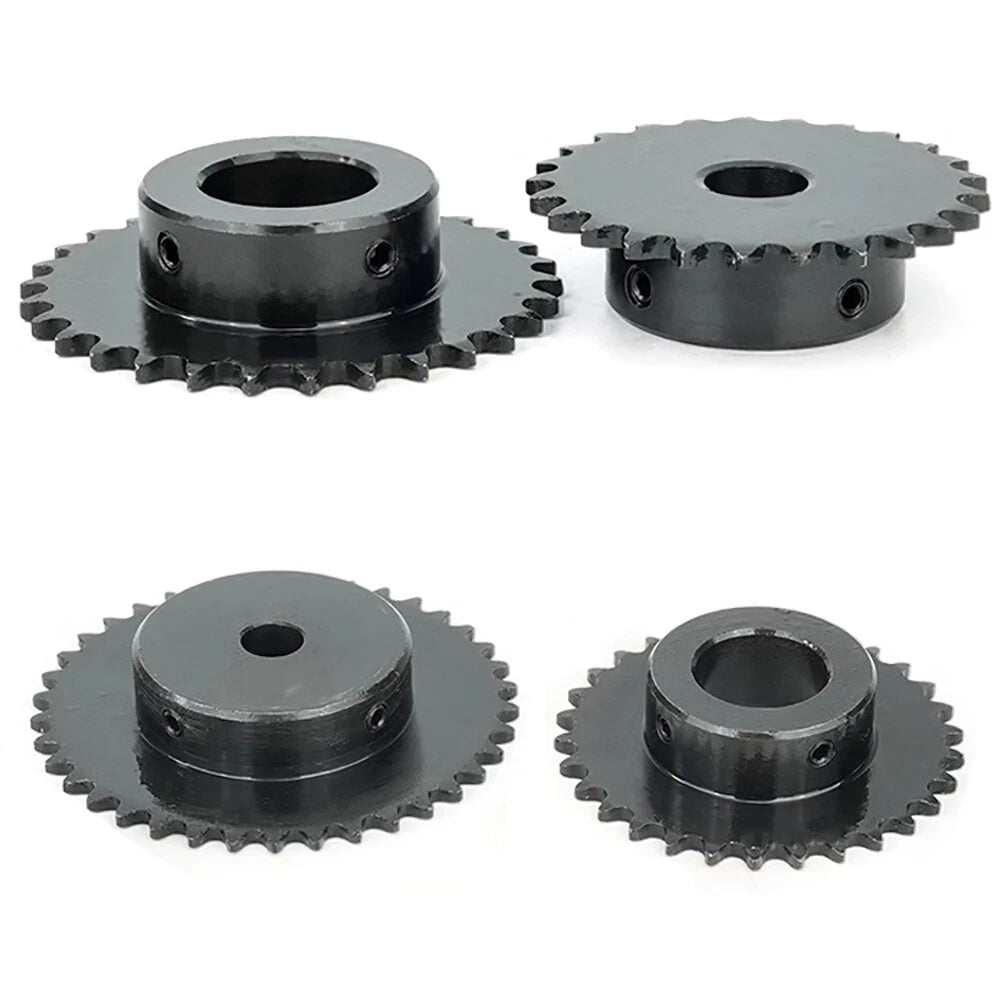
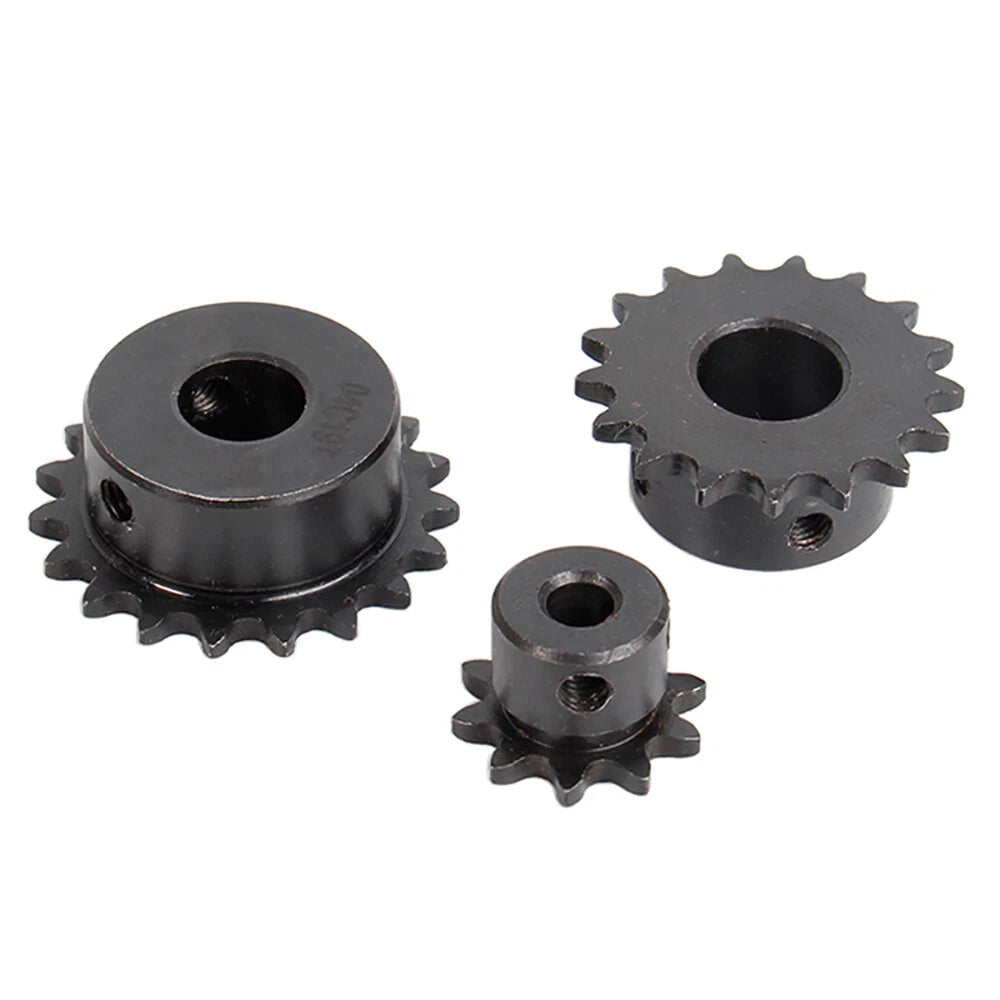
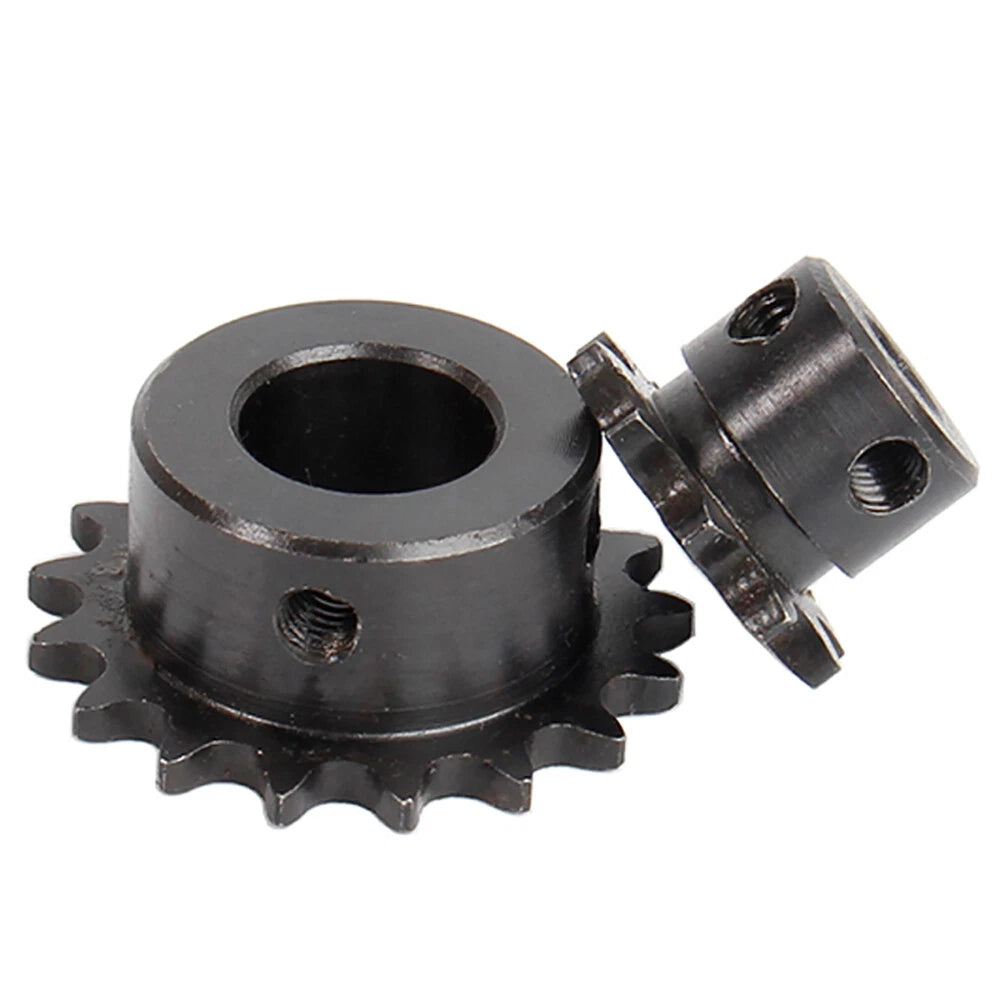
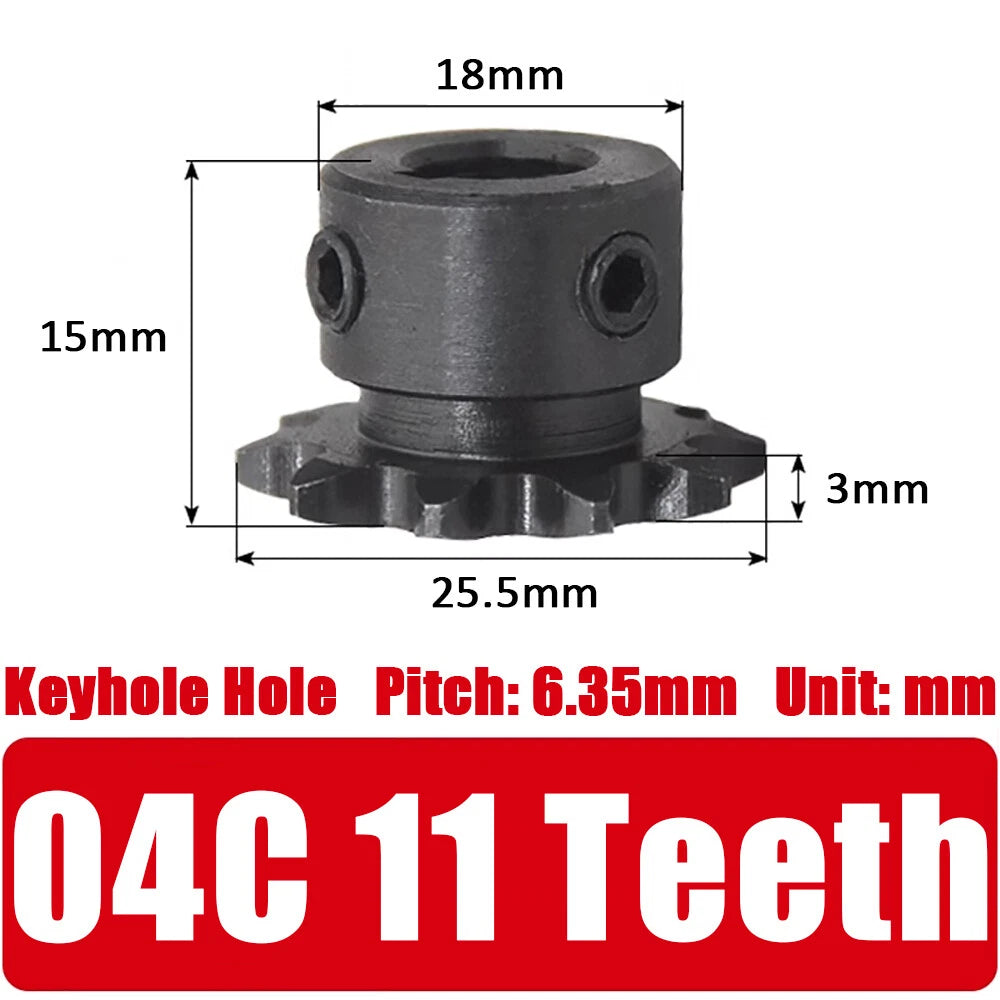
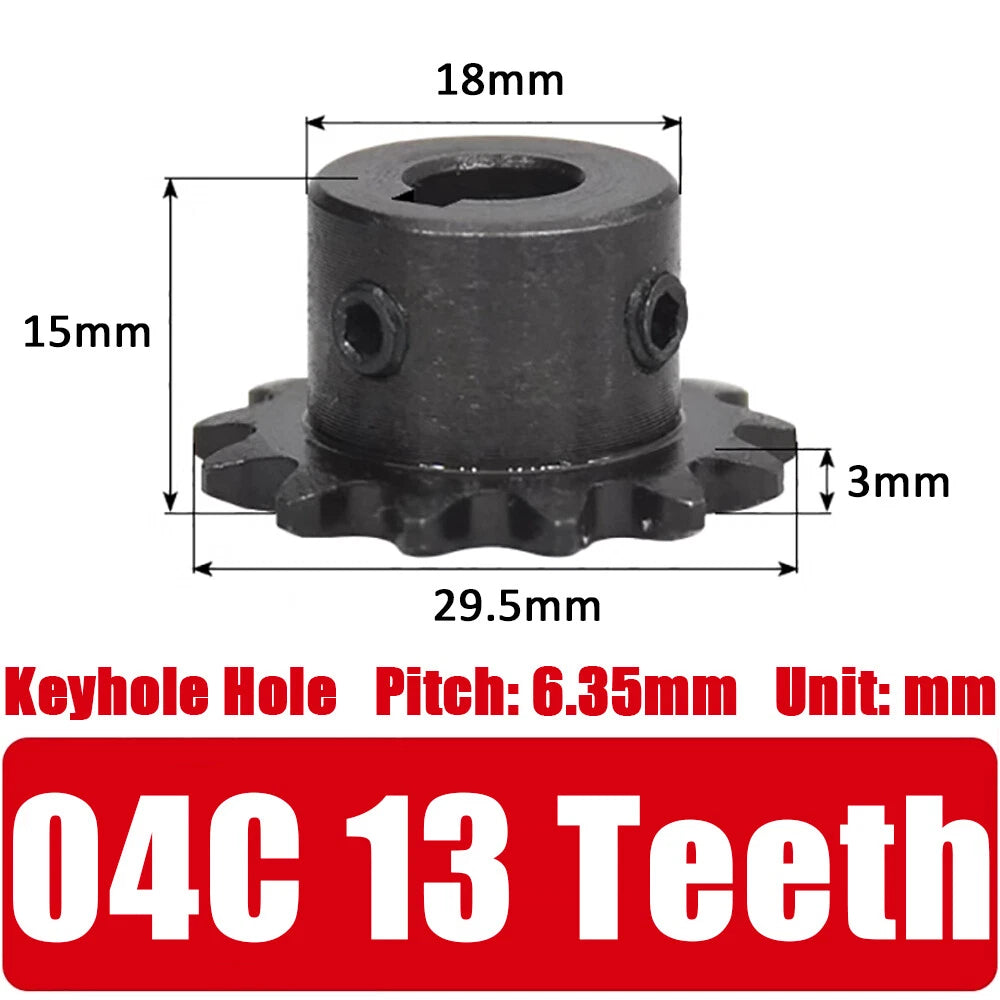
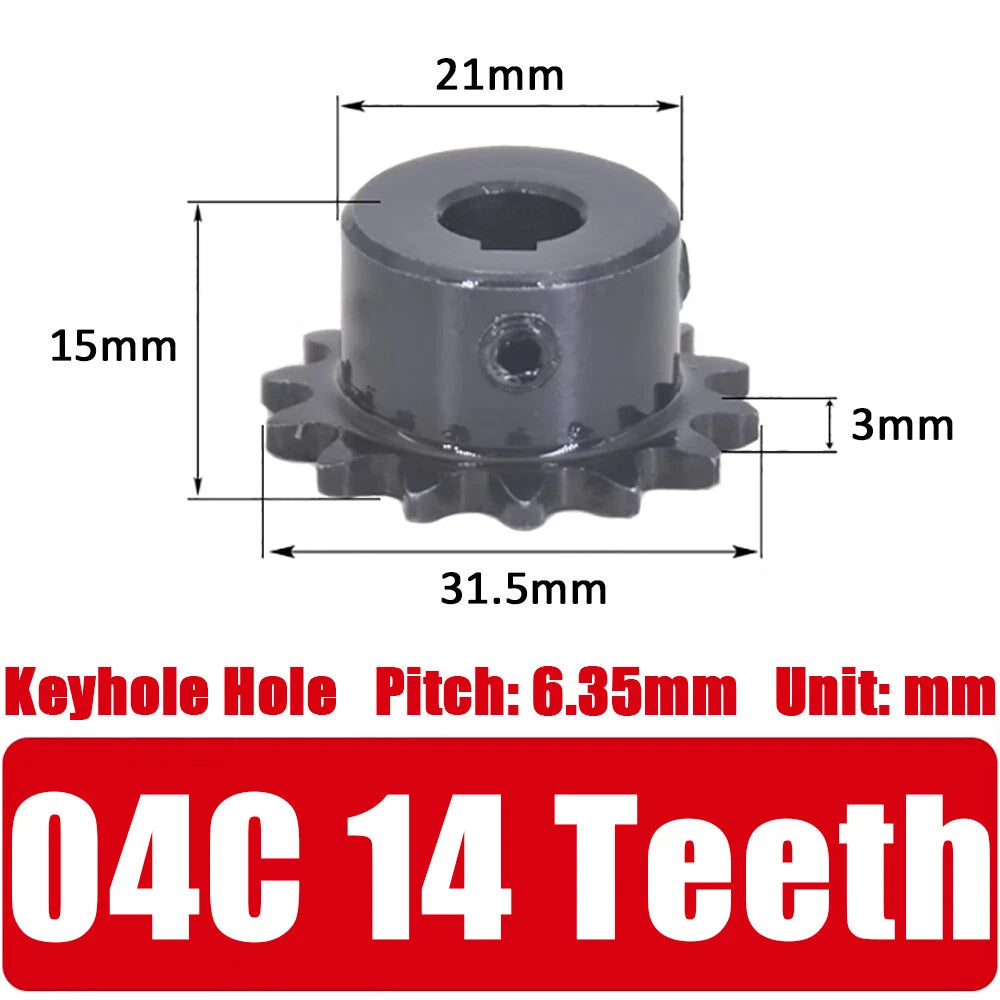
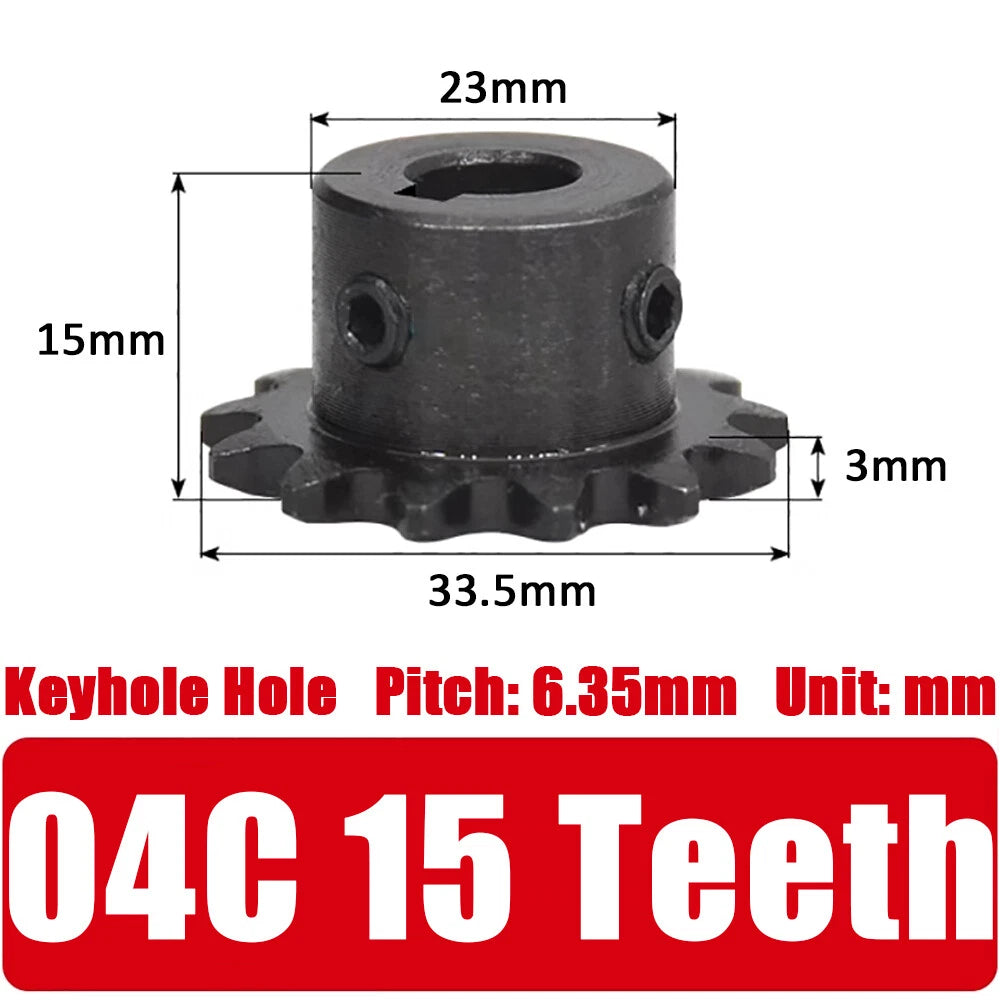
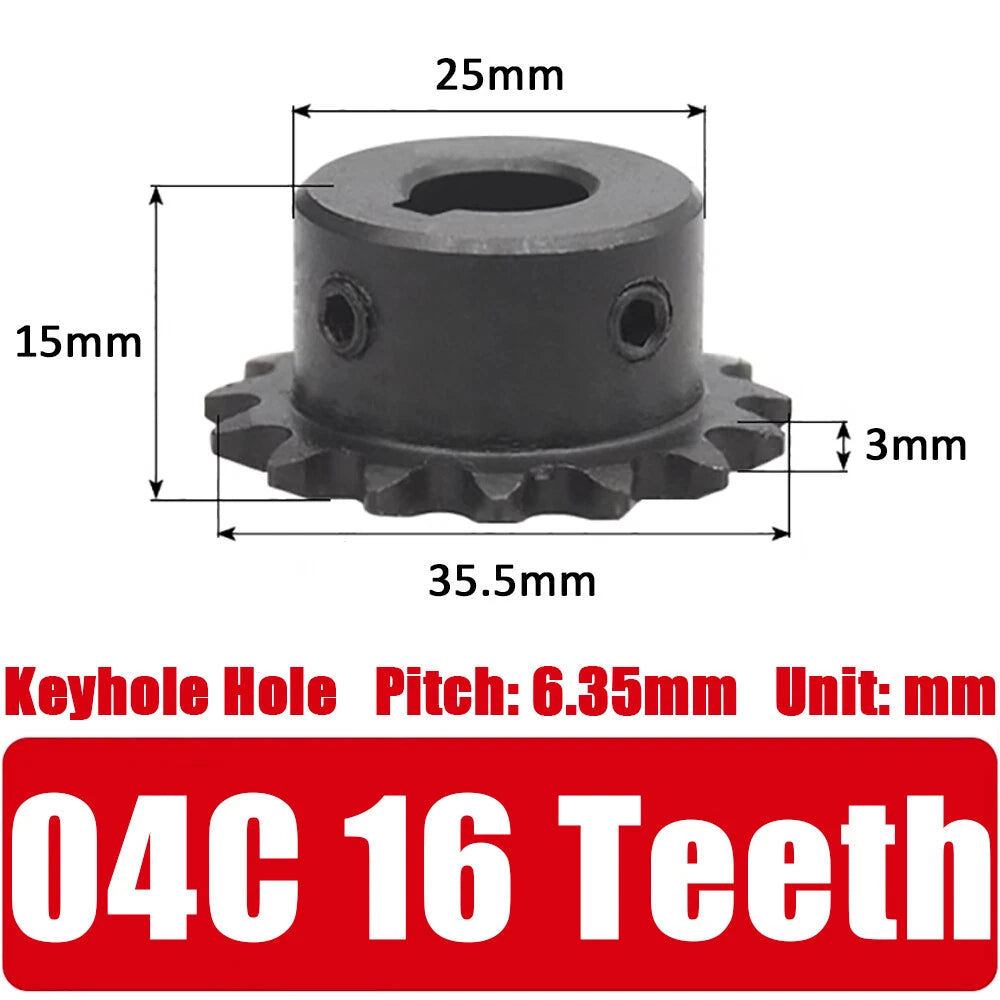
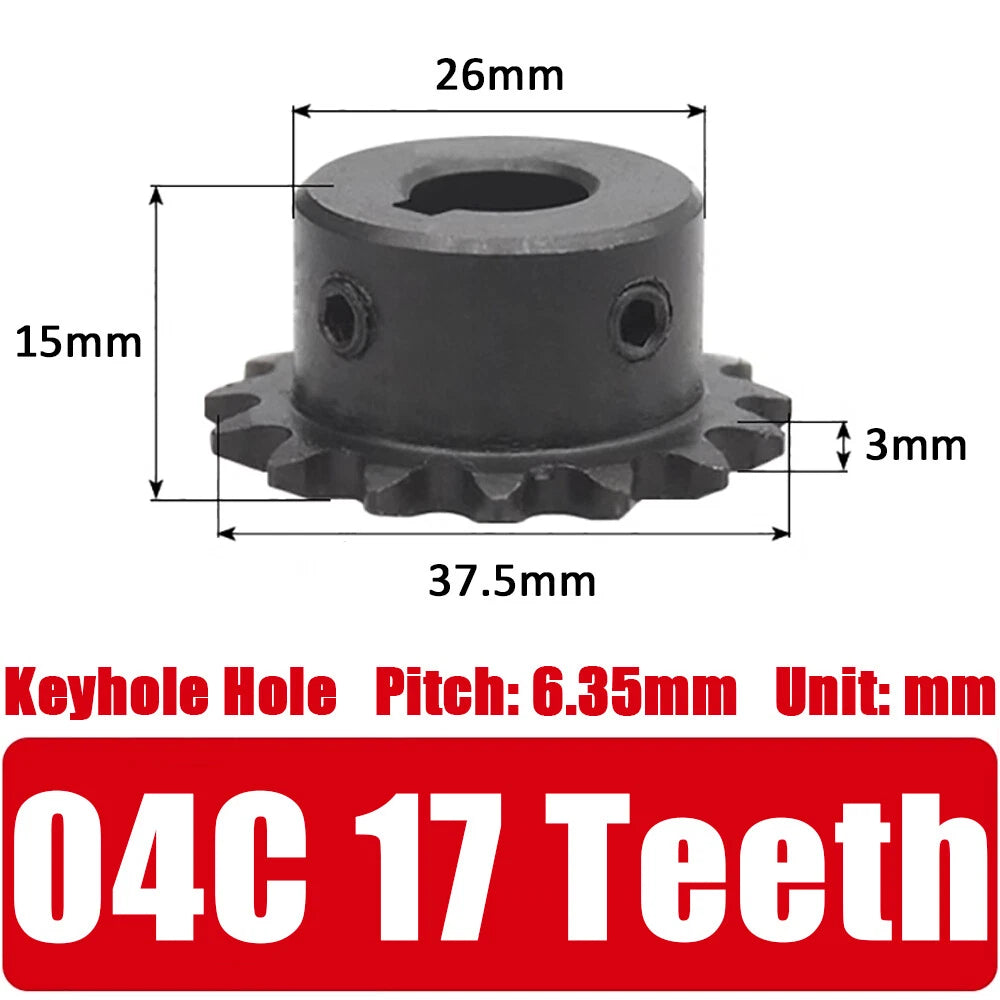
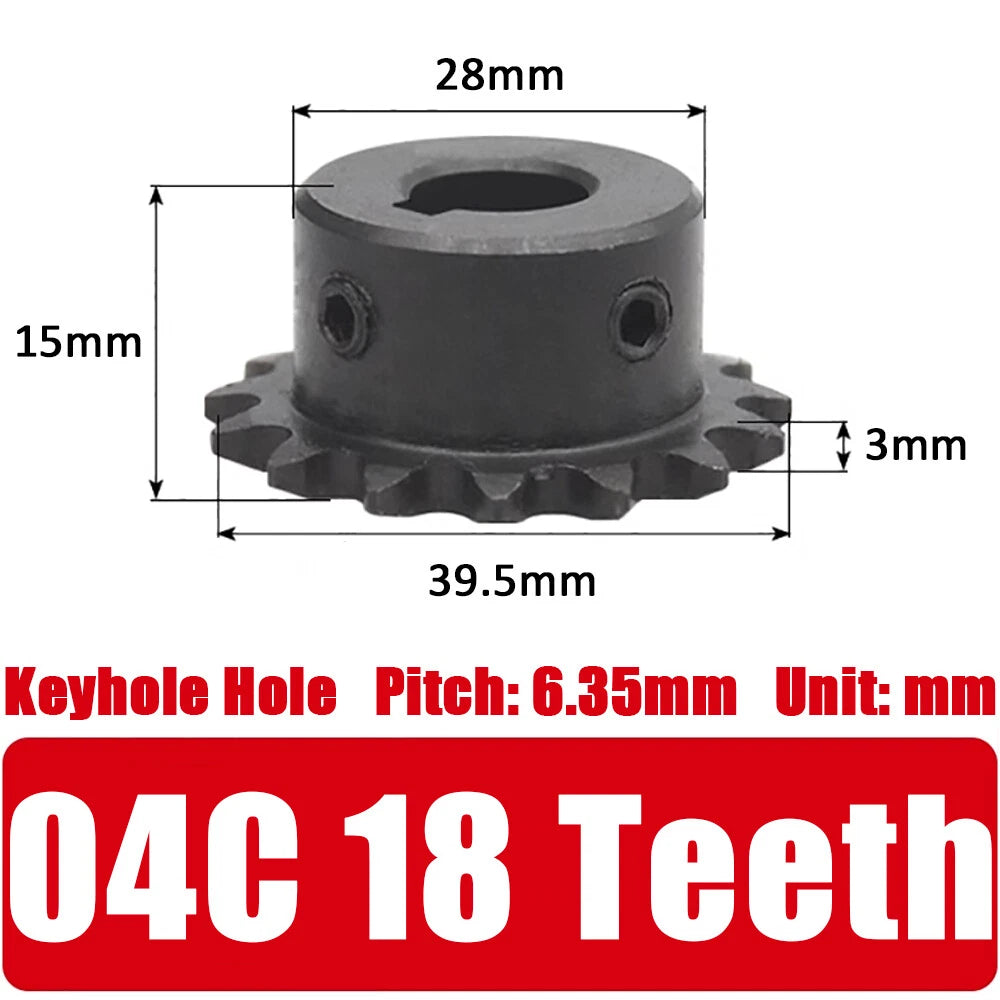
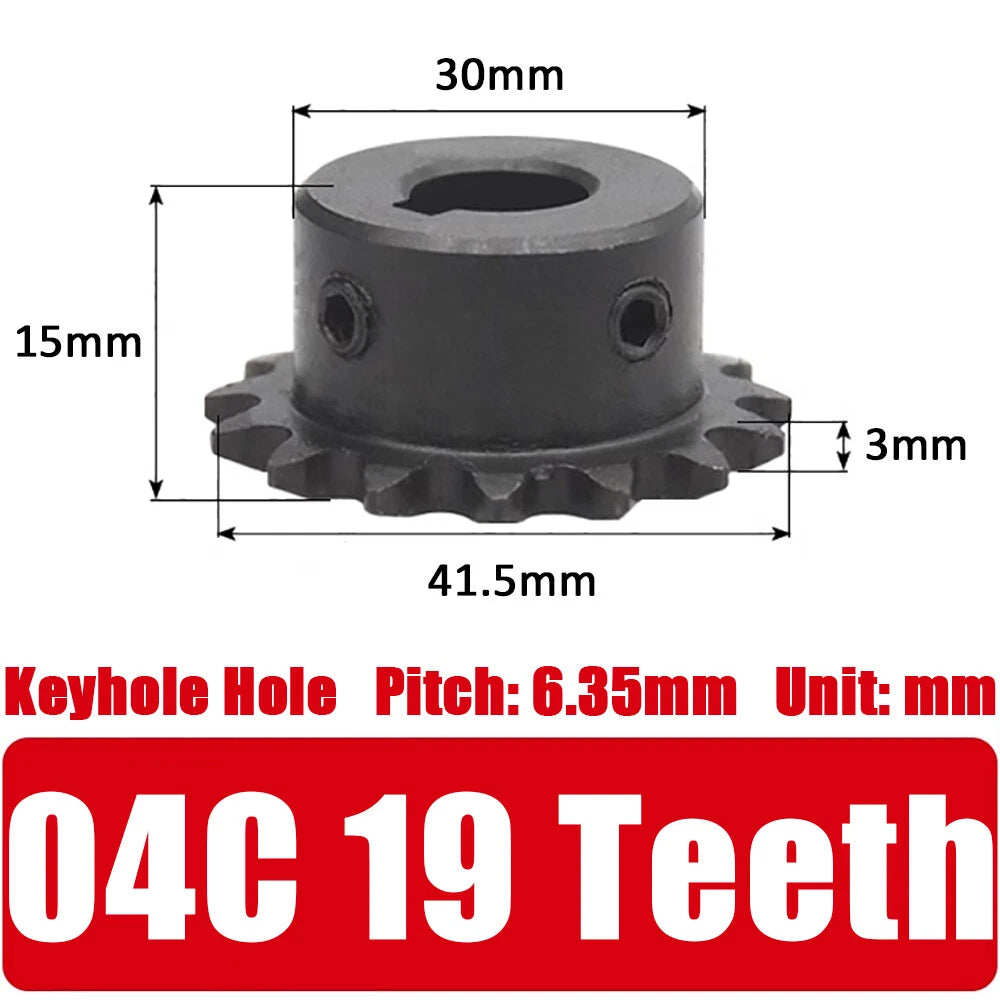
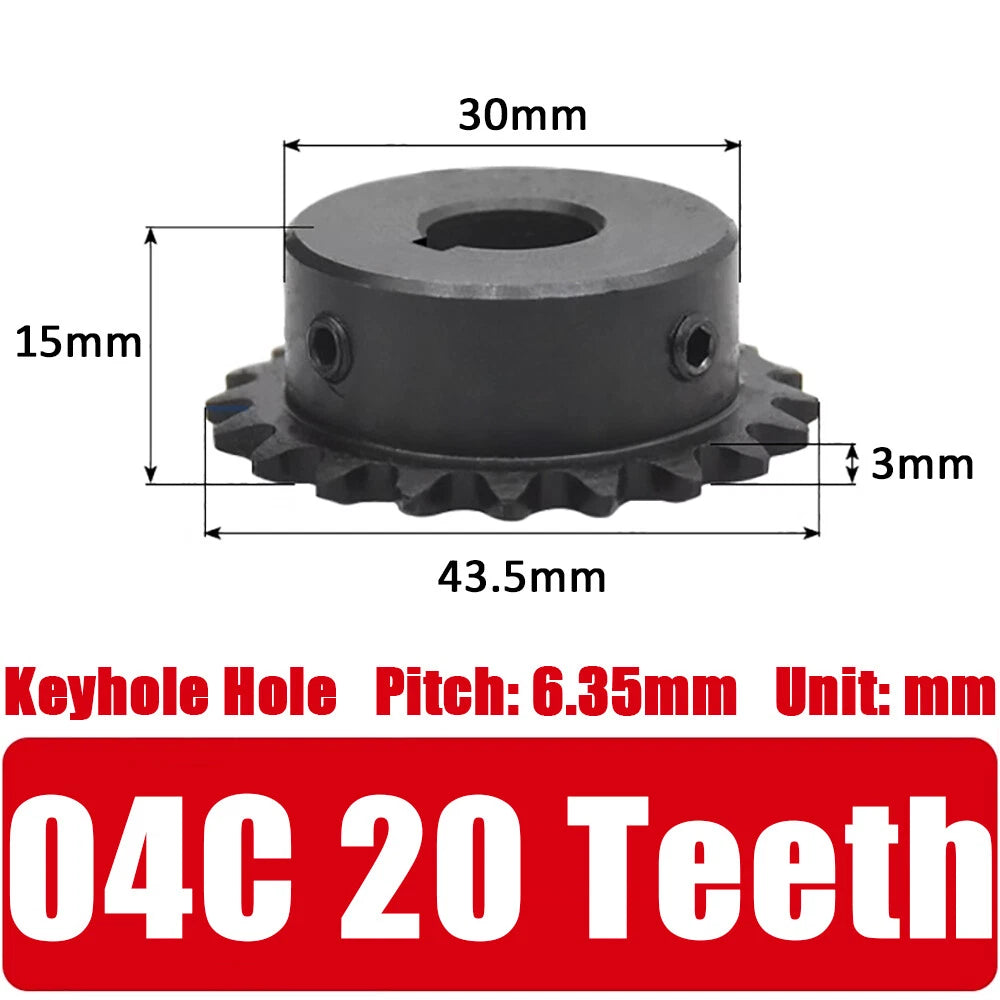
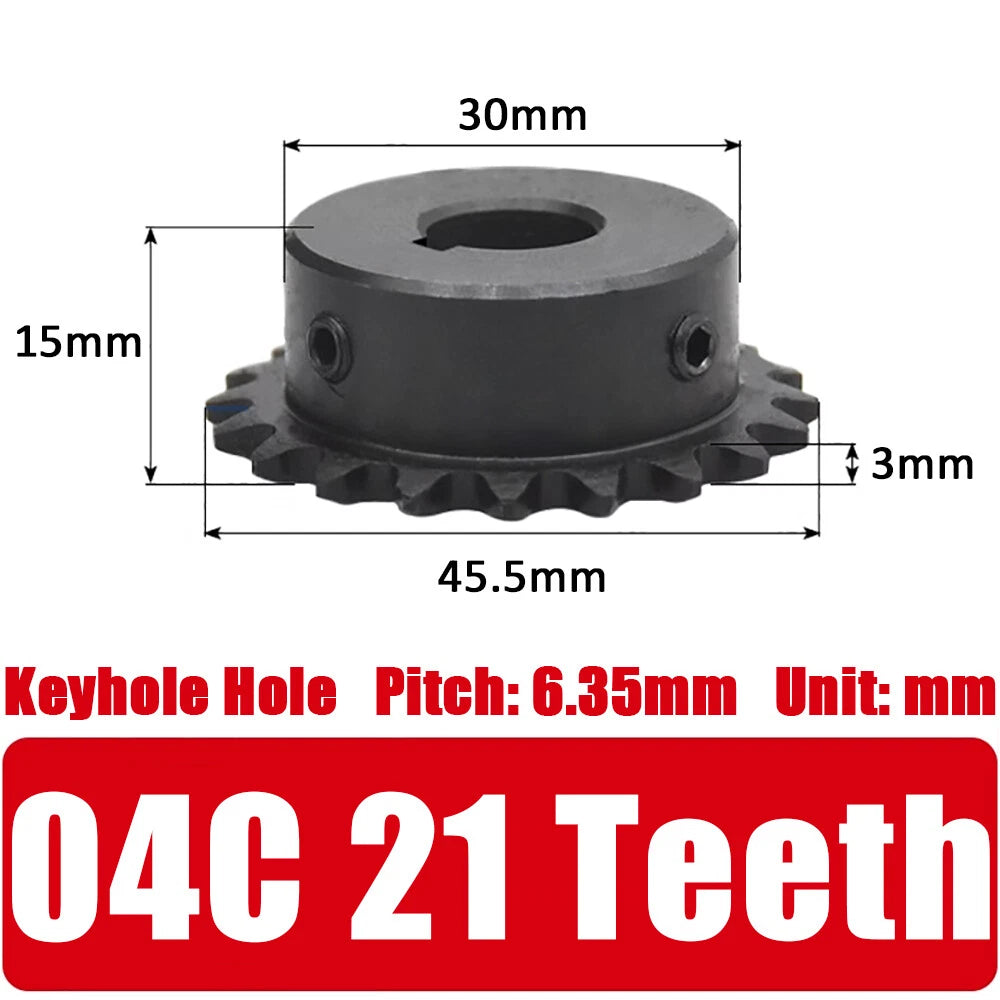
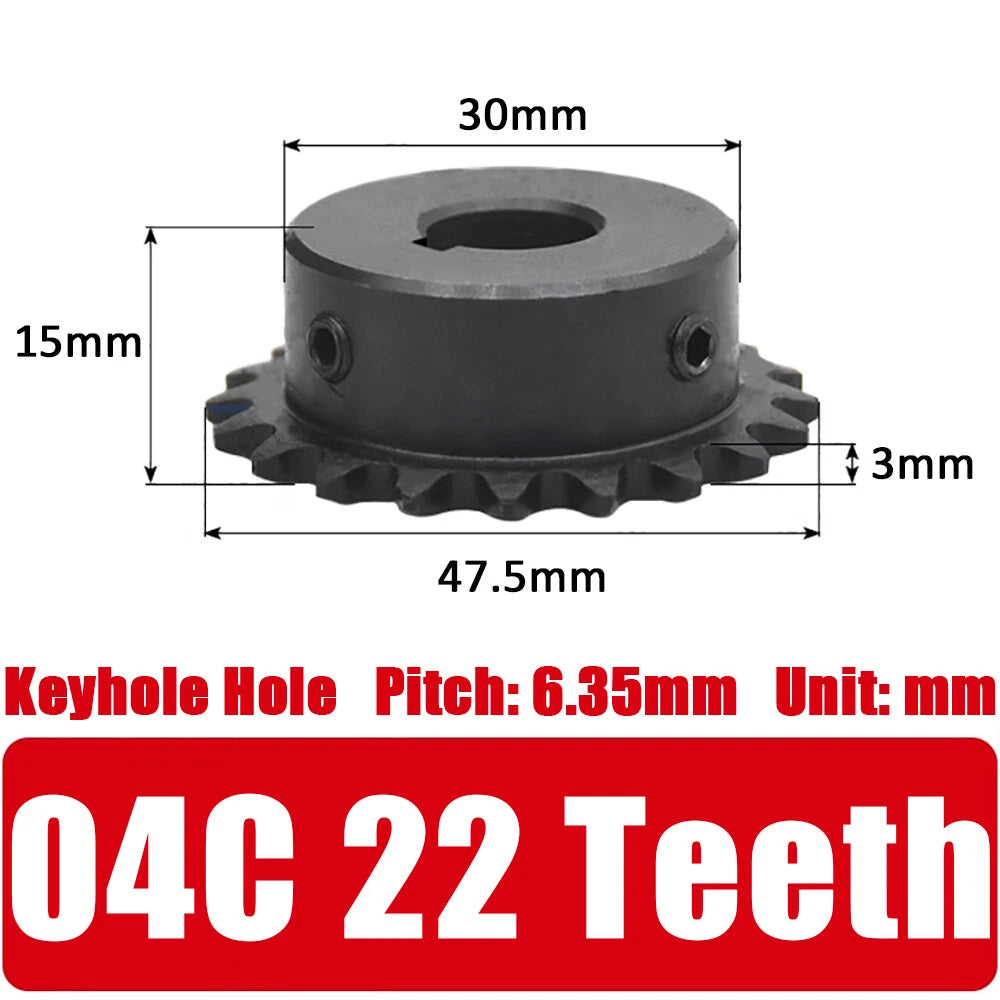
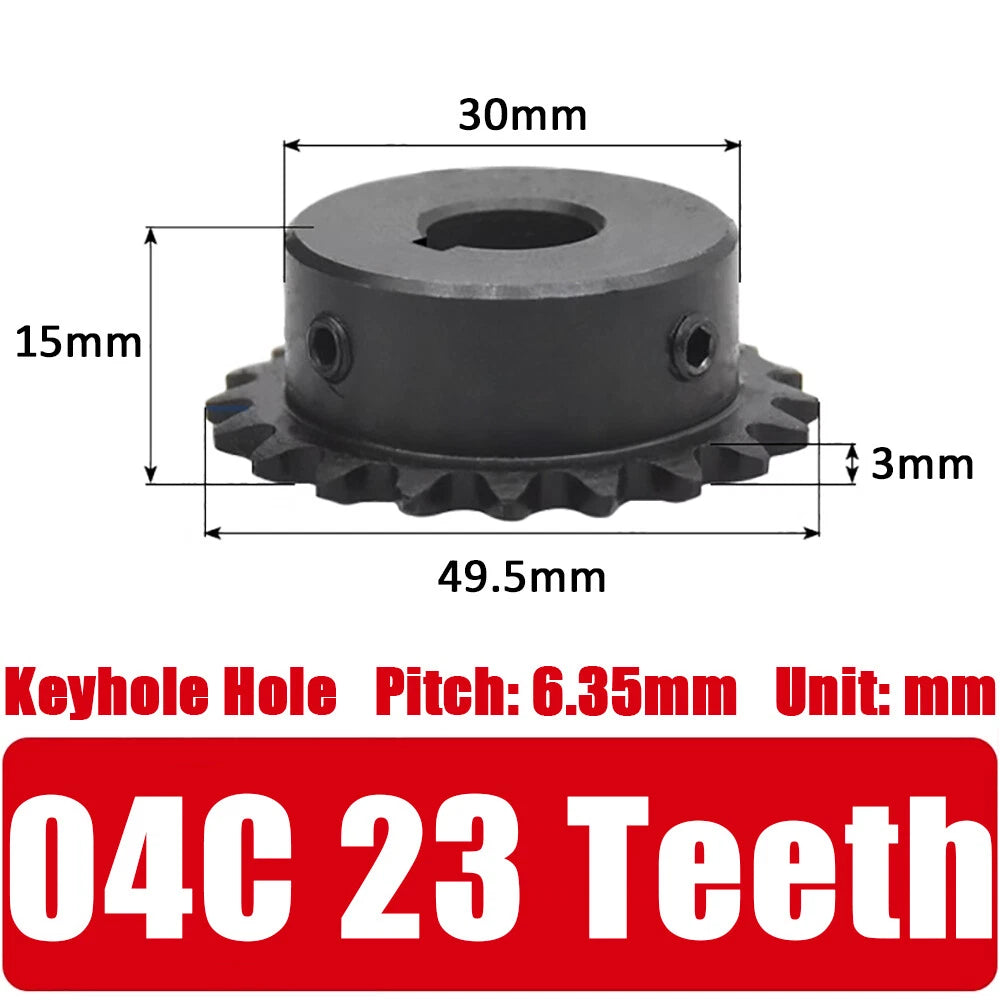
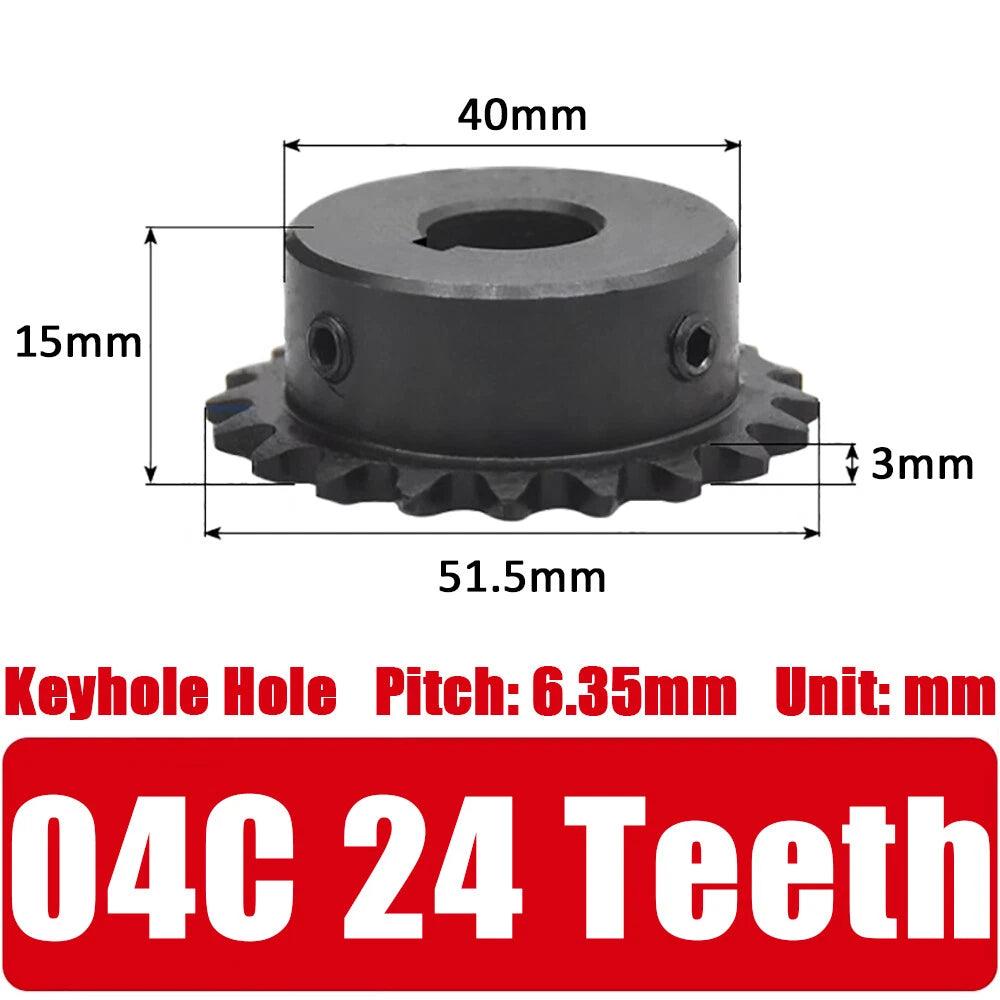
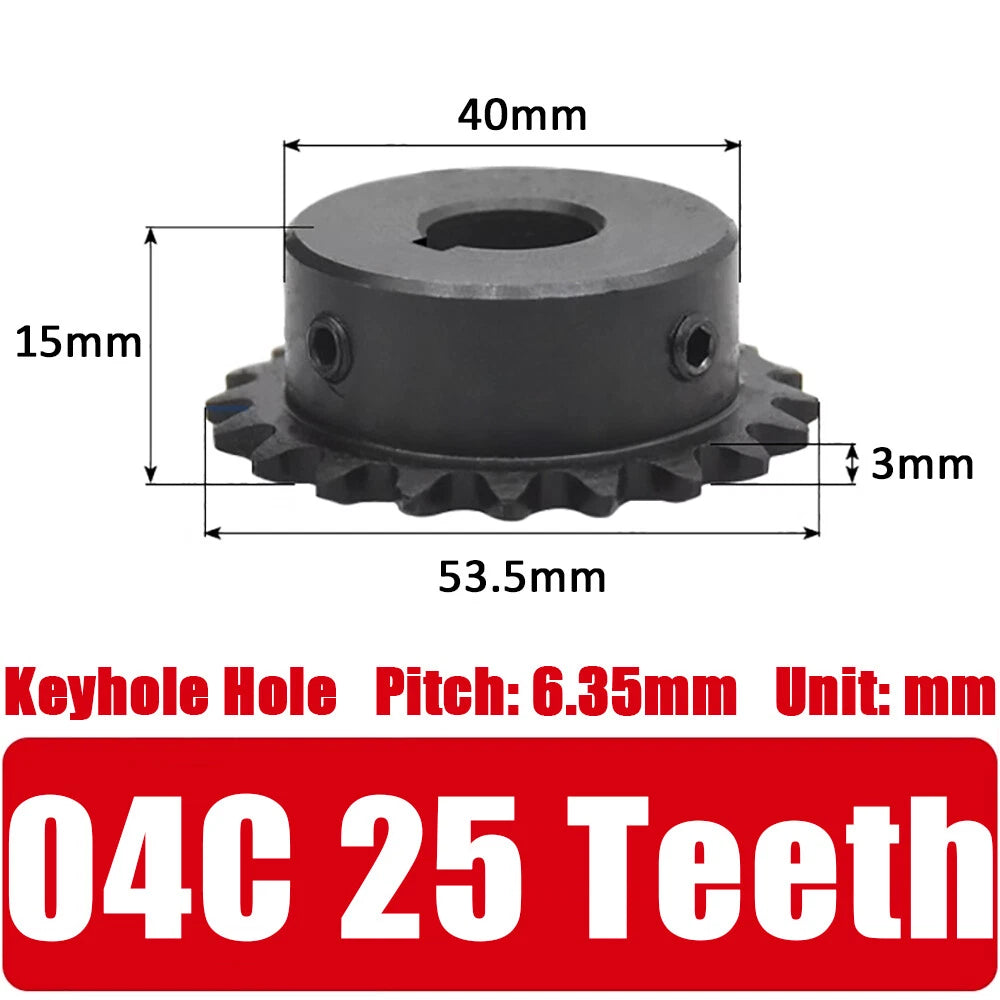
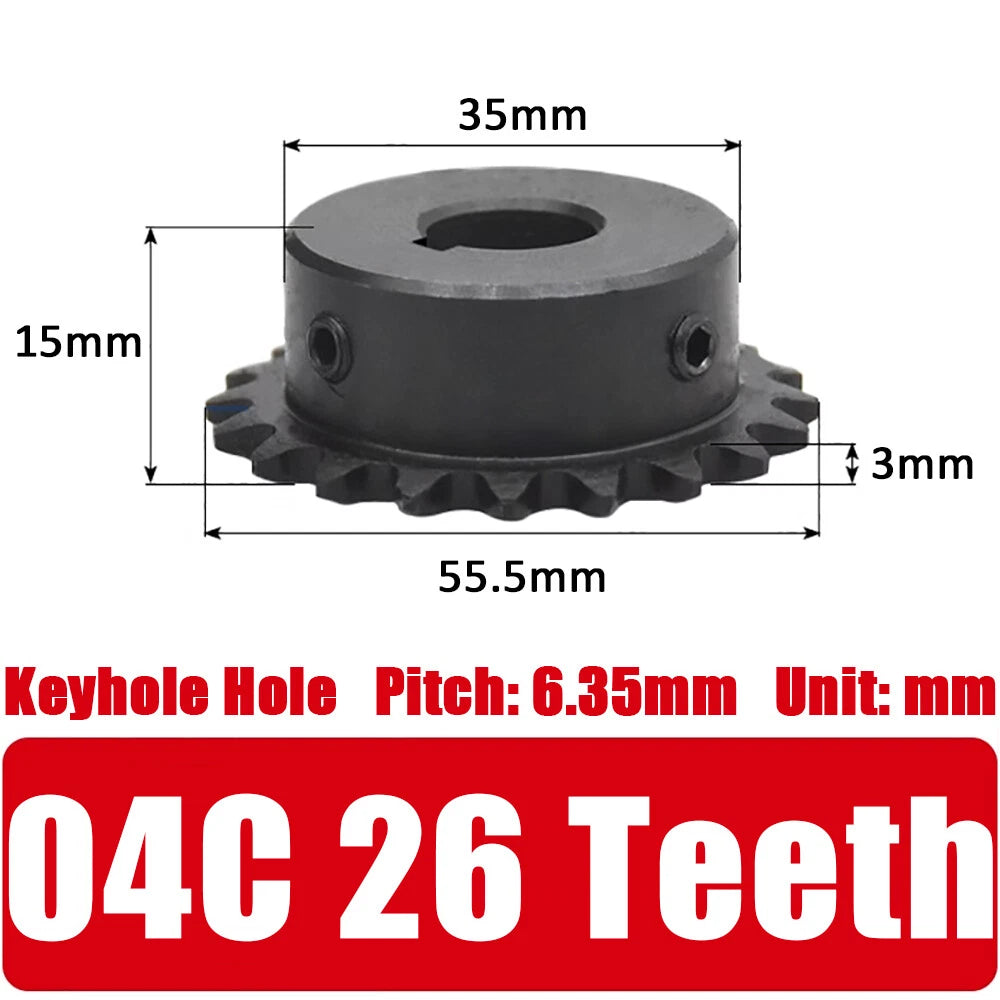
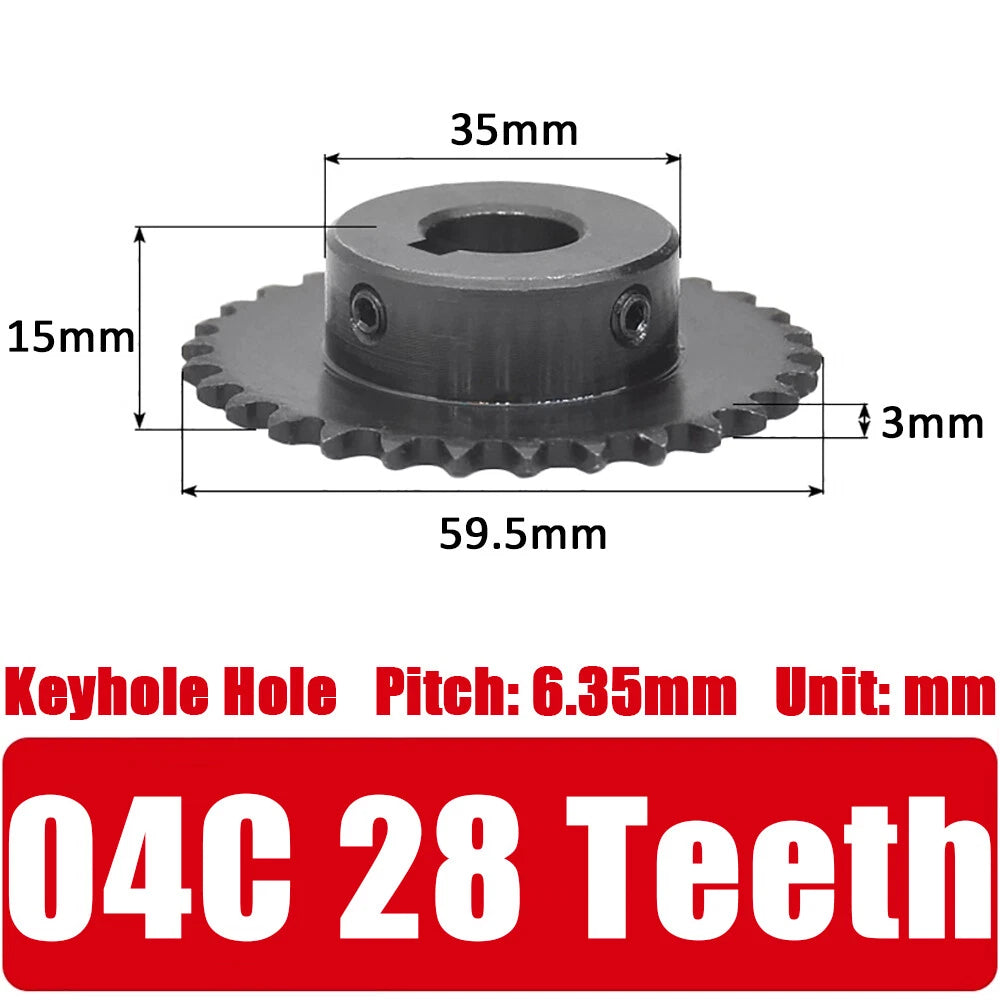
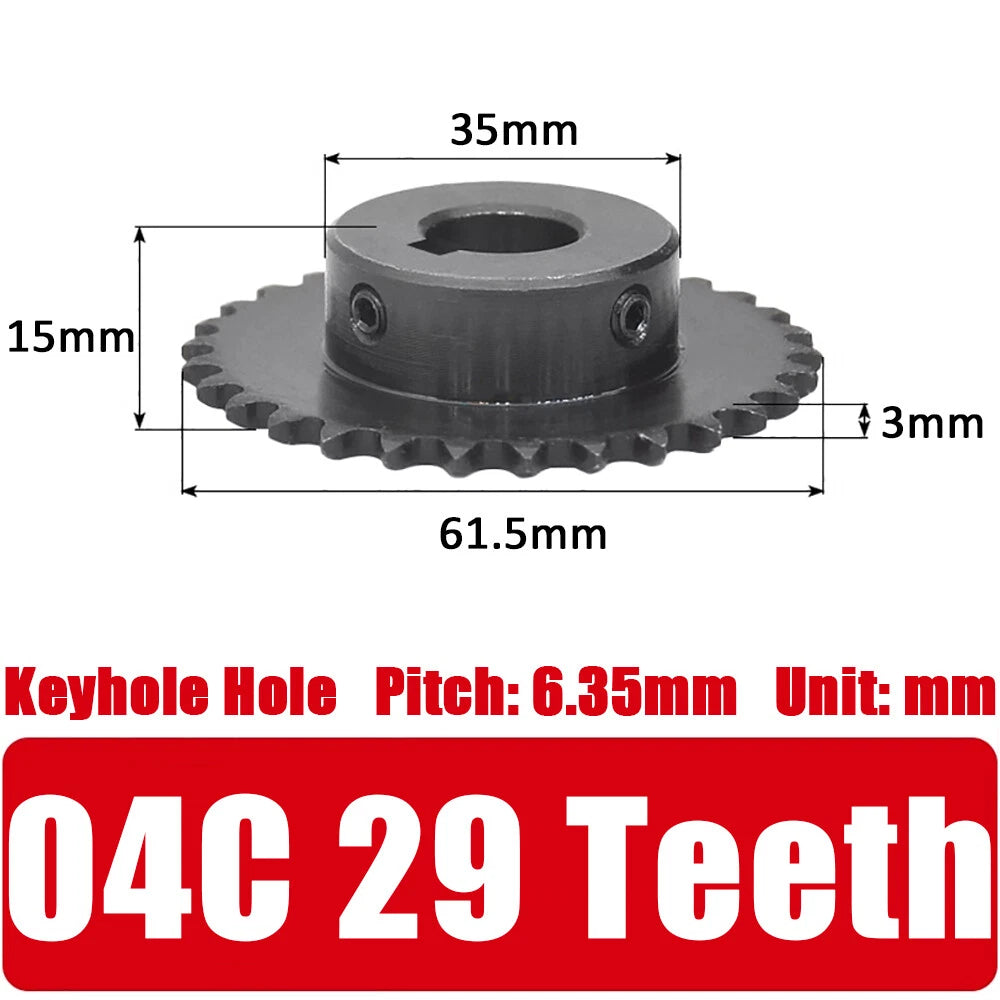
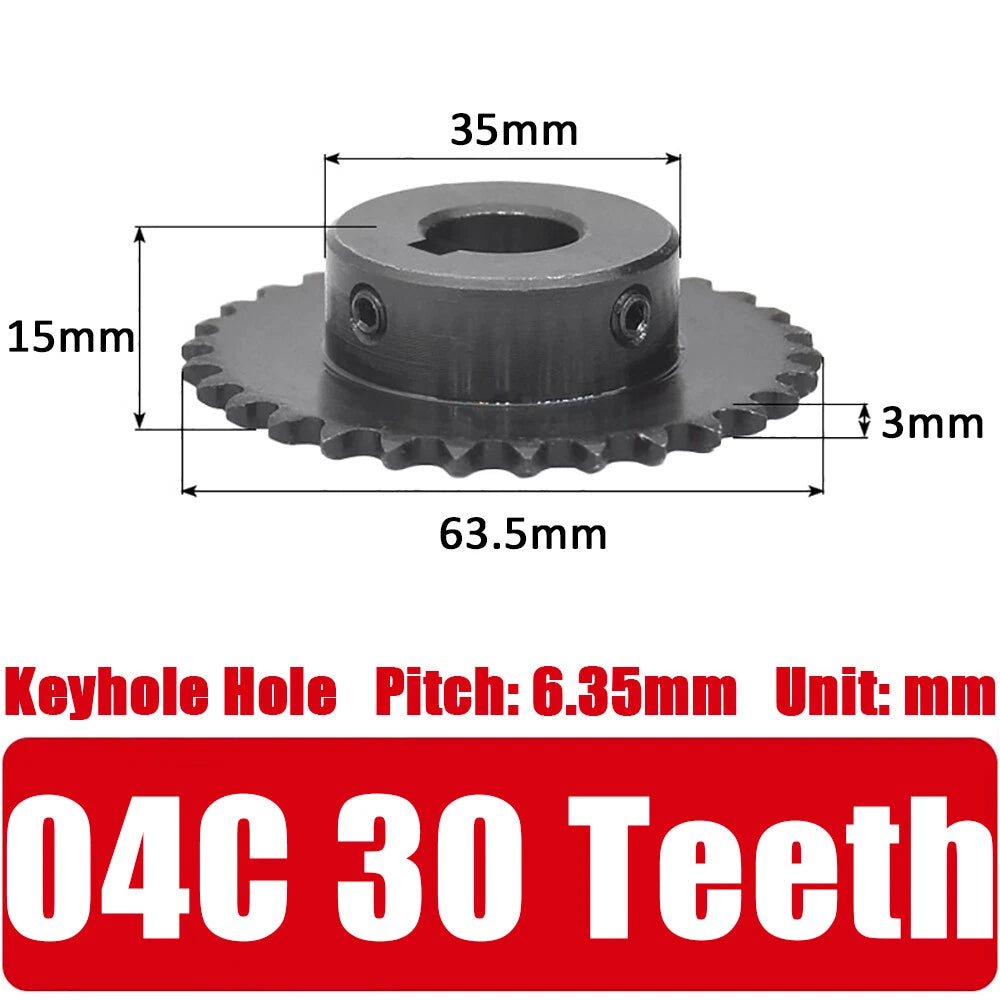
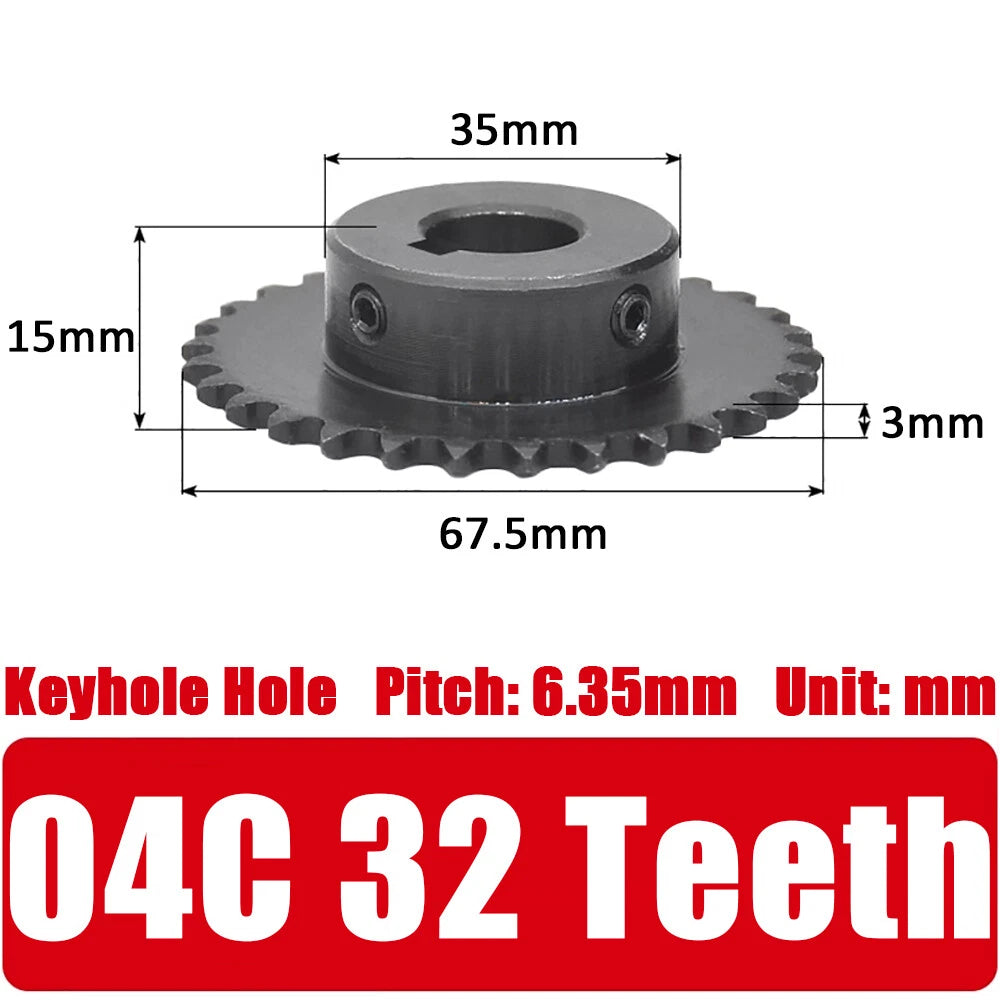
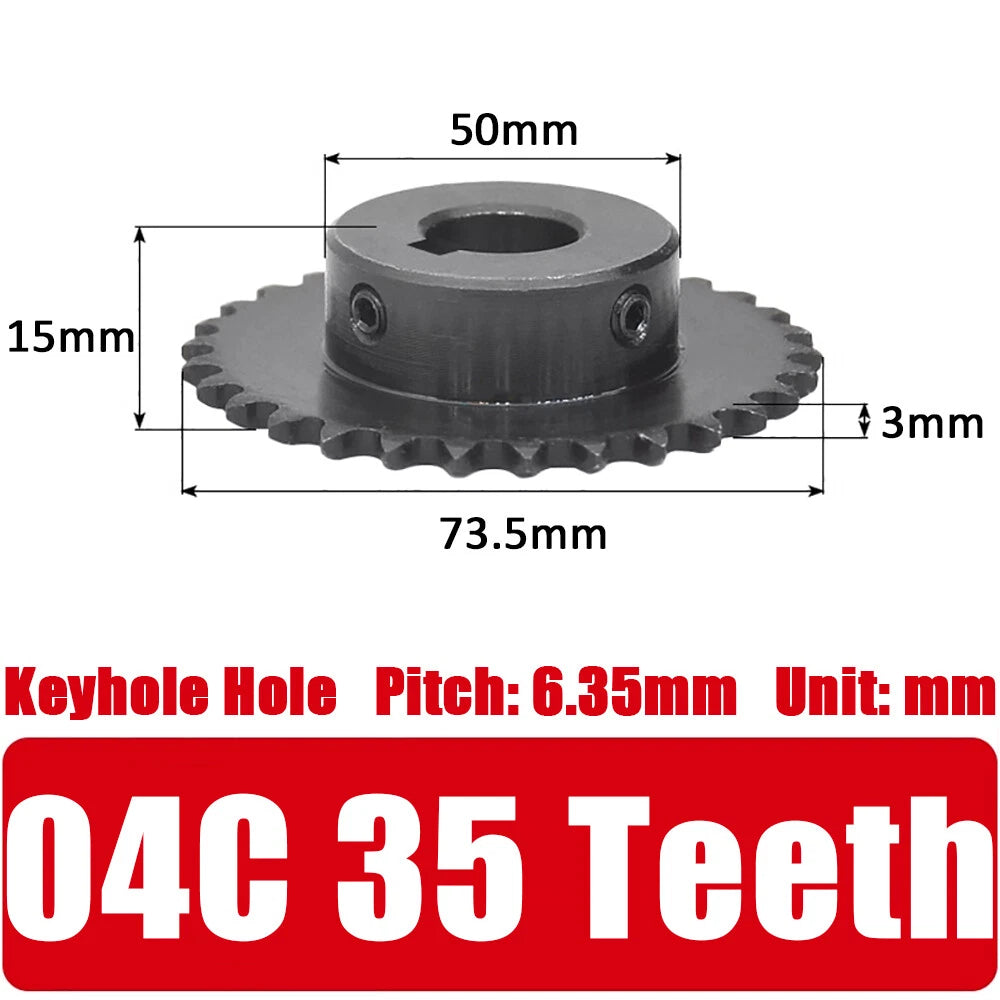
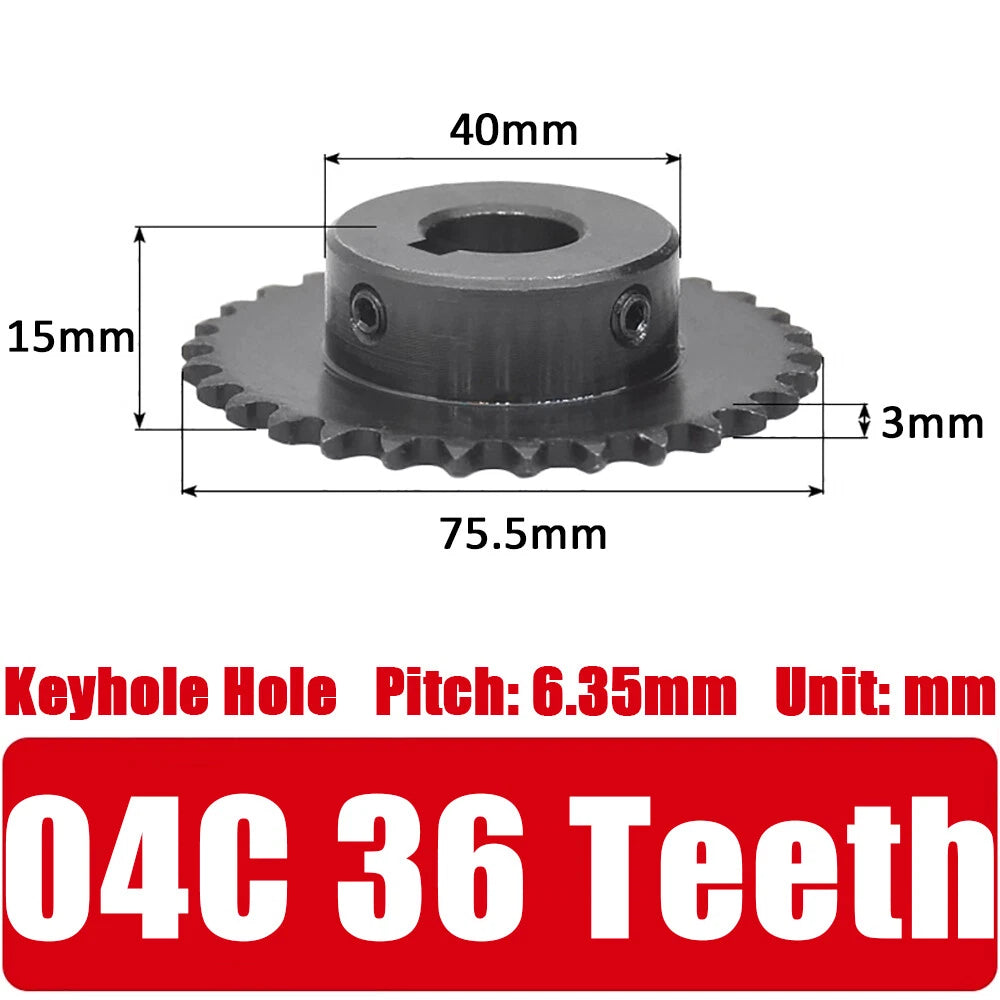
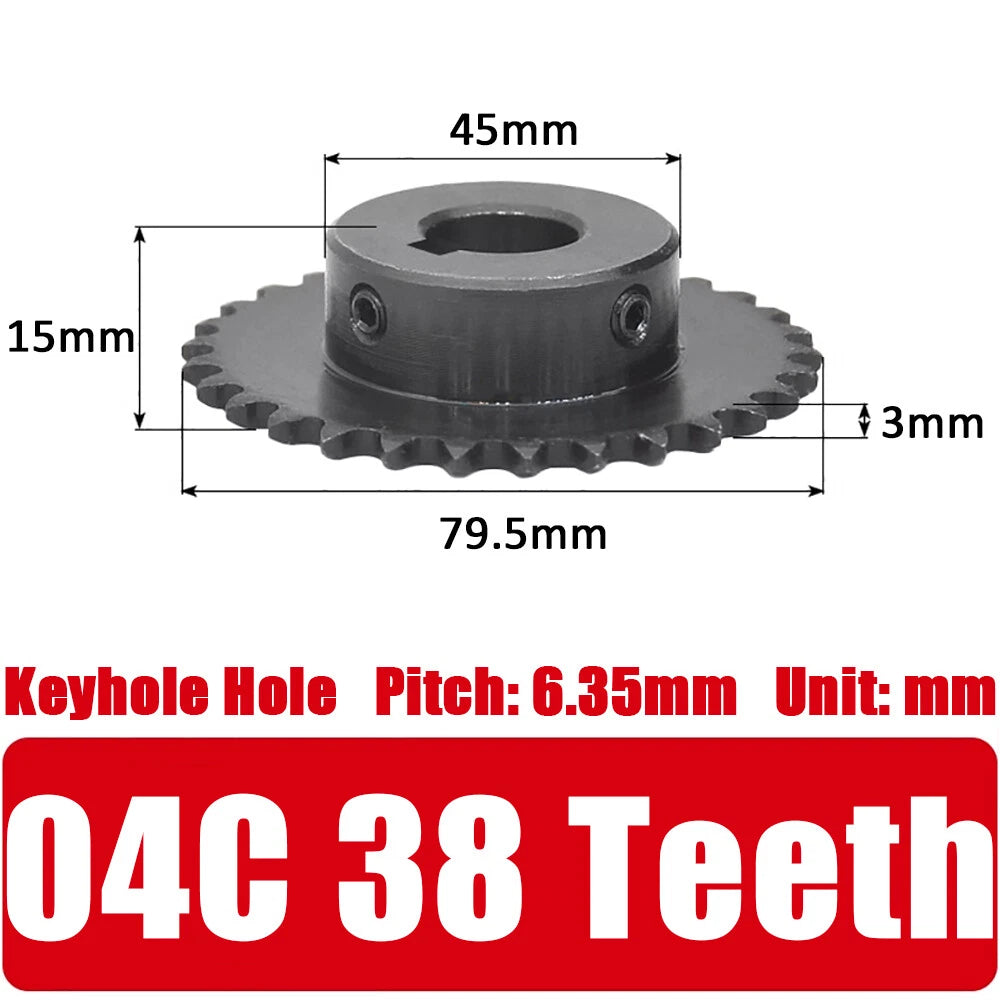
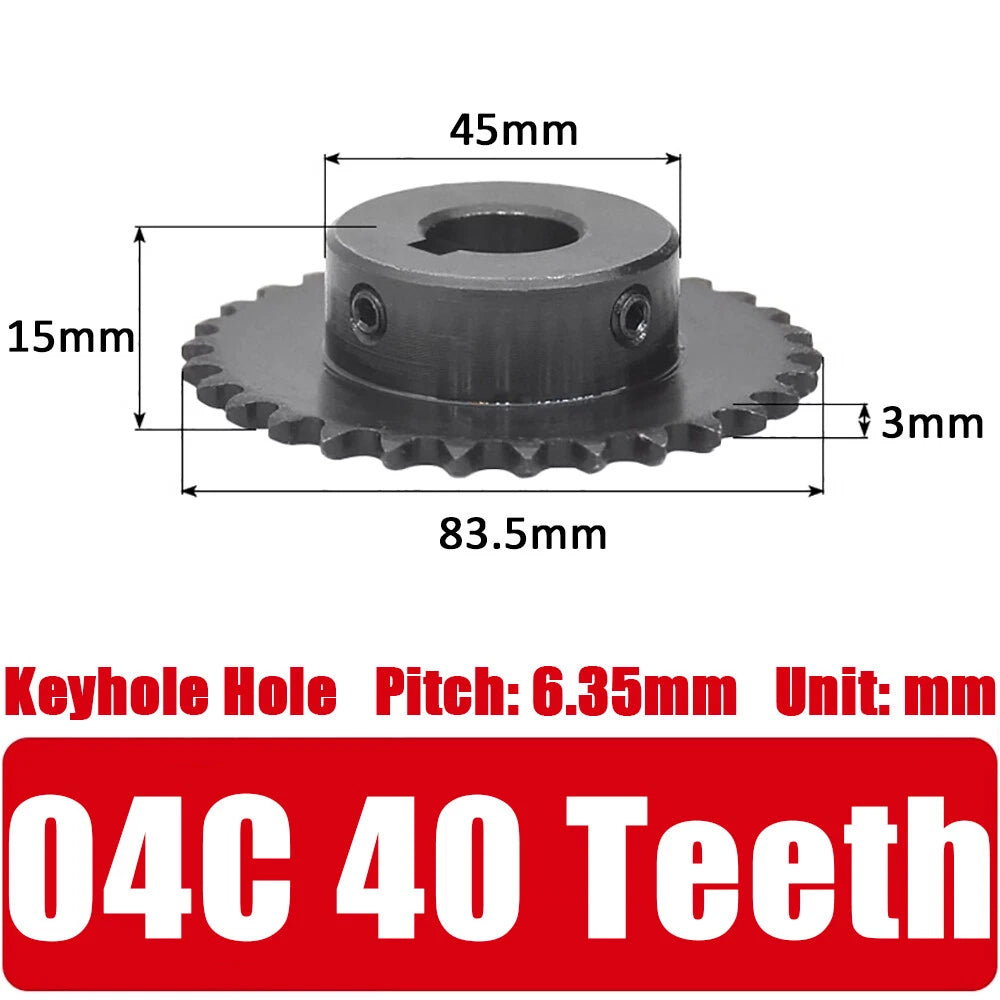
This 04C roller chain sprocket wheel is machined from carbon steel and features a keyhole (D-bore) hub for positive shaft engagement. The pitch is 6.35 mm (1/4 inch), matching the 04C chain standard. Tooth counts range from 11 T to 40 T, and bore diameters span 8 mm to 30 mm (approximately 0.31 in to 1.18 in), with keyway widths of 1.4 mm, 1.8 mm, 2.3 mm, or 3.3 mm depending on the selected bore size.
Typical applications include small conveyor drives, 3D-printer extruder geartrains, DIY go-kart or mini-bike reduction stages, and tabletop CNC axis drives — anywhere a compact 04C chain drive sprocket with a precise bore-to-keyway fit is required.
| Chain Standard | 04C (ISO/DIN) |
|---|---|
| Pitch | 6.35 mm (1/4 in) |
| Roller Diameter (chain) | 2.38 mm (0.094 in) |
| Tooth Count Range | 11 T – 40 T (see variant options) |
| Bore Diameter Range | 8 mm – 30 mm (see variant options) |
| Keyway Width | 1.4 mm / 1.8 mm / 2.3 mm / 3.3 mm (varies by bore) |
| Keyway Depth | See variant options |
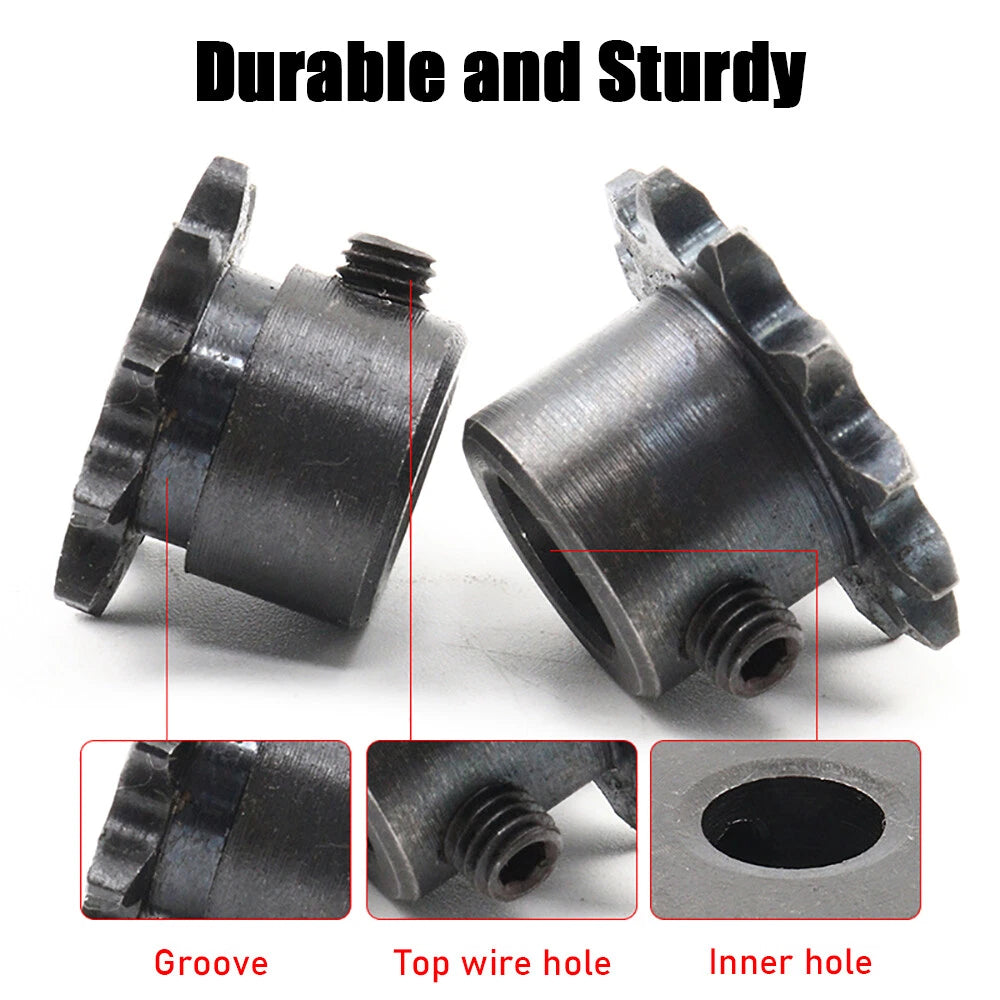
| Hub Style | Keyhole (D-bore) |
| Material | Carbon steel |
| Surface Finish | See variant options |
| Hub Length | See variant options |
| Outer Diameter | See variant options |
| Unit Quantity | 1 piece per order |
Divide the desired speed ratio by 1 to get the tooth-count ratio. For example, a 3:1 reduction with a 12 T driver sprocket requires a 36 T driven sprocket. Select the tooth count that gives you the closest ratio to your target, then verify the resulting chain length fits your center-distance constraints.
Measure your shaft diameter with a caliper. The bore must match the shaft diameter exactly — for example, a 10 mm shaft requires the 10 mm bore option. Also confirm the keyway width matches the key already cut into your shaft (options are 1.4 mm, 1.8 mm, 2.3 mm, or 3.3 mm depending on bore size).
This sprocket is designed for 04C chain, which shares the 6.35 mm (1/4") pitch with ANSI 25 and 25H chain. However, roller diameter and inner link width can differ between standards. Confirm that your chain's roller diameter is 2.38 mm and inner link width matches 04C specifications before pairing.
Carbon steel provides the hardness and tensile strength needed for continuous chain engagement in light-to-medium duty applications such as conveyor drives, go-kart reduction stages, and robotics. For high-speed or heavy-shock-load environments, consider adding a lubricant to the chain and inspecting the sprocket teeth periodically for wear.
Carbon steel is susceptible to surface oxidation in humid or wet environments. For outdoor or washdown applications, apply a chain lubricant or anti-corrosion coating regularly. If corrosion resistance is a primary requirement, contact us to confirm whether a treated or stainless variant is available for your tooth count and bore combination.
The D-bore (keyhole) design is intended to be used with a matching flat on the shaft. Running without the key engagement risks rotational slip under torque, which can damage both the sprocket bore and the shaft. Always use the sprocket with a properly fitted shaft flat or key for reliable power transmission.
Use the standard chain-length formula: L = 2C/P + (N1+N2)/2 + ((N2−N1)/2π)² × (P/C), where C is center distance, P is pitch (6.35 mm), N1 is driver teeth, and N2 is driven teeth. Round up to the nearest even number of links and use a connecting link to close the chain.