The chain is fine...but I ordered the wrong size. Nine links of the chain I ordered equals six of the size I wanted. My error...
How can I straighten out the springs? I can't use them coil uo as is.
Your payment information is processed securely. We do not store credit card details nor have access to your credit card information.
Get fitment advice & recommendations
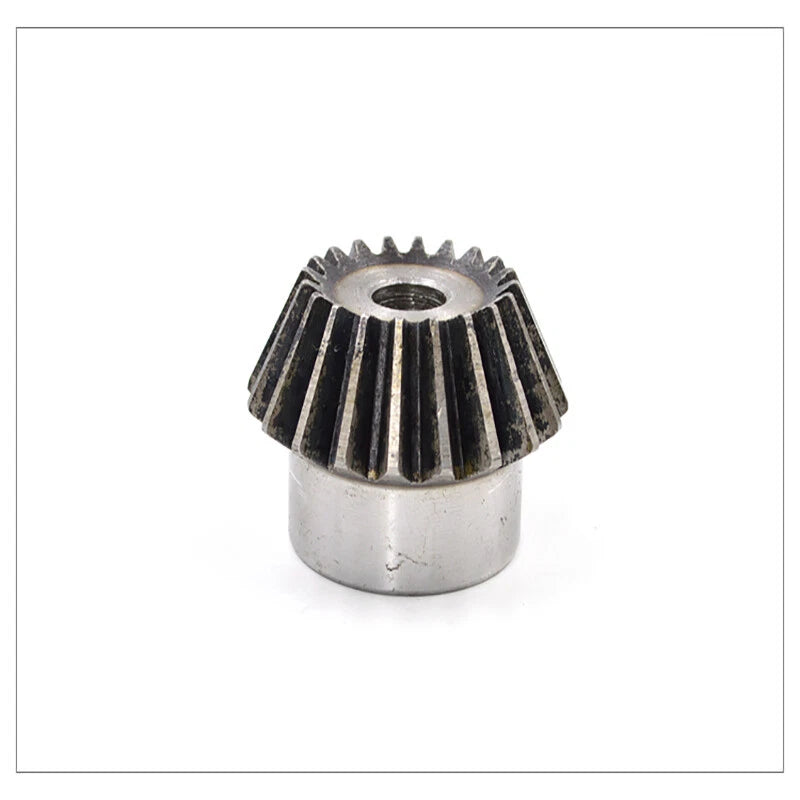
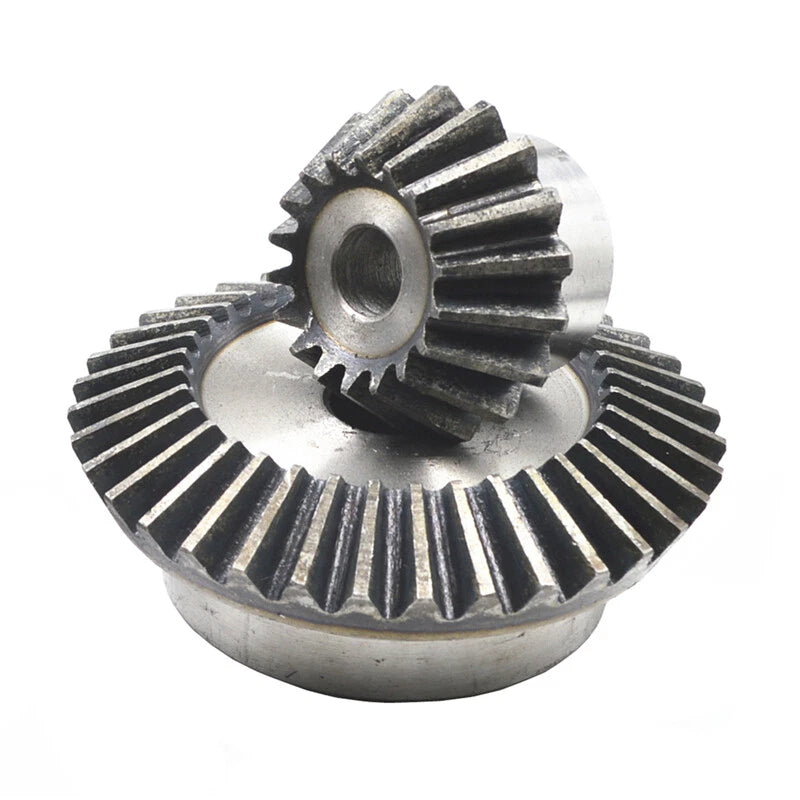
When your motor shaft needs to change direction without losing torque, a mismatched or undersized bevel gear set becomes the weakest link in your entire drivetrain. Engineers, robotics builders, and CNC hobbyists who demand repeatable, low-backlash 90° power transmission need a gear pair machined to tight tolerances — not a cast approximation. These metal motor bevel gears are designed for makers and mechanical engineers who refuse to compromise on dimensional accuracy.
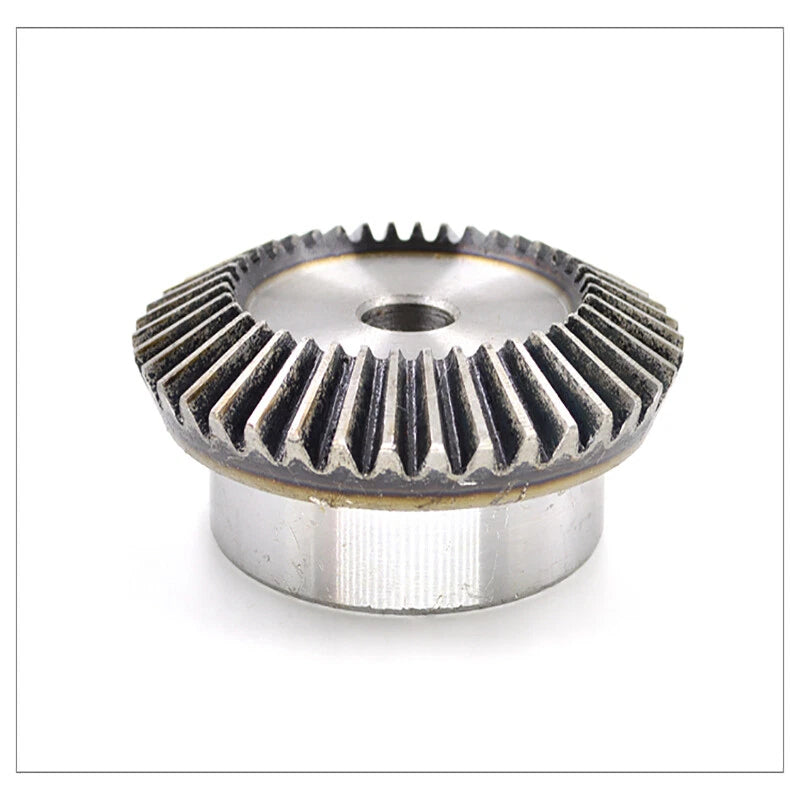
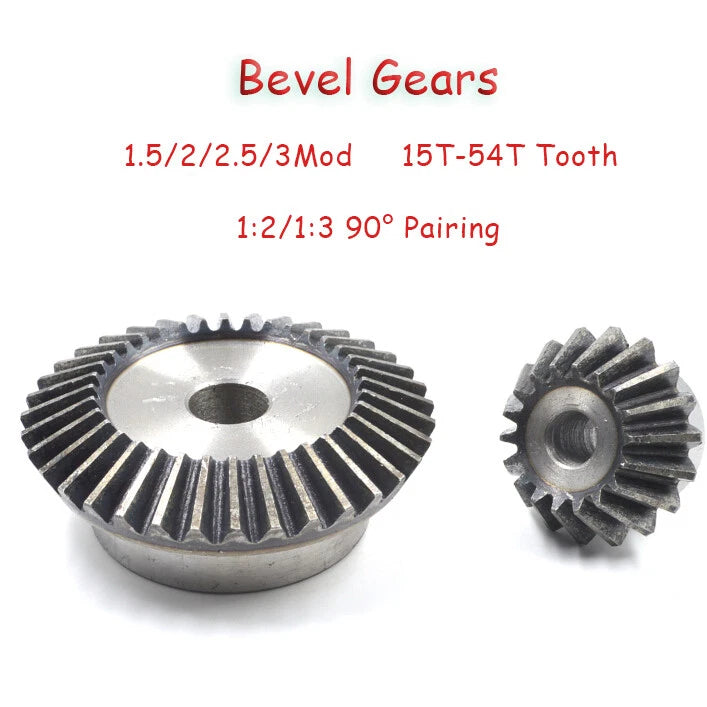
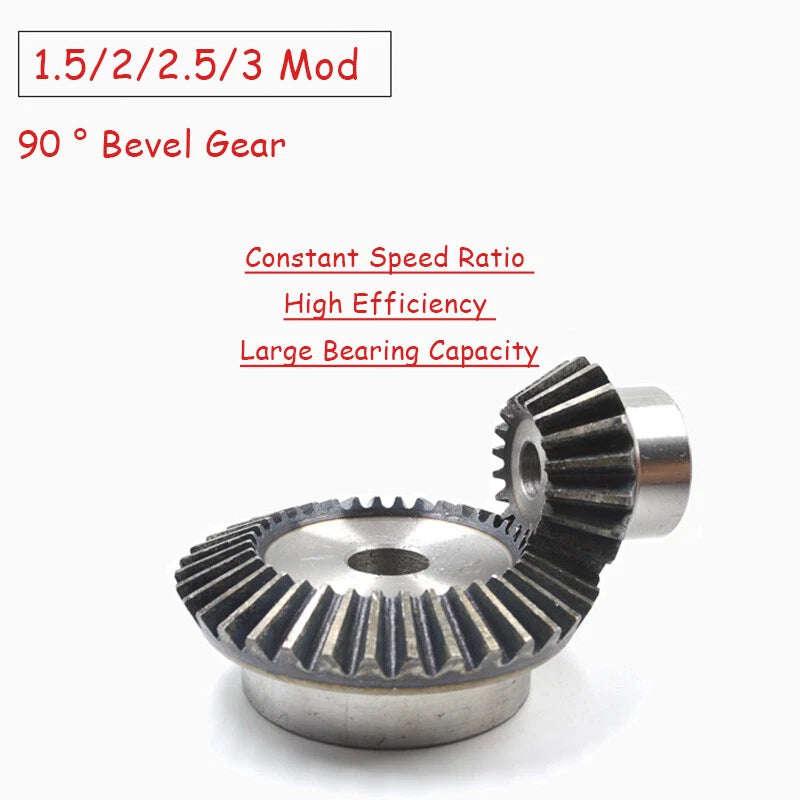
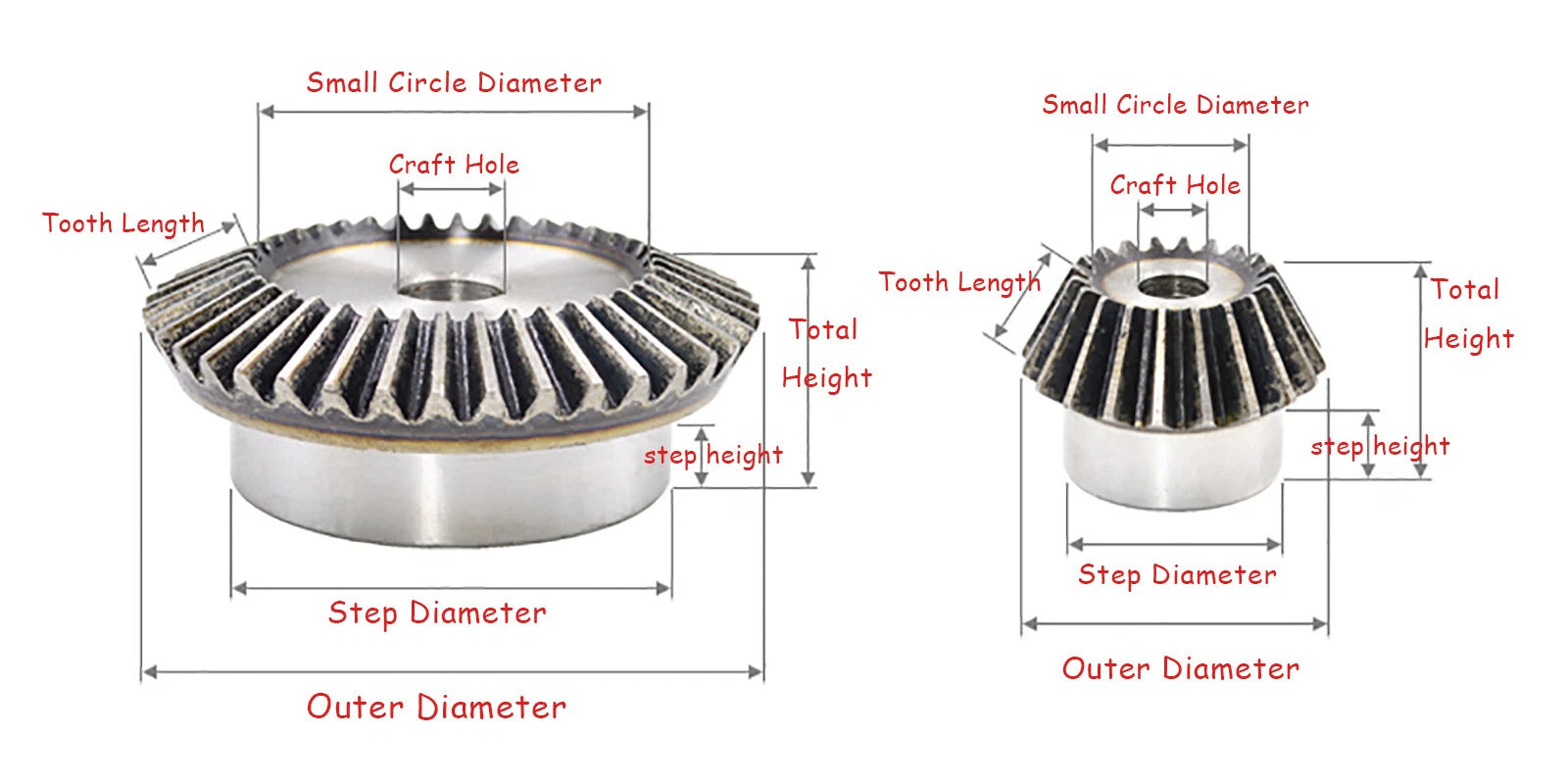
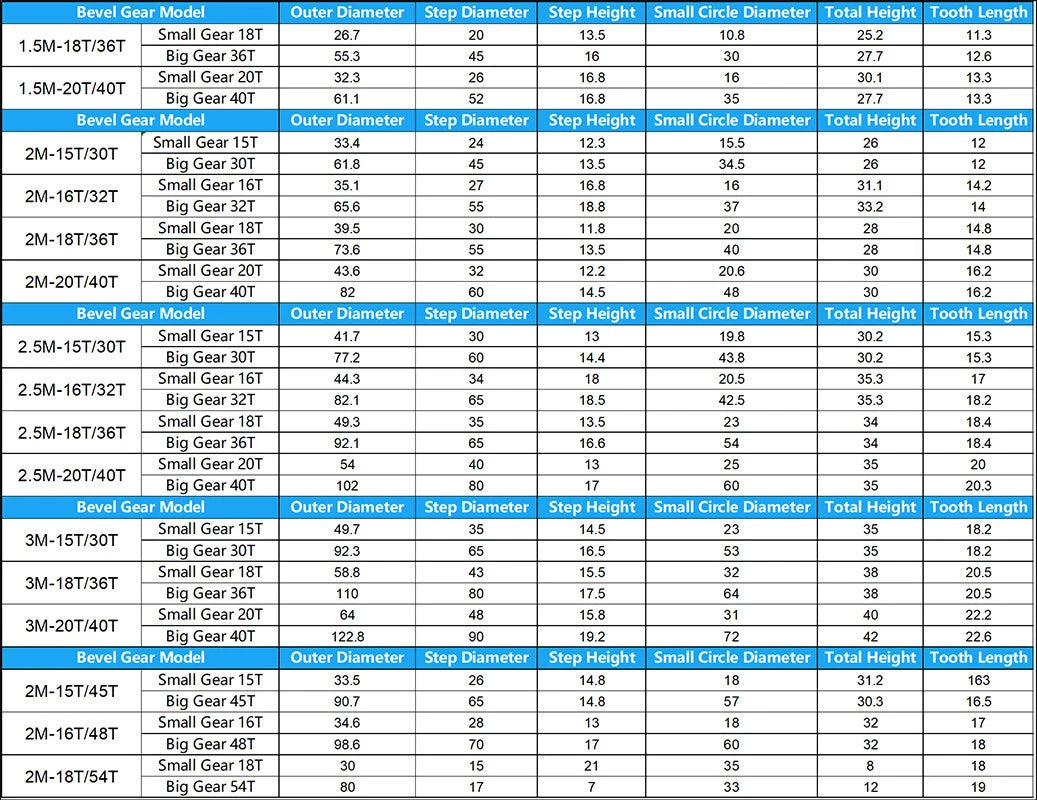
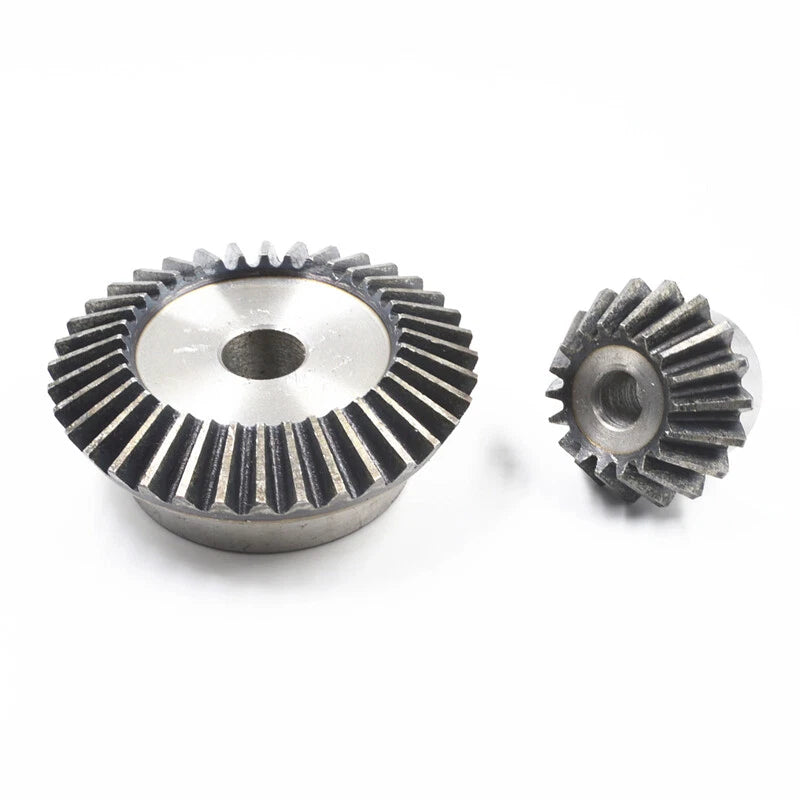
Each set consists of a matched pinion and ring gear pair, machined from 45# medium-carbon steel for a balance of hardness and toughness. Available in modulus 1.5, 2, 2.5, and 3, with tooth counts ranging from 15T to 54T (approximately 0.59 in to 2.13 in pitch diameter depending on modulus), the pairs are pre-matched at a 90° shaft angle and offered in 1:2 and 1:3 reduction ratios. Bore diameter and keyway dimensions vary by model — see variant options for exact bore specs.
Typical use cases include DC motor gearboxes for wheeled robots, 90° axis drives in desktop CNC routers, servo-driven pan-tilt mechanisms, and custom reduction stages in 3D printer extruder assemblies. Long-tail applications such as "small bevel gear set for robot arm" and "90 degree gear drive for stepper motor" are well served across the full modulus range.
Machined from 45# steel, these bevel gears deliver a reliable combination of surface hardness and core toughness — resisting wear under continuous motor load without becoming brittle.
Four modulus options let you match tooth strength to your torque requirement. Smaller modulus (1.5) suits compact, high-speed motor shafts; larger modulus (3) handles heavier loads and lower-speed drives.
Each listing ships as a factory-matched pinion-and-ring pair, pre-verified for correct mesh at 90°. No hand-lapping or shimming required for standard shaft center distances.
Choose a 1:2 ratio for moderate speed reduction or a 1:3 ratio for greater torque multiplication — both available within the same product family for easy drivetrain planning.
The machined steel surfaces are treated to resist oxidation during storage and operation in typical indoor mechanical environments. For high-humidity or outdoor applications, additional lubrication is recommended.
With tooth counts from 15T to 54T across the range, you can fine-tune pitch diameter and gear ratio to fit tight chassis envelopes or achieve specific output RPM targets in your motor drive design.
| Material | 45# Medium-Carbon Steel |
|---|---|
| Gear Type | Straight Bevel Gear (Miter / Reduction) |
| Shaft Angle | 90° |
| Available Modulus | 1.5 / 2 / 2.5 / 3 |
| Tooth Count (Pinion + Ring) | 15+30T, 16+32T, 18+36T, 20+40T (1:2); 15+45T, 16+48T, 18+54T (1:3) |
| Gear Ratio | 1:2 or 1:3 (see variant options) |
| Pitch Diameter Range | See variant options |
| Bore Diameter | See variant options |
| Keyway | See variant options |
| Surface Treatment | Oxidation-resistant machined finish |
| Sold As | Matched pair (pinion + ring gear) |
| Weight | See variant options |
Modulus determines tooth size and load capacity. For small DC or stepper motors (typically under 50W) driving lightweight mechanisms, modulus 1.5 or 2 is usually sufficient. For higher-torque servo or gear-motor applications, modulus 2.5 or 3 provides greater tooth strength and longer service life. When in doubt, size up — a larger modulus gear in a slightly bigger envelope is more reliable than an undersized one running at its limit.
A 1:2 ratio means the output shaft turns at half the speed of the input shaft, doubling the torque (minus friction losses). A 1:3 ratio provides a greater speed reduction — the output turns at one-third the input speed — tripling the torque multiplication. Choose 1:2 for moderate reduction and 1:3 when you need significantly more output torque from a high-RPM motor.
Compatibility depends on bore diameter and keyway dimensions, which vary by modulus and tooth count. Please check the bore spec listed in the variant options against your motor shaft diameter before ordering. If your shaft diameter falls between standard bore sizes, a set-screw hub or shaft adapter may be required.
45# medium-carbon steel offers significantly higher tensile strength and wear resistance than brass or aluminum. Brass gears are quieter and corrosion-resistant but fatigue faster under cyclic load. Aluminum gears are lightweight but soft. Steel is the preferred choice for motor-driven applications where load cycles are high and dimensional stability matters.
Yes. For continuous-duty motor applications, apply a light gear grease (such as NLGI #2 lithium grease) to the tooth flanks before assembly. Re-lubricate periodically based on operating hours and load. For intermittent or low-speed use, a thin film of machine oil is sufficient. Proper lubrication extends gear life and reduces operating noise.
These are sold and designed as factory-matched pairs. The pinion and ring gear are machined to mesh together at the correct center distance and tooth contact pattern. Mixing gears from different pairs — even of the same modulus — can result in uneven tooth contact, increased backlash, and accelerated wear. Always use the matched pair as supplied.
The gears have a machined steel finish with a light oxidation-resistant treatment suitable for typical indoor mechanical environments. They are not fully rust-proof in high-humidity or wet conditions. For outdoor or high-moisture applications, apply a protective grease coating and consider housing the gear assembly in an enclosed gearbox to prevent corrosion.