
The chain is fine...but I ordered the wrong size. Nine links of the chain I ordered equals six of the size I wanted. My error...
How can I straighten out the springs? I can't use them coil uo as is.
Your payment information is processed securely. We do not store credit card details nor have access to your credit card information.
Get fitment advice & recommendations
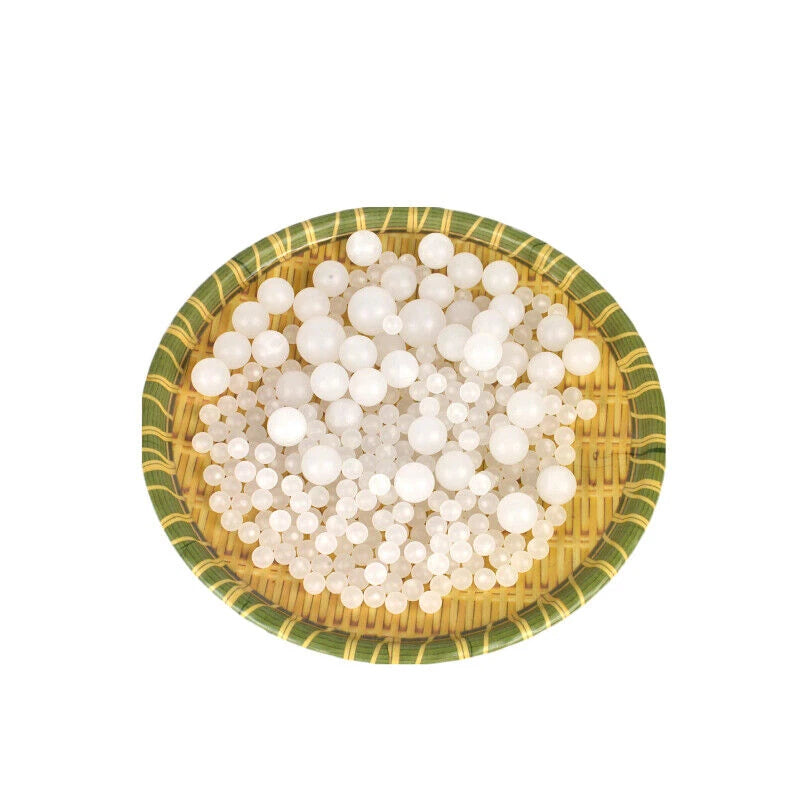
When metal corrodes, adds unwanted weight, or creates conductivity issues in your build, PP solid plastic balls offer a reliable alternative. Engineers, hobbyists, and maintenance technicians working on conveyors, check valves, fluid handling systems, and DIY roller bearing assemblies consistently face the challenge of sourcing the right rolling element in the right diameter — without ordering a full industrial minimum. These PP solid plastic balls solve that problem directly.
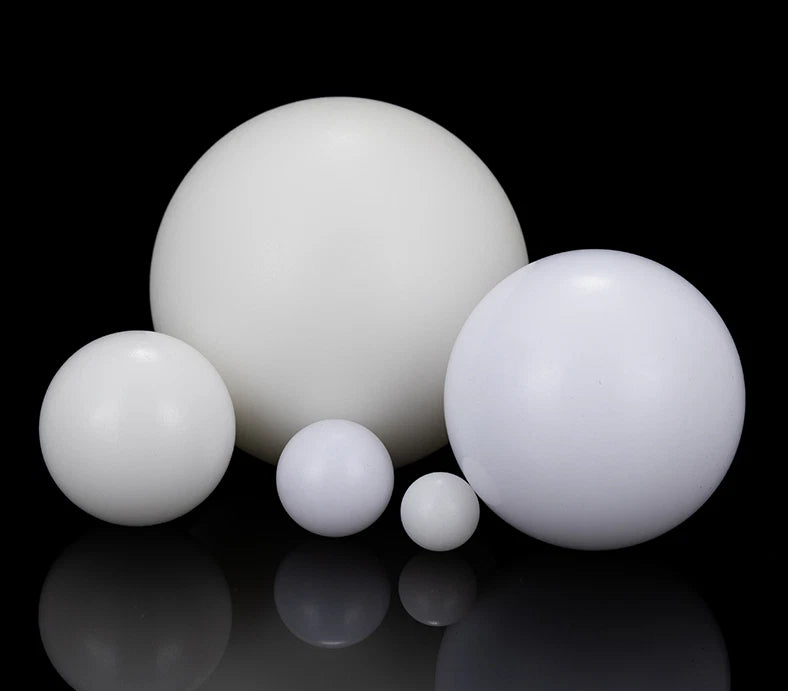
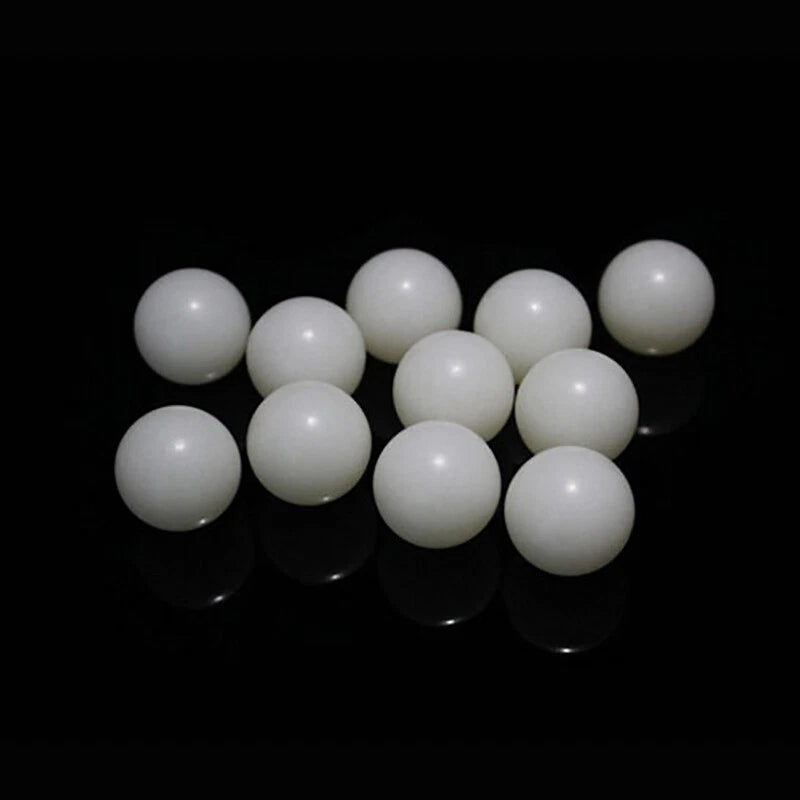
Each ball is machined from virgin polypropylene (PP), a semi-rigid thermoplastic known for its chemical resistance, low moisture absorption, and consistent dimensional accuracy. Diameters span 11.112 mm (7/16 in) through 50 mm (≈1.97 in), covering both metric and fractional-inch standards. Pack quantities range from 1 piece up to 1,000 pieces, letting you order exactly what your project requires.
Typical use cases include replacement rolling elements in light-duty ball bearings, flow-control balls in check valves and spray nozzles, spacing and guide balls in conveyor tracks, and precision rolling elements in DIY transmission or motion-transfer rigs where metal contamination or weight must be minimized.
| Material | Virgin Polypropylene (PP) |
|---|---|
| Diameter Range | 11.112 mm – 50 mm (7/16 in – ≈1.97 in) |
| Available Diameters | 11.112, 12, 12.7, 14, 15, 15.875, 16, 18, 19.05, 20, 22.225, 25, 25.4, 30, 35, 38.1, 40, 45, 50 mm |
| Density | Approx. 0.90–0.91 g/cm³ |
| Hardness | Approx. Shore D 70–75 (typical for PP) |
| Operating Temperature | Typically –10 °C to +100 °C (14 °F to 212 °F) |
| Chemical Resistance | Resistant to dilute acids, alkalis, alcohols, and most organic solvents; not recommended for concentrated oxidizing acids |
| Surface Finish | Smooth, flash-free (See variant options for tolerance class) |
| Colour | Natural white / off-white (typical PP) |
| Pack Quantity Options | 1, 2, 3, 4, 5, 8, 10, 15, 20, 25, 30, 50, 80, 100, 150, 200, 250, 300, 500, 1000 pcs |
| Load Rating | Light-to-medium duty (See variant options for specific load data) |
| Certifications | Contact us to confirm |
Measure the internal bore diameter of your housing or seat with calipers. The ball diameter should match the seat diameter precisely for check valves, or fall within the bearing's specified ball diameter range for rolling-element assemblies. If you are replacing an existing ball, measure the worn ball or consult the original equipment specification. Fractional-inch sizes (e.g., 12.7 mm = 1/2", 25.4 mm = 1") are available for imperial-standard housings.
Polypropylene balls are rated for light-to-medium loads. They are well-suited for check valves, spray nozzles, conveyor guides, and low-speed rolling assemblies. They are not recommended for high-load radial or axial bearing applications where steel or ceramic balls are the standard. If your application involves significant compressive or impact loads, contact us to confirm suitability before ordering.
Yes. Polypropylene has excellent resistance to water, dilute acids, dilute alkalis, alcohols, and many organic solvents. It does not rust or corrode. It is commonly used in water treatment, chemical dosing, and food-processing-adjacent applications. However, PP is not compatible with concentrated oxidizing acids (e.g., concentrated sulfuric or nitric acid) or aromatic/chlorinated hydrocarbons at elevated temperatures. If your fluid is aggressive, contact us to confirm compatibility.
Standard polypropylene maintains dimensional stability and mechanical properties from approximately –10 °C to +100 °C (14 °F to 212 °F). Continuous exposure above 90 °C may cause gradual softening over time. For applications requiring higher temperature resistance, consider PTFE or nylon alternatives. Contact us if you need to confirm suitability for a specific temperature profile.
In many light-duty applications, yes — provided the diameter matches and the load, speed, and temperature requirements fall within PP's capability range. PP balls are lighter and softer than steel or glass, which reduces noise and inertia but also limits maximum load and surface hardness. For precision bearing replacements, verify the grade tolerance (G-grade) required by your bearing specification. Contact us to confirm if you need a specific tolerance class.
For prototyping or single-unit repairs, small packs (1–10 pcs) minimize upfront cost. For production runs or maintenance stock, bulk packs (100–1,000 pcs) significantly reduce the per-unit price. Check the variant pricing table above to compare cost per piece across pack sizes — the per-ball cost drops substantially at higher quantities. If you need a quantity not listed, contact us for a custom quote.
Polypropylene is widely used in food-contact applications and is generally recognized as food-safe in its virgin (unrecycled) form. These balls are made from virgin PP resin. However, formal food-contact certification (e.g., FDA 21 CFR, EU 10/2011) depends on the specific resin grade and any additives used. Contact us to confirm certification documentation if your application requires regulatory compliance.





