The chain is fine...but I ordered the wrong size. Nine links of the chain I ordered equals six of the size I wanted. My error...
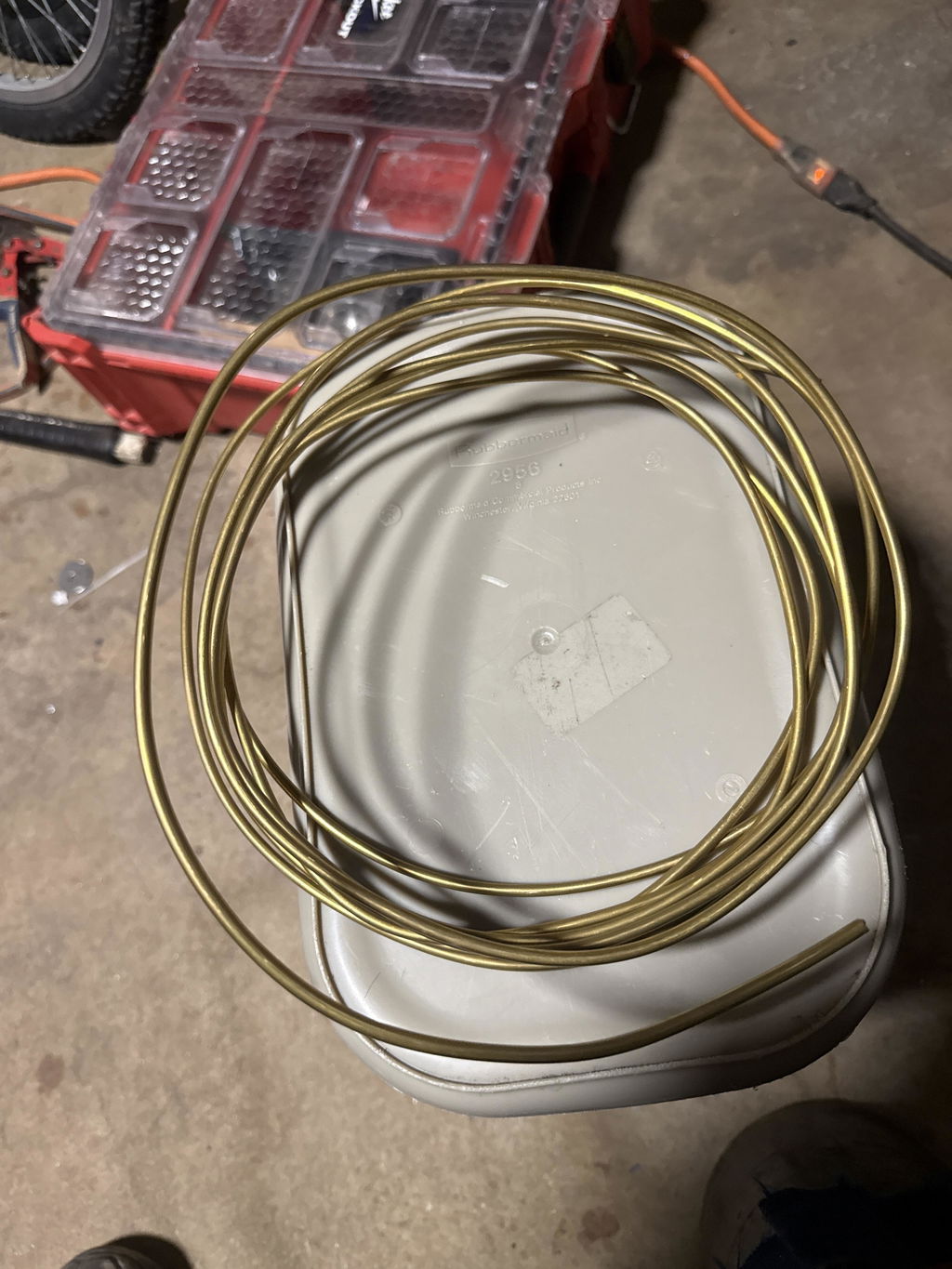
How can I straighten out the springs? I can't use them coil uo as is.
Your payment information is processed securely. We do not store credit card details nor have access to your credit card information.
Get fitment advice & recommendations
When a worn or undersized sprocket causes chain skip, uneven wear, or unexpected downtime, finding an exact-spec replacement matters. Engineers, maintenance technicians, and serious DIY builders working with 12A (#40) roller chain drives need sprockets machined to tight tolerances — not generic castings that introduce slop into the drivetrain.
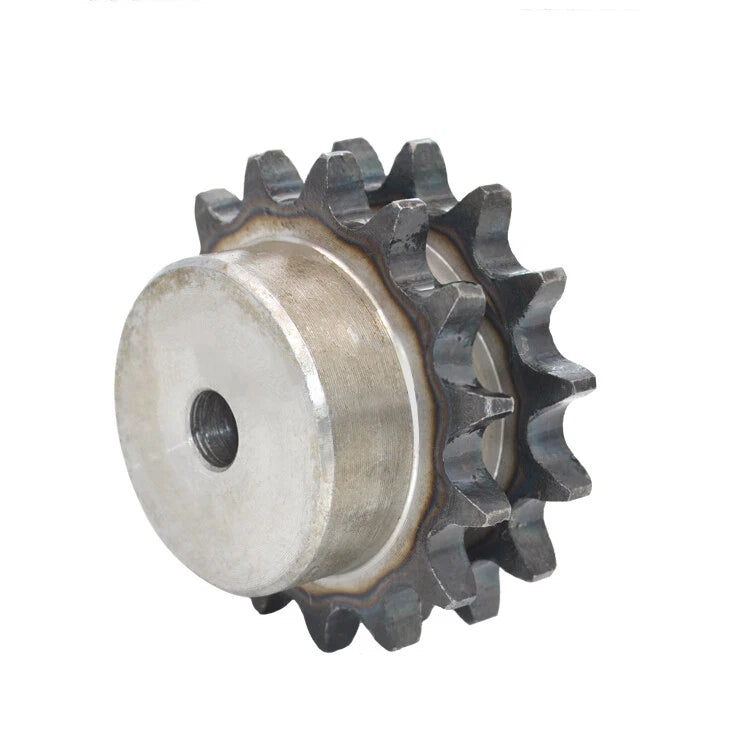
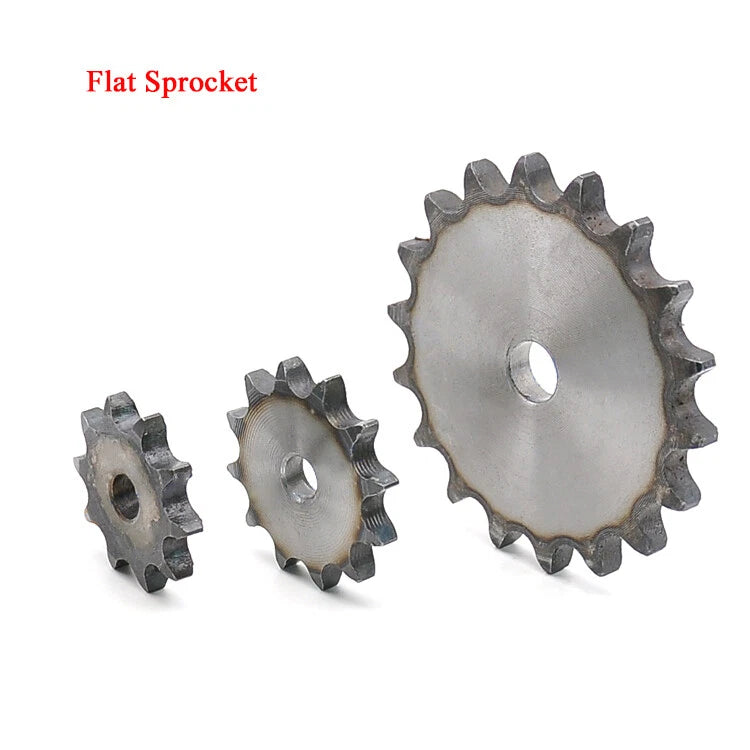
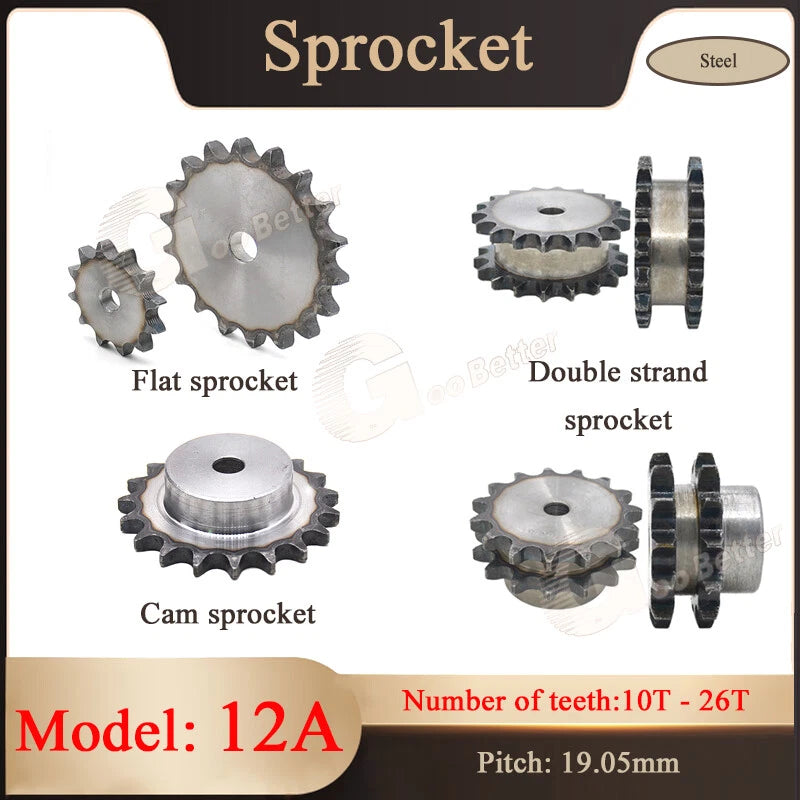
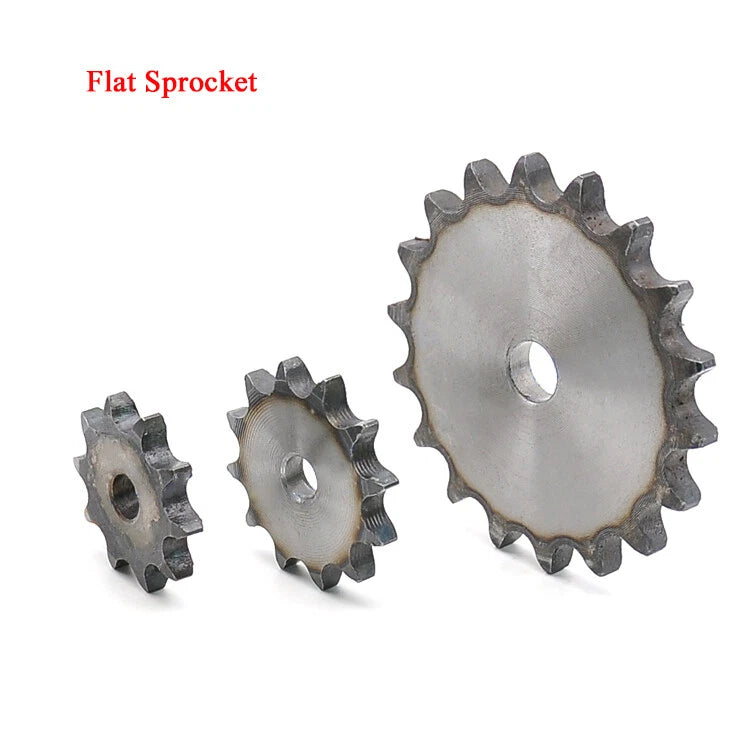
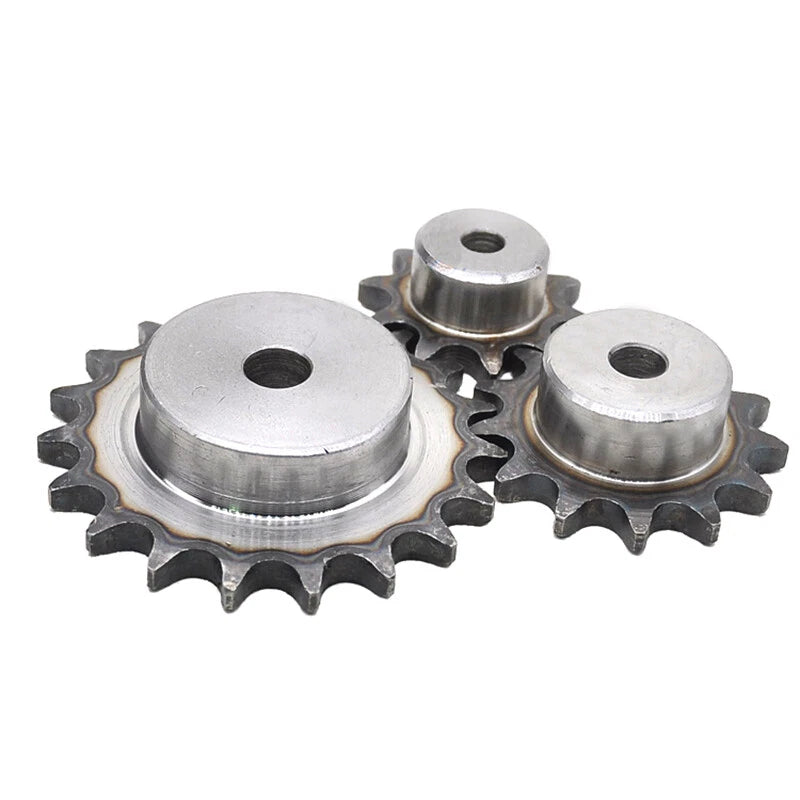
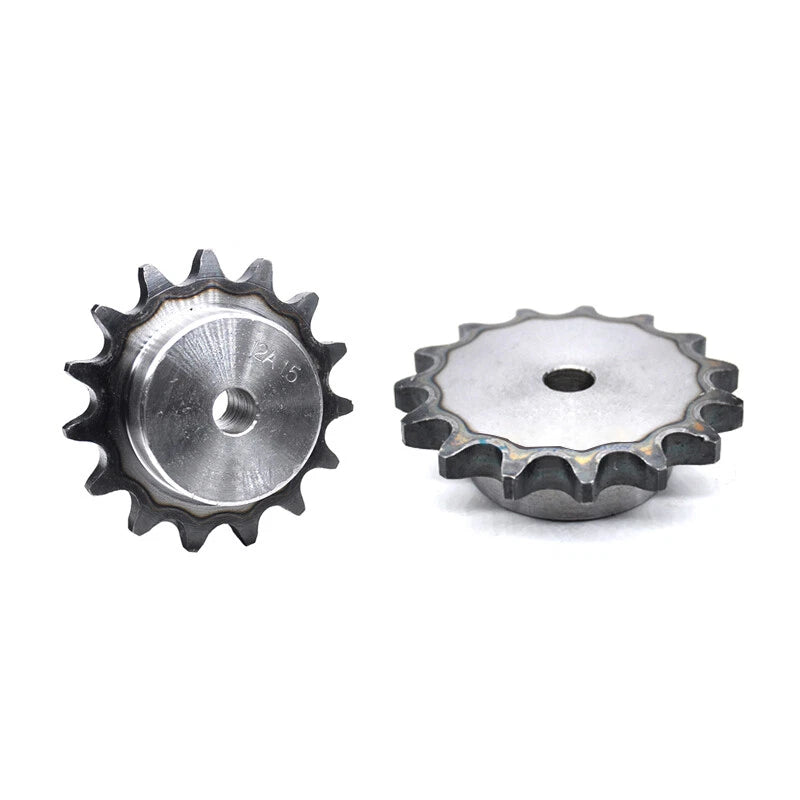
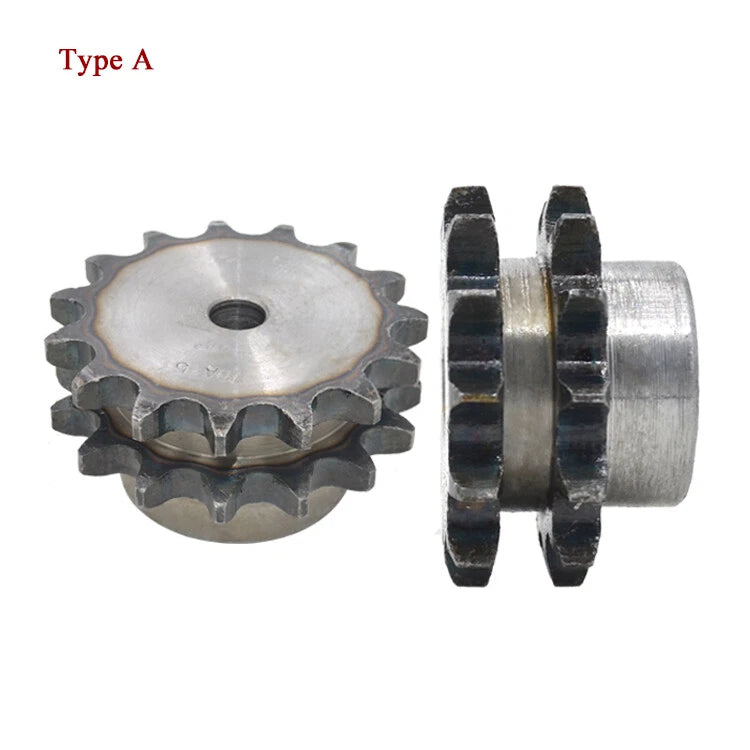
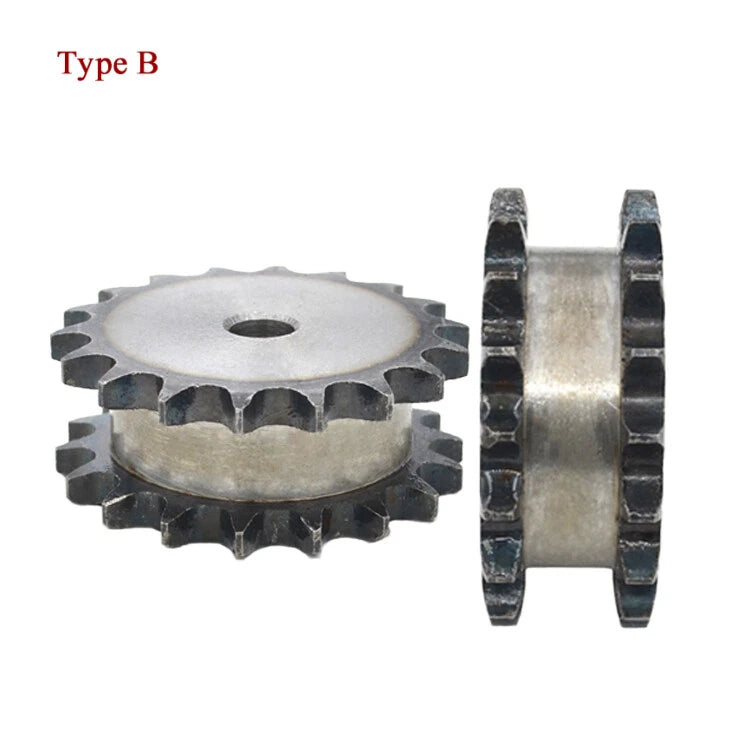
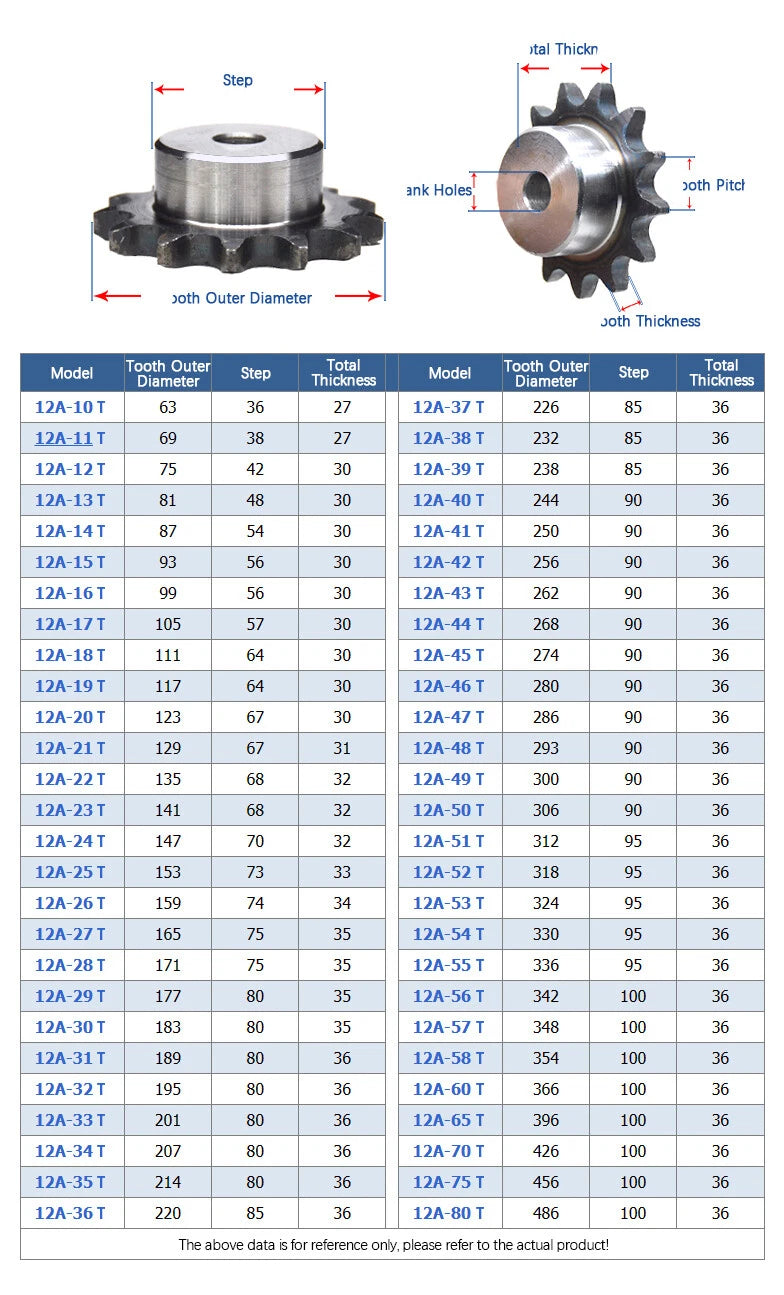
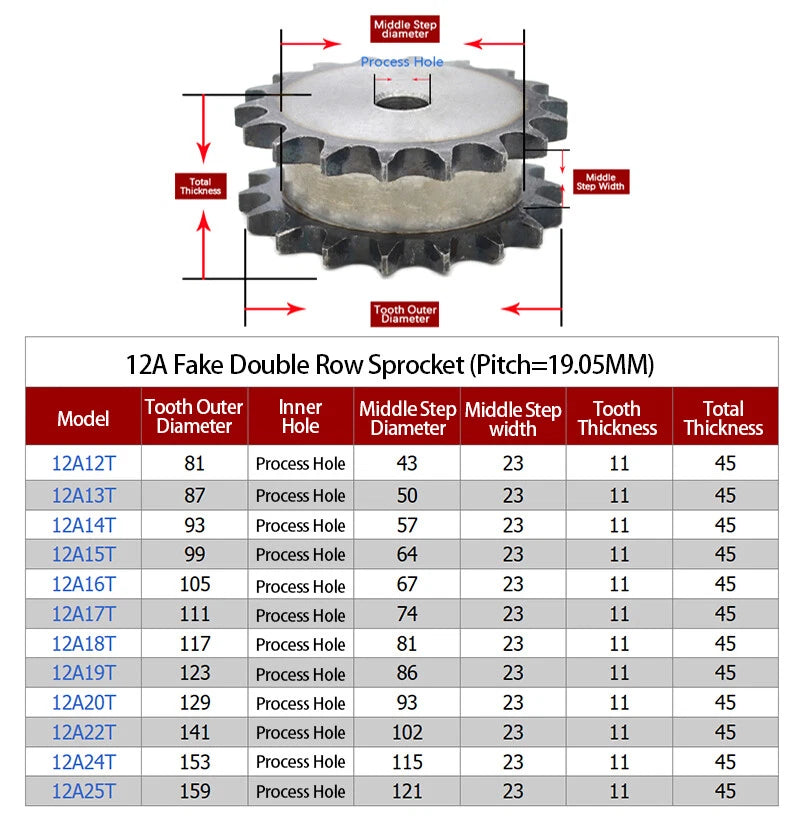
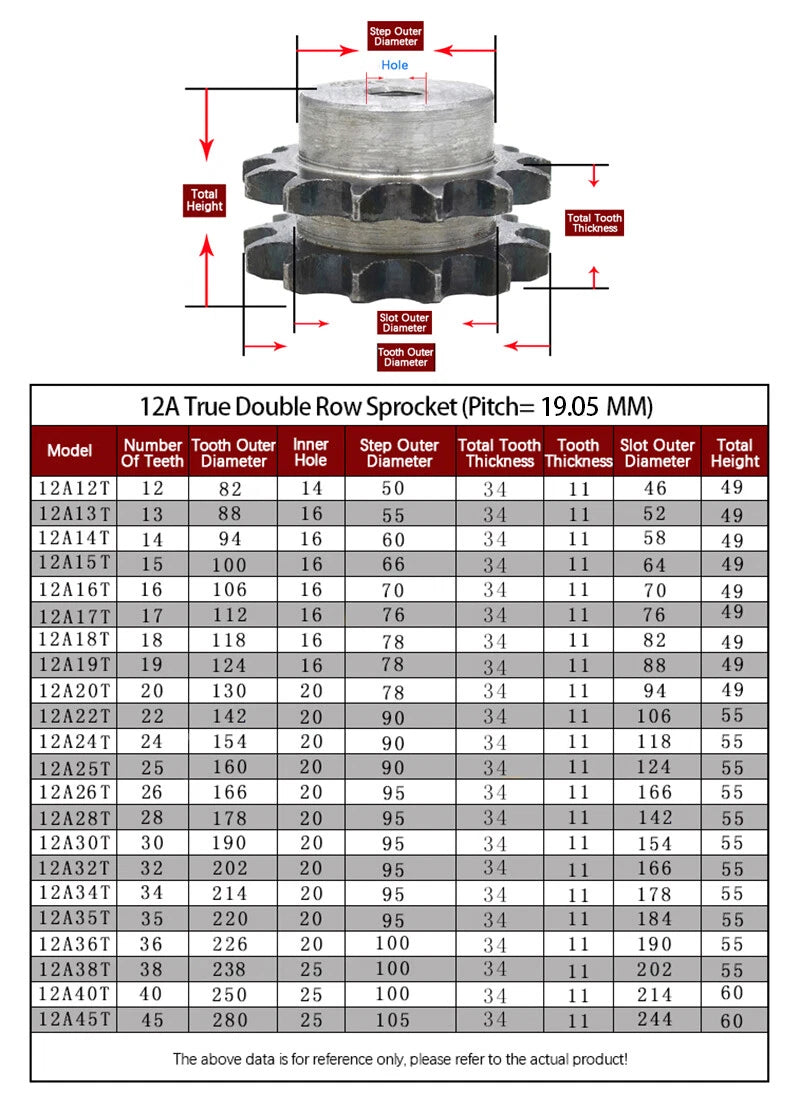
These 12A roller chain sprockets are machined from 45# carbon steel (equivalent to AISI 1045) with an A3 structural steel option on select variants. The chain pitch is 19.05 mm (¾ inch), matching the ISO 12A / ANSI #40 standard. Tooth counts range from 10T to 26T, with outer diameters scaling accordingly from approximately 62 mm (2.44 in) at 10T to approximately 160 mm (6.30 in) at 26T. Available configurations include Flat Sprocket, Cam Sprocket, A-Double Strand Sprocket, and B-Double Strand Sprocket.
Typical use cases include conveyor drive systems requiring a 12A sprocket replacement, agricultural and industrial gearbox output shafts running #40 chain, and custom power-transmission builds where a specific tooth count is needed to achieve a target gear ratio. The double-strand variants suit applications demanding higher load capacity on the same shaft centerline.
| Chain Standard | ISO 12A / ANSI #40 |
|---|---|
| Chain Pitch | 19.05 mm (¾ in) |
| Tooth Count (T) | 10T, 11T, 12T, 13T, 14T, 15T, 16T, 17T, 18T, 19T, 20T, 21T, 22T, 23T, 24T, 25T, 26T |
| Sprocket Type | Flat Sprocket / Cam Sprocket / A-Double Strand / B-Double Strand |
| Material | 45# Carbon Steel (AISI 1045 equivalent) |
| Outer Diameter | See variant options |
| Hub Diameter / Bore | See variant options |
| Hub Length | See variant options |
| Keyway | See variant options |
| Surface Treatment | Oxidation-resistant finish |
| Weight | See variant options |
Your gear ratio equals the driven sprocket tooth count divided by the drive sprocket tooth count. For example, pairing a 13T drive sprocket with a 26T driven sprocket gives a 2:1 reduction. Count the teeth on your existing sprocket or measure the pitch circle diameter and use a sprocket calculator to confirm the tooth count before ordering.
Yes. ISO 12A and ANSI #40 share the same 19.05 mm (¾ in) pitch, so these sprockets are fully interchangeable with standard #40 roller chain from any manufacturer.
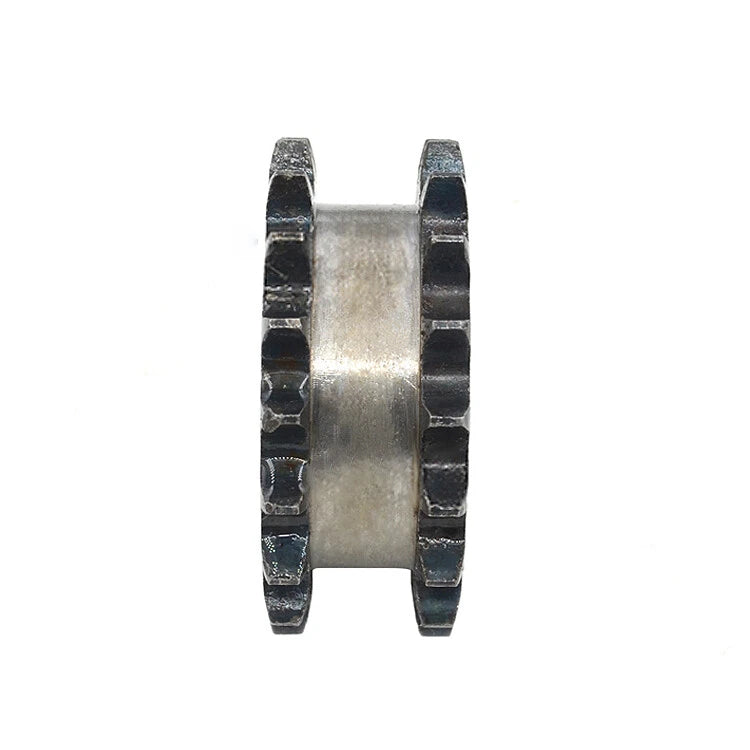
The Flat Sprocket is a standard single-strand sprocket with a flat hub face. The Cam Sprocket features a cam-style hub for specific shaft-locking applications. A-Double Strand and B-Double Strand sprockets accept two parallel strands of #40 chain simultaneously, roughly doubling the load capacity compared to a single-strand sprocket — the A and B designations refer to different hub geometries for different shaft configurations.
45# carbon steel (AISI 1045) has a typical tensile strength of approximately 600–700 MPa and yield strength around 355 MPa. For exact load ratings, cross-reference the ANSI #40 chain breaking load (typically 17.8 kN for single strand) with your application's safety factor. Double-strand variants can handle proportionally higher loads.
The surface treatment provides moderate corrosion resistance suitable for indoor industrial and sheltered outdoor use. For continuously wet or chemically aggressive environments, apply a chain lubricant regularly and consider stainless steel alternatives if long-term exposure is expected.
Measure three things: (1) chain pitch — the center-to-center distance between two adjacent roller pins, which should be 19.05 mm; (2) tooth count — count all teeth around the sprocket; (3) bore diameter — measure the shaft hole diameter to ensure the replacement sprocket's bore matches your shaft. Contact us with these measurements if you need confirmation before ordering.
No. Double-strand sprockets are machined with two side-by-side tooth rows and require double-strand #40 chain. Using a single-strand chain on a double-strand sprocket will result in misalignment and accelerated wear. Select the Flat or Cam Sprocket type for single-strand chain applications.