20-50mm PVC Pipe Fittings Elbow Tee 3 4 5-Way Plumbing Connector Solvent Weld

No reviews

Price:
Sale price$2.71 USD
Stock:
In stock (500 units), ready to be shipped

Payment & Security

Ach Direct Debit Amazon American Express Apple Pay Bancontact Diners Club Discover Google Pay iDEAL Wero Mastercard PayPal Shop Pay USDC Visa

Your payment information is processed securely. We do not store credit card details nor have access to your credit card information.

Quantity Discount Promotion
🎯 BULK DISCOUNT: Buy More, Save More!
Buy 2 Items
5% OFF
Buy 4 Items
10% OFF
Buy 6 Items
15% OFF
Expert

DIY Expert Support

Get fitment advice & recommendations

Mon-Fri, 8:30AM-8PM
24-Hour Fast Ship
🚚
Arrives in 3-14 days
🌍
Global Reach
↩️
30-Day Returns
🌱 1 tree planted with every purchase

Description

PVC Solvent Weld Pipe Fittings — Straight, Elbow, Tee & Multi-Way Connectors for Reliable Plumbing Runs

When a plumbing run needs to change direction, split flow, or terminate cleanly, the wrong fitting creates leaks, stress cracks, and callbacks. Plumbers, maintenance contractors, and serious DIYers who work with rigid PVC systems need fittings that bond permanently, hold pressure, and match the pipe they already have on site.

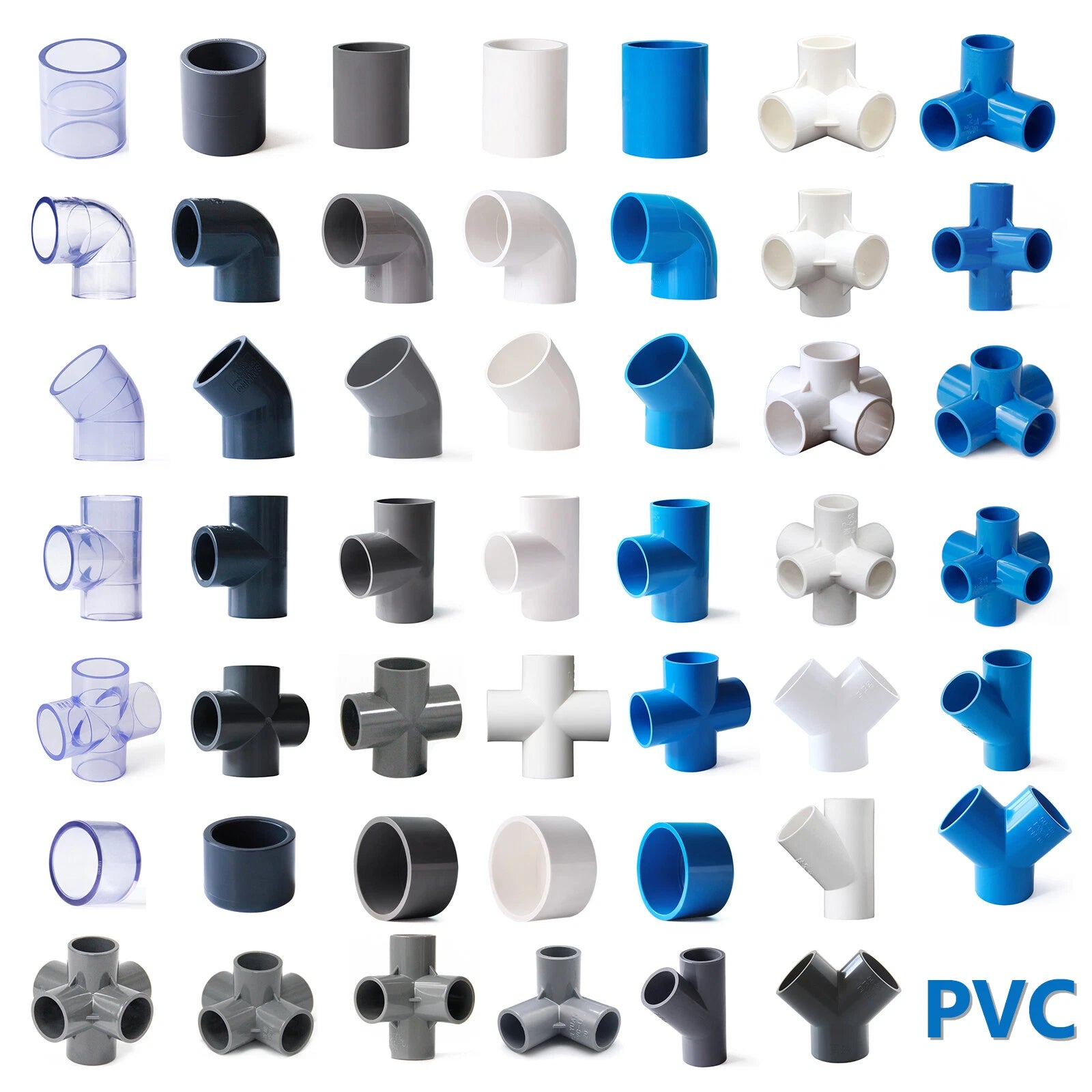
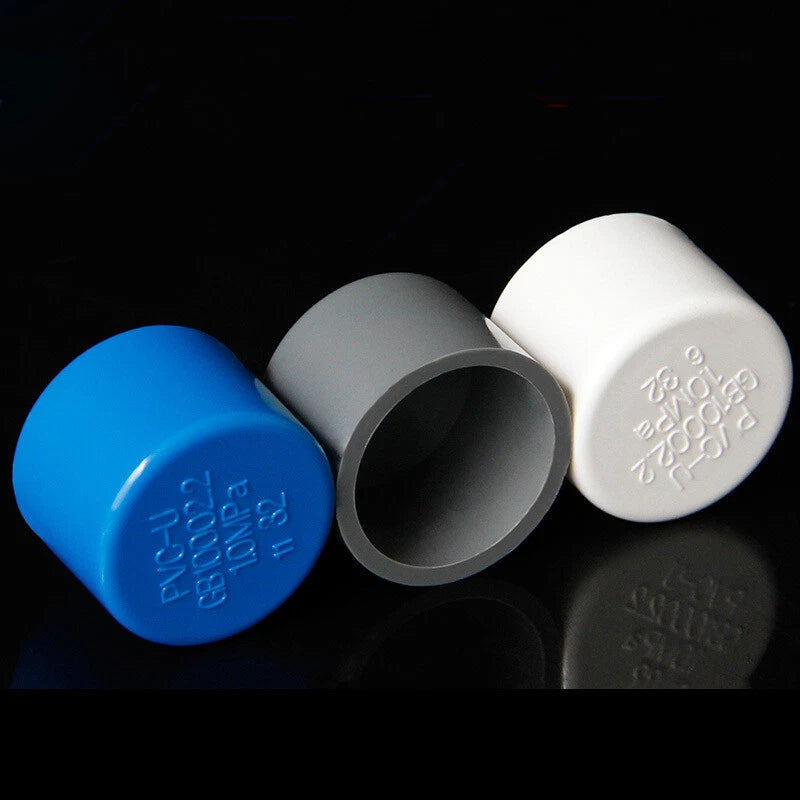
This range of PVC solvent weld pipe fittings covers the full set of junction types — Straight couplers, 90° Elbows, 45° Elbows, Tees, Crosses, 45° Tees, Y-Pieces, 3-Way / 4-Way / 5-Way / 6-Way Elbows, Caps, and 500 mm Rigid Pipe sections. Inner diameters span 16 mm (⅝ in) through 110 mm (4⅓ in), with the most common sizes — 20 mm (¾ in), 25 mm (1 in), 32 mm (1¼ in), 40 mm (1½ in), and 50 mm (2 in) — available across the widest colour selection: White, Blue, Grey, Dark Grey, and Clear Blue.

These PVC solvent weld fittings suit cold-water supply lines, irrigation manifolds, drainage laterals, compressed-air distribution, and conduit routing in residential and light-commercial builds. The solvent-cement socket design creates a fused, monolithic joint that resists vibration and thermal cycling — making it the standard choice for buried, concealed, and exposed runs alike.

⚙️ Compatibility: Designed for standard Schedule 40 / Class D PVC pipe. Confirm pipe outer diameter matches the fitting's inner diameter before bonding. Not rated for hot-water or high-pressure steam service.

✅ Key Features of These PVC Solvent Weld Pipe Fittings

🔗Solvent-Cement Socket Joint
Each fitting uses a deep socket bore sized for a snug interference fit with matching PVC pipe. When bonded with standard PVC cement, the joint fuses into a single piece — eliminating the leak paths that threaded or push-fit connections can develop over time.
📐Full Range of Junction Types
Straight, 90° Elbow, 45° Elbow, Tee, Cross, 45° Tee, Y-Piece, 3-Way / 4-Way / 5-Way / 6-Way Elbow, Cap, and 500 mm Rigid Pipe — one product family covers every direction change and branch point in a typical installation.
📏Wide Size Selection
Inner diameters from 16 mm to 110 mm (⅝ in to 4⅓ in) let you match the fitting to the pipe already specified for the job, without adapters or reducers where none are needed.
🎨Five Colour Options
White, Blue, Grey, Dark Grey, and Clear Blue allow colour-coding by system (potable water, irrigation, drainage, conduit) or matching to existing visible pipework — a practical detail that reduces identification errors during maintenance.
🛡️UV-Stabilised PVC Construction
The material is formulated to resist UV degradation and surface chalking in exposed outdoor installations, maintaining structural integrity and colour consistency over extended service life.
🔧No Special Tools Required
Installation requires only a pipe cutter or hacksaw, deburring tool, PVC primer, and solvent cement — tools already on hand for any plumbing or irrigation job. No threading dies, compression sleeves, or heat guns needed.

📐 Technical Specifications — PVC Solvent Weld Pipe Fittings

Material Rigid PVC (Polyvinyl Chloride)
Connection Method Solvent cement weld (socket type)
Inner Diameter Range 16 mm – 110 mm (⅝ in – 4⅓ in)
Available Sizes 16, 20, 25, 32, 40, 50, 63, 75, 90, 110 mm (see variant options)
Fitting Types Straight, 90° Elbow, 45° Elbow, Tee, Cross, 45° Tee, Y-Piece, 3-Way / 4-Way / 5-Way / 6-Way Elbow, Cap, Rigid Pipe 500 mm
Colours Available White, Blue, Grey, Dark Grey, Clear Blue
Wall Thickness See variant options
Pressure Rating See variant options
Temperature Range Suitable for cold-water service (typically 0–60 °C / 32–140 °F)
UV Resistance UV-stabilised formulation
Compatible Pipe Standard Schedule 40 / Class D PVC pipe
Rigid Pipe Length 500 mm (19.7 in) — Rigid Pipe variant only

❓ Frequently Asked Questions

How do I choose the correct fitting size?

Match the fitting's inner diameter (ID) to the outer diameter (OD) of your PVC pipe. For example, a 20 mm fitting accepts pipe with a 20 mm OD. If you are unsure, measure the pipe OD with calipers or check the pipe's printed markings. Using a fitting that is even 1 mm too large will result in a loose bond that can fail under pressure.

Can these fittings be used for drinking water (potable water) supply?

PVC solvent weld fittings are widely used in cold potable water systems. Confirm the specific fitting and cement you select carry the relevant local certification (e.g., NSF/ANSI 61 in North America, WRAS in the UK) if your jurisdiction requires it for drinking water contact. The fittings are not rated for hot water above approximately 60 °C (140 °F).

What type of solvent cement should I use?

Use a standard PVC solvent cement (also called PVC glue or PVC adhesive) rated for the pipe class and application. For sizes 32 mm and above, apply a PVC primer first to soften the socket surface before cementing — this is required by most plumbing codes and significantly improves bond strength. Follow the cement manufacturer's cure time before pressurising the line.

Are these fittings suitable for outdoor or buried installations?

Yes. The UV-stabilised PVC formulation resists surface degradation in exposed outdoor conditions. For buried installations, PVC is chemically resistant to most soils and groundwater. Ensure the trench is free of sharp stones that could stress the pipe wall, and follow local codes for burial depth and bedding material.

What is the difference between a Tee, a Cross, and a Y-Piece?

A Tee has three ports at 90° — one inlet and two outlets (or one straight run plus one branch). A Cross has four ports, allowing two straight runs to intersect. A Y-Piece has three ports arranged at approximately 45°, which produces a gentler flow transition and lower turbulence than a standard Tee — making it preferred for drainage and waste lines where solids may be present.

Can I disassemble a solvent-welded joint if I make a mistake?

No. Once cured, a solvent weld joint is permanent — the cement chemically fuses the pipe and fitting into a single piece. If a joint is incorrectly assembled, cut it out with a pipe cutter or hacksaw and install a new fitting with a short coupling section. This is why dry-fitting and marking alignment before applying cement is strongly recommended.

What is the purpose of the multi-way elbows (3-Way, 4-Way, 5-Way, 6-Way)?

Multi-way elbows allow multiple pipes to meet at a single junction point — useful in irrigation manifolds, compressed-air distribution headers, and modular display or structural frameworks built from PVC pipe. A 3-Way Elbow connects three pipes at a corner; a 6-Way Elbow connects six pipes meeting at a central hub. Select the number of ports that matches the branches required at that node in your system.

🛒 Select your Product type, Size, and Colour above, then add to cart.

You may also like

Recently viewed