The chain is fine...but I ordered the wrong size. Nine links of the chain I ordered equals six of the size I wanted. My error...
How can I straighten out the springs? I can't use them coil uo as is.
Your payment information is processed securely. We do not store credit card details nor have access to your credit card information.
Get fitment advice & recommendations
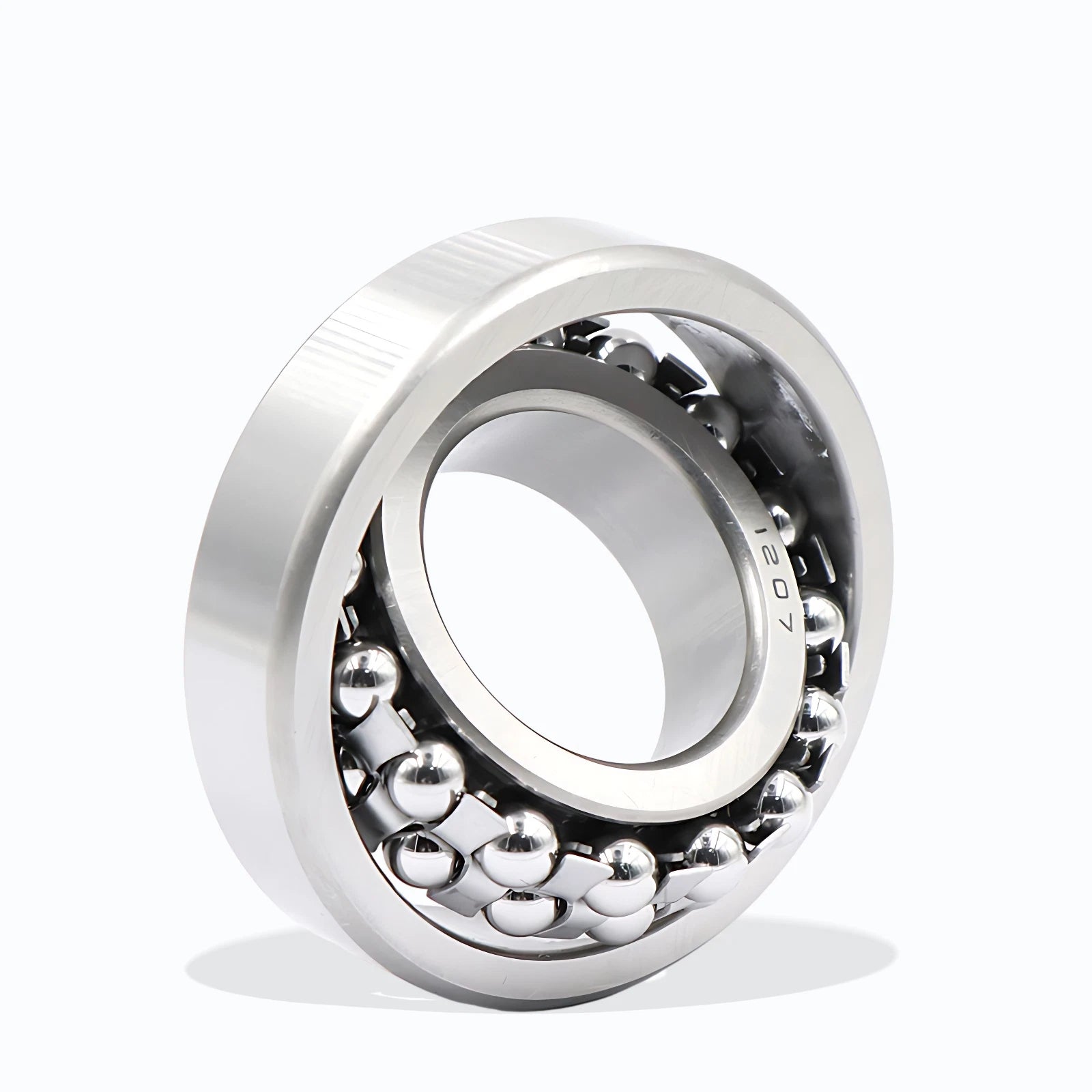
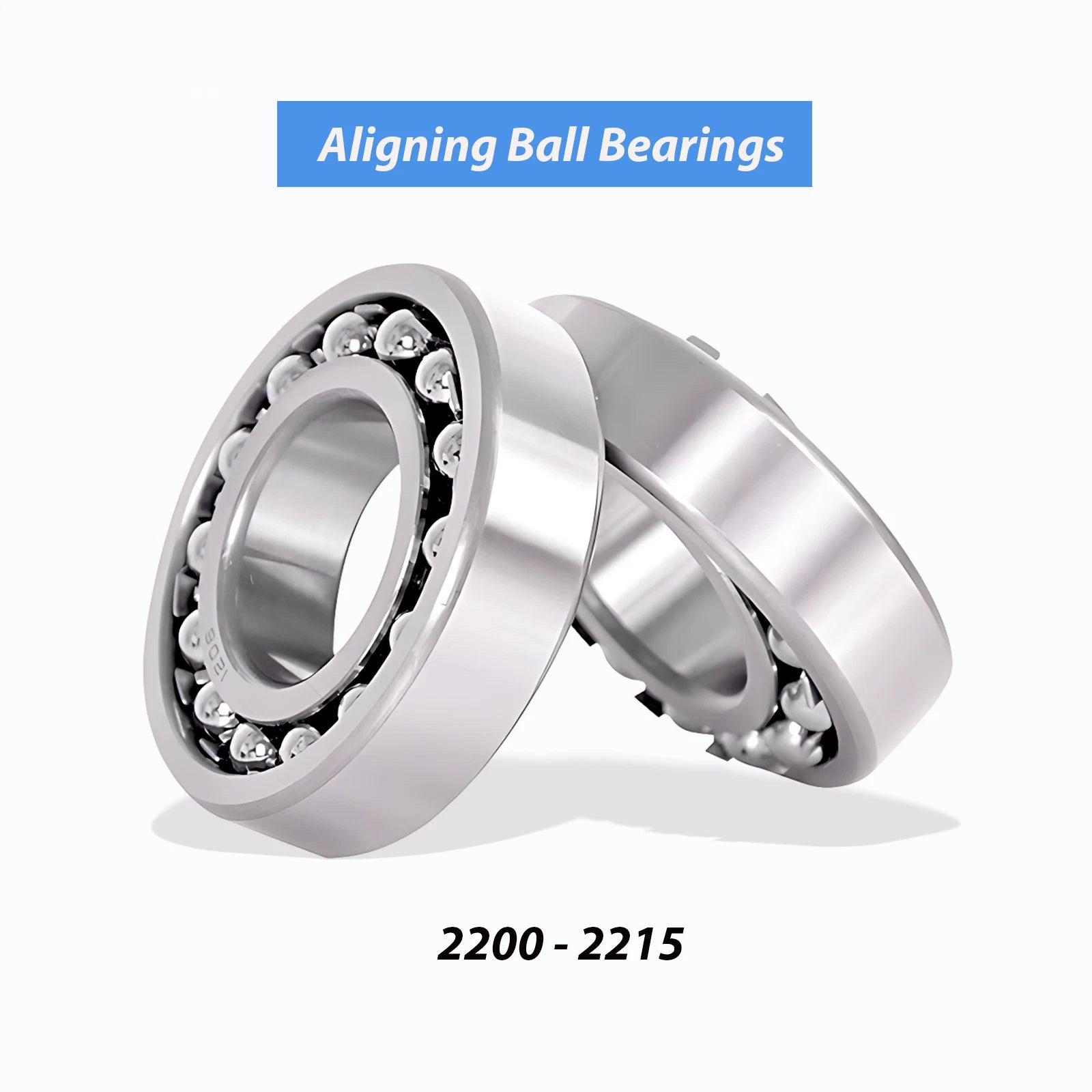
When shaft deflection or housing misalignment causes premature bearing failure, engineers and maintenance technicians reach for self aligning ball bearings. The 2200–2215 series is engineered to accommodate angular misalignment of up to 2–3°, making it the go-to choice for applications where perfect shaft alignment cannot be guaranteed — from agricultural equipment and conveyor drives to industrial fans and textile machinery.
Each bearing in this series features a double-row ball complement running in a spherical outer raceway ground into the outer ring. Inner bore diameters span 10 mm (2200) through 75 mm (2215), with corresponding outer diameters from 30 mm to 130 mm and widths from 14 mm to 31 mm. All dimensions conform to ISO 15 standards. Rings are manufactured from through-hardened bearing steel; retainers are pressed steel or machined brass depending on size.
Typical use cases include conveyor roller shafts where frame flex introduces misalignment, centrifugal fan pillow-block assemblies subject to thermal expansion, and agricultural PTO drive shafts exposed to vibration and shock loads. The self aligning ball bearing design also suits light-duty gearbox input shafts and woodworking machinery spindles where periodic realignment is impractical.
Two rows of balls share the load across a common spherical outer raceway, distributing radial and axial forces more evenly than single-row alternatives and extending service intervals under combined loading.
The spherical outer raceway accommodates shaft-to-housing misalignment of typically 2–3°, preventing edge loading and the accelerated fatigue that destroys rigid bearings in deflecting structures.
Inner and outer rings are produced from through-hardened chromium bearing steel (equivalent to 100Cr6 / SUJ2), delivering consistent hardness throughout the cross-section for resistance to subsurface fatigue.
Sixteen size variants from 2200 (10 × 30 × 14 mm) to 2215 (75 × 130 × 31 mm) cover the majority of light-to-medium industrial shaft diameters, reducing the need to source from multiple suppliers.
Standardized envelope dimensions ensure drop-in interchangeability with housings and adapters designed to the same international standard, simplifying maintenance and replacement sourcing.
Open design accepts both grease-packed and oil-bath lubrication, giving engineers flexibility to match the lubrication regime already in use on the machine without modifying the housing.
| Series | 2200 – 2215 (Double-Row Self Aligning) |
|---|---|
| Bore Diameter (d) | 10 mm – 75 mm (see variant options) |
| Outer Diameter (D) | 30 mm – 130 mm (see variant options) |
| Width (B) | 14 mm – 31 mm (see variant options) |
| Misalignment Tolerance | Typically 2° – 3° |
| Row Configuration | Double-row |
| Raceway Type | Spherical outer raceway |
| Ring Material | Through-hardened chromium bearing steel (100Cr6 equivalent) |
| Retainer Material | Pressed steel (smaller sizes); machined brass (larger sizes) |
| Dimensional Standard | ISO 15 / DIN 630 |
| Lubrication Type | Grease or oil (open design) |
| Sealing | Open (unsealed) |
| Load Direction | Radial (primary) + light axial |
| Operating Temperature | See variant options |
| Quantity per Order | 1 piece |
Match the bore diameter (d) to your shaft diameter. Each variant listing shows the designation number followed by bore × outer diameter × width in millimeters — for example, 2205 is 25 × 52 × 18 mm. Measure your shaft with a micrometer and select the variant whose bore matches. If your shaft is imperial, convert to metric: 1 inch = 25.4 mm.
The 2200–2215 series typically accommodates angular misalignment of 2° to 3° between the shaft axis and the bearing housing axis. Exceeding this range will cause the balls to contact the raceway edges, increasing noise and reducing service life. For applications requiring greater misalignment tolerance, consider spherical roller bearings.
The standard open design is not sealed against water or contaminants. For outdoor or washdown environments, use a sealed or shielded variant (suffix 2RS or ZZ) if available, or install the bearing inside a sealed housing with adequate grease replenishment intervals. Stainless steel variants offer improved corrosion resistance for mildly corrosive conditions — contact us to confirm availability.
Yes, but with important limits. Self aligning ball bearings are primarily designed for radial loads. They can accept light axial (thrust) loads — typically up to 20–30% of the basic dynamic radial load rating — but are not suited for applications where axial load is the dominant force. For heavy combined loading, angular contact or tapered roller bearings are more appropriate.
Lithium-based NLGI Grade 2 grease is suitable for most general industrial applications. Fill the bearing cavity approximately one-third to one-half full — overpacking causes churning heat. Re-greasing intervals depend on speed, temperature, and load; a common starting point for moderate-duty applications is every 500–2,000 operating hours. Consult your machinery OEM guidelines for specific intervals.
Choose a self aligning ball bearing when your application involves shaft deflection under load, housing bore misalignment due to manufacturing tolerances, or thermal expansion across long shaft spans. Deep groove ball bearings are better suited for applications with precise alignment, higher speeds, or where both radial and moderate axial loads must be handled simultaneously without misalignment compensation.
In the ISO designation system, the first two digits "22" identify the bearing type (double-row self aligning ball bearing) and the dimension series. The last two digits indicate the bore code: for sizes 04 and above, multiply by 5 to get the bore in millimeters (e.g., 05 × 5 = 25 mm bore for 2205). For sizes 2200–2203, the bore is directly encoded: 2200 = 10 mm, 2201 = 12 mm, 2202 = 15 mm, 2203 = 17 mm.