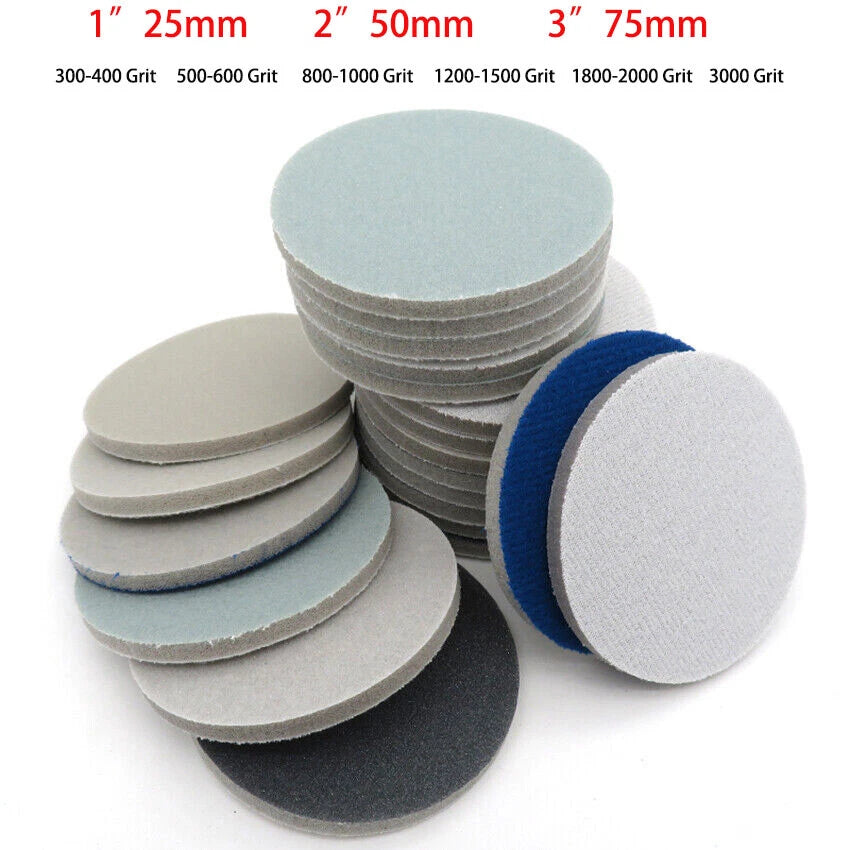
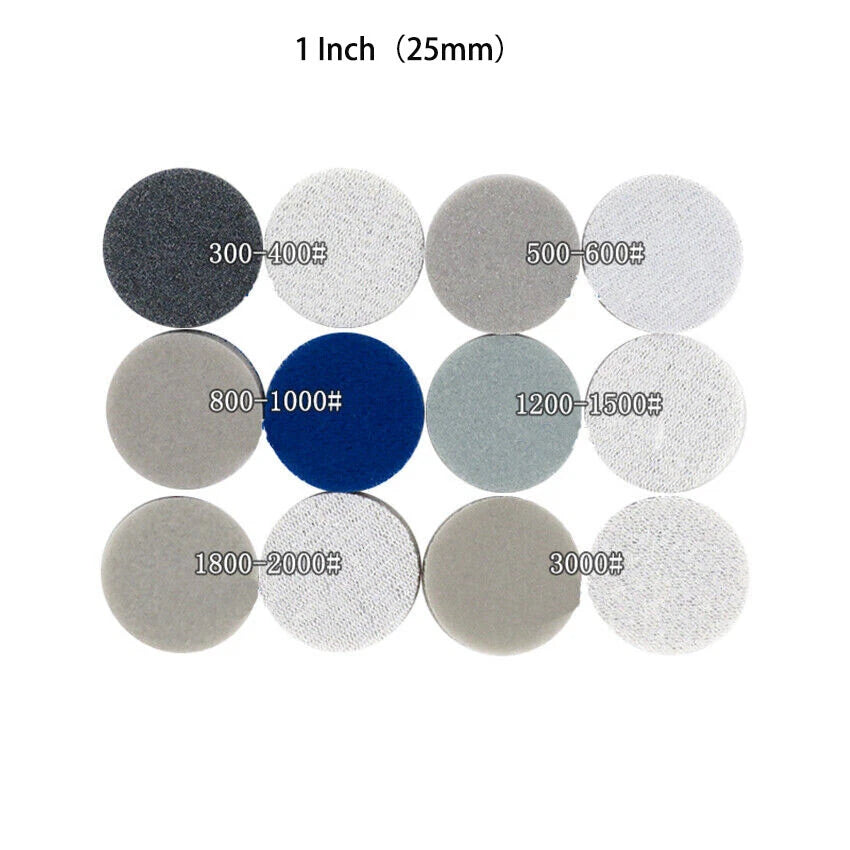
Whether you're a professional detailer refining clear coats or a weekend DIYer restoring a set of headlights, these wet dry sponge sanding discs make surface prep predictable and clean. The flexible foam core hugs curves and contours without creasing, while the hook & loop backing keeps the disc planted on your pad—so you spend less time fighting torn paper, and more time getting a consistent scratch pattern. From rough shaping at 300 grit to a mirror finish at 3000 grit, this kit covers virtually every stage of sanding on auto body, wood turnings, metal, and even resin projects.
Can I use these sponge discs for wet sanding, or will the foam fall apart?
You can definitely use them wet. The silicon carbide grain and closed‑cell foam are engineered for water‑assisted sanding. Water helps carry away swarf and prevents the grit from loading up, so you actually extend the disc’s usable life.
What size hook & loop backing pad do I need?
The kit includes discs in three diameters—25mm, 50mm, and 75mm. You’ll need a corresponding backing pad of the same size. These standard sizes fit most detail sanders, drill adapters, and small random orbital sanders on the market.
Is this a full grit assortment, and will it cover headlight restoration?
Yes, you receive an assortment ranging from 300 to 3000 grit. For headlight restoration, start with 600 or 800 grit to remove oxidation, then step through 1500, 2000, and finish with 3000 grit for a clear, polish‑ready surface.
The disc slides off my pad after a few passes—what could be wrong?
First, check that the hook side of your backing pad is clean and free of compacted dust. A quick brush or blast of compressed air usually restores adhesion. Also, press the disc firmly while giving it a slight twist when mounting; this seats the hooks fully into the loop material.
How many uses can I expect from a single disc?
With light to moderate pressure and regular rinsing, a single sponge disc can handle several panels or multiple small projects. The foam backing resists crumbling, and the grain remains sharp through repeated wet/dry cycles.
Will these work on plastic or painted surfaces without deep scratching?
Absolutely. When you follow the grit sequence (never skip more than 200-300 grit between steps) and use light pressure, the scratches from the previous step are completely removed by the next finer grit, leaving a smooth, uniform finish ready for polish.