The chain is fine...but I ordered the wrong size. Nine links of the chain I ordered equals six of the size I wanted. My error...
How can I straighten out the springs? I can't use them coil uo as is.
Your payment information is processed securely. We do not store credit card details nor have access to your credit card information.
Get fitment advice & recommendations
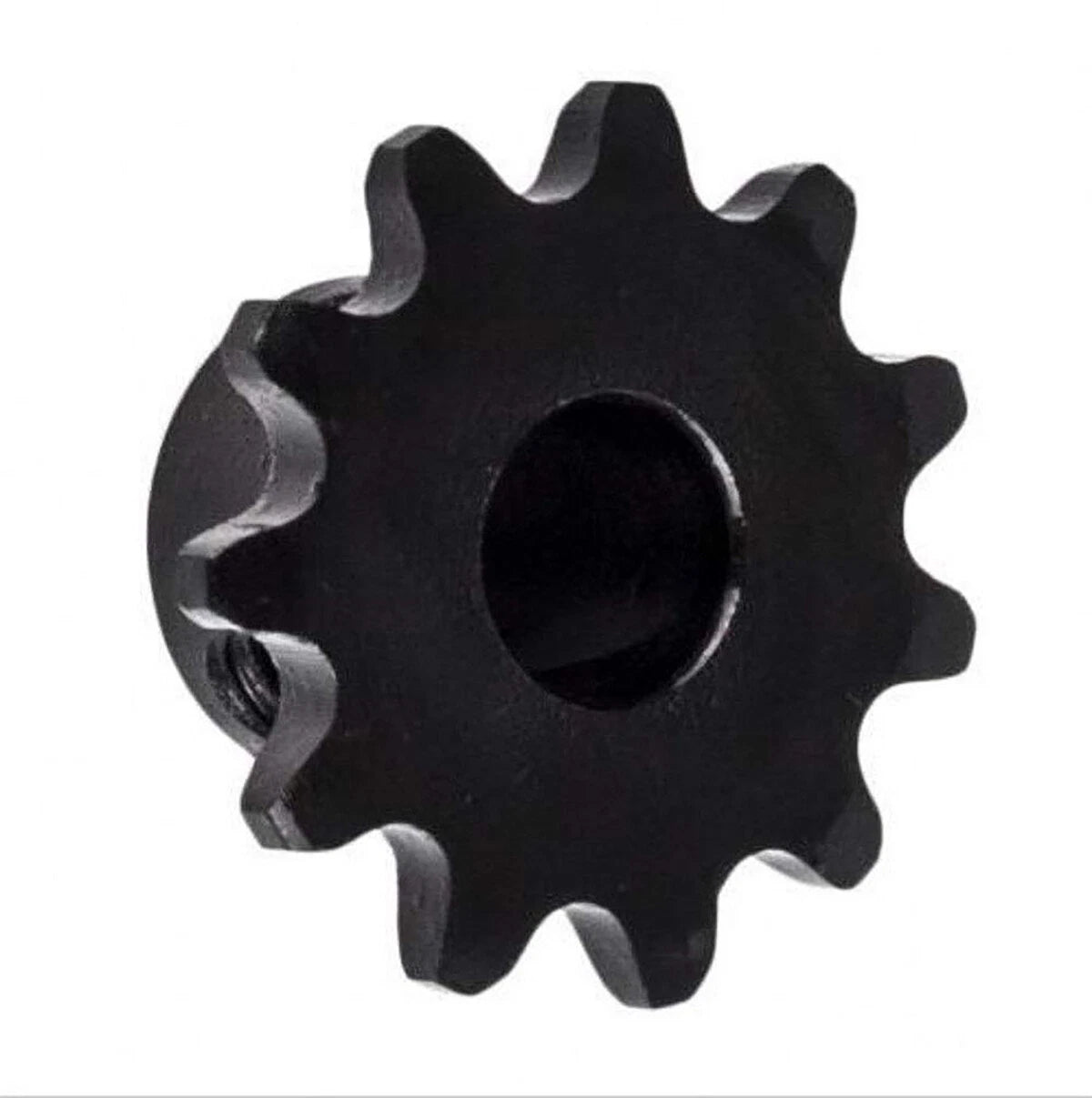
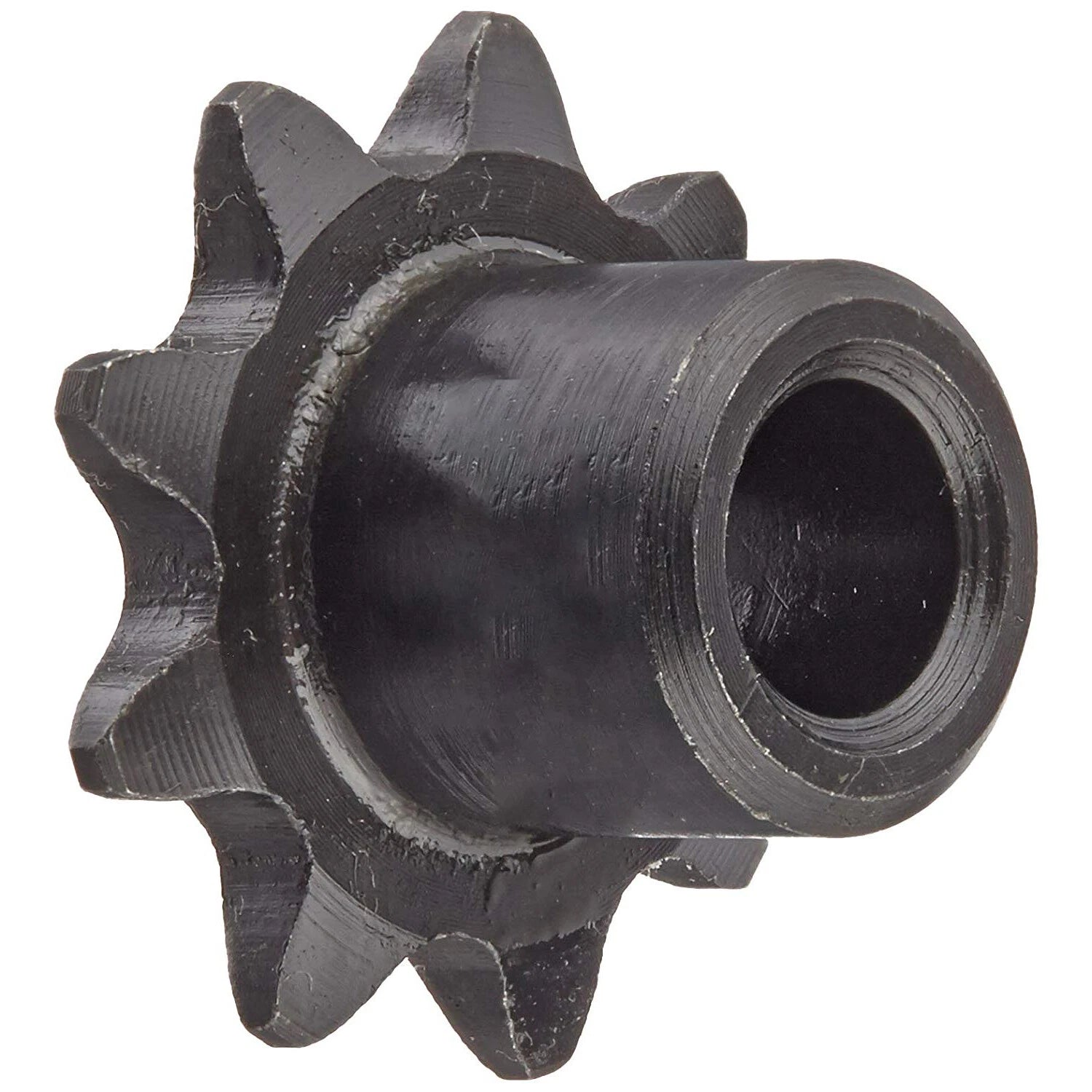
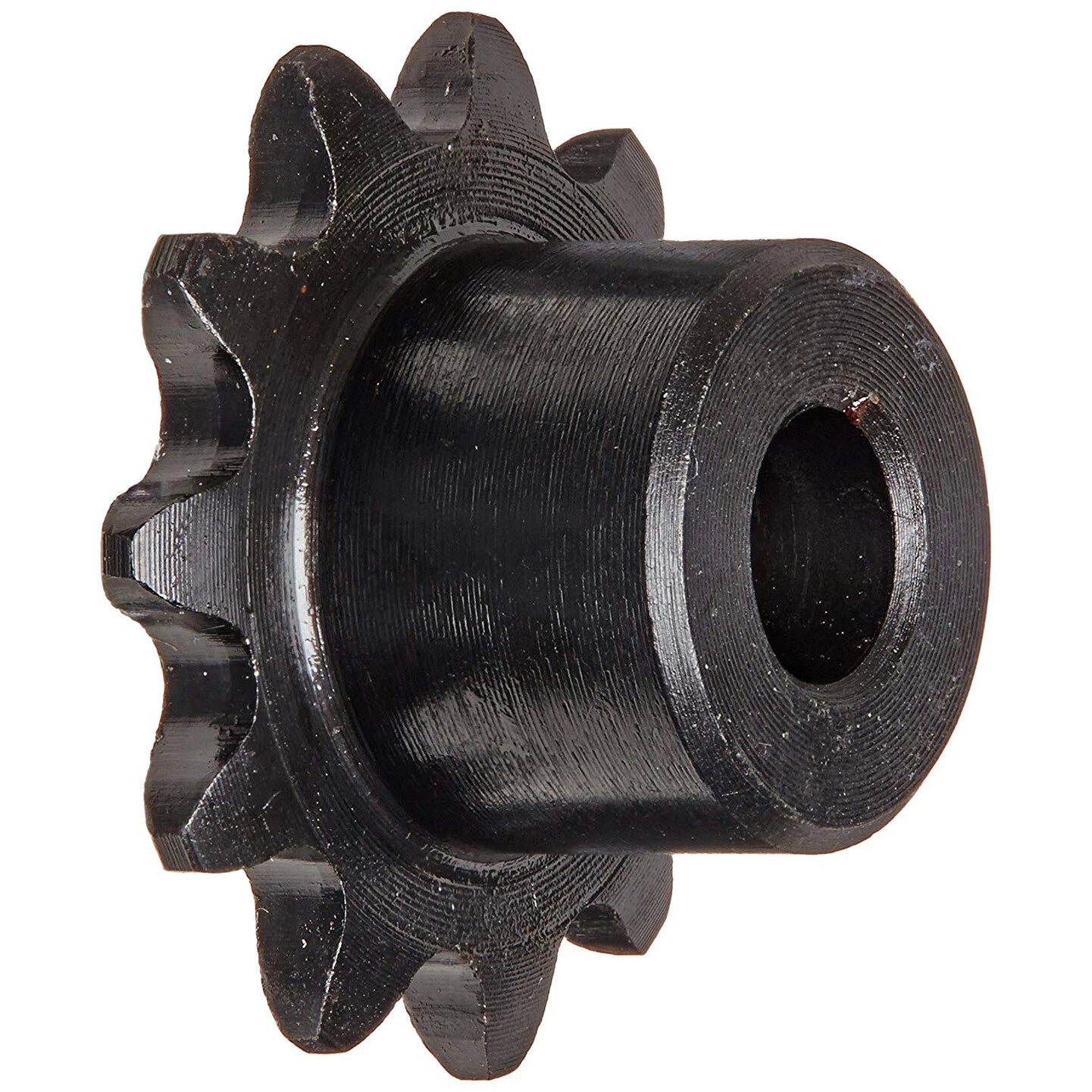
When a worn or undersized sprocket causes chain skip, premature wear, or misalignment in your drive system, finding an exact-fit replacement becomes critical. Engineers, hobbyists, and machine builders working with compact #25 (04C) chain drives need a sprocket that holds tight tolerances across a wide range of tooth counts and bore sizes — without having to custom-machine a hub.
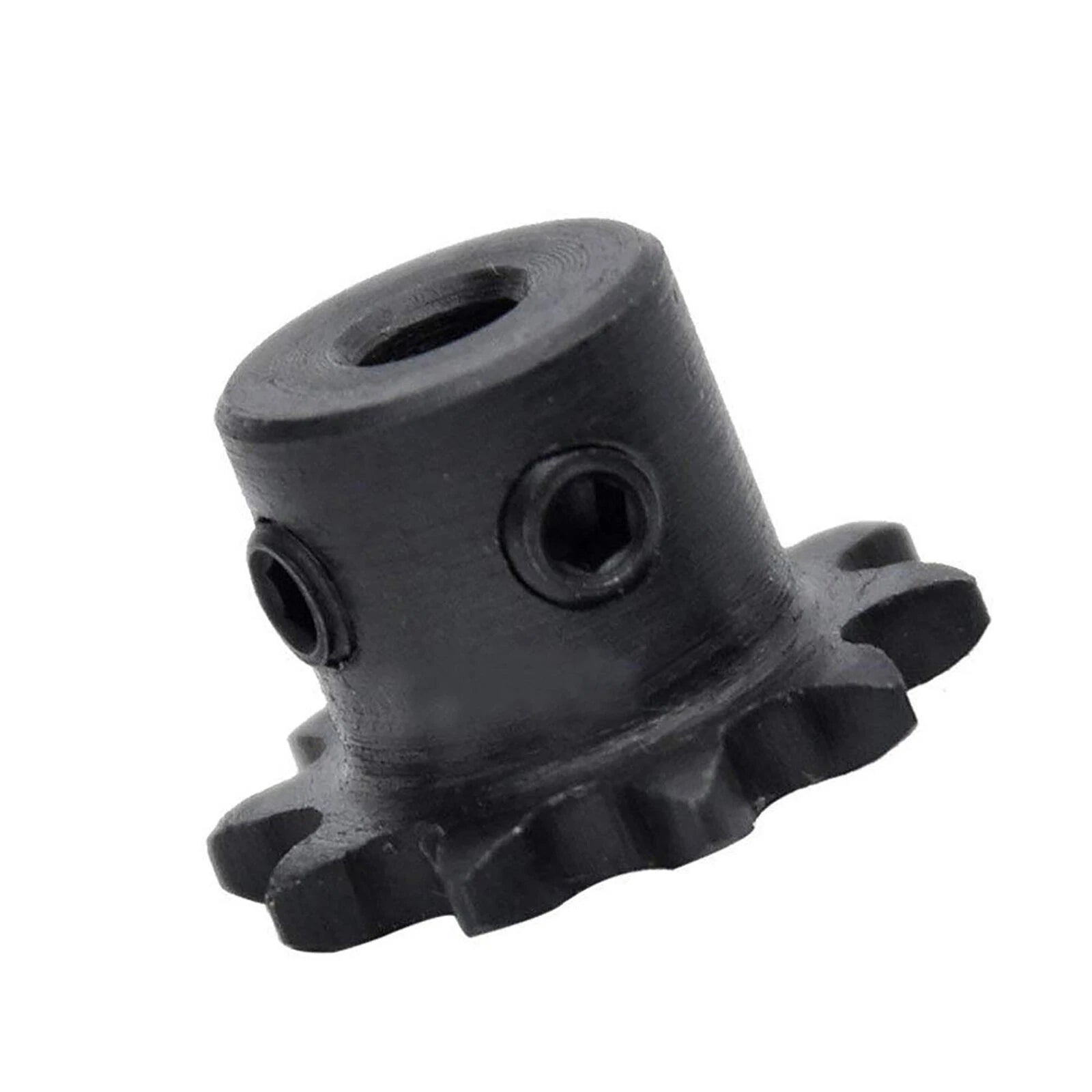
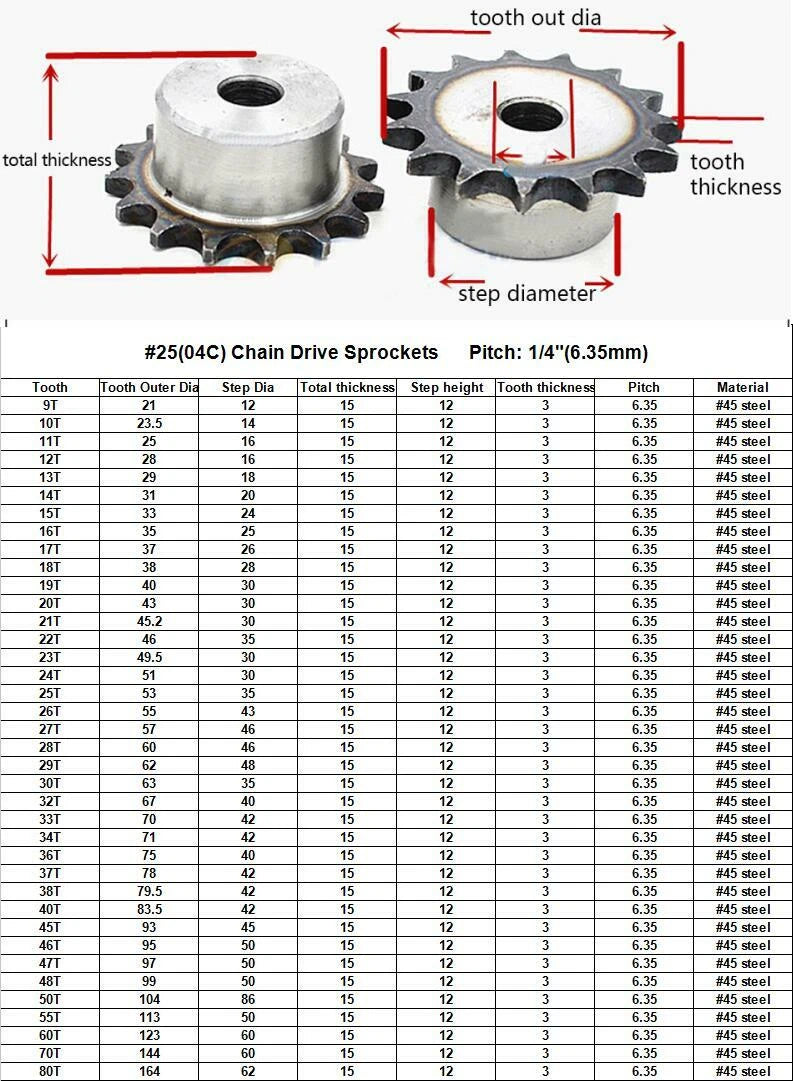
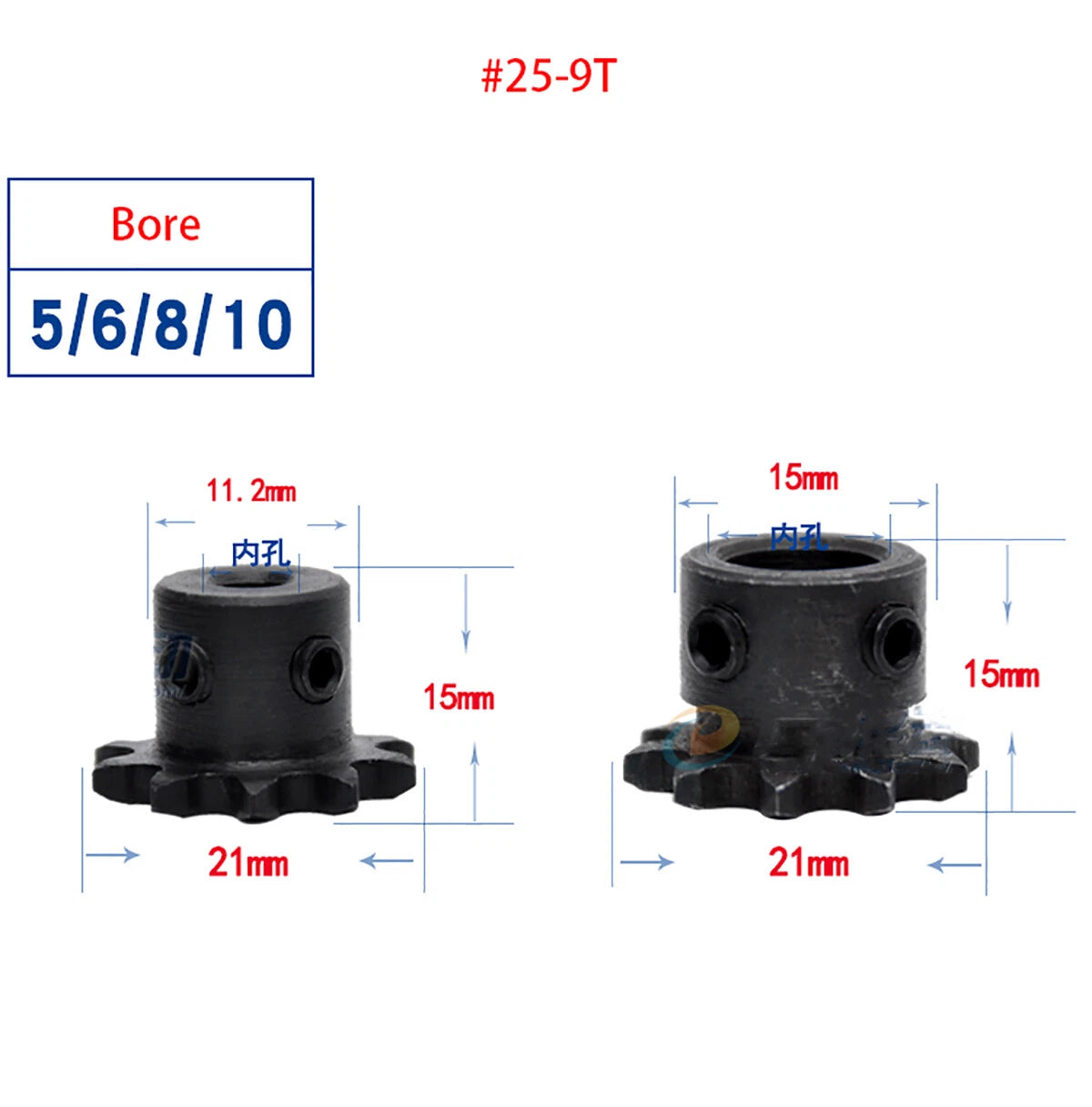
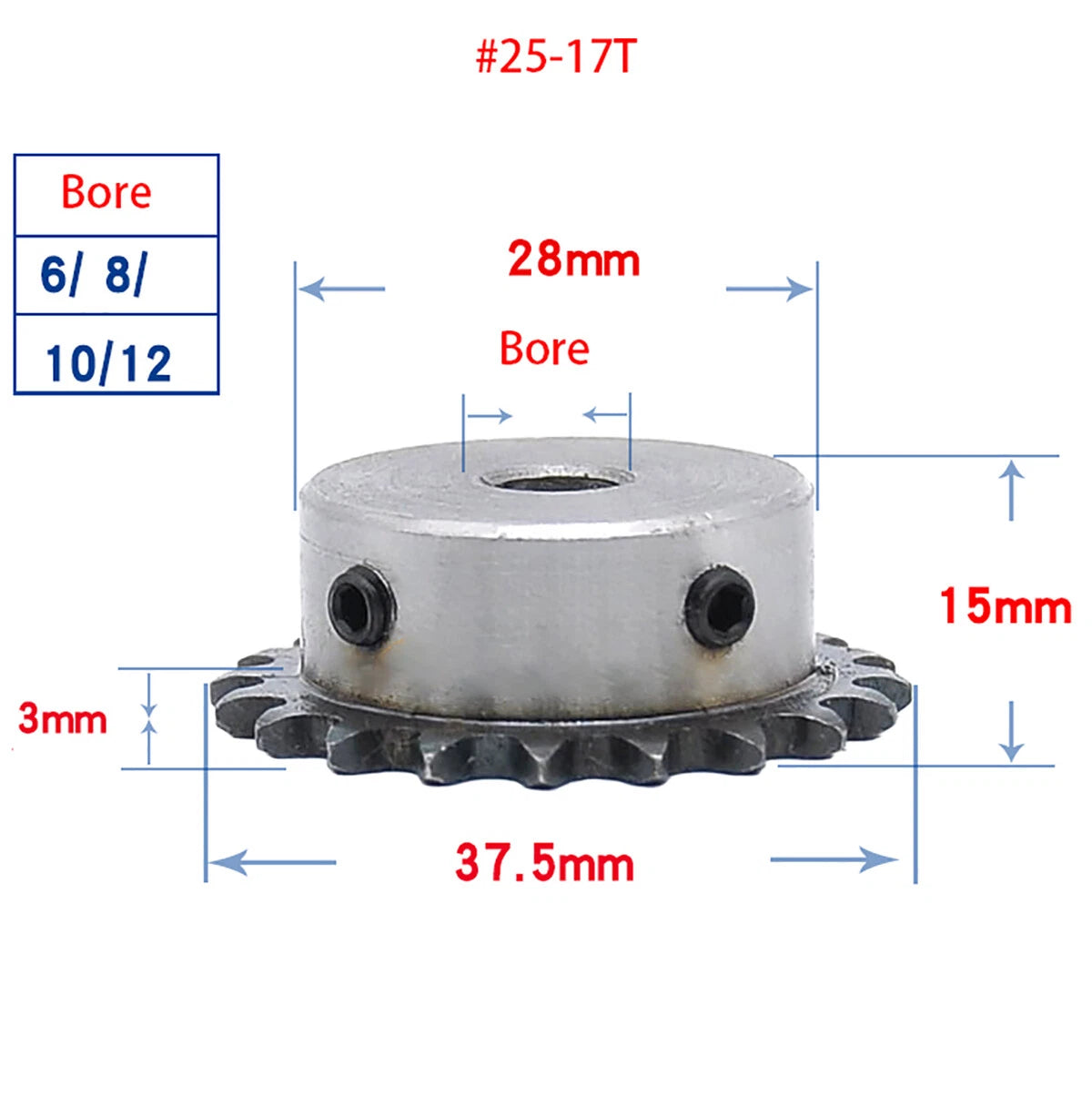
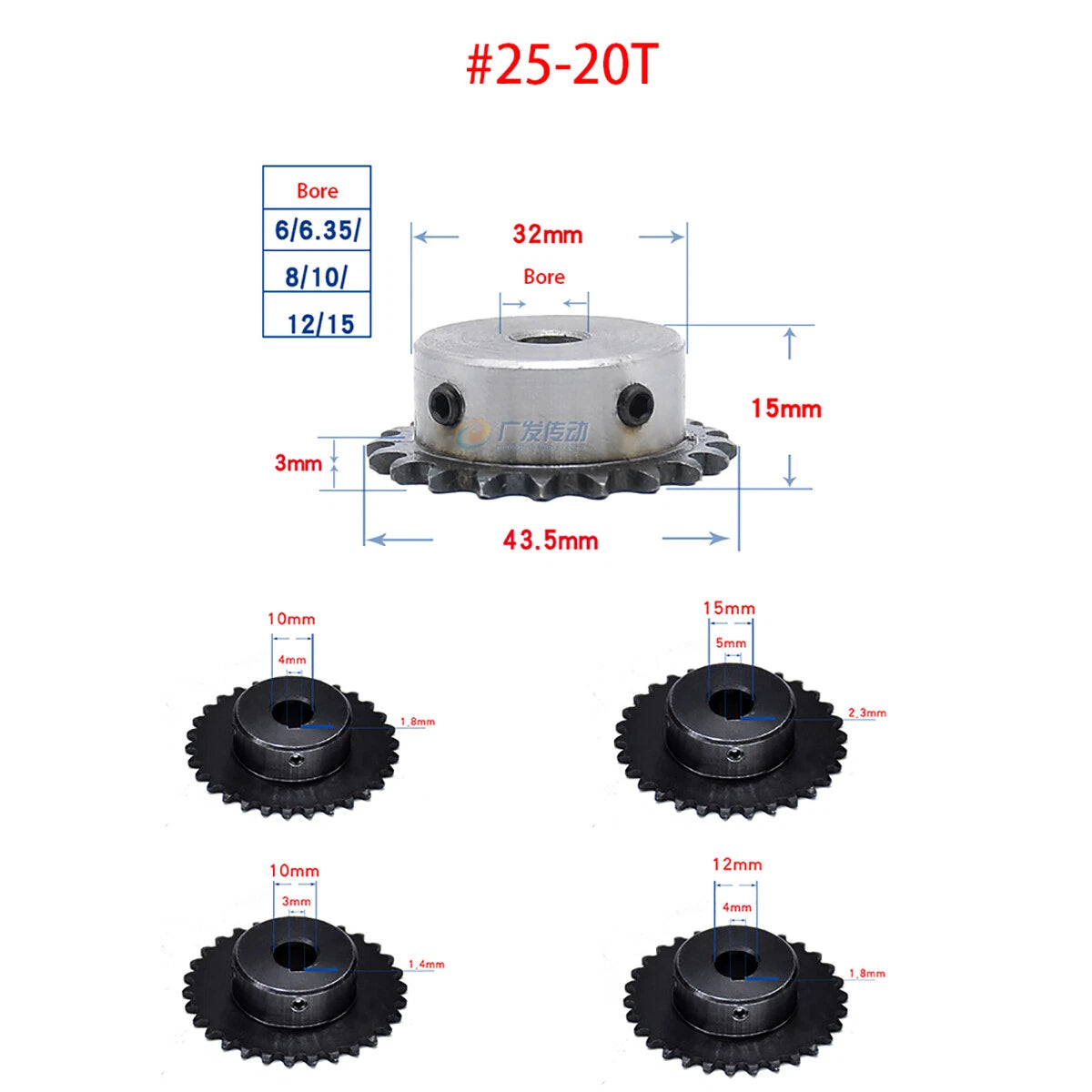
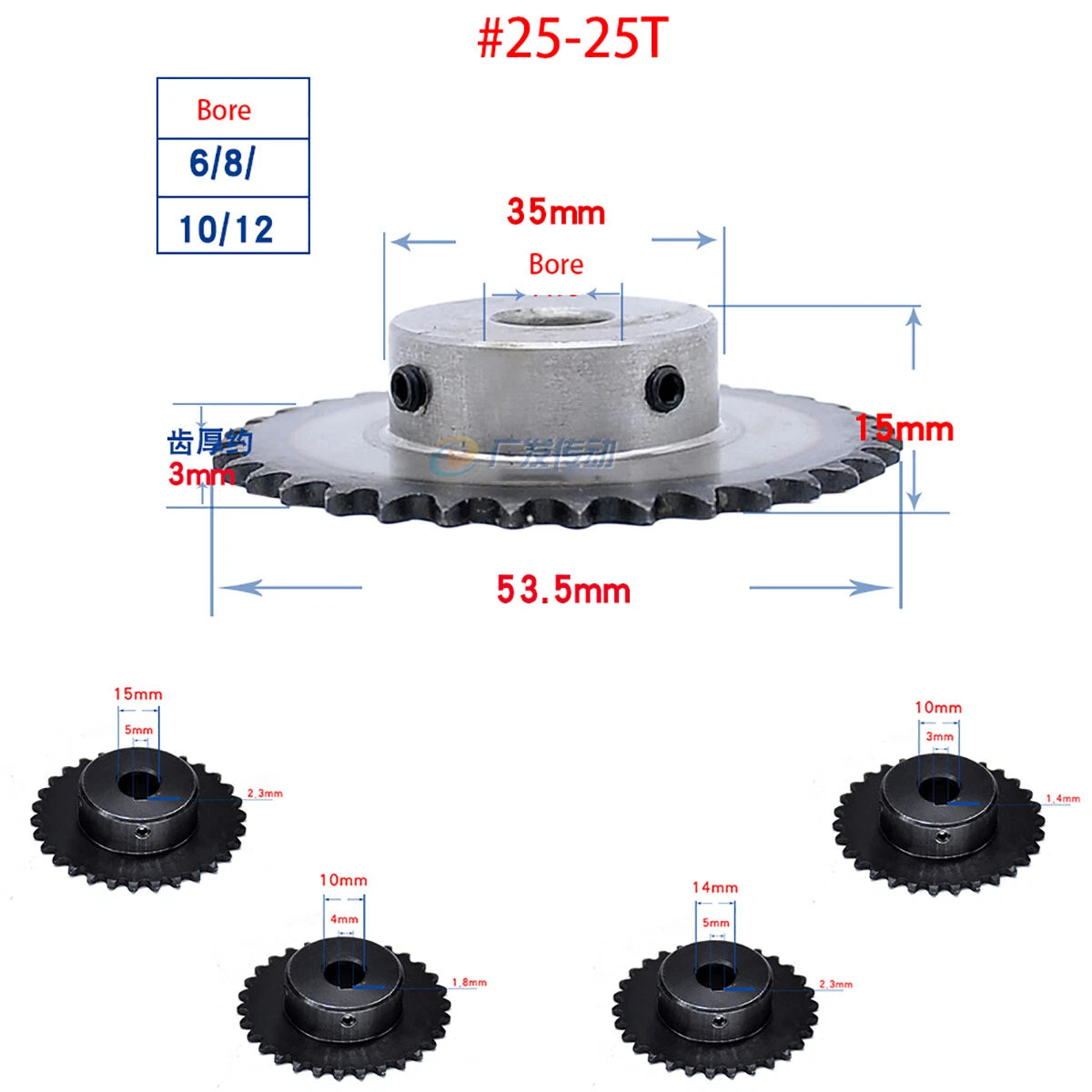
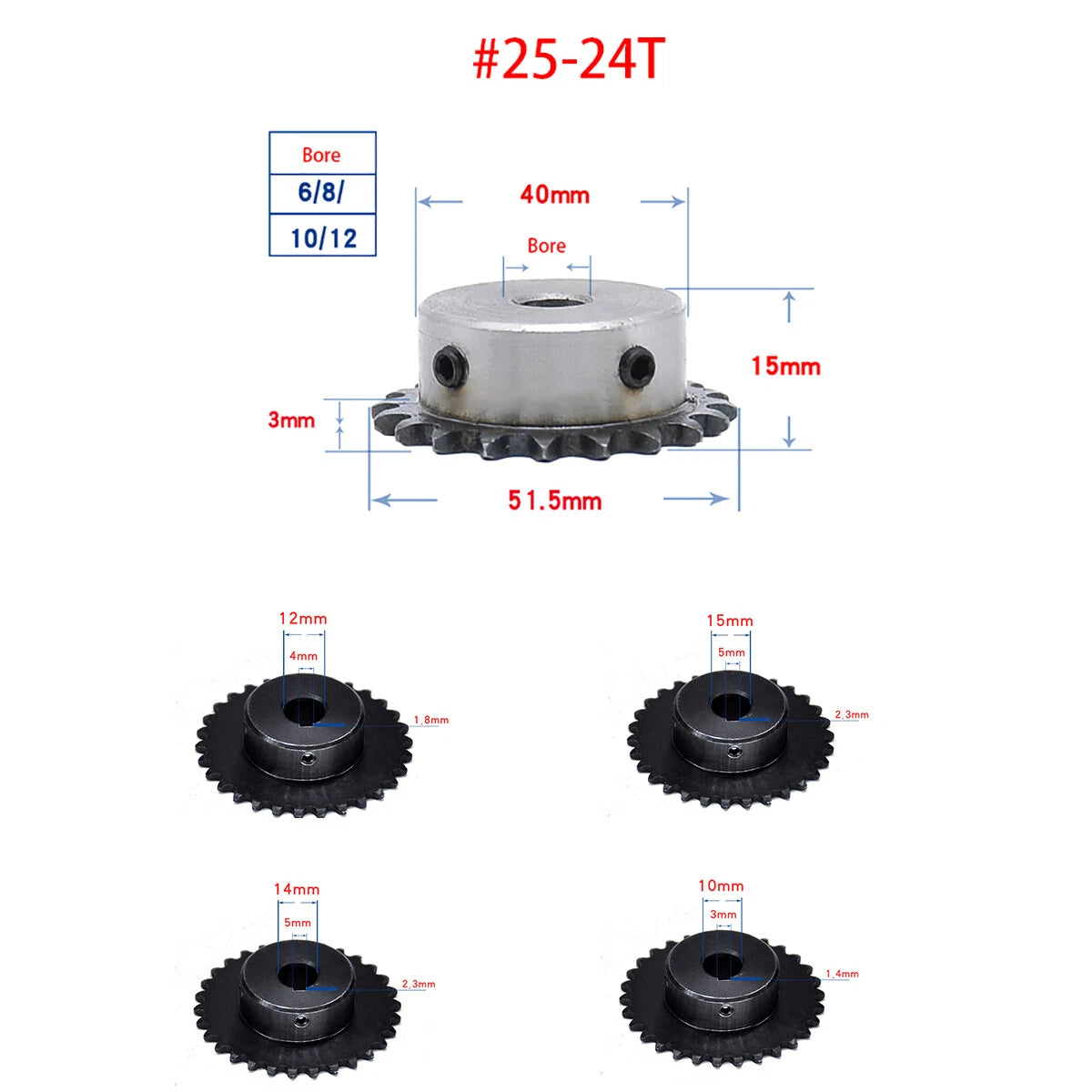
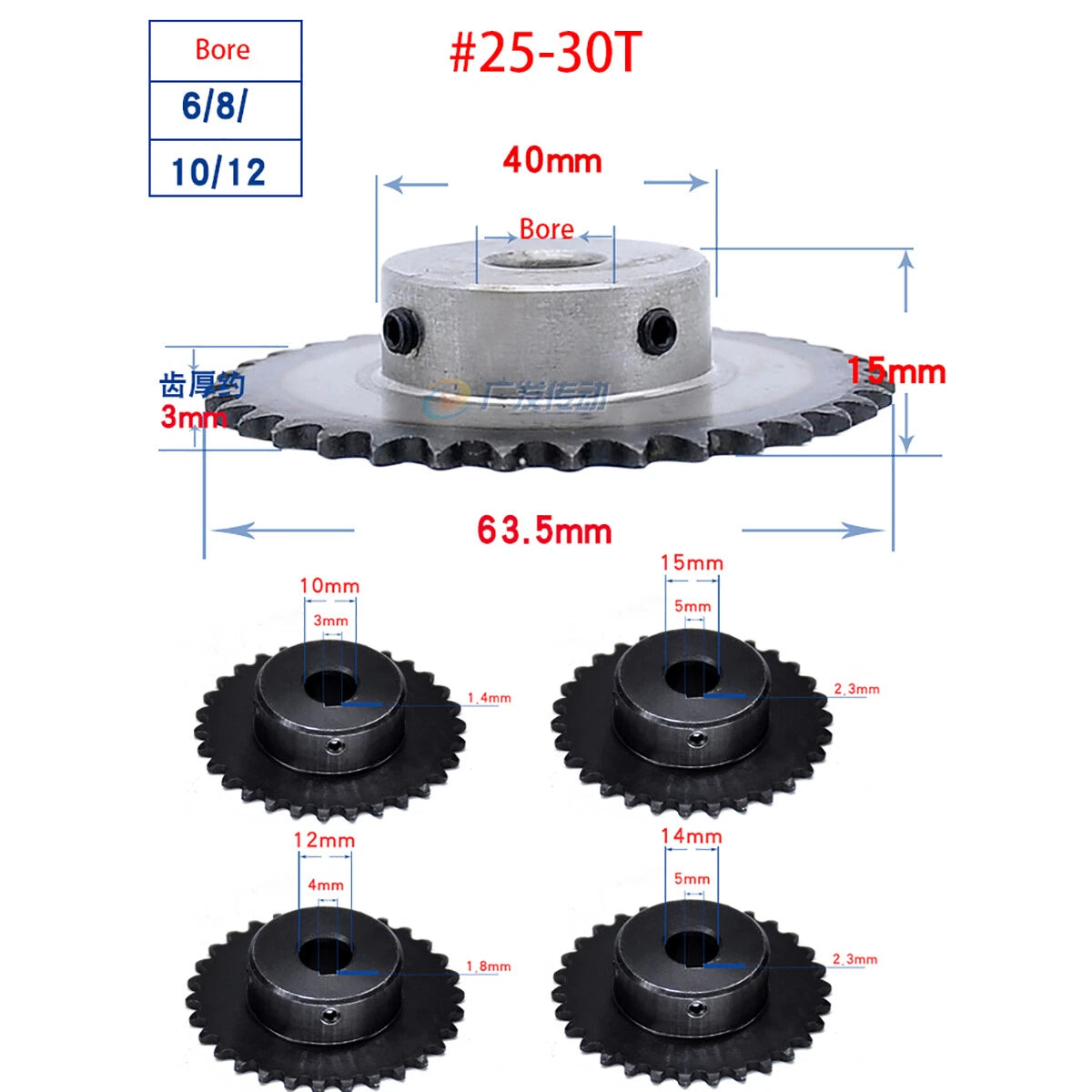
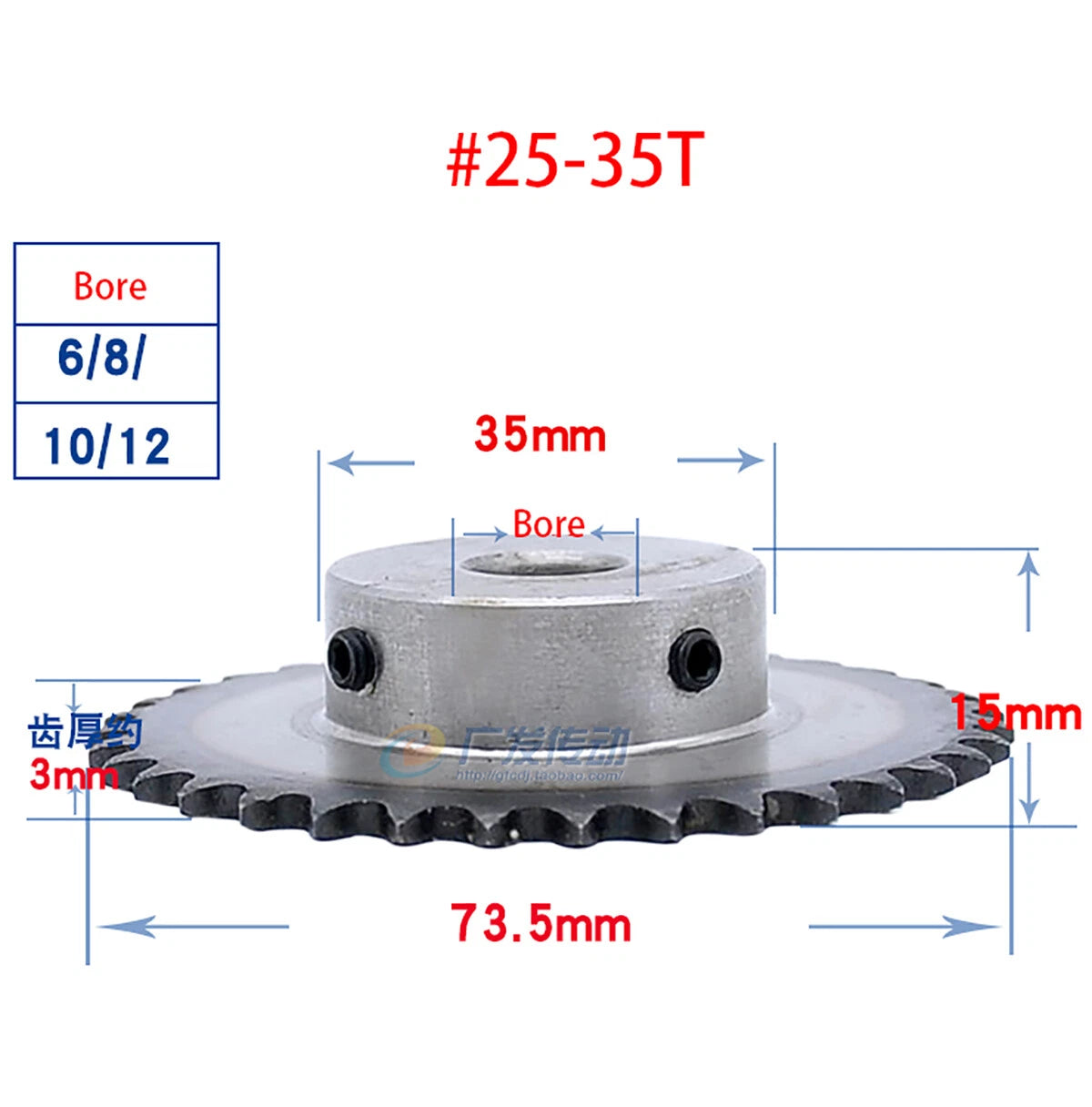
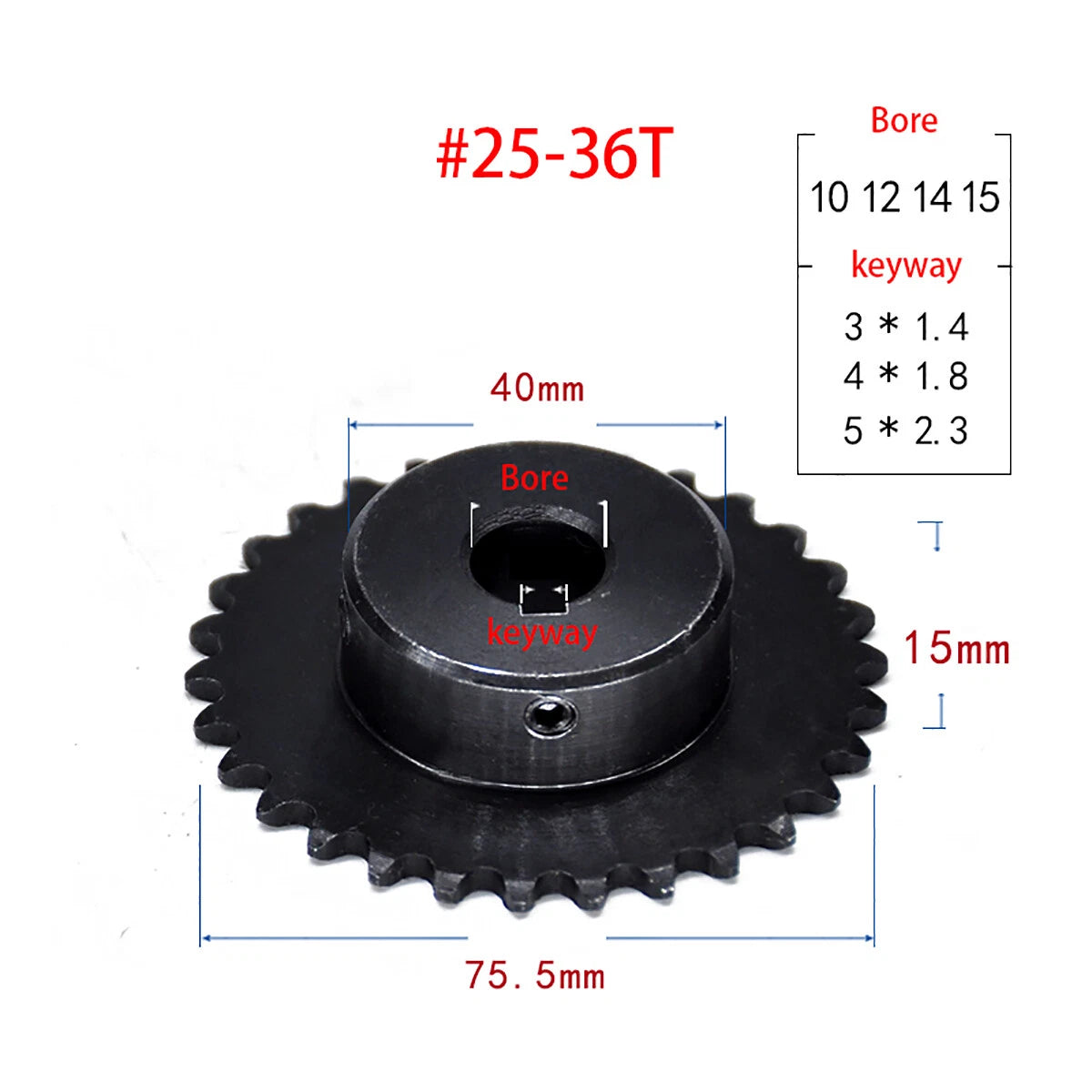
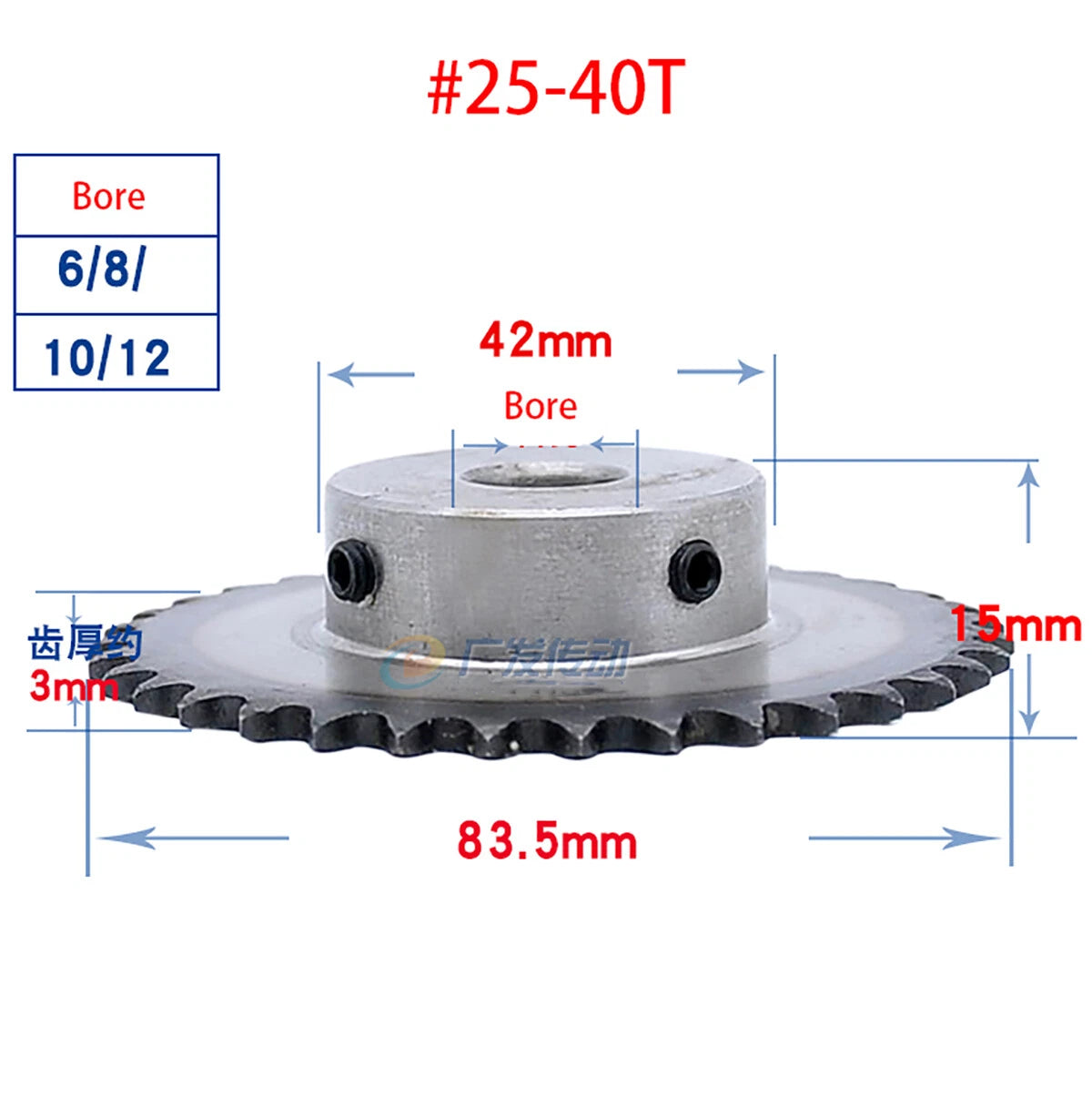
These 04C #25 roller chain sprockets are machined from carbon steel and are available in tooth counts from 21T to 40T, with bore diameters ranging from 5mm to 20mm (approximately 0.20 in to 0.79 in). The pitch is 6.35mm (1/4 inch), conforming to the 04C / #25 chain standard. Bore configurations include round through-hole, keyway bore (with matching key dimensions), and D-bore options — all in a step-without-groove hub profile.
Typical applications include small conveyor drives, go-kart and mini-bike transmissions, robotics and automation platforms, and DIY power transmission projects requiring a reliable #25 chain sprocket with a custom bore size. The wide tooth-count and bore selection makes these sprockets a practical solution for replacing OEM sprockets or designing new drive ratios.
Available from 21T to 40T, covering a broad spectrum of drive ratios for speed reduction or torque multiplication in compact chain drive systems.
Choose from round through-hole, keyway bore (with standard key slot dimensions), or D-bore — each sized to match your shaft precisely without additional machining.
Pitch of 6.35mm (1/4 inch) conforms to ANSI #25 and ISO 04C specifications, ensuring direct compatibility with standard #25 roller chain links and connecting pins.
The stepped hub design provides a clean mounting surface and axial positioning reference, suitable for set-screw or keyway retention without a retaining groove.
Machined from carbon steel for the strength and wear resistance needed in continuous-duty chain drive applications, including conveyors, small vehicles, and automation equipment.
Each sprocket ships as a single unit. Select your exact model (tooth count), bore type, and bore size from the variant options above to receive the correct part for your application.
| Chain Standard | ANSI #25 / ISO 04C |
|---|---|
| Pitch | 6.35mm (1/4 inch) |
| Tooth Count (T) | 21T, 22T, 23T, 24T, 25T, 26T, 27T, 28T, 29T, 30T, 32T, 33T, 35T, 36T, 38T, 40T |
| Bore Type | Round through-hole / Keyway bore / D-bore |
| Bore Diameter Range | 5mm – 20mm (approx. 0.20" – 0.79") |
| Keyway Dimensions | See variant options (e.g., 3×1.4mm, 4×1.8mm, 5×2.3mm, 6×2.8mm, 8×3.3mm) |
| Hub Profile | Step without groove |
| Material | Carbon steel |
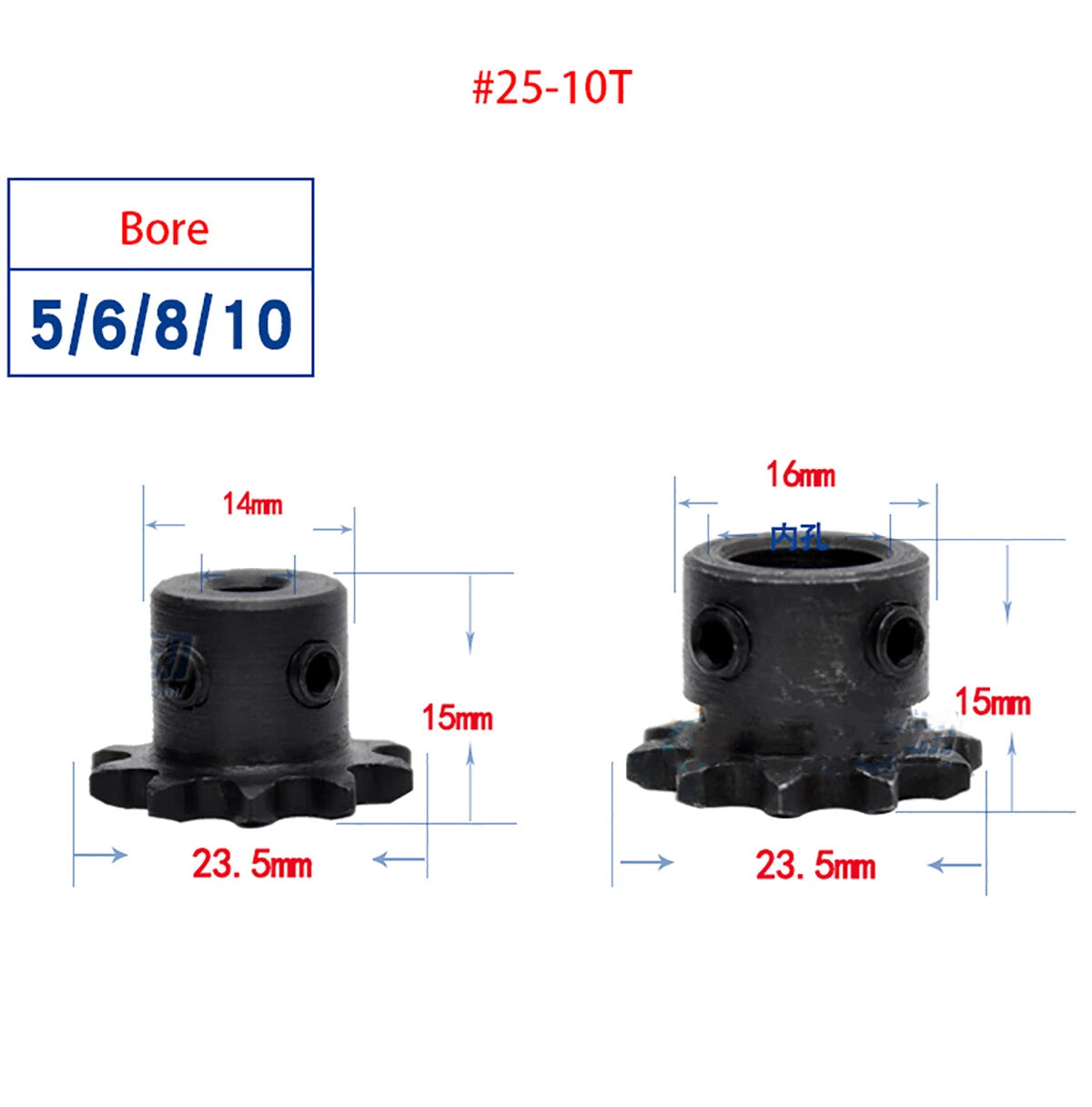
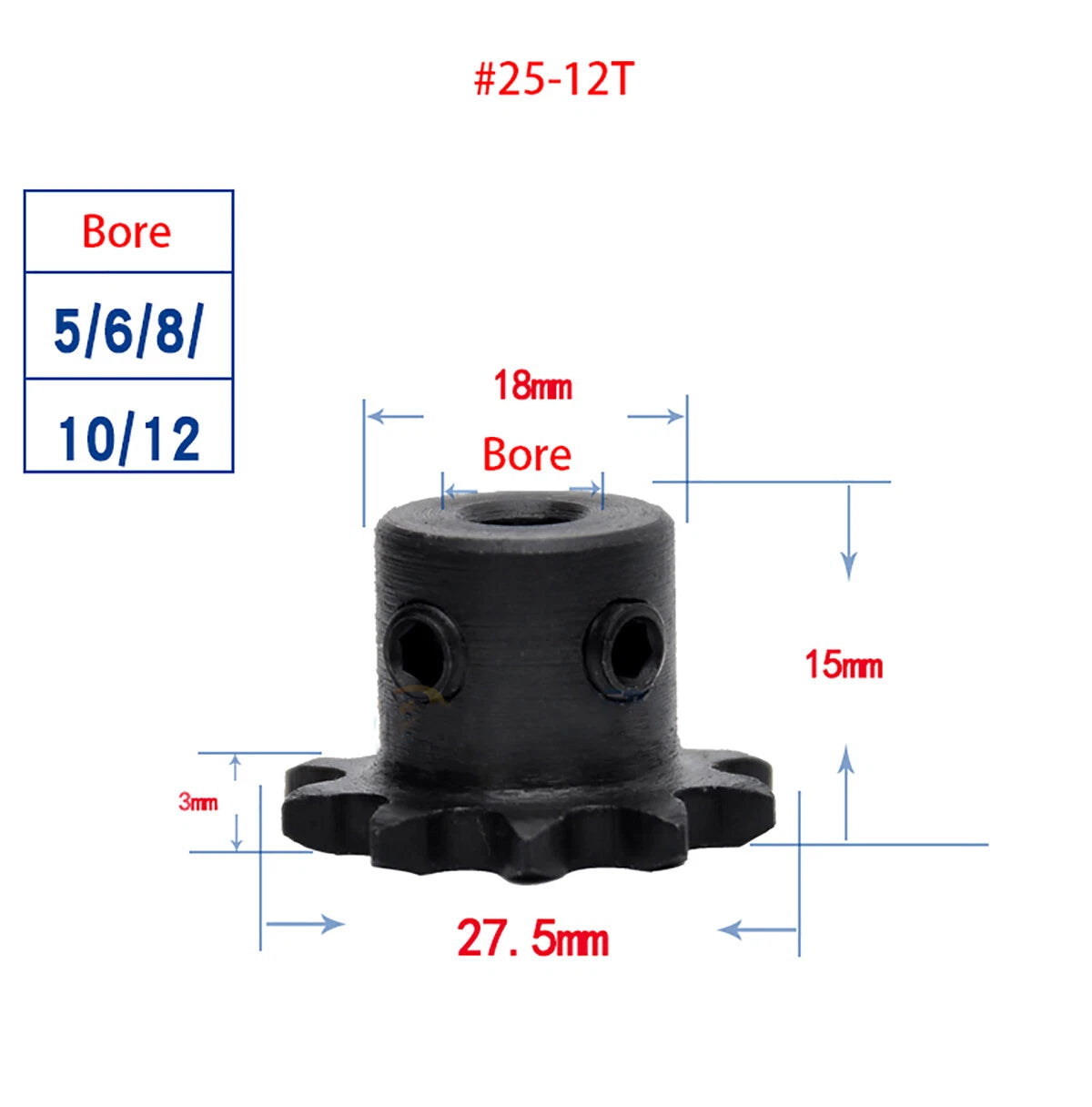
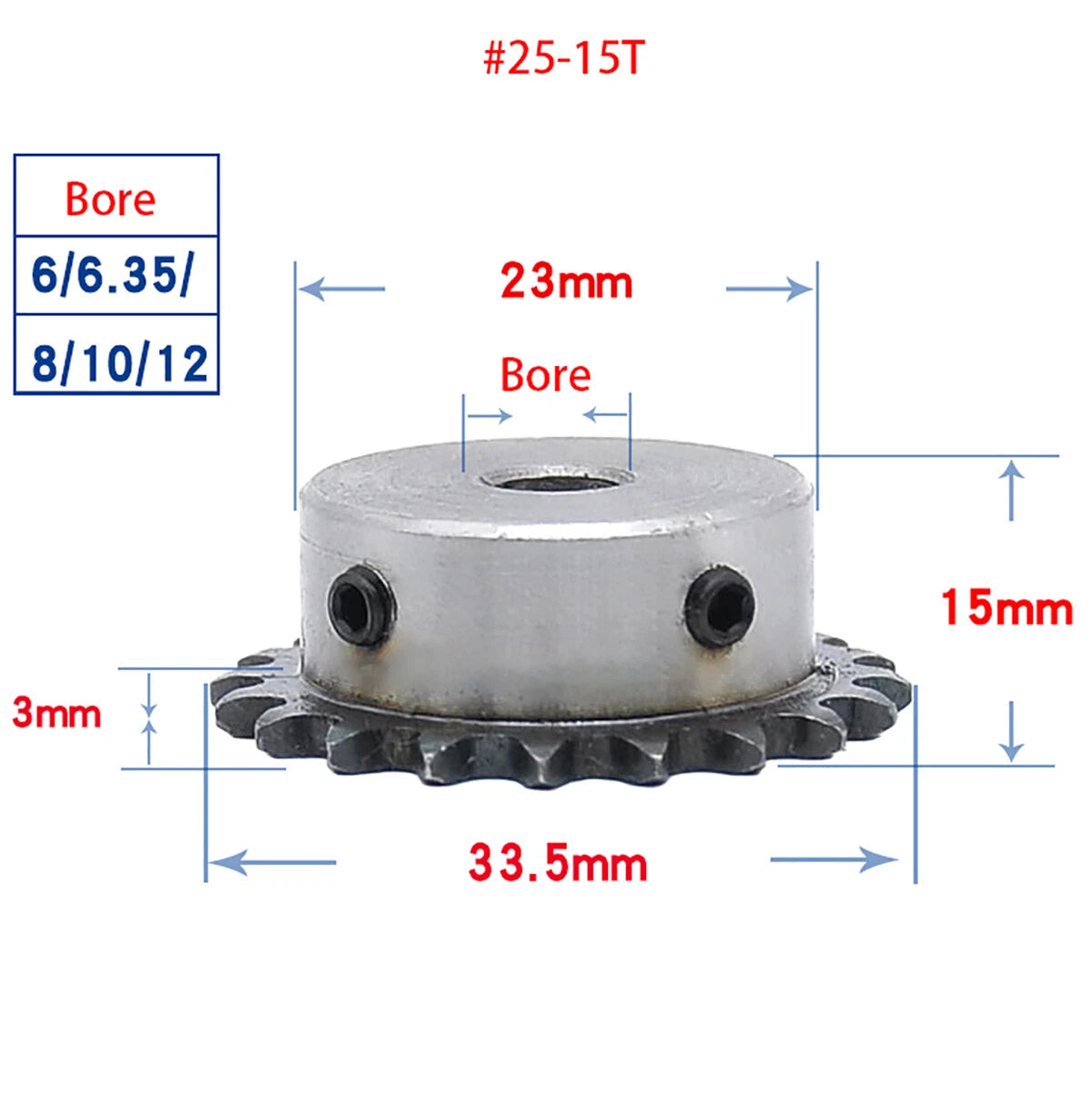
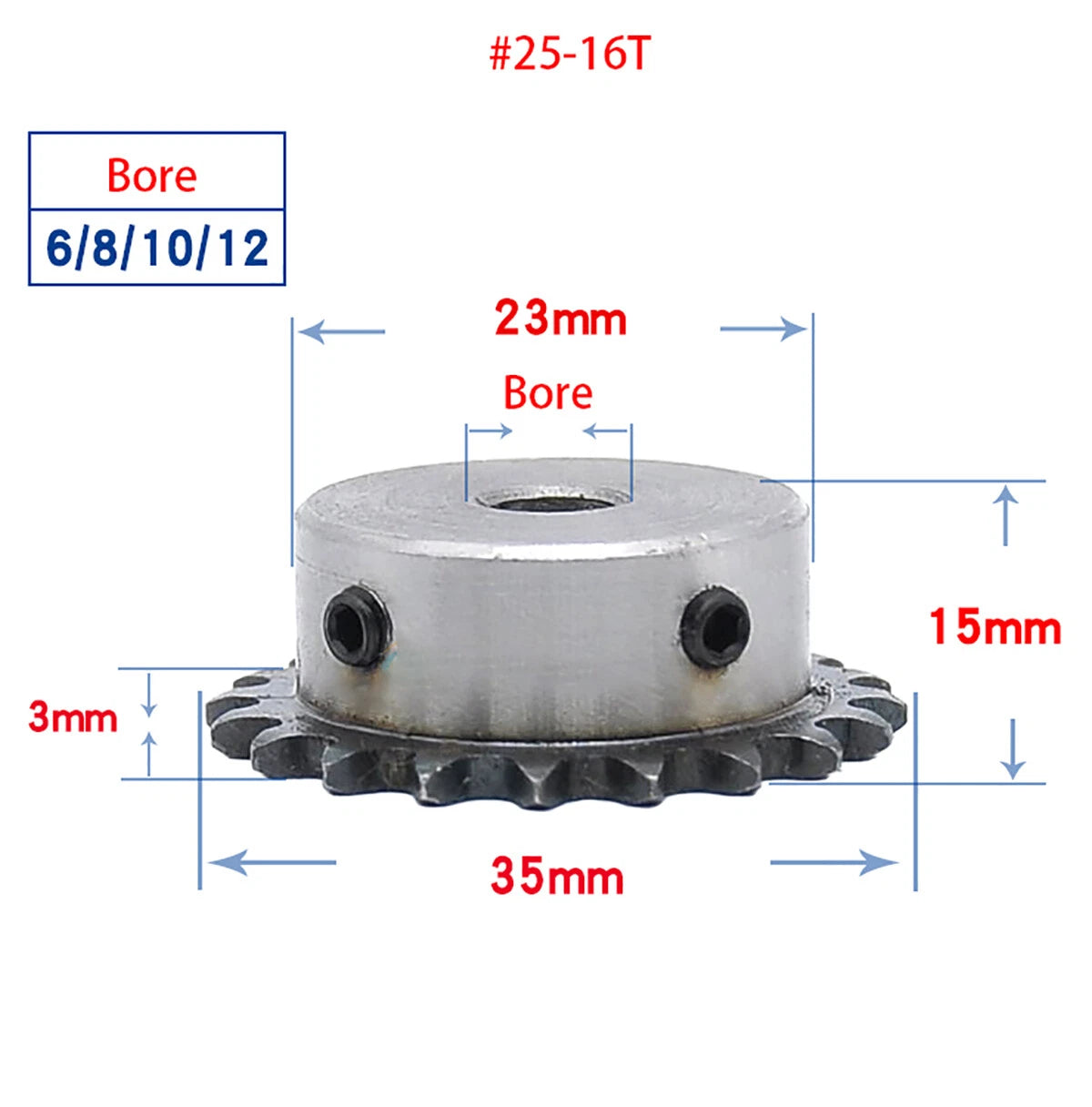
| Outer Diameter | See variant options |
| Hub Diameter | See variant options |
| Hub Length | See variant options |
| Roller Diameter Compatibility | 3.30mm (#25 / 04C standard) |
The tooth count determines your drive ratio. Divide the driven sprocket teeth by the driver sprocket teeth to get the reduction ratio. For example, a 21T driver paired with a 40T driven sprocket gives approximately a 1:1.9 reduction. Choose a higher tooth count on the driven side for more torque, or a lower count for higher speed.
A round through-hole bore is a plain cylindrical hole — typically retained with a set screw or press fit. A keyway bore includes a machined slot that accepts a standard key for positive torque transmission without slipping. A D-bore has one flat side machined into the bore, matching a D-shaped shaft for simple, slip-resistant mounting without a separate key.
Yes, provided your chain conforms to the ANSI #25 or ISO 04C standard with a 6.35mm (1/4") pitch and 3.30mm roller diameter. These are the most common #25 chain dimensions. If your chain is a different pitch (e.g., #35 at 9.525mm or #40 at 12.7mm), this sprocket will not be compatible.
Use a digital caliper to measure the outer diameter of your shaft at the mounting location. Select the bore size that matches your shaft diameter exactly. For keyway bores, also confirm the key slot dimensions (width × height) match the key already on your shaft, or the key you plan to use.
These sprockets are machined from carbon steel, which provides good mechanical strength but has limited inherent corrosion resistance. For outdoor or high-humidity environments, regular lubrication of both the chain and sprocket is recommended. If corrosion resistance is a primary requirement, consider stainless steel alternatives or apply a protective coating after installation.
#25 chain and 04C sprockets are commonly used in go-karts, mini-bikes, and small motorized vehicles where compact, lightweight drive systems are needed. Confirm your existing chain pitch is 6.35mm (#25) and select the tooth count that achieves your target speed ratio. For high-torque or high-speed applications, verify the bore and hub dimensions suit your axle or engine output shaft.
"Step without groove" refers to the hub geometry: the hub has a stepped diameter change (a shoulder) but no circumferential retaining groove (such as a snap-ring groove or circlip groove). This profile is standard for sprockets retained by set screws or keys rather than snap rings, and it provides a clean, flat hub face for mounting against a bearing or collar.