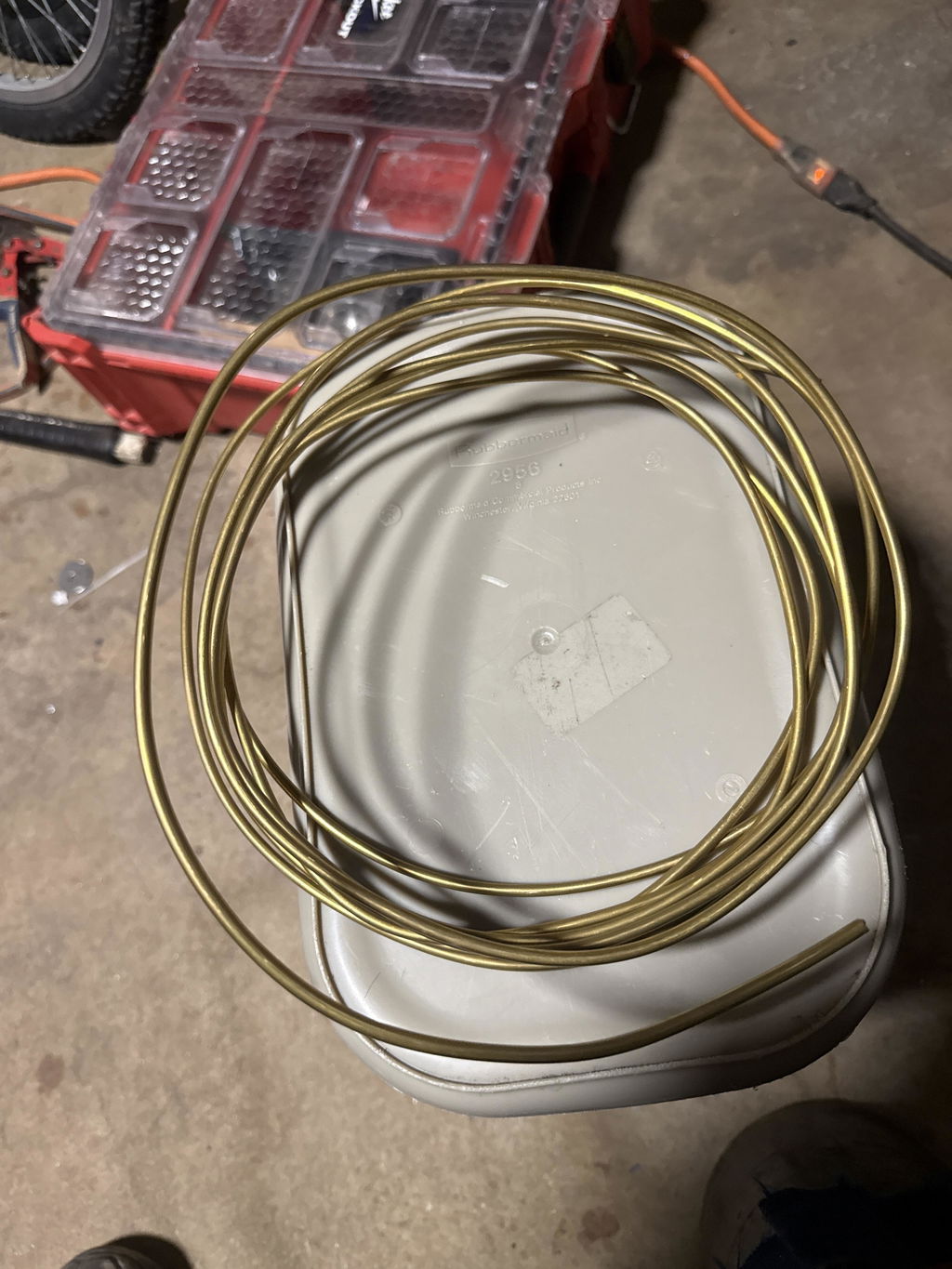
The chain is fine...but I ordered the wrong size. Nine links of the chain I ordered equals six of the size I wanted. My error...
How can I straighten out the springs? I can't use them coil uo as is.
Your payment information is processed securely. We do not store credit card details nor have access to your credit card information.
Get fitment advice & recommendations
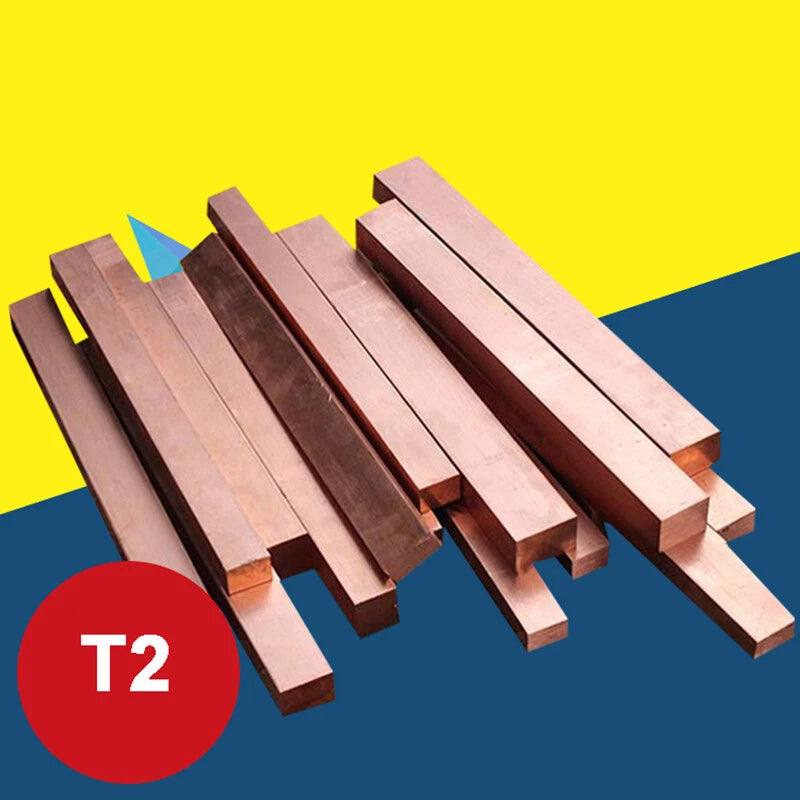
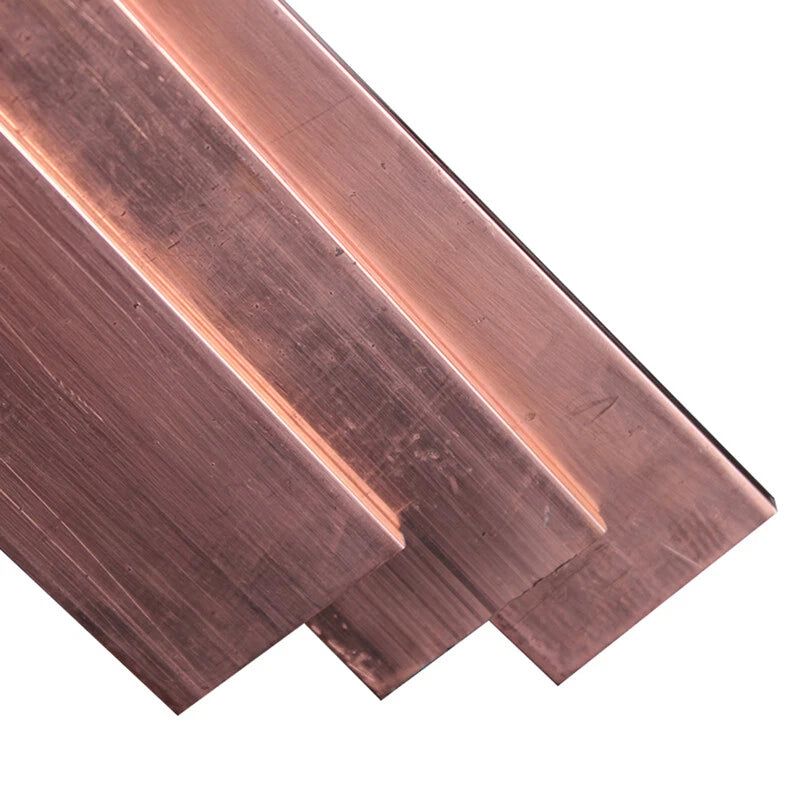
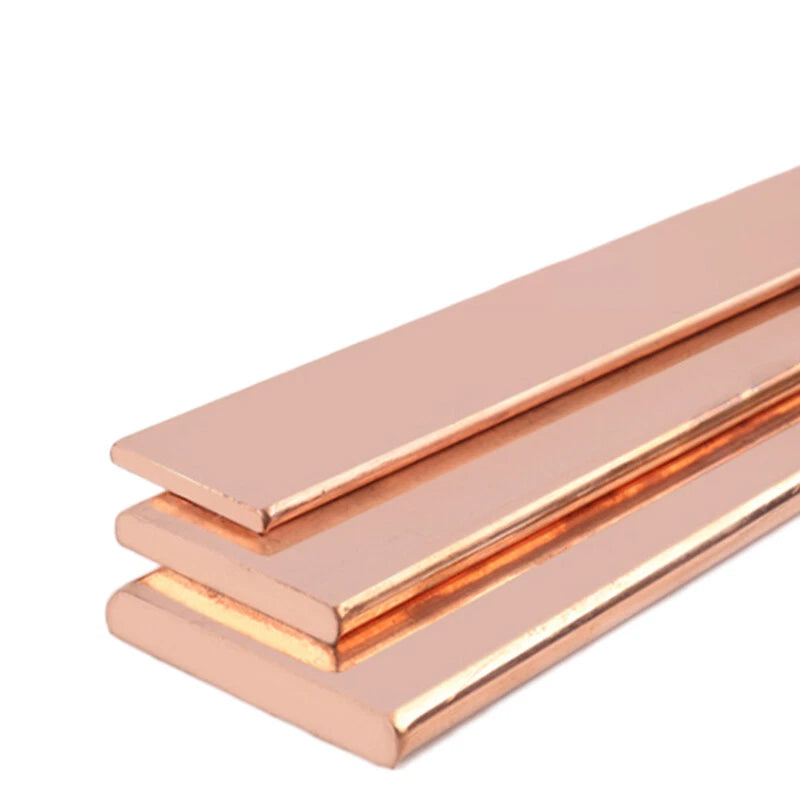
When your project demands reliable conductivity and precise dimensions, sourcing the right copper flat bar can be a frustrating guessing game. Whether you are a hobbyist fabricating custom bus bars, an electrician needing short copper bridging strips, or a maker crafting decorative metalwork, inconsistent sizing and impure alloys waste time and money. These T2 pure copper strip flat bars are designed for DIYers and professionals who need dependable material they can cut, bend, and solder with confidence.
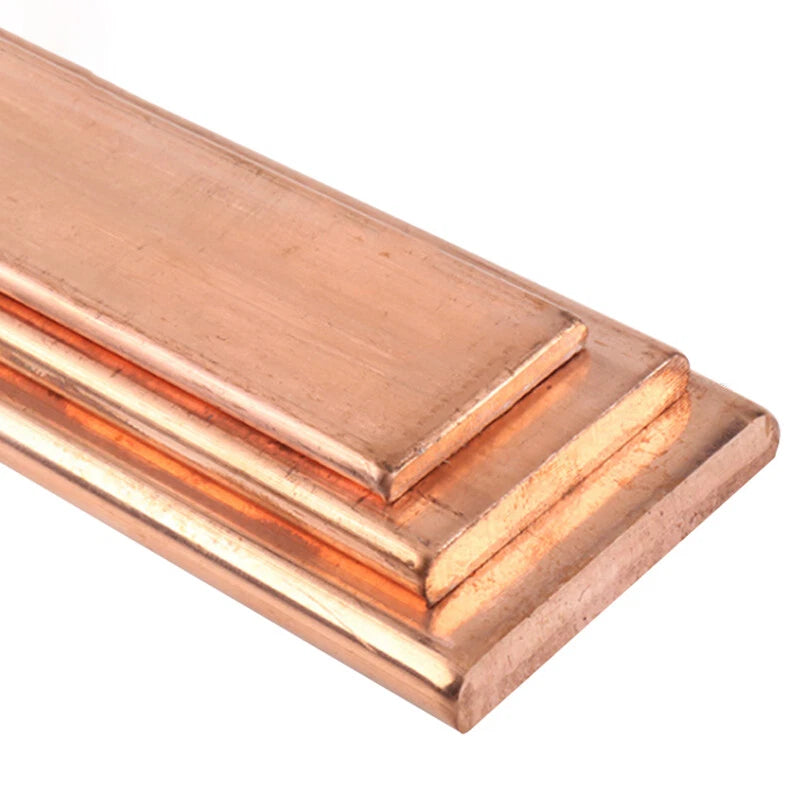
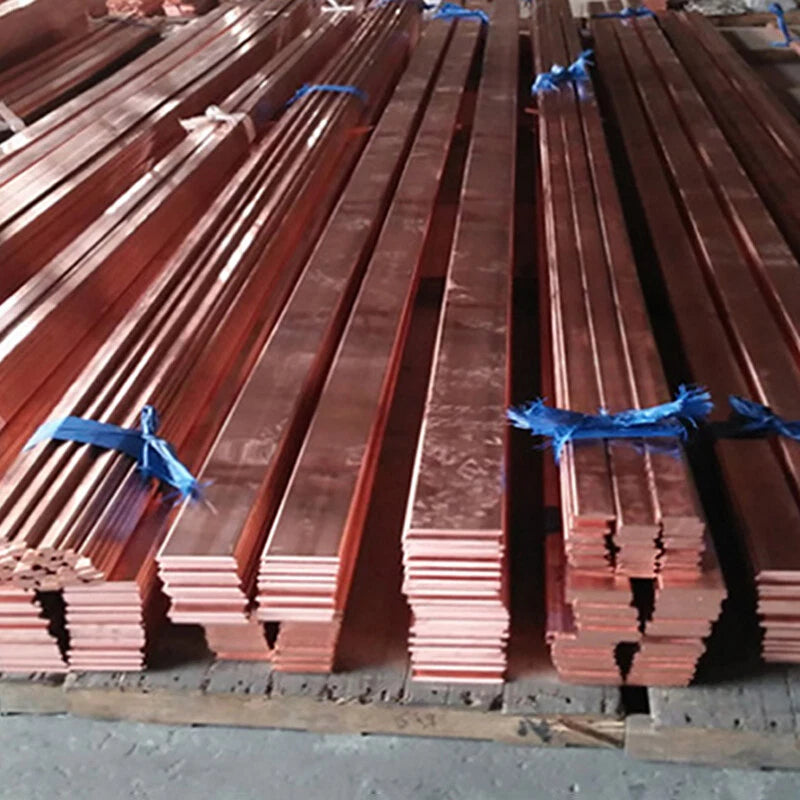
Each piece is machined from T2-grade copper (≥99.9% Cu), delivering excellent electrical conductivity and thermal performance. Available in four thicknesses — 3mm, 4mm, 5mm, and 6mm — and widths ranging from 10mm to 50mm (approximately 0.39 in to 1.97 in), with a fixed 100mm (≈3.94 in) length per piece. Quantity options of 1, 2, 3, or 4 pieces per order let you buy exactly what you need without overstocking.
Typical applications include DIY copper bus bar fabrication for battery packs and solar systems, custom grounding straps and electrical bonding strips, jewelry-making and decorative metalwork inlays, heat-sink shims and thermal interface components, and small-scale machining or CNC milling stock for copper parts.
| Material | T2 Pure Copper (≥99.9% Cu) |
|---|---|
| Thickness Options | 3mm / 4mm / 5mm / 6mm |
| Width Options | 10mm / 15mm / 20mm / 25mm / 30mm / 40mm / 50mm |
| Length | 100mm (≈3.94 in) |
| Electrical Conductivity | ≥100% IACS (approx. 57–58 MS/m) |
| Thermal Conductivity | Approx. 385–400 W/(m·K) |
| Tensile Strength | Typically 200–250 MPa (annealed state) |
| Surface Finish | Mill finish (slight oxidation may be present; clean before use) |
| Quantity per Order | See variant options |
| Weight per Piece | See variant options |
| Color | Reddish-orange copper |
| Application | Electrical bus bars, grounding straps, thermal shims, metalwork, jewelry |
Start with your current-carrying requirement or mechanical load. For low-current signal or grounding applications, 3mm thickness is often sufficient. For battery bus bars or higher-current connections (30A+), consider 4mm or 5mm. Width determines the cross-sectional area — wider strips carry more current. If you are unsure, select the variant closest to your calculated cross-section (thickness × width in mm²) and verify against your ampacity tables.
T2 copper is a designation for electrolytic tough-pitch (ETP) copper with a purity of ≥99.9% Cu. It offers excellent electrical conductivity (≥100% IACS), good thermal conductivity, and is easy to solder and braze. It differs from lower-purity brass or bronze alloys, which trade conductivity for hardness. T2 is the standard choice for electrical and thermal applications where conductivity is the primary requirement.
Yes. T2 copper solders readily with standard rosin-core or water-soluble flux solder. For brazing, use a silver-bearing brazing alloy and appropriate flux. Clean the surface with fine sandpaper or a wire brush before joining to remove any surface oxidation and ensure a strong bond.
Copper naturally oxidizes when exposed to air and moisture, forming a brownish or greenish patina (verdigris). This patina actually slows further corrosion. For electrical connections, clean contact surfaces before assembly and apply a thin layer of electrical contact grease or tin-plate the contact area to maintain low resistance over time. In decorative applications, the patina is often desirable and can be accelerated or sealed as needed.
Copper can be used alongside aluminum and steel, but direct contact between copper and aluminum in a wet environment can cause galvanic corrosion. Use bi-metallic washers or anti-oxidant compound when joining copper to aluminum bus bars. Copper-to-steel contact is generally less problematic but should still be protected in outdoor or high-humidity environments.
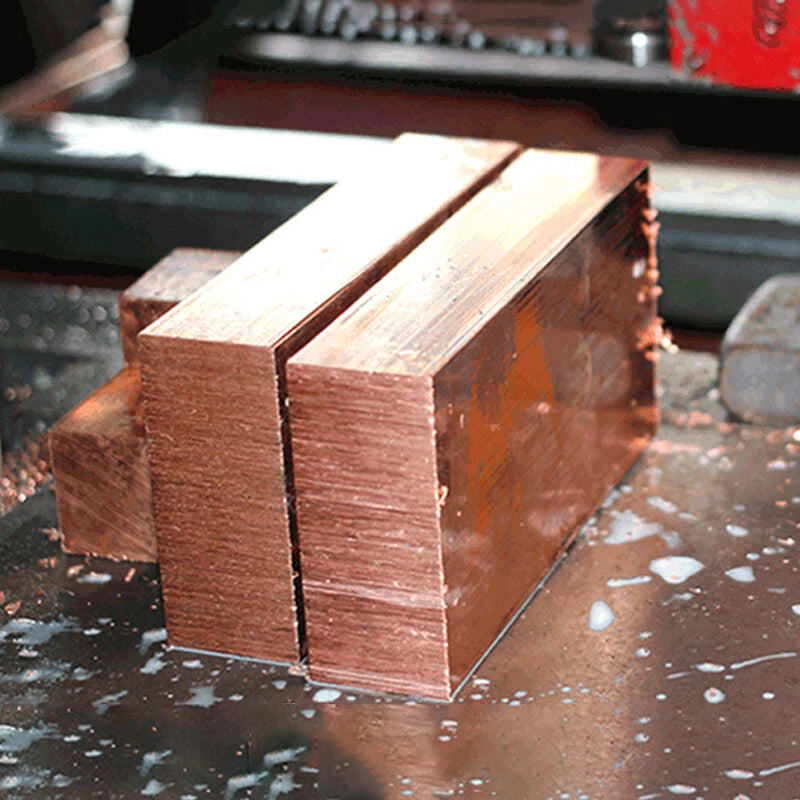
Yes. Copper is a soft, ductile metal that cuts cleanly with a hacksaw, angle grinder with a metal-cutting disc, or tin snips (for thinner pieces). Drilling is straightforward with standard HSS drill bits — use cutting oil and moderate speed to prevent work-hardening. Deburr cut edges with a file or sandpaper for safe handling and clean electrical contact.
A typical 4S or 8S LiFePO4 battery pack requires one bus bar per cell-to-cell connection. For a 4S pack, you would need 3 bus bars; for an 8S pack, 7 bus bars. Order the quantity variant that matches your build, or order extra pieces to allow for test cuts and adjustments. The 2-pcs and 4-pcs variants offer the best value for small battery builds.