The chain is fine...but I ordered the wrong size. Nine links of the chain I ordered equals six of the size I wanted. My error...
How can I straighten out the springs? I can't use them coil uo as is.
Your payment information is processed securely. We do not store credit card details nor have access to your credit card information.
Get fitment advice & recommendations
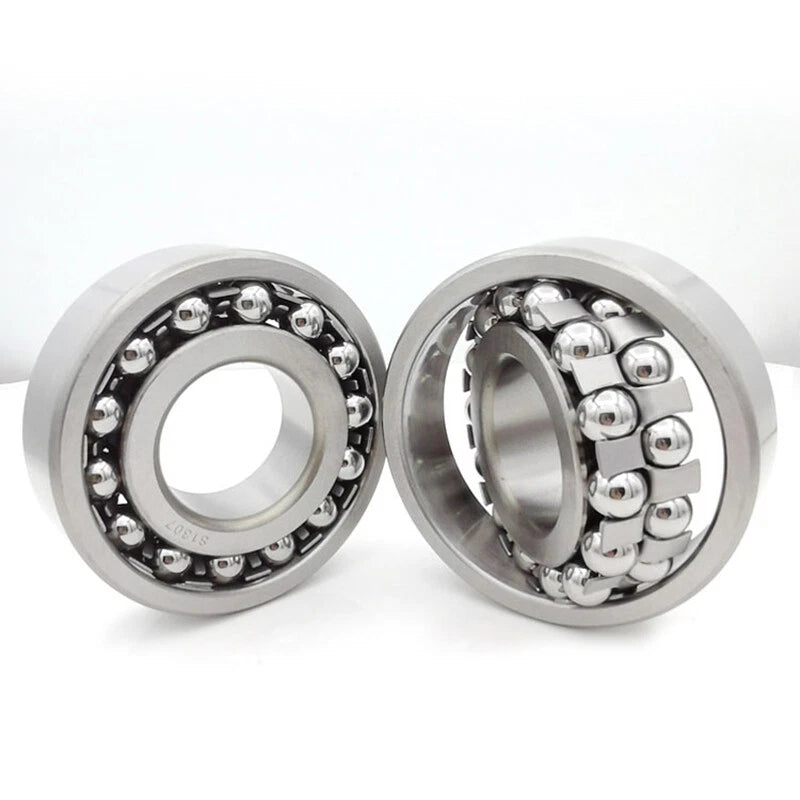
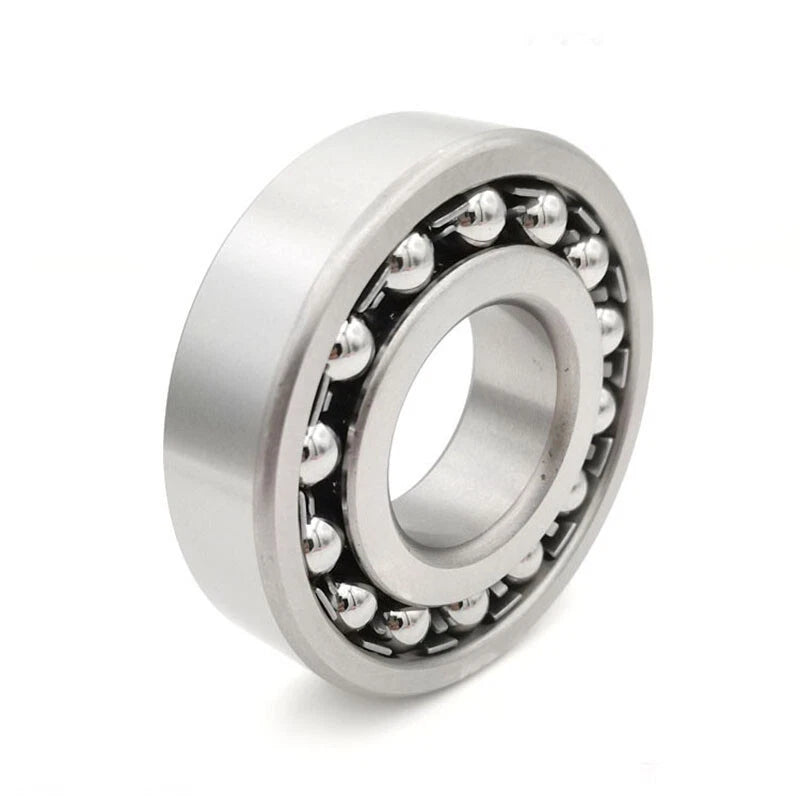
Shaft misalignment is one of the most common causes of premature bearing failure in machinery, conveyors, and agricultural equipment. Engineers, maintenance professionals, and serious DIYers who need a bearing that compensates for angular errors without sacrificing load capacity will find these double-row self-aligning ball bearings an essential solution.
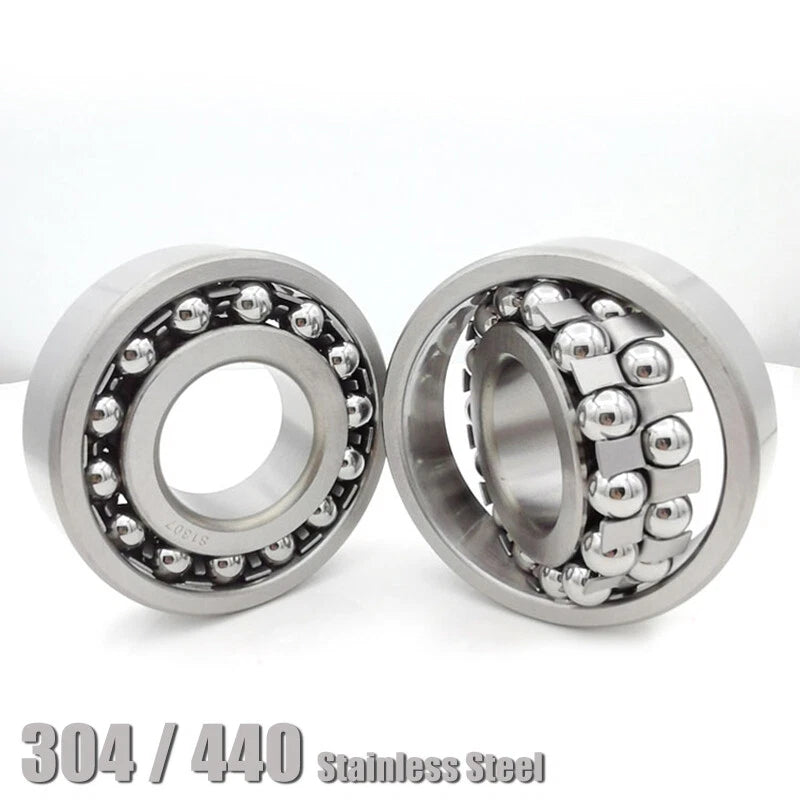
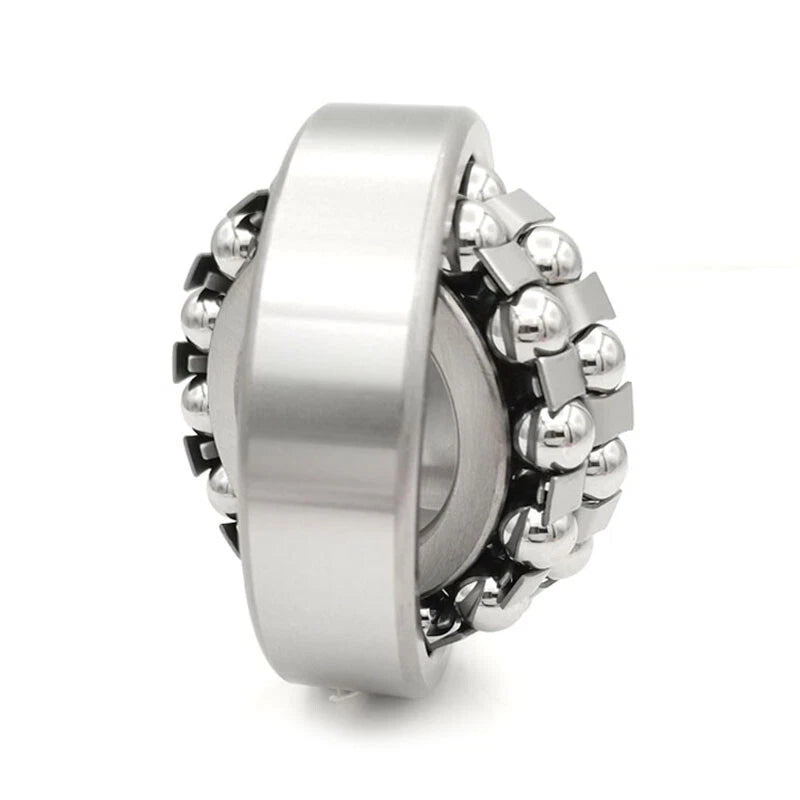
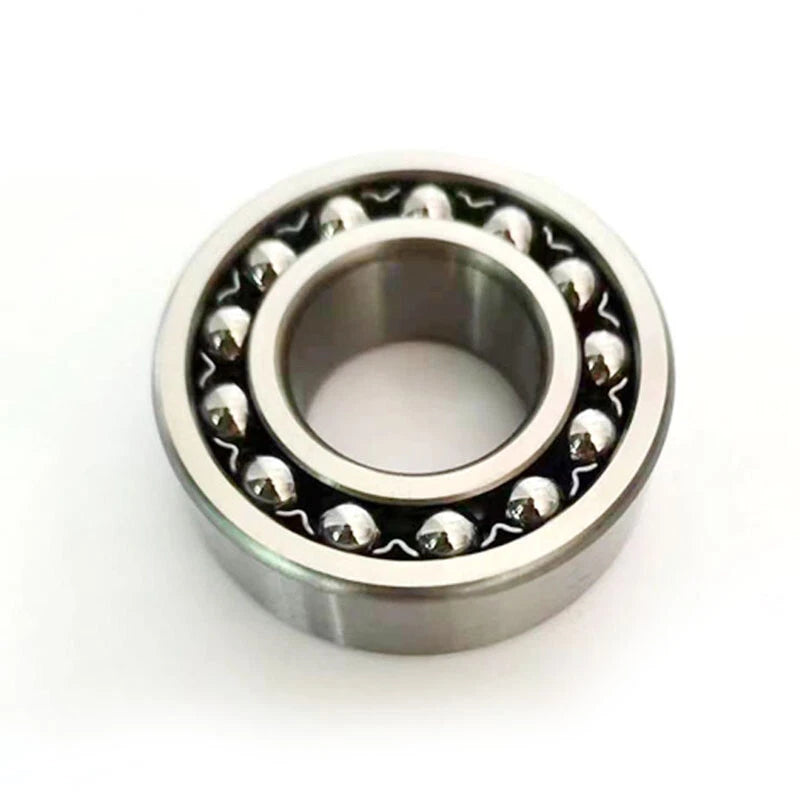
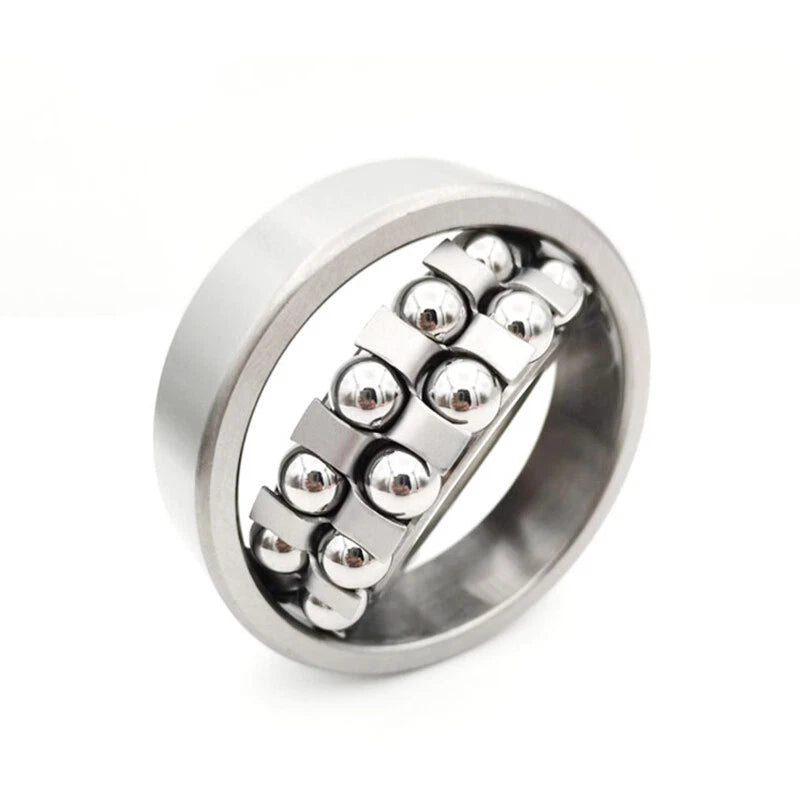
Each bearing in the S1200–S1210 series features a double-row ball complement seated in a spherical outer raceway, allowing angular misalignment of typically 2°–3°. Available in 304 stainless steel (corrosion-resistant, general-purpose) and 440 stainless steel (higher hardness, enhanced wear resistance), inner diameters range from 10 mm (0.39 in) to 50 mm (1.97 in), outer diameters from 30 mm (1.18 in) to 90 mm (3.54 in), and heights from 9 mm (0.35 in) to 20 mm (0.79 in).
Typical use cases include food-processing conveyor shafts where washdown resistance is critical, marine deck hardware subject to salt-spray exposure, and pump or fan assemblies where shaft deflection under load demands a self-aligning double-row ball bearing that maintains consistent radial load distribution.
Two rows of balls share radial and axial loads simultaneously, delivering greater load capacity and longer service life compared to single-row alternatives in the same envelope.
The spherical outer raceway accommodates angular misalignment of typically 2°–3°, protecting the bearing from bending moments caused by shaft deflection or housing misalignment.
304 grade offers broad corrosion resistance for wet or mildly corrosive environments; 440 grade adds higher surface hardness for applications with abrasive contact or elevated wear demands.
Eleven metric sizes cover bore diameters from 10 mm to 50 mm, making it straightforward to source the correct bearing for both light-duty and medium-duty shaft assemblies.
Full stainless steel construction — rings, balls, and cage — resists rust and oxidation in humid, washdown, and mildly acidic environments where carbon steel bearings would degrade rapidly.
Dimensioned to standard S1200-series metric specifications, these bearings are direct replacements for worn or corroded units in existing housings without machining or adaptation.
| Series | S1200 – S1210 (Double Row Self Aligning) |
|---|---|
| Material Grade | 304 Stainless Steel / 440 Stainless Steel |
| Bore (ID) Range | 10 mm – 50 mm (0.39 in – 1.97 in) |
| Outer Diameter (OD) Range | 30 mm – 90 mm (1.18 in – 3.54 in) |
| Height Range | 9 mm – 20 mm (0.35 in – 0.79 in) |
| Number of Rows | Double Row |
| Misalignment Capacity | Typically 2° – 3° |
| Outer Raceway Profile | Spherical (self-aligning) |
| Cage Material | See variant options |
| Lubrication | See variant options |
| Sealing | See variant options |
| Dynamic Load Rating (C) | See variant options |
| Static Load Rating (C0) | See variant options |
| Weight | See variant options |
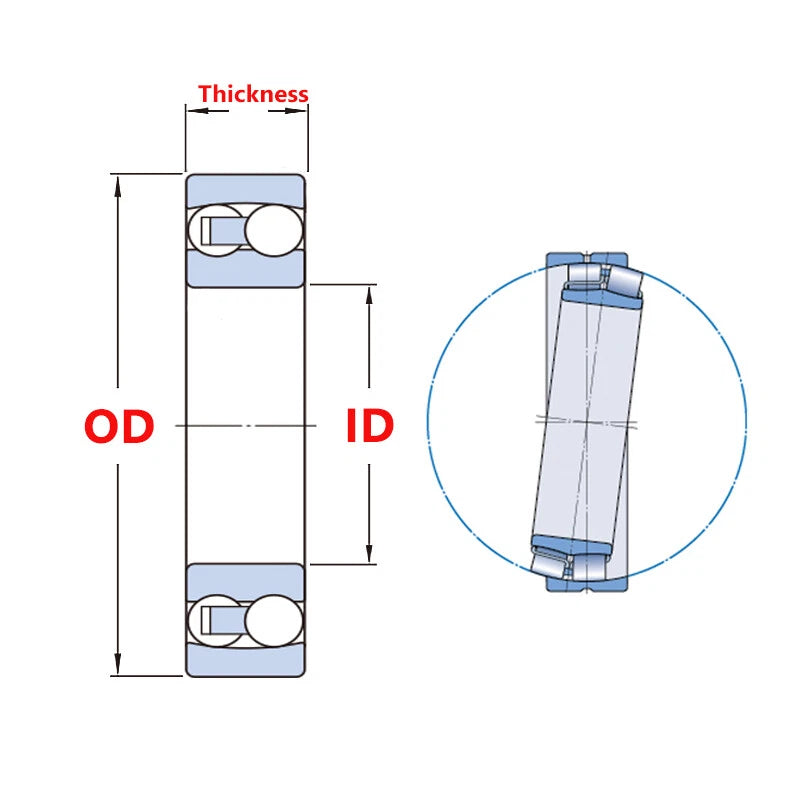
Match the bearing bore (ID) to your shaft diameter and the outer diameter (OD) to your housing bore. The variant name lists dimensions as ID × OD × Height in millimeters — for example, S1204 (20×47×14) fits a 20 mm shaft in a 47 mm housing bore with a 14 mm width. Always verify all three dimensions against your assembly drawings before ordering.
304 stainless steel offers excellent general corrosion resistance and is well-suited for food-processing, marine, and washdown environments. 440 stainless steel is a martensitic grade that can be hardened to higher Rockwell values, providing better wear resistance and fatigue life under heavier loads — at a slight reduction in corrosion resistance compared to 304. Choose 304 for wet/chemical environments and 440 for higher-load or abrasive conditions.
The spherical outer raceway of a double-row self-aligning ball bearing typically accommodates angular misalignment of 2°–3° between the shaft and housing centerlines. This makes them suitable for applications where shaft deflection, thermal expansion, or imprecise housing alignment is expected. Exceeding the rated misalignment angle will reduce bearing life.
Yes. Both 304 and 440 stainless steel grades resist rust and oxidation significantly better than standard carbon steel bearings. They are commonly used in food-processing lines, marine hardware, chemical handling equipment, and outdoor machinery exposed to moisture. For highly aggressive acids or chloride-rich environments, confirm compatibility with your specific chemical exposure before use.
Yes. These bearings are dimensioned to standard S1200-series metric specifications, so they are drop-in replacements for worn or corroded units in existing housings. Confirm the bore, OD, and height match your current bearing's stamped dimensions before installation.
Double-row self-aligning ball bearings are primarily designed for radial loads, with the ability to handle moderate axial (thrust) loads in both directions. The double-row configuration increases radial load capacity compared to a single-row bearing of the same bore size. They are not intended for heavy pure-thrust applications — use angular contact or thrust bearings for those scenarios.
Lubrication details vary by variant. Please refer to the specific variant listing or contact us to confirm whether the bearing is supplied with grease, oil, or dry. For most industrial applications, re-lubrication intervals should follow the bearing manufacturer's guidelines based on speed, load, and operating temperature.
Maximum permissible speed depends on the bearing size, lubrication type, and load conditions. Larger bore sizes generally have lower speed ratings. Contact us to confirm the speed rating for your specific size and application requirements.