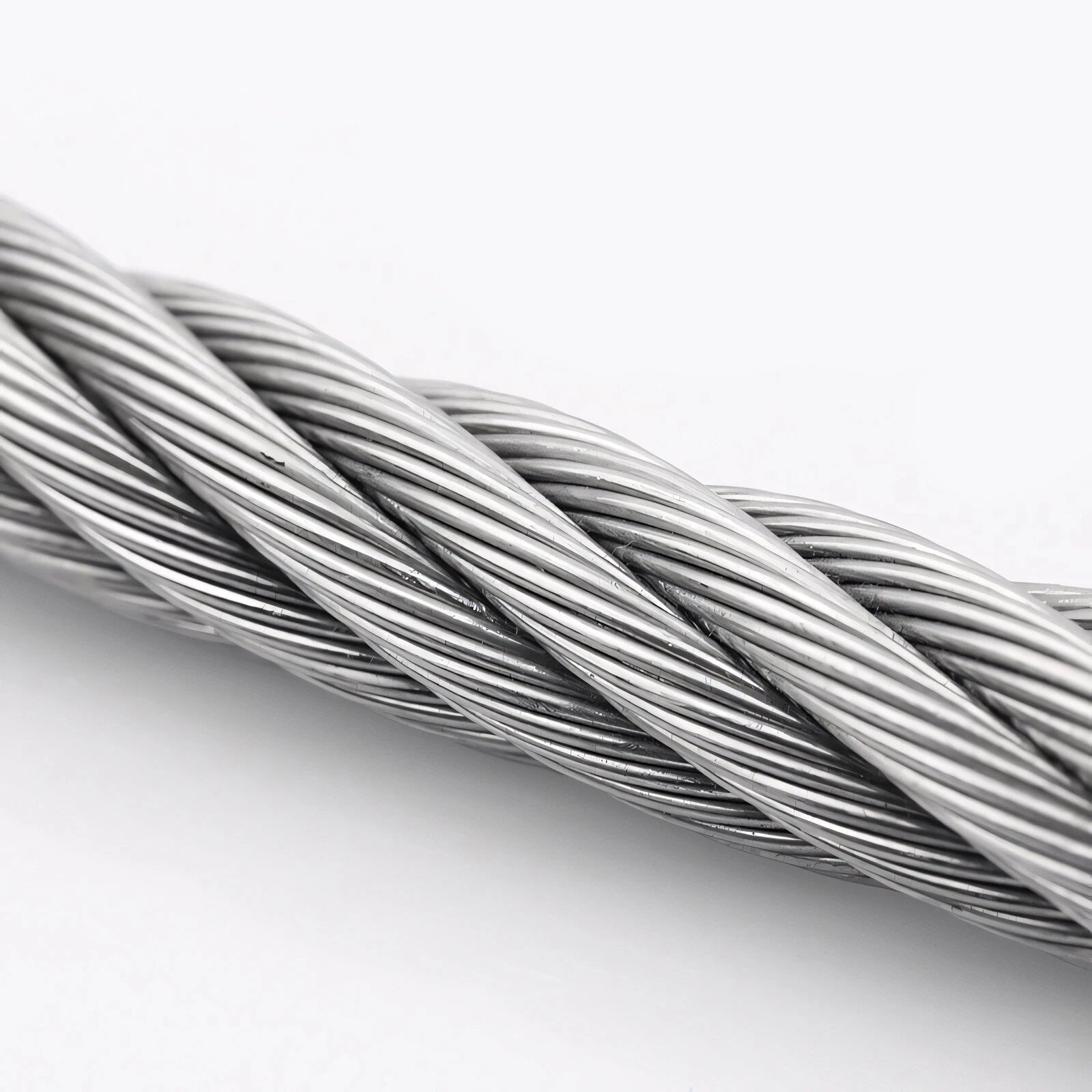
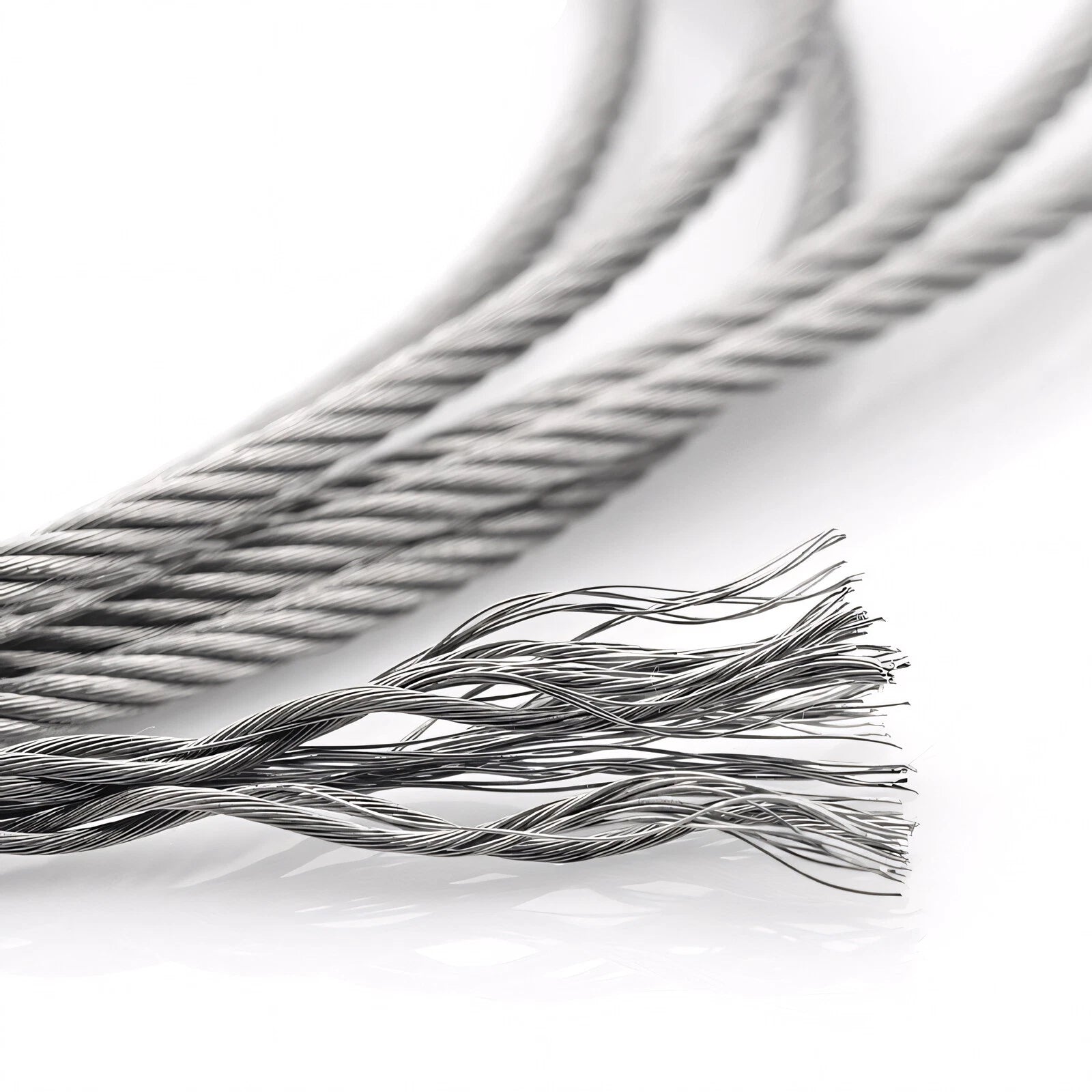
304 A2 Stainless Steel Wire Rope 0.3mm-20mm LIFTING METAL CABLE 7x7-7x19

No reviews

Price:
Sale price$2.03 USD
Stock:
In stock (500 units), ready to be shipped

Payment & Security

Ach Direct Debit Amazon American Express Apple Pay Bancontact Diners Club Discover Google Pay iDEAL Wero Mastercard PayPal Shop Pay USDC Visa

Your payment information is processed securely. We do not store credit card details nor have access to your credit card information.

Quantity Discount Promotion
🎯 BULK DISCOUNT: Buy More, Save More!
Buy 2 Items
5% OFF
Buy 4 Items
10% OFF
Buy 6 Items
15% OFF
Expert

DIY Expert Support

Get fitment advice & recommendations

Mon-Fri, 8:30AM-8PM
24-Hour Fast Ship
🚚
Arrives in 3-14 days
🌍
Global Reach
↩️
30-Day Returns
🌱 1 tree planted with every purchase

Description

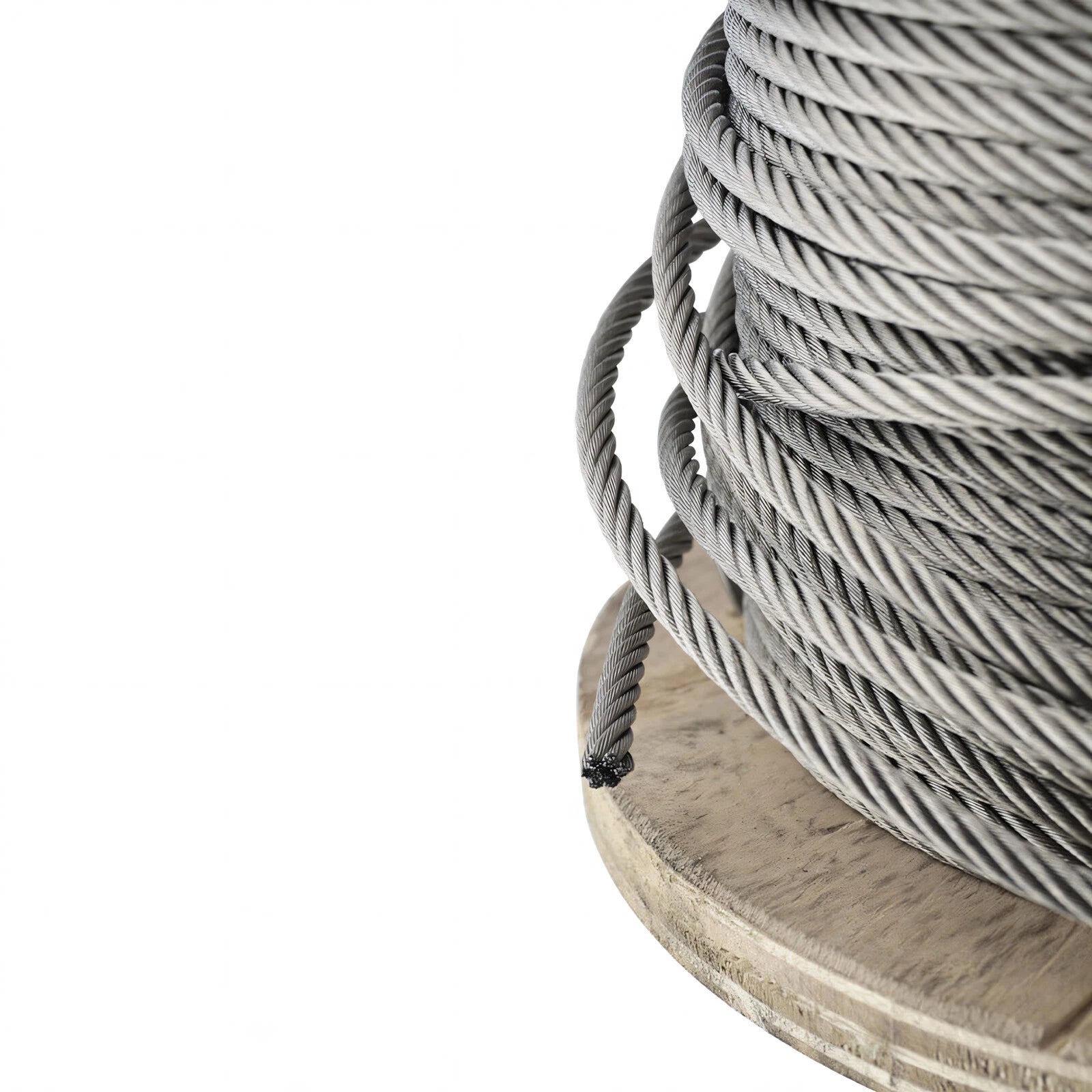
304 A2 Stainless Steel Wire Rope — Corrosion-Resistant Lifting Cable for Marine, Rigging & DIY

When a standard galvanised cable starts to rust after a single wet season, the repair bill quickly outweighs the original saving. Fabricators, riggers, boat owners, and serious DIYers who need a cable that holds its integrity in damp, salt-laden, or chemically active environments turn to 304 A2 stainless steel wire rope as the dependable long-term choice.

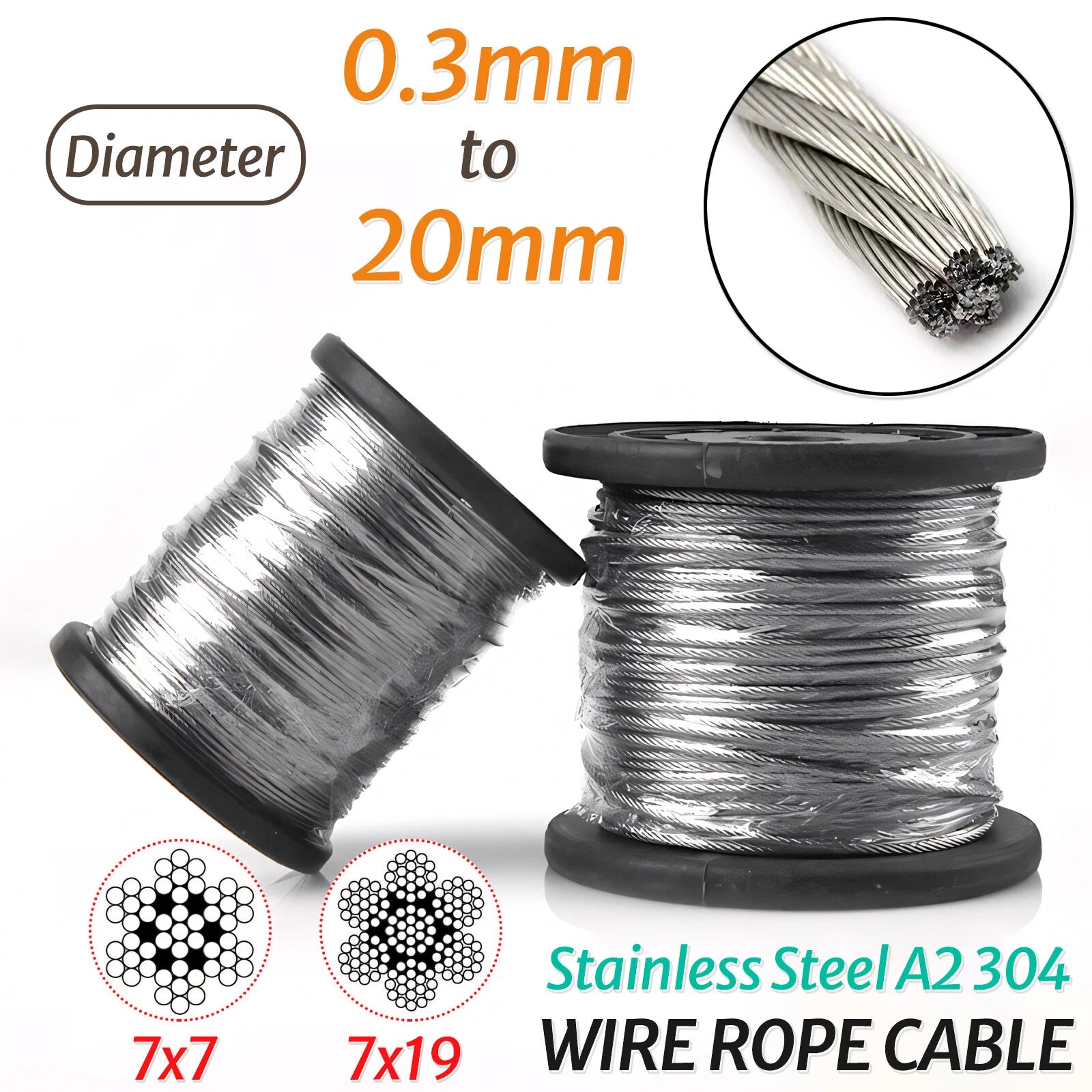
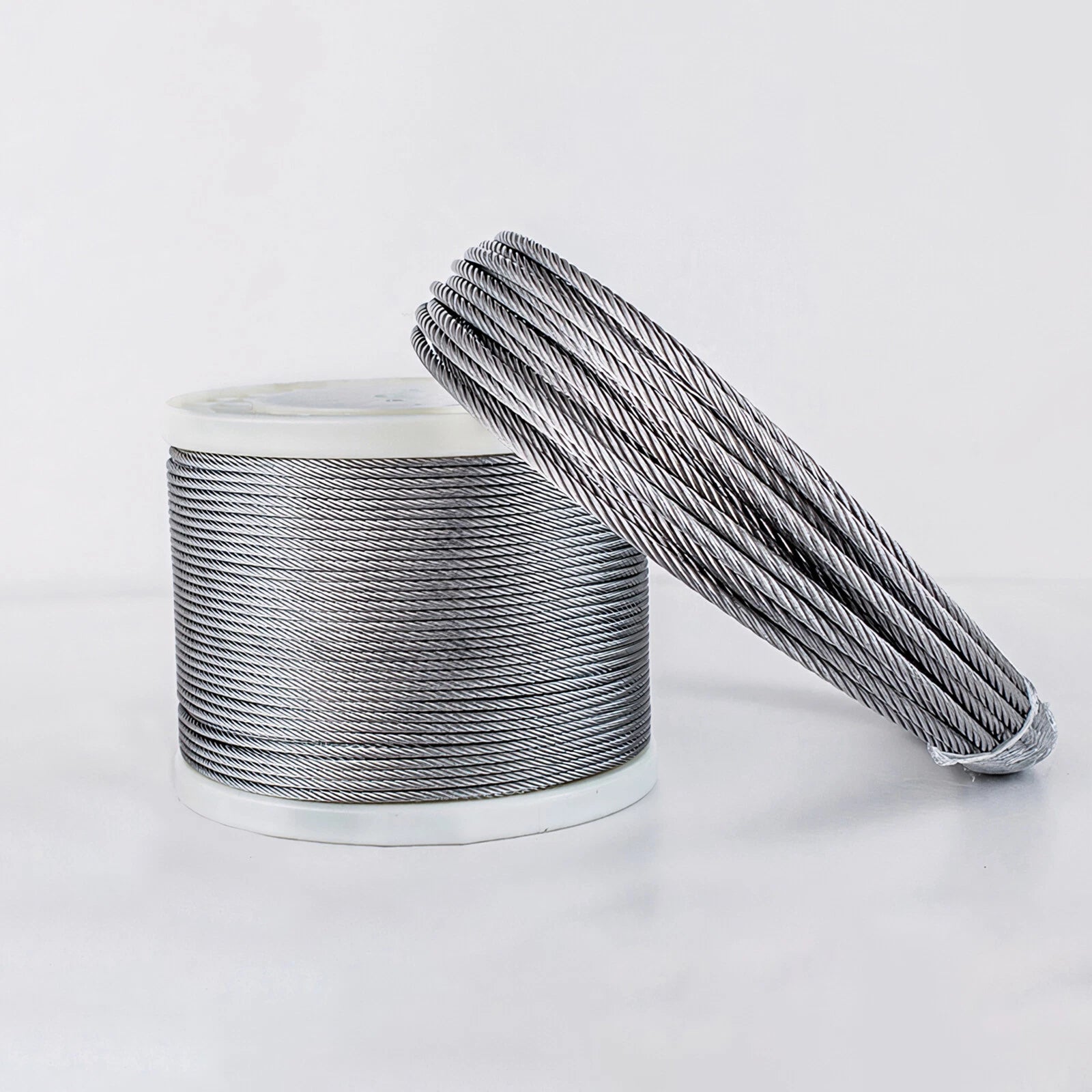
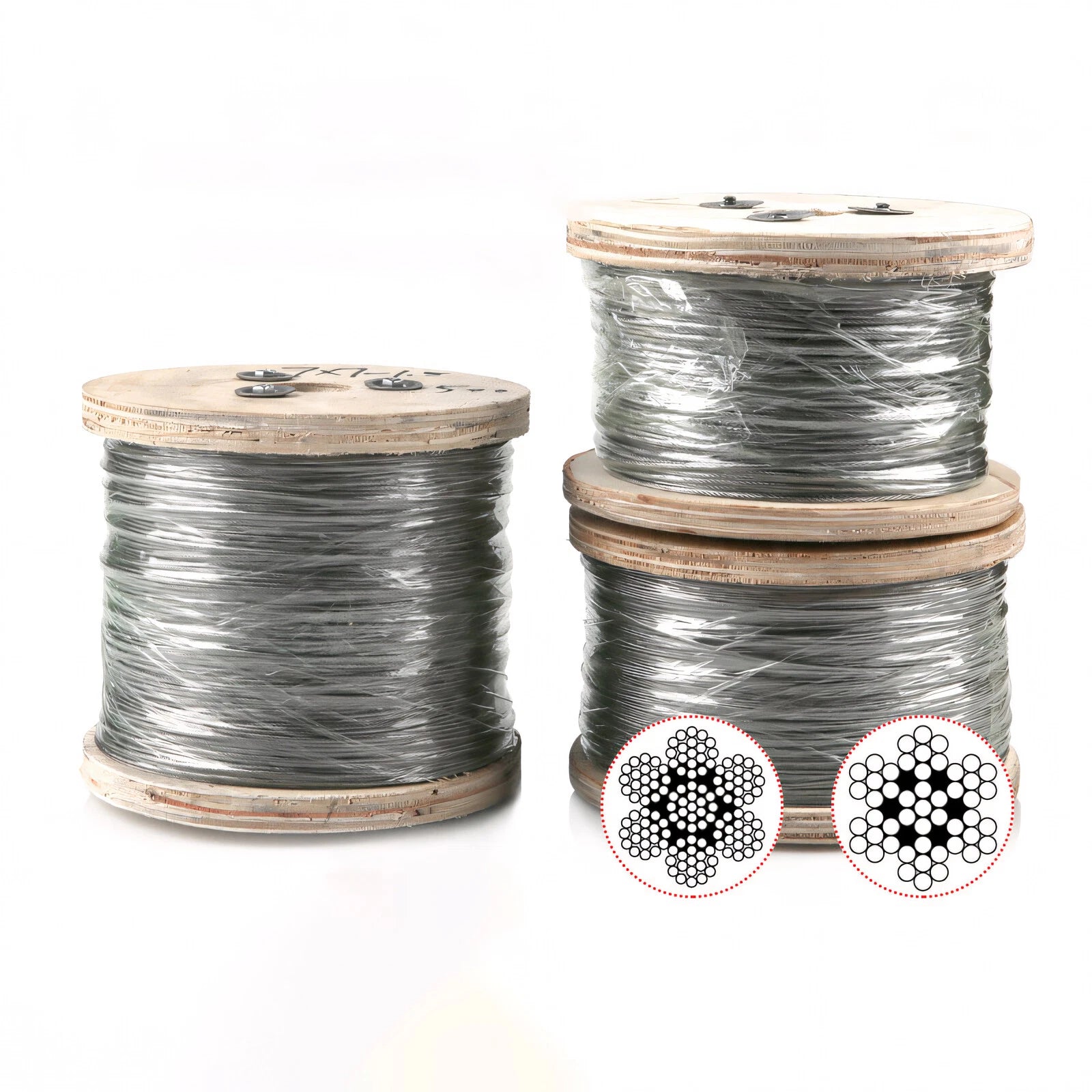
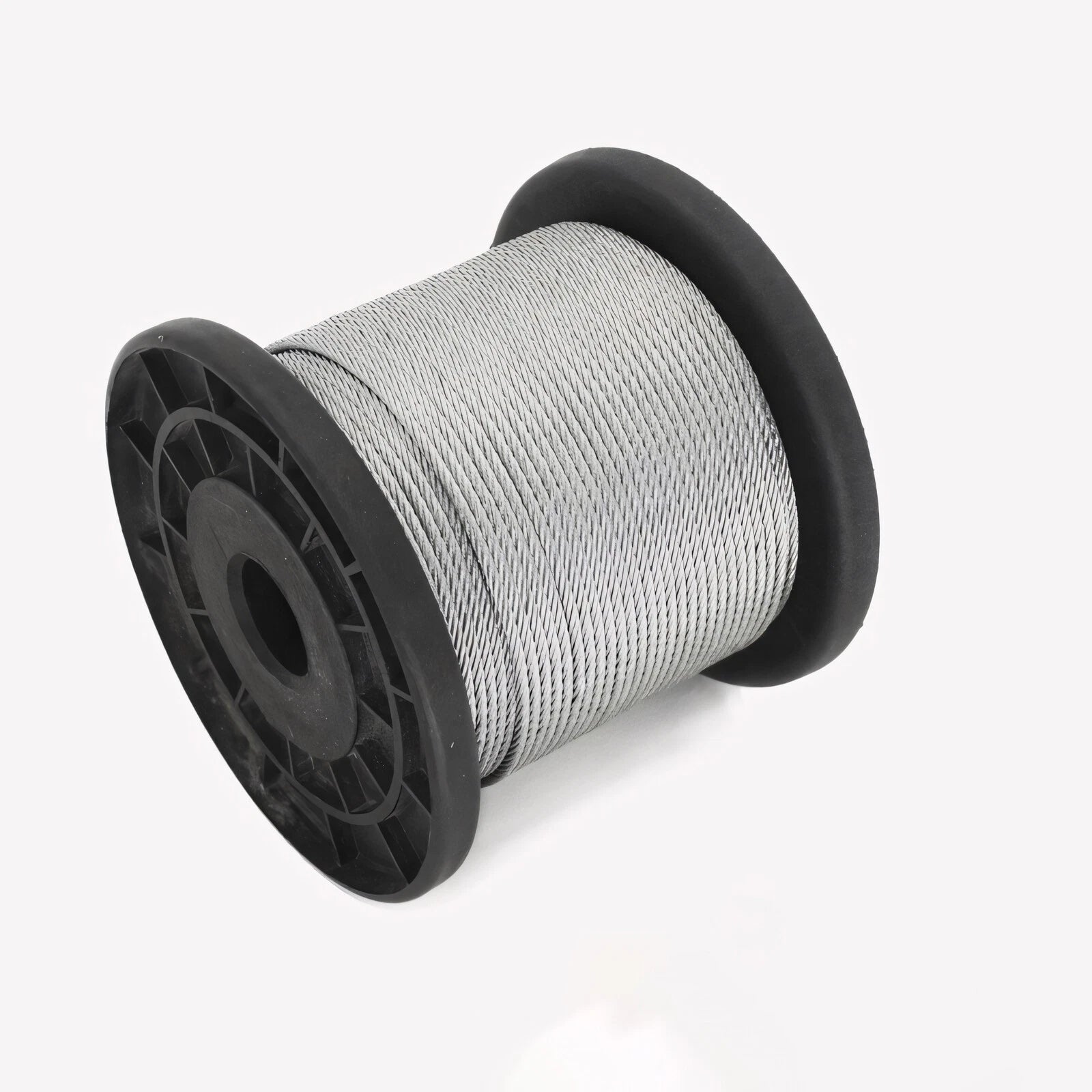
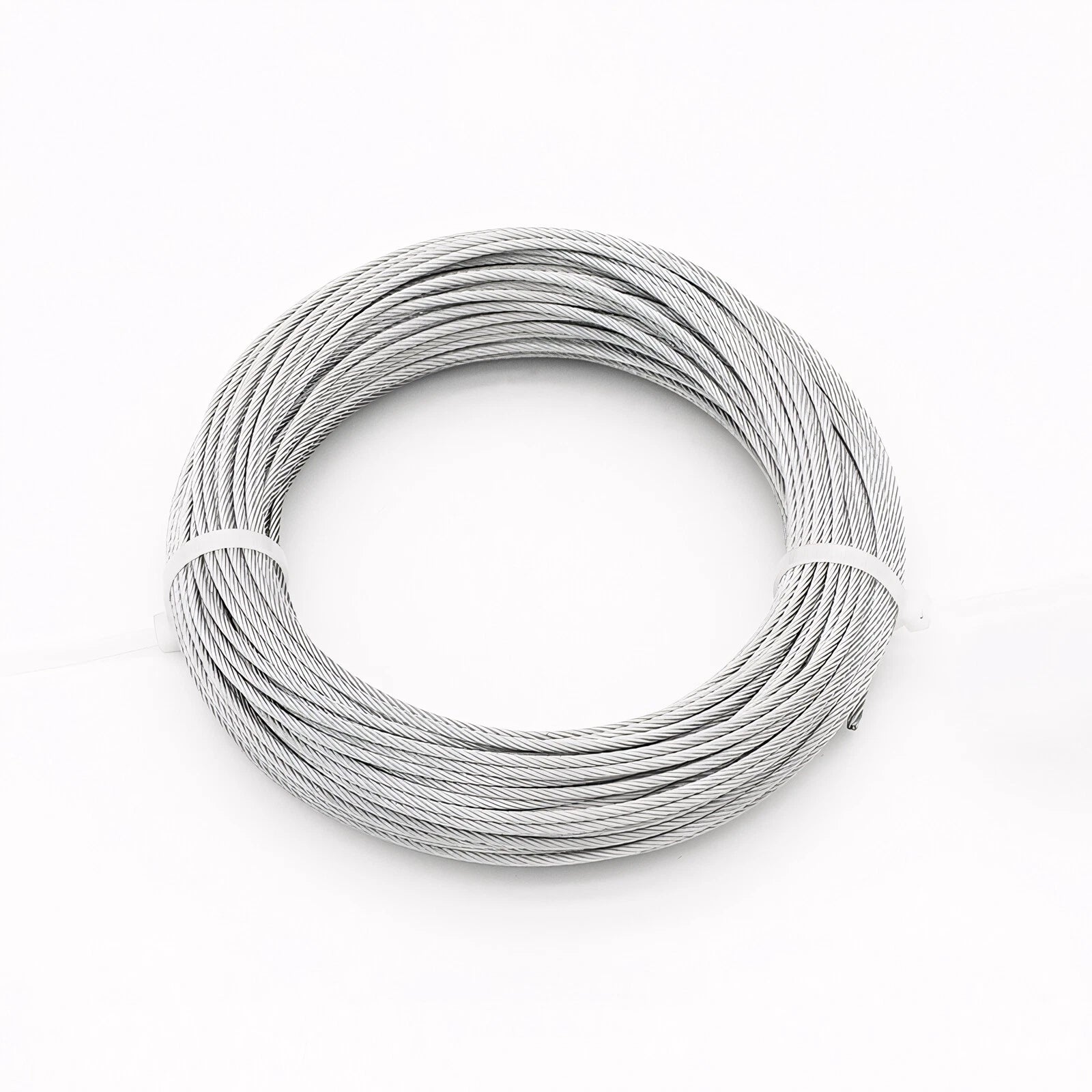
This 304 A2 stainless steel wire rope is available in two strand constructions — 7×7 (medium-soft, suitable for semi-rigid runs) and 7×19 (soft and flexible, ideal for bending around sheaves or pulleys) — with diameters spanning 0.3 mm to 20 mm (approximately 0.012 in to 0.79 in) and cut lengths from 1 m up to 500 m (3.3 ft to 1,640 ft). The outer surface is bright, uncoated stainless steel.

Typical applications include sailboat standing and running rigging, balustrade and handrail infill cables, greenhouse and trellis support wires, cable railing systems, suspension and tensioning rigs, and general workshop lifting or lashing tasks where a rust-free wire rope is required.

⚙️ Compatibility note: Verify your swage fittings, ferrules, or cable clips are rated for the selected diameter and strand construction (7×7 or 7×19) before ordering. Mixing strand types with fittings designed for the other construction may reduce grip strength.

✅ Key Features of These 304 A2 Stainless Steel Wire Ropes

  • 🔩Grade 304 (A2) Stainless Steel — Contains 18% chromium and 8% nickel for reliable resistance to oxidation, moisture, and mild chemical exposure without surface treatment.
  • 🔀Two Strand Constructions — 7×7 offers a stiffer, more stable run suited to fixed or semi-rigid applications; 7×19 provides greater flexibility for routing around pulleys, sheaves, or tight bends.
  • 📏Wide Diameter Range: 0.3 mm – 20 mm — Covers light-duty craft wire at 0.3 mm (0.012 in) through to heavy structural cable at 20 mm (0.79 in), letting you match the rope to the actual load requirement.
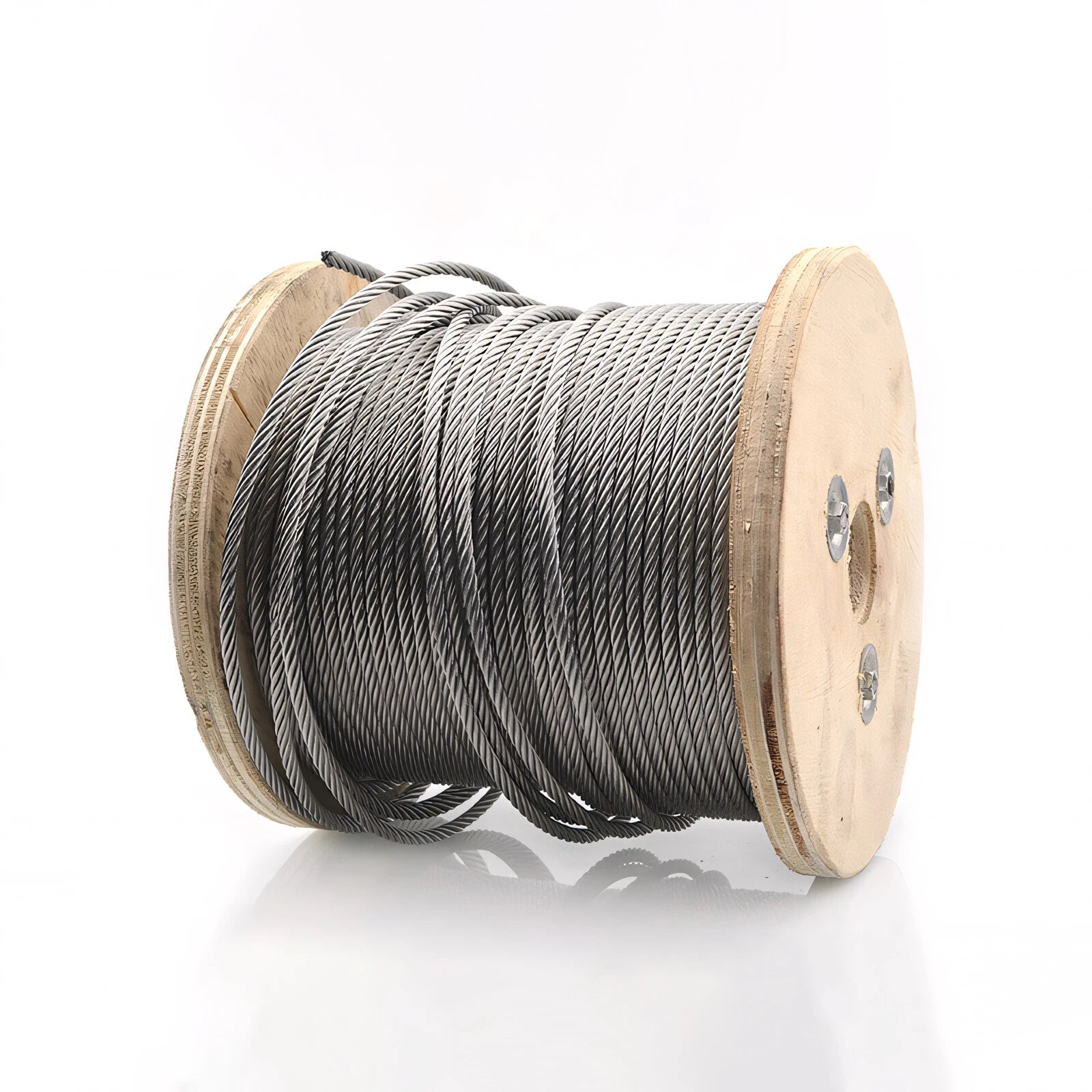
  • 🎯Cut-to-Length Options: 1 m – 500 m — Order exactly the run you need — from a 1 m sample up to a 500 m bulk spool — reducing offcuts and waste on larger projects.
  • Marine & Outdoor Rated — The 304 alloy performs in coastal and outdoor environments where carbon steel would corrode rapidly, making it a practical choice for boat rigging, outdoor railings, and garden structures.
  • 🏗️Suitable for Lifting, Tensioning & Structural Use — Appropriate for balustrade infill, cable railing, trellis tensioning, workshop hoisting rigs, and suspension applications where a rated, corrosion-resistant wire rope is specified.

📐 Technical Specifications — Stainless Steel Wire Rope

Material 304 (A2) Stainless Steel
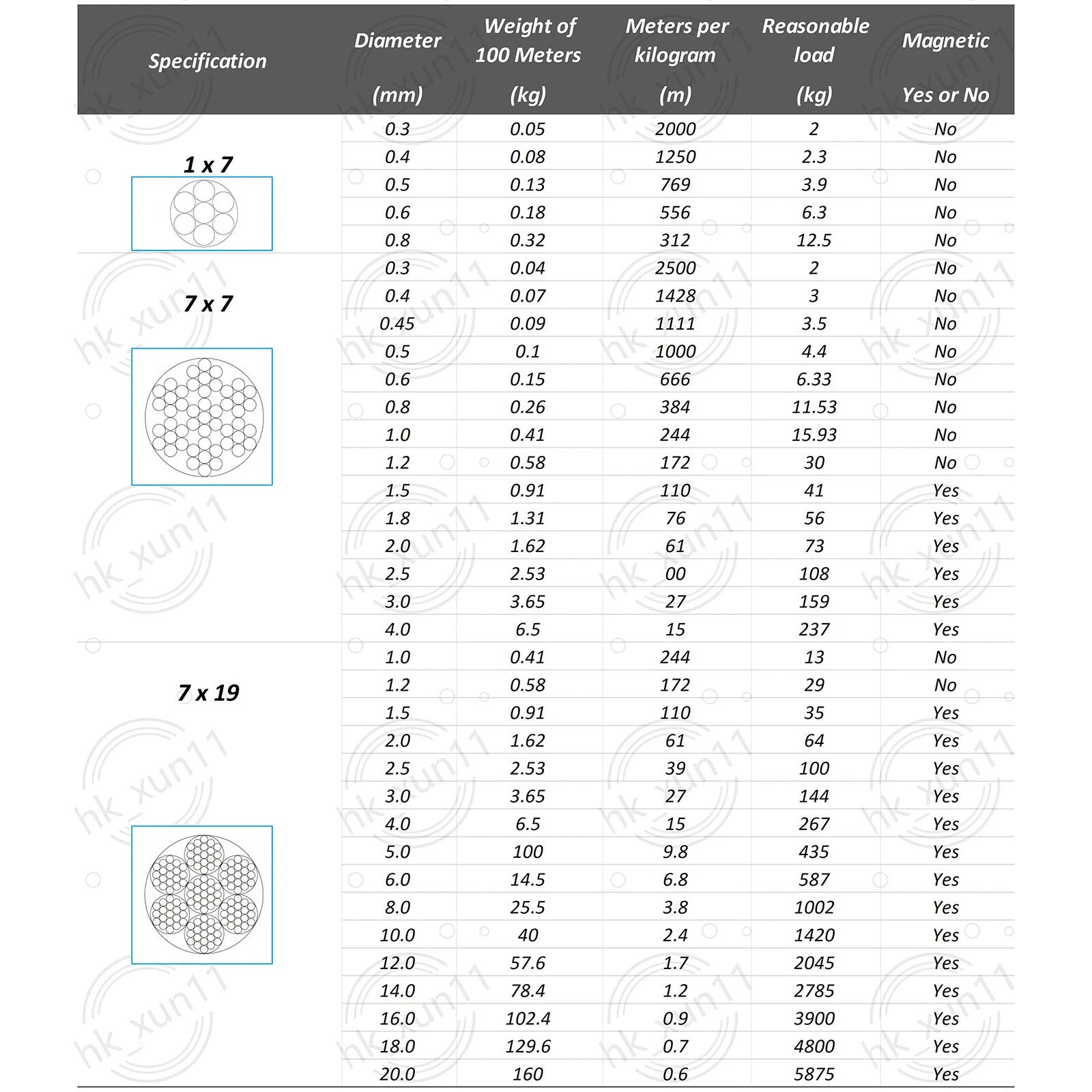
Strand Construction 7×7 (Medium-soft) / 7×19 (Soft & Flexible) — see variant options
Diameter Range 0.3 mm – 20 mm (approx. 0.012 in – 0.79 in)
Available Lengths 1 m, 2 m, 5 m, 10 m, 20 m, 50 m, 100 m, 200 m, 500 m
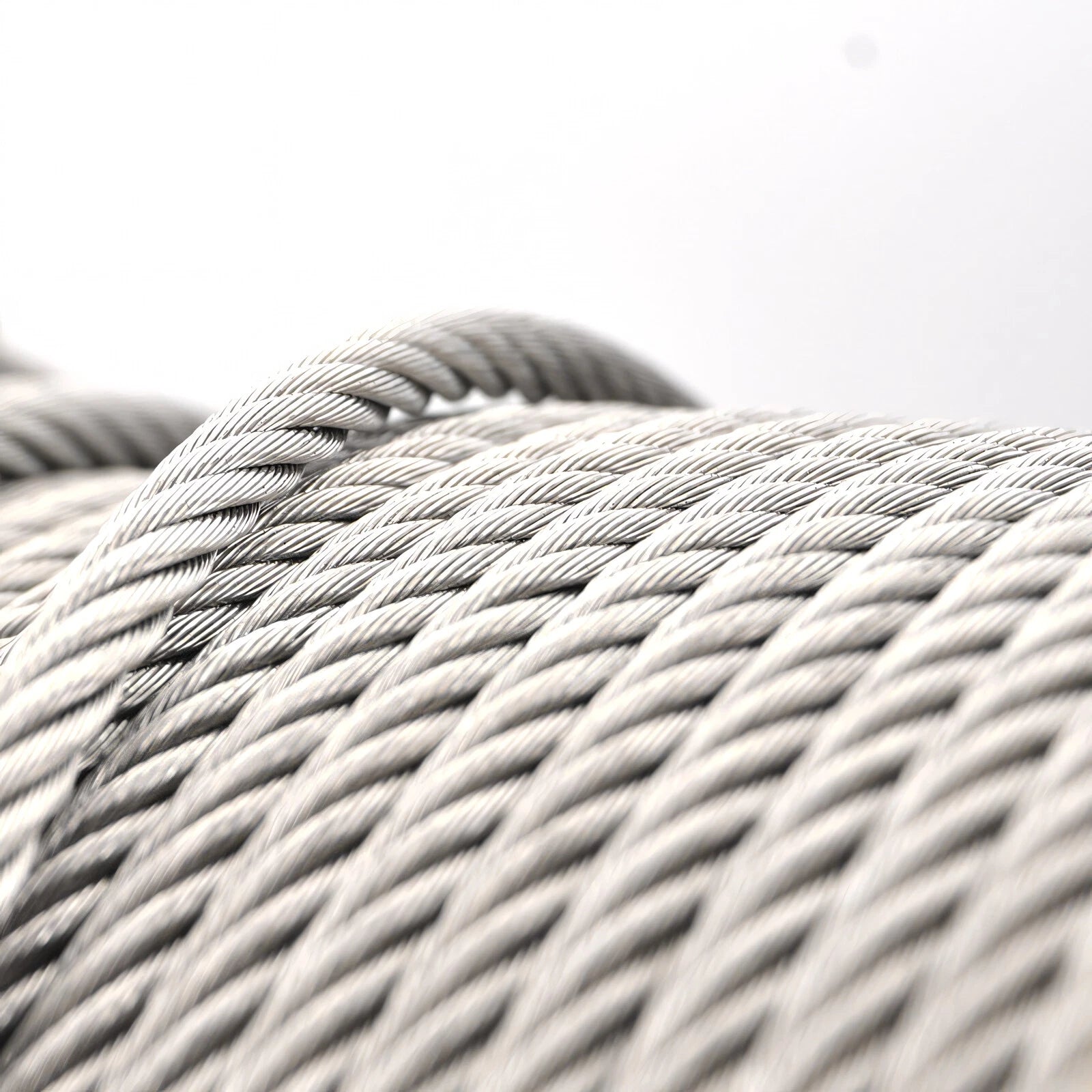
Surface Finish Bright / bare stainless (uncoated)
Minimum Breaking Load See variant options
Flexibility 7×7: medium-soft | 7×19: soft & flexible
Corrosion Resistance Suitable for outdoor, coastal, and mildly corrosive environments
Typical Applications Rigging, balustrade cable, trellis wire, cable railing, lifting, lashing
Weight per Metre See variant options (varies by diameter)

❓ Frequently Asked Questions

What is the difference between 7×7 and 7×19 strand construction?

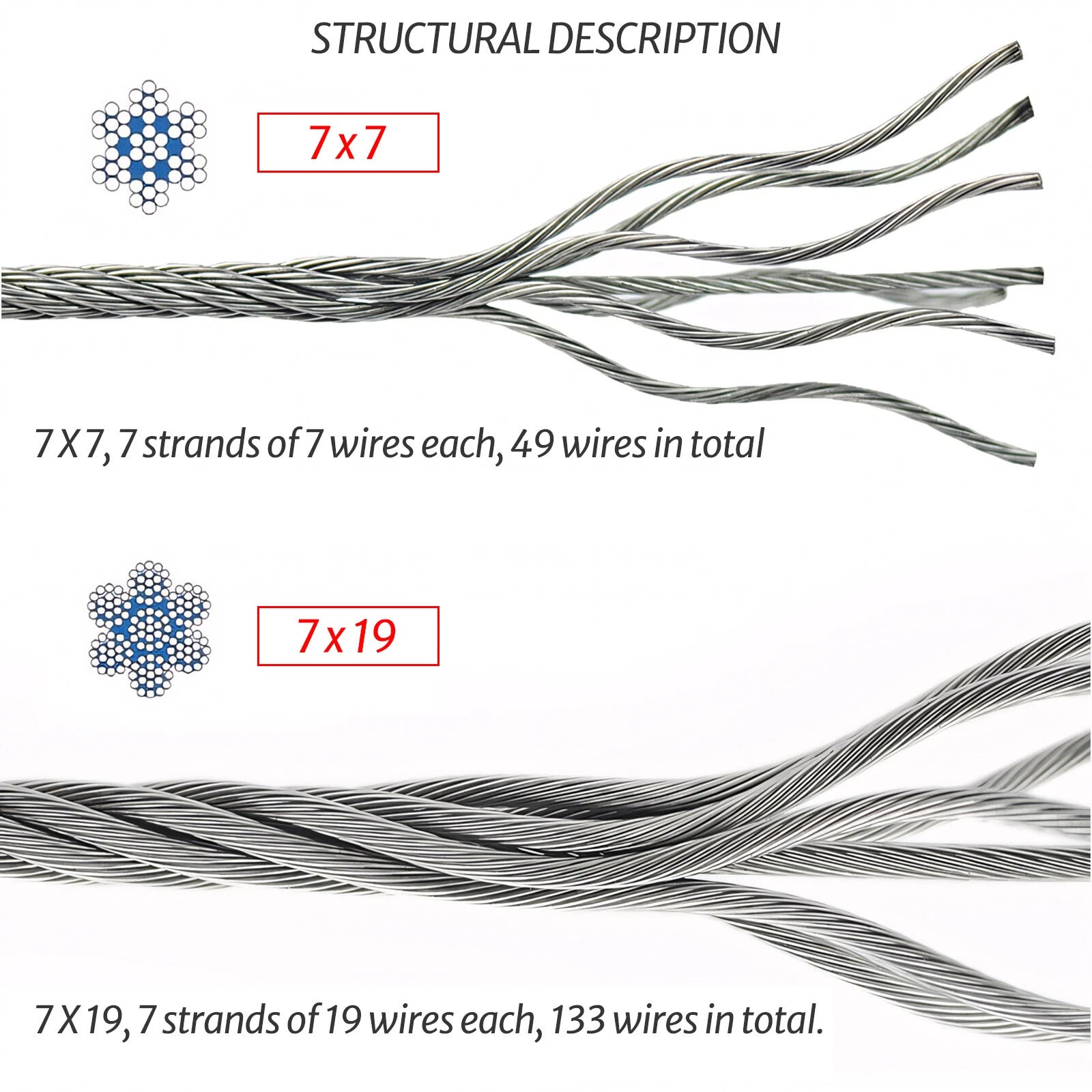
A 7×7 rope consists of 7 strands each containing 7 individual wires (49 wires total). It is stiffer and holds its shape better, making it well suited to fixed runs such as balustrade infill or standing rigging where minimal flex is expected. A 7×19 rope has 7 strands of 19 wires each (133 wires total), giving it significantly greater flexibility. Choose 7×19 when the cable must bend around pulleys, sheaves, or tight corners, or where repeated movement is involved.

Is 304 stainless steel wire rope suitable for marine or saltwater use?

Grade 304 (A2) stainless steel offers good resistance to moisture and mild salt exposure, making it a practical choice for inland waterways, freshwater boats, and coastal applications with regular rinsing. For prolonged immersion in seawater or highly aggressive salt environments, grade 316 (A4) stainless is generally recommended. If you are unsure which grade suits your application, contact us to confirm before ordering.

How do I choose the correct diameter for my project?

Diameter selection depends on the load the cable must carry and the fittings or hardware it will pass through. As a general guide: 0.3 mm–1.0 mm diameters suit craft, jewellery, and light tensioning work; 1.2 mm–3.0 mm covers trellis, greenhouse, and light balustrade applications; 4.0 mm–8.0 mm is typical for cable railing and moderate rigging; 10 mm–20 mm is used for heavier structural, lifting, and marine standing rigging. Always verify the minimum breaking load against your calculated working load with an appropriate safety factor.

Can I cut the wire rope myself, and will it fray?

Stainless steel wire rope can be cut with bolt cutters, angle grinder cutting discs, or purpose-made cable cutters. To prevent the cut end from fraying, apply a small amount of heat-shrink tubing, a ferrule, or a swage end stop immediately after cutting. Avoid using standard wire cutters on larger diameters as they tend to crush and distort the strands rather than making a clean cut.

What fittings are compatible with this wire rope?

Standard swage fittings, Swageless (mechanical) terminals, wire rope clips (bulldog grips), ferrules, and thimbles sized to match the cable diameter are all compatible. Ensure any fitting is rated for the strand construction you select — some swage fittings are optimised for 7×7 and may not grip 7×19 as effectively. Always follow the fitting manufacturer's installation torque or swage specifications.

How should I store unused wire rope to prevent corrosion or kinking?

Coil the rope loosely in the direction of its natural lay and store it in a dry, well-ventilated area away from direct contact with dissimilar metals (which can cause galvanic corrosion). Avoid tight bends or kinks during storage, as these can permanently deform the strands and reduce the rope's rated strength. For long-term storage, a light application of a compatible wire rope lubricant or corrosion inhibitor spray helps maintain the surface condition.

What length should I order if I am unsure how much I need?

Measure the total run of your project, then add at least 10–15% for termination tails, tensioner adjustment, and any routing curves. For example, a 10 m balustrade run typically requires 11–12 m of cable per horizontal line once end fittings are accounted for. If you are prototyping or testing a fitting method, ordering a 1 m or 2 m sample of the relevant diameter first is a cost-effective way to confirm compatibility before committing to a longer length.

🛒 Select your Specification, Diameter, and Length above, then add to cart.

You may also like

Recently viewed