
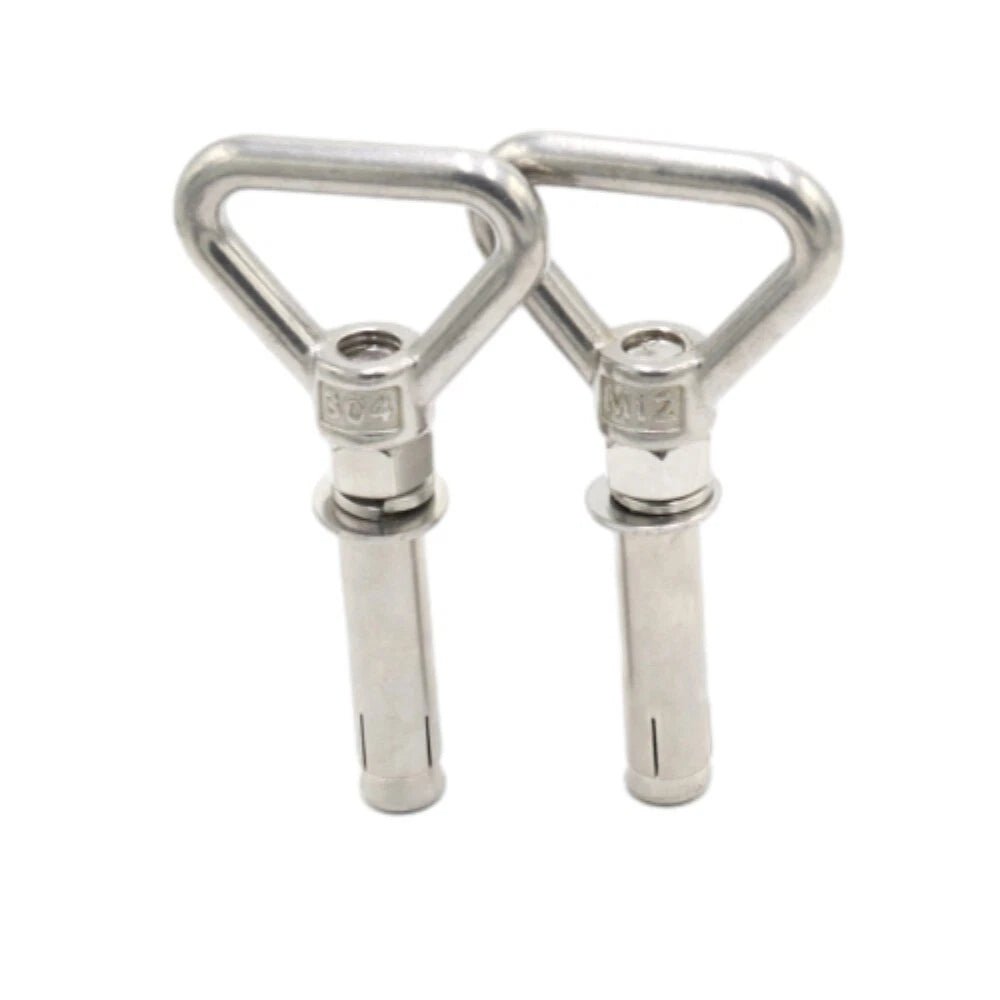
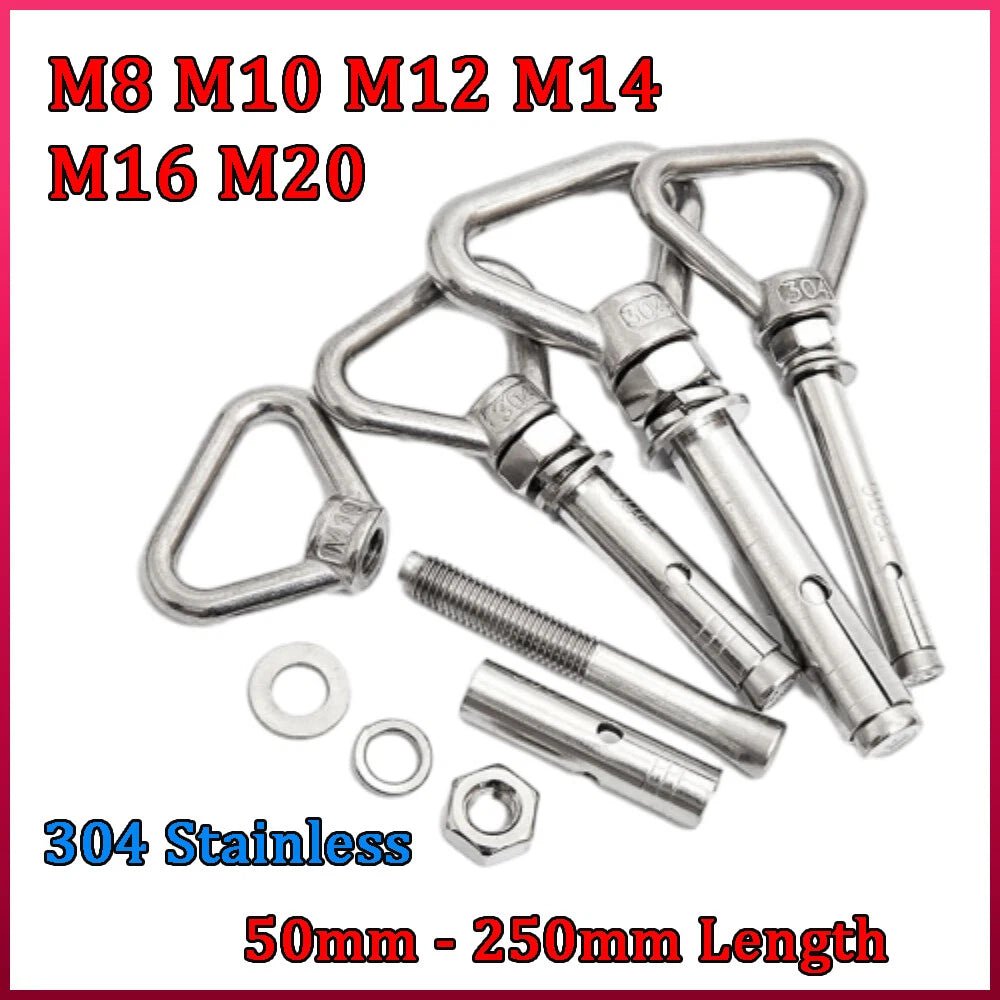
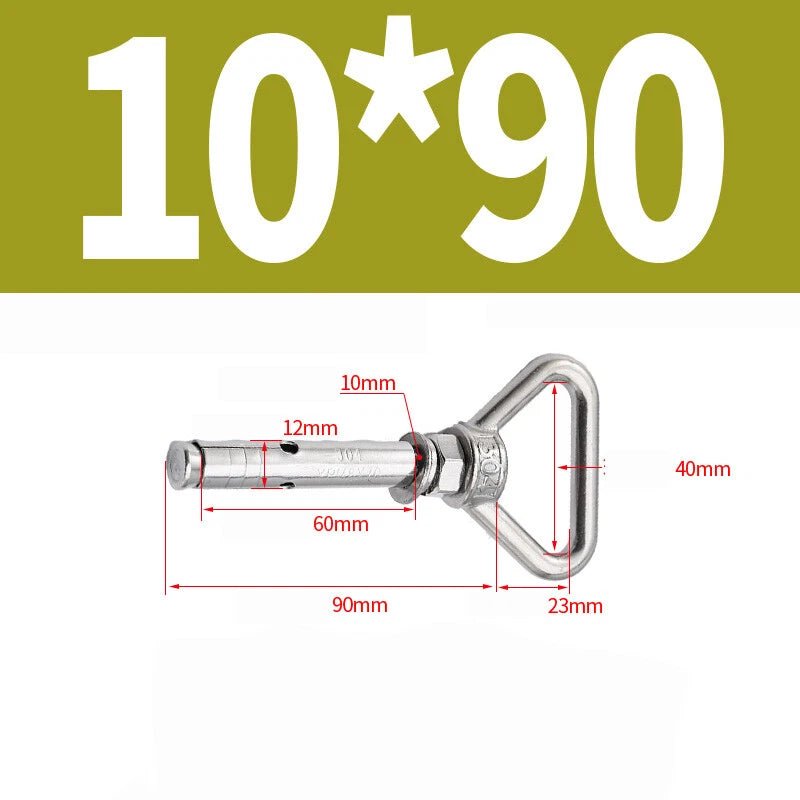
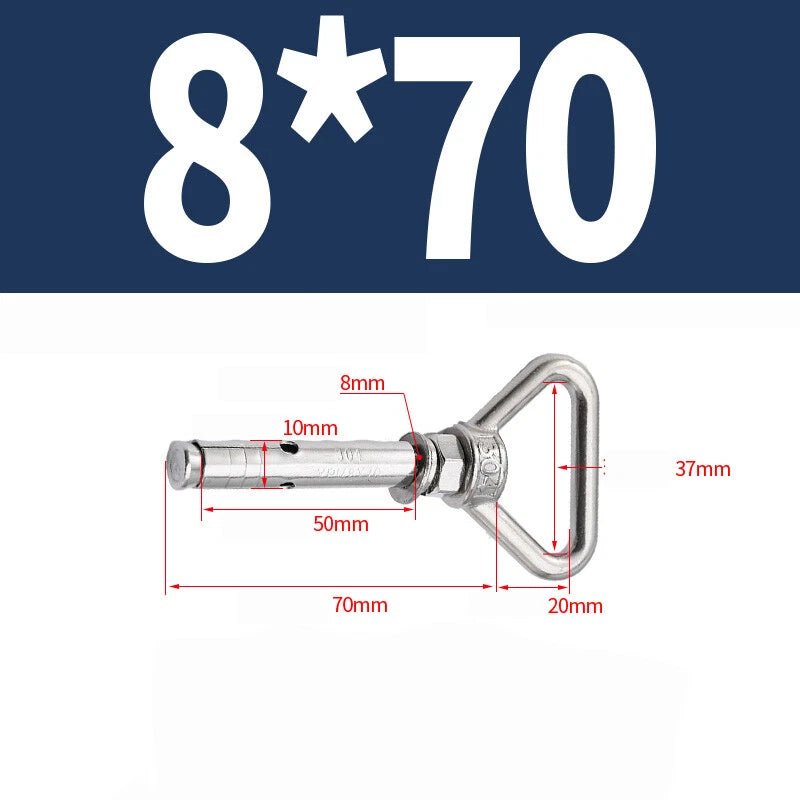
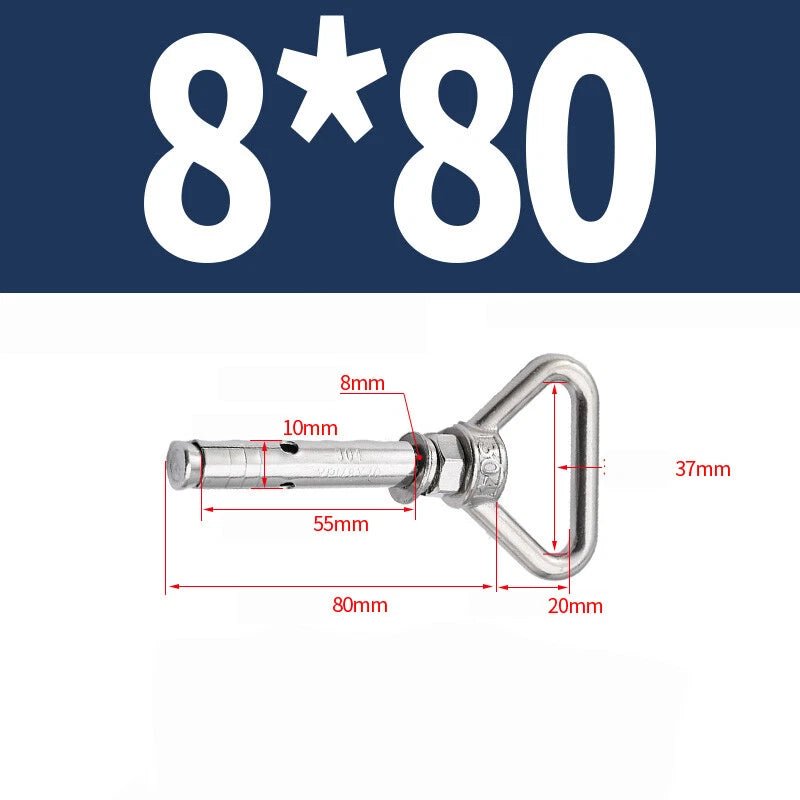
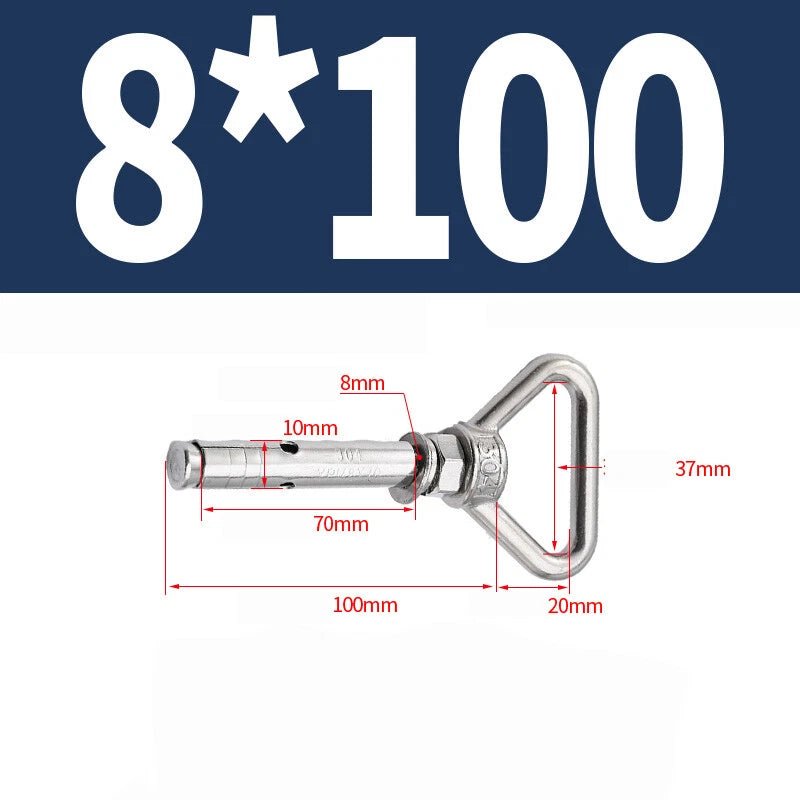
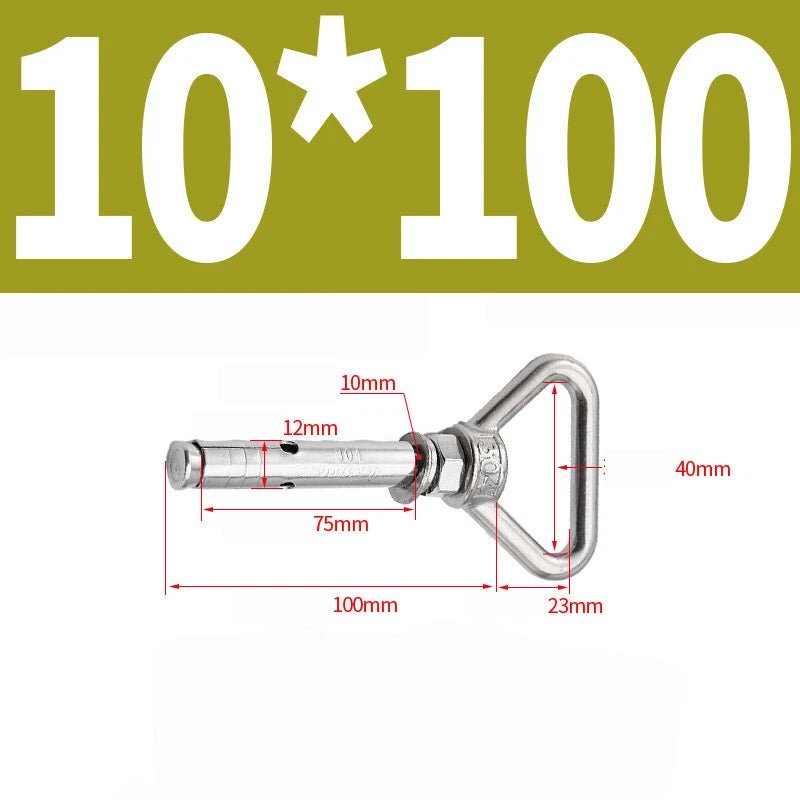
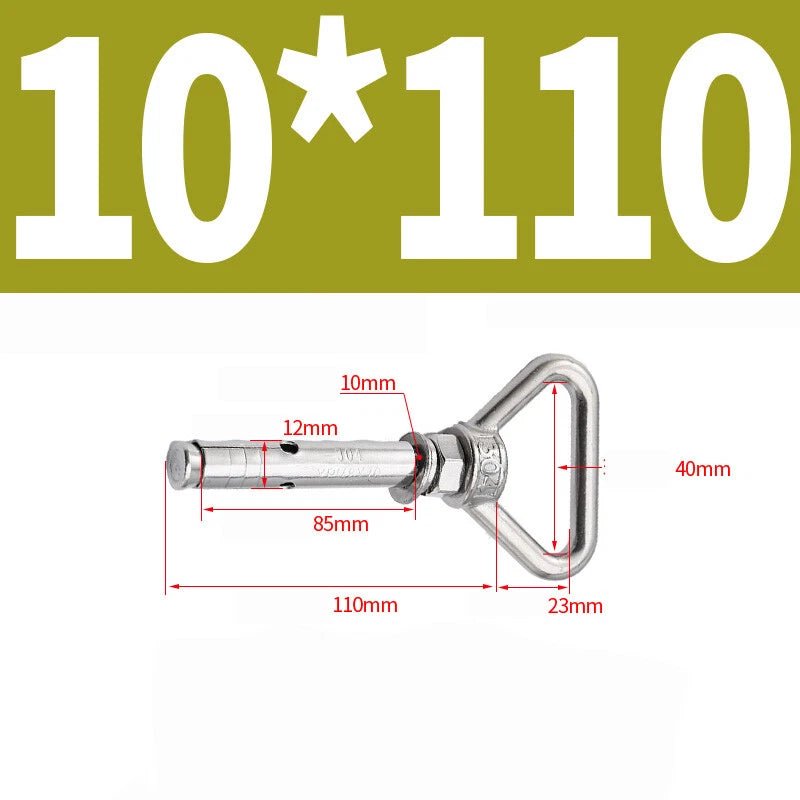
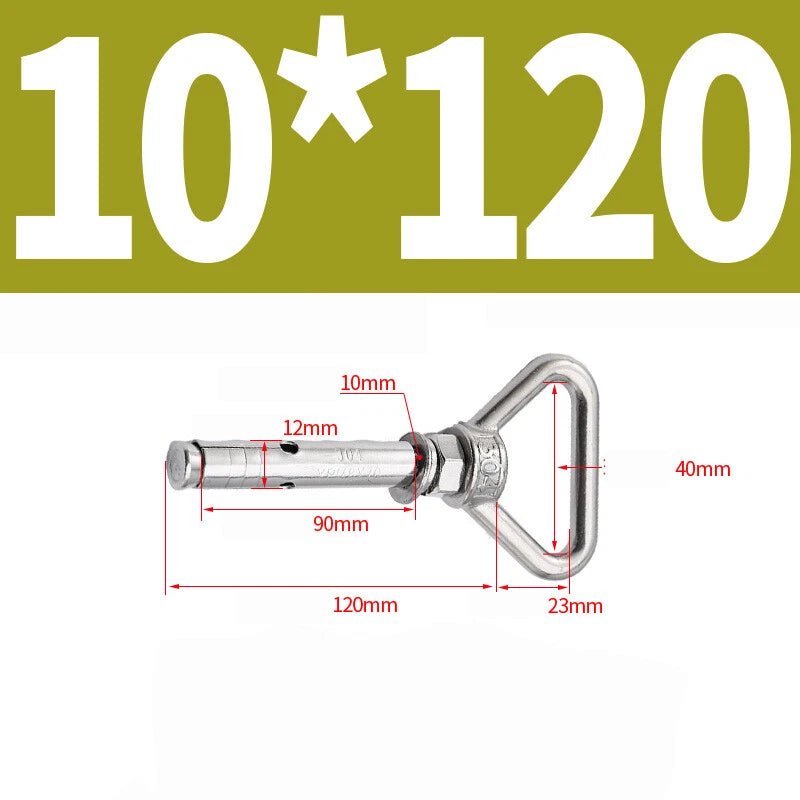
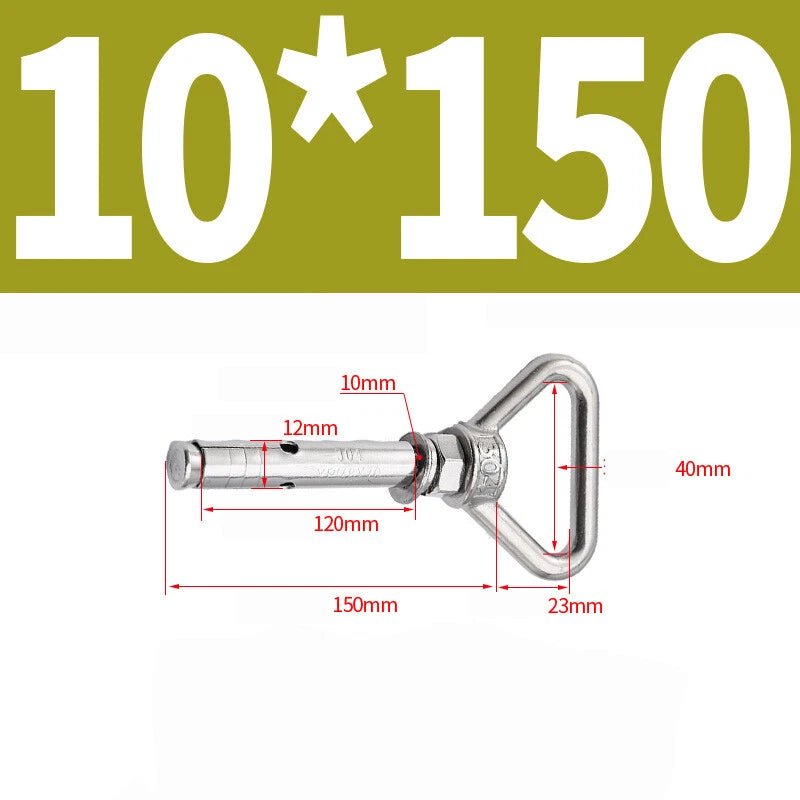
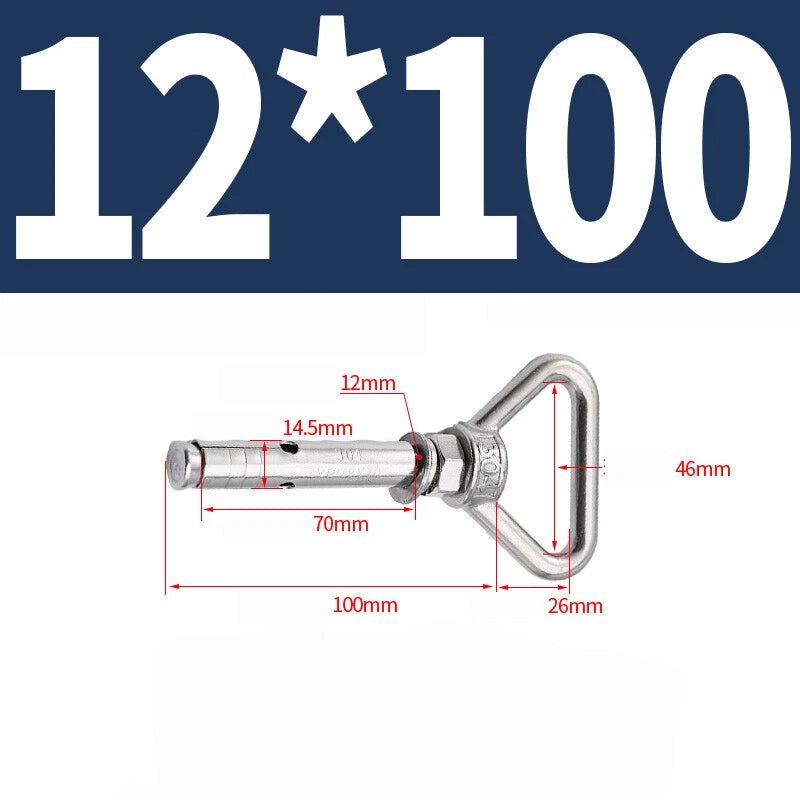
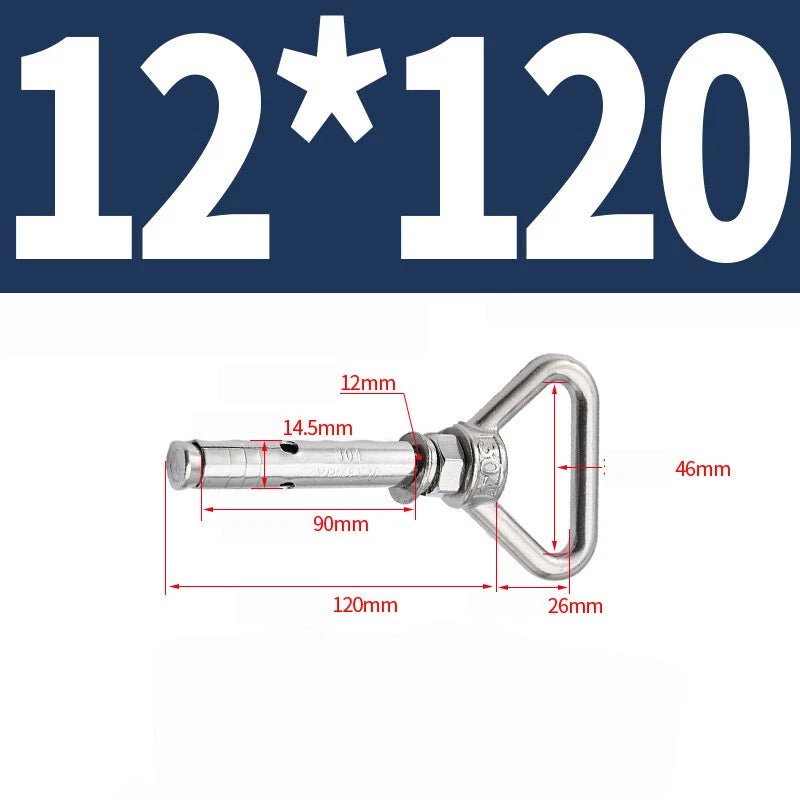
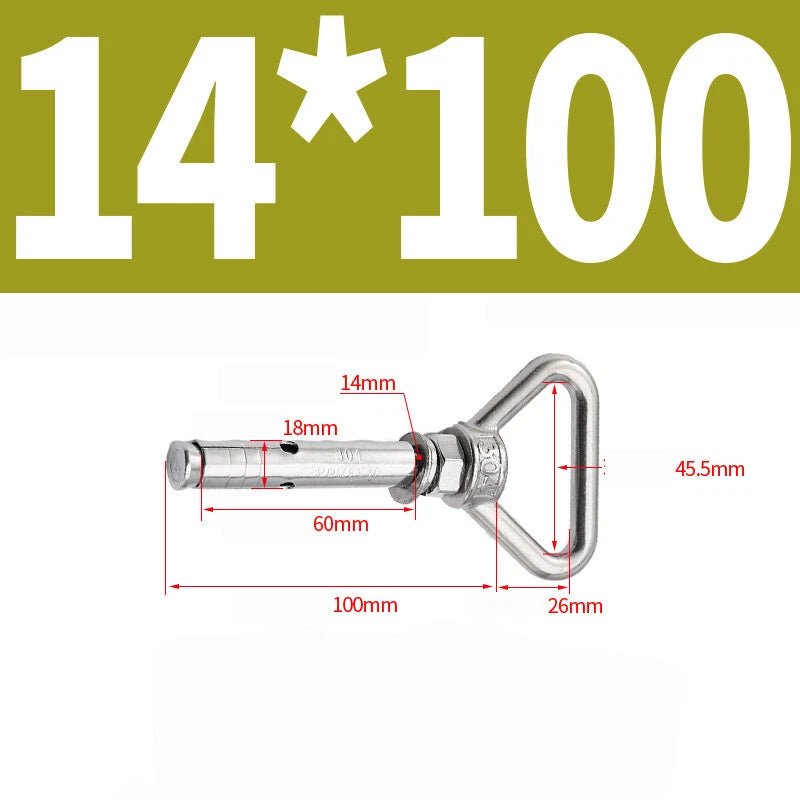
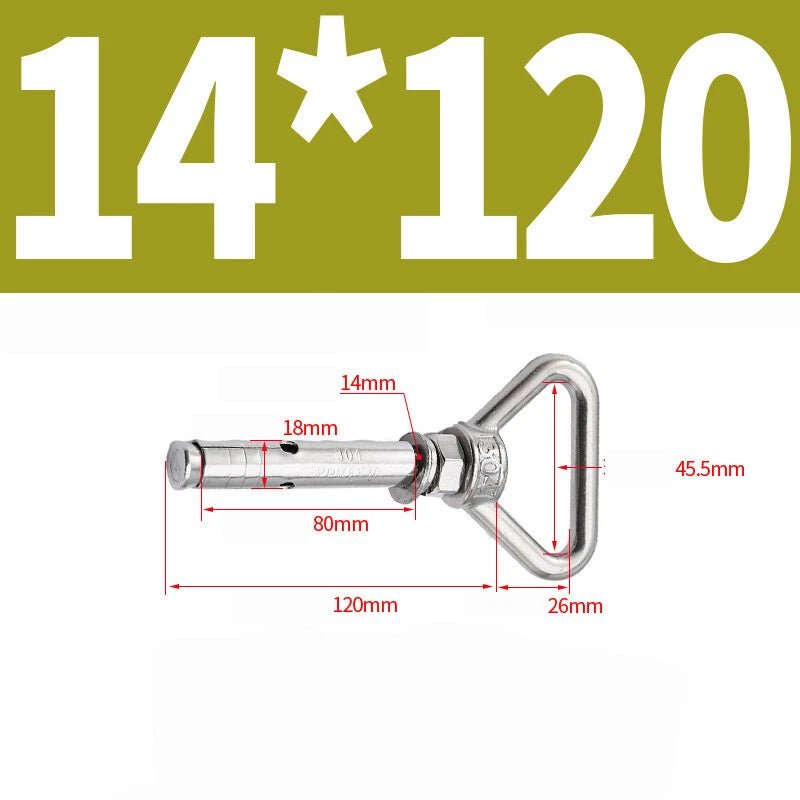
304 Stainless Steel Lifting Eye Ring Concrete Sleeve Anchor Bolts — M8 to M20

No reviews

Price:
Sale price$3.28 USD
Stock:
In stock (500 units), ready to be shipped

Payment & Security

Amazon American Express Apple Pay Bancontact Diners Club Discover Google Pay iDEAL Wero Mastercard PayPal Shop Pay USDC Visa

Your payment information is processed securely. We do not store credit card details nor have access to your credit card information.

Quantity Discount Promotion
🎯 BULK DISCOUNT: Buy More, Save More!
Buy 2 Items
5% OFF
Buy 4 Items
10% OFF
Buy 6 Items
15% OFF
Expert

DIY Expert Support

Get fitment advice & recommendations

Mon-Fri, 8:30AM-8PM
24-Hour Fast Ship
🚚
Arrives in 3-14 days
🌍
Global Reach
↩️
30-Day Returns
🌱 1 tree planted with every purchase

Description

304 Stainless Steel Lifting Eye Ring Concrete Sleeve Anchor Bolts — Secure, Reliable, and Built to Last

Whether you're a contractor setting up a rigging point on a concrete ceiling, a DIYer mounting heavy equipment in a garage, or a facilities manager installing anchor points in a warehouse, finding an expansion anchor that won't corrode, strip, or pull out under load is non-negotiable. Ordinary zinc-plated anchors rust within months in damp conditions, leaving you with a weakened connection and a costly repair job.

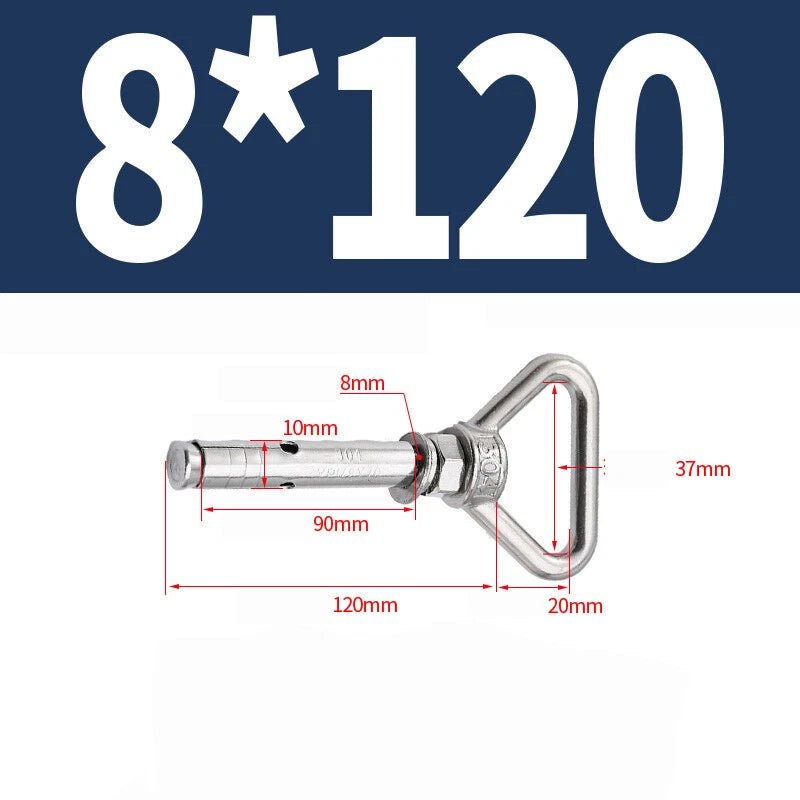
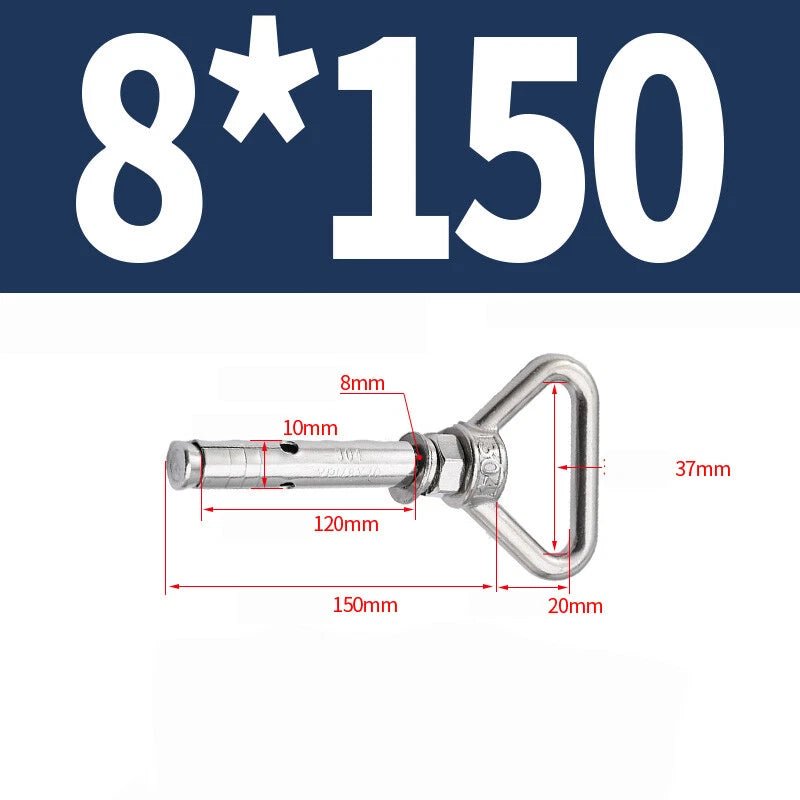
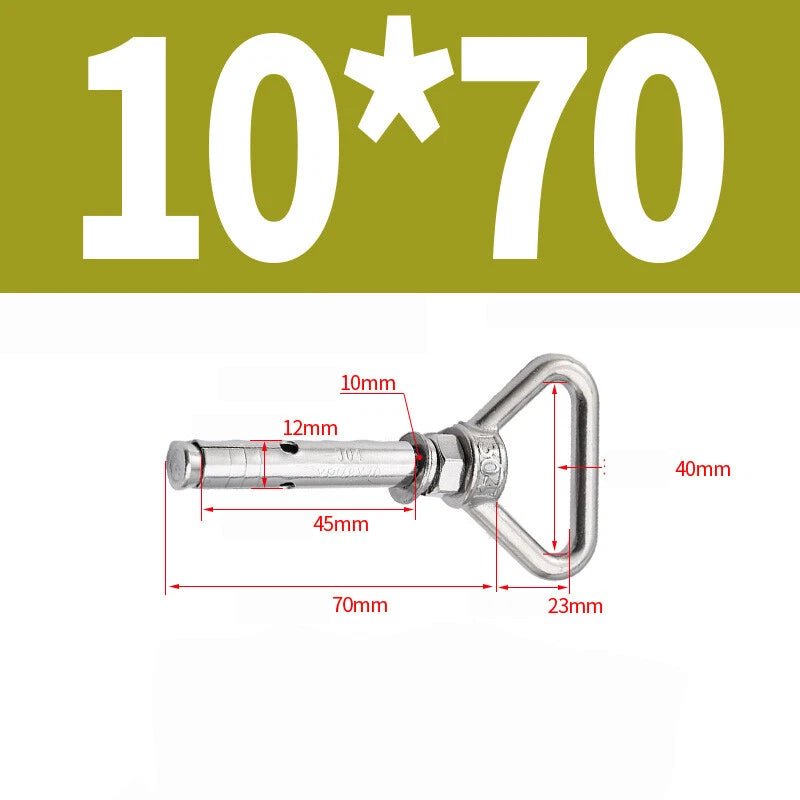
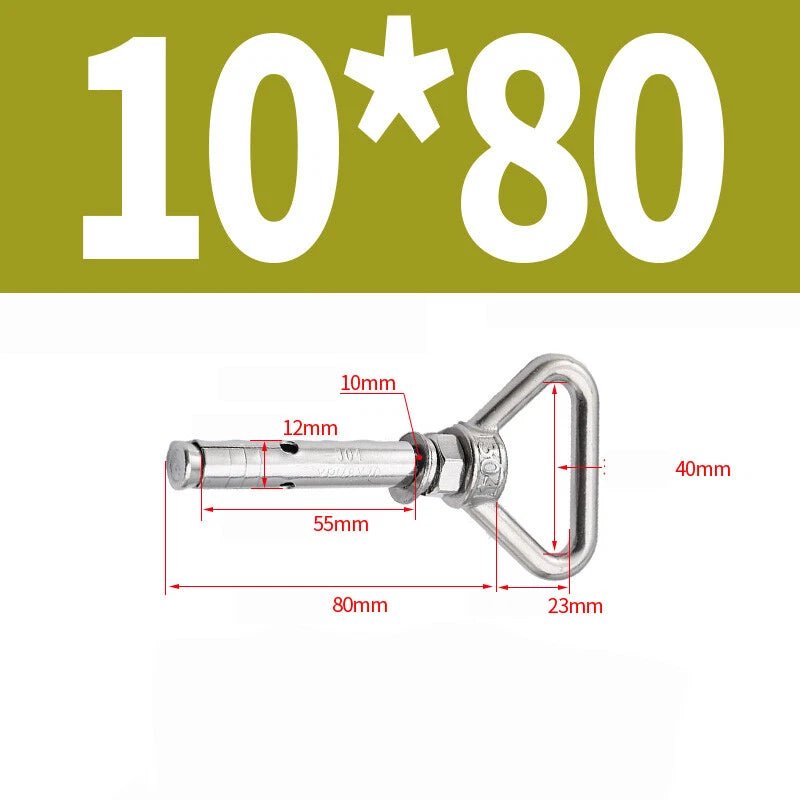
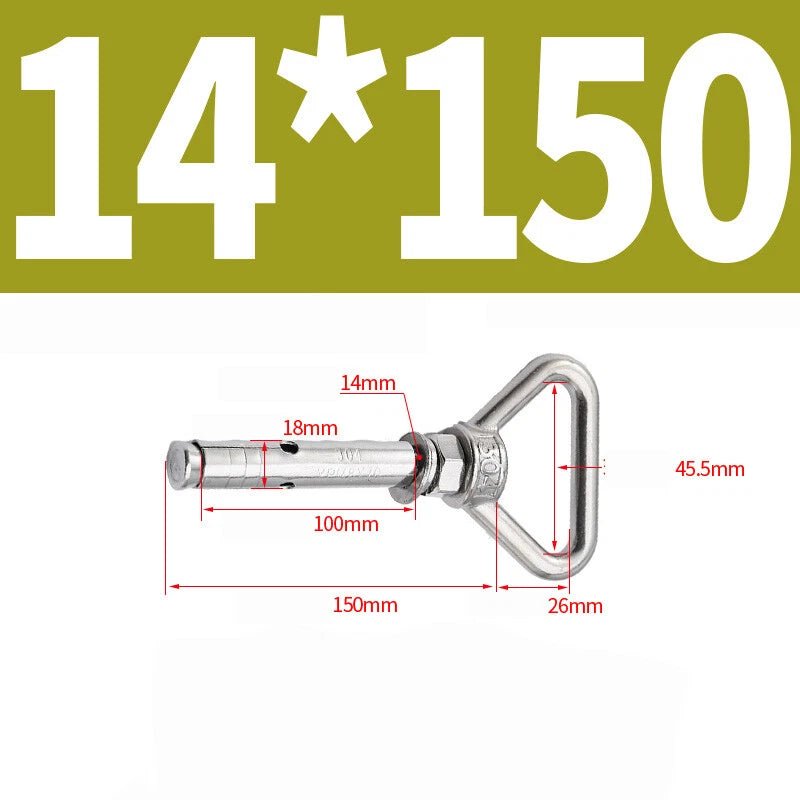
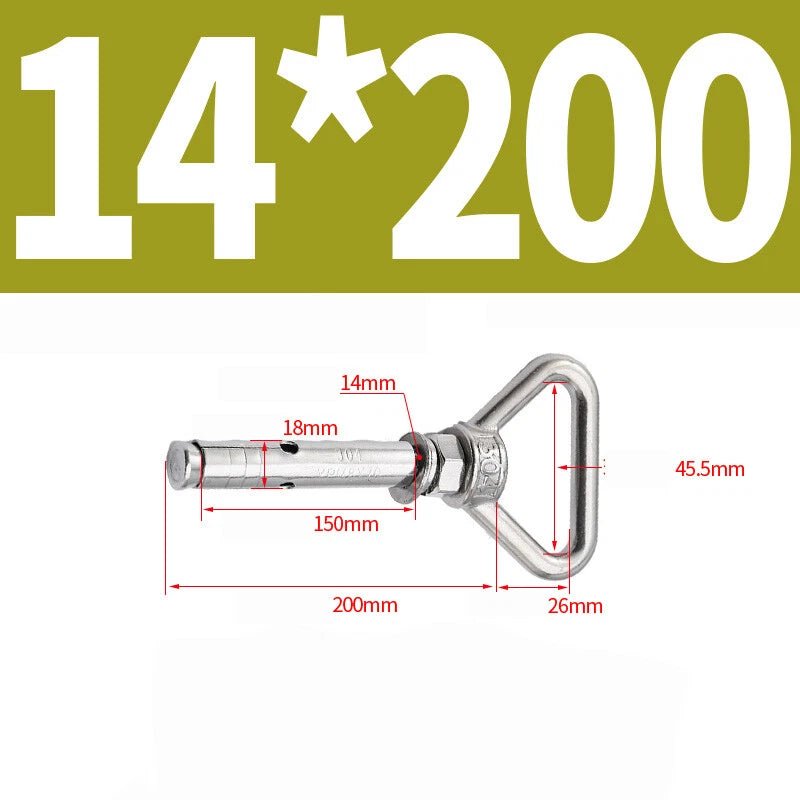
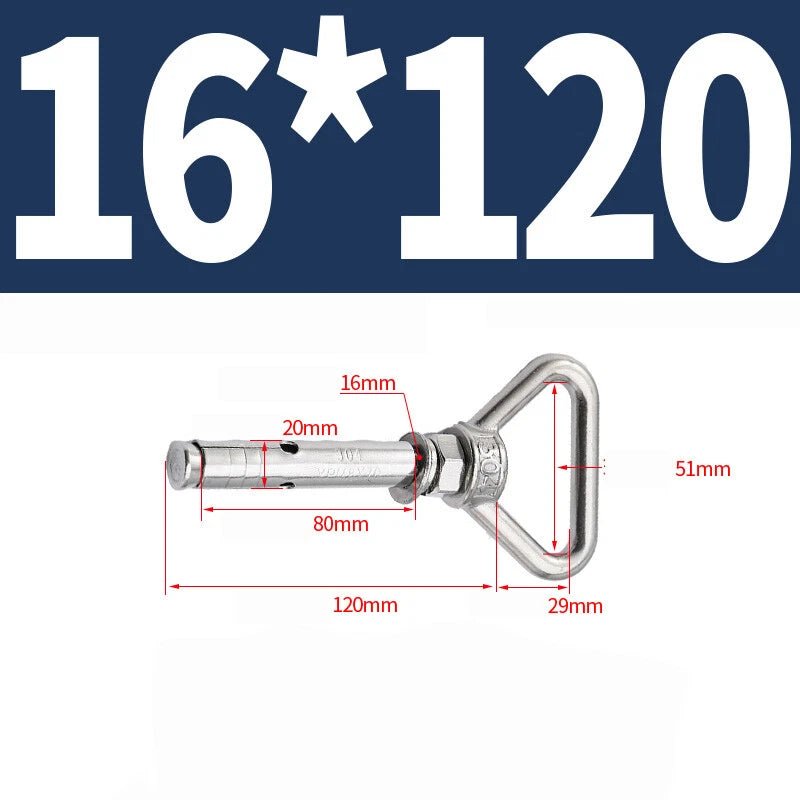
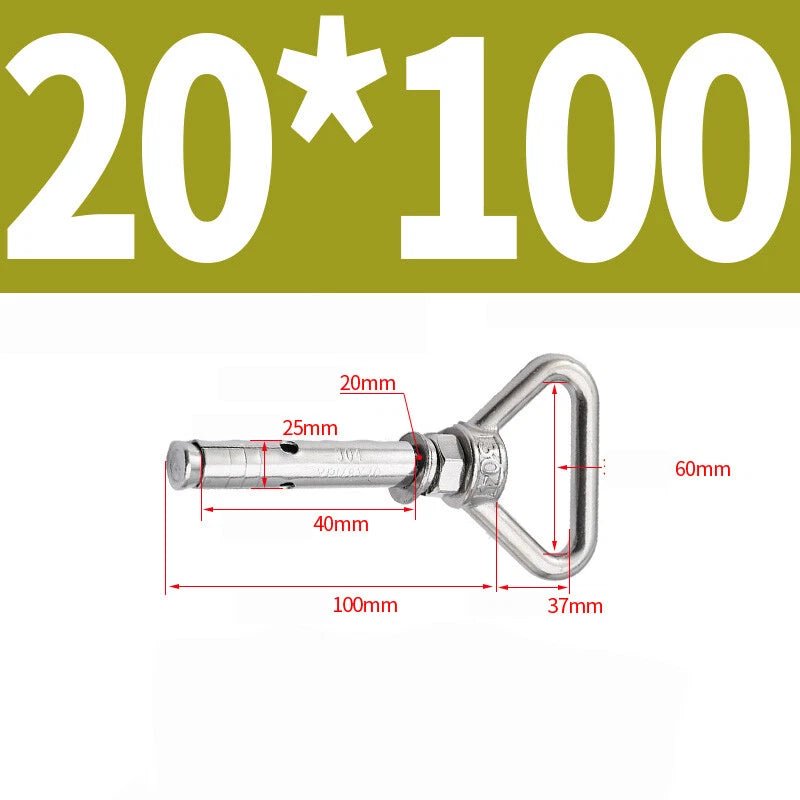
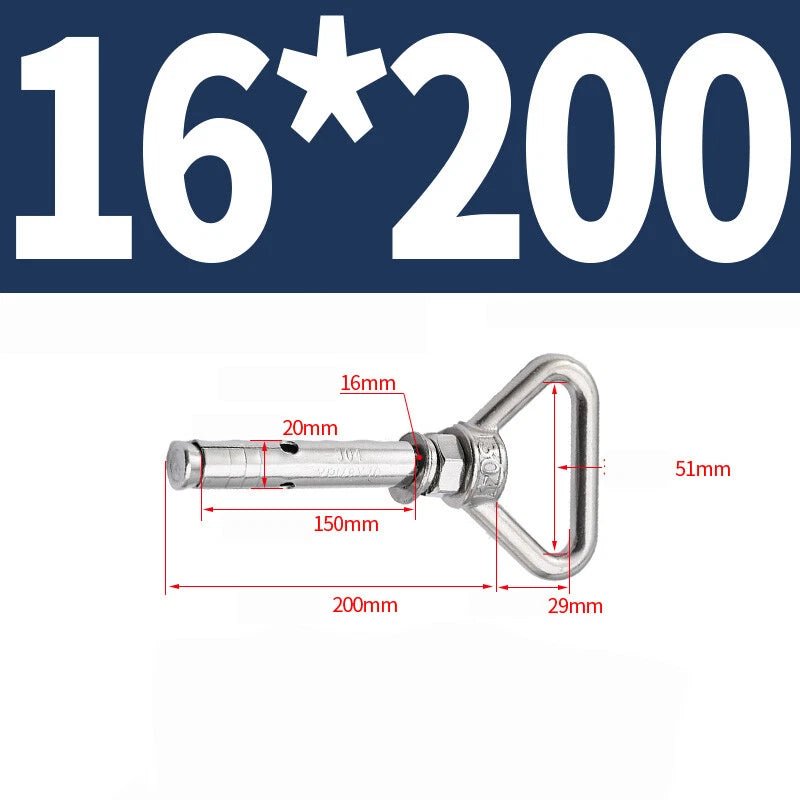
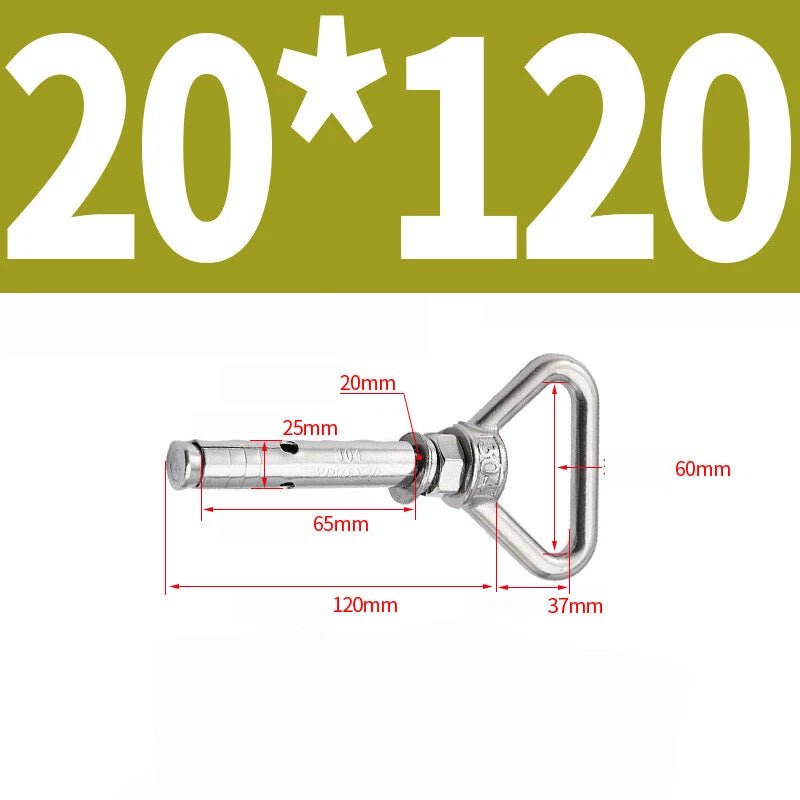
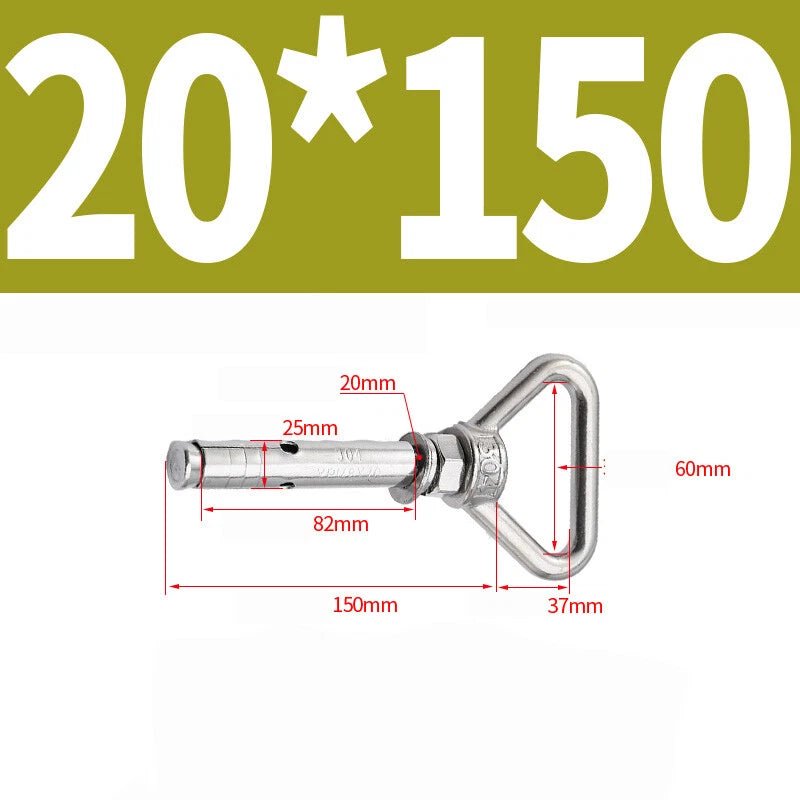
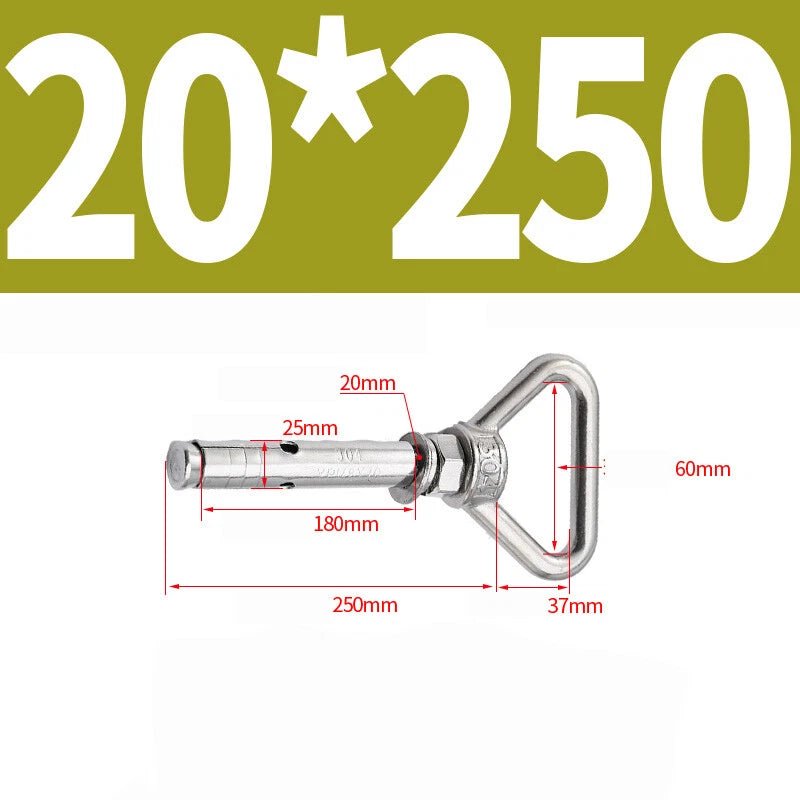
These lifting eye ring concrete sleeve anchor bolts are machined from 304 stainless steel and feature an integrated eye ring head for direct attachment of hooks, shackles, cables, or chains. Available in metric sizes M8 through M20, with lengths ranging from 50mm (≈2.0") to 250mm (≈9.8"), each listing is sold individually or in multi-packs of 2, 3, 4, 5, 7, or 10 pieces so you can order exactly what your project requires.

Typical applications include concrete ceiling rigging points for chain hoists and block-and-tackle systems, anchor bolts for safety railings and barrier posts, lifting attachment points on precast concrete panels, and secure tie-down anchors in workshops, gyms, and industrial facilities — all scenarios where a stainless steel concrete sleeve anchor with an eye ring delivers a clean, permanent, and corrosion-resistant solution.

🔵 Compatibility: Designed for solid concrete and dense masonry. Requires a hammer drill and a carbide-tipped bit matching the anchor diameter. Thread standard: ISO metric coarse (M8–M20). Compatible with standard metric shackles, hooks, and lifting hardware.

✅ Key Features of These 304 Stainless Steel Lifting Eye Ring Concrete Sleeve Anchors

  • 🔩Integrated Eye Ring Head — The forged eye ring is part of the bolt body, providing a direct, low-profile attachment point for hooks, shackles, wire rope, and chain without additional hardware.
  • 🛡️304 Stainless Steel Construction — Resists rust, oxidation, and surface corrosion in outdoor, humid, and mildly corrosive environments — far more durable than standard zinc or galvanized anchors for long-term installations.
  • 📐Wide Size Range (M8–M20) — Covers light-duty rigging with M8 anchors up to heavy structural lifting points with M20 anchors, letting you match the fastener to the actual load requirement of your concrete sleeve anchor application.
  • ⚙️Sleeve Expansion Mechanism — The wedge-action expansion sleeve locks mechanically against the concrete bore wall as the nut is tightened, creating a secure hold that resists both pull-out and shear forces.
  • 📦Flexible Quantity Options — Order 1, 2, 3, 4, 5, 7, or 10 pieces per transaction so you can buy exactly what you need for a single repair or a multi-point installation without overstocking.
  • 🔧Standard Metric Thread Compatibility — ISO metric coarse threads on M8 through M20 diameters work with off-the-shelf metric nuts, washers, and lifting accessories available at any hardware store.

📐 Technical Specifications — Lifting Eye Ring Concrete Sleeve Anchor Bolts

Material 304 Stainless Steel
Head Type Lifting Eye Ring (integrated)
Anchor Type Sleeve Expansion (wedge-action)
Thread Standard ISO Metric Coarse
Available Diameters M8, M10, M12, M14, M16, M20
Available Lengths 50mm (≈2.0") — 250mm (≈9.8")
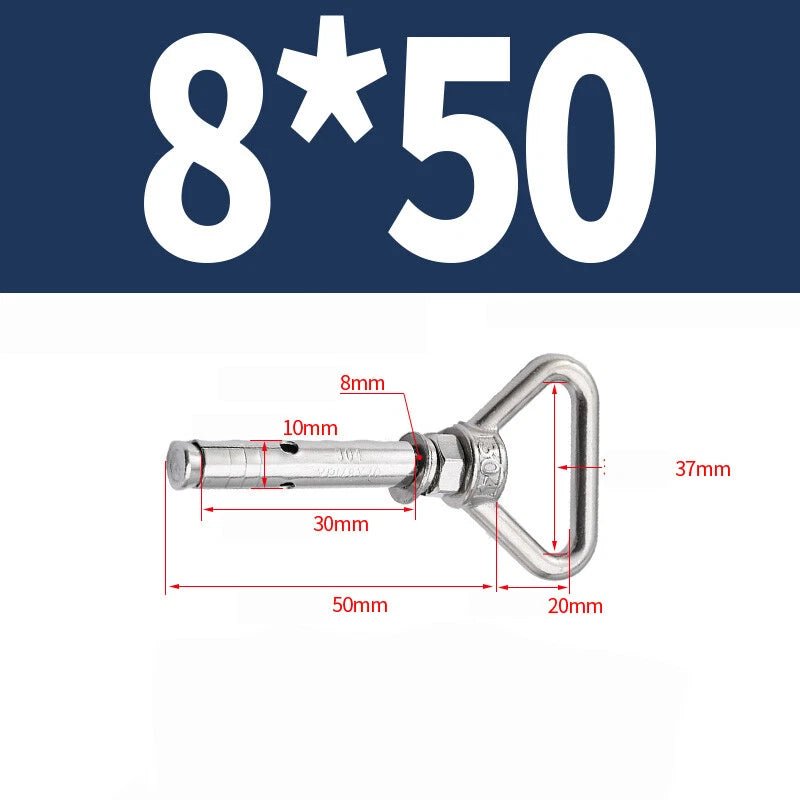
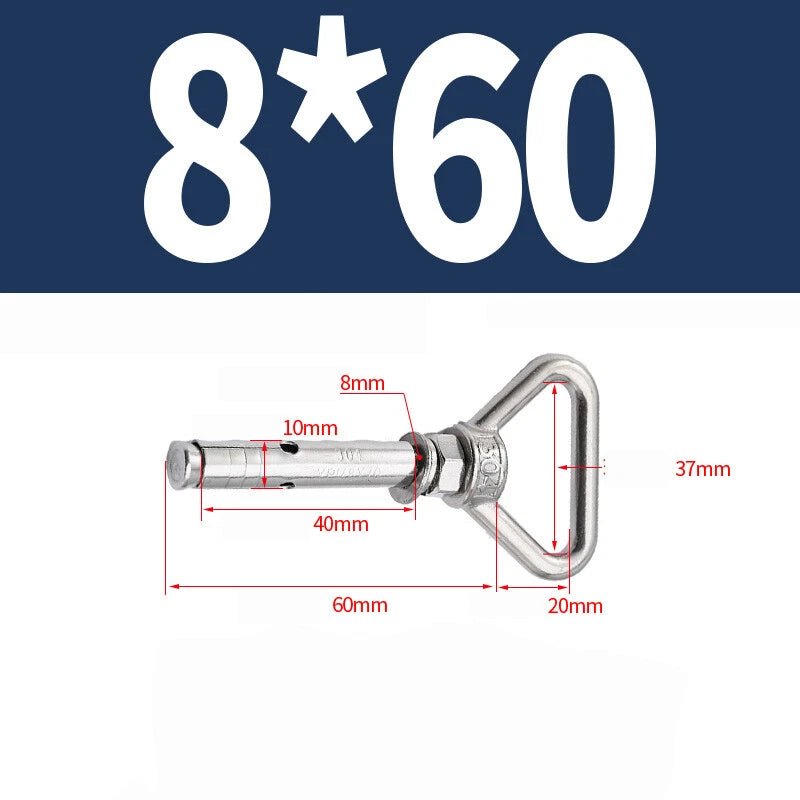
M8 Length Options 50mm (≈2.0"), 60mm (≈2.4"), 70mm (≈2.8"), 80mm (≈3.1"), 90mm (≈3.5"), 100mm (≈3.9"), 120mm (≈4.7"), 150mm (≈5.9")
M10 Length Options 60mm (≈2.4"), 70mm (≈2.8"), 80mm (≈3.1"), 90mm (≈3.5"), 100mm (≈3.9"), 110mm (≈4.3"), 120mm (≈4.7"), 150mm (≈5.9")
M12 Length Options 80mm (≈3.1"), 90mm (≈3.5"), 100mm (≈3.9"), 110mm (≈4.3"), 120mm (≈4.7"), 150mm (≈5.9"), 200mm (≈7.9")
M14 Length Options 100mm (≈3.9"), 120mm (≈4.7"), 150mm (≈5.9"), 200mm (≈7.9")
M16 Length Options 100mm (≈3.9"), 120mm (≈4.7"), 150mm (≈5.9"), 200mm (≈7.9")
M20 Length Options 100mm (≈3.9"), 120mm (≈4.7"), 150mm (≈5.9"), 200mm (≈7.9"), 250mm (≈9.8")
Quantity per Order 1, 2, 3, 4, 5, 7, or 10 pieces
Surface Finish Brushed / Natural Stainless
Suitable Base Materials Solid concrete, dense brick, solid masonry block
Working Load Limit See variant options — varies by diameter and embedment depth
Installation Tool Required Hammer drill + carbide-tipped bit (diameter matching anchor size)
⚠️ Note: Always verify the working load limit with a qualified engineer before using these anchors in overhead lifting or safety-critical applications. Embedment depth, concrete strength, and edge distance all affect actual load capacity.

❓ Frequently Asked Questions

How do I choose the right length for a concrete sleeve anchor?

Generally, the anchor embedment depth should be at least 1.5× the bolt diameter. For example, an M10 anchor typically needs at least 15mm of embedment into concrete. Add the thickness of the material being fastened to determine the total bolt length you need. As a practical rule: bolt length = material thickness + minimum embedment depth. For example, if you're fastening a 20mm bracket with an M10 anchor, you'd typically want at least a 60mm (≈2.4") bolt. When in doubt, go longer — you can always use a nut to adjust the exposed thread.

How much weight can these lifting eye ring anchors hold?

Load capacity depends on the bolt diameter, embedment depth, and the compressive strength of the concrete. Larger diameters (M16, M20) generally support significantly higher loads than smaller ones (M8, M10). In typical 3,000 psi concrete with full embedment, M8 anchors can generally handle several hundred pounds of pull-out force, while M20 anchors can handle several thousand pounds — but these are general estimates. Always consult a structural engineer for safety-critical or overhead lifting applications and never exceed the rated working load limit for the specific installation conditions.

Are these anchors suitable for outdoor or wet environments?

Yes. These anchors are made from 304 stainless steel, which provides strong resistance to rust and oxidation in most outdoor, humid, and mildly corrosive environments — making them a far better long-term choice than zinc-plated or galvanized anchors for exterior concrete applications. For highly corrosive environments such as coastal, marine, or chemical-exposure settings, 316 stainless steel is generally recommended for even greater corrosion resistance.

What thread standard do these anchors use — are they compatible with standard hardware?

These anchors use standard ISO metric coarse threads, which are the most common metric thread standard used worldwide. M8, M10, M12, M14, M16, and M20 sizes are all compatible with standard metric nuts, washers, shackles, hooks, and lifting rings available at any hardware or rigging supply store. No special or proprietary hardware is required.

Can I use these anchors in brick or block walls, not just poured concrete?

Sleeve expansion anchors are primarily designed for solid poured concrete, where they perform best. They can generally be used in solid brick or dense concrete block, but performance in hollow block, lightweight block, or soft masonry is typically reduced and may not be reliable. Always verify the base material's density and suitability before installation, and consider using a different anchor type (such as a chemical anchor) for hollow or soft masonry.

How do I install a concrete sleeve anchor correctly?

Installation is straightforward: (1) Drill a hole in the concrete matching the anchor diameter to the required depth using a hammer drill and carbide-tipped bit. (2) Clear all dust and debris from the hole using compressed air or a brush. (3) Insert the anchor into the hole — the sleeve should sit flush with or slightly below the surface. (4) Place a washer and nut on the threaded shank and tighten with a wrench. As the nut is tightened, the sleeve expands against the bore wall, locking the anchor in place. Do not over-torque, as this can crack the surrounding concrete or damage the anchor.

What is the advantage of buying a multi-pack vs. a single piece?

Single pieces are ideal when you need just one anchor for a specific repair or a one-off installation. Multi-packs (2, 3, 4, 5, 7, or 10 pcs) offer a lower per-unit cost and are practical for projects requiring multiple anchor points — such as hanging equipment, installing safety railings, setting up rigging points in a workshop, or securing machinery to a concrete floor. Buying a multi-pack also ensures you have spares on hand if a hole needs to be re-drilled or an anchor is damaged during installation.

🛒 Select your material & size and quantity above, then add to cart — ships from our US warehouse.

You may also like

Recently viewed





