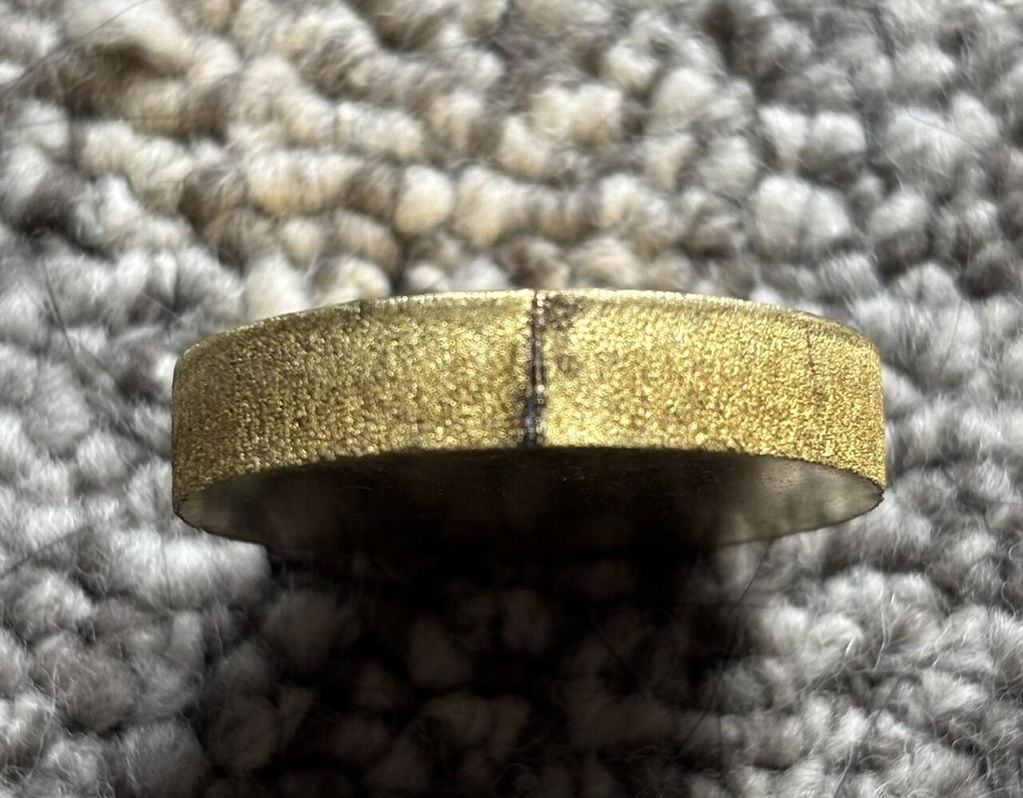
The chain is fine...but I ordered the wrong size. Nine links of the chain I ordered equals six of the size I wanted. My error...
How can I straighten out the springs? I can't use them coil uo as is.
Your payment information is processed securely. We do not store credit card details nor have access to your credit card information.
Get fitment advice & recommendations
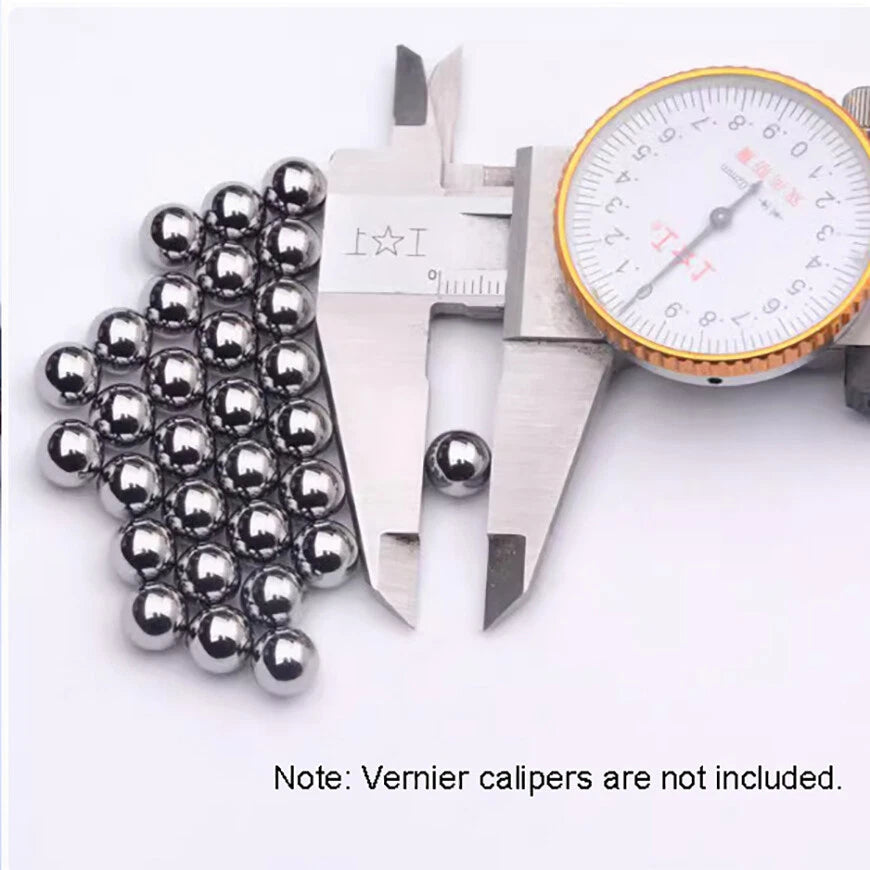
When a worn or corroded ball bearing causes play in a wheel hub, bottom bracket, or precision pivot, finding the exact replacement diameter quickly matters. Cyclists, mechanics, and DIY builders who work with both metric and imperial assemblies often struggle to source the right size without ordering from multiple suppliers. These 304 stainless steel ball bearings cover the full range from 0.5mm to 63.5mm in a single listing, letting you match the exact diameter your application requires.
Each ball is manufactured from 304 stainless steel, offering a balance of corrosion resistance and hardness suited to wet or humid environments. Diameters span 0.5mm (≈0.020 in) through 63.5mm (2.500 in), including common imperial fractional sizes such as 2.381mm (3/32"), 3.175mm (1/8"), 3.969mm (5/32"), 6.35mm (1/4"), 7.938mm (5/16"), 9.525mm (3/8"), 12.7mm (1/2"), 15.875mm (5/8"), 19.05mm (3/4"), 25.4mm (1"), 31.75mm (1-1/4"), and 38.1mm (1-1/2"). Packing quantities range from 1 pc to 300 pcs depending on diameter, so you can order exactly what a repair or build requires.
Typical use cases include bicycle wheel bearing replacement for road and mountain bikes, skateboard and inline skate axle bearings, small machinery pivot points requiring stainless steel ball bearings for corrosion resistance, and precision DIY jigs or fixtures where dimensional accuracy is critical. The wide diameter selection also suits hobbyist CNC builds and 3D-printer linear motion systems that call for loose ball replacements.
| Material | 304 Stainless Steel |
|---|---|
| Diameter Range | 0.5mm–63.5mm (≈0.020"–2.500") |
| Imperial Sizes Available | 3/32", 1/8", 5/32", 3/16", 1/4", 5/16", 3/8", 1/2", 5/8", 3/4", 1", 1-1/4", 1-1/2", 2", 2-1/2" |
| Packing Quantity Options | 1 pc / 5 pcs / 10 pcs / 50 pcs / 100 pcs / 300 pcs (varies by diameter) |
| Ball Type | Loose ball (not pre-assembled) |
| Surface Finish | Smooth spherical, bright finish |
| Corrosion Resistance | Suitable for wet and humid environments |
| Typical Grade | See variant options |
| Tolerance Class | See variant options |
| Compatible Race Types | Open races, retainer cages, loose-ball assemblies |
Remove the old ball from the race and measure its diameter with a digital caliper. Measure across the widest point of the sphere. Match that measurement to the nearest listed diameter. For imperial assemblies, cross-reference the fractional inch size — for example, a 1/4" ball measures 6.35mm. If the old ball is worn, measure the race groove width as a secondary check.
Yes. 304 stainless steel loose balls are a common replacement for cup-and-cone style bicycle hubs and threaded bottom brackets that use open races with retainer cages or loose balls. Confirm the diameter matches your existing balls before ordering. Most road bike hubs use 3/16" (4.76mm) or 1/4" (6.35mm) balls; many bottom brackets use 1/4" balls.
Chrome steel (52100) offers higher hardness and load capacity, making it the standard for sealed cartridge bearings under heavy radial loads. 304 stainless steel provides superior corrosion resistance in wet or humid conditions at the cost of slightly lower hardness. For bicycle maintenance, skateboard pivots, and light machinery in damp environments, 304 stainless is a practical choice. For high-load industrial applications, consult your equipment specification.
These are loose balls intended for open races and retainer-style assemblies. Sealed cartridge bearings (e.g., 608, 6001) are factory-assembled units and are not designed to be re-balled in the field. Use these balls for cup-and-cone hubs, loose-ball bottom brackets, and open-race pivot assemblies where individual ball replacement is the standard service procedure.
The number varies by hub model. A standard cup-and-cone front hub typically uses 10 balls per side (20 total) at 3/16" (4.76mm). A rear hub often uses 9 balls per drive side and 10 per non-drive side. Always count the existing balls before discarding them, or consult your hub manufacturer's service manual for the exact count and diameter.
Yes. The listing includes both metric steps (0.5mm, 1mm, 2mm, 3mm, 4mm, 5mm, 6mm, 8mm, 10mm, etc.) and imperial fractional equivalents (3/32", 1/8", 5/32", 1/4", 5/16", 3/8", 1/2", 5/8", 3/4", 1", 1-1/4", 1-1/2", 2", 2-1/2"). Select the diameter that matches your application from the variant dropdown.
For a single hub or bottom bracket service, a pack of 10–20 balls is typically sufficient. For workshop stock or multiple repairs, 100 pcs or 300 pcs packs offer better per-unit value. Packing quantity options vary by diameter — larger balls (21mm and above) are available in 1 pc increments, while smaller diameters (0.5mm–2.5mm) are packed in 100 pcs.