The chain is fine...but I ordered the wrong size. Nine links of the chain I ordered equals six of the size I wanted. My error...
How can I straighten out the springs? I can't use them coil uo as is.
Your payment information is processed securely. We do not store credit card details nor have access to your credit card information.
Get fitment advice & recommendations
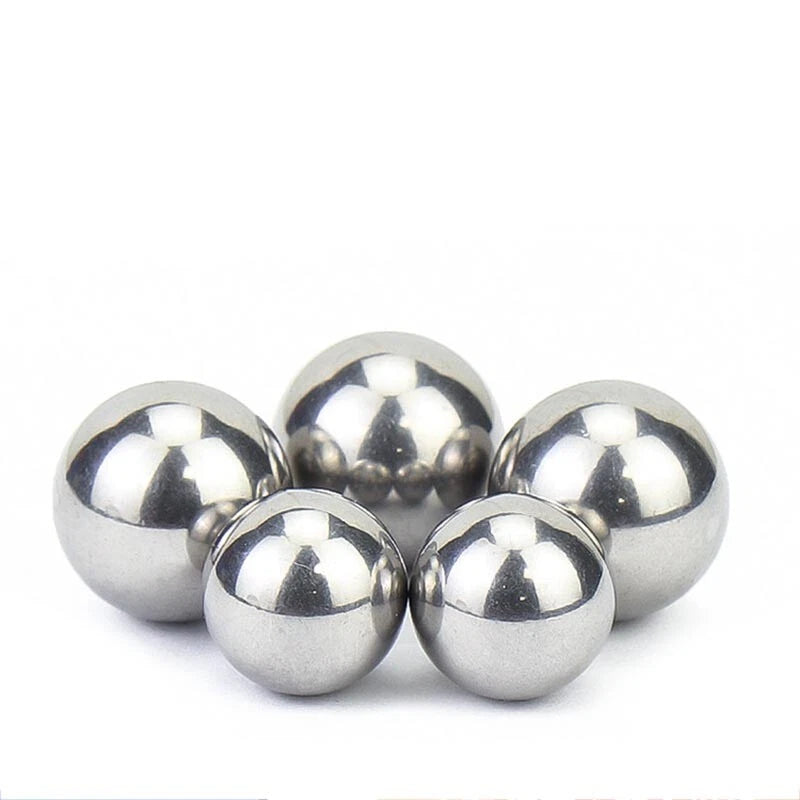
When a worn bearing seat, a leaking valve, or a stalled linear slide brings a project to a halt, the root cause is often a ball that has corroded, deformed, or drifted out of tolerance. These 304 stainless steel ball bearings are sized for engineers, machinists, and serious DIYers who need a dimensionally consistent, corrosion-resistant rolling element they can trust without measuring twice.
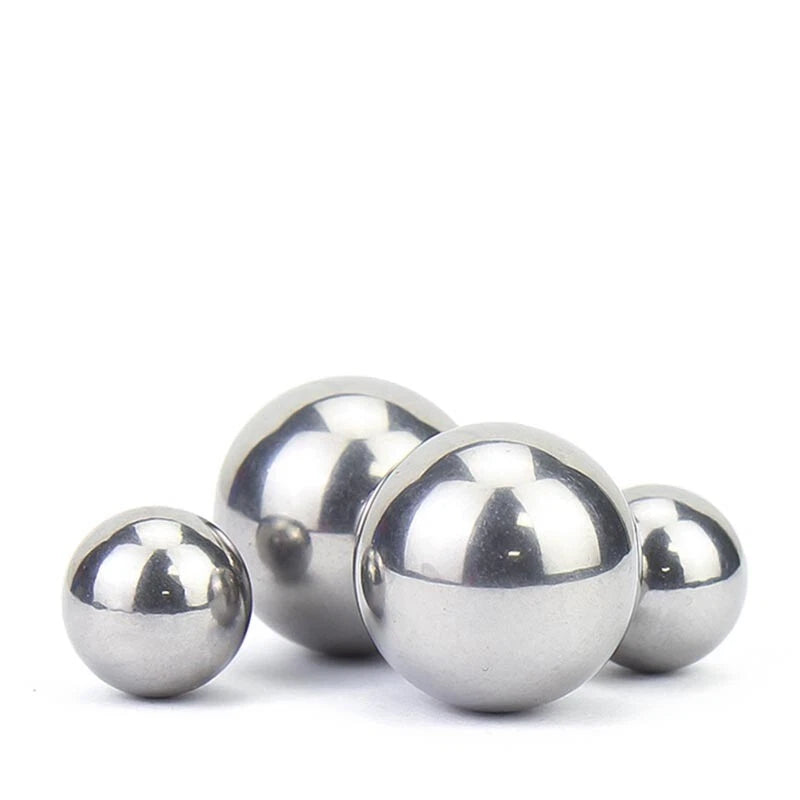
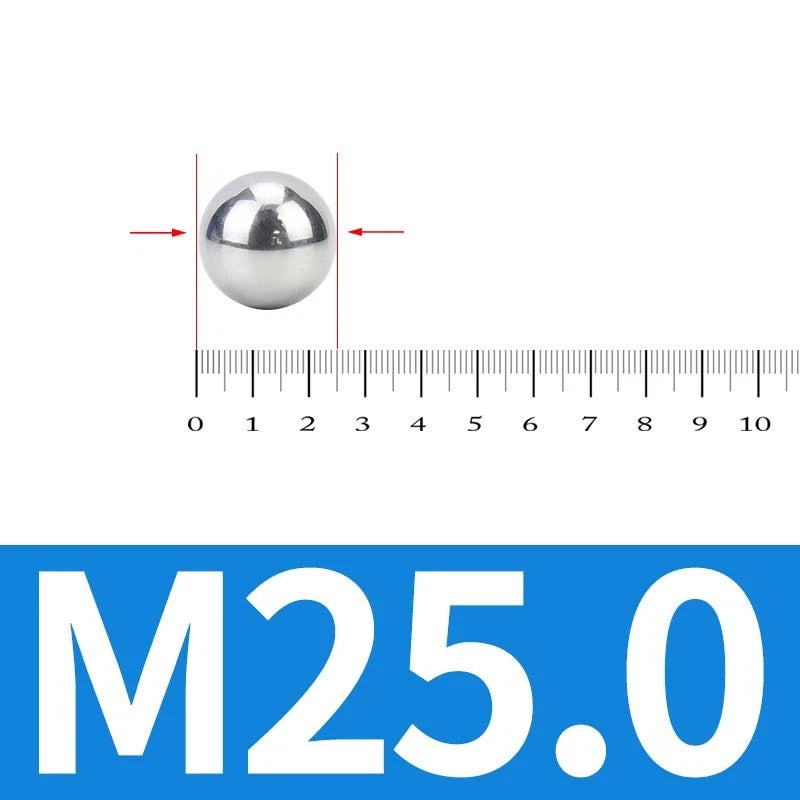
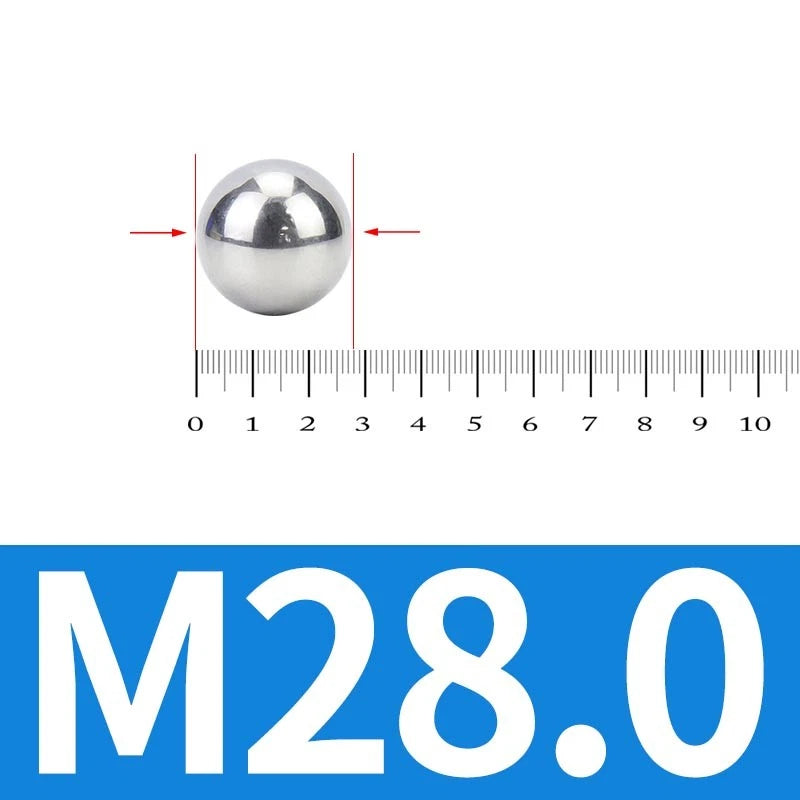
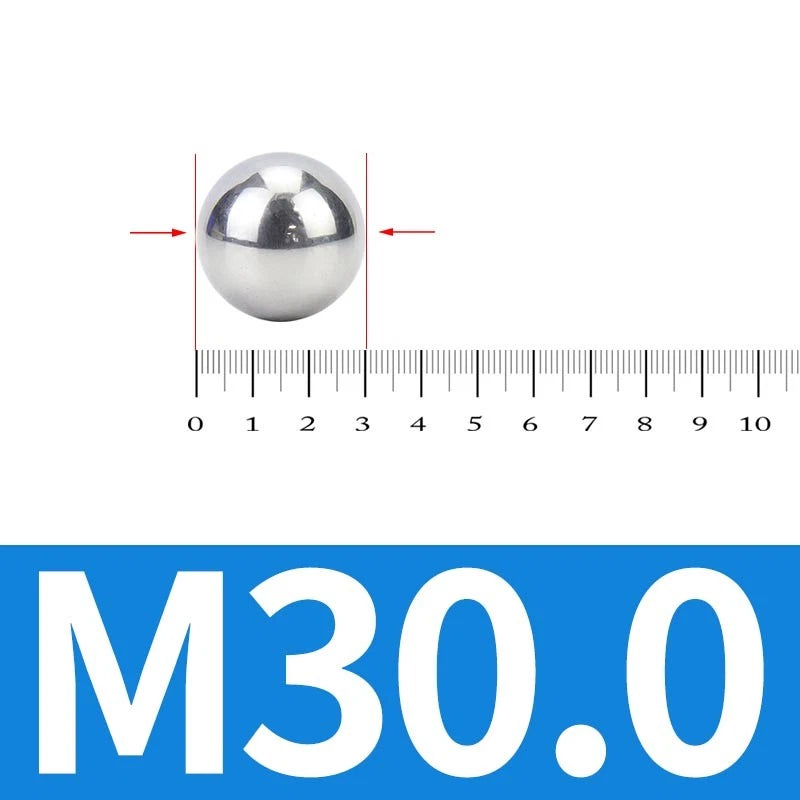
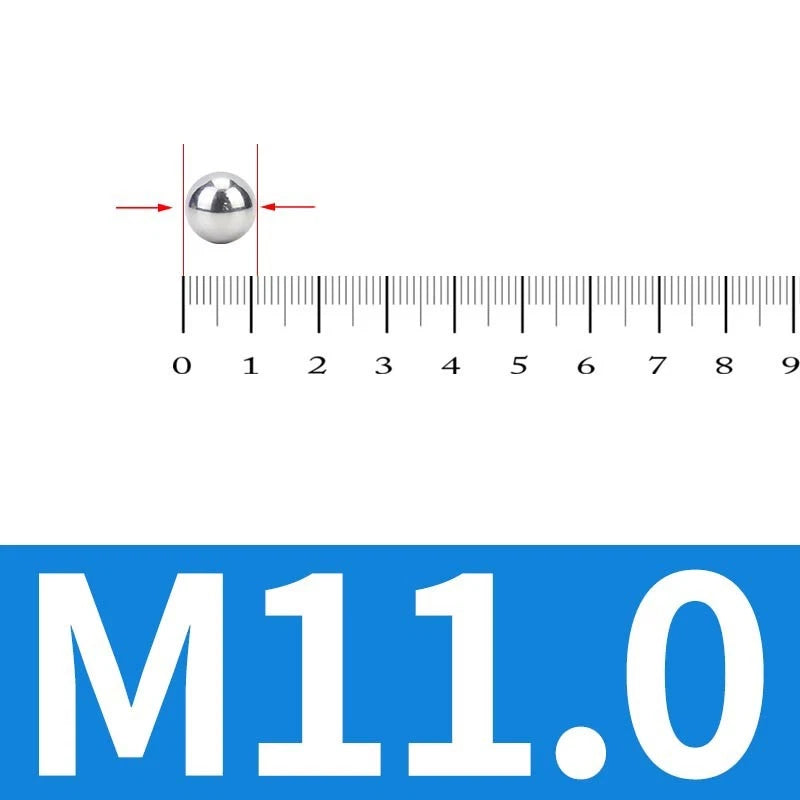
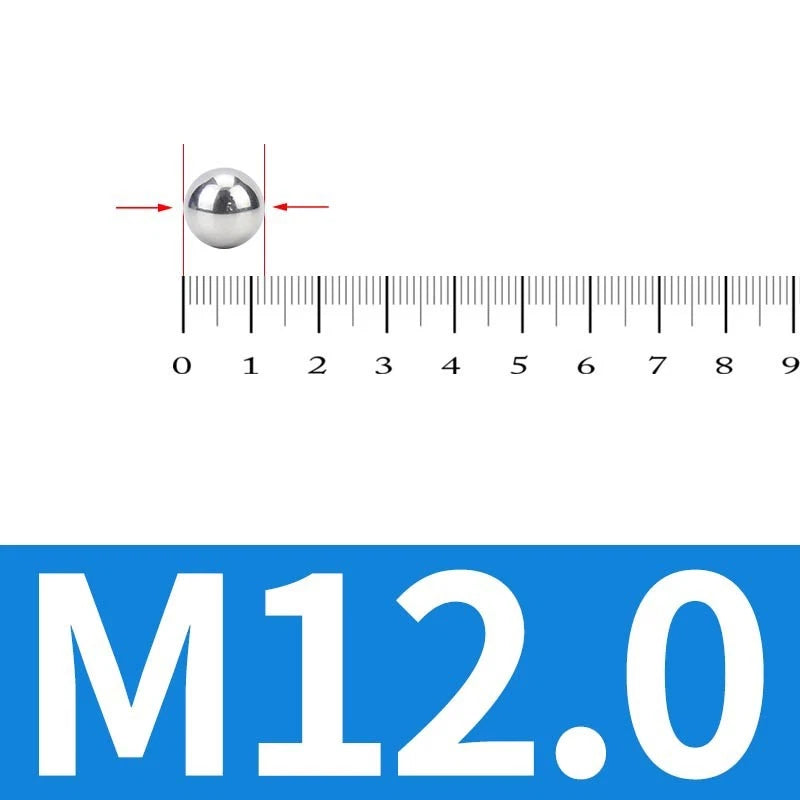
Each ball is machined from solid 304 stainless steel — an austenitic alloy with a chromium content of approximately 18% and nickel content of approximately 8% — delivering a surface hardness typically in the range of 70–85 HRB. Diameters span 11 mm (0.433 in) through 30 mm (1.181 in), with additional imperial-friendly sizes at 12.7 mm (1/2 in), 22.225 mm (7/8 in), and 25.4 mm (1 in). Pack sizes of 1, 2, 5, 10, and 20 pieces let you order exactly what a repair or build requires.
Typical use cases include replacement rolling elements in radial and thrust bearings, check-valve seats in fluid-handling systems, load-distributing balls in drawer slides and linear guides, and decorative or functional hardware in woodworking jigs and custom fixtures. The non-magnetic grade also suits applications near sensitive electronics or magnetic-field-sensitive instruments.
Machined from a single billet of 304 stainless — no hollow core, no plating that can flake. The alloy provides reliable resistance to oxidation, mild acids, and salt-spray environments.
Twenty-three diameter options, including imperial-standard sizes (1/2 in, 7/8 in, 1 in), cover the most common bearing and valve-seat specifications without custom ordering.
Balls are ground and lapped to a tight spherical tolerance, reducing vibration and uneven load distribution in rotating or reciprocating assemblies.
The 18-8 chromium-nickel composition forms a passive oxide layer that resists rust in humid, marine, and light chemical environments where carbon-steel balls would fail quickly.
Order a single ball for a one-off repair or a 20-piece pack for production runs and maintenance stock. Each pack size is priced to reflect the quantity, keeping per-unit cost predictable.
304 stainless is weakly magnetic at most, making these balls suitable for use near sensors, solenoids, or other components sensitive to ferromagnetic interference.
| Material | 304 Stainless Steel (18-8 Cr-Ni alloy) |
|---|---|
| Form | Solid sphere (no hollow core) |
| Diameter Range | 11 mm – 30 mm (0.433 in – 1.181 in) |
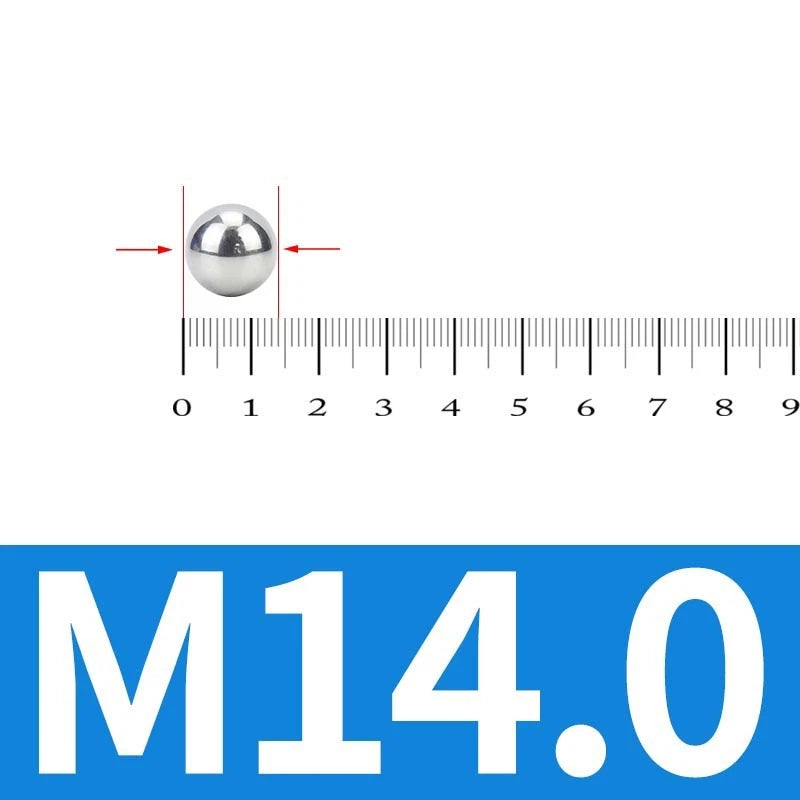
| Available Diameters | 11, 12, 12.7, 13, 14, 15, 16, 17, 18, 19, 20, 21, 22, 22.225, 23, 24, 25, 25.4, 26, 27, 28, 29, 30 mm |
| Pack Size Options | 1 Pcs, 2 Pcs, 5 Pcs, 10 Pcs, 20 Pcs |
| Surface Finish | Ground and lapped |
| Hardness (typical) | 70–85 HRB |
| Magnetic Properties | Weakly magnetic (austenitic grade) |
| Corrosion Resistance | Suitable for humid, marine, and mild chemical environments |
| Weight (per ball) | See variant options |
| Application | Bearings, valve seats, linear guides, jigs, fixtures |
Measure the bore of your bearing race or valve seat with a caliper. The ball diameter should match the bore specification exactly — a ball that is even 0.1 mm undersized will introduce play and accelerate wear. If you are replacing an existing ball, measure the worn ball across its widest point and round up to the next standard size listed in the variant options.
304 stainless steel has a tensile strength of approximately 515 MPa and a yield strength of approximately 205 MPa, making it suitable for moderate-load bearing and valve applications. For very high-load or high-speed precision bearings (ABEC 5 and above), consider chrome steel (52100) balls, which offer higher hardness. These 304 balls are well-suited for low-to-medium speed assemblies, check valves, and structural jigs.
304 stainless steel forms a self-repairing chromium oxide passive layer that resists rust in most outdoor and marine environments. It performs well in fresh water, humid air, and mild salt spray. For prolonged immersion in seawater or exposure to chloride-rich environments, 316 stainless steel offers superior pitting resistance. If your application involves continuous saltwater contact, contact us to confirm suitability.
Yes. 12.7 mm = 1/2 inch, 22.225 mm = 7/8 inch, and 25.4 mm = 1 inch exactly. These sizes are listed in millimeters for catalog consistency but are machined to the same tolerances as their imperial equivalents, making them direct replacements in inch-dimensioned bearing races and valve seats.
304 stainless steel is widely used in food-processing equipment and is generally considered food-safe for incidental contact. However, these balls are not supplied with material certifications or FDA compliance documentation. If your application requires certified food-grade or medical-grade components, please contact us to confirm whether documentation is available before ordering.
Each pack size contains the stated number of balls of the selected diameter. A 1 Pcs option is ideal for a single repair or prototype. Larger packs (5, 10, 20 Pcs) reduce the per-unit cost and are practical for production runs, maintenance kits, or projects requiring multiple balls of the same size. All pack sizes ship as a single unit.
These balls are loose rolling elements and will fit any bearing race or housing machined to the corresponding diameter. Confirm the ball diameter specification in your bearing's datasheet before ordering. They are not pre-assembled into cages or races.