The chain is fine...but I ordered the wrong size. Nine links of the chain I ordered equals six of the size I wanted. My error...
How can I straighten out the springs? I can't use them coil uo as is.
Your payment information is processed securely. We do not store credit card details nor have access to your credit card information.
Get fitment advice & recommendations
When a single out-of-tolerance ball causes vibration, noise, or premature wear in a precision assembly, the cost of rework far exceeds the cost of the component itself. Engineers, instrument makers, and DIY builders who work with miniature mechanisms need steel ball bearings they can trust to be round, smooth, and corrosion-resistant right out of the bag — without sorting or regrinding.
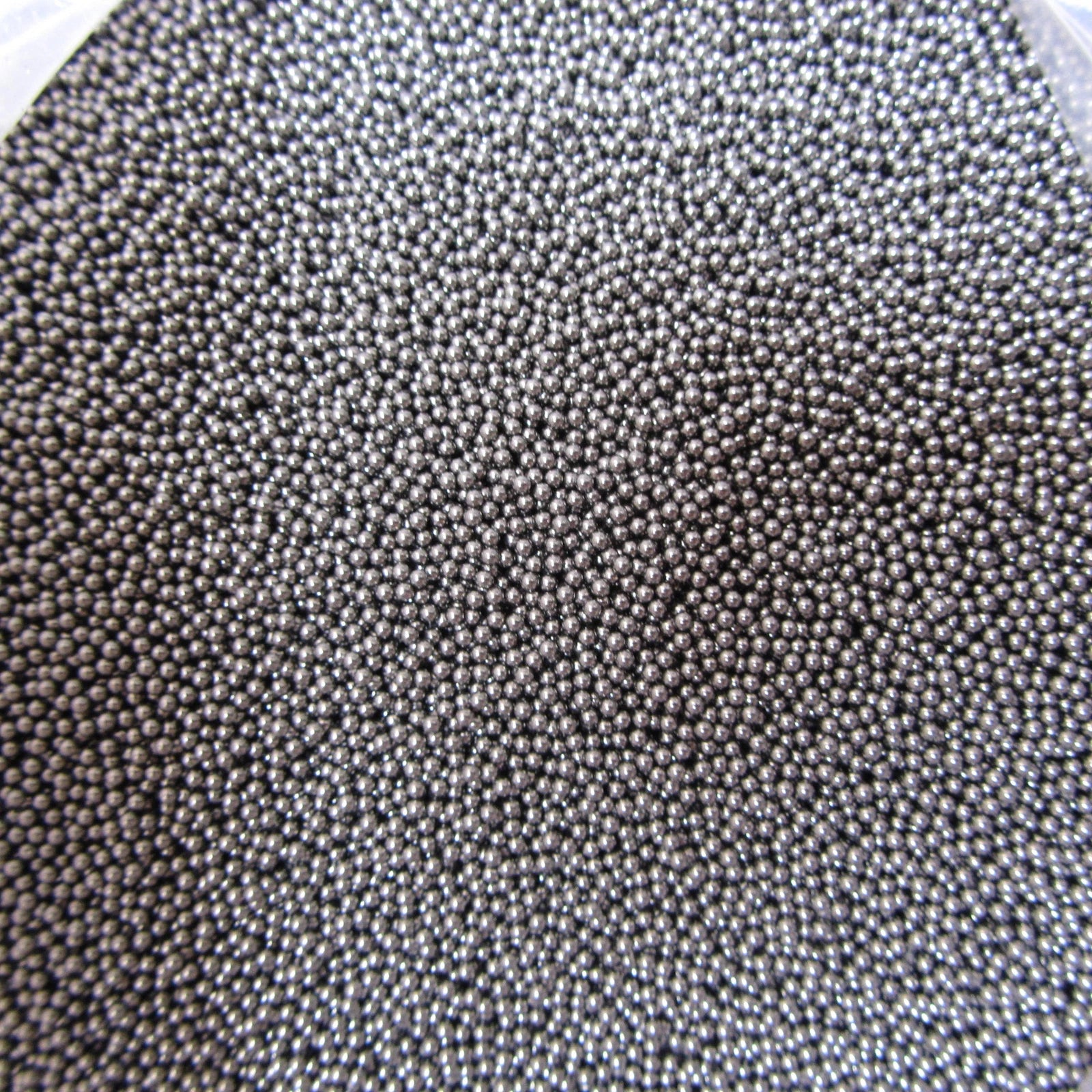
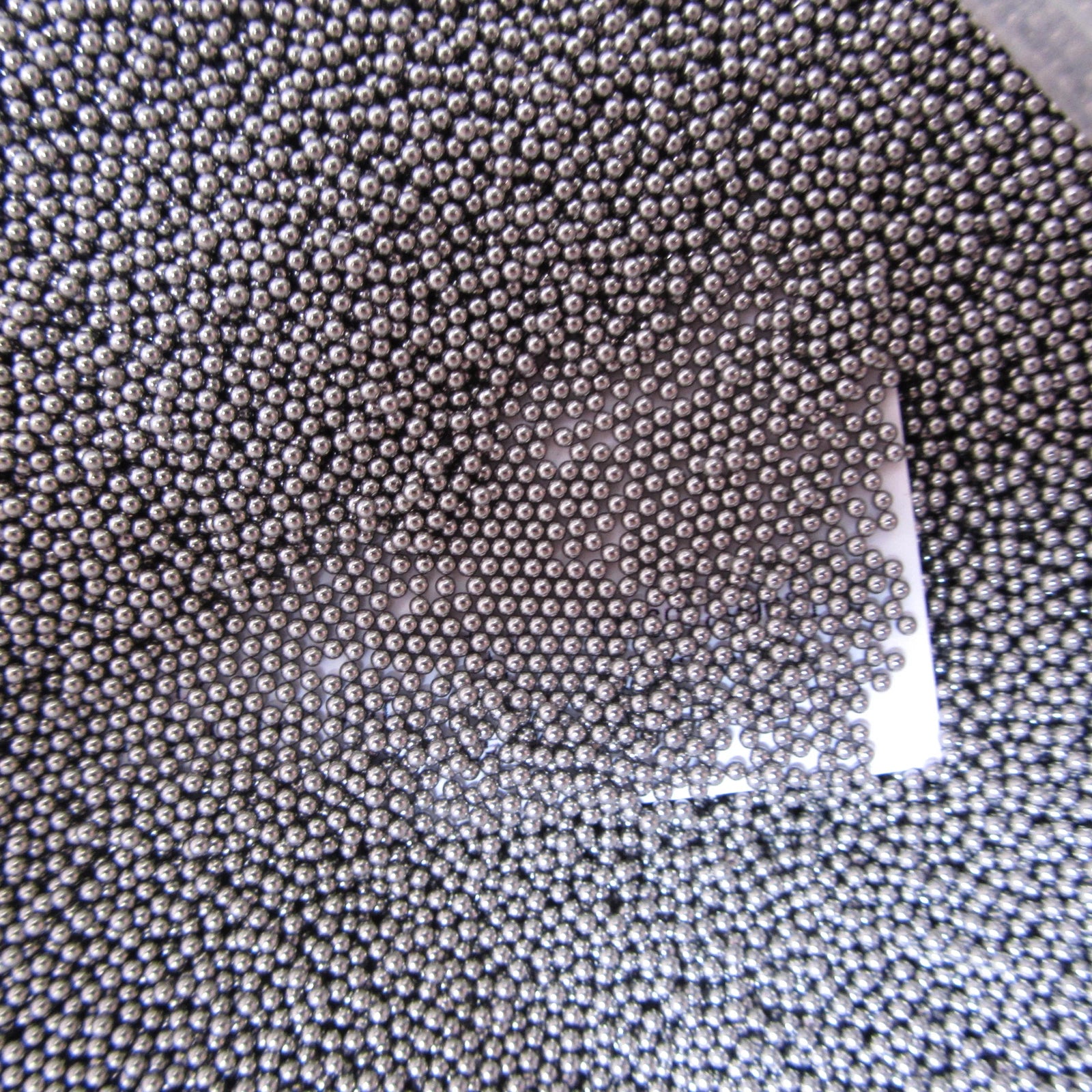
These 304 stainless steel precision ball bearings are manufactured to tight sphericity tolerances and are available in diameters ranging from 0.4 mm to 2.8 mm (approximately 0.016 in to 0.110 in). Each ball is produced from 304-grade austenitic stainless steel, delivering a smooth, bright surface finish suited to low-load, high-cycle rolling contact. Packs are available in quantities of 500, 1,000, or 2,000 pieces per order.
Typical use cases include miniature ball bearing races and retainer assemblies, precision instrument pivots and stylus mechanisms, valve seats in fluid-handling devices, and small-scale robotics or automation components where consistent ball diameter is critical to smooth linear or rotary motion.
Austenitic 304 alloy provides solid corrosion resistance in humid, mildly acidic, and washdown environments without the brittleness of hardened carbon steel alternatives.
Nine discrete sizes from 0.4 mm to 2.8 mm (0.016"–0.110") cover miniature instrument bearings, small valve seats, and compact robotic joints in a single product family.
Manufactured to close roundness tolerances, these balls seat consistently in races and retainers, reducing vibration and extending service life in repetitive-motion assemblies.
The polished surface minimizes rolling friction and reduces the risk of scoring contact surfaces in lightly loaded applications such as instrument pivots and stylus guides.
Order the quantity that matches your production run or repair stock. Larger packs reduce per-unit cost for workshops and small-batch manufacturers.
Suitable as replacement balls in miniature deep-groove bearings, thrust washers, ball screws, and custom retainer assemblies across mechanical, optical, and fluid-control devices.
| Material | 304 Stainless Steel (austenitic) |
|---|---|
| Diameter Range | 0.4 mm – 2.8 mm (0.016" – 0.110") |
| Available Sizes | 0.4, 0.5, 0.6, 1.2, 1.58, 1.6, 1.8, 1.9, 2.8 mm |
| Surface Finish | Bright polished |
| Corrosion Resistance | Suitable for humid and mildly corrosive environments |
| Pack Quantities | 500 pcs / 1,000 pcs / 2,000 pcs |
| Application Type | Loose rolling elements (not pre-assembled bearings) |
| Load Rating | See variant options |
| Hardness | See variant options |
| Grade / Tolerance Class | Contact us to confirm |
Match the ball diameter to the race groove radius of your bearing housing — the ball should contact the groove at roughly 52–55% of the ball diameter for standard deep-groove geometry. If you have the original bearing part number, cross-reference the ball complement size in the manufacturer's datasheet. When in doubt, measure the worn balls with a micrometer and order the same nominal size.
304 stainless steel has a lower hardness than bearing-grade 440C stainless or chrome steel (52100), so these balls are best suited to light-load, low-impact applications such as instrument pivots, valve seats, and small retainer assemblies. For heavy radial or axial loads, consider hardened steel or ceramic alternatives and verify the dynamic load rating against your application requirements.
304 stainless steel offers solid resistance to atmospheric moisture, fresh water, and mild chemical exposure. It is not fully immune to chloride-rich environments (such as saltwater or bleach solutions), which can cause pitting over time. For marine or aggressive chemical applications, 316 stainless steel balls would provide better corrosion resistance.
Yes, provided the diameter matches the original ball complement size and the material grade is acceptable for your load and speed conditions. Measure the existing balls with a micrometer, confirm the count per bearing, and order accordingly. Note that 304 stainless is softer than the 440C or 52100 steel used in most precision bearings, so service life under heavy load may differ.
Each size is a distinct nominal diameter: 0.4 mm, 0.5 mm, 0.6 mm, 1.2 mm, 1.58 mm, 1.6 mm, 1.8 mm, 1.9 mm, and 2.8 mm. These correspond to common miniature bearing ball complements and instrument pivot sizes. Select the size that matches your housing specification exactly — even a 0.1 mm difference will affect fit and rolling performance.
Store in a sealed container away from moisture, dust, and direct contact with dissimilar metals to avoid galvanic corrosion. A light coating of clean machine oil or VCI (vapor corrosion inhibitor) paper is recommended for long-term storage. Avoid storing near chloride-containing cleaning agents or in environments with high humidity fluctuations.
The listed sizes and pack quantities (500 / 1,000 / 2,000 pcs) cover the most common miniature ball bearing applications. If you need a diameter or quantity not shown, contact us through the store's contact page and we will advise on availability.